
 = Partner Site
Short Vowel Worksheets
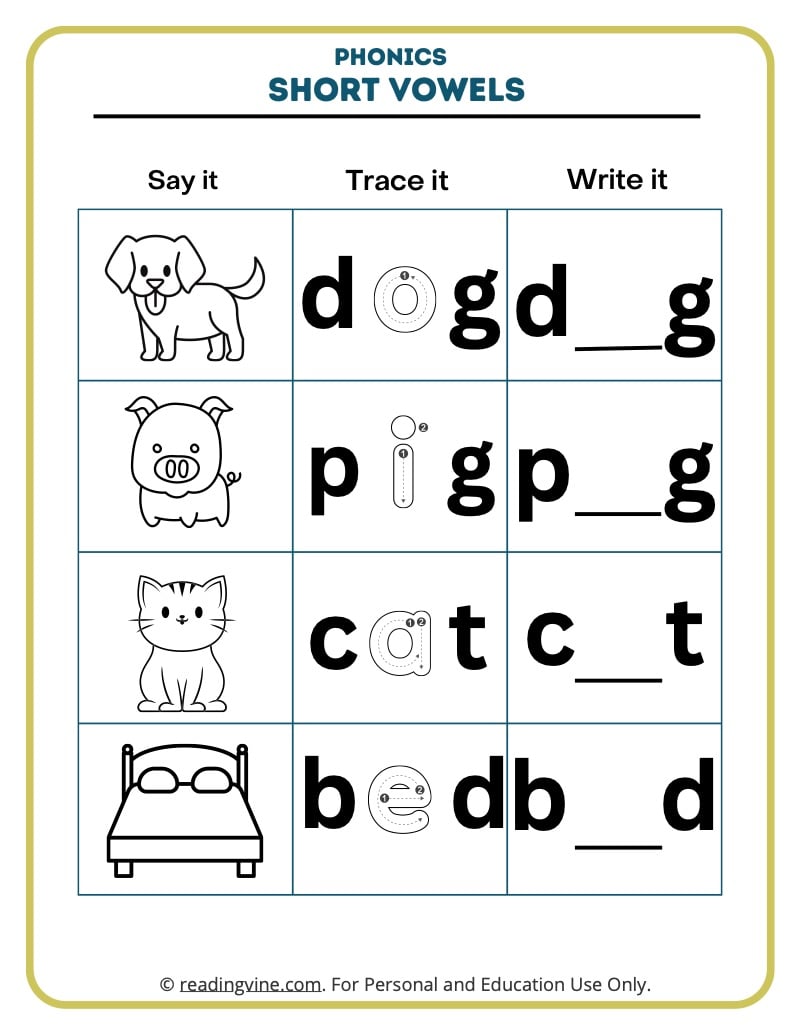
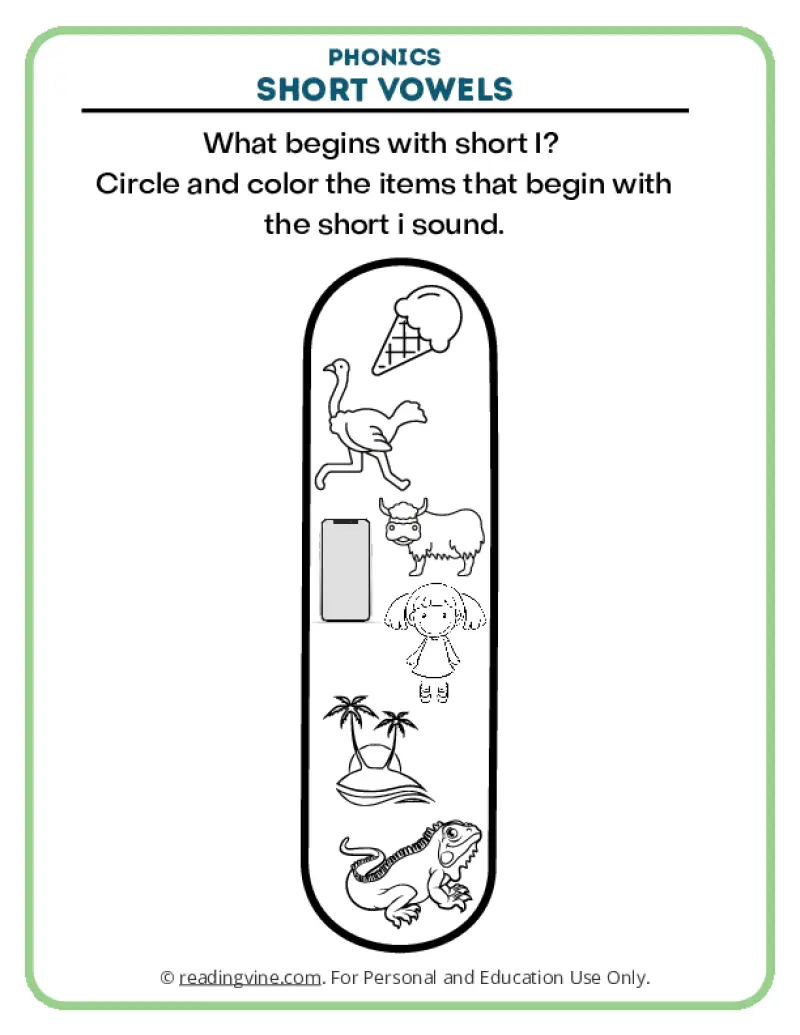
Looking for printable Short Vowel Sounds worksheets? This page provides a collection of activities designed to help children strengthen their understanding of short vowel sounds. The worksheets include exercises where children circle and color pictures of objects that begin with a given short vowel sound, helping them connect sounds to visual representations. Additionally, there are fill-in-the-blank activities where children complete CVC short vowel words by adding the missing vowel.
These printable PDF short vowel worksheets offer a fun and effective way for children to practice working with short vowel words. They are ideal for reinforcing phonics skills and building a strong foundation for reading and spelling success. Download and print these worksheets to provide targeted practice with short vowel words.
Fill in the Blank Short Value Worksheets
These worksheets focus on short vowel sounds in CVC words. Children will practice identifying and writing the correct short vowel (a, e, i, o, or u) to complete words. For example, given "c_t," they would fill in the "a" to make "cat." These activities are designed to reinforce short vowel sounds and improve reading and spelling skills.


Color the Items That Start With Short Vowel
Children will look at a group of pictures and circle and color only the objects that begin with the /ă/ sound, as in "apple." They will learn to distinguish between objects that start with short a and those that start with other sounds.




Tips for Using These Short Vowel Worksheets
- Isolate the Sounds: Before starting, review the distinct short vowel sounds (ă, ĕ, ĭ, ŏ, ŭ). Use clear pronunciation and examples of short vowel words. Avoid long vowel examples at this stage to minimize confusion. Focus on the quick, crisp sounds of each short vowel.
- Targeted Vowel Practice: Concentrate on one short vowel sound per worksheet or activity, especially with younger learners. For example, dedicate a worksheet solely to short "a" words before moving on to short "e." This focused practice helps solidify their understanding of each individual sound.
- Short Vowel Word Play: Make learning fun! Turn the worksheets into games by adding an element of competition (e.g., who can find the most short "o" words?) or using colorful markers and stickers. A playful approach makes learning short vowel words more engaging.
- Short Vowel Connections: Connect the short vowel words to real-world objects and images. When working on short "i," show pictures of igloos, insects, and other relevant items. This helps children associate the short vowel sounds with concrete examples.
- Multi-Sensory Short Vowel Learning: Engage multiple senses. Have children say the short vowel words aloud, clap the syllables, or use letter tiles or play dough to create the short vowel words physically. This multi-sensory approach reinforces learning.
- Short Vowel Modeling and Support: Before independent practice, model how to identify short vowel sounds in words. Show how to distinguish between short and long vowel sounds. Provide support and encouragement as needed, focusing specifically on the short vowel sounds.