
 = Partner Site
Adverb Worksheets
Help your 2nd and 3rd graders master adverbs with this comprehensive Adverb Worksheet Batch! These engaging worksheets provide students with targeted practice in identifying and using adverbs in sentences, enhancing their grammar skills and overall literacy. With a variety of exercises such as fill-in-the-blanks, sentence rewrites, and creative writing prompts, students will learn how adverbs modify verbs, adjectives, and other adverbs, while expanding their vocabulary. Perfect for independent work, literacy centers, or homework, this resource reinforces key grammar concepts and boosts students’ writing skills.
Printable Adverb Worksheets
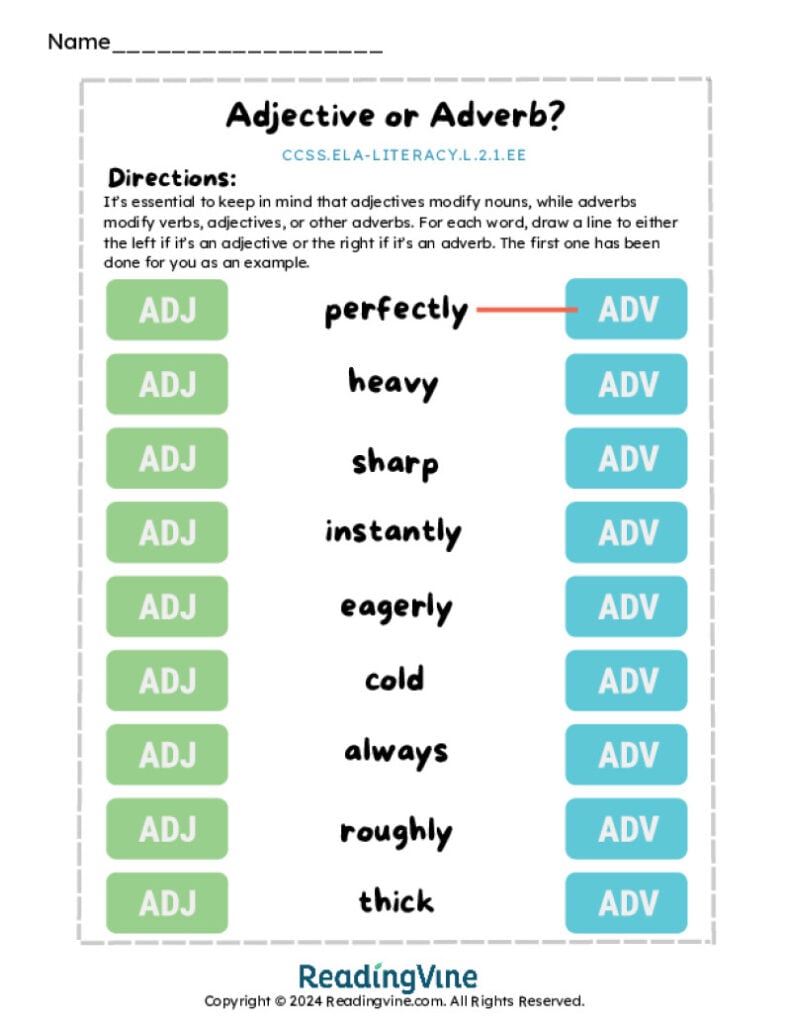
Adjective or Adverb Worksheet
Determine whether each word is an adjective or adverb by analyzing what it modifies in context.
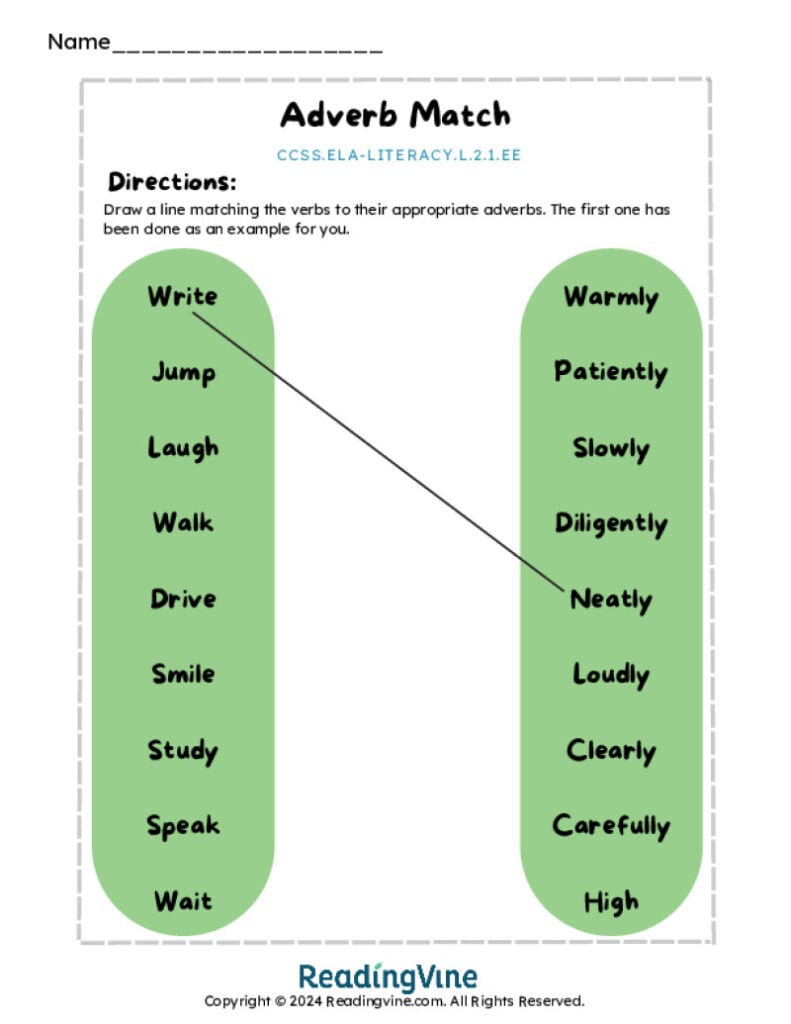
Adverb Matching Activity
Match verbs from one column to their appropriate adverbs in another column by drawing connecting lines.
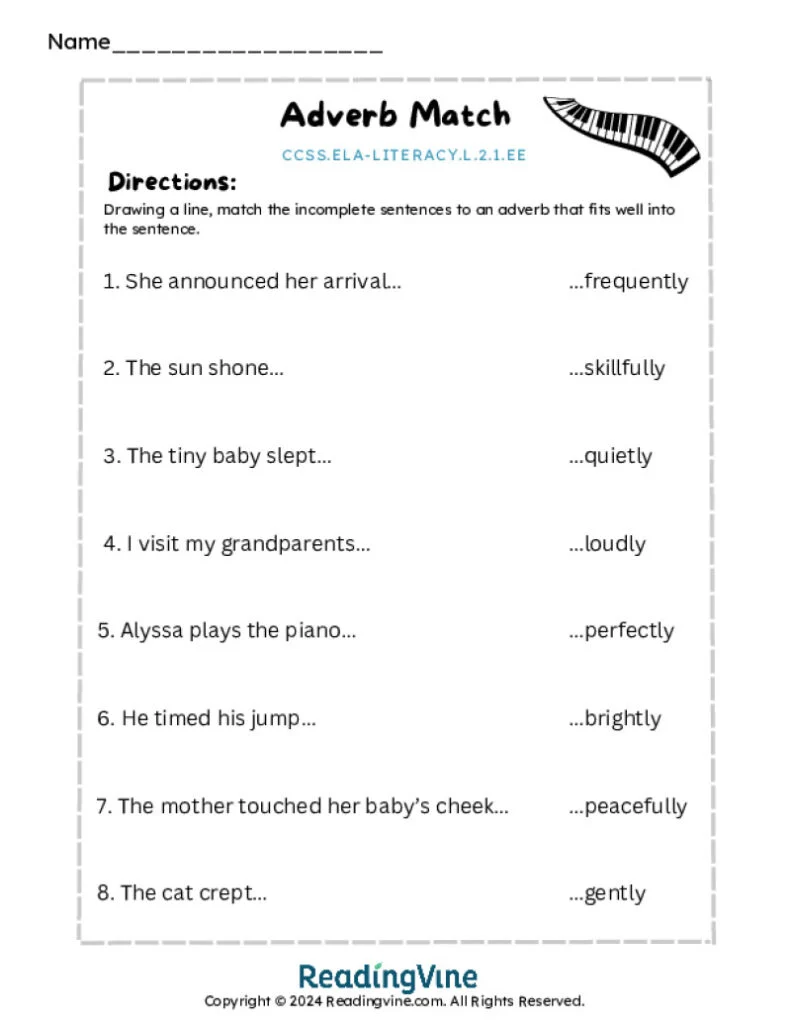
Adverb Matching Activity
Draw lines connecting incomplete sentences with adverbs that complete them appropriately and create logical meanings.

Adverb Modifiers Worksheet
Draw arrows from underlined adverbs to the words they modify, showing the grammatical relationship between modifiers and verbs.

Adverb Sorting
Cut out adverb shapes, sort them by type, and paste into columns telling when, how, or where actions occur.

Write Your Own Sentences Adverb Activity
Compose original sentences using provided adverbs and adverbial phrases, creating grammatically correct descriptive writing.

Adverbial Phrases Worksheet
Match sentences to their correct adverbial phrases by analyzing which multi-word expressions appropriately modify the actions.

Complete the Sentence
Complete each sentence by filling in blanks with appropriate adverbs that describe the actions being performed.
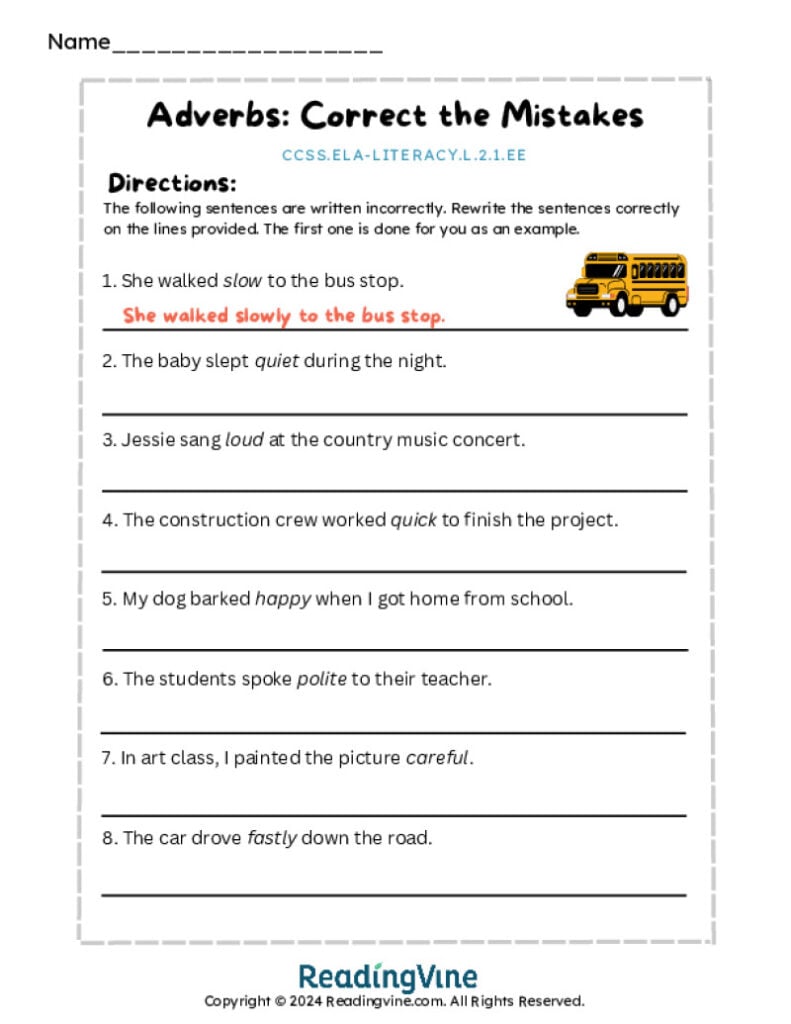
Correct the Mistakes
Identify incorrect adverb usage in sentences and rewrite each one correctly, fixing grammatical errors.
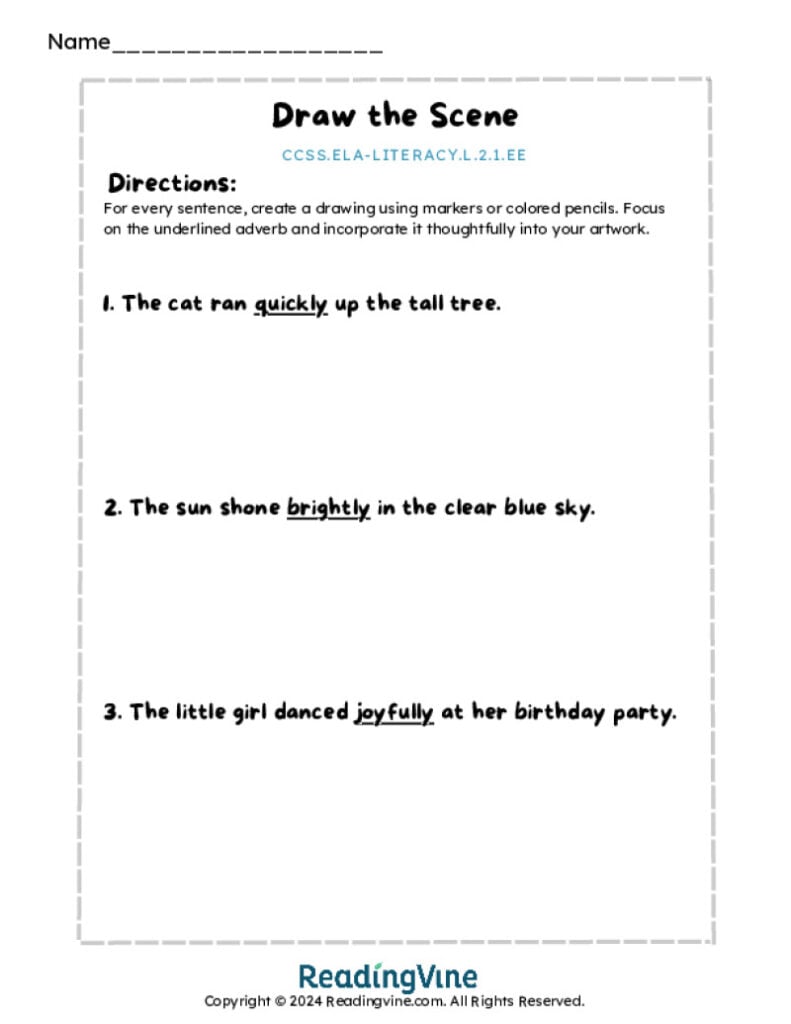
Draw the Scene
Create drawings illustrating sentences, using markers or colored pencils to visualize scenes described by underlined adverbs.

Fill in the Blank Adverb Activity
Use words from the provided list to fill in sentence blanks with adverbs that appropriately describe the action verbs.
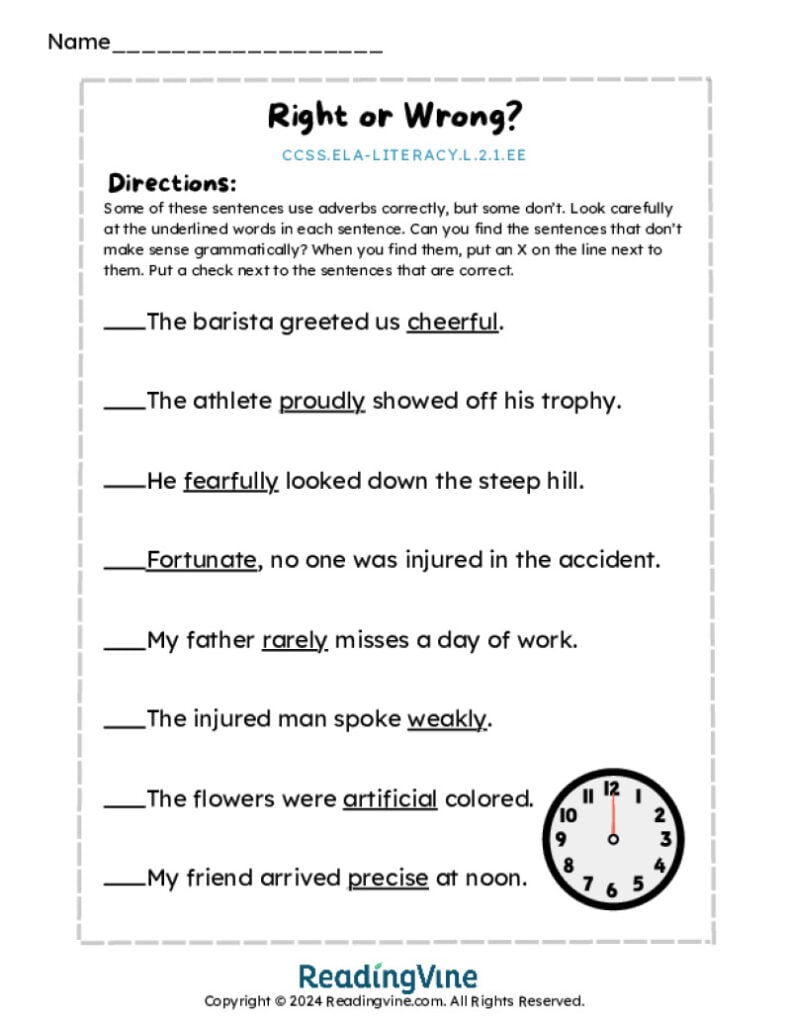
Adverbs - Right or Wrong?
Identify sentences with correct adverb usage and find those with errors by placing an X next to incorrect examples.
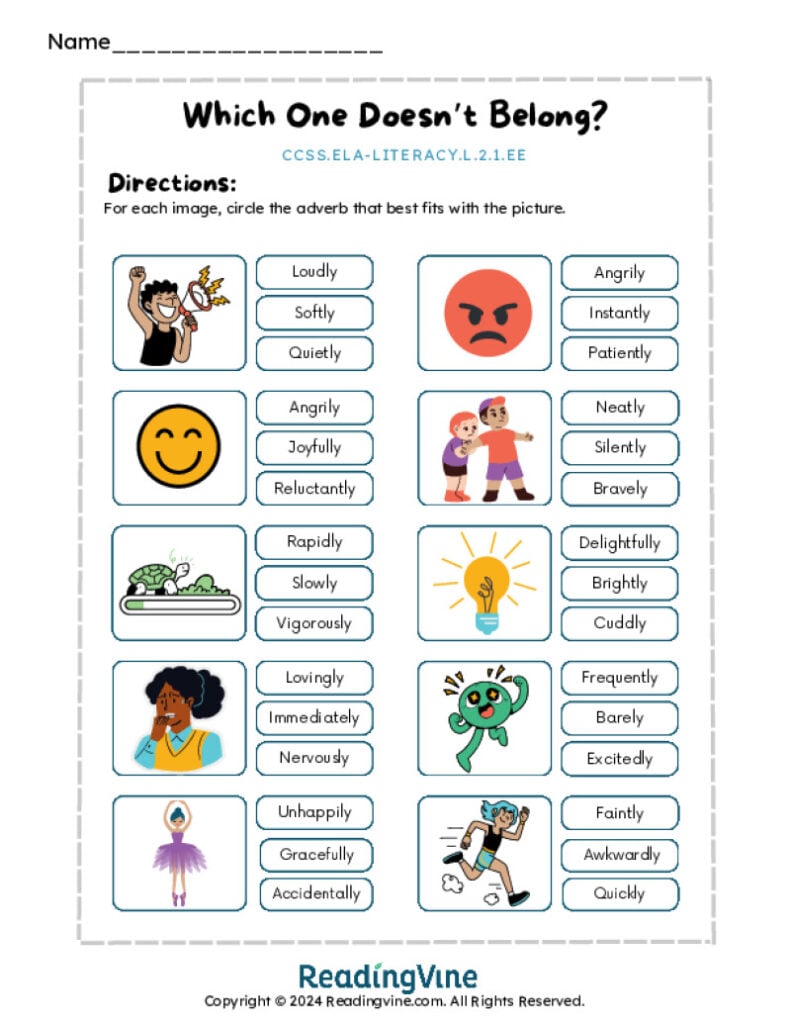
Which One Doesn't Belong?
For each illustrated scenario, circle the adverb that best fits the picture by analyzing which word appropriately describes the action shown.
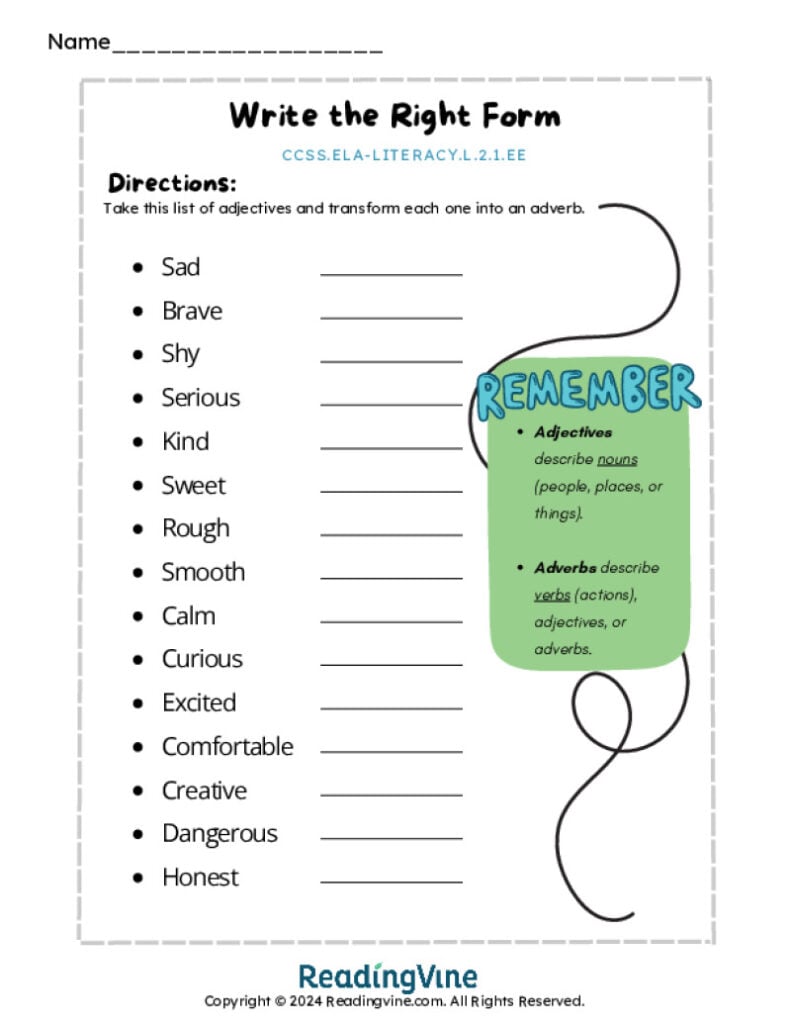
Write the Right Form
Transform adjectives into their adverb forms by adding -ly or making other necessary spelling changes to each word.

Adverbs - Writing Sentences Worksheet
Craft original responses to questions using adverbs, creating sentences that answer with descriptive detail about how actions occur.

Adverbs in Poetry Activity
Read the poem and underline all adverbs, identifying words that describe actions throughout the poetic text.
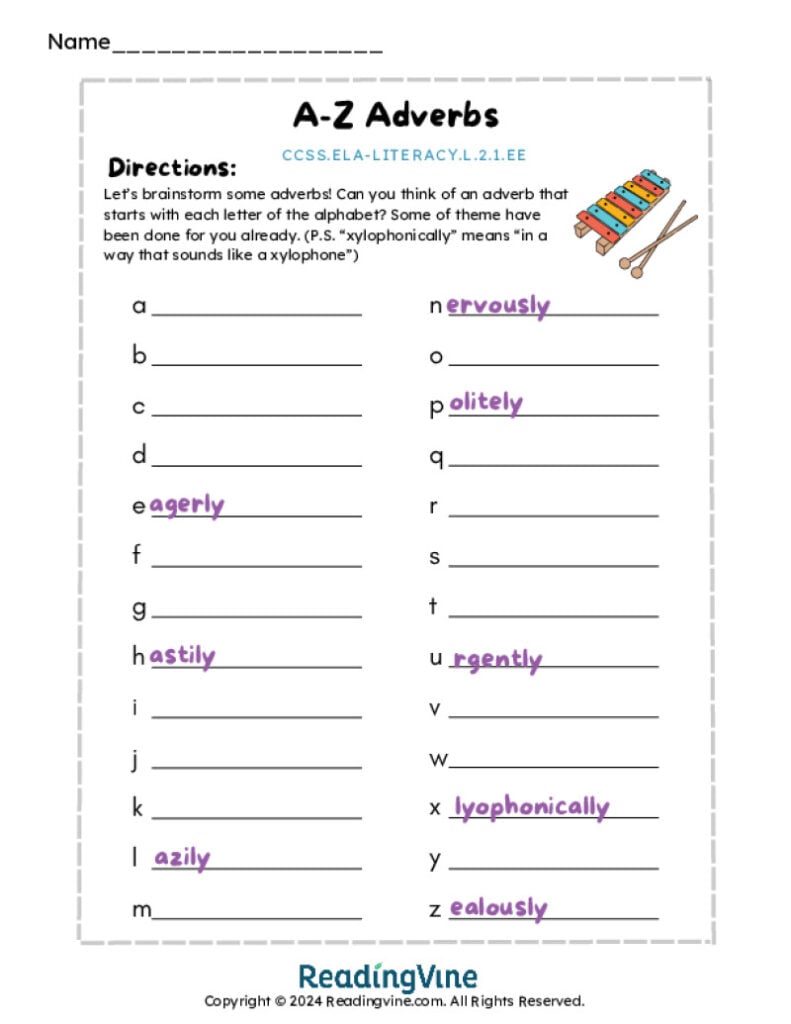
A-Z Adverbs
Think of an adverb starting with each letter of the alphabet, practicing vocabulary knowledge of words that modify verbs.
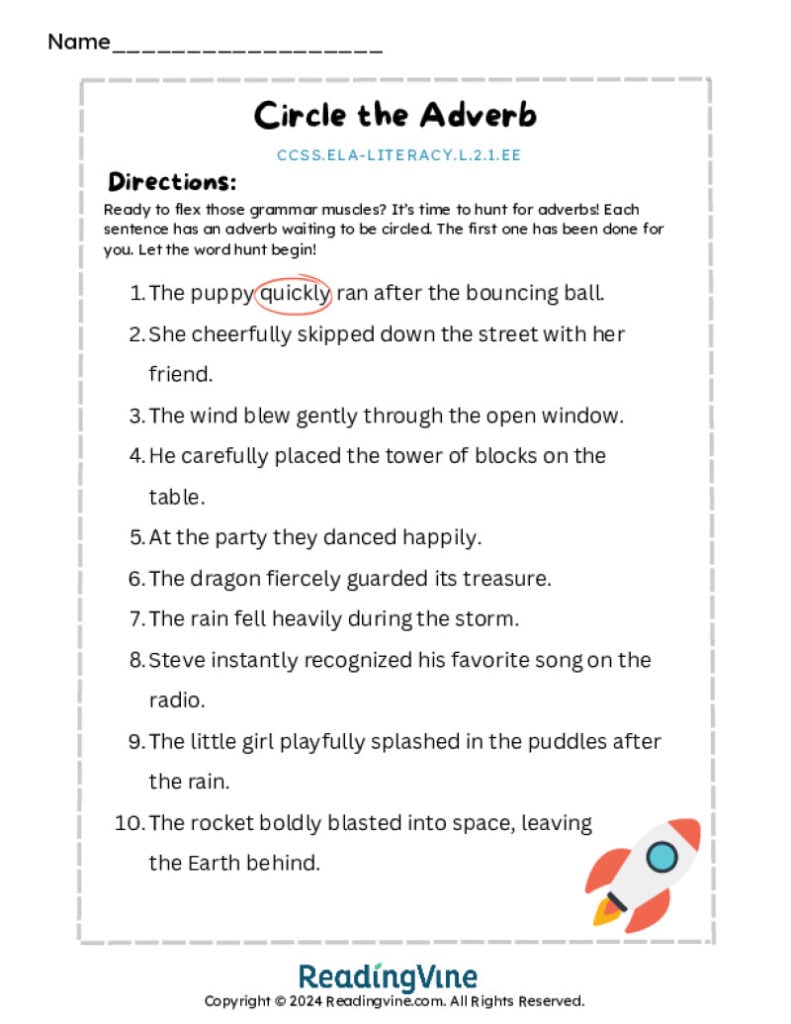
Circle the Adverb
Hunt for adverbs throughout the sentences, circling each word that describes how, when, or where an action happens.
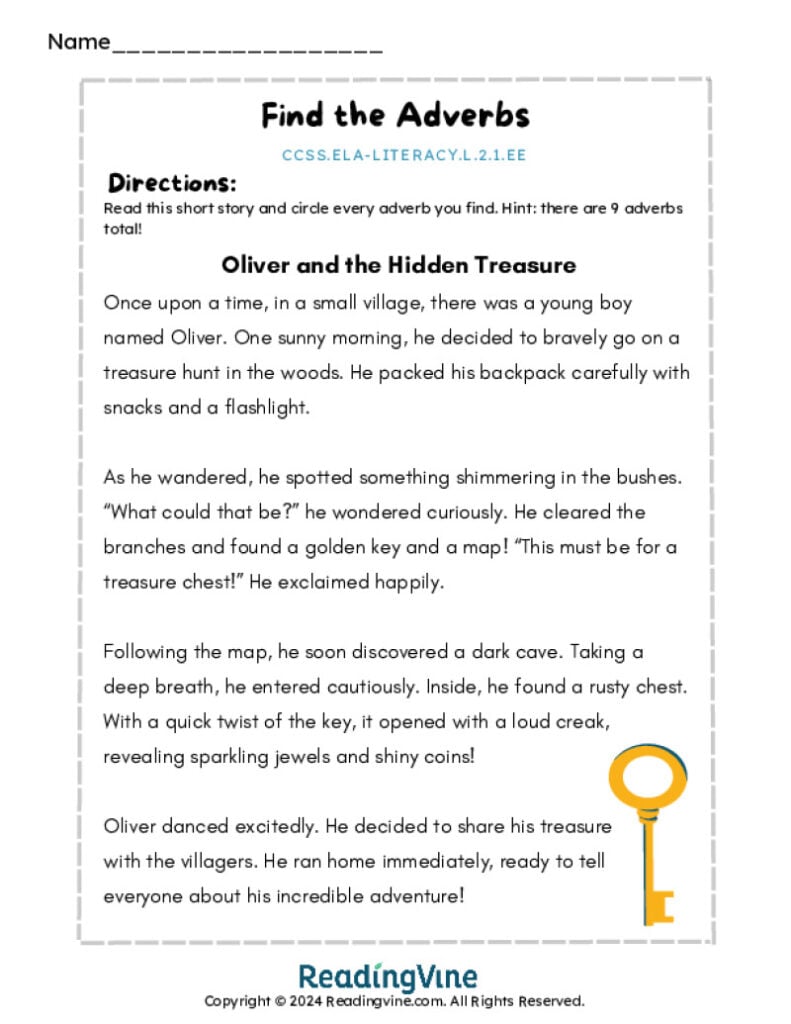
Find the Adverbs in the Story
Find and circle the adverbs throughout the short story, identifying descriptive words that modify actions in narrative text.

Identify the Adverb
For each sentence, identify which word functions as an adverb by analyzing how words modify the actions described.

Introduction to Adverbs
Circle the adverbs in each sentence, identifying words that describe how, when, or where actions occur.

Match the Adverb Activity
Connect incomplete sentence beginnings to appropriate adverbs by drawing lines that create grammatically correct, logical sentences.
Understanding Adverbs: A Guide for Teachers and Parents
What Are Adverbs?
Adverbs modify verbs, adjectives, or other adverbs, answering questions like how? (quickly, carefully), when? (yesterday, soon, always), where? (outside, here, everywhere), or to what extent? (very, quite, extremely). While many adverbs end in -ly, common exceptions include fast, hard, early, late, and well.
Types of Adverbs
Students typically learn adverbs in this sequence: manner (how – slowly, loudly), time (when – yesterday, later), place (where – outside, nearby), frequency (how often – always, never), and degree (to what extent – very, quite). Starting with concrete action adverbs (run quickly, jump high) before abstract ones helps build understanding.
Teaching Tips
Help students identify adverbs by asking questions: “How did she run?” (quickly), “When did they arrive?” (yesterday), “Where did he go?” (outside). Use movement activities where students act out verbs with different adverbs – walk slowly vs. walk quickly makes the concept physical and memorable.
Common Mistakes
Students often confuse adjectives with adverbs (good vs. well, bad vs. badly) or forget that not all -ly words are adverbs (friendly, lovely are adjectives). Practice distinguishing what the word modifies: adjectives describe nouns, adverbs describe actions or qualities.