
 = Partner Site
3rd Grade Spelling Words
This 36-week 3rd grade spelling curriculum advances students from multisyllable word patterns through prefixes, suffixes, irregular forms, and syllable division strategies. Each weekly list includes 10 spelling words plus bonus words and sight words for extended practice.
3rd Grade Spelling Words for 1st Quarter: Multisyllable Patterns & Vowel Sounds
Students tackle longer words by applying familiar patterns to multisyllable contexts. They work through CVC multisyllable words (catfish, basketball), CVCe multisyllable words (complete, telephone), long vowel syllables (mainstream, toaster), vowel diphthongs (fountain, astound), and R-controlled syllables (concert, orphan).

Week 1 Spelling List
Week 1 spelling list focusing on multisyllable CVC words including catfish, batman, pitfall, hubcap, sunlit, upset, suntan, cannot, subset, and cobweb plus bonus words and sight words.
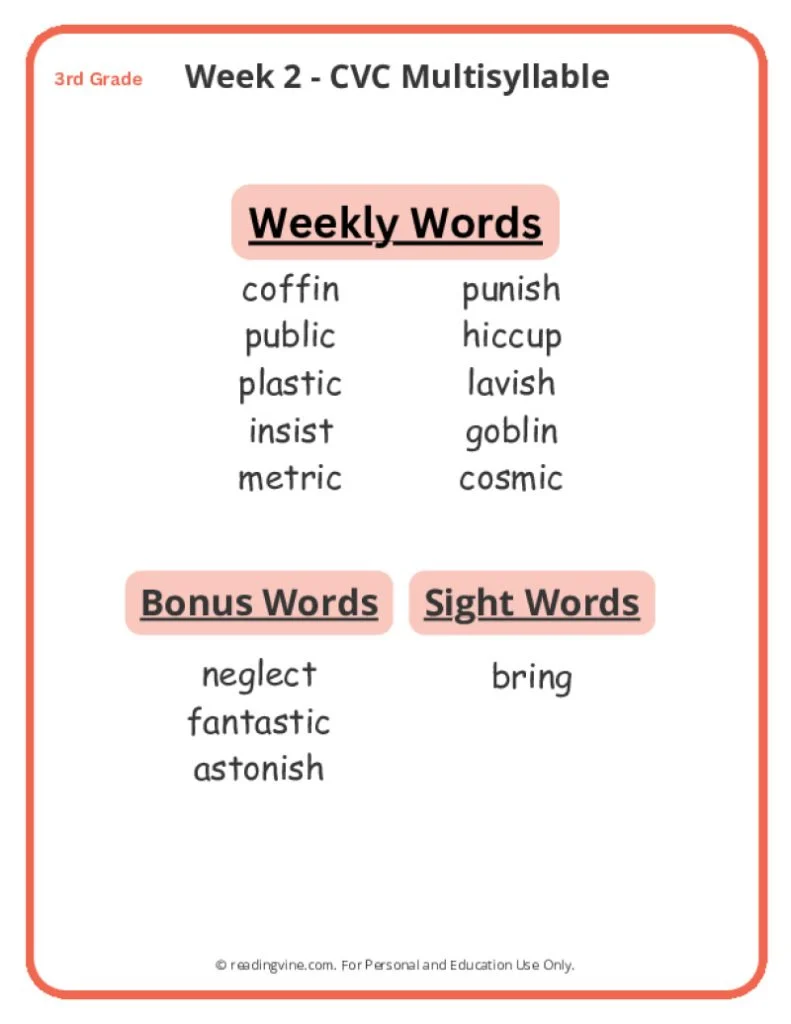
Week 2 Spelling List
Week 2 spelling list featuring multisyllable CVC words including coffin, public, plastic, insist, metric, punish, hiccup, lavish, goblin, and cosmic plus bonus words and sight words.
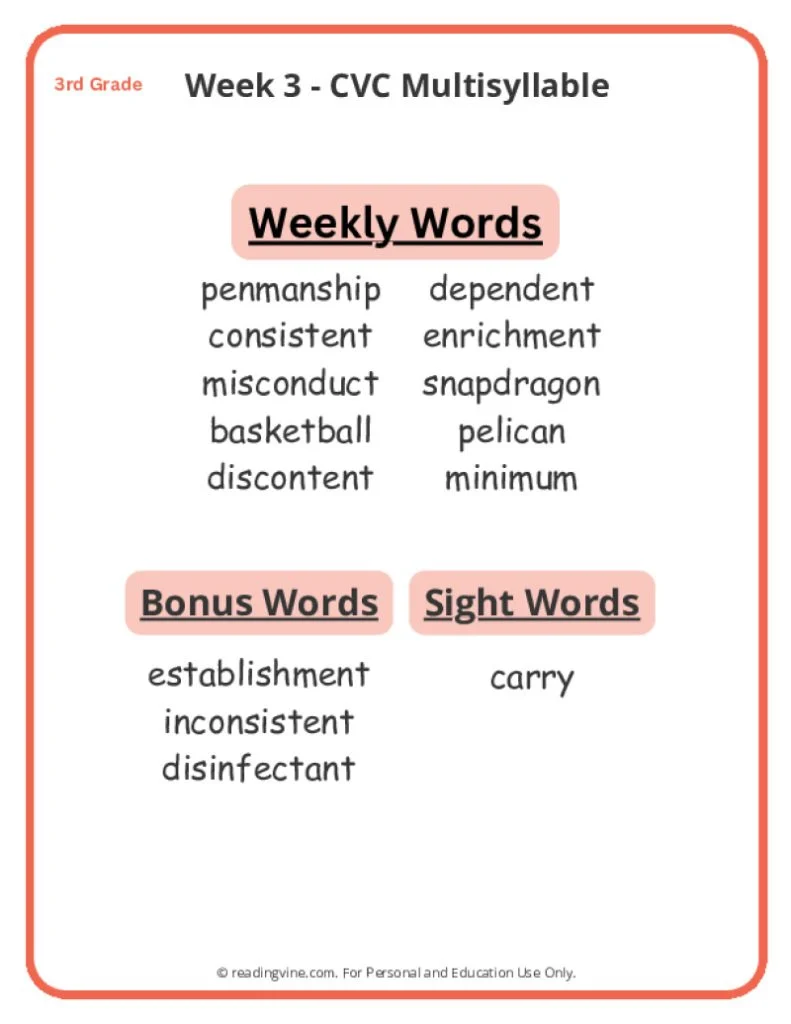
Week 3 Spelling List
Week 3 spelling list focusing on multisyllable CVC words including penmanship, consistent, misconduct, basketball, discontent, dependent, enrichment, snapdragon, pelican, and minimum plus bonus words and sight words.

Week 4 Spelling List
Week 4 spelling list featuring multisyllable CVCe words including invoke, complete, inside, wildlife, headache, milestone, unmade, trombone, ozone, and skyline plus bonus words and sight words.
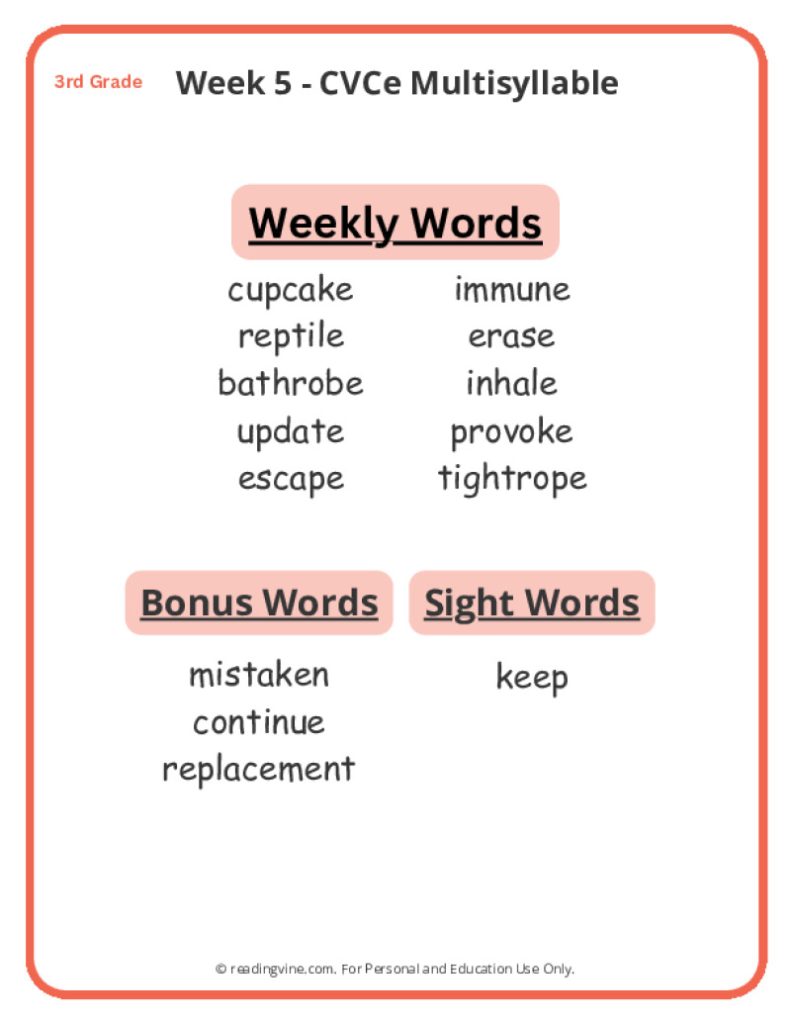
Week 5 Spelling List
Week 5 spelling words focusing on multisyllable CVCe words including cupcake, reptile, bathrobe, update, escape, immune, erase, inhale, provoke, and tightrope plus bonus words and sight words.
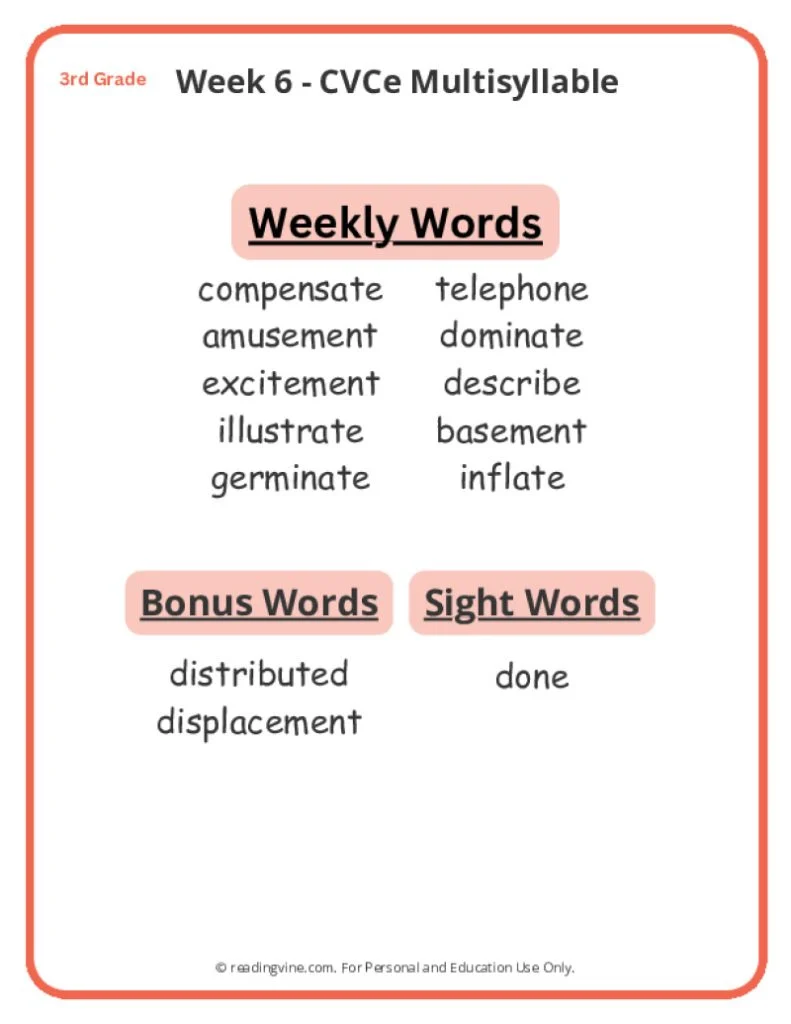
Week 6 Spelling List
Week 6 spelling list featuring multisyllable CVCe words including compensate, amusement, excitement, illustrate, germinate, telephone, dominate, describe, basement, and inflate plus bonus words and sight words.
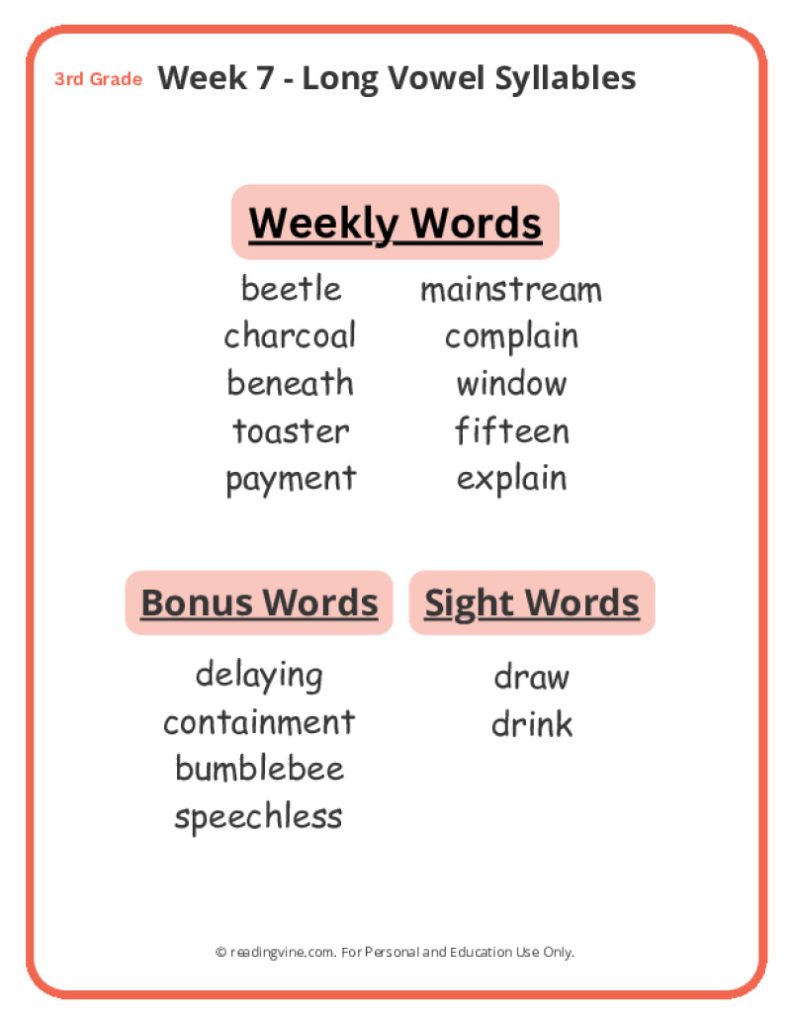
Week 7 Spelling List
Week 7 spelling list focusing on long vowel syllables including beetle, charcoal, beneath, toaster, payment, mainstream, complain, window, fifteen, and explain plus bonus words and sight words.
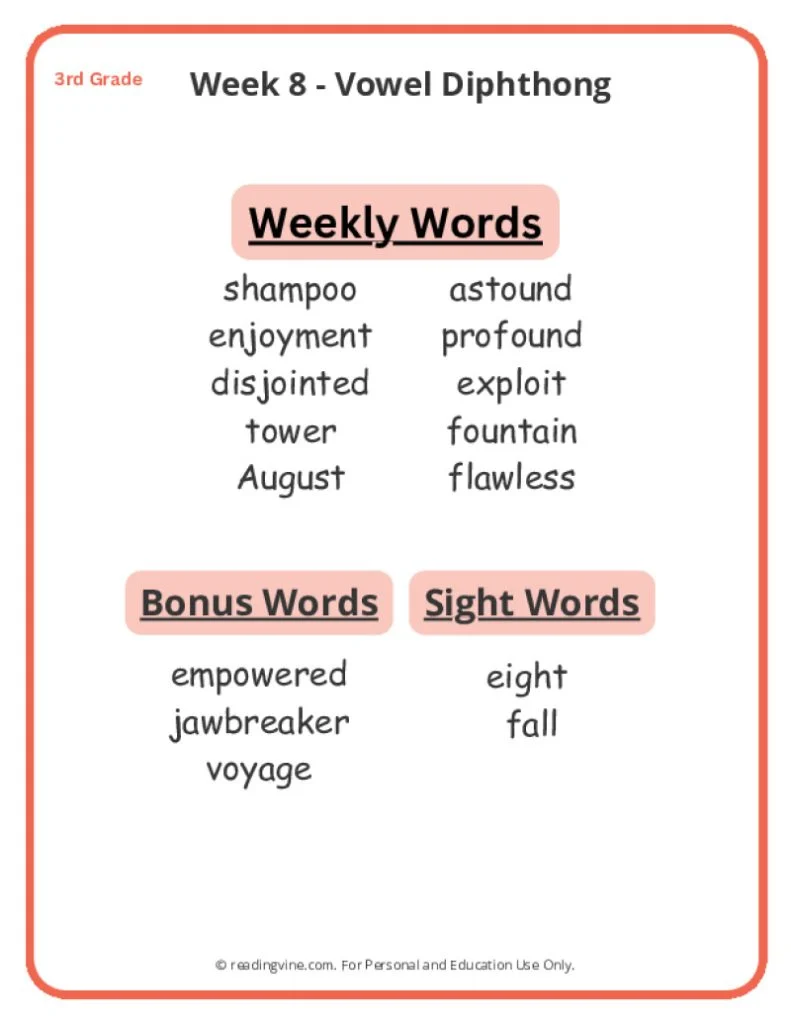
Week 8 Spelling List
Week 8 spelling list featuring vowel diphthongs including shampoo, enjoyment, disjointed, tower, August, astound, profound, exploit, fountain, and flawless plus bonus words and sight words.
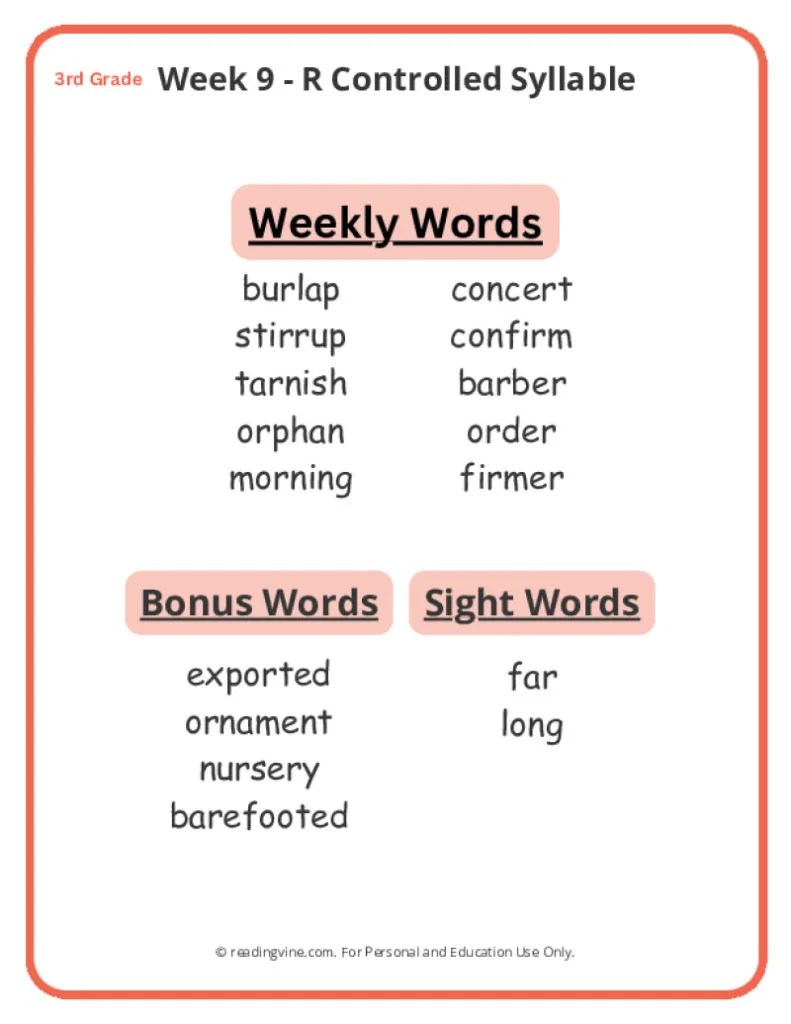
Week 9 Spelling List
Week 9 spelling list focusing on R-controlled syllables including burlap, stirrup, tarnish, orphan, morning, concert, confirm, barber, order, and firmer plus bonus words and sight words.
3rd Grade Spelling Words for 2nd Quarter: Base Words, Affixes & Irregular Forms
Building on word structure knowledge, students explore how base words change with endings (-ed, -ing) and prefixes (dis-, mis-, over-, re-, un-). They master irregular verbs (taught, written, forgotten), irregular plurals (children, mice, geese), and silent letter patterns including Wr (wreck, wrist), Gn/Kn (gnome, knight), and Mb (thumb, climb).

Week 10 Spelling List
Week 10 spelling list featuring base words and endings including questioned, questioning, gardened, gardening, explored, exploring, appeared, appearing, protecting, and protected plus bonus words and sight words.

Week 11 Spelling List
Week 11 spelling list focusing on base words and prefixes including disappear, misprint, nonmagnetic, overcorrect, mismatch, overlook, semicircle, rediscover, unicycle, and remodel plus bonus words and sight words.
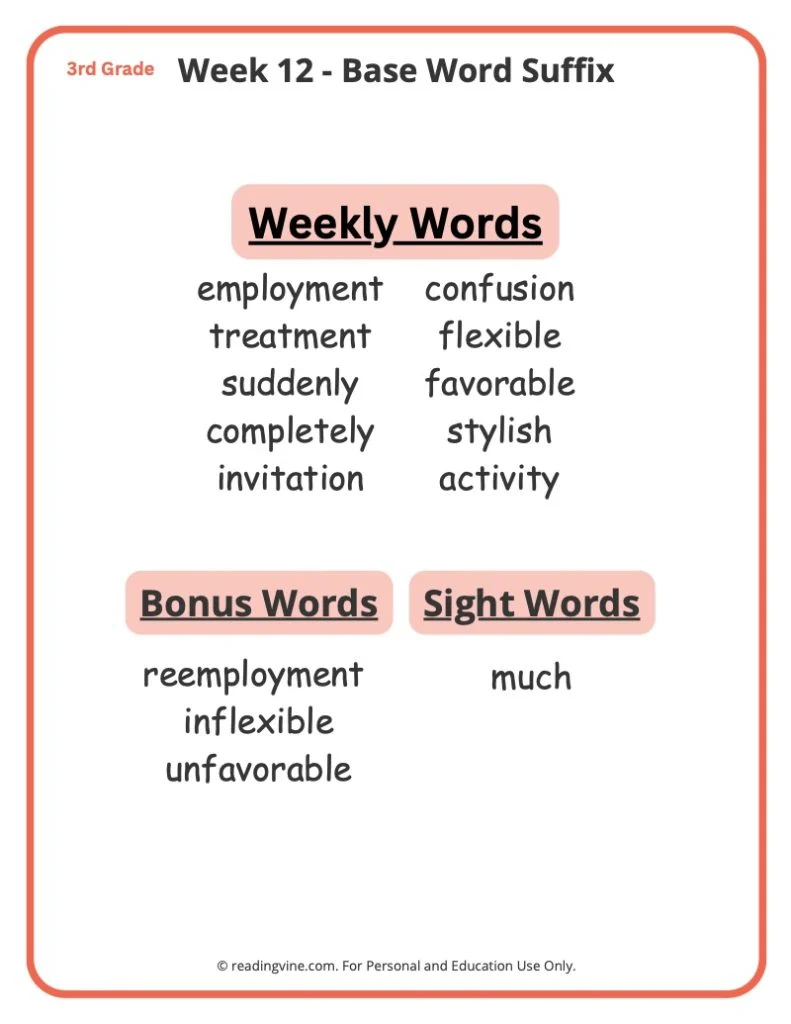
Week 12 Spelling List
Week 12 spelling list featuring base words and suffixes including employment, treatment, suddenly, completely, invitation, confusion, flexible, favorable, stylish, and activity plus bonus words and sight words.
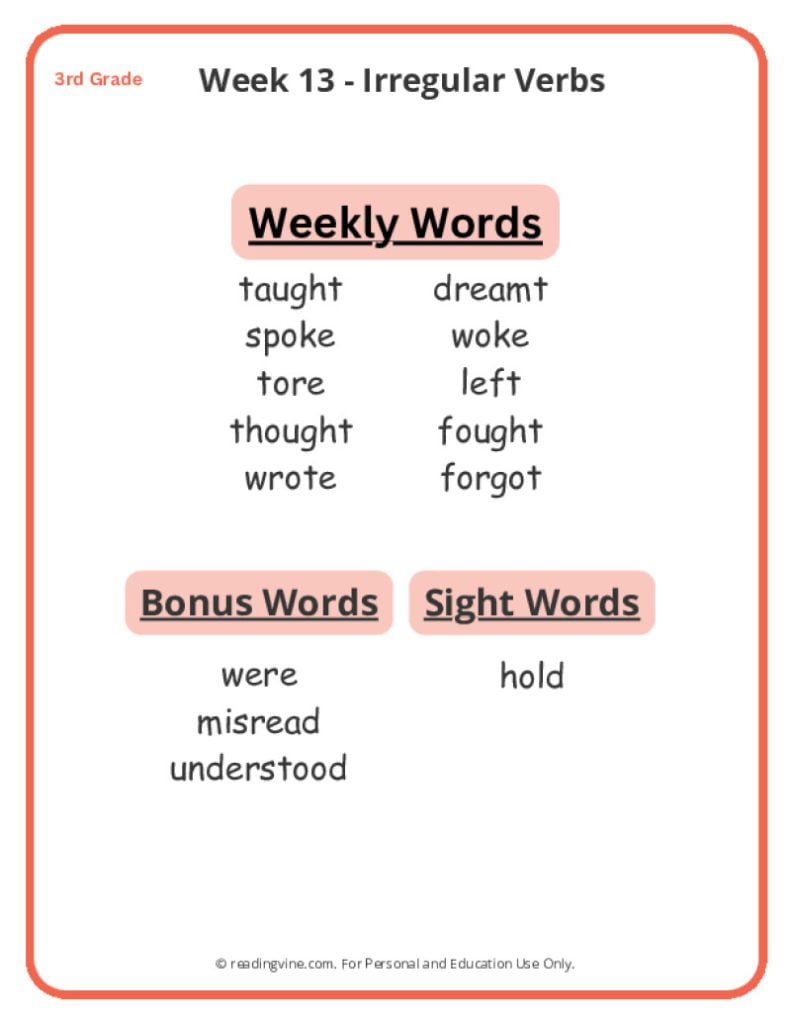
Week 13 Spelling List
Week 13 spelling list focusing on irregular verbs including taught, spoke, tore, thought, wrote, dreamt, woke, left, fought, and forgot plus bonus words and sight words.
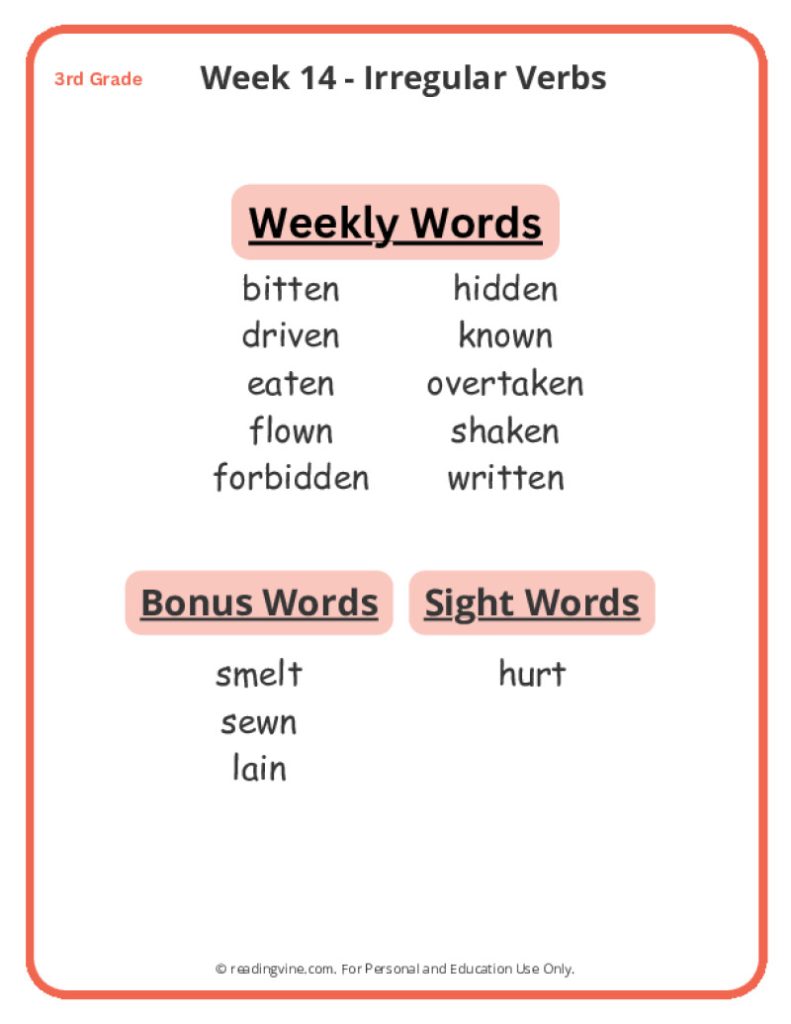
Week 14 Spelling List
Week 14 spelling list featuring irregular verbs including bitten, driven, eaten, flown, forbidden, hidden, known, overtaken, shaken, and written plus bonus words and sight words.
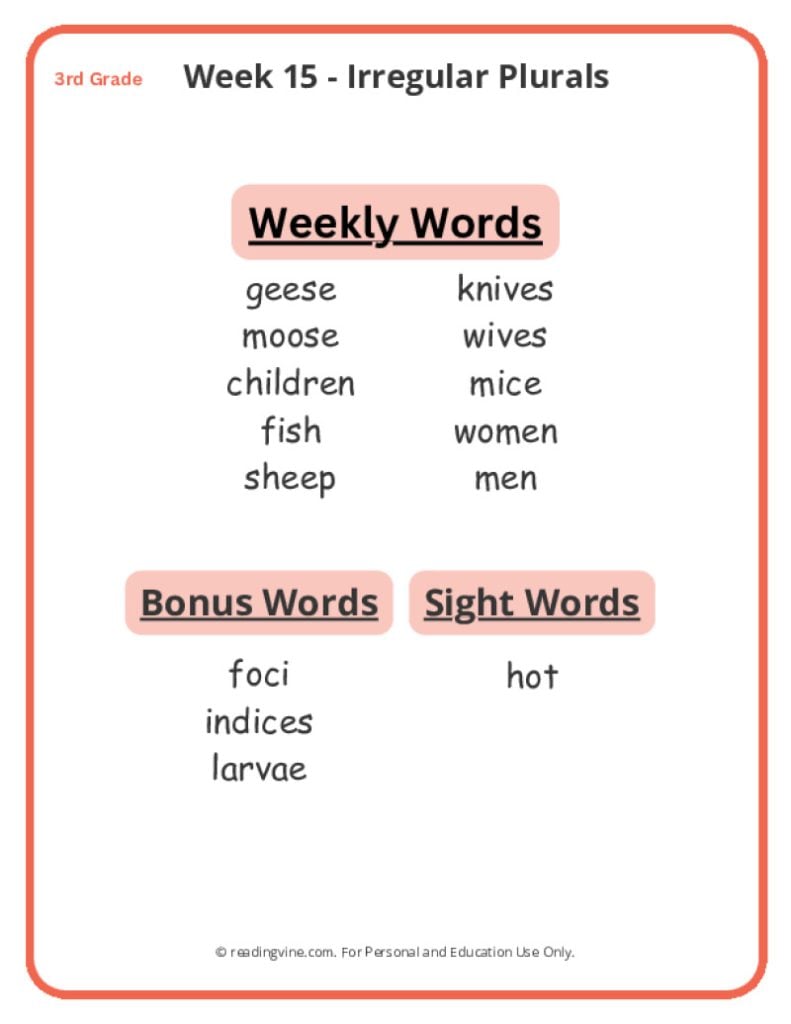
Week 15 Spelling List
Week 15 spelling list focusing on irregular plurals including geese, moose, children, fish, sheep, knives, wives, mice, women, and men plus bonus words and sight words.
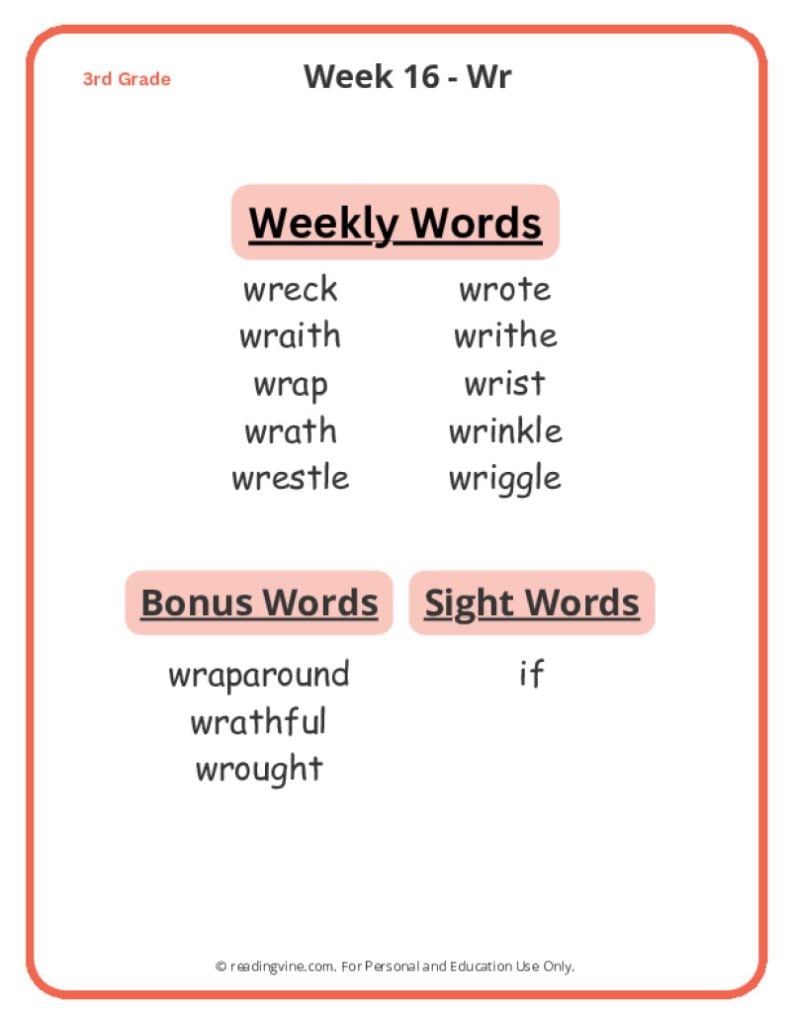
Week 16 Spelling List
Week 16 spelling list featuring silent Wr words including wreck, wraith, wrap, wrath, wrestle, wrote, writhe, wrist, wrinkle, and wriggle plus bonus words and sight words.
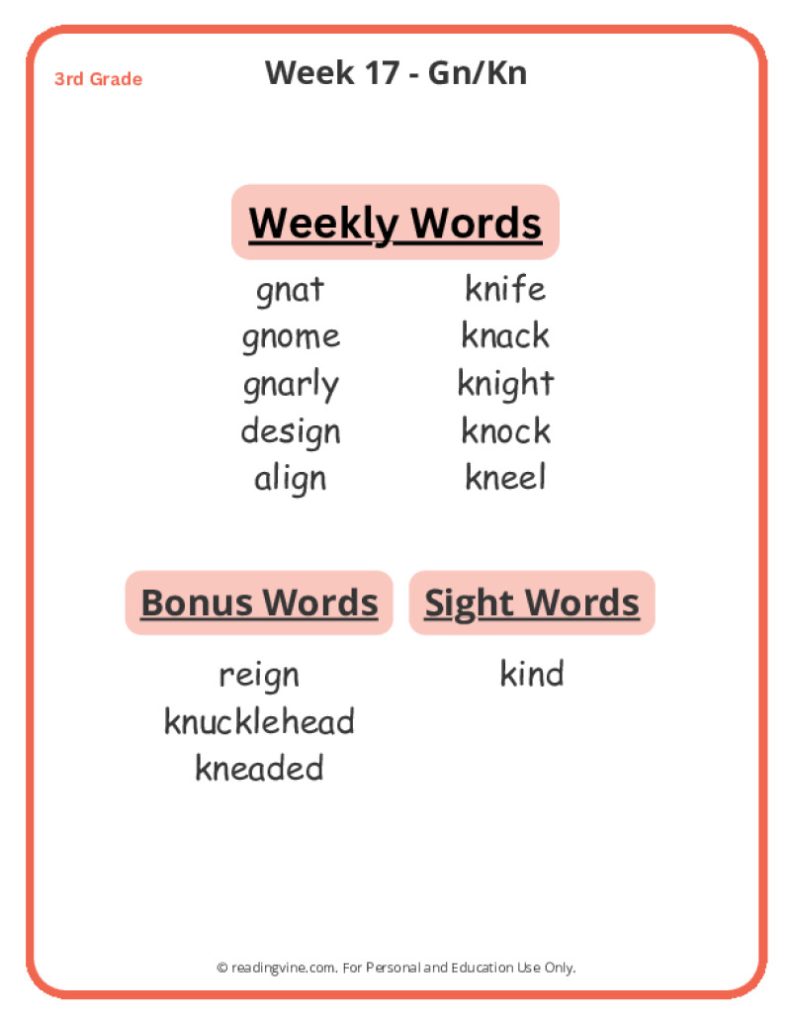
Week 17 Spelling List
Week 17 spelling list focusing on silent Gn and Kn words including gnat, gnome, gnarly, design, align, knife, knack, knight, knock, and kneel plus bonus words and sight words.
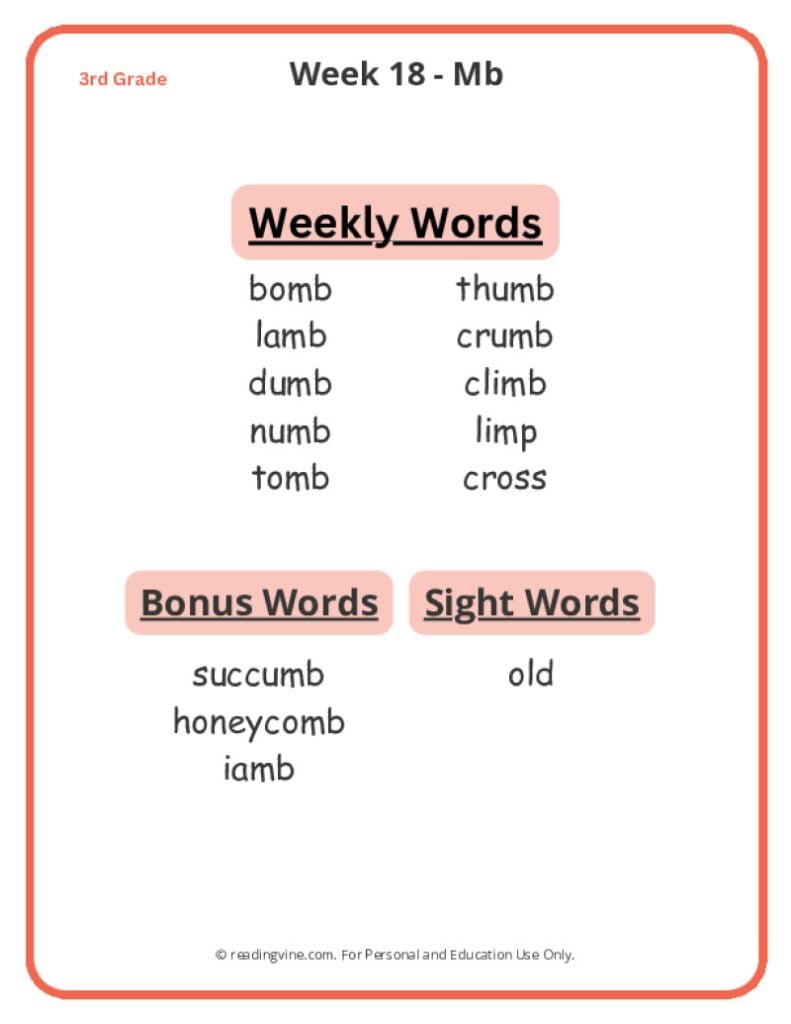
Week 18 Spelling List
Week 18 spelling list featuring silent Mb words including bomb, lamb, dumb, numb, tomb, thumb, crumb, climb, limp, and cross plus bonus words and sight words.
3rd Grade Spelling Words for 3rd Quarter: Word Relationships & Prefix Mastery
Students sharpen vocabulary skills by studying homophones (brake/break, flour/flower), homographs (bow, lead, wind), and homonyms (bare/bear, site/sight). They then dive deep into prefix meanings—learning how anti-, auto-, bi-, de-, dis-, im-, in-, mis-, multi-, non-, pre-, sub-, trans-, tri-, un-, and under- change word meanings. The quarter concludes with suffix study (-able, -ful, -ize, -less, -ment, -ness, -tion).
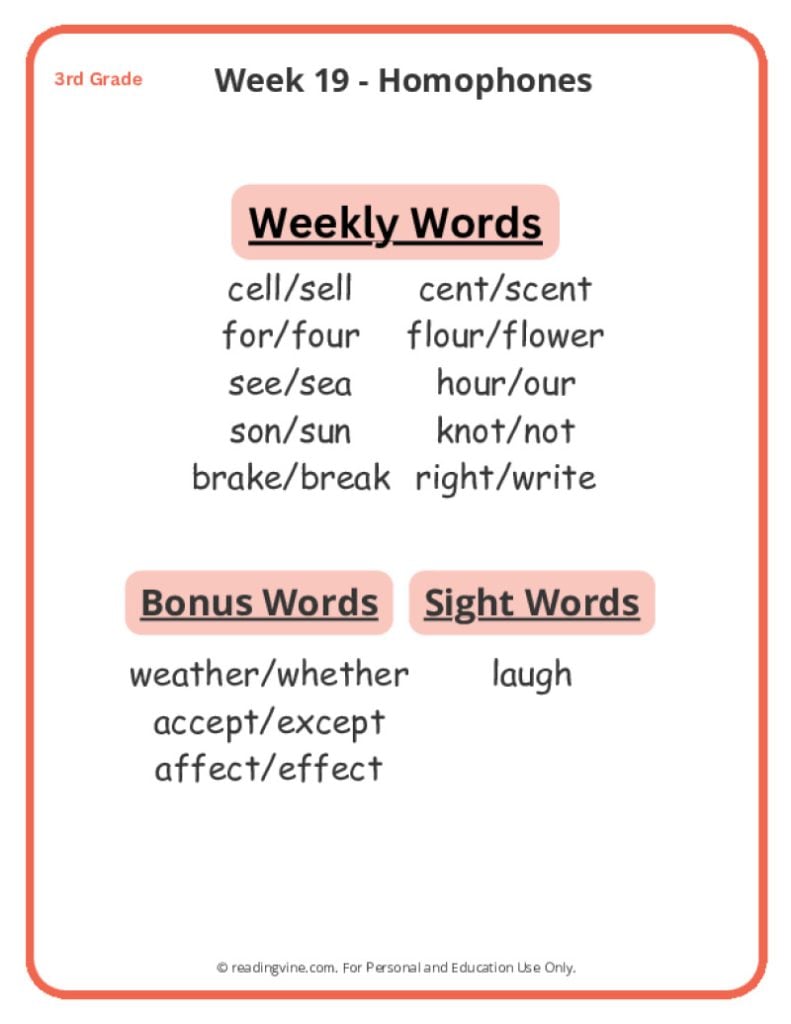
Week 19 Spelling List
Week 19 spelling list focusing on homophones including cell/sell, for/four, see/sea, son/sun, brake/break, cent/scent, flour/flower, hour/our, knot/not, and right/write plus bonus words and sight words.
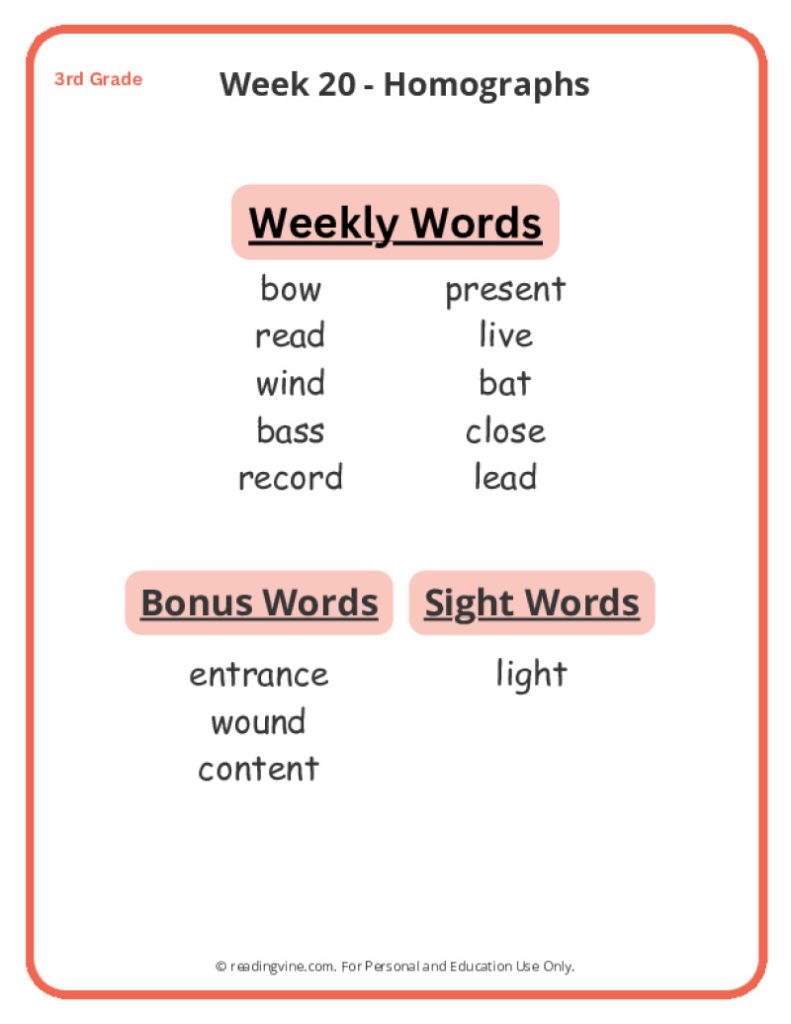
Week 20 Spelling List
Week 20 spelling list featuring homographs including bow, read, wind, bass, record, present, live, bat, close, and lead plus bonus words and sight words.
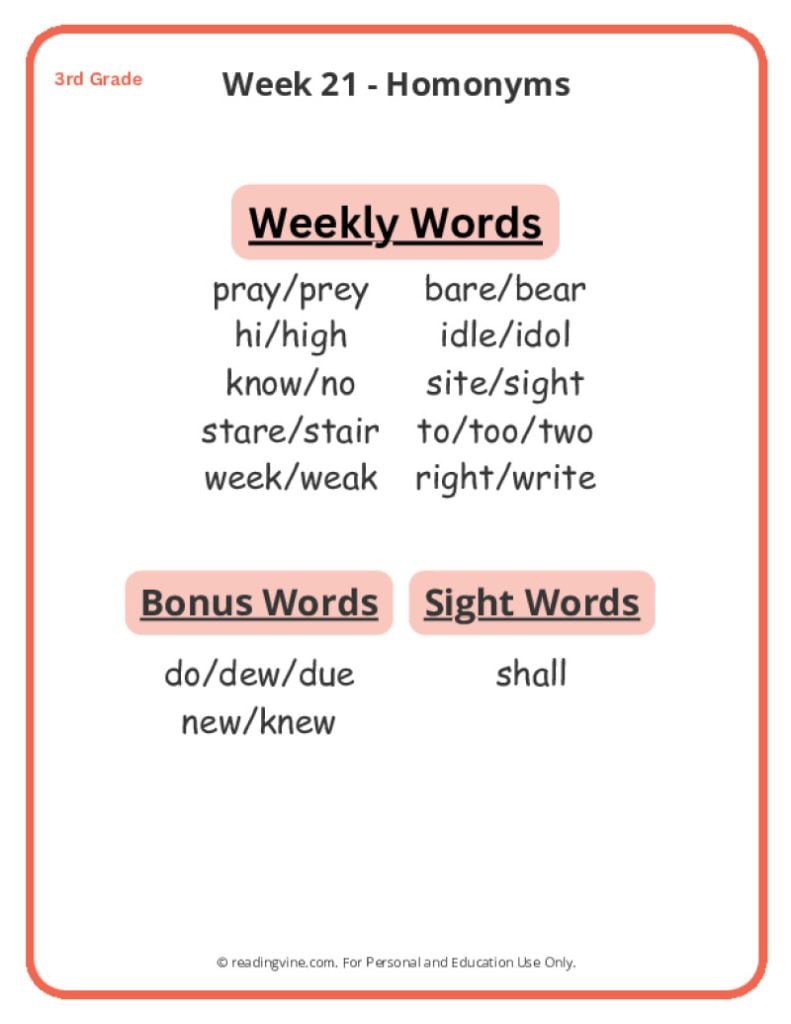
Week 21 Spelling List
Week 21 spelling list focusing on homonyms including pray/prey, hi/high, know/no, stare/stair, week/weak, bare/bear, idle/idol, site/sight, to/too/two, and right/write plus bonus words and sight words.
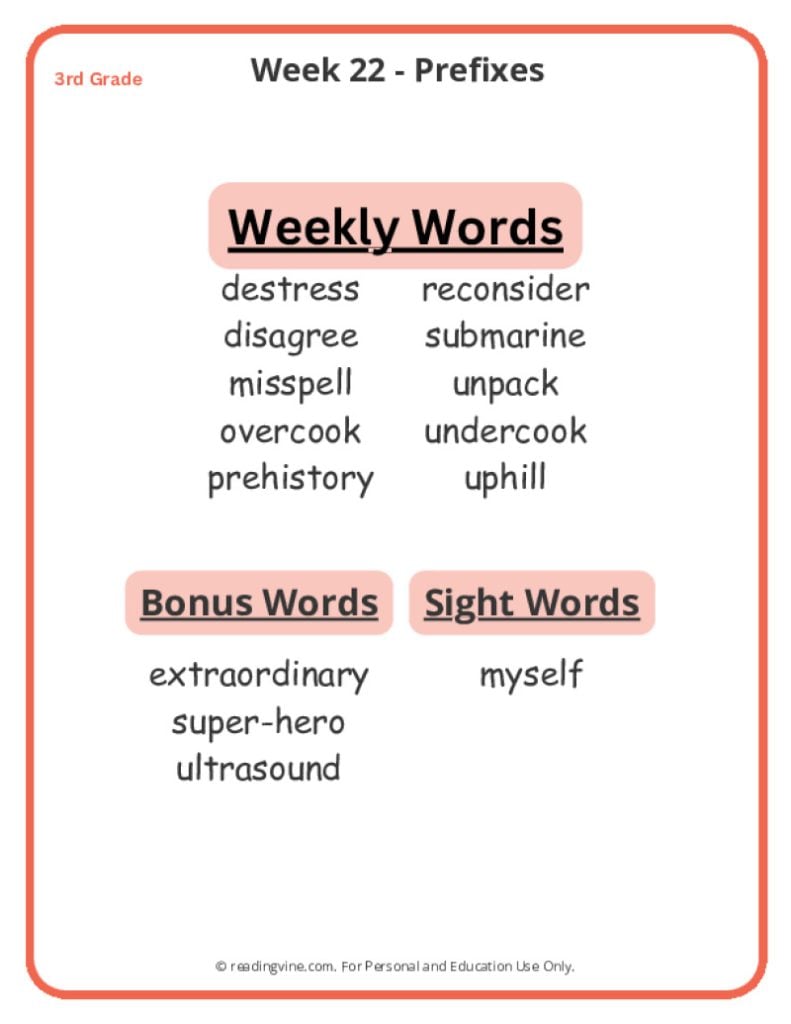
Week 22 Spelling List
Week 22 spelling list featuring prefixes including destress, disagree, misspell, overcook, prehistory, reconsider, submarine, unpack, undercook, and uphill plus bonus words and sight words.

Week 23 Spelling List
Week 23 spelling list focusing on prefixes including impossible, unable, antifreeze, injustice, misread, nonsense, return, unfriendly, undersea, and transport plus bonus words and sight words.
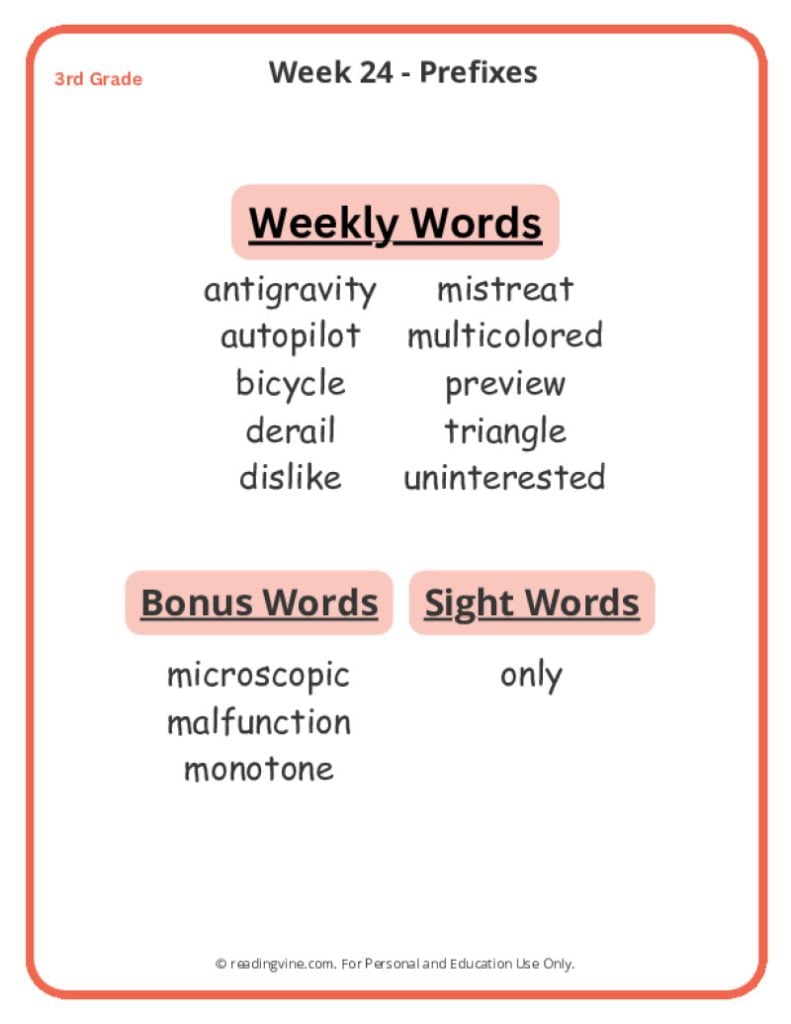
Week 24 Spelling List
Week 24 spelling list featuring prefixes including antigravity, autopilot, bicycle, derail, dislike, mistreat, multicolored, preview, triangle, and uninterested plus bonus words and sight words.
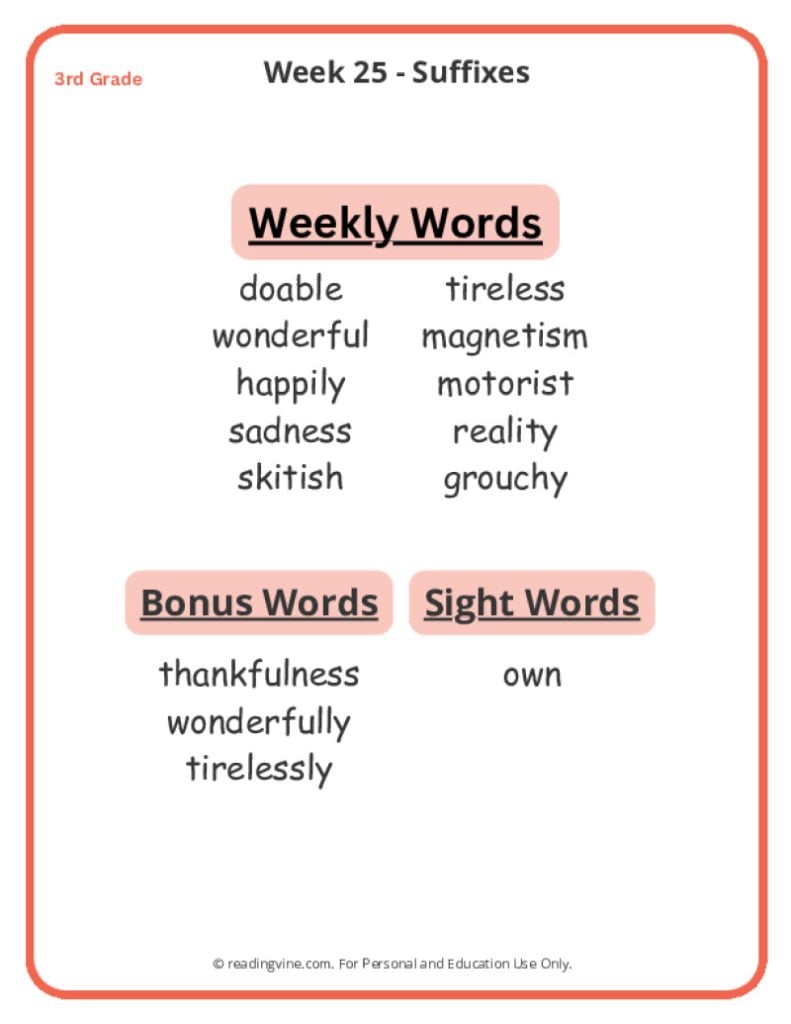
Week 25 Spelling List
Week 25 spelling list focusing on suffixes including doable, wonderful, happily, sadness, skittish, tireless, magnetism, motorist, reality, and grouchy plus bonus words and sight words.
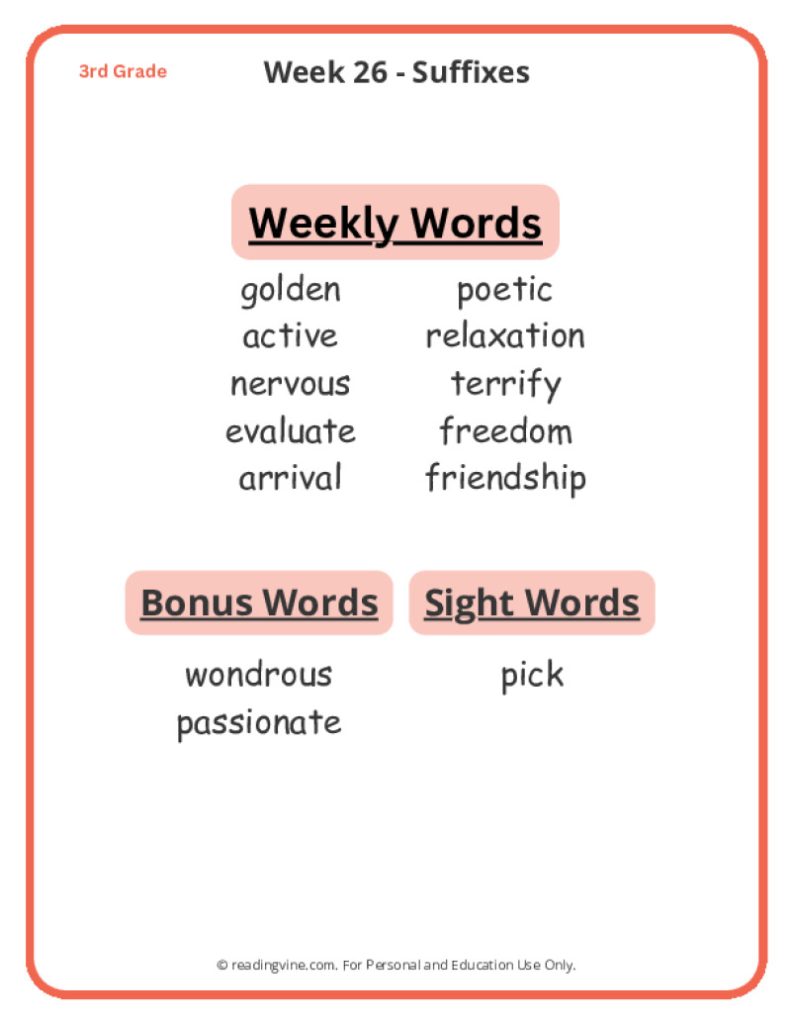
Week 26 Spelling List
Week 26 spelling list featuring suffixes including golden, active, nervous, evaluate, arrival, poetic, relaxation, terrify, freedom, and friendship plus bonus words and sight words.

Week 27 Spelling List
Week 27 spelling list focusing on suffixes including punishment, humanize, musical, childish, plaintive, joyous, quickly, wooden, personal, and attraction plus bonus words and sight words.
3rd Grade Spelling Words for 4th Quarter: Contractions & Syllable Division
In the final quarter, students master contractions formed with not (can’t, wouldn’t), pronouns (I’ve, she’ll, they’re), and various helper words. They then learn systematic syllable division rules: VccV patterns (rabbit, traffic), long and short VcV patterns (robot vs. cabin), VCCCV patterns (monster, inspect), consonant -le syllables (circle, marble), and VCCCCV patterns (construct, transcript).
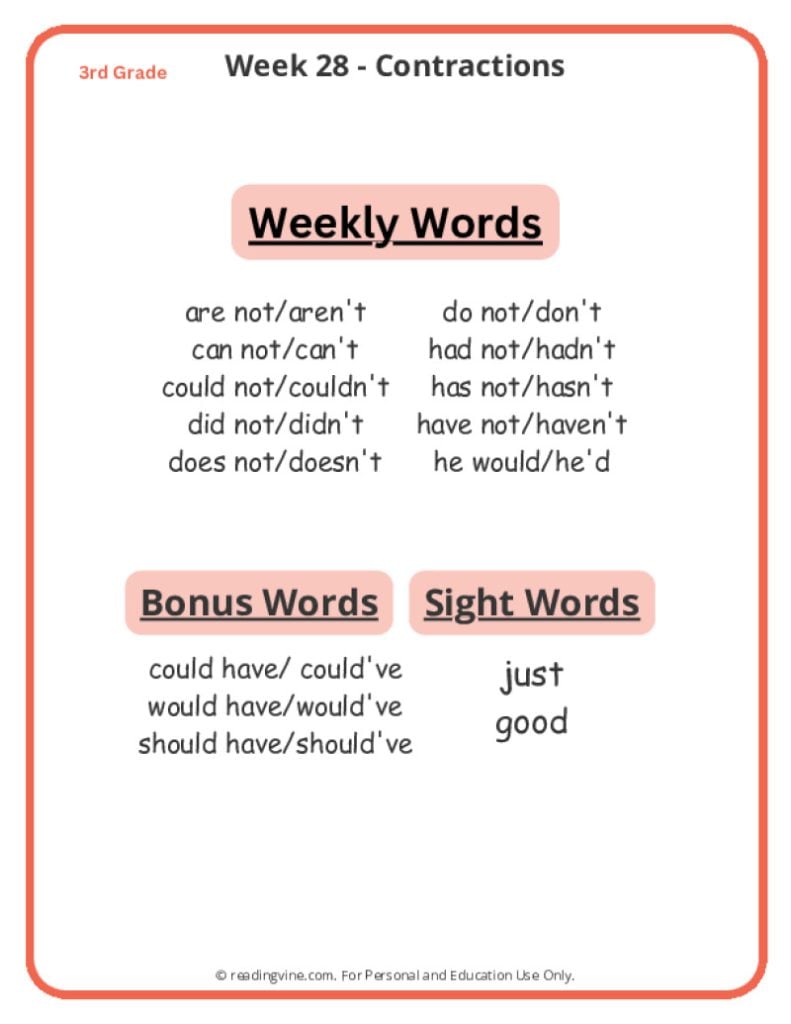
Week 28 Spelling List
Week 28 spelling list featuring contractions with not including are not/aren't, can not/can't, could not/couldn't, did not/didn't, does not/doesn't, do not/don't, had not/hadn't, has not/hasn't, have not/haven't, and he would/he'd plus bonus words and sight words.
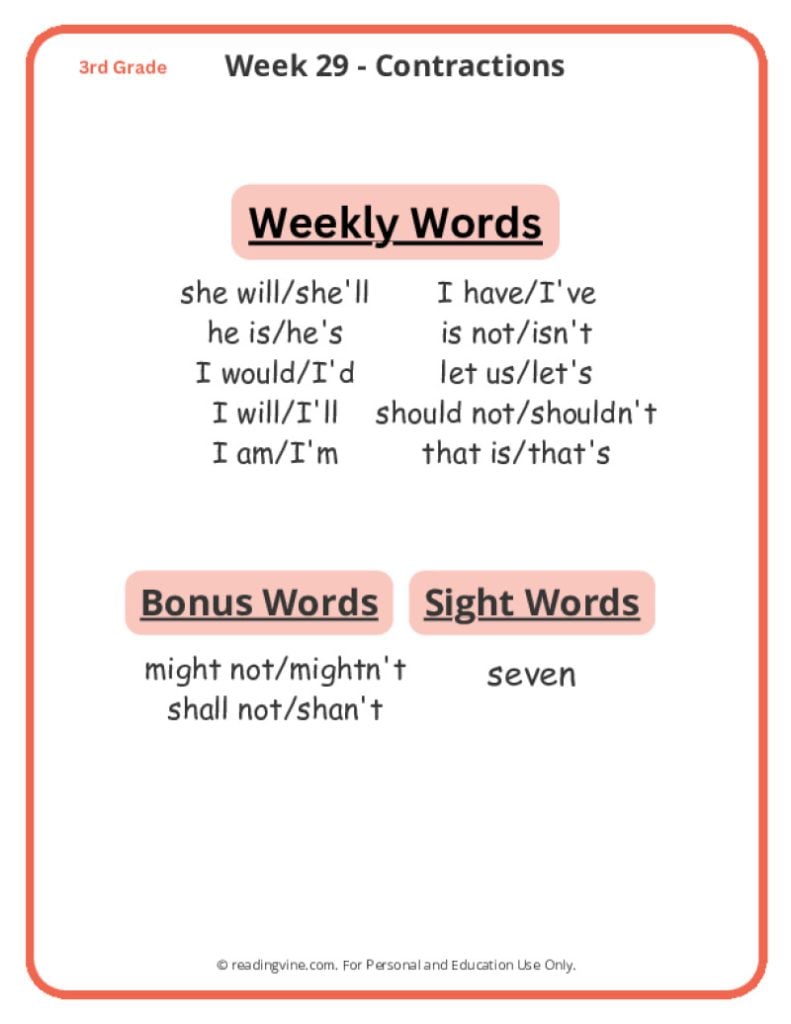
Week 29 Spelling List
Week 29 spelling list focusing on contractions with will, have, is, and am including she will/she'll, he is/he's, I would/I'd, I will/I'll, I am/I'm, I have/I've, is not/isn't, let us/let's, should not/shouldn't, and that is/that's plus bonus words and sight words.

Week 30 Spelling List
Week 30 spelling list featuring contractions including there is/there's, they would/they'd, they will/they'll, they are/they're, we would/we'd, we are/we're, we have/we've, what are/what're, you are/you're, and you will/you'll plus bonus words and sight words.

Week 31 Spelling List
Week 31 spelling list focusing on VccV syllable division words including rabbit, possum, fossil, classic, traffic, mascot, velvet, tablet, cactus, and public plus bonus words and sight words.
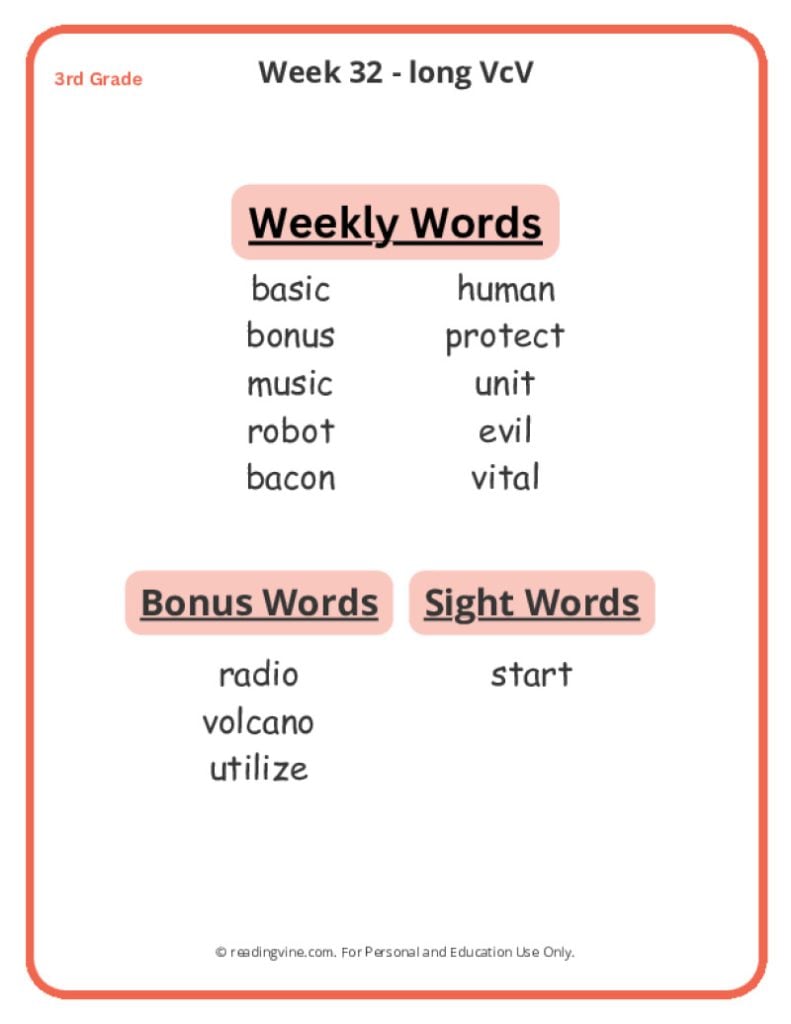
Week 32 Spelling List
Week 32 spelling list featuring long VcV syllable division words including basic, bonus, music, robot, bacon, human, protect, unit, evil, and vital plus bonus words and sight words.

Week 33 Spelling List
Week 33 spelling list focusing on short VcV syllable division words including visit, cabin, wagon, comic, timid, atom, habit, edit, rapid, and shiver plus bonus words and sight words.
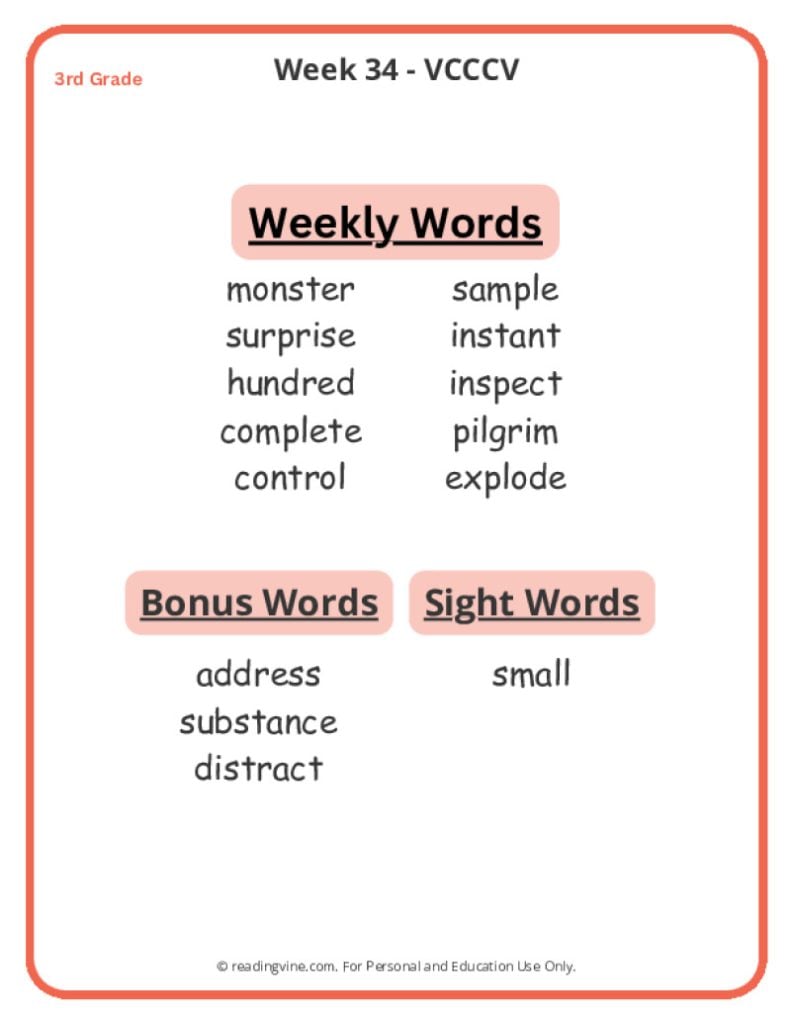
Week 34 Spelling List
Week 34 spelling list featuring VCCCV syllable division words including monster, surprise, hundred, complete, control, sample, instant, inspect, pilgrim, and explode plus bonus words and sight words.
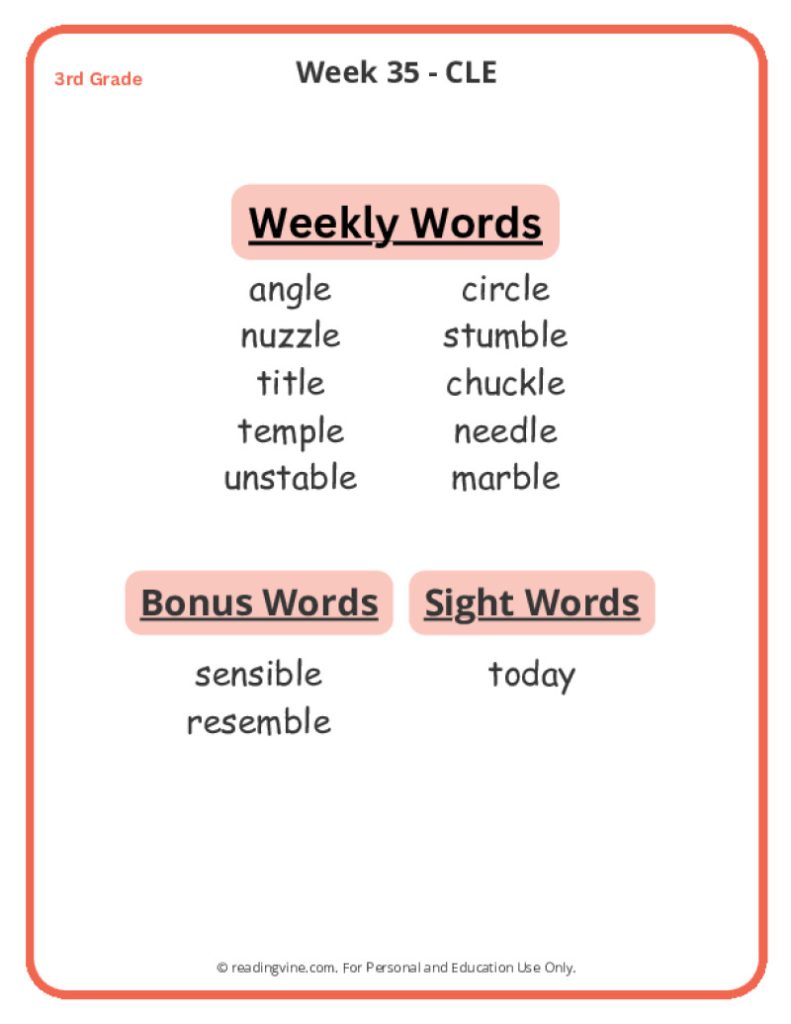
Week 35 Spelling List
Week 35 spelling list focusing on consonant -le syllable words including angle, nuzzle, title, temple, unstable, circle, stumble, chuckle, needle, and marble plus bonus words and sight words.
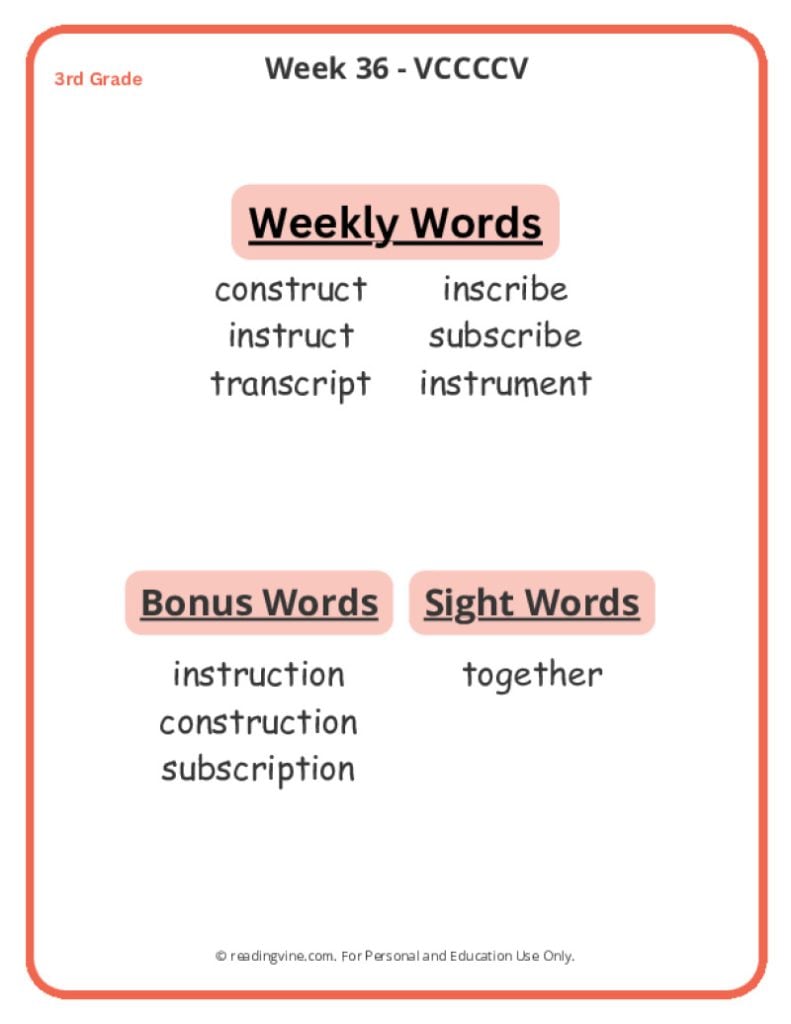
Week 36 Spelling List
Week 36 spelling list featuring VCCCCV syllable division words including construct, instruct, transcript, inscribe, subscribe, and instrument plus bonus words and sight words.
How can this curriculum help students improve reading and writing? This 36-week curriculum builds the advanced decoding and encoding skills third graders need for increasingly complex texts. By systematically teaching multisyllable patterns, affixes, and syllable division rules, students learn to break apart unfamiliar words when reading and construct correct spellings when writing. The progression from word patterns to word relationships (homophones, homographs) also strengthens vocabulary and helps students avoid common spelling confusions.
What research supports this curriculum? This curriculum follows systematic, explicit instruction aligned with the Science of Reading. Skills build logically—students master multisyllable patterns before tackling affixes, learn base words before studying how prefixes and suffixes change them, and understand syllable types before applying division rules. This structured morphological approach helps students recognize meaningful word parts, which research shows improves both spelling accuracy and reading comprehension in upper elementary grades.
How do I use these weekly spelling lists? Each weekly list includes 10 core spelling words, bonus words for students ready for more challenge, and sight words for continued high-frequency practice. Introduce 2-3 words per day through dictation, word sorts, and morphology activities. For affix weeks, have students identify base words and discuss how prefixes or suffixes change meaning. For syllable division weeks, practice breaking words apart using the targeted pattern. The bonus words extend the same pattern for advanced spellers.