
 = Partner Site
1st Grade Spelling Words
This complete first grade spelling curriculum covers 36 weeks of phonics-based spelling instruction, organized in a logical scope and sequence that builds from simple patterns to more complex word structures.
The program begins with CVC and CVCe review, then progresses through consonant blends, open syllables, glued sounds, double consonants, vowel teams, R-controlled vowels, diphthongs, final syllable -le, and ends with common prefixes and suffixes. Each weekly list includes 10 spelling words, bonus challenge words, and Dolch sight words for high-frequency word practice.
1st Grade Spelling Words for 1st Quarter: CVC & CVCe Review
Students begin with a quick review of short vowel CVC words like cat, pit, and hot, then move into CVCe “magic e” patterns with words like cape, hike, and tune. This foundation ensures mastery before tackling more complex patterns.
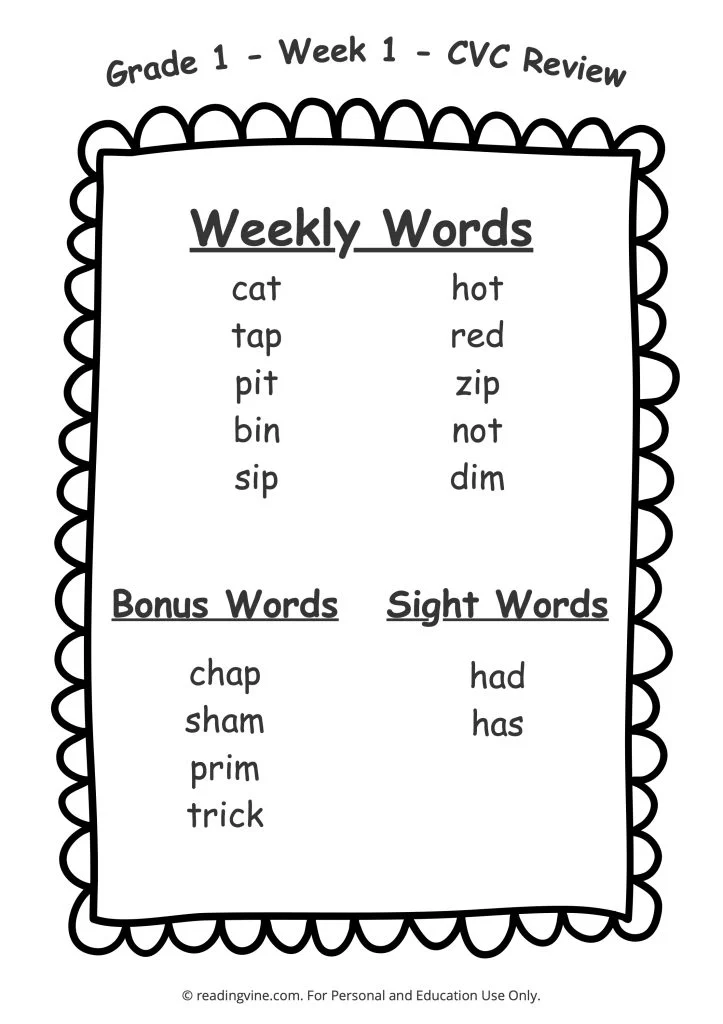
Week 1 Spelling List
Grade 1 Week 1 spelling list featuring CVC words with short vowels including cat, tap, pit, bin, sip, hot, red, zip, not, and dim plus bonus words and sight words had and has.
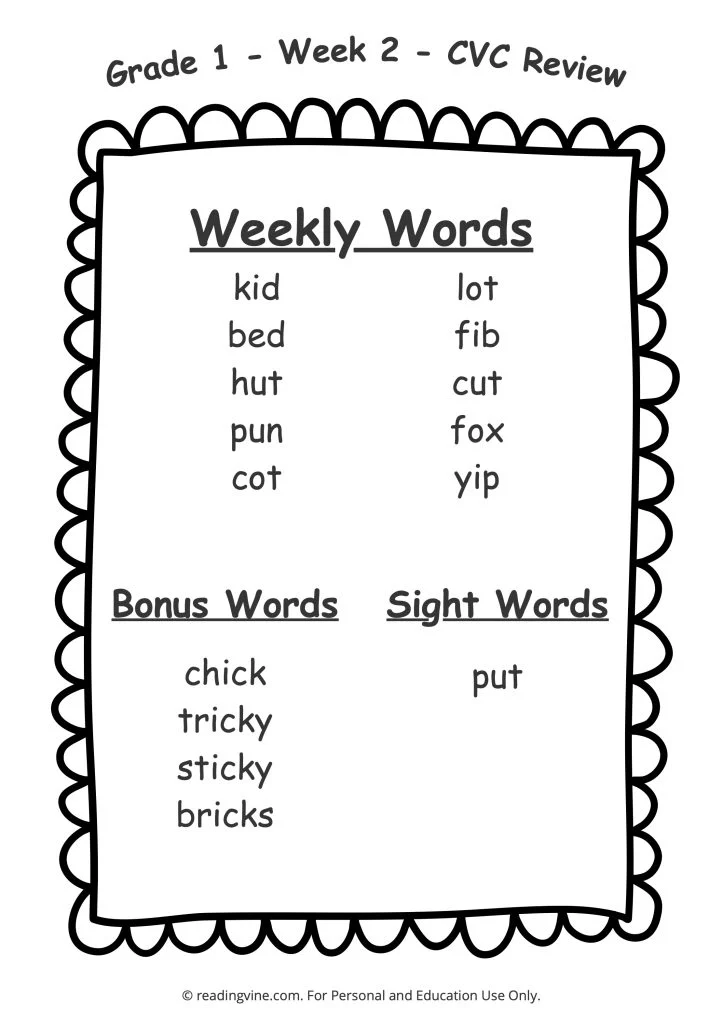
Week 2 Spelling List
Week 2 spelling list with CVC words across short vowel patterns including kid, bed, hut, pun, cot, lot, fib, cut, fox, and yip plus bonus words and sight word put.
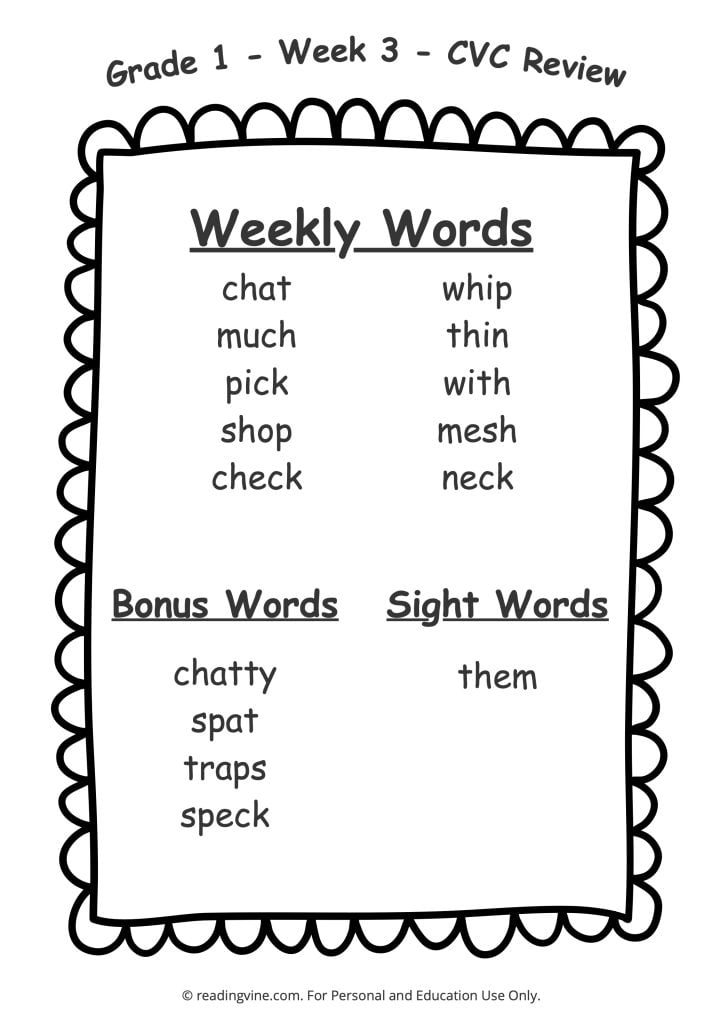
Week 3 Spelling List
Week 3 spelling list focusing on digraphs with words like chat, much, pick, shop, check, whip, thin, with, mesh, and neck plus bonus words and sight word them.
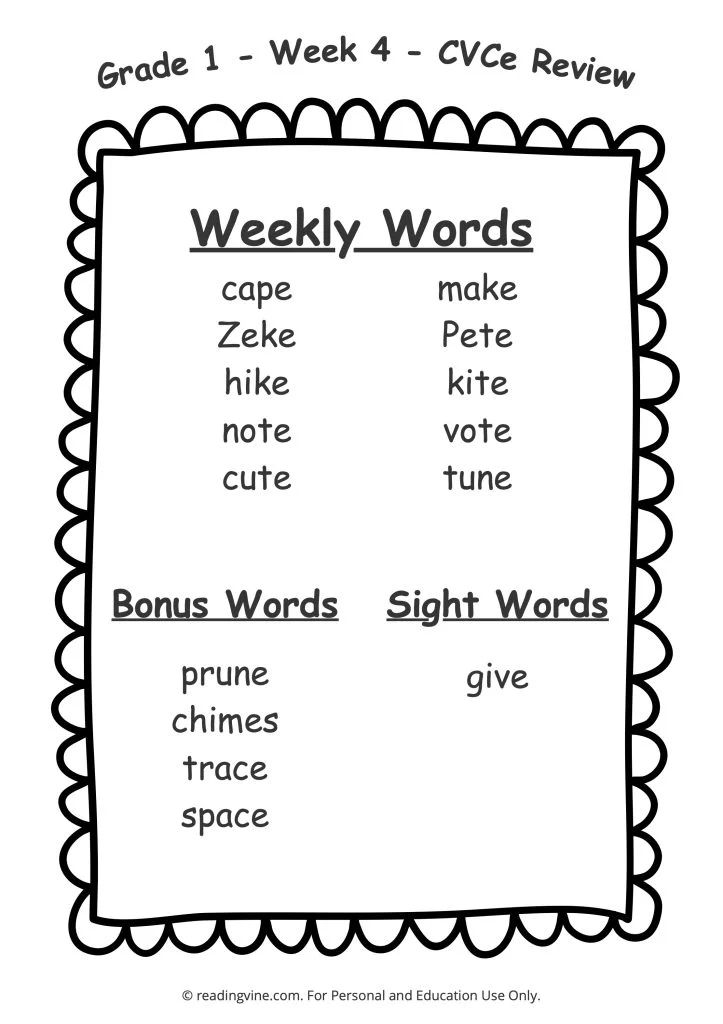
Week 4 Spelling List
Week 4 CVCe spelling list featuring long vowel silent-e words including cape, make, Zeke, Pete, hike, kite, note, vote, cute, and tune plus bonus words and sight word give.
Week 5 Spelling List
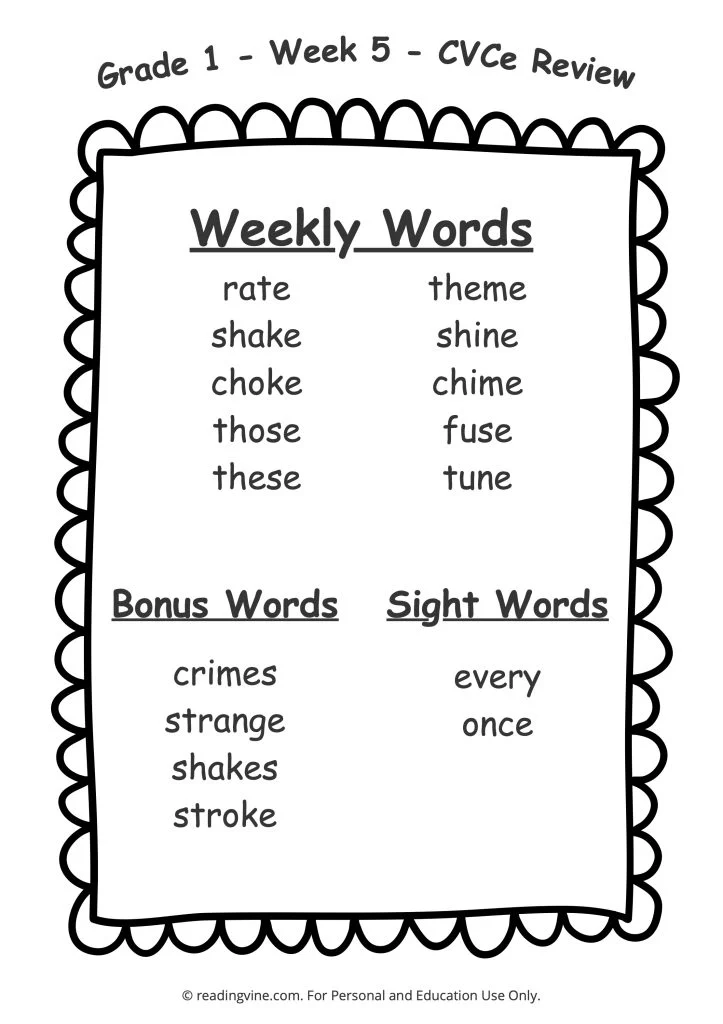
Week 5 CVCe spelling list with long vowel words including rate, shake, choke, those, these, theme, shine, chime, fuse, and tune plus bonus words and sight words every and once.
Week 6 Spelling List
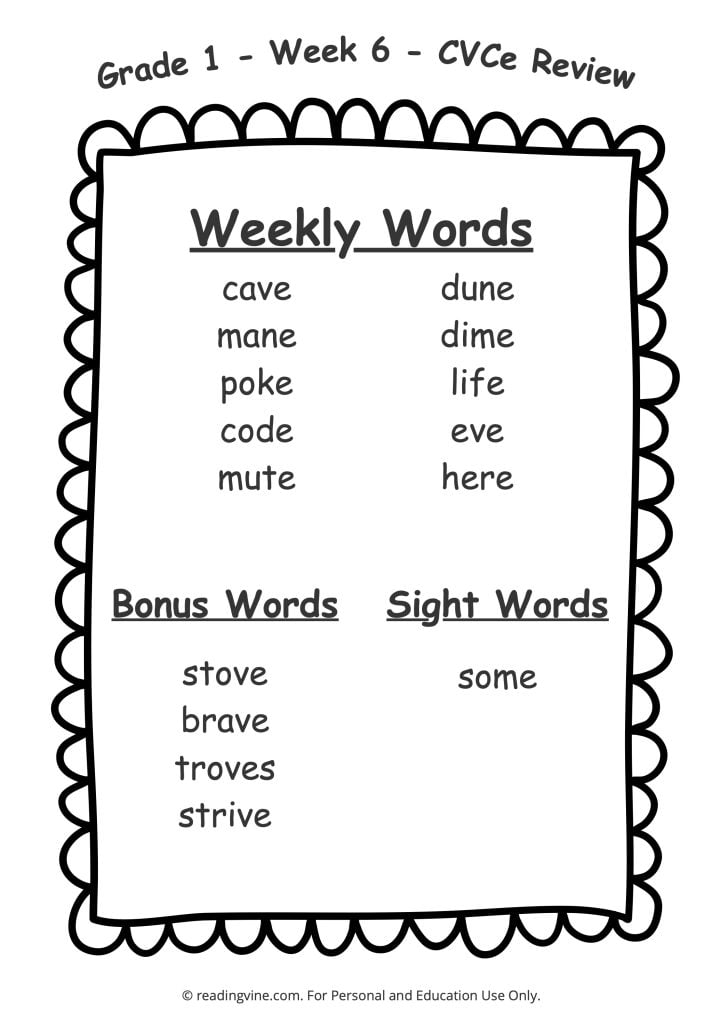
Week 6 CVCe spelling list featuring long vowel silent-e words including cave, mane, poke, code, mute, dune, dime, life, eve, and here plus bonus words and sight word some.

Week 7 Spelling List
Week 7 spelling list focusing on consonant R blends with words like brag, trick, crane, frame, prize, grape, pride, crime, brick, and trap plus bonus words and sight words thank and after.
Week 8 Spelling List
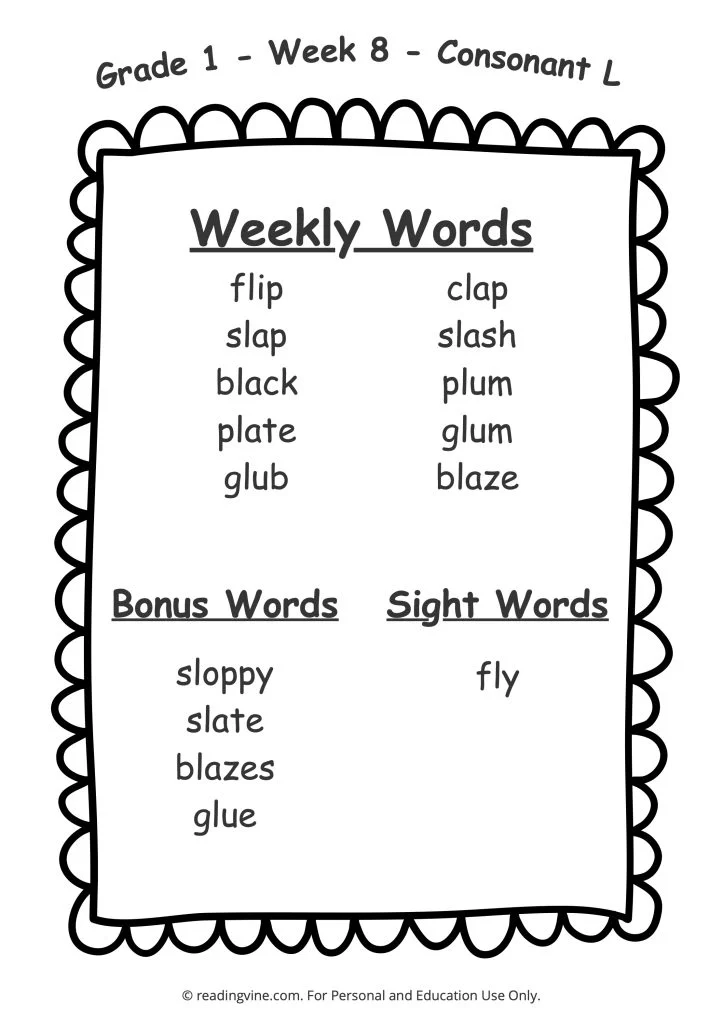
Week 8 spelling list focusing on consonant L blends with words like flip, slap, black, plate, glub, clap, slash, plum, glum, and blaze plus bonus words and sight word fly.
Week 9 Spelling List
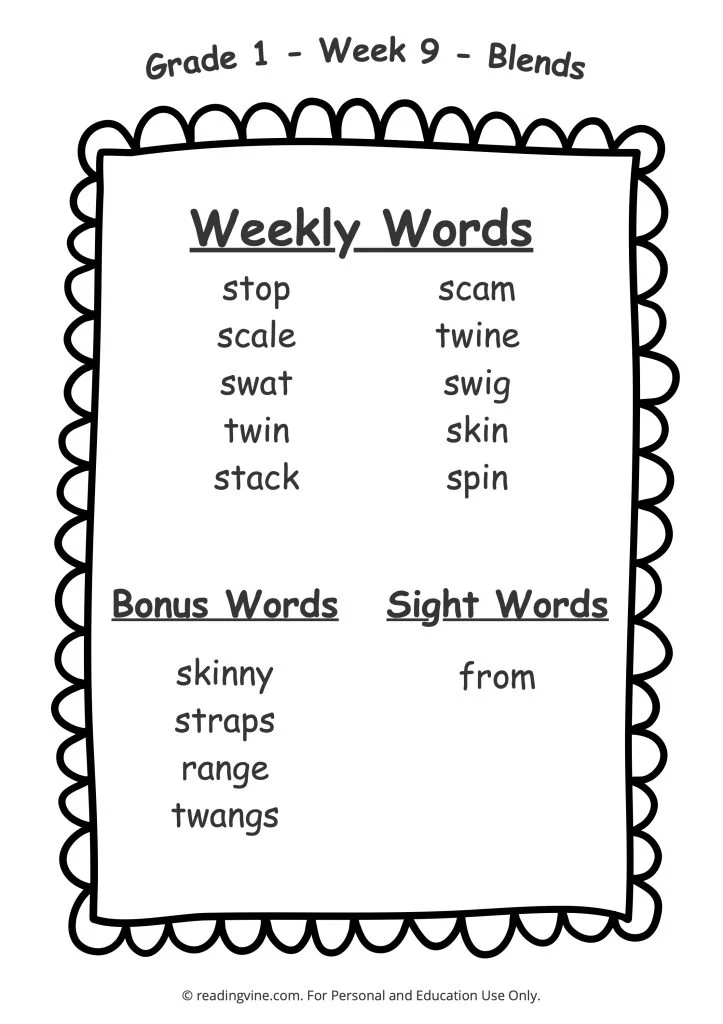
Week 9 spelling list featuring S and T blends with words like stop, scale, swat, twin, stack, scam, twine, swig, skin, and spin plus bonus words and sight word from.
1st Grade Spelling Words for 2nd Quarter: Blends & Glued Sounds
Building on single consonants, students learn how consonants blend together at the start of words—R blends (brag, trap), L blends (flip, clap), and S/T blends (stop, twin). Then they tackle “glued” sounds like -ang, -ing, -unk, and -ank that stick together as units.
Week 10 Spelling List
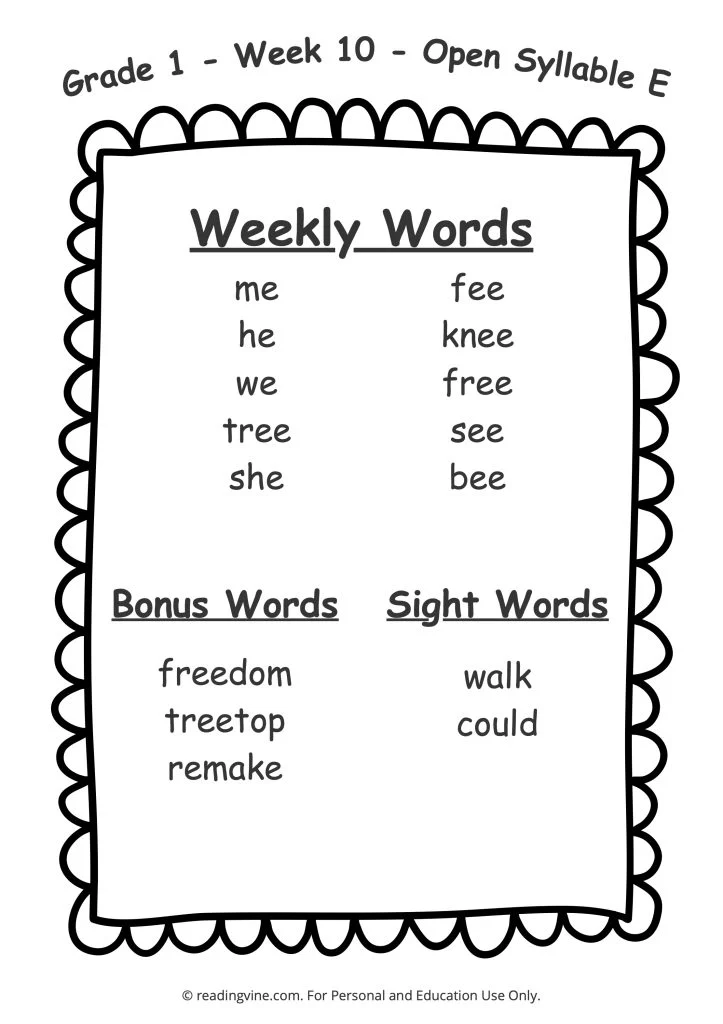
Week 10 spelling list focusing on open syllable E words including me, he, we, tree, she, fee, knee, free, see, and bee plus bonus words and sight words walk and could.
Week 11 Spelling List
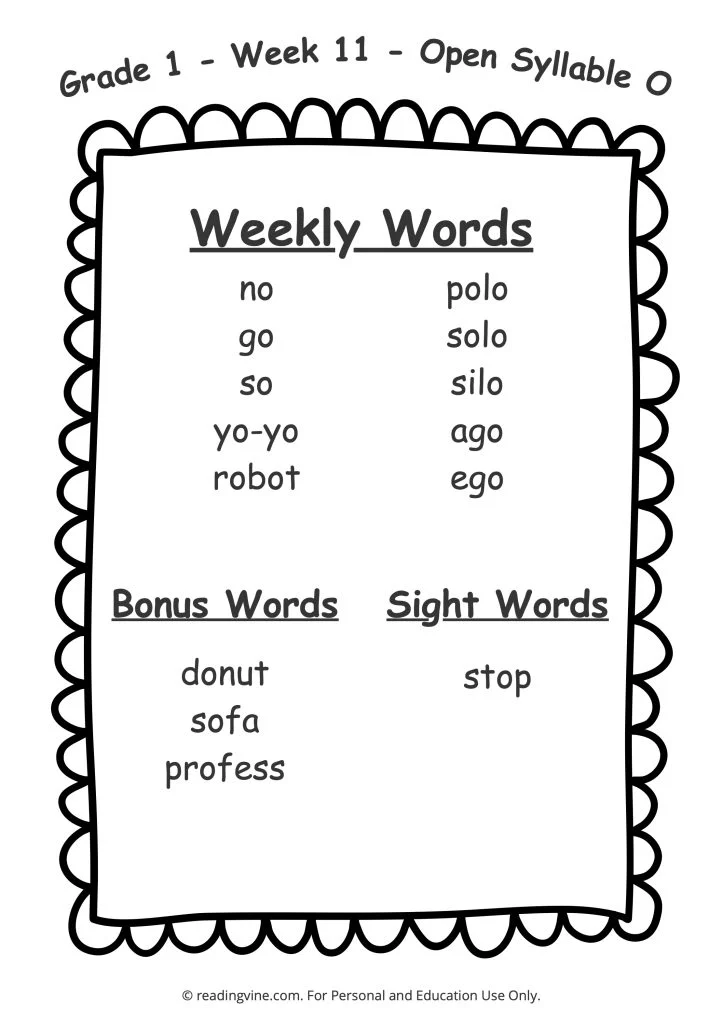
Week 11 spelling list featuring open syllable O words including no, go, so, yo-yo, robot, polo, solo, silo, ago, and ego plus bonus words and sight word stop.

Week 12 Spelling List
Week 12 spelling list with open syllable words including a, spider, music, bonus, fever, hi, tiger, item, radio, and bacon plus bonus words and sight word just.

Week 13 Spelling List
Week 13 spelling list focusing on glued sounds with -ang and -ing words including bang, sang, rang, fang, hang, ping, ring, wing, cling, and thing plus bonus words and sight words an and any.
Week 14 Spelling List
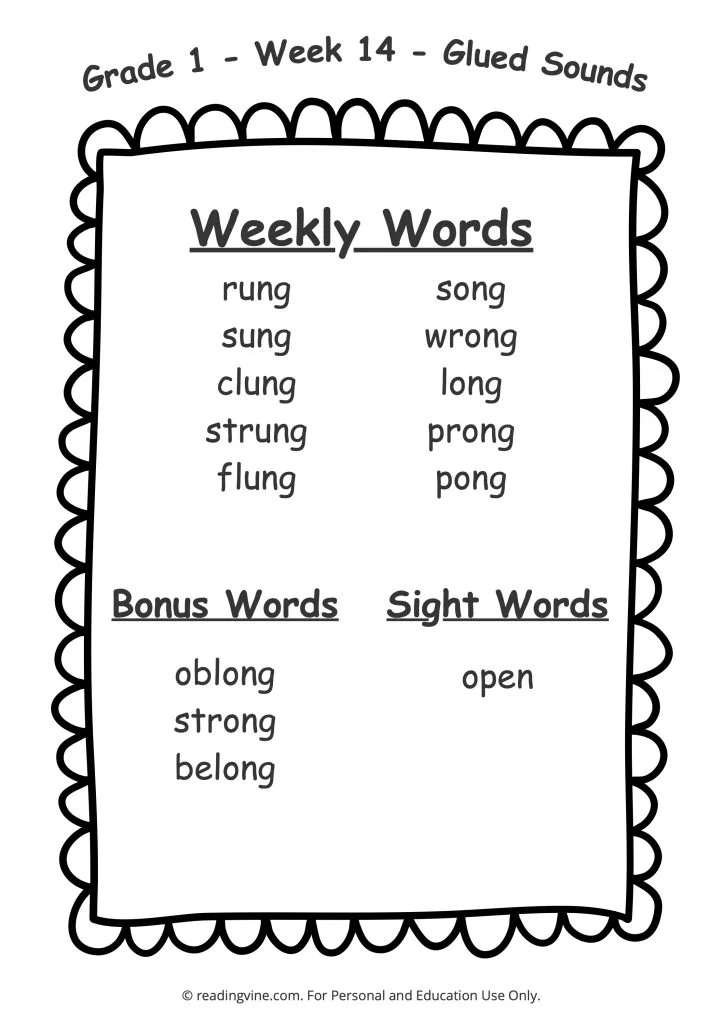
Week 14 spelling list featuring glued sounds with -ung and -ong words including rung, sung, clung, strung, flung, song, wrong, long, prong, and pong plus bonus words and sight word open.
Week 15 Spelling List
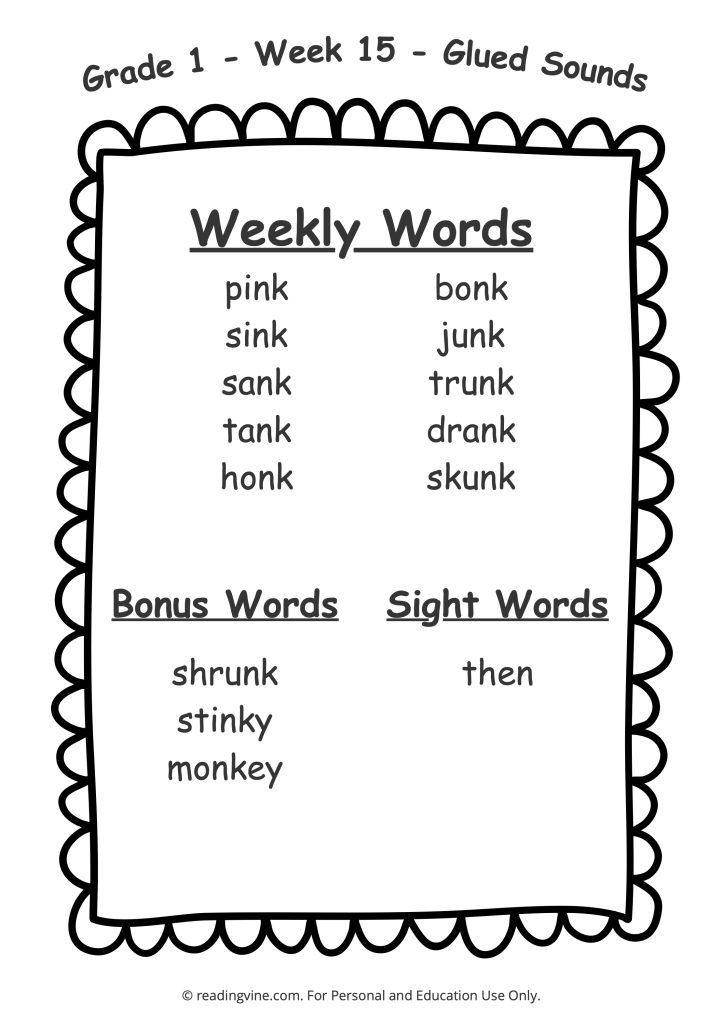
Week 15 spelling list focusing on glued sounds with -ink, -ank, and -unk words including pink, sink, sank, tank, honk, bonk, junk, trunk, drank, and skunk plus bonus words and sight word then.
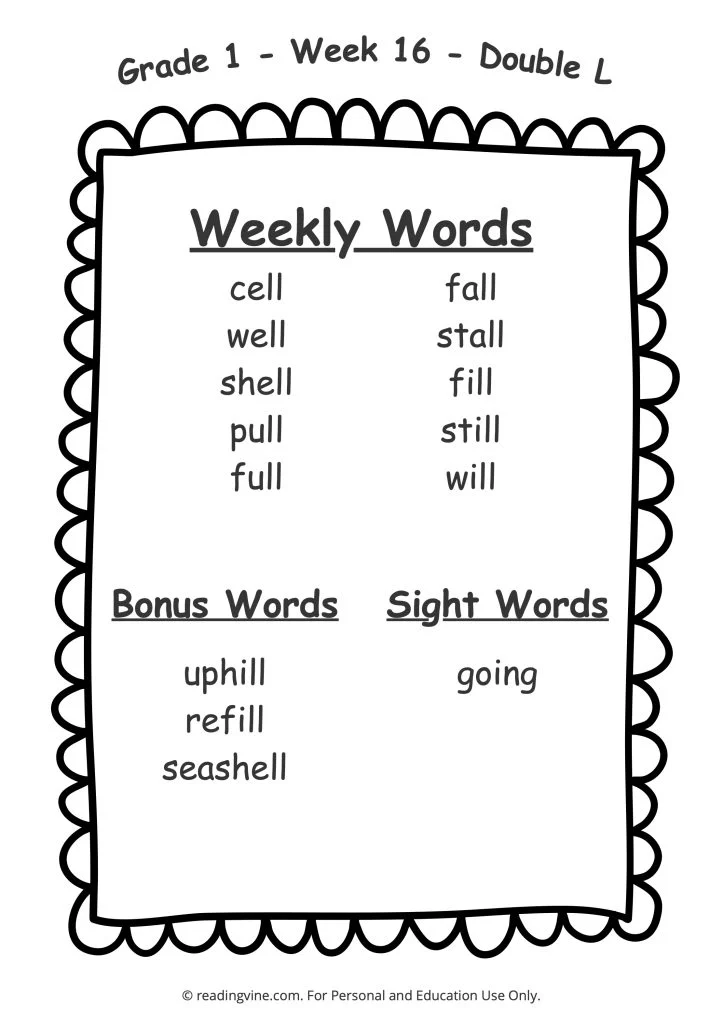
Week 16 Spelling List
Week 16 spelling list featuring double L words including cell, well, shell, pull, full, fall, stall, fill, still, and will plus bonus words and sight word going.

Week 17 Spelling List
Week 17 spelling list focusing on double F words including huff, stuff, fluff, stiff, whiff, puff, bluff, scruff, gruff, and cuff plus bonus words and sight word as.
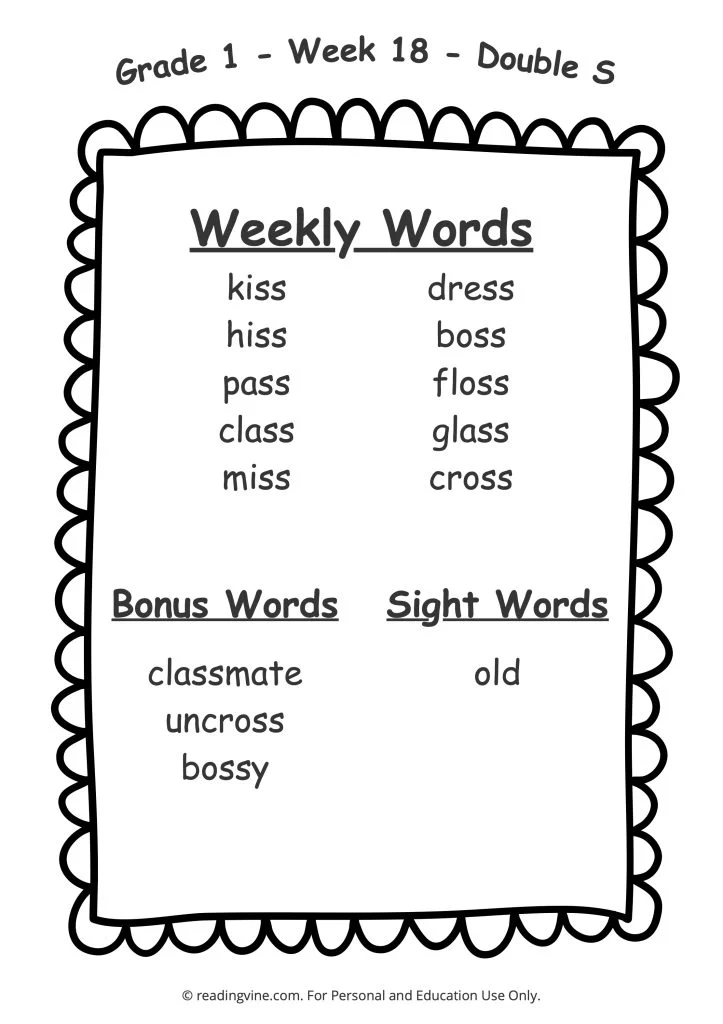
Week 18 Spelling List
Week 18 spelling list featuring double S words including kiss, hiss, pass, class, miss, dress, boss, floss, glass, and cross plus bonus words and sight word old.
1st Grade Spelling Words for 3rd Quarter: Double Consonants & Vowel Teams
Students master words with double letters (well, huff, kiss) before diving into vowel teams where two vowels work together: EA/EE (treat, tree), AI/AY (paid, play), and OA/OE (boat, toe). R-controlled vowels (car, corn, bird) round out the quarter.
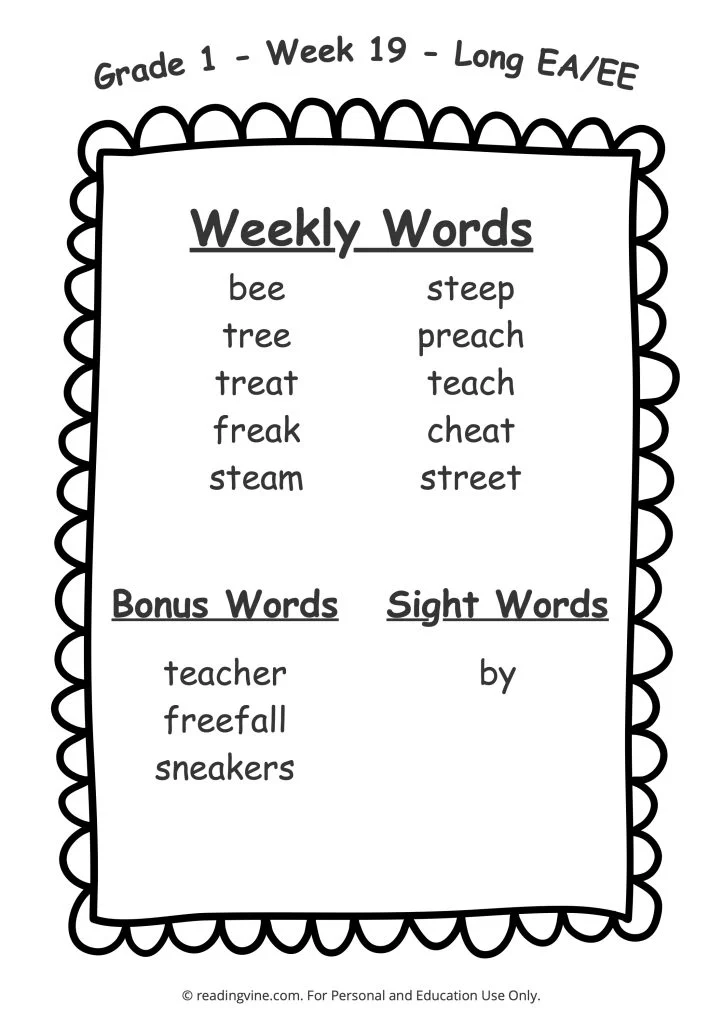
Week 19 Spelling List
Week 19 spelling list featuring long EA/EE vowel teams including bee, tree, treat, freak, steam, steep, preach, teach, cheat, and street plus bonus words and sight word by.
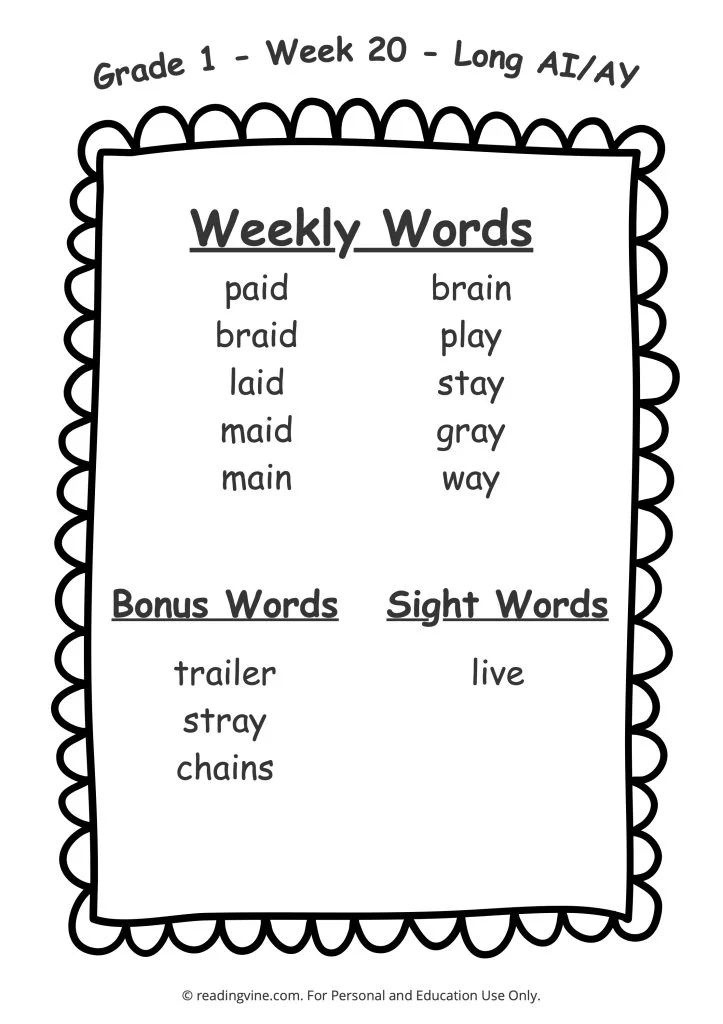
Week 20 Spelling List
Week 20 spelling list focusing on long AI/AY vowel teams including paid, braid, laid, maid, main, brain, play, stay, gray, and way plus bonus words and sight word live.

Week 21 Spelling List
Week 21 spelling list featuring long OA/OE vowel teams including boat, coat, goat, throat, gloat, float, toe, doe, roe, and foe plus bonus words and sight word were.
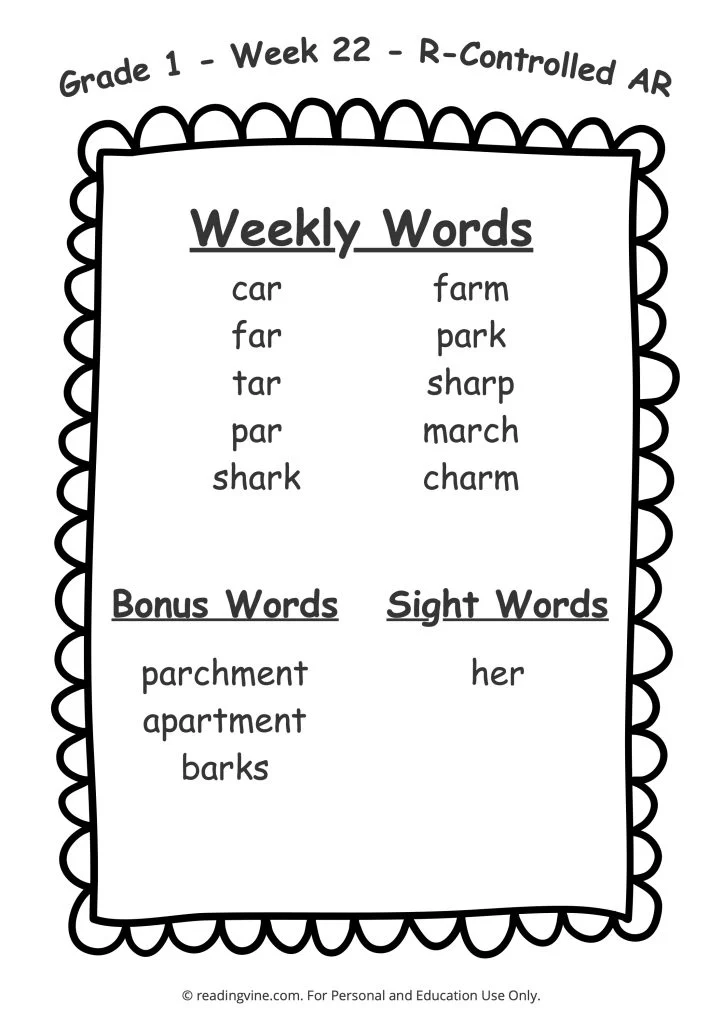
Week 22 Spelling List
Week 22 spelling list focusing on R-controlled AR words including car, far, tar, par, shark, farm, park, sharp, march, and charm plus bonus words and sight word her.
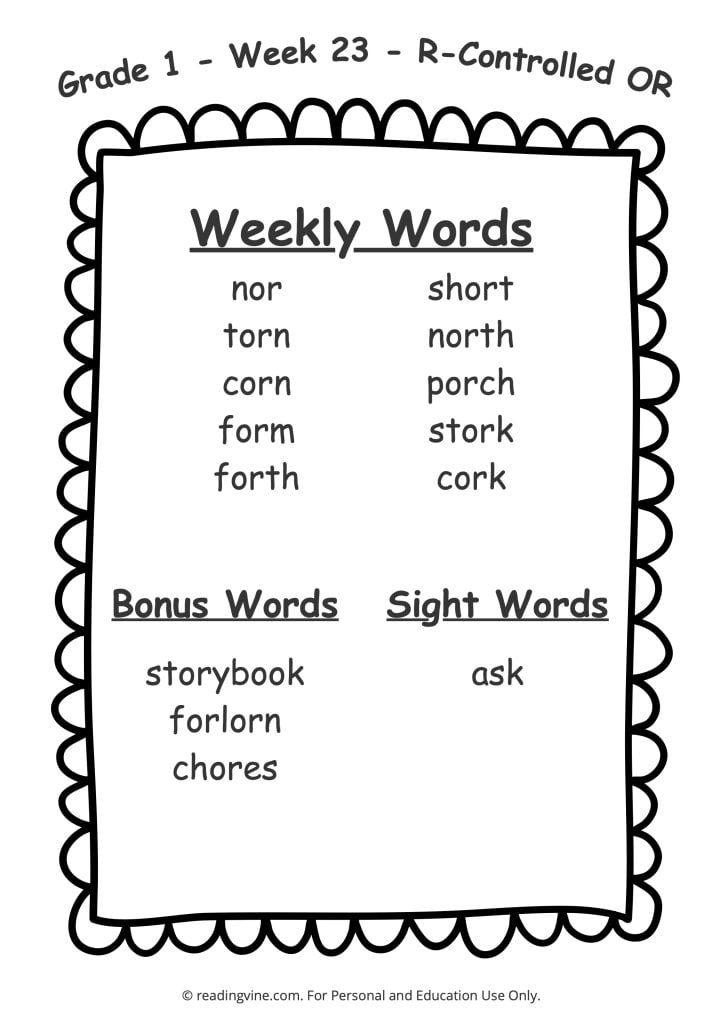
Week 23 Spelling List
Week 23 spelling list featuring R-controlled OR words including nor, torn, corn, form, forth, short, north, porch, stork, and cork plus bonus words and sight word ask.
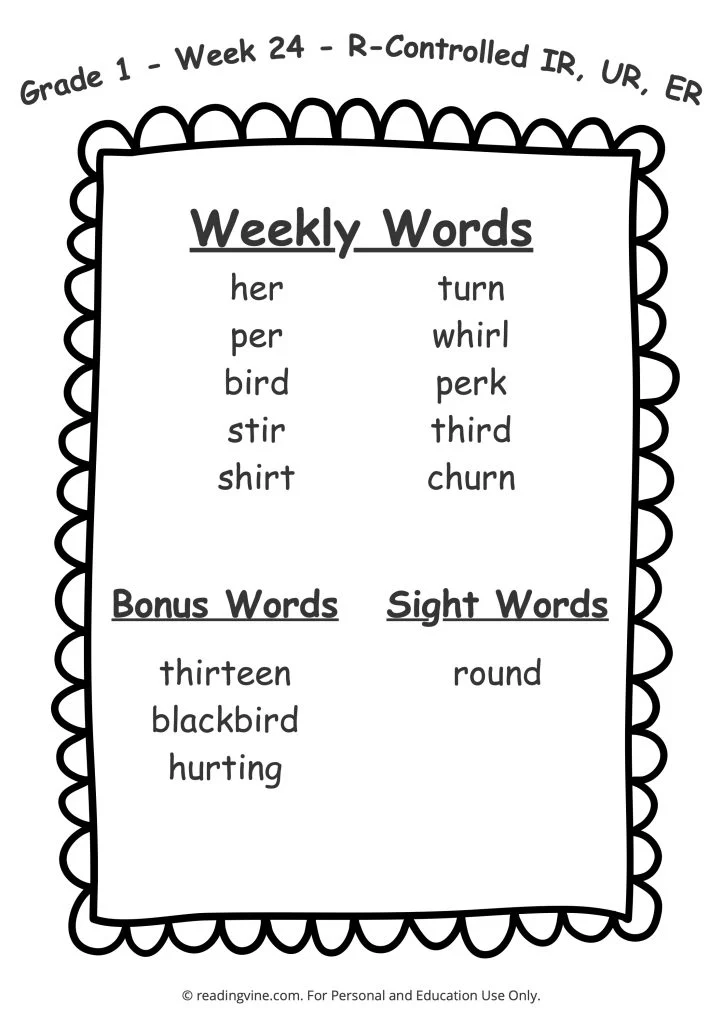
Week 24 Spelling List
Week 24 spelling list focusing on R-controlled IR, UR, and ER words including her, per, bird, stir, shirt, turn, whirl, perk, third, and churn plus bonus words and sight word round.
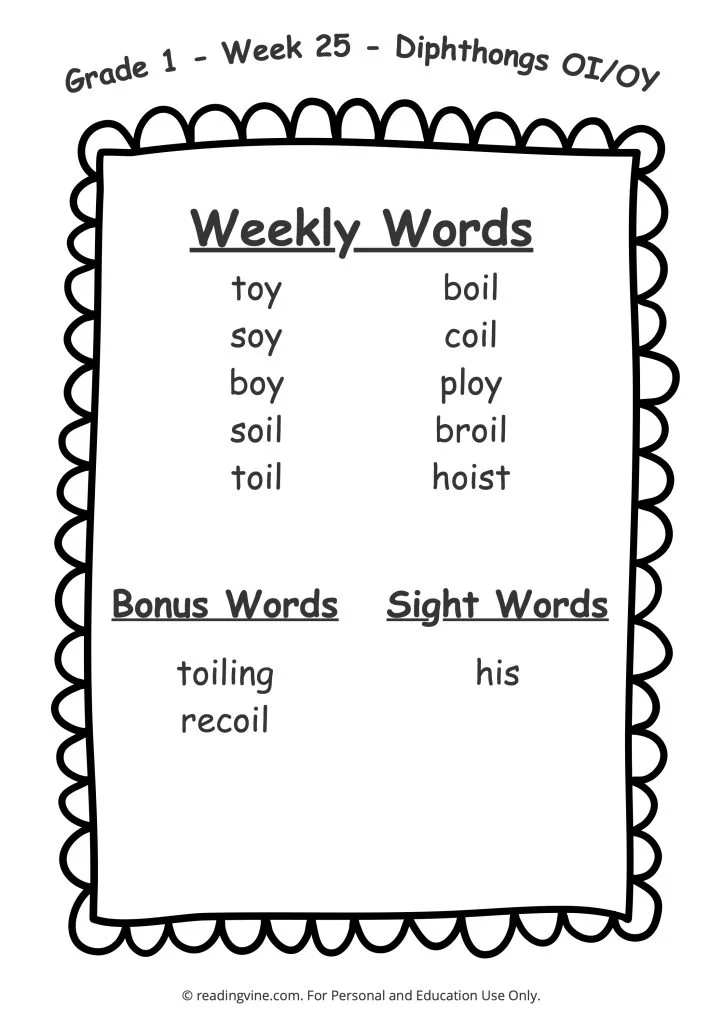
Week 25 Spelling List
Week 25 spelling list featuring diphthongs OY/OI including toy, soy, boy, soil, toil, boil, coil, ploy, broil, and hoist plus bonus words and sight word his.
Week 26 Spelling List
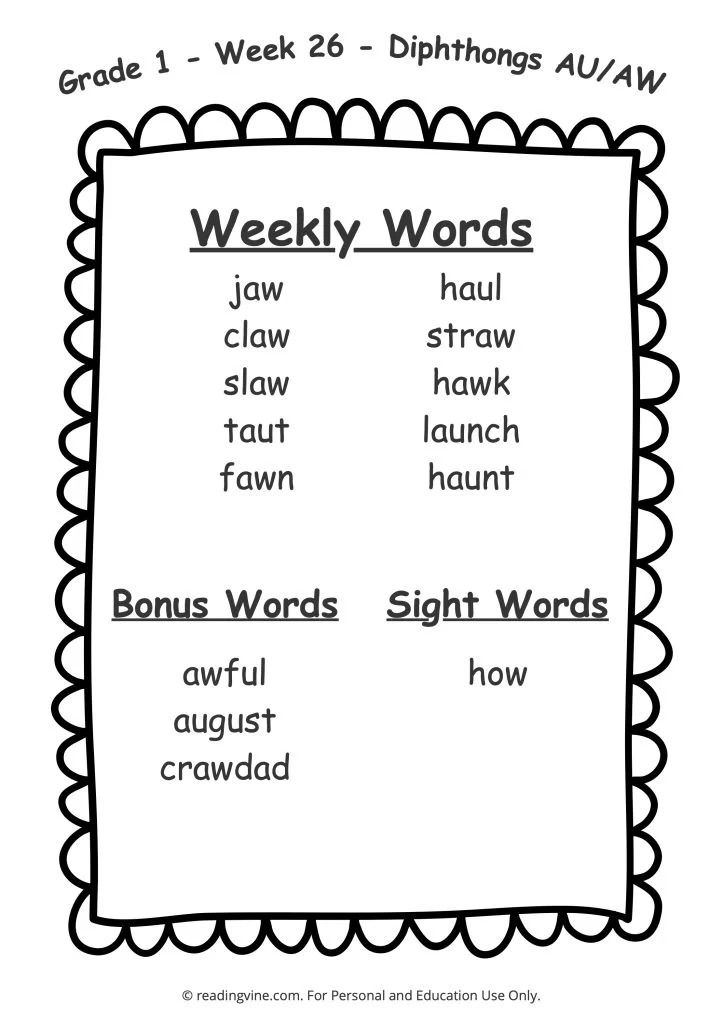
Week 26 spelling list focusing on diphthongs AU/AW including jaw, claw, slaw, taut, fawn, haul, straw, hawk, launch, and haunt plus bonus words and sight word how.
Week 27 Spelling List
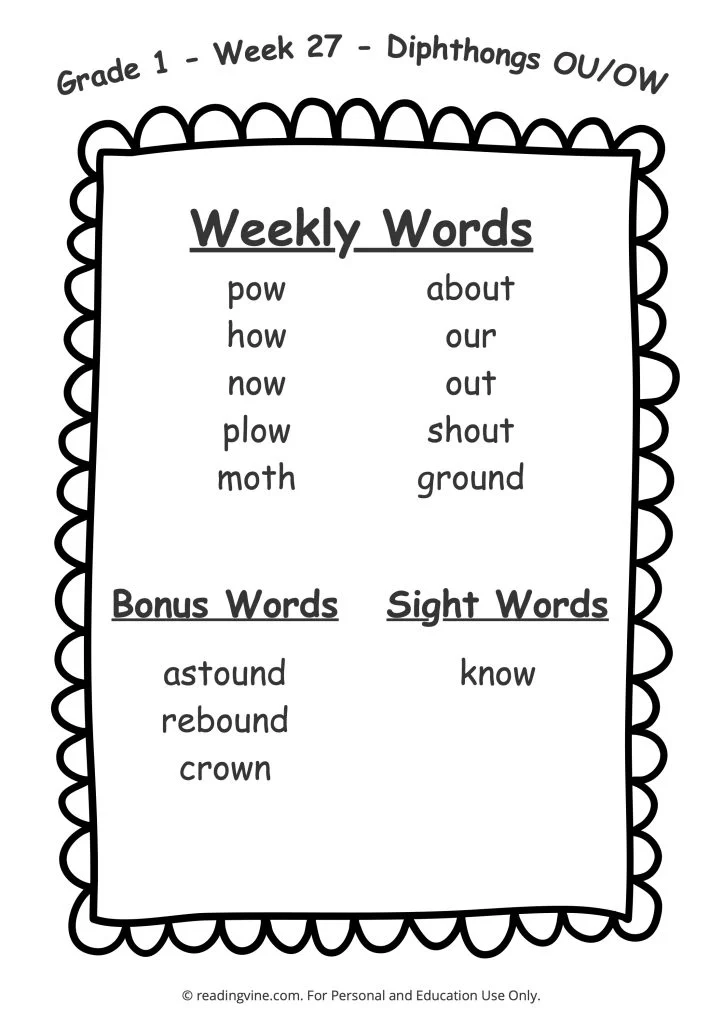
Week 27 spelling list featuring diphthongs OU/OW including pow, how, now, plow, moth, about, our, out, shout, and ground plus bonus words and sight word know.
1st Grade Spelling Words for 4th Quarter: Diphthongs, Syllables & Affixes
Ready for advanced patterns, students explore diphthongs like OY/OI (toy, boil) and OU/OW (shout, plow). They learn the final -LE syllable (table, giggle) and finish with common prefixes and suffixes: RE- (redo), MIS- (mistake), UN- (unhappy), -ED, -S/-ES, and -ING.
Week 28 Spelling List
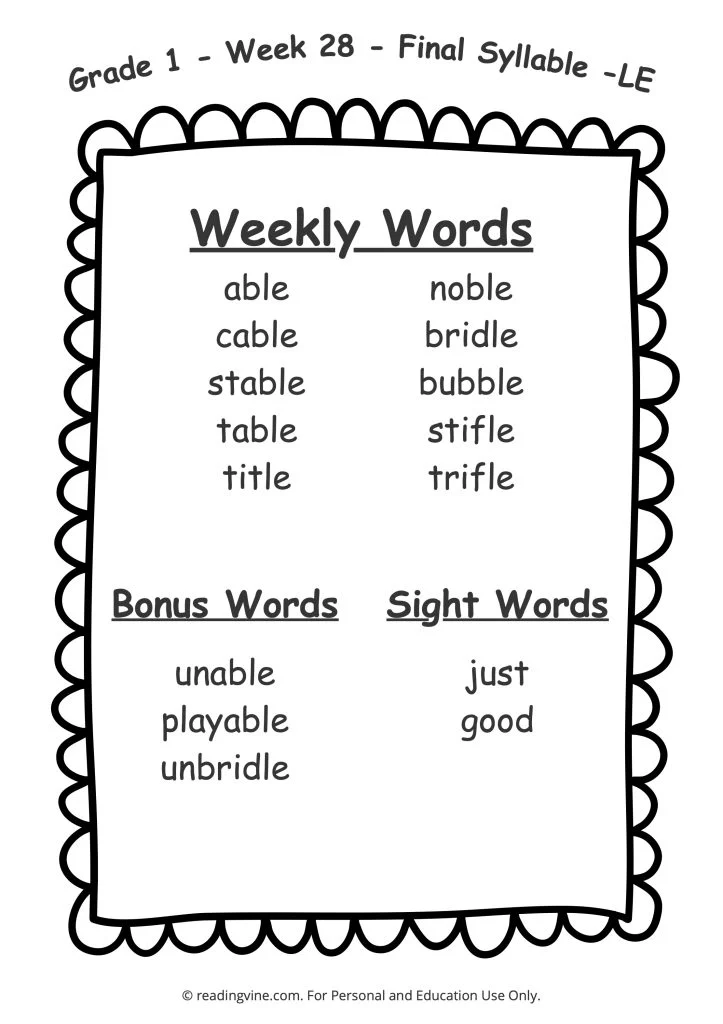
Week 28 spelling list featuring final syllable -LE words including able, cable, stable, table, title, noble, bridle, bubble, stifle, and trifle plus bonus words and sight words just and good.

Week 29 Spelling List
Week 29 spelling list focusing on final syllable -LE words including boggle, giggle, brittle, tattle, bottle, paddle, ripple, muddle, puddle, and wiggle plus bonus words and sight words have, one, and every.
Week 30 Spelling List
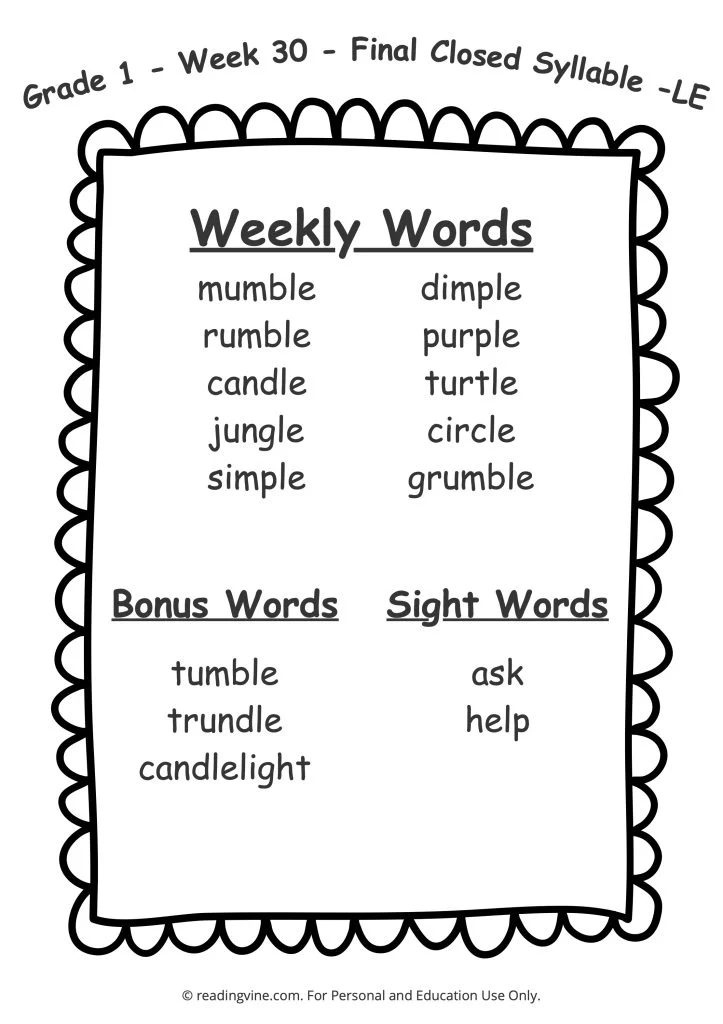
Week 30 spelling list featuring final closed syllable -LE words including mumble, rumble, candle, jungle, simple, dimple, purple, turtle, circle, and grumble plus bonus words and sight words ask and help.

Week 31 Spelling List
Week 31 spelling list focusing on suffix -ED words including tricked, begged, played, talked, liked, jumped, shifted, checked, brushed, and peeled plus bonus words and sight word again.
Week 32 Spelling List
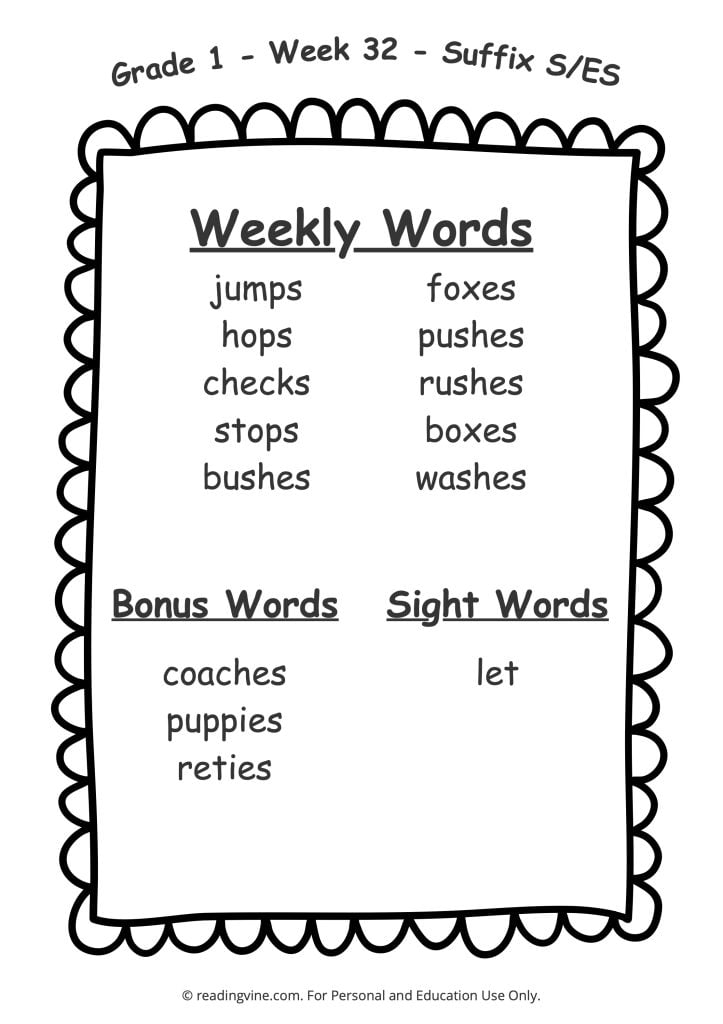
Week 32 spelling list featuring suffix -S/-ES words including jumps, hops, checks, stops, bushes, foxes, pushes, rushes, boxes, and washes plus bonus words and sight word let.
Week 33 Spelling List
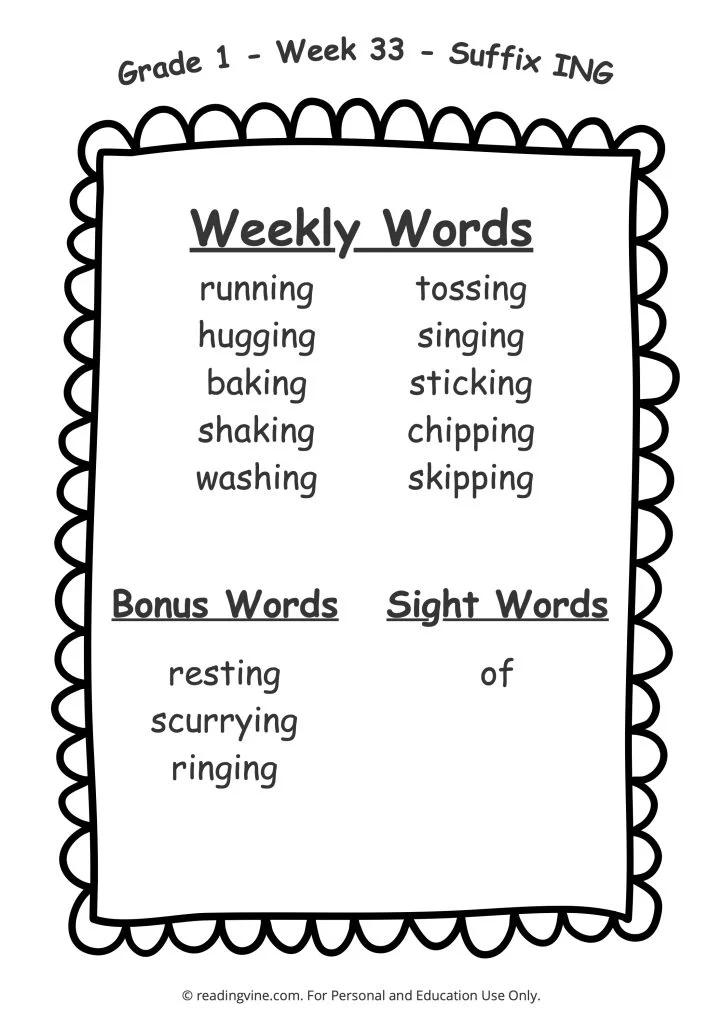
Week 33 spelling list focusing on suffix -ING words including running, hugging, baking, shaking, washing, tossing, singing, sticking, chipping, and skipping plus bonus words and sight word of.
Week 34 Spelling List
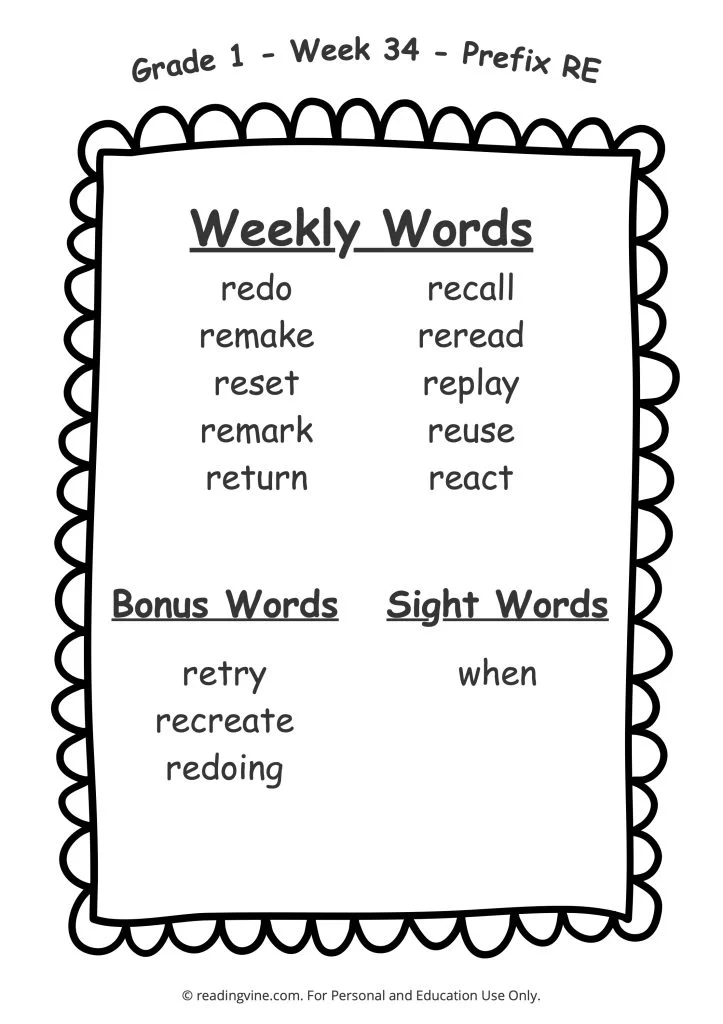
Week 34 spelling list featuring prefix RE- words including redo, remake, reset, remark, return, recall, reread, replay, reuse, and react plus bonus words and sight word when.
Week 35 Spelling List
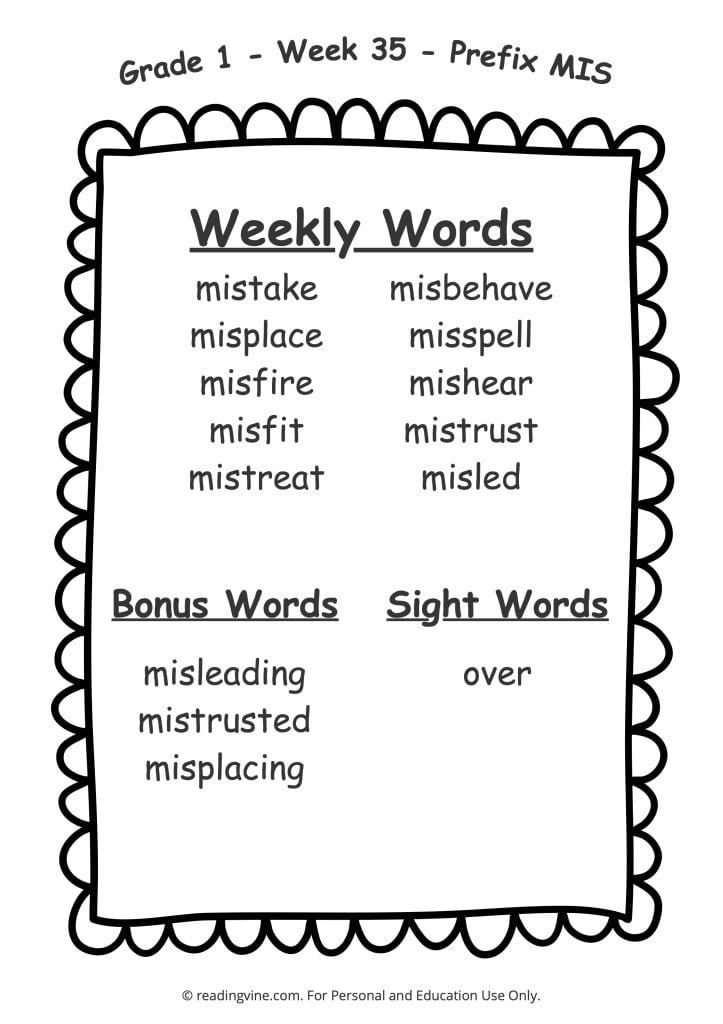
Week 35 spelling list focusing on prefix MIS- words including mistake, misplace, misfire, misfit, mistreat, misbehave, misspell, mishear, mistrust, and misled plus bonus words and sight word over.

Week 36 Spelling List
Week 36 spelling list featuring prefix UN- words including undo, under, untrue, unwell, unhappy, untie, unkind, unpack, unlock, and unsafe plus bonus words and sight word take.
How can this curriculum help students learn to read and write? This 36-week curriculum builds on kindergarten phonics foundations, moving students from CVC review through advanced patterns like vowel teams, R-controlled vowels, and common affixes. By systematically teaching how letters and letter combinations represent sounds, students strengthen both decoding skills for reading and encoding skills for writing. The progression from simple blends to prefixes and suffixes prepares first graders for the increased reading demands of second grade.
What research supports this curriculum? This curriculum follows a systematic, explicit phonics approach aligned with the Science of Reading. Each week’s pattern builds on previous learning—students master CVC and CVCe words before tackling vowel teams, then R-controlled vowels before diphthongs. This structured sequence helps learners make connections between familiar patterns and new ones, which research shows accelerates literacy development and improves spelling retention.
How do I use these weekly spelling lists? Each weekly list includes 10 core spelling words, bonus words for extension, and sight words for high-frequency practice. We recommend introducing 2-3 words per day through writing, oral spelling, and word-building activities. Use bonus words for students ready for more challenge. The sight words align with first grade high-frequency lists, so incorporate them into daily reading and writing practice.