
 = Partner Site
Pronoun Worksheets
Pronouns replace nouns to avoid repetition and keep sentences flowing—”Maria grabbed her coat” instead of “Maria grabbed Maria’s coat.” These worksheets cover the pronoun types students encounter in elementary grades: personal, possessive, reflexive, indefinite, and more.
Since pronouns connect to so many skills—subject/verb agreement, antecedent clarity, case (I vs. me)—this collection spans identification, error correction, and sentence writing. Browse below for targeted practice by pronoun type or skill focus.
Printable Pronoun Worksheets
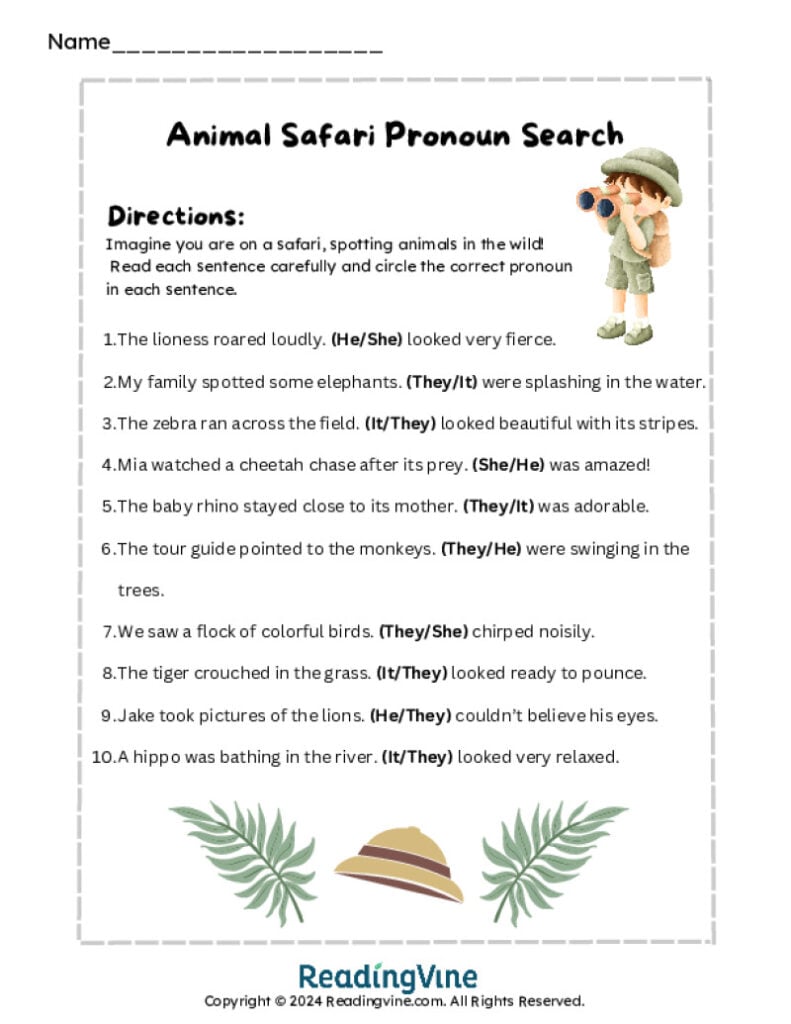
Animal Safari Pronoun Search
Go on a safari adventure and circle the correct pronoun in each sentence about wild animals like lions, elephants, zebras, and tigers.
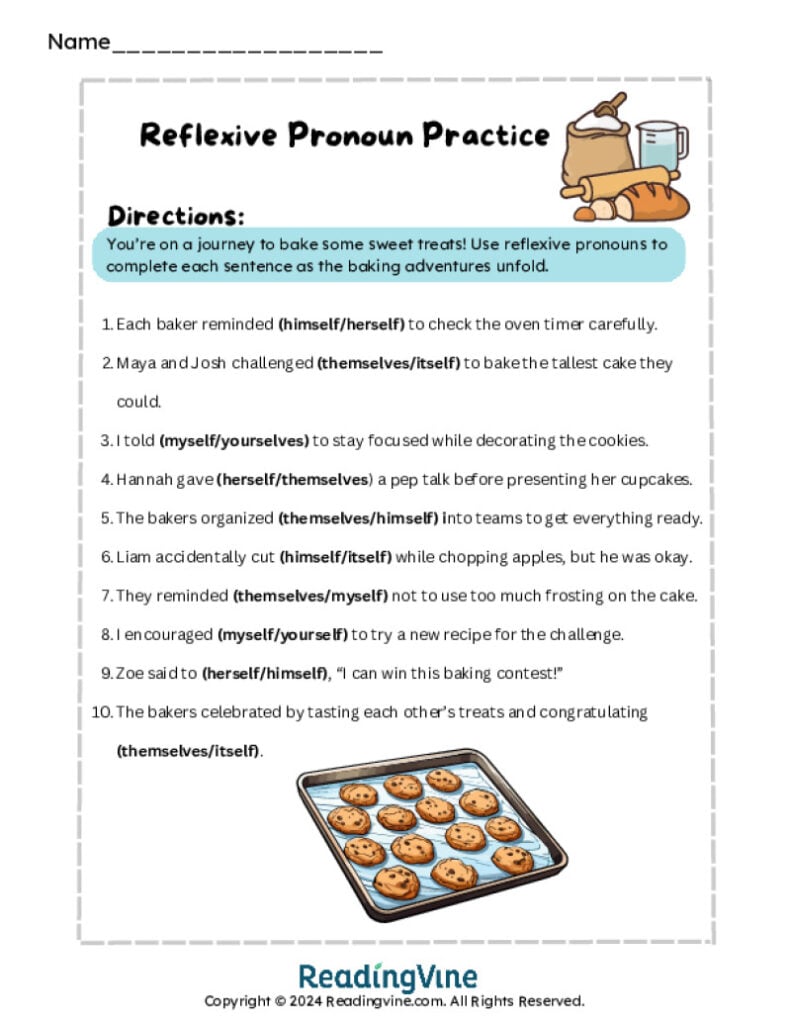
Baking Adventures Reflexive Pronoun Practice

Busy Bee Poem Pronouns Worksheet
Write original sentences using provided subordinating conjunctions to demonstrate understanding of complex sentence construction.

Intro to Pronouns Fill in the Blanks Activity
Read each sentence and fill in the blank with the correct pronoun from the word bank, learning how pronouns replace nouns to avoid repetition.
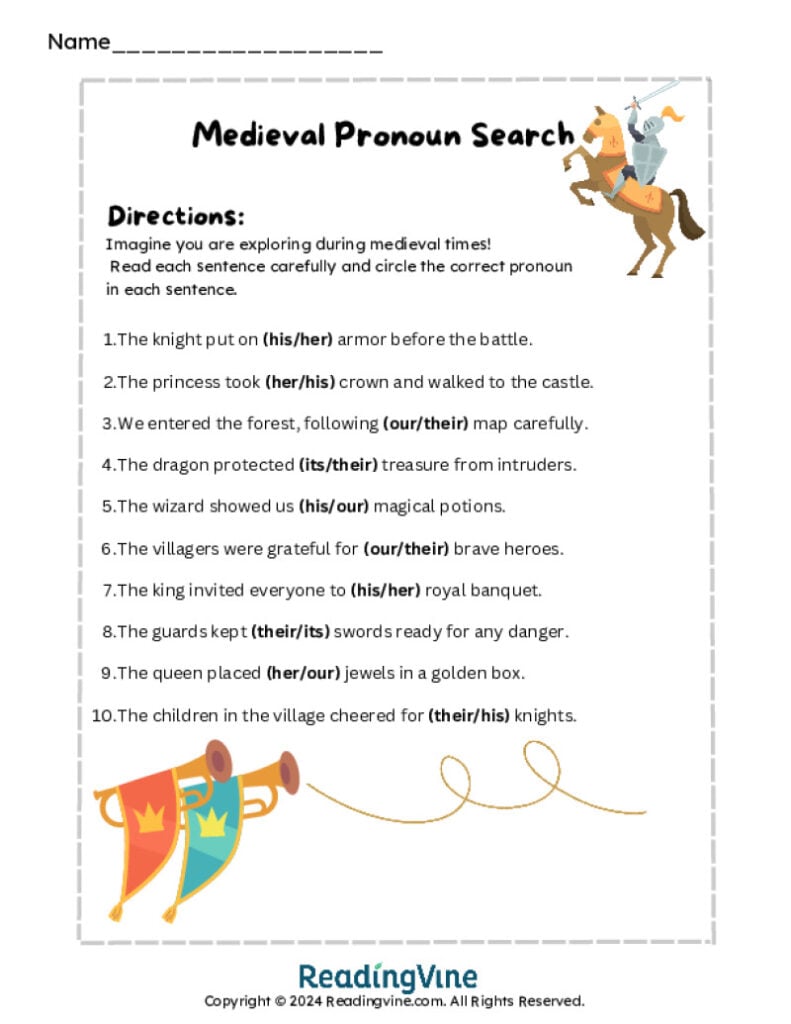
Medieval Pronoun Search
Travel to medieval times and circle the correct pronoun in each sentence featuring knights, dragons, princesses, and castles to practice pronoun selection.
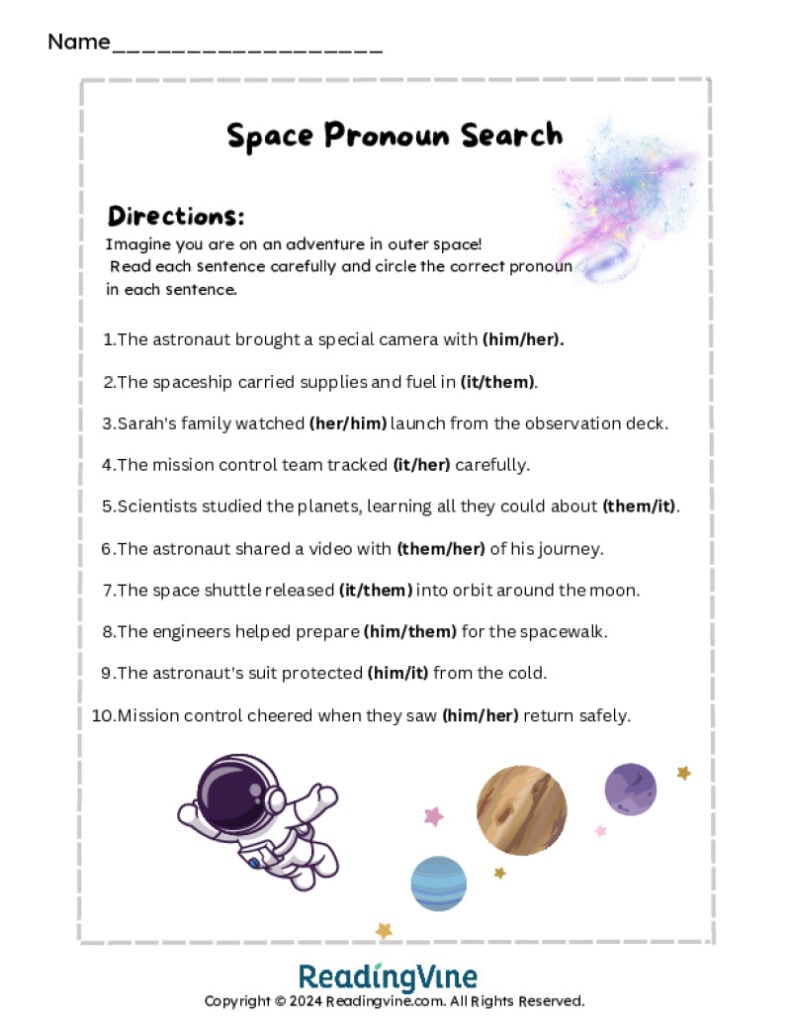
Outer Space Pronoun Search
Explore outer space while practicing pronouns by reading each sentence and circling the correct pronoun choice from the two options provided

Pick the Pronoun Printable Activity
Choose the correct pronoun for each picture by selecting he, she, it, or they based on who or what is shown in the illustration.

Pick the Pronoun Worksheet
Look at each picture showing people, animals, or objects and select the correct pronoun—he, she, it, or they—that matches the subject shown.

Printable Pronoun Match Activity
Underline the pronoun in each sentence, then draw a line to match it with the picture that shows what's happening in the scene.

Printable Reflexive Pronoun Practice

Pronoun Practice Fill in the Blanks Worksheet
Compose fall-themed sentences using subordinating conjunctions from the word bank to practice creating complex sentence structures.

Pronoun Space Adventure Activity
Blast off with this space-themed activity by reading each sentence and marking a check if it contains a pronoun or an X if it doesn't.
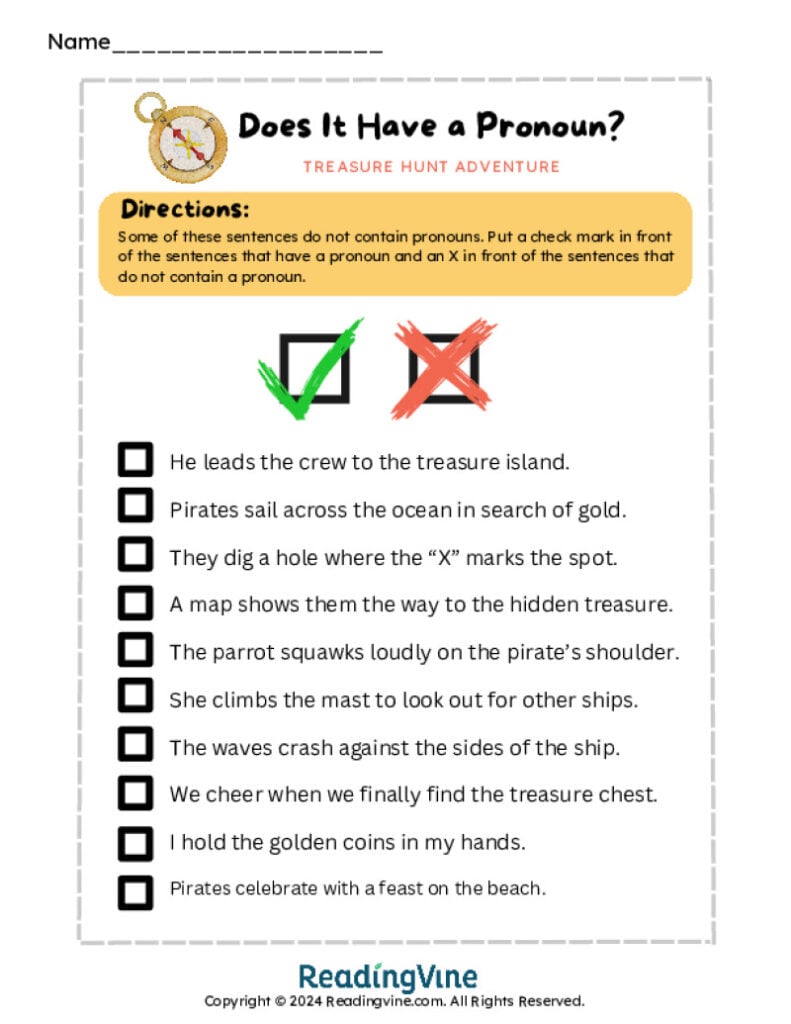
Pronoun Treasure Hunt Activity
Hunt for pronouns in pirate-themed sentences by marking a check for sentences that contain pronouns and an X for those that don't.
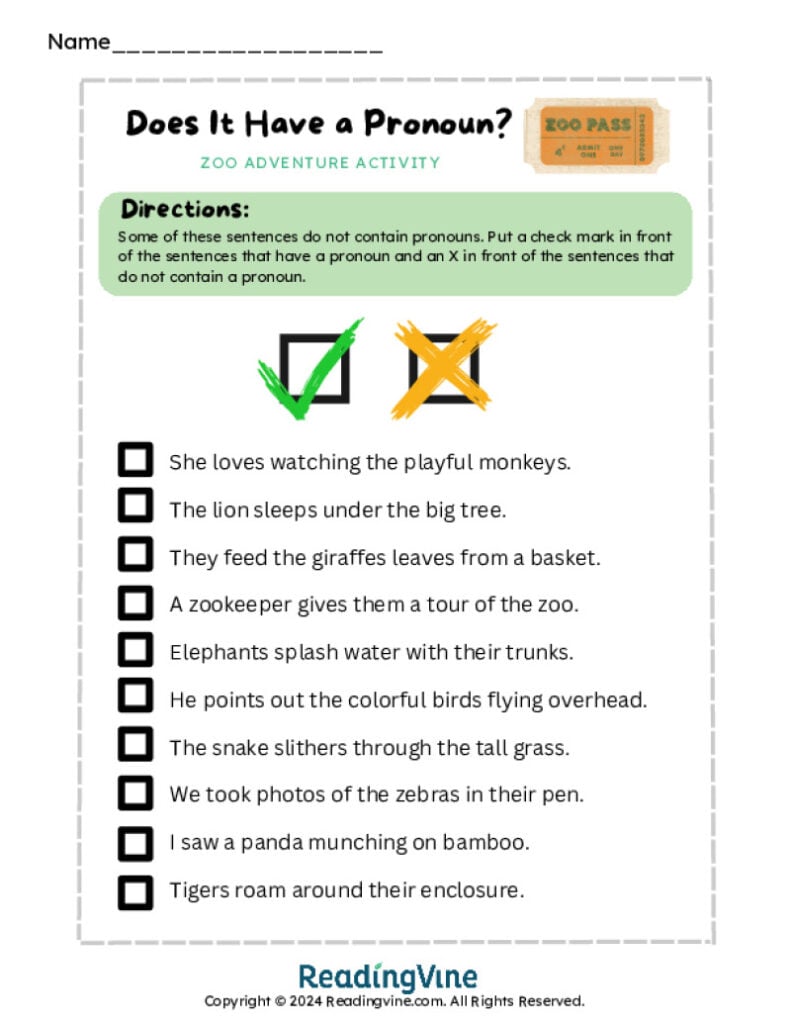
Pronoun Zoo Adventure Activity
Read each zoo-themed sentence and decide if it contains a pronoun, marking a check for yes or an X for no to build pronoun recognition skills.
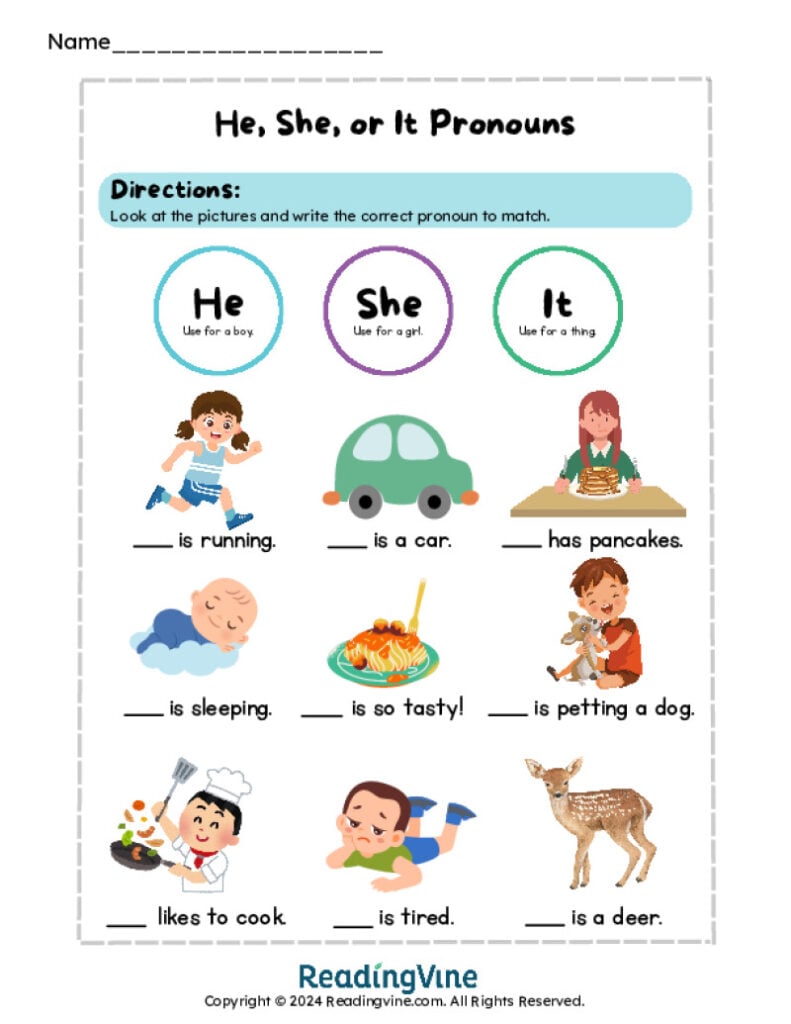
Pronouns Picture Activity
Look at each picture and write the correct pronoun—he, she, or it—to complete sentences describing actions like running, sleeping, cooking, and more.
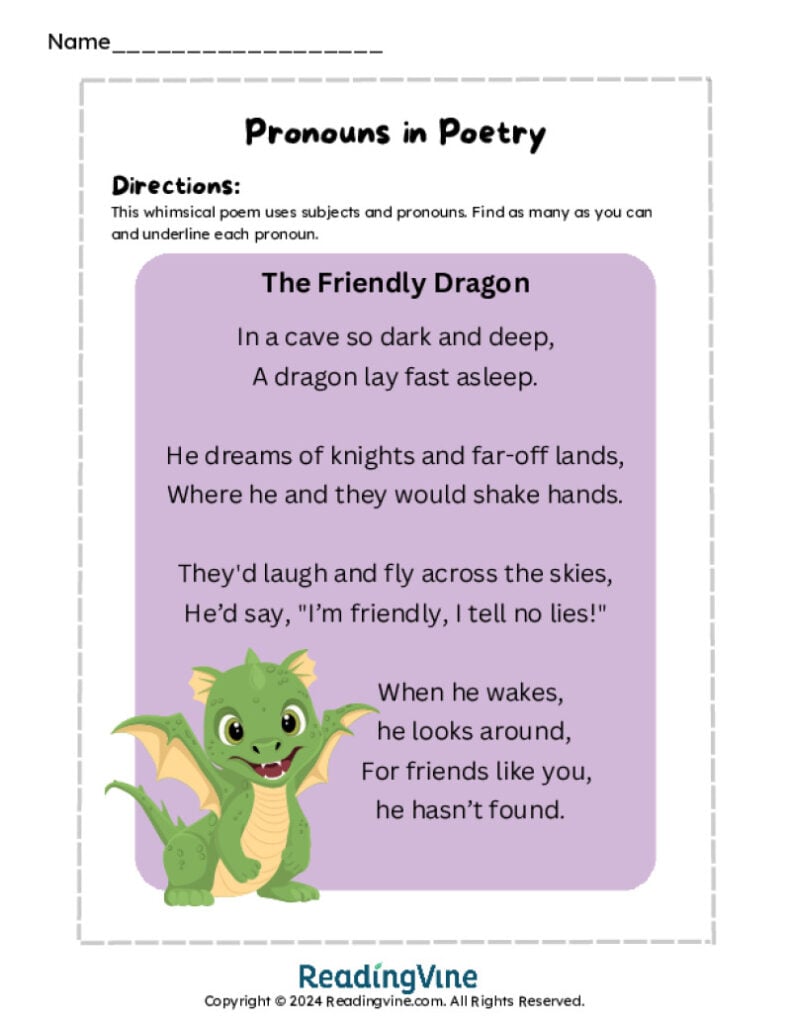
Pronouns in Poetry Activity
Read "The Friendly Dragon" poem and underline all the subject pronouns you can find, practicing pronoun identification within a whimsical rhyming text.

Reflexive Pronoun Practice Worksheet
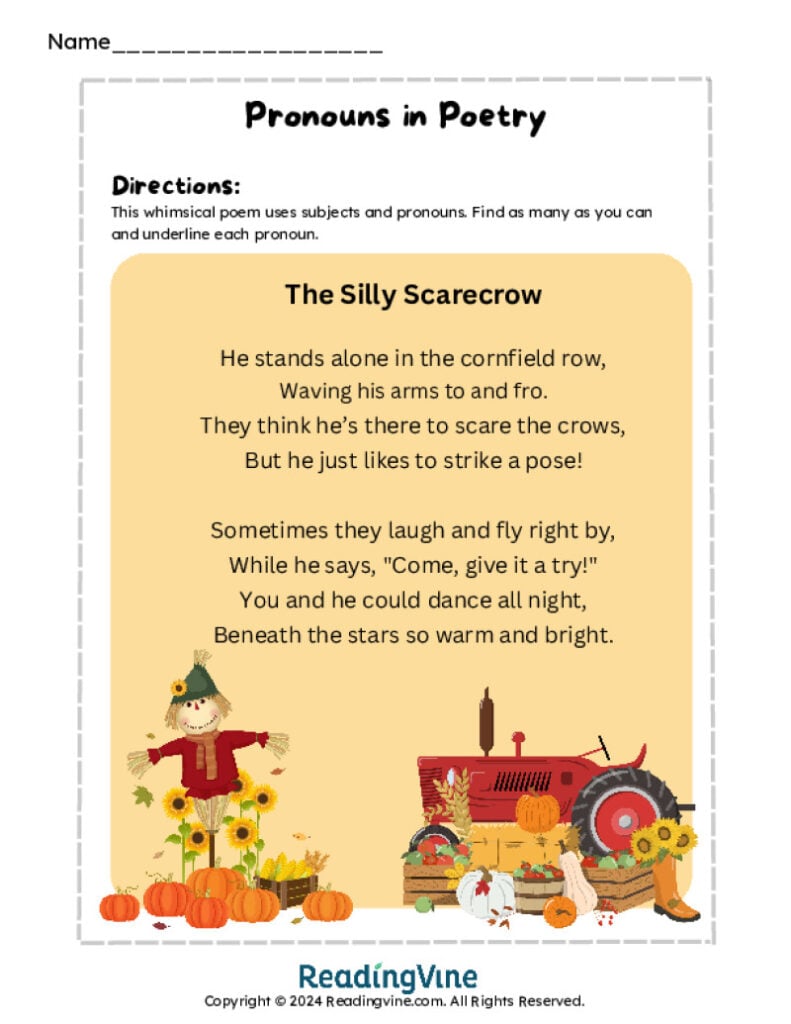
Silly Scarecrow Pronouns in Poetry
Read "The Silly Scarecrow" poem and find as many subject pronouns as you can, underlining each one to practice identifying pronouns in context.

Superhero Reflexive Pronoun Practice Activity
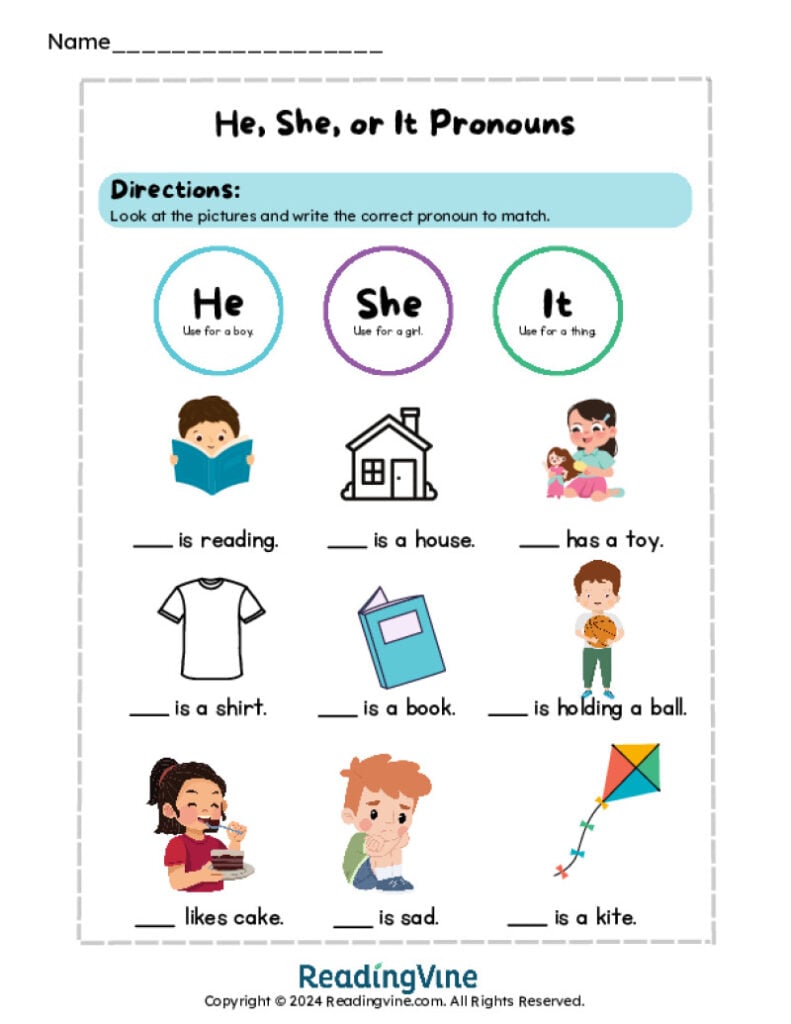
Using Pronouns Printable Activity
Match subject pronouns he, she, and it to pictures by writing the correct pronoun to complete each sentence describing what's shown in the illustration.
Grade-Level Progression: Personal pronouns (I, you, he, she, it, we, they) appear in grades 1-2 with basic identification and substitution. Possessive pronouns and reflexive pronouns (myself, herself) follow in grades 2-3. Indefinite pronouns (everyone, somebody, nothing) and pronoun-antecedent agreement typically arrive in grades 3-5.
Common Trouble Spots: Three errors dominate student writing: subject/object confusion (“Me and him went” vs. “He and I went”), unclear antecedents (“Tom told Jake he was late”—who’s late?), and possessive/contraction mix-ups (its/it’s, their/they’re). Worksheets targeting these specific errors build lasting editing habits.
The Substitution Test: Teach students to check their work by reading sentences with the noun instead of the pronoun. If “Me went to the store” sounds wrong as “John went to the store”—wait, that sounds fine. But “Me went” reveals the error. This self-check builds independence.