
 = Partner Site
Figurative Language Worksheets
Help students master figurative language with this collection of printable worksheets covering alliteration, hyperbole, idioms, metaphors, onomatopoeia, personification, and similes. Each section includes identification activities, creative writing prompts, and practice exercises that develop students’ ability to recognize literary devices in text and apply them in their own writing.
Figurative Language Guide
Learn all types of figurative language with 50+ examples, teaching tips, and FAQs for grades K-8.
Alliteration Worksheets
See all Alliteration WorksheetsPractice the playful power of repeated sounds! These worksheets help students identify and create alliterative phrases and sentences, building phonemic awareness while adding style to their writing.

Alliteration Anchor Chart
A classroom poster defining alliteration—repetition of initial sounds in nearby words—featuring the classic "Betty Botter" tongue twister with repeated B sounds highlighted.

Alliteration Animal Challenge Activity
Write alliterative phrases or sentences for each animal shown, using names that begin with the same sound as the animal.

Alliteration Challenge Worksheet
Write alliterative phrases or sentences for each category using the provided icons as visual prompts for word selection.
Hyperbole Worksheets
See all Hyperbole WorksheetsExaggeration makes writing come alive! Students learn to recognize and craft hyperboles, understanding how writers use extreme exaggeration for emphasis and effect without meaning statements literally.

Comparing Hyperboles Worksheet
Analyze pairs of hyperboles and rank them according to degree of exaggeration to understand varying intensities of figurative expression.

Exaggerated Art Hyperbole Drawing Activity

Express Hyperboles With Art
Choose a hyperbole from the list, illustrate it with a drawing, then explain what the exaggeration means in your own words.
Idiom Worksheets
See all Idiom WorksheetsIdioms don’t mean what they literally say—and that’s what makes them tricky! These activities help students decode common expressions and understand figurative meanings in everyday language.

Create Your Own Idiom Activity
Complete fill-in-the-blank sentences with appropriate words to create personification, giving human qualities to non-human subjects in each statement.

Creating Context With Idioms

Fill in the Blank Idiom Worksheet
Complete sentences by filling in blanks with appropriate idioms from the provided word bank to practice using figurative expressions contextually.
Metaphor Worksheets
See all Metaphor WorksheetsMetaphors create powerful comparisons by saying one thing IS another. Students practice identifying metaphors in text and crafting their own to add depth and imagery to their writing.

6th Grade Choose a Metaphor Worksheet
In this multiple choice activity, students choose the correct metaphor from options to match with the given sentence context.

Choosing Metaphors Multiple Choice Activity
Students read each sentence, then choose the correct metaphor to match the meaning of the sentence from multiple choices.
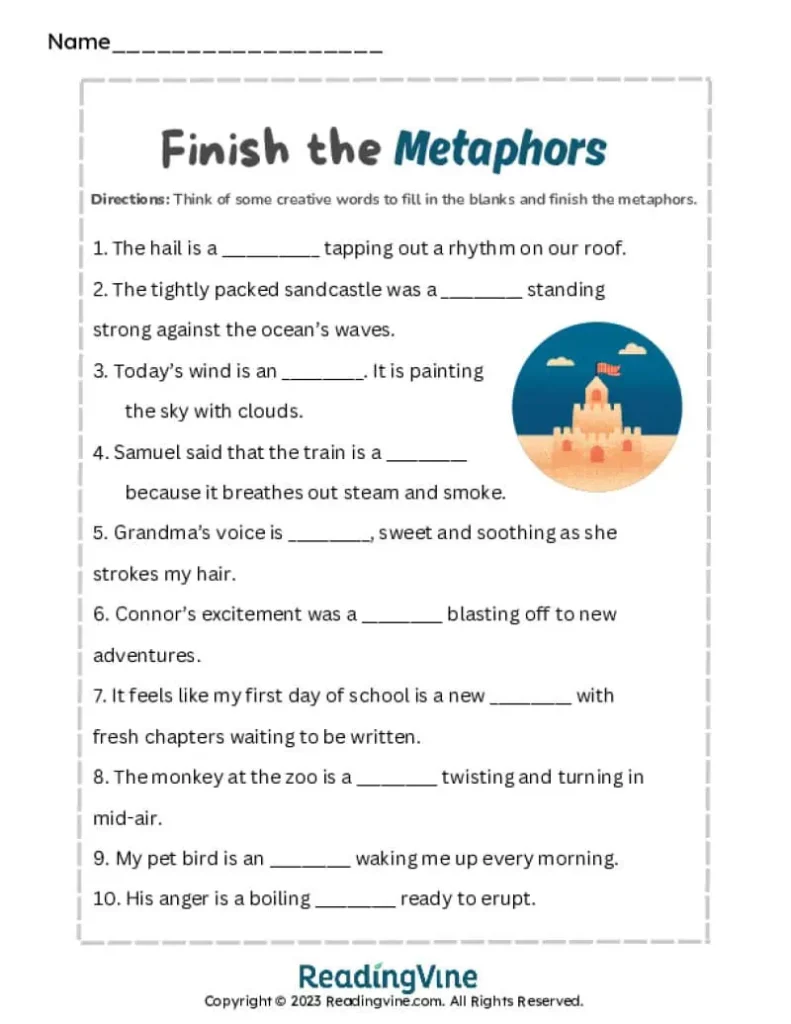
6th Grade Complete the Metaphors Activity
Students are asked to read each sentence, then fill in the blanks to complete the metaphors using contextual clues.
Onomatopoeia Worksheets
See all Onomatopoeia WorksheetsCrash, buzz, sizzle! Onomatopoeia brings sound to the page. These worksheets help students recognize and use words that imitate the sounds they describe.

Onomatopoeia in Poetry: Add Your Own!
Read the poem excerpt by Henry Wadsworth Longfellow, then add your own onomatopoeia to make it even better with sound effects.

Adding Your Own Onomatopoeia in Poetry
In this activity, students read the given poem and then draw arrows adding their own onomatopoeia to enhance sound imagery.

Fill in the Blank Onomatopoeia Activity
Read the poem and use the word bank to fill in the blanks with examples of onomatopoeia matching the context.
Personification Worksheets
See all Personification WorksheetsWhen objects talk and trees dance, that’s personification! Students learn to identify and create examples of giving human qualities to non-human things.

Identify Personification In Action
Circle the object being personified in each sentence, identifying which non-human subject is given human characteristics or actions.

Identifying Personification Activity
Circle the personified objects in each sentence, identifying which non-human subjects are given human characteristics or behaviors in figurative language.

Intro to Personification Worksheet
Learn about personification definition and examples, read sentences demonstrating the technique, then identify objects receiving human characteristics in new sentences.
Simile Worksheets
See all Simile WorksheetsSimiles compare using “like” or “as” to create vivid images. These activities build students’ ability to spot similes in reading and craft original comparisons in their writing.
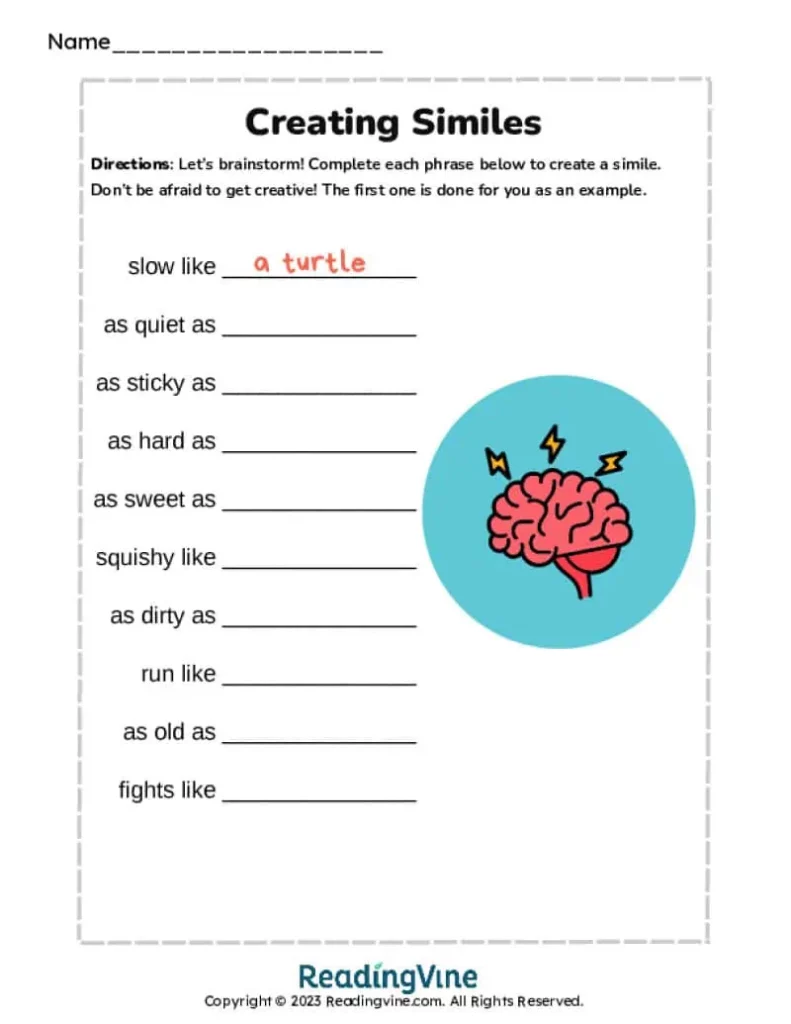
5th-6th Grade Create Your Own Similes Activity
Create your own similes by writing original comparisons using like or as for each category or prompt to practice figurative composition.

3rd-4th Grade Creating Similes Printable Worksheet
Create original similes by completing sentences with like or as comparisons for each prompted topic or situation provided.
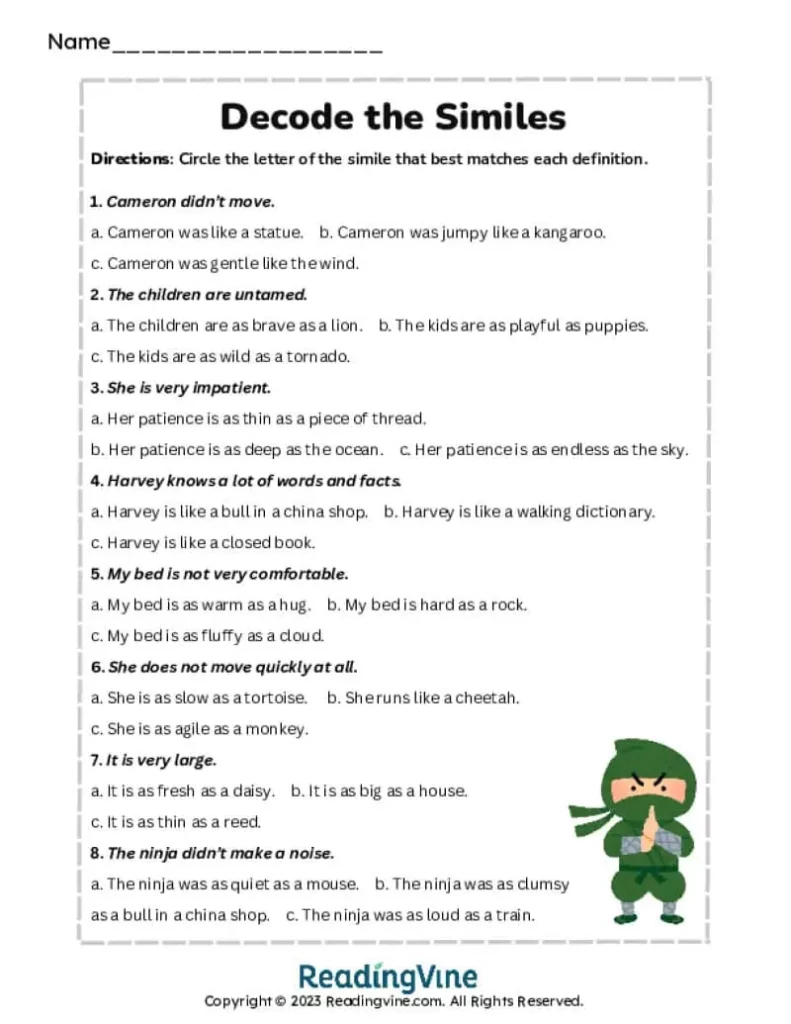
5th-6th Grade Decode the Similes Multiple Choice Activity
Circle the letter of the simile that best matches each definition to demonstrate understanding of comparative meanings using like or as.