
 = Partner Site
Reading Comprehension
Reading comprehension is the ability to understand, interpret, and analyze what you read. It’s not just about decoding words—it’s about making meaning from text. Strong readers use a toolkit of skills: identifying the main idea, understanding text structure, making inferences, analyzing characters, and recognizing how authors use language to achieve their purpose. These skills work together to help readers deeply understand any text they encounter.
For Teachers
Reading comprehension skills build on each other. Start with concrete skills like identifying main idea and text structure, then move to more abstract skills like theme and inference. Use the examples pages below for direct instruction, modeling, and guided practice.
For Parents
Help your child become a stronger reader by asking questions during and after reading: “What was that mostly about? Why do you think the character did that? What might happen next?” These simple questions build the comprehension skills below.
Reading Comprehension Worksheets
Printable worksheets to practice main idea, theme, text structure, cause and effect, and other essential reading skills.
Reading Comprehension Skills
Click any skill below to see 50+ examples, teaching tips, common mistakes, and FAQs.
Understanding the Text
Core skills for comprehending what a text is about and how it’s organized.
Main Idea
The most important point or central message of a text.
50+ examplesText Structure
How authors organize information: description, sequence, cause/effect, compare/contrast, problem/solution.
50+ examplesCause and Effect
Understanding why events happen and what results from them.
50+ examplesContext Clues
Using surrounding text to figure out the meaning of unfamiliar words.
50+ examplesFact vs. Opinion
Distinguishing provable statements from personal beliefs.
50+ examplesSummarizing
Condensing a text to its most important points.
30+ examplesAnalyzing Deeper Meaning
Skills for understanding what’s beneath the surface—themes, inferences, and author choices.
Theme
The central message or life lesson a story conveys.
50+ examplesTheme vs. Topic
Understanding the difference between subject and message.
Examples & comparisonsAuthor’s Purpose
Why an author writes: to persuade, inform, or entertain.
50+ examplesMaking Inferences
Drawing conclusions from clues and evidence in the text.
45+ examplesMain Idea vs. Theme
Distinguishing what a text is about from its life lesson.
Examples & comparisonsAnalyzing Story Elements
Skills for understanding characters, perspective, and narrative structure in fiction.
Point of View
The perspective from which a story is told: first, second, or third person.
50+ examplesCharacter Traits
Qualities and characteristics that define how a character thinks, feels, and acts.
200+ traitsStory Elements
Setting, plot, characters, conflict, and resolution.
45+ examplesConflict Types
Character vs. character, nature, society, self, and more.
50+ examplesPlot Structure
Exposition, rising action, climax, falling action, resolution.
50+ examplesSetting
When and where a story takes place.
50+ examplesHow Reading Comprehension Skills Connect
Main idea = what a text is about (specific to that text). Theme = the life lesson (universal message).
Sequence = order of events. Cause/effect = one event MAKES another happen.
Inference = conclusion about what’s happening. Prediction = guess about what will happen.
Topic = 1-2 words (subject). Main idea = complete sentence (what about the topic).
Reading Comprehension Skills by Grade Level
Focus on: Main idea, retelling, character traits, asking questions, making predictions, simple cause/effect
Focus on: Theme, text structure, point of view, inference, author’s purpose, comparing texts, summarizing
Focus on: Complex themes, analyzing arguments, evaluating evidence, unreliable narrators, author’s craft, text analysis
Reading Comprehension Worksheets
Free printable worksheets to practice essential reading comprehension skills.
Reading Comprehension Anchor Charts
Free printable anchor charts to support reading instruction. Click any chart to download the PDF.
 Main Idea
 Context Clues
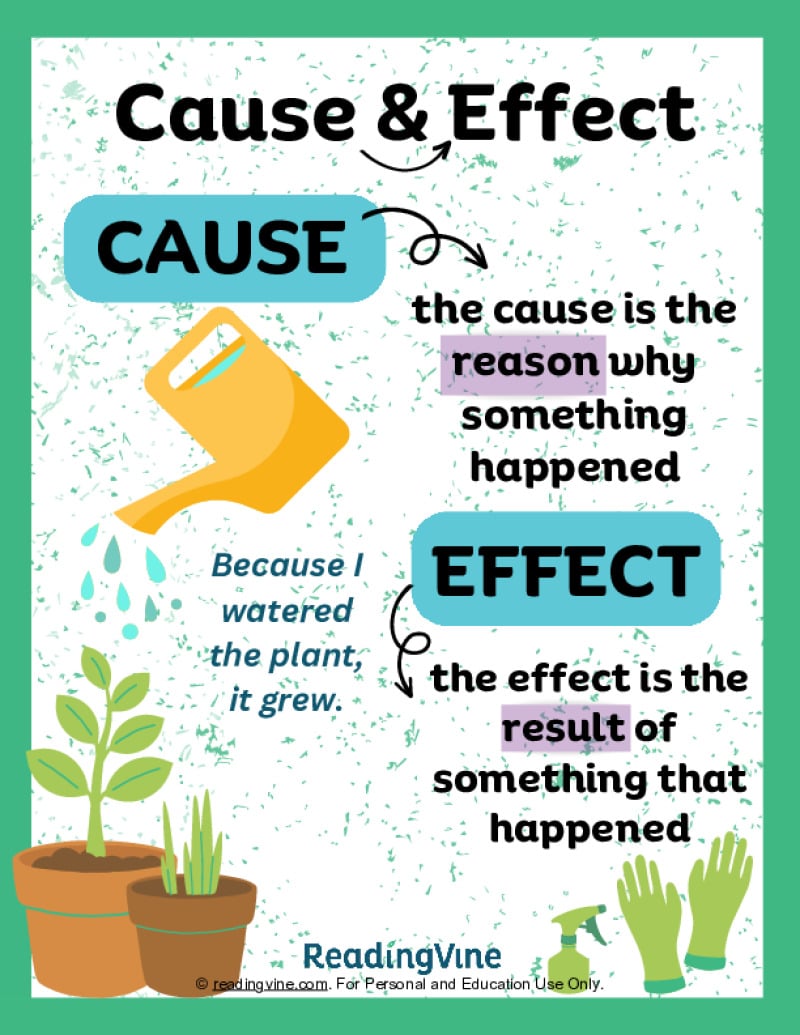 Cause & Effect
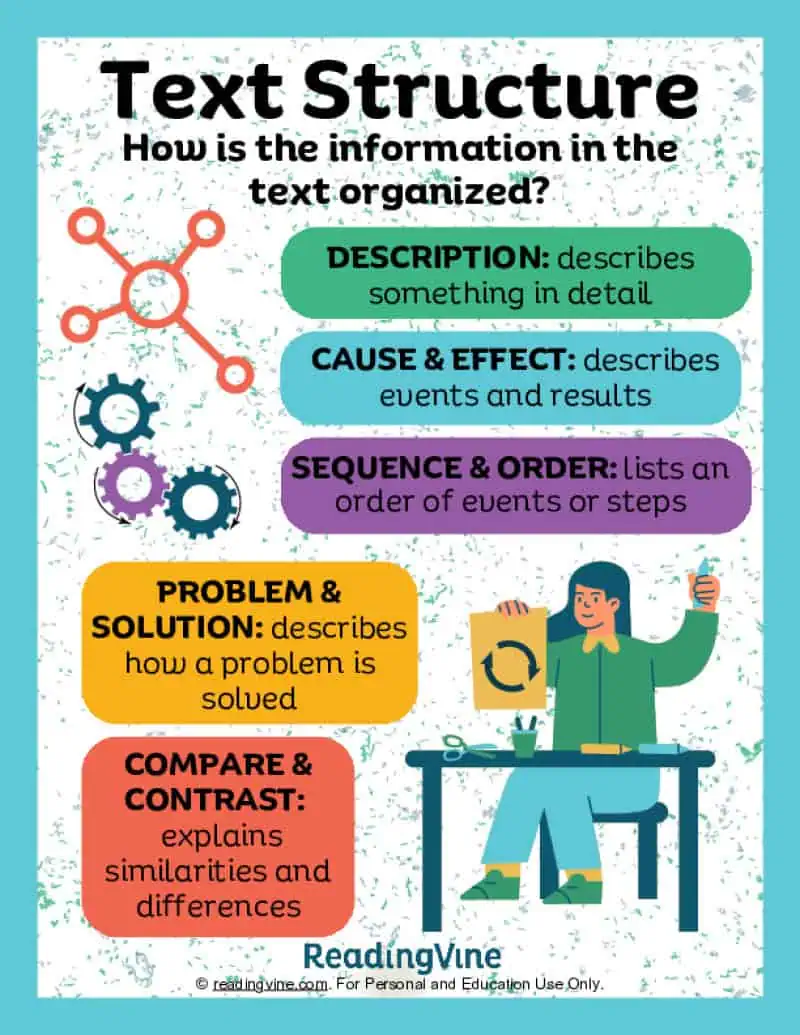 Text Structure
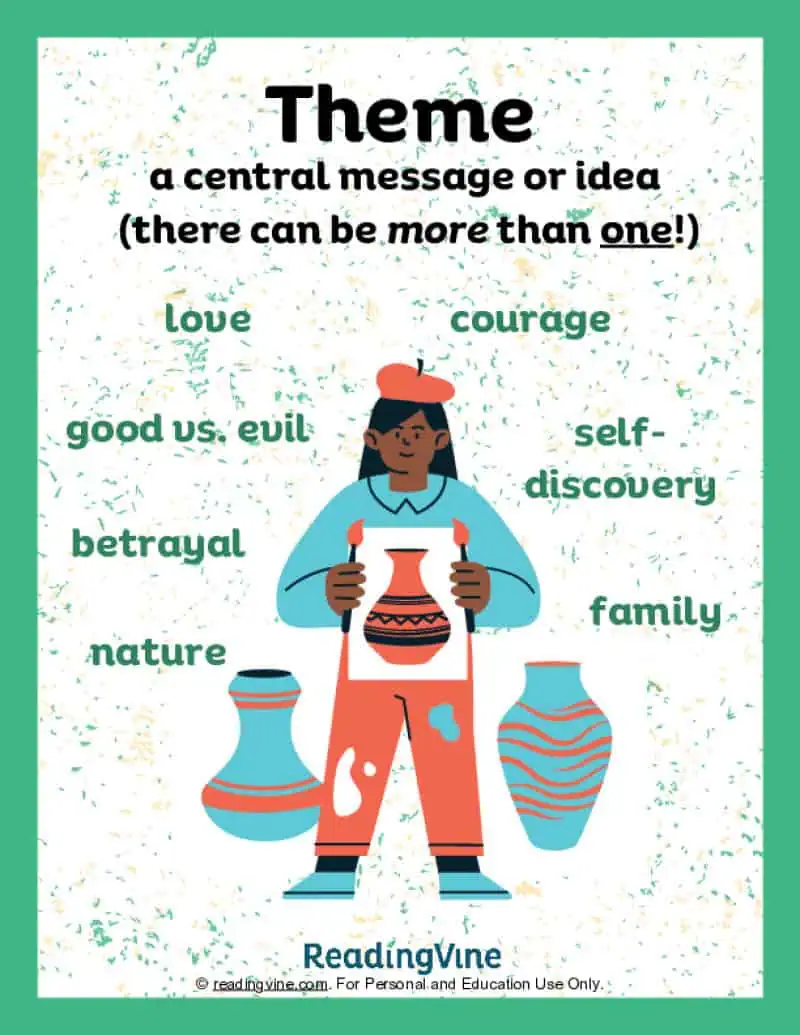 Theme
Theme
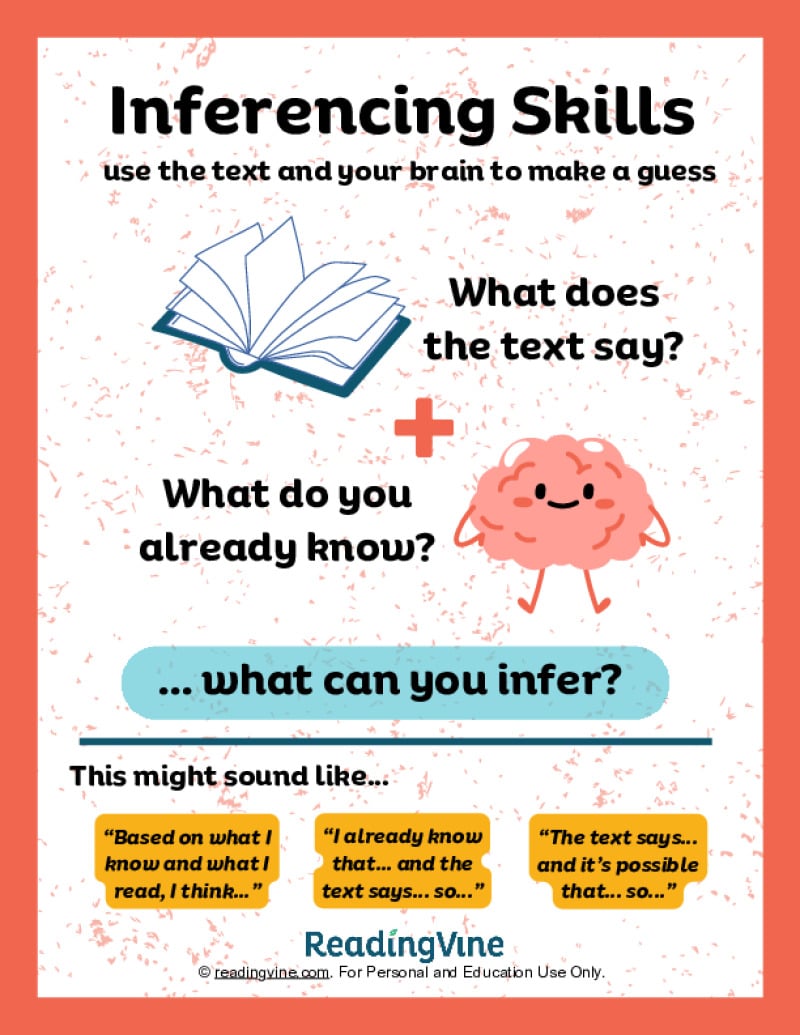 Making Inferences
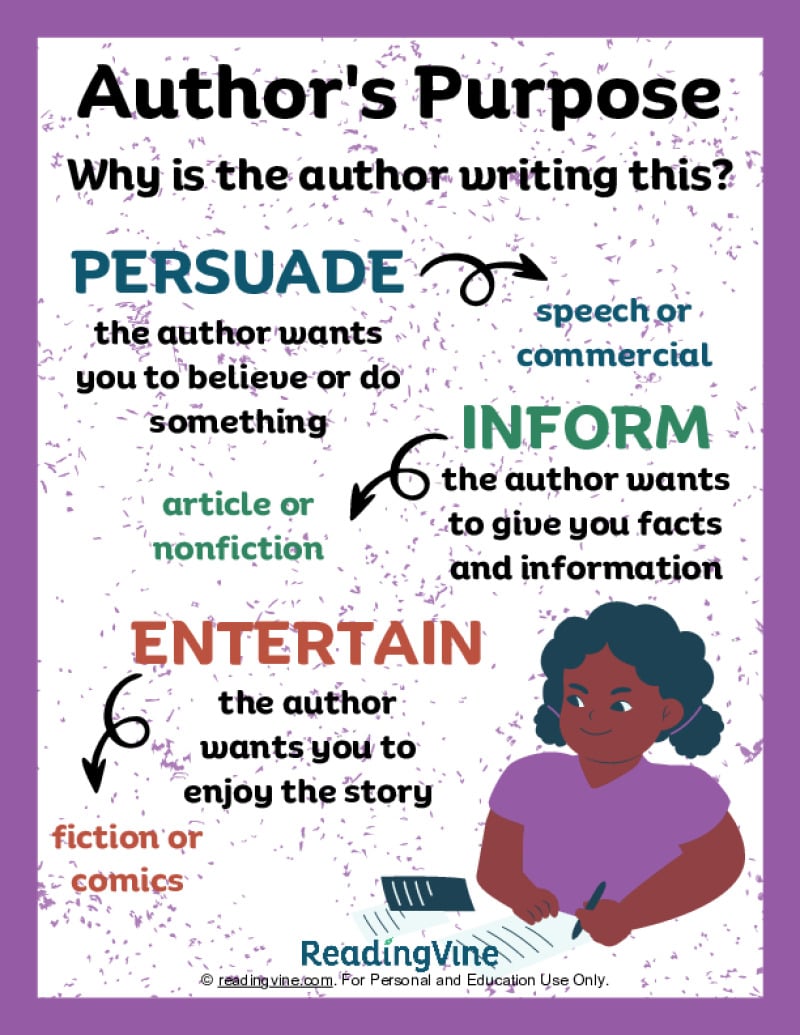 Author’s Purpose (K-5)
 Author’s Purpose (6-12)
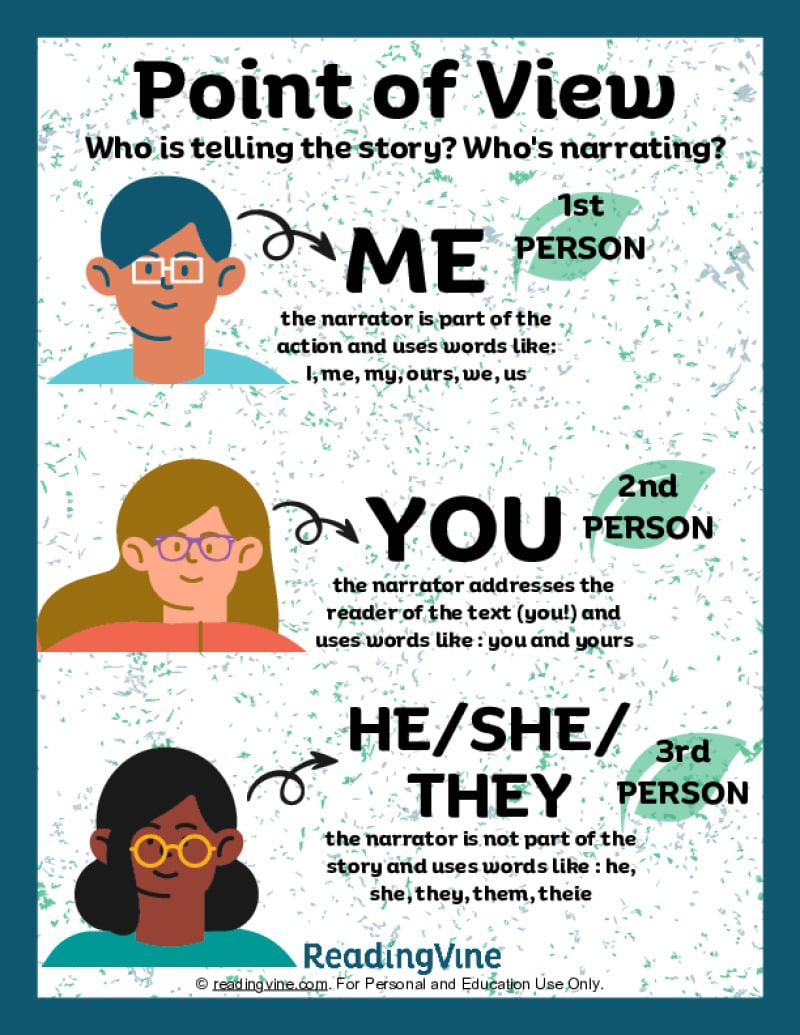 Point of View (K-5)
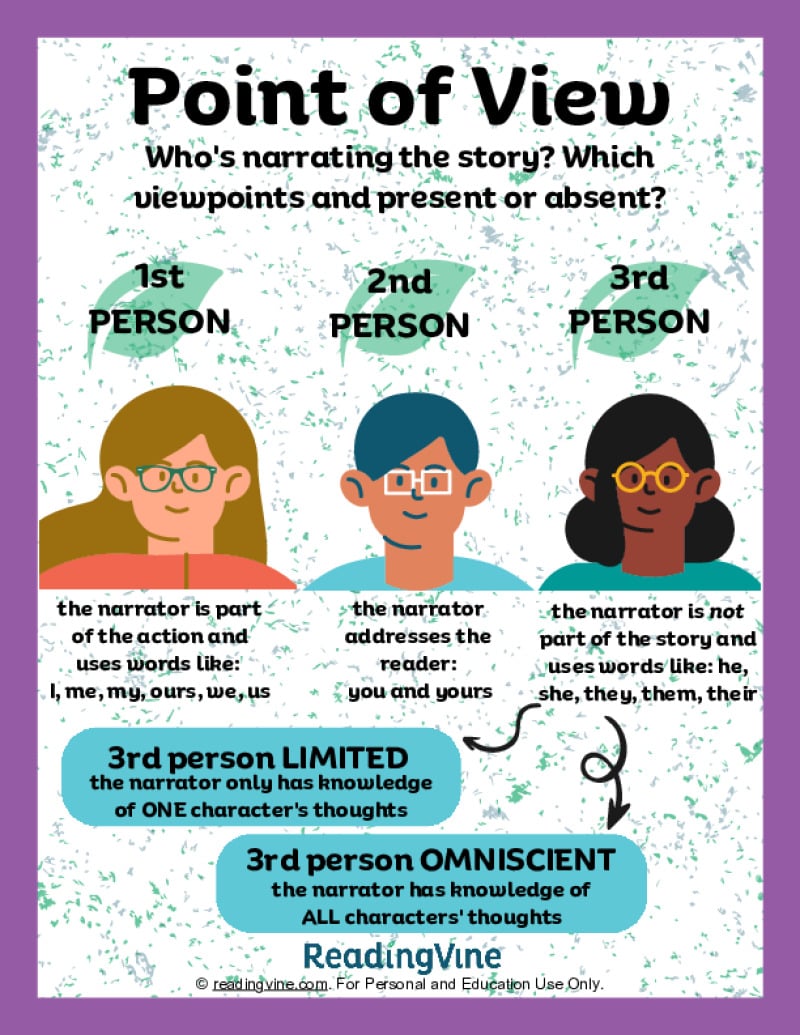 Point of View (6-12)
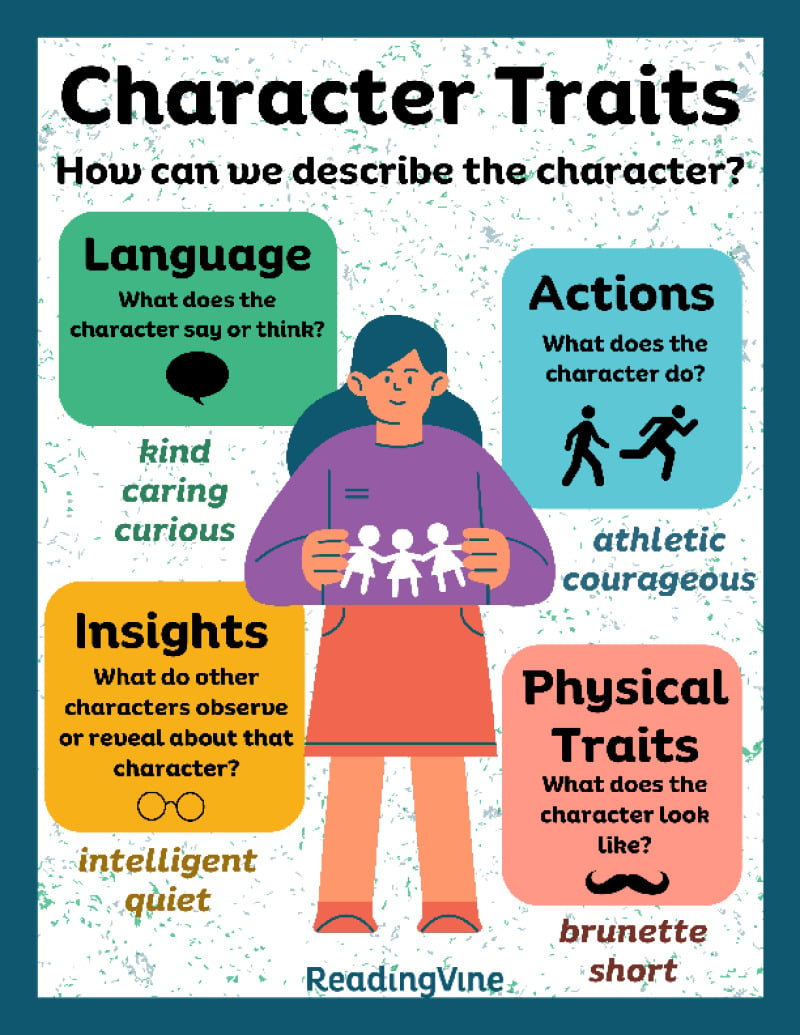 Character Traits List
 Identifying Traits
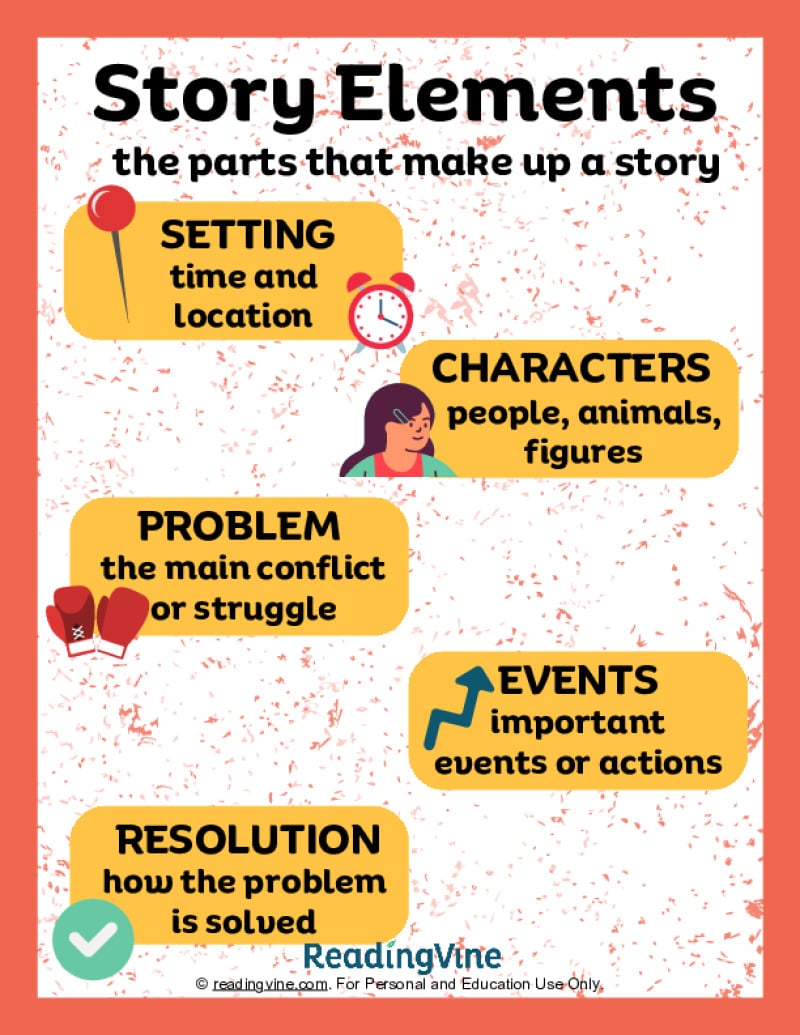 Story Elements (K-5)
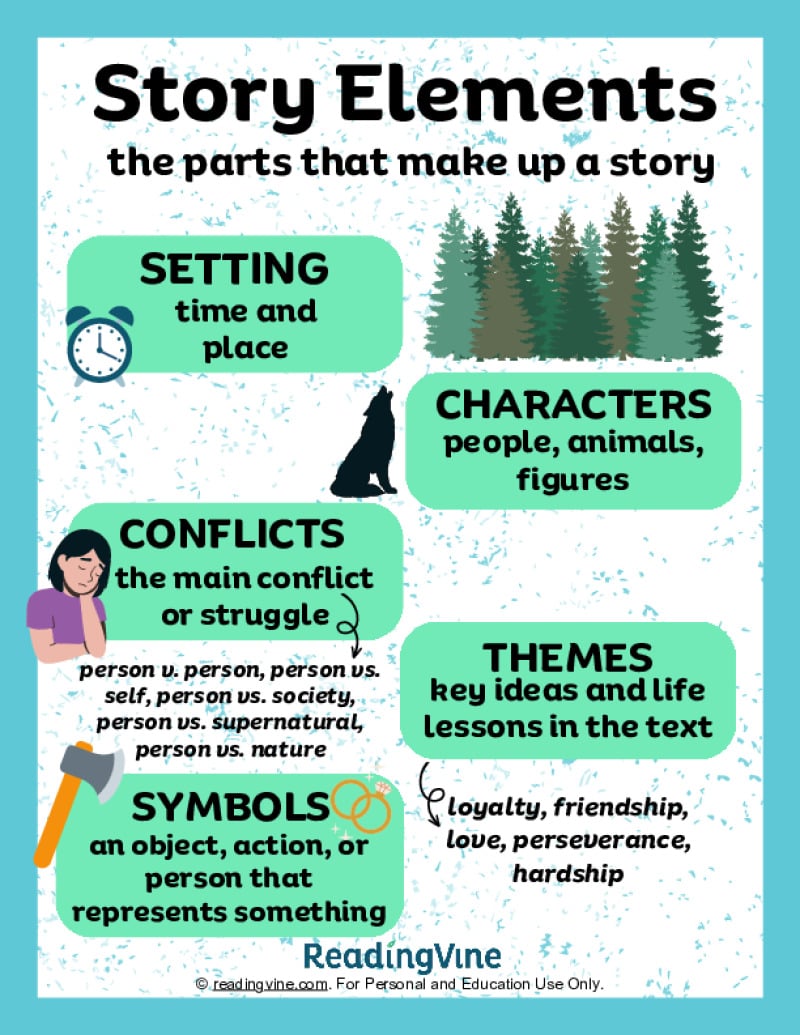 Story Elements (6-12)
Tips for Teaching Reading Comprehension
Show students what good readers do: pause, question, reread, connect. Make your comprehension process visible through think-alouds.
Introduce one skill at a time with clear examples. Then have students apply it to multiple texts until it becomes automatic.
Mix literal questions (right there in the text), inferential questions (read between the lines), and evaluative questions (what do you think?).
Match organizers to skills: Venn diagrams for compare/contrast, flow charts for sequence, webs for main idea and details.
Comprehension depends on what readers already know. Preview vocabulary, discuss the topic, and activate prior knowledge before reading.
Train students to support their answers with evidence from the text. This deepens comprehension and prepares them for assessments.
Reading Comprehension: Frequently Asked Questions
What is reading comprehension?
Reading comprehension is the ability to understand, interpret, and analyze what you read. It goes beyond decoding words to include understanding main ideas, making inferences, analyzing structure, and evaluating author choices. Strong comprehension allows readers to learn from texts, think critically, and connect ideas.
What are the most important reading comprehension skills?
Key reading comprehension skills include: identifying main idea (what a text is mostly about), understanding text structure (how information is organized), making inferences (reading between the lines), analyzing theme (the life lesson), understanding cause and effect, using context clues for vocabulary, and identifying author’s purpose.
How can I improve my child’s reading comprehension?
Ask questions before, during, and after reading: “What do you think this will be about? Why did the character do that? What was the main idea?” Encourage your child to make predictions, visualize scenes, and connect the text to their own experiences. Read aloud together and discuss the text, even with older children.
What’s the difference between main idea and theme?
Main idea is what a specific text is mostly about—stated in one sentence. Theme is a universal life lesson or message that applies beyond the text. For example, a story’s main idea might be “A boy learns to overcome his fear of swimming,” while the theme might be “Facing our fears helps us grow.”
What reading comprehension skills are taught in each grade?
Grades K-2 focus on retelling, main idea, character traits, and simple cause/effect. Grades 3-5 add theme, text structure, point of view, inference, and author’s purpose. Grades 6-8 emphasize analyzing complex themes, evaluating arguments, and examining author’s craft. Skills build on each other across grades.
Why do students struggle with reading comprehension?
Common reasons include: limited vocabulary (can’t understand enough words), lack of background knowledge (no context to connect new information), weak decoding skills (too much effort on reading words leaves little for meaning), and not knowing comprehension strategies (don’t know how to monitor understanding or fix confusion).