
 = Partner Site
Character Traits
Character traits are the qualities that describe a person’s personality—how they think, act, and interact with others. Whether you’re analyzing a character in a novel, writing a story, or building vocabulary, understanding character traits is essential. This guide includes 100+ character trait words (positive and negative), plus examples showing how to identify traits from a character’s actions, words, and thoughts.
For Teachers
Start by distinguishing character traits from feelings and physical descriptions—this is where most students struggle. Use the trait lists below for vocabulary building, and teach students to find TEXT EVIDENCE that proves a trait.
For Parents
While reading together, pause and ask: “What kind of person is this character? How do you know?” Help your child move beyond “nice” and “mean” to more specific trait words like “generous,” “loyal,” or “jealous.”
What Are Character Traits?
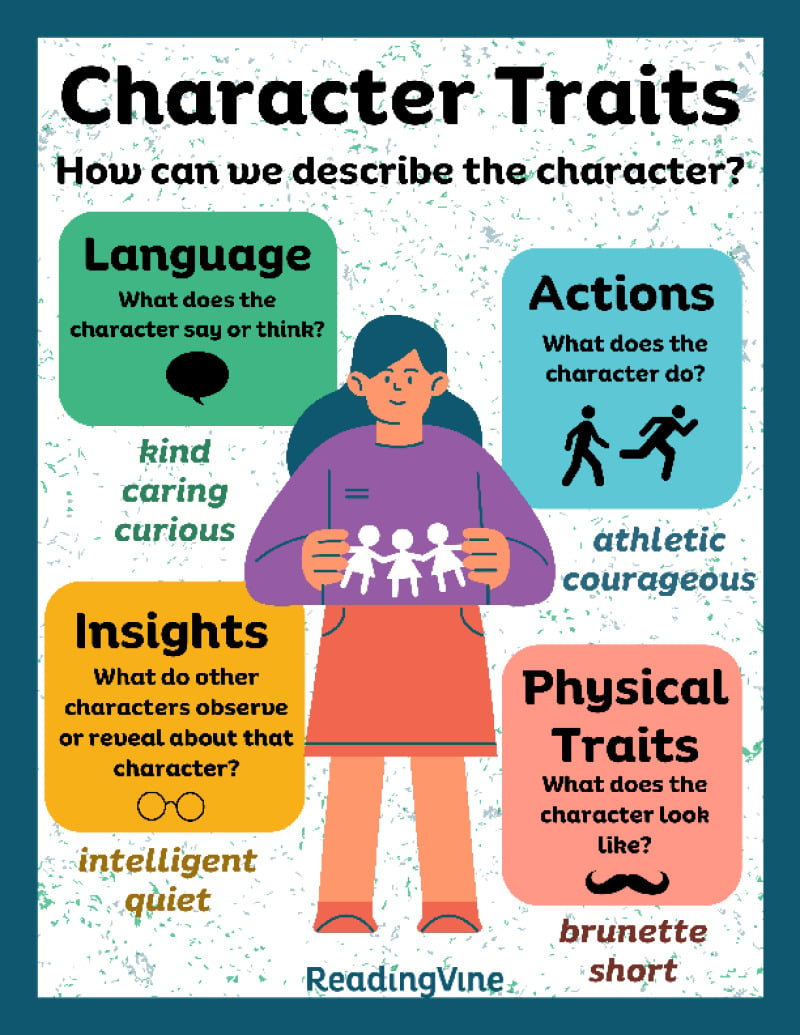
Character traits are the consistent qualities that describe a person’s personality. Unlike feelings (which change moment to moment) or physical features (which describe appearance), character traits describe WHO someone is at their core—how they typically behave, think, and treat others. A character might feel angry in one scene but have the trait of being patient overall. Readers identify character traits by examining what characters say, do, think, and how others react to them.
Character Traits Anchor Charts
Use these printable anchor charts to help students identify and describe character traits.

Character Traits vs. Feelings vs. Physical Descriptions
A consistent personality quality.
brave, honest, selfish, kind, stubbornA temporary emotional state.
angry, sad, excited, scared, happyHow someone looks.
tall, blonde, young, freckled, athleticKey test: Is this quality always true about the character, or just true right now? “Scared” is a feeling (temporary). “Cowardly” is a trait (consistent pattern of behavior).
Character Traits by Category
Jump to any section, or scroll through all character trait lists and examples below.
Positive Traits
Admirable qualities
60+ traitsNegative Traits
Flaws and weaknesses
60+ traitsNeutral Traits
Neither good nor bad
20+ traitsHow to Identify
Actions, words, thoughts
4 methodsExamples by Grade
Text evidence practice
24 examplesCommon Mistakes
Errors to avoid
5 mistakesPositive Character Traits List
Admirable qualities that people respect and value. Use these words to describe heroes, protagonists, and characters readers should admire.
Courage & Strength
Brave
Willing to face danger or difficulty without fear.
Courageous
Able to do things that frighten most people.
Determined
Firmly committed to achieving a goal despite obstacles.
Resilient
Able to recover quickly from setbacks or hardship.
Confident
Believes in their own abilities and judgment.
Persistent
Keeps trying even when things get difficult.
Adventurous
Willing to try new and exciting experiences.
Bold
Not afraid to take risks or speak up.
Kindness & Compassion
Kind
Friendly, generous, and considerate toward others.
Compassionate
Shows concern for the suffering of others.
Generous
Willingly gives time, money, or help to others.
Caring
Shows concern for the well-being of others.
Empathetic
Understands and shares the feelings of others.
Thoughtful
Considers others’ needs and feelings.
Helpful
Ready and willing to assist others.
Nurturing
Cares for and encourages growth in others.
Honesty & Integrity
Honest
Tells the truth and doesn’t deceive others.
Trustworthy
Can be relied upon to keep promises and secrets.
Loyal
Faithful and devoted to friends, family, or causes.
Sincere
Genuine and free from pretense or deceit.
Fair
Treats everyone equally and justly.
Principled
Acts according to strong moral beliefs.
Dependable
Can be counted on to follow through.
Reliable
Consistently does what they say they will do.
Intelligence & Creativity
Intelligent
Quick to learn, understand, and apply knowledge.
Wise
Uses experience and knowledge to make good decisions.
Curious
Eager to learn and explore new things.
Creative
Uses imagination to create new ideas or things.
Clever
Quick-witted and able to solve problems.
Resourceful
Finds quick and clever ways to overcome difficulties.
Perceptive
Notices and understands things quickly.
Logical
Thinks clearly and reasons well.
Social & Leadership
Friendly
Warm, approachable, and easy to get along with.
Respectful
Shows consideration for others’ feelings and rights.
Cooperative
Works well with others toward a common goal.
Patient
Able to wait calmly without getting frustrated.
Humble
Modest and not boastful about achievements.
Polite
Shows good manners and courtesy.
Charming
Pleasant and likeable in manner.
Inspiring
Motivates others to do or feel something positive.
Work Ethic & Responsibility
Hardworking
Puts great effort into tasks and responsibilities.
Responsible
Takes ownership of duties and actions.
Organized
Keeps things in order and plans ahead.
Diligent
Careful and thorough in completing work.
Ambitious
Has strong desire to succeed and achieve goals.
Dedicated
Committed to a task, purpose, or cause.
Punctual
Arrives and completes things on time.
Self-disciplined
Controls impulses and stays focused on goals.
Positivity & Joy
Optimistic
Tends to see the positive side of situations.
Cheerful
Noticeably happy and positive in attitude.
Enthusiastic
Shows intense enjoyment and interest.
Playful
Lighthearted and fun-loving in nature.
Grateful
Appreciates what they have and shows thanks.
Witty
Uses humor in a clever, amusing way.
Easygoing
Relaxed and not easily upset or worried.
Hopeful
Believes that good things will happen.
Negative Character Traits List
Flaws and weaknesses that create conflict in stories. Use these to describe antagonists, villains, or to show a character’s areas for growth.
Dishonesty & Deception
Dishonest
Lies, cheats, or deceives others.
Deceitful
Deliberately misleads others to get what they want.
Manipulative
Controls or influences others in unfair ways.
Sneaky
Acts in a secretive, underhanded way.
Untrustworthy
Cannot be relied upon to tell the truth or keep promises.
Two-faced
Acts differently around different people; insincere.
Selfishness & Greed
Selfish
Cares only about their own needs and wants.
Greedy
Wants more than their fair share, especially money.
Jealous
Envious of what others have or achieve.
Envious
Wants what others have; resentful of their success.
Stingy
Unwilling to give or spend; miserly.
Self-centered
Focused on themselves with little concern for others.
Cruelty & Meanness
Cruel
Willfully causes pain or suffering to others.
Mean
Unkind and hurtful to others.
Spiteful
Deliberately hurts others out of ill will.
Vindictive
Seeks revenge; holds grudges.
Heartless
Shows no compassion or pity for others.
Ruthless
Shows no mercy; willing to harm others to succeed.
Arrogance & Pride
Arrogant
Has an exaggerated sense of their own importance.
Boastful
Brags excessively about achievements.
Conceited
Excessively proud of oneself; vain.
Vain
Overly focused on appearance or achievements.
Condescending
Acts superior; talks down to others.
Egotistical
Thinks they are better than everyone else.
Weakness & Fear
Cowardly
Lacks courage to face danger or difficulty.
Timid
Easily frightened; lacks confidence.
Weak-willed
Easily influenced or gives up easily.
Insecure
Lacks confidence in themselves.
Gullible
Easily deceived or tricked by others.
Indecisive
Unable to make decisions; constantly uncertain.
Behavior & Attitude
Lazy
Unwilling to work or put in effort.
Stubborn
Refuses to change their mind or behavior.
Impatient
Easily annoyed when things take time.
Rude
Lacks manners; impolite to others.
Careless
Doesn’t pay attention; makes avoidable mistakes.
Irresponsible
Doesn’t take duties or obligations seriously.
Neutral Character Traits List
These traits are neither clearly positive nor negative—they depend on context. Use these for complex, realistic characters.
Quiet
Doesn’t talk much; reserved in conversation.
Serious
Solemn; not given to joking around.
Independent
Prefers to do things alone; self-reliant.
Competitive
Wants to win or be the best.
Cautious
Careful to avoid potential problems or dangers.
Mysterious
Difficult to understand; keeps secrets.
Reserved
Slow to reveal feelings or opinions.
Skeptical
Tends to question or doubt things.
Emotional
Feels and expresses emotions strongly.
Talkative
Enjoys talking; speaks a lot.
Blunt
Speaks directly without softening words.
Perfectionist
Demands the highest standards in everything.
How to Identify Character Traits
Authors show character traits through four main methods. Look for text evidence in each area.
What the Character DOES
Actions reveal character. A character who shares their lunch shows generosity. A character who pushes to the front of the line shows selfishness.
“Maya stayed after school every day to help her struggling classmate with math.” → Helpful, patient
What the Character SAYS
Dialogue reveals personality. Notice what characters talk about, how they speak to others, and whether their words match their actions.
“‘I don’t care what anyone thinks,’ Jake said. ‘I’m going to do it my way.'” → Independent, confident
What the Character THINKS
Internal thoughts reveal true feelings and motivations. This is especially useful in first-person narration.
“Sarah couldn’t stop worrying about the test, even though she’d studied for hours.” → Anxious, hardworking
How OTHERS React
Other characters’ responses provide clues. If everyone trusts a character with secrets, they’re probably trustworthy.
“Whenever there was a problem, the whole team looked to Marcus for answers.” → Wise, respected
Character Traits Examples with Text Evidence
Practice identifying character traits from actions, words, and thoughts.
Grades K-2
“Ben shared his crayons with the new student who didn’t have any.”
Trait: Kind, generous — He gave something of his to help someone else.
“Emma kept practicing her spelling words until she got them all right.”
Trait: Determined, hardworking — She didn’t give up.
“‘That’s mine!’ shouted Tyler, grabbing the ball from his little sister.”
Trait: Selfish — He took something without sharing.
“Lily told the truth even though she knew she might get in trouble.”
Trait: Honest, brave — She chose truth over avoiding consequences.
“Sam always said ‘please’ and ‘thank you’ to everyone he met.”
Trait: Polite, respectful — He used good manners consistently.
“When her friends wanted to be mean to the new kid, Rosa said no and walked away.”
Trait: Brave, principled — She stood up for what was right.
Grades 3-5
“Despite being afraid of heights, Marcus climbed the tree to rescue his neighbor’s cat.”
Trait: Brave, helpful — He overcame his fear to help someone.
“‘I studied all week,’ Priya thought. ‘I know I can ace this test.'”
Trait: Confident, hardworking — She prepared and believes in herself.
“Jordan blamed his teammate for the loss, even though Jordan had missed the winning shot.”
Trait: Dishonest, unfair — He avoided responsibility by blaming others.
“Everyone in class asked Kenji for help because he always explained things patiently.”
Trait: Patient, helpful — Others’ reactions show his qualities.
“Aaliyah noticed the new girl sitting alone and invited her to join their group.”
Trait: Thoughtful, kind — She noticed and acted on another’s need.
“‘Why should I help?’ Derek muttered. ‘It’s not my problem.'”
Trait: Selfish, uncaring — His words show he only thinks of himself.
Grades 6-8
“Though she disagreed with the group’s decision, Samira voiced her opinion respectfully and then supported the final choice.”
Trait: Respectful, mature — She expressed herself while supporting the team.
“After losing the election, Jasmine congratulated the winner and offered to help.”
Trait: Gracious, mature — She handled defeat with dignity.
“Damon spent hours researching both sides of the issue before forming his opinion.”
Trait: Thoughtful, open-minded — He considers all perspectives.
“When Miguel saw his friend being bullied, he stepped in and said, ‘Leave him alone.'”
Trait: Brave, loyal — He risked himself for his friend.
“Sofia kept her promise to volunteer even when a better offer came along.”
Trait: Reliable, principled — She honored her word despite temptation.
“‘I’m definitely the smartest one here,’ Ethan announced while others struggled.”
Trait: Arrogant, boastful — He brags instead of helping.
Common Character Traits Mistakes
These are the errors students make most often when identifying character traits.
1 Confusing Traits with Feelings
“The character’s trait is angry.”
“The character feels angry, but his trait is hot-tempered.”
Remember: Feelings are temporary (happy, sad). Traits are consistent qualities. Ask: “Is this always true, or just true right now?”
2 Confusing Traits with Physical Descriptions
“The character’s traits are tall, blonde, and athletic.”
“The character is physically tall and athletic. Her traits are competitive and determined.”
Remember: Physical descriptions tell how someone looks. Character traits tell who someone is on the inside.
3 Using Vague Words Like “Nice” or “Mean”
“The character is nice.”
“The character is generous, thoughtful, and compassionate.”
Remember: “Nice” and “mean” are too vague. Push for specific traits that paint a clearer picture.
4 Identifying Traits Without Text Evidence
“I think the character is brave.”
“The character is brave because she stood up to the bully even though she was scared.”
Remember: Always support trait claims with evidence from the text.
5 Assuming Characters Have Only One Trait
“The character’s trait is brave.”
“The character is brave, loyal, and sometimes impulsive.”
Remember: Well-written characters have multiple traits. A character can be both generous AND stubborn.
Tips for Teaching Character Traits
This is the #1 source of confusion. Use the “always or right now?” test before any other instruction.
Create a classroom character traits anchor chart and add words as you encounter them.
Train students to use: “[Character] is [trait] because [evidence from text].”
Help students track trait evidence across a text to see complexity and change.
Teach students to look in: actions, dialogue, thoughts, and others’ reactions.
This deepens analysis and reinforces trait vocabulary.
Character Traits: Frequently Asked Questions
What are character traits in simple terms?
Character traits are words that describe a person’s personality—how they usually act, think, and treat others. Unlike feelings (which change moment to moment), traits are consistent qualities that are always or almost always true about a person.
What is the difference between character traits and feelings?
Character traits are consistent personality qualities (brave, kind, selfish). Feelings are temporary emotional states (angry, happy, scared). A simple test: Is this always true about the character, or just true right now?
What are some examples of positive character traits?
Positive traits include: brave, kind, honest, loyal, generous, compassionate, hardworking, responsible, patient, creative, curious, respectful, humble, determined, and optimistic.
What are some examples of negative character traits?
Negative traits include: selfish, dishonest, cruel, lazy, arrogant, jealous, greedy, stubborn, impatient, rude, cowardly, and manipulative.
How do I identify character traits in a story?
Look at four sources: (1) What the character does, (2) What the character says, (3) What the character thinks, (4) How others react to them. Always support your trait identification with specific evidence from the text.
What grade level should students learn about character traits?
Students begin in K-1 with simple words like kind, brave, and selfish. By grades 3-5, students use sophisticated vocabulary and text evidence. In middle school, students analyze complex characters with multiple traits.