
 = Partner Site
Inference Worksheets
There’s no doubt that inferencing skills are some of the most challenging to teach (and learn) in any classroom. Students need close reading skills, as well as the confidence, to make a strong inference about what they’re reading. If you’re looking for resources on teaching this skill to your students, you’ve come to the right place! Below, you’ll read more about making inferences as well as gain access to our printable inference worksheets!
Inferencing skills are all about using what’s in the text and what a learner already knows in order to create a conclusion. For this reason, students will need to exercise flexibility and critical thinking skills.
Inferencing is the key to comprehension, especially as students grow as readers and navigate more complex texts.
Instructional Approach
At first, practicing inferencing skills may leave students feeling confused or “stuck.”. They may also express doubt about the ideas they have. After all, some texts will lend themselves to prior knowledge better than others and not all students will approach a text with the exact same background knowledge.
By contrast, other students may make wild guesses based on their creative and imaginative thinking. It truly takes time and patience to hone inferencing skills.
Still, it is important to emphasize (again and again) that inferencing skills depend on two ideas: using one’s background knowledge and what the text says to form a conclusion or estimate.
This is in contrast to predicting, which considers what will happen in the future. Inferencing depends on what has already happened and how that may lead to the next event or resolution.
Remind students that inferencing is a real-world skill. We use our inferencing skills when we see a weather report. If the weather forecaster says it will rain based on the data they have, we can infer that it may be a good idea to keep an umbrella and rain jacket with us that day. If we see that many of our classmates are in need of tissues, it may be that a “bug” is going around and we should therefore wash our hands more often.
When it comes to reading, it is these cognitive processes, in combination with what readers encounter in a text, that enables them to use their inferencing skills.
The conclusions and estimates readers make as a result of what they know and what they read must be informed by logic, reason, and sensibility.
Here are a few simple reminders for students as they practice their inferencing skills:
- Try and Try, Again!: It’s important to exercise flexibility and think through all possible options, within reason. Students should aim to generate reasonable conclusions so that they can determine possible outcomes based on what they know and the clues in the text. Students should be able to justify their conclusions.
- Use Language to Confirm Inferencing Skills: In addition to coaching students to use inference skills, providing them with the language necessary to
- Reflect: It is also important for students to use metacognitive skills to reflect on their guesses. This is an important part of how they understand their skills and where they can improve.
One simple way to begin practicing is to select a short story and decide on a point at which the story can pause. At that point, ask students to make an inference (based on what the text says and what they know) about what might happen next. Finish the story so they can reflect on the accuracy of their inferences. This is a worthy whole-class lesson that all students can enjoy.
An important part of learning inferencing skills is to keep the work fun! By enjoying a range of high-interest texts, students can activate their prior knowledge and make informed inferences when reading different stories. Now, scroll below to get started with ReadingVine’s printable inference worksheets!
Inference

7th Grade Inferencing Skills Activity
Read scenarios and demonstrate inferencing skills through questions requiring logical deductions supported by textual evidence.

8th Grade Inferences Writing Activity
Practice inferencing through a writing activity that requires reading passages and explaining logical conclusions with textual support.
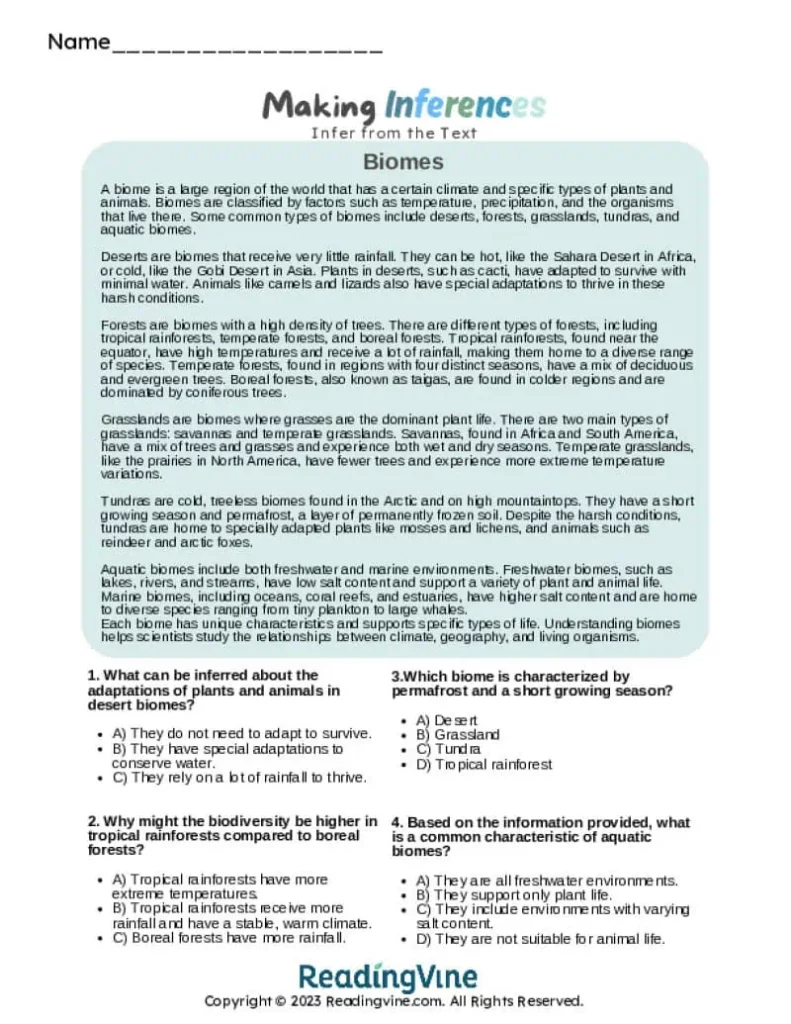
8th Grade Inferencing Skills Reading Worksheet
Read about biomes and answer inferencing questions by analyzing scientific text and drawing evidence-based logical conclusions.
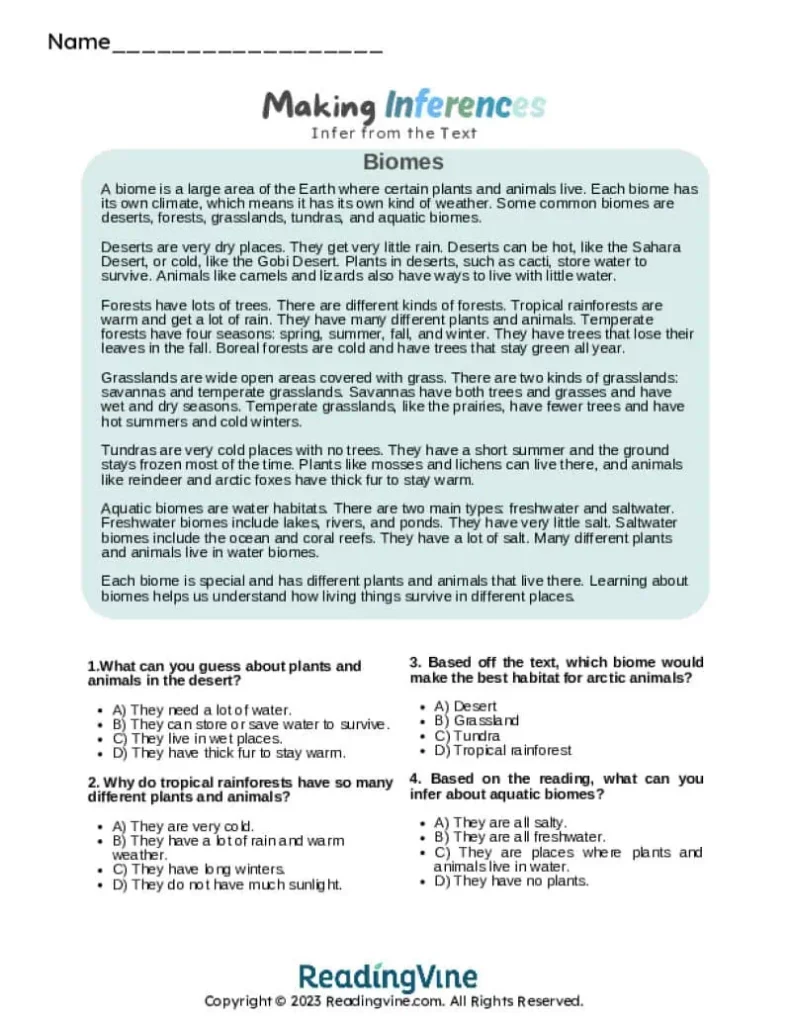
Biomes Making Inferences Reading Activity
Read about biomes and answer questions by making inferences that integrate scientific content with analytical reasoning skills.
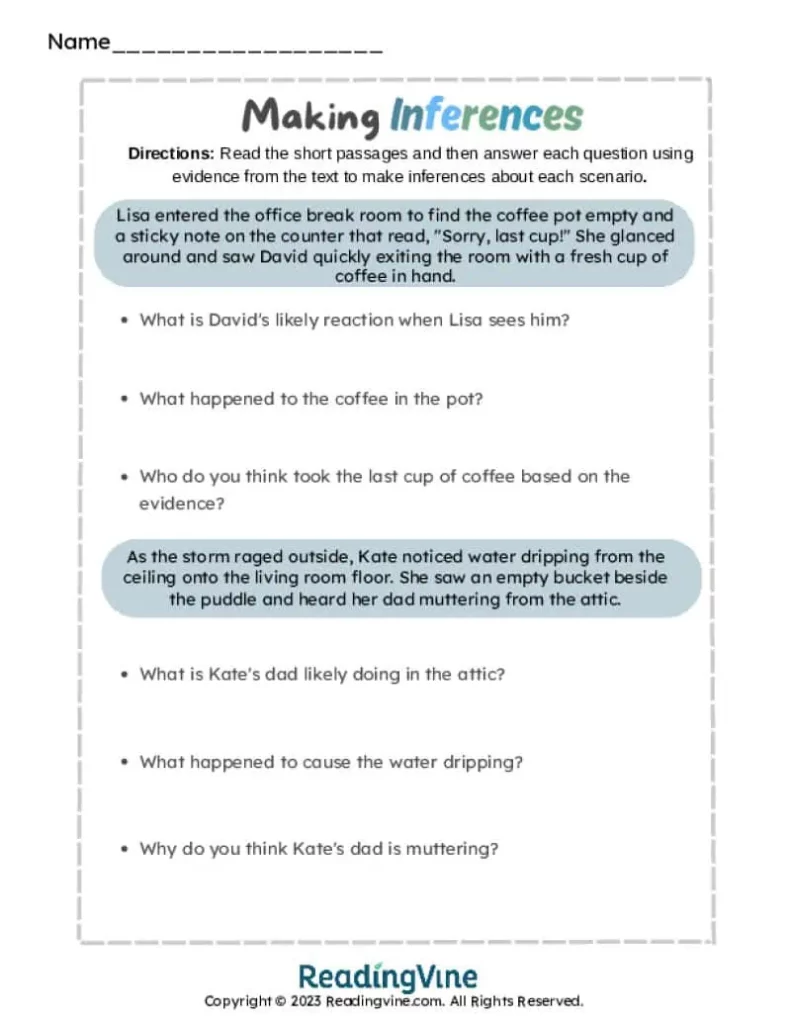
Fifth Grade Making Inferences Worksheet
Read scenarios and answer questions by making inferences that require analyzing textual evidence and drawing logical conclusions.
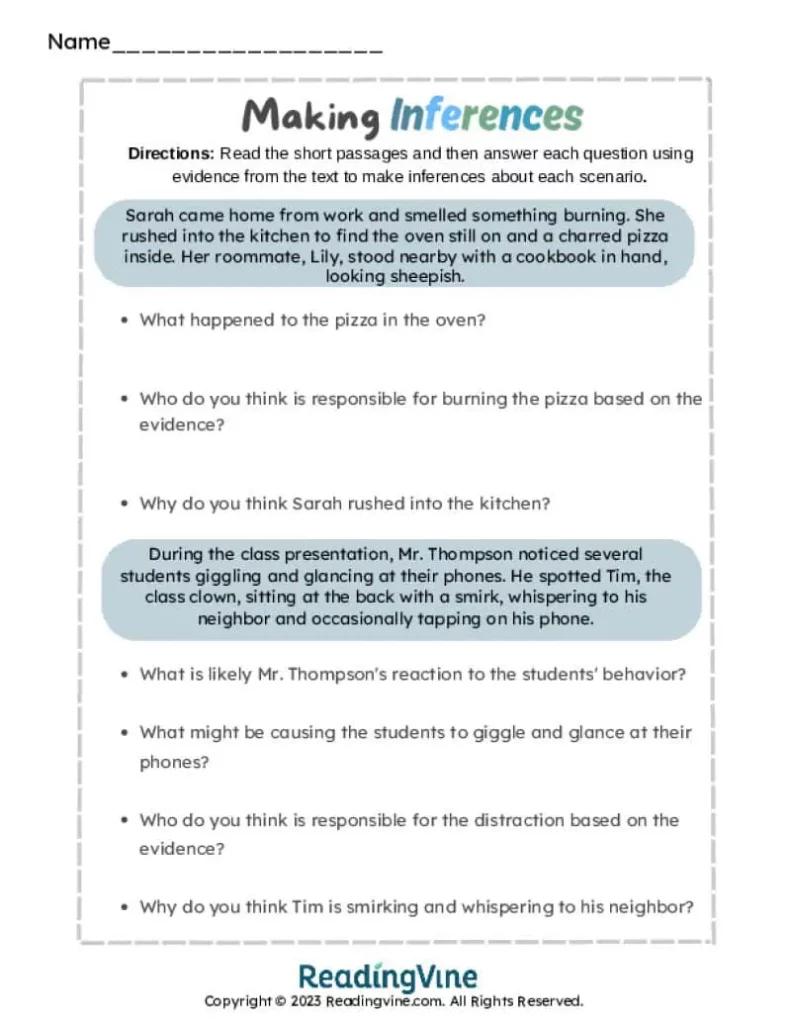
Fourth Grade Inferencing Skills Worksheet
Answer comprehension questions by reading passages carefully and making logical inferences based on textual evidence.
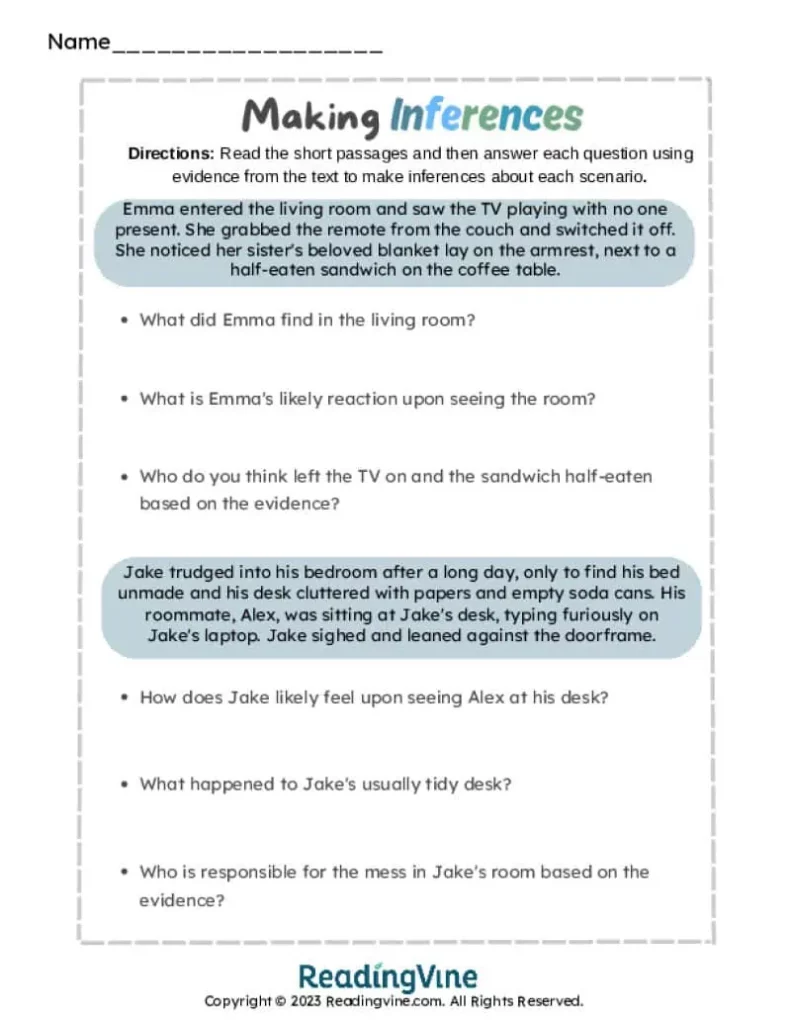
Fourth Grade Making Inferences Worksheet
Read short passages and answer questions by making inferences using evidence and logical reasoning from the text.

Inferencing Skills Anchor Chart
A classroom poster explaining how to make inferences by combining text evidence with prior knowledge, featuring sentence starters like "Based on what I read, I think..."

Inferencing Skills Fourth Grade Worksheet
Develop inferencing skills by examining pictures and answering paired questions requiring logical conclusions from visual evidence.

Inferencing Skills Reading Comprehension Worksheet
Practice inferencing skills with this reading activity by analyzing passages and answering questions requiring evidence-based conclusions.
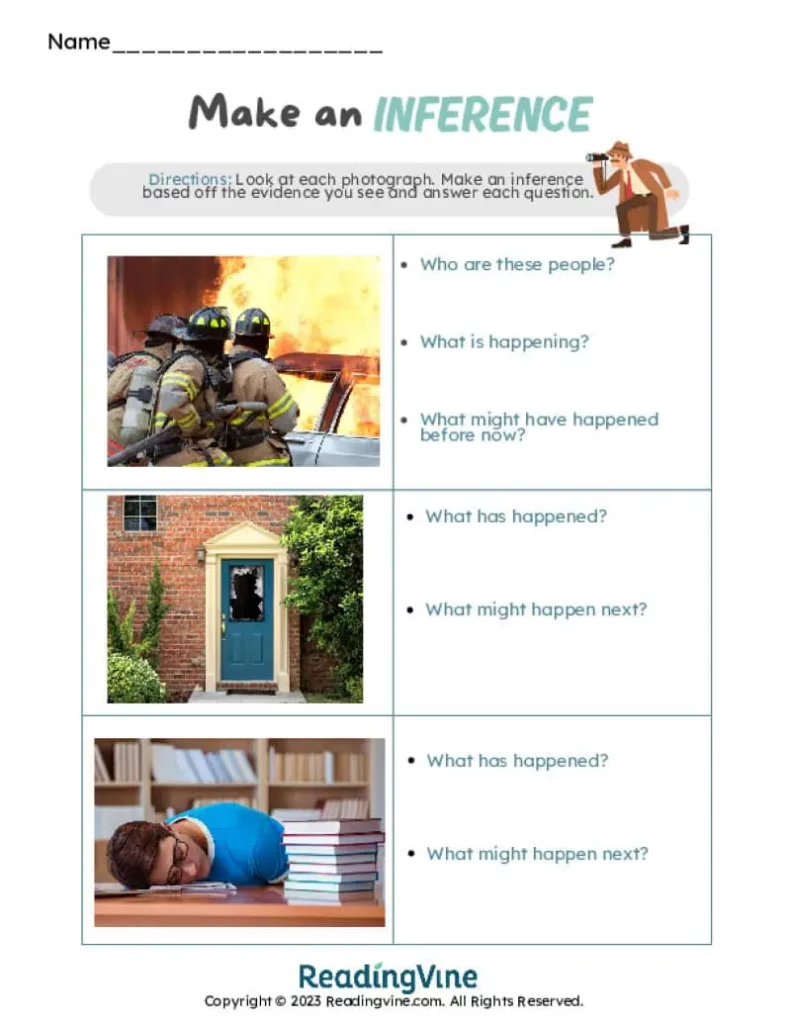
Make an Inference Fourth Grade Activity
Examine photographs and make inferences by answering questions that require analyzing visual details and context.

Making Inferences 7th Grade Worksheet
Answer questions by reading passages carefully and making complex inferences using evidence and analytical reasoning.
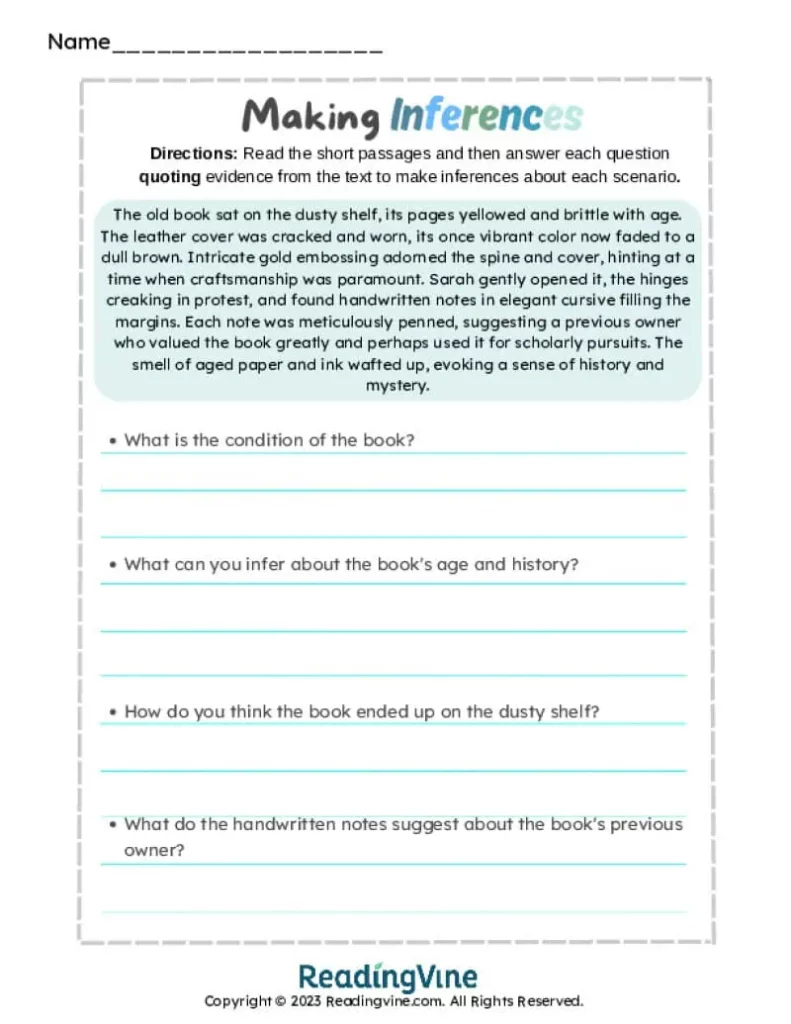
Making Inferences 8th Grade Worksheet
Read passages and answer inferencing questions by analyzing textual evidence and drawing sophisticated logical conclusions.
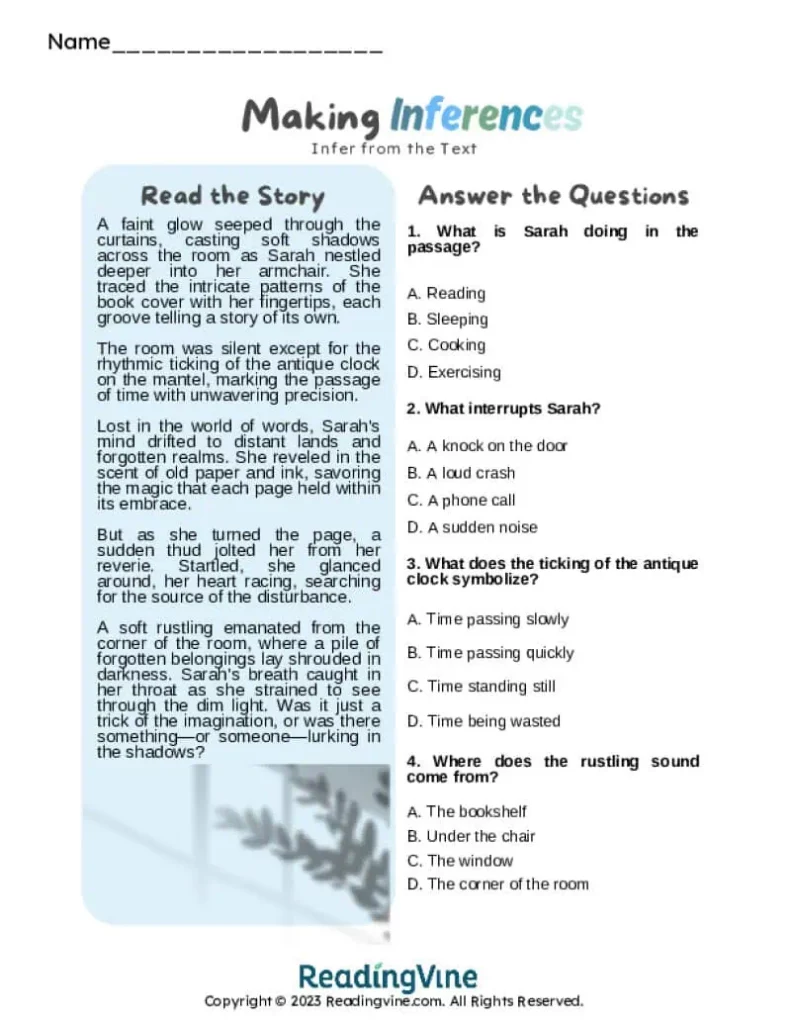
Making Inferences Reading Comprehension Activity
Answer comprehension questions by reading passages and making inferences that demonstrate understanding of implicit meanings.

Making Inferences Third Grade Activity
Practice inferencing skills by examining pictures and answering questions that require drawing conclusions from visual evidence.

Sixth Grade Inferencing Skills Worksheet
Read short passages and demonstrate inferencing skills by answering questions that require evidence-based logical reasoning.
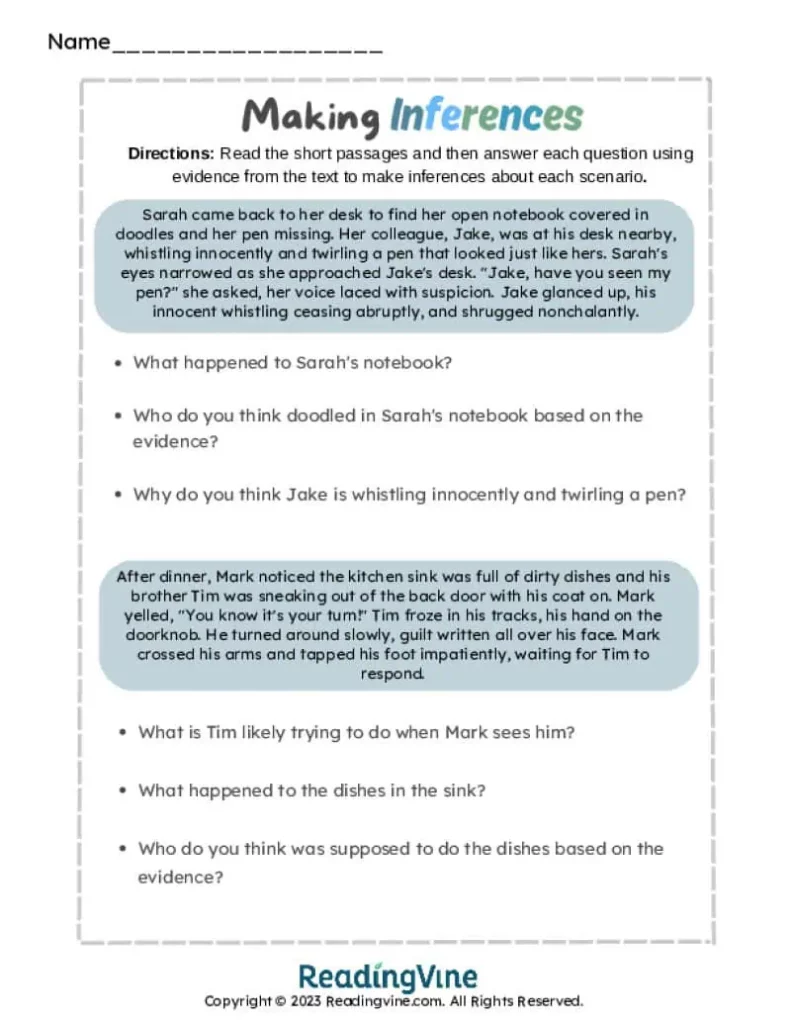
Sixth Grade Making Inferences Activity
Practice making inferences by reading passages and answering questions requiring logical conclusions supported by textual evidence.

Third Grade Make an Inference Activity
Look at pictures and answer paired questions to practice making logical inferences based on visual evidence.

Use Inferencing Skills Reading Passage
Read about earthquakes and practice inferencing by answering questions that require analytical thinking and textual evidence.