
 = Partner Site
Character Traits Anchor Chart
Welcome to our character traits anchor chart section! Character traits are qualities that define a character within a story. Readers can look for clues that are provided directly by the author, make interpretations based on a character’s language, thoughts, and action, and consider insights that other characters provide. Understanding and learning to assign traits to characters enriches reader-text connections and helps to build a diverse trove of vocabulary. As learners mature, their insights related to character traits will deepen based on their experiences and the complexity of the text itself. It is a skill that evolves continuously.
To make the most out of character trait analysis, always:
Read Actively: Note characters’ actions and emotions; identify recurring behaviors that define the character.
Return and Develop: If you analyze character traits throughout a longer work, return to your early analysis to add to it. Be aware of changes that occur based on the story’s development.
Text-Based Evidence: Support character trait analysis with evidence from the text; keep track of coordinating page numbers where these details occur.
Character trait analysis is a skill that improves with practice. Always consider creative and engaging tools that you can use to deepen student learning. Conversely, be mindful of the power of routines. Learners can grow their skills through repeated practice with certain classroom tools and structures.
Character Traits

Character Traits Anchor Chart #1
A detailed reference poster showing four ways to identify character traits—through language, actions, insights from other characters, and physical traits—with example descriptors for each category.
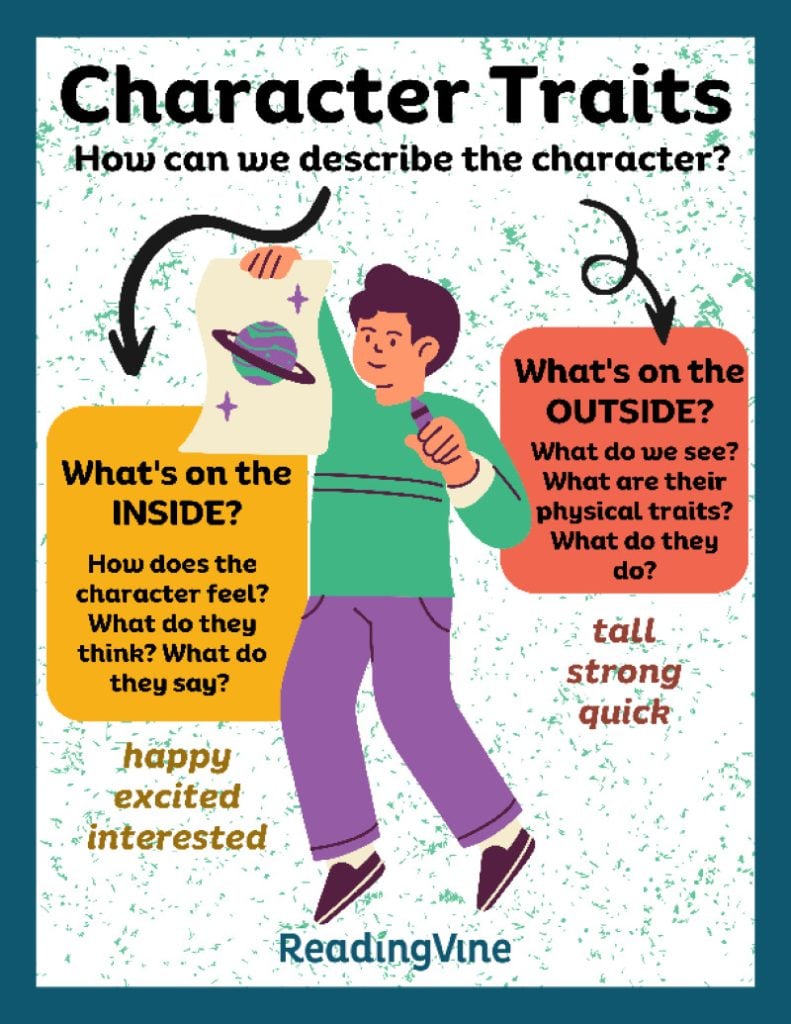
Character Traits Anchor Chart #2
A classroom poster distinguishing internal and external character traits, with "What's on the Inside?" covering feelings and thoughts, and "What's on the Outside?" addressing physical traits and actions.
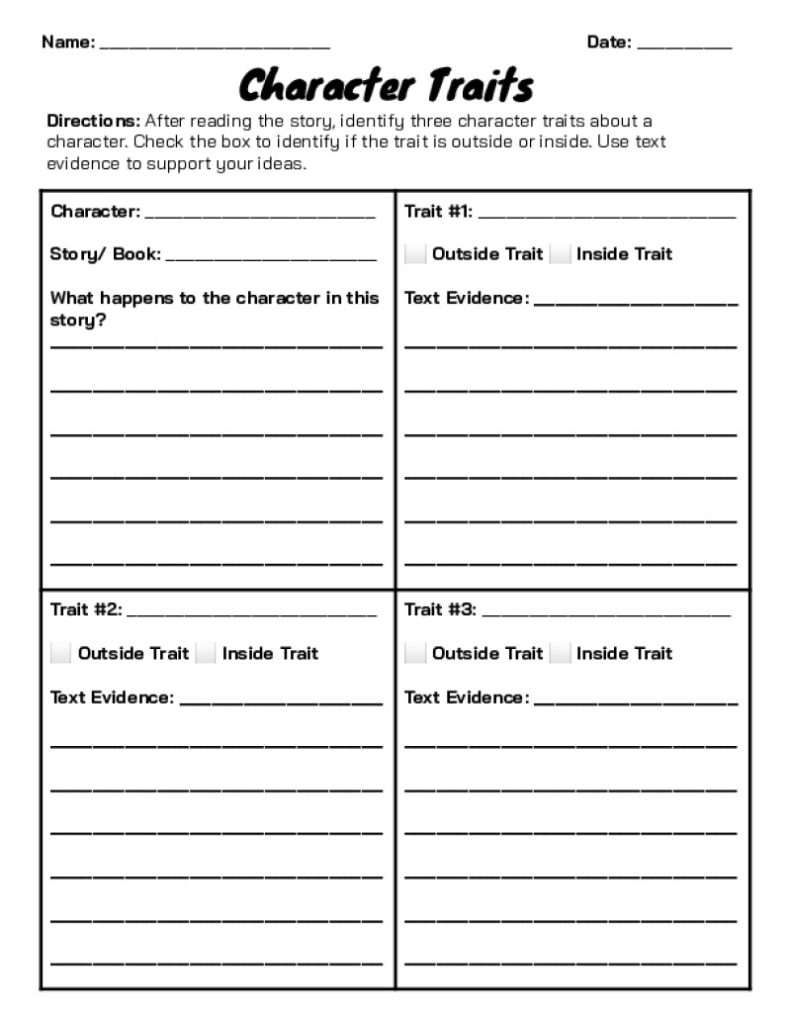
Character Traits Graphic Template Elementary
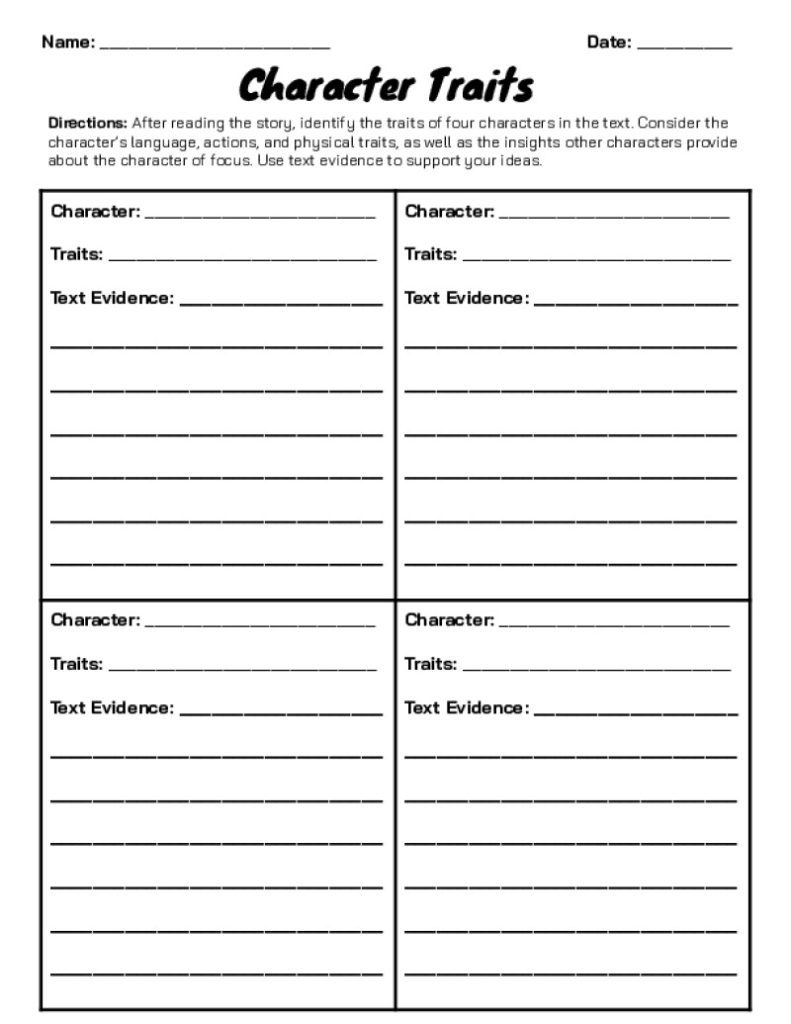
Character Traits Graphic Template Middle and High School

Direct Characterization Anchor Chart
A visual reference explaining direct characterization as what an author explicitly tells readers about a character, with examples of physical descriptors and intellectual traits for a character named Lucy.

Flat Character Anchor Chart
A classroom poster defining flat characters as uncomplicated figures who do not change throughout a story, using "Tim" as an example of a consistently happy supporting character.
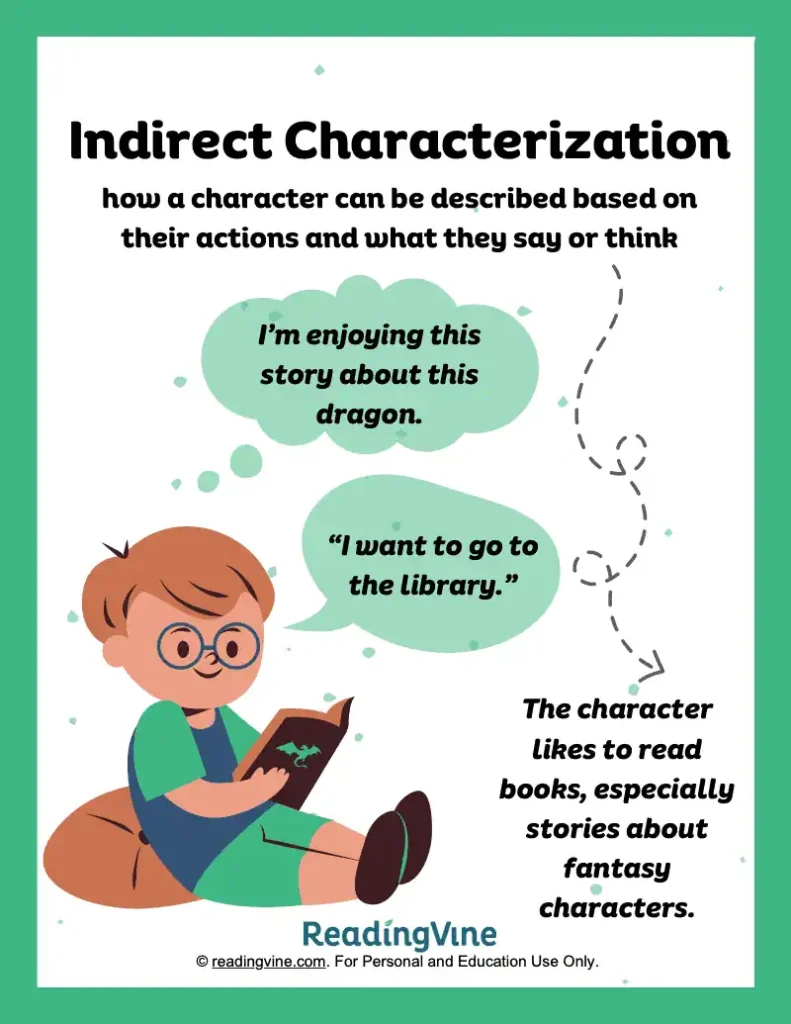
Indirect Characterization Anchor Chart
A visual reference explaining indirect characterization as describing characters through their actions and words, showing how a boy's dialogue about dragons and libraries reveals he loves reading.