
 = Partner Site
SEL Worksheets
Looking for SEL worksheets? These social-emotional learning printables help children develop essential life skills—from understanding their emotions and building self-esteem to setting goals and showing kindness to others. Whether you’re teaching a full SEL curriculum or just want to support your child’s emotional growth, you’ll find activities for every age and skill level.
Explore Emotions Words by Grade Level
Help students name and understand their feelings with our comprehensive emotions vocabulary list organized by grade level.
All About Me Printable Worksheets
See all All About Me Worksheets
All About Me - Draw and Write Favorites
A drawing-focused poster with shaped frames—rectangle, cloud, heart, and thought bubble—where young learners illustrate themselves, their age, and favorites including book, movie, and animal.
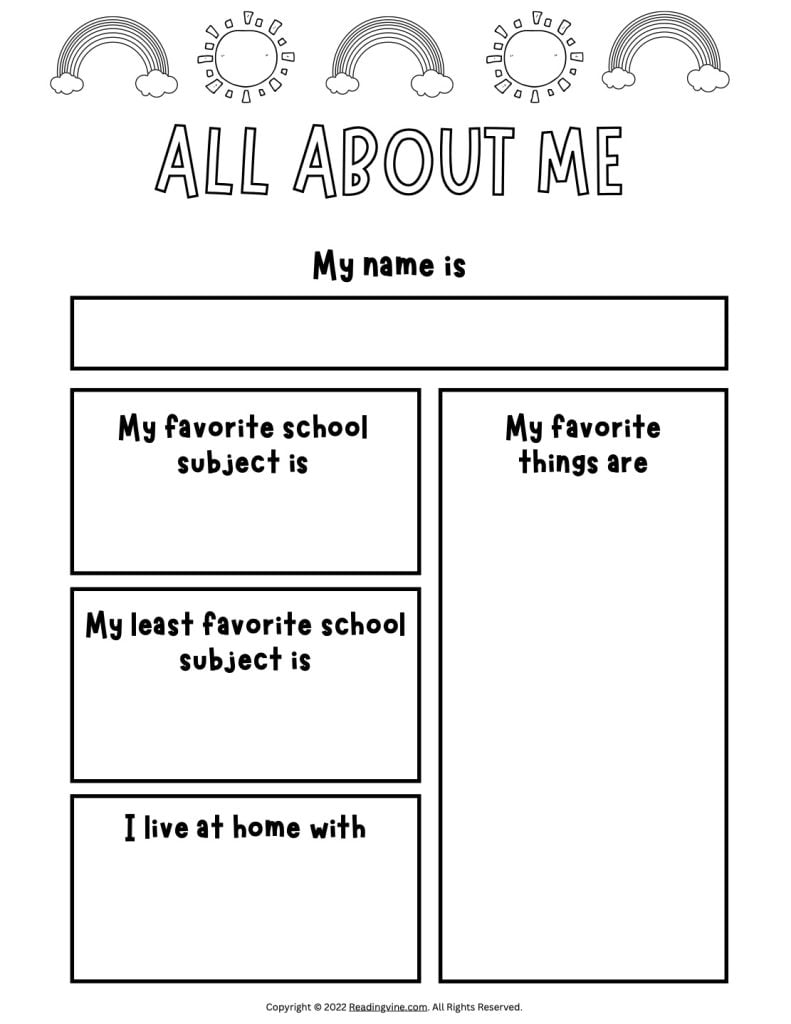
All About Me - School Favorites and Family
A rainbow-themed worksheet where students share their name, favorite and least favorite school subjects, favorite things, and who they live at home with, featuring open boxes for writing or drawing.
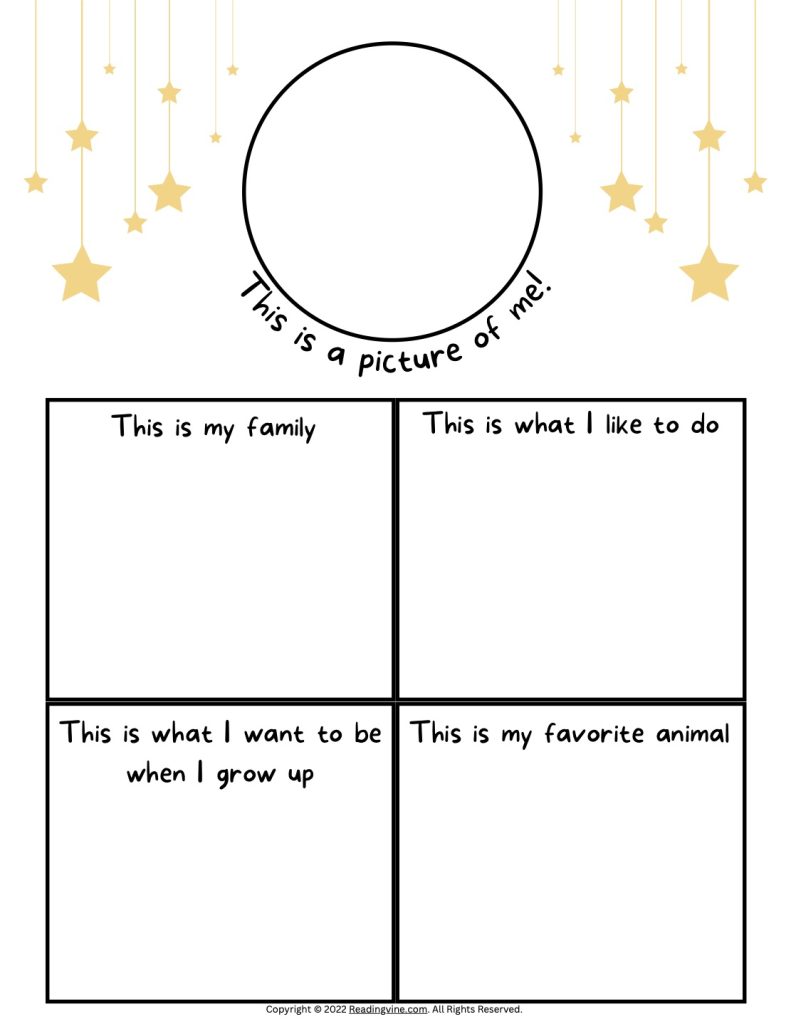
All About Me - Self-Portrait and Goals
A star-themed poster featuring a large self-portrait circle and four quadrants for drawing or writing about family, favorite activities, future aspirations, and favorite animal.
Emotions Printable Worksheets
See all Emotions Worksheets
Advanced Emotions Antonym Match
Identify advanced emotion antonyms by connecting sophisticated feeling words like confident, grateful, generous, and patient to their opposite terms in this activity.

Advanced Emotions Synonym Match
Identify advanced emotion synonyms by connecting sophisticated feeling words like furious, delighted, anxious, and proud to their matching terms in this activity.
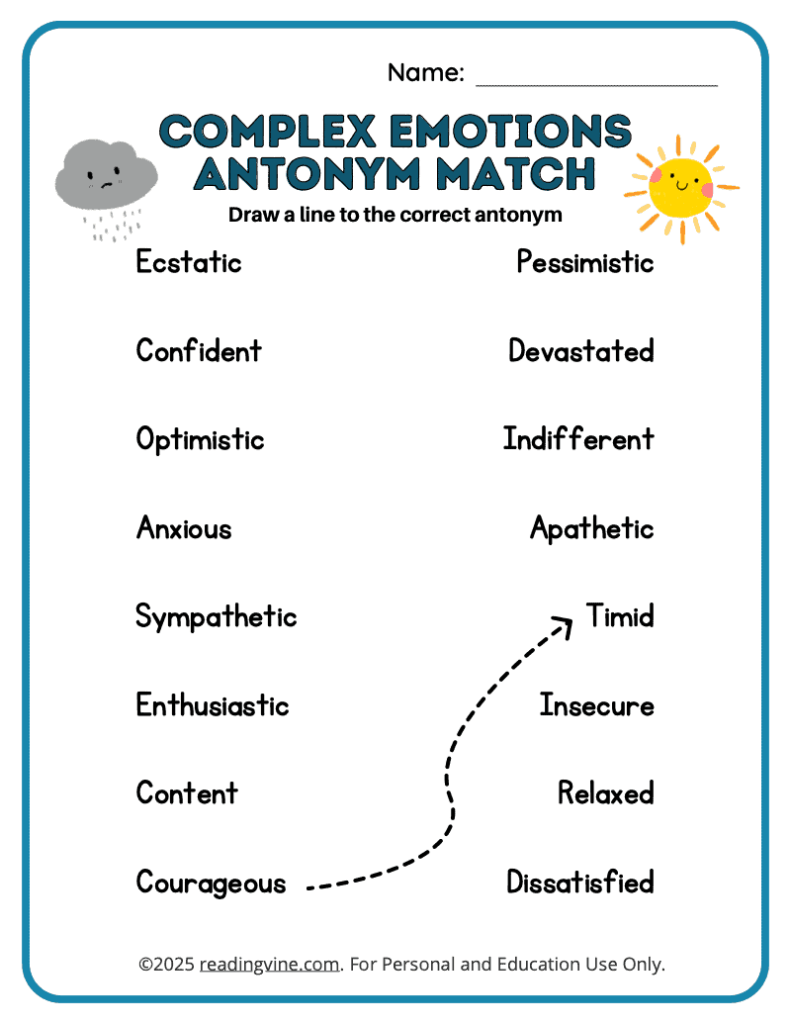
Complex Emotions Antonym Match
Match emotion words to antonyms including ecstatic-pessimistic, confident-devastated, and optimistic-indifferent.
Goals & Perseverance Printable Worksheets
See all Goals & Perseverance Worksheets
Achieve a Goal SEL Activity
In this goal-setting activity, children write down a goal they want to achieve at school or home, then draw a picture of how they'll feel when they accomplish it.

Never Give Up Drawing Activity
Children think about a time they didn't give up on something hard—like learning to ride a bike or tie their shoes—then draw the experience and complete sentence starters about perseverance.

New Year’s Goal and Action Plan
In this goal-setting activity, students identify one New Year's goal, create a three-step action plan to achieve it, and explain why the goal matters to them.
Kindness & Empathy Printable Worksheets
See all Kindness & Empathy Worksheets
Acts of Kindness SEL Worksheet

Being a Good Friend SEL Activity
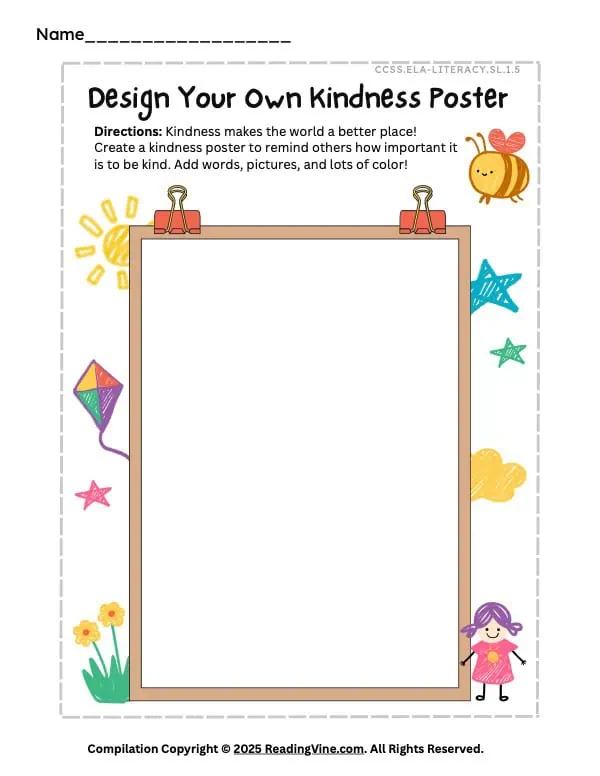
Design a Poster
Kindness makes the world a better place! Students create a kindness poster to remind others how important it is to be kind. Add words, pictures, and lots of color!
Self-Esteem and Confidence Printable Worksheets
See all Self-Esteem and Confidence Worksheets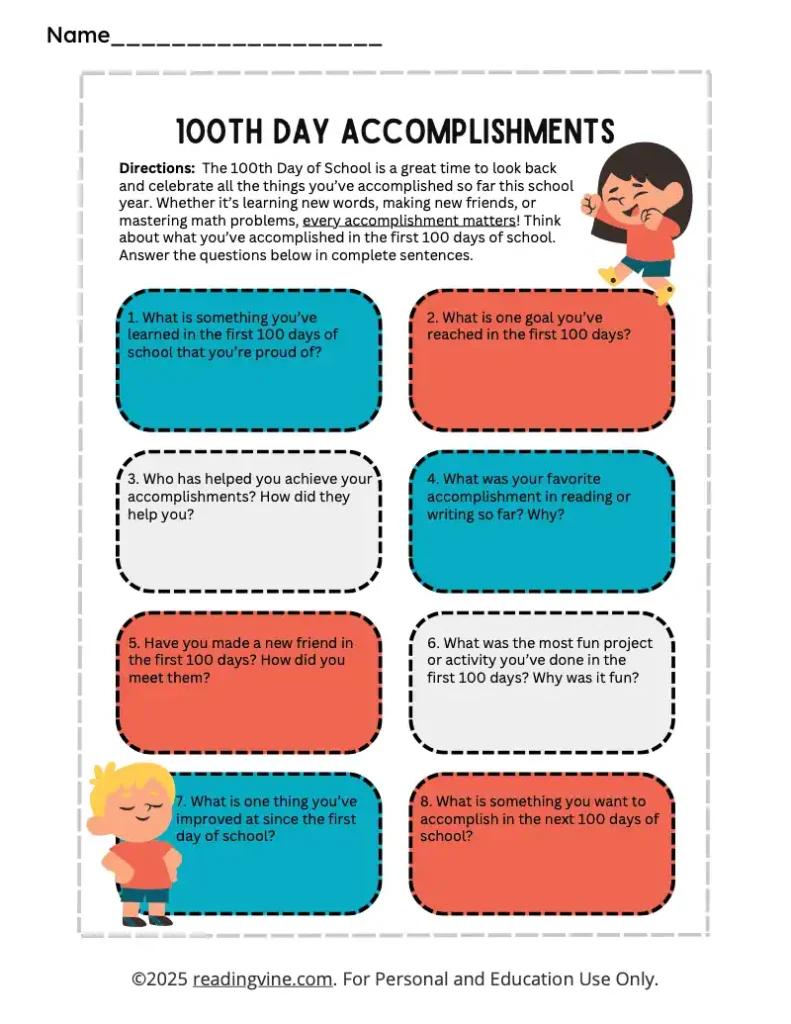
100th Day of School Write Your Accomplishments
Reflect on your proudest accomplishments since kindergarten by completing thought-provoking prompts with detailed responses.

A Look In the Mirror Self-Portrait SEL Activity
In this self-portrait activity, children look in a mirror, notice what makes them unique, draw themselves, and write three things they love about the way they look.

Give Yourself a Compliment Writing Activity
Students think about how others see them and list five compliments their friends and family might give them in this self-esteem building activity.
Frequently Asked Questions About SEL Worksheets
What is social-emotional learning (SEL)?
Social-emotional learning is the process of developing skills to understand emotions, set goals, show empathy, build relationships, and make responsible decisions. The CASEL framework identifies five core competencies: self-awareness, self-management, social awareness, relationship skills, and responsible decision-making. SEL worksheets help children practice these skills through reflection, discussion, and guided activities.
What are the 5 SEL competencies?
The five CASEL competencies are: (1) Self-awareness—recognizing your emotions and strengths; (2) Self-management—regulating emotions and behaviors; (3) Social awareness—understanding others’ perspectives and showing empathy; (4) Relationship skills—communicating, cooperating, and resolving conflicts; (5) Responsible decision-making—making thoughtful, ethical choices. SEL worksheets typically target one or more of these areas.
What age is SEL appropriate for?
SEL is appropriate for all ages, from preschool through high school and beyond. Young children (Pre-K–2) focus on identifying emotions, following rules, and basic friendship skills. Elementary students build empathy, goal-setting, and conflict resolution. Middle and high schoolers work on identity, stress management, and ethical decision-making. The concepts stay the same; the complexity and context grow with age.
Why is social-emotional learning important?
Research shows SEL improves academic performance, behavior, and mental health. Students with strong social-emotional skills are better able to focus, manage stress, work with others, and persist through challenges. A 2011 meta-analysis of over 200 studies found SEL programs improved academic achievement by 11 percentile points. Beyond school, these skills support success in careers and relationships throughout life.
How do I use SEL worksheets at home?
Use SEL worksheets as conversation starters, not just fill-in-the-blank activities. Choose a quiet moment when your child isn’t stressed. Work through the worksheet together, sharing your own experiences when appropriate. Ask open-ended questions: “When have you felt that way?” or “What could you try next time?” Keep sessions short and pressure-free—the goal is reflection and connection, not perfection.
How often should children practice SEL skills?
Brief, consistent practice works better than occasional long sessions. In classrooms, 15–30 minutes of dedicated SEL instruction 2–3 times per week is common, with skills reinforced throughout the day. At home, even 5–10 minutes of intentional conversation about emotions, goals, or kindness makes a difference. SEL worksheets work well as weekly check-ins or when specific situations arise.