
 = Partner Site
City of Bones Reading Level: A Complete Guide
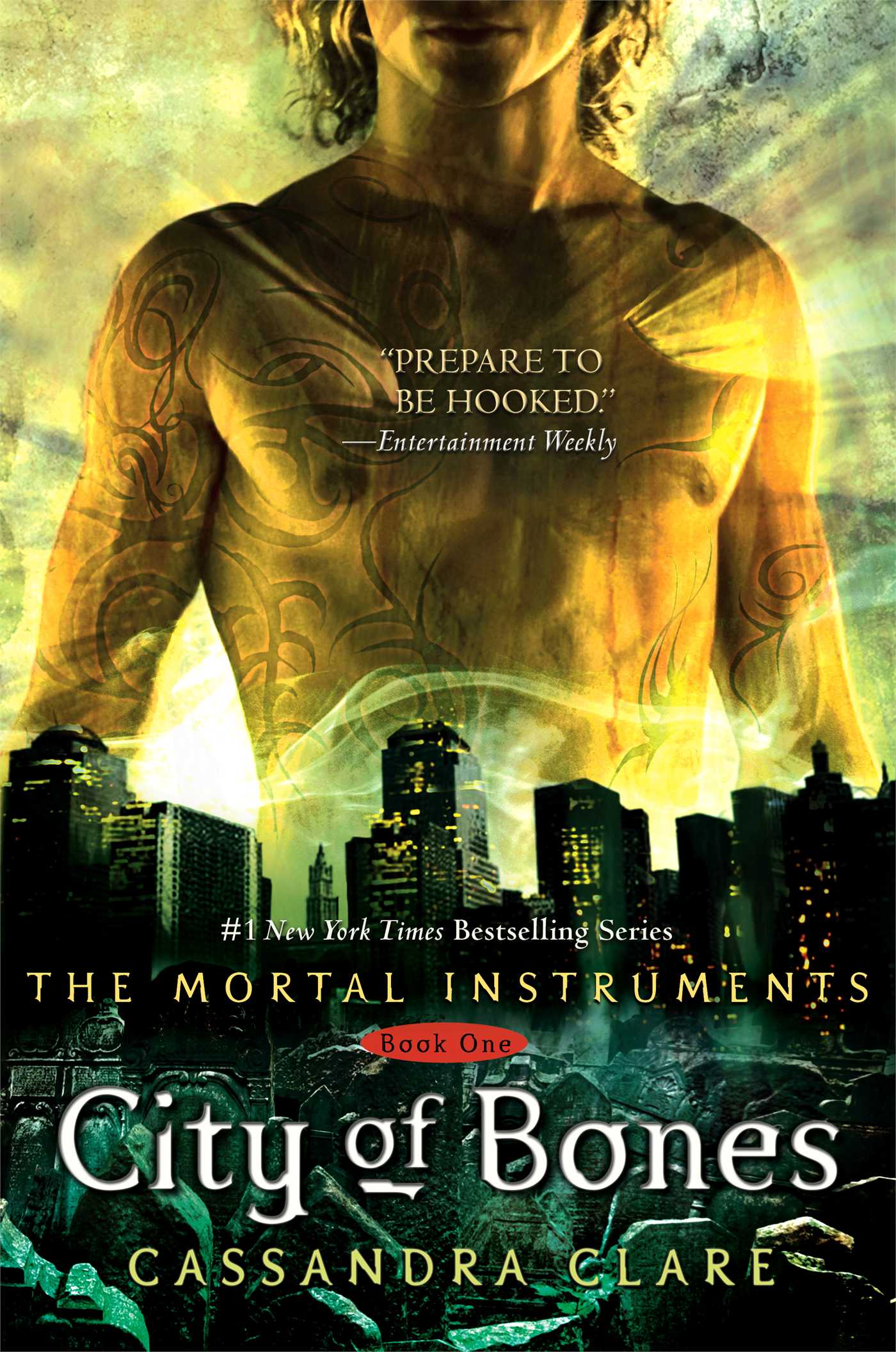
City of Bones by Cassandra Clare is an urban fantasy novel set in present-day New York City, in a world where demons walk among ordinary humans and the only thing standing between humanity and the supernatural underworld is a secret society of warriors called Shadowhunters. Fifteen-year-old Clary Fray has always been ordinary — until her mother disappears, a demon attacks her in her own home, and she discovers that the world she thought she knew is not remotely close to the truth. Published in 2007, it is the first book in The Mortal Instruments series and the opening novel of the larger Shadowhunter Chronicles, one of the most expansive urban fantasy universes in contemporary YA. This complete guide covers City of Bones‘s reading level, recommended age, content considerations, characters, themes, and books similar to City of Bones, designed for parents, teachers, and students.
For Parents
A fast-paced urban fantasy with demons, angels, vampires, werewolves, and warlocks in New York City — lighter in content than most adult dark fantasy, with violence at the level of action-adventure YA, a developing romance, and an LGBTQ+ character whose storyline is handled with care. Appropriate for ages 13 and up; most commonly read in grades 7–9.
For Teachers
A high-engagement series starter for reluctant readers and genre enthusiasts — Clare’s mythology-building, the urban fantasy setting, and the ensemble cast make it excellent for independent reading units and book clubs. The chapter headings drawn from the Bible, Milton, and Dante reward discussion of how a YA author uses canonical literary sources. The Shadowhunter Chronicles universe is extensive enough to sustain multi-year independent reading programs.
City of Bones at a Glance
Find on Amazon →| Author | Cassandra Clare |
| Published | 2007 (Margaret K. McElderry Books / Simon & Schuster) |
| Grade Level | 7–9 (our assessment) |
| Recommended Age | 13+ |
| ATOS Reading Level | 5.0 |
| Lexile | HL710L |
| Word Count | 130,949 |
| Pages | 485 (paperback) |
| Series | The Mortal Instruments, Book 1 (series complete, 6 books); part of the Shadowhunter Chronicles |
| Genre | Young adult urban fantasy |
| Setting | New York City; present day |
For official Lexile and AR levels, visit Lexile.com or AR BookFinder. ReadingVine provides independent editorial assessments.
What Reading Level Is City of Bones?
City of Bones has an ATOS reading level of 5.0 and a Lexile of HL710L. Like Six of Crows and An Ember in the Ashes, the “HL” designation stands for “High/Low” — the Lexile framework’s acknowledgment that the book is written at a lower measured reading level but designed for older readers. The prose is accessible and fast-moving, optimized for readability rather than linguistic complexity. The publisher rates it ages 14 and up, grade 9 and up; our editorial assessment places it at grades 7–9, ages 13 and up, reflecting that the content is lighter than many other YA fantasy novels at this tier.
The genuine reading challenge in City of Bones is not linguistic but architectural: Clare builds an extensive mythology from the ground up — Shadowhunters, Downworlders, the Clave, runes, demons of various kinds, warlocks, vampires, werewolves, the Mortal Instruments themselves — and introduces it alongside a plot that moves quickly enough that readers who are not paying attention to the world-building details will find themselves confused in the series’ later books. The chapter headings, drawn from the Bible, John Milton, and Dante, are a layer of literary reference that rewards students who recognize them without penalizing those who don’t. At 130,949 words and 485 pages, the novel is long for its reading level; most readers who are engaged finish it quickly because the pacing rarely slows. For official Lexile and AR scores, visit Lexile.com or AR BookFinder. ReadingVine’s assessments are independent editorial judgments.
The Mortal Instruments Series Overview
The Mortal Instruments is a completed six-book series. It is the first series set in Cassandra Clare’s Shadowhunter Chronicles universe, which has expanded to include multiple companion series, novellas, and graphic novels. Readers can enter the Chronicles through City of Bones or through Clockwork Angel (the start of The Infernal Devices, a Victorian-era prequel trilogy) — both work as entry points. The original trilogy (Books 1–3) tells a complete story; Books 4–6 are a second trilogy set in the same world with the same characters two years later.
| Book | Year | Pages | ATOS | Lexile | Our Grade |
| City of Bones | 2007 | 485 | 5.0 | HL710L | 7–9 |
| City of Ashes | 2008 | 453 | 5.0 | 720L | 7–9 |
| City of Glass | 2009 | 541 | 5.3 | 760L | 7–9 |
| City of Fallen Angels | 2011 | 424 | 5.2 | 750L | 7–9 |
| City of Lost Souls | 2012 | 535 | — | — | 7–9 |
| City of Heavenly Fire | 2014 | 725 | — | — | 8–10 |
Content escalates modestly across the series — the later books are darker and longer — but remains within the range of upper-middle and high school YA fantasy throughout. The series does not need to be read back-to-back; many readers take breaks between books. The broader Shadowhunter Chronicles (The Infernal Devices, The Dark Artifices, The Last Hours, The Eldest Curses) can be read in any order alongside the main series.
What Age Is City of Bones Appropriate For?
We recommend City of Bones for readers ages 13 and up, slightly below the publisher’s 14+ recommendation, reflecting that the content is relatively accessible for this genre. The novel’s violence is the violence of YA action-fantasy — demon-fighting, combat, some deaths — rather than the sustained brutality of darker YA fantasy titles in this catalog. There is a developing romance between Clary and Jace with some physical tension but no explicit content. The novel includes an LGBTQ+ storyline: Alec Lightwood is gay and closeted for most of the book, coming out (partially) near the end. His developing relationship with the warlock Magnus Bane is handled with warmth and becomes more prominent in subsequent books.
The novel’s most discussed content concern is the revelation near the end that Clary and Jace — who have been falling in love throughout the book — appear to be siblings, both children of the villain Valentine Morgenstern. This revelation is handled with appropriate horror by the characters, and the question of whether it is actually true is part of the series’ larger arc. Parents should be aware that the incest-as-plot-twist is present, that the characters respond to it in the way you would expect them to, and that it is not resolved in this book.
What Is City of Bones About?
Clary Fray is fifteen years old, lives in Brooklyn with her mother Jocelyn, and has a best friend named Simon who has been in love with her for years without her noticing. Her life is ordinary in the way that lives are ordinary when you have no idea what’s underneath them. One night at the Pandemonium Club — an underage dance venue in Manhattan — she witnesses three teenagers kill a boy in a back room and watches his body dissolve. No one else saw it happen. The teenagers — Jace Wayland, Isabelle Lightwood, and Alec Lightwood — are Shadowhunters: Nephilim, humans with angel blood, marked with runes that give them supernatural abilities, dedicated to hunting and killing demons. The boy who died was a demon. Clary should not have been able to see any of it.
Before she can process what she saw, her mother calls in a panic and tells her not to come home. Clary goes home anyway. She finds the apartment wrecked and a demon in it — a Ravener demon that attacks her and that she kills with an injector pen her mother left by the door. Her mother is gone. Clary barely escapes, collapses, and wakes up at the Institute — the Shadowhunters’ base in New York, a deconsecrated church in the East Village — where Jace has brought her to recover.
The Institute is run by the Lightwood family — Isabelle and Alec’s parents. From them, and from Jace, Clary learns the basics of the Shadowhunter world: the Clave (the governing body), the Accords (the peace treaty between Shadowhunters and Downworlders — the vampires, werewolves, warlocks, and faeries who share the shadow world), and the Mortal Instruments themselves: three objects — the Mortal Cup, the Mortal Sword, and the Mortal Mirror — that were given by the angel Raziel to the first Shadowhunter, Jonathan Shadowhunter. The Mortal Cup can be used to create new Shadowhunters. Someone called Valentine Morgenstern wants it, and he is willing to kill anyone who stands between him and it.
Clary’s search for her mother becomes the novel’s plot engine: to find Jocelyn, she needs to understand who Jocelyn was, why she ran, and what connection she has to the Shadowhunter world. Those answers involve Valentine, the Mortal Cup, and the truth about who Clary’s father is — a truth the novel withholds until its final pages and that reframes everything that has happened between Clary and Jace. The book ends with Clary’s mother in a magical coma, Valentine in possession of the Cup, and a revelation about Clary and Jace’s parentage that will drive the next two books in the series.
City of Bones Characters
Is City of Bones Banned?
City of Bones and the Mortal Instruments series have not appeared on the ALA’s most challenged books lists and do not have a significant formal challenge history. The series has been noted in district-level reviews in conservative areas alongside other YA fantasy titles, primarily for its supernatural content (demons, warlocks, vampires) and its LGBTQ+ storyline. These concerns have not produced documented formal challenges at any significant scale. The novel’s supernatural worldview — drawn from a hybrid of Christian mythology, Dante, and Milton — has occasionally prompted objections from parents who consider demonic content inappropriate regardless of context. These concerns are worth noting for parents making individual decisions rather than reporting as a formal challenge record.
City of Bones Themes and Lessons
Clare structures the Shadowhunter mythology from an explicitly literary foundation: the chapter headings draw from Genesis, Milton’s Paradise Lost, and Dante’s Inferno, and the novel’s epigraph is from the Book of Isaiah. The Nephilim concept — humans with angel blood, marked and different — draws on biblical tradition through a YA lens, and Valentine’s Circle is explicitly modeled on the historical pattern of idealistic movements that become violent and exclusionary. Clare is not doing systematic theology; she is using a rich literary tradition as the scaffolding for a contemporary urban fantasy world, and the scaffolding rewards recognition without requiring it.
The novel’s treatment of Alec’s sexuality is one of its most carefully handled elements. Alec is gay, closeted, and in an environment — the Shadowhunter world — that the novel presents as not particularly affirming. His attraction to Jace is treated as painful and unrequited, and his developing connection to Magnus is treated as something genuinely possible and real. Clare has said that she included Alec specifically because she wanted LGBTQ+ representation in the YA fantasy genre when it was still relatively rare, and Alec/Magnus became one of the most widely discussed relationships in the series. By the second and third books, Alec’s coming out arc is a major storyline.
The novel’s central emotional argument is about the nature of family — specifically about what it means when the family you were born into turns out to be both more and less than you believed. Clary’s mother has been lying to her for her entire life about the most fundamental facts of her existence. Valentine is Clary’s father in the biological sense and the opposite of a father in every meaningful sense. The Shadowhunters who take Clary in are strangers who become something closer to family than her biological origins. This is the found-family argument that runs through virtually all of Clare’s Shadowhunter Chronicles work, and it is stated most directly and most painfully in this first book.
Discussion questions for classrooms and families: What do the chapter headings from Milton and Dante add to the novel — do they shape how you understand the story? Why does Clare make Valentine a former idealist rather than a simple villain — what does this argue about how fanaticism develops? What does the novel say about the difference between the family you are born into and the family you choose? How does Alec’s experience of being closeted in the Shadowhunter world reflect real-world experiences of LGBTQ+ teens?
How Many Pages and Chapters in City of Bones?
The paperback is 485 pages across 23 chapters organized in three parts — “Part One: Dark Descent,” “Part Two: Easy Is the Descent,” and “Part Three: The Descent Beckons” — each chapter headed with a literary epigraph. The three-part structure quotes Dante’s Inferno in its framing: “Facilis descensus Averno” (“Easy is the descent to Hell”) is Virgil’s warning in the Aeneid and the organizing metaphor for Clary’s journey into the hidden world. Word count is 130,949. Most readers who are engaged finish it in a week or less; classrooms using it for independent reading typically allot two to three weeks.
Books Similar to City of Bones
About Cassandra Clare
Cassandra Clare was born Judith Rumelt in 1973 in Tehran, Iran, and grew up in various locations including the United Kingdom and the United States. She worked as a journalist and entertainment reporter before beginning the Shadowhunter Chronicles. She began writing in the Harry Potter fanfiction community in the early 2000s, producing widely read work under the pen name “Cassandra Claire” — an experience that introduced her to the craft of serial storytelling for a large engaged audience, and that also generated controversy: she was eventually banned from the Harry Potter FanFiction Archive in 2001 for plagiarism, having included unattributed passages from other works in her stories. Clare has addressed this history publicly; she has said she was young, handled attribution poorly, and did not understand the distinction between homage and plagiarism. The fanfiction controversy is part of her biography without being the whole of it.
City of Bones was published in 2007 and immediately became a bestseller; the original Mortal Instruments trilogy sold millions of copies and launched a franchise that has now expanded to more than a dozen novels across multiple connected series. The Shadowhunter Chronicles include The Mortal Instruments (6 books), The Infernal Devices (3 books, Victorian London), The Dark Artifices (3 books), The Last Hours (3 books), The Eldest Curses (co-written with Wesley Chu, 3 books), and additional novellas and short story collections. A film adaptation of City of Bones in 2013 was a commercial disappointment; the Shadowhunters television series (2016–2019, Freeform) ran three seasons and developed a devoted fan following. Clare lives in western Massachusetts with her husband and three cats.
City of Bones: Frequently Asked Questions
What reading level is City of Bones?
City of Bones has an ATOS reading level of 5.0 and a Lexile of HL710L. The “HL” (High/Low) designation indicates it is written at a lower measured reading level but designed for older readers. The prose is accessible and fast-moving; the challenge is the extensive world-building mythology rather than linguistic complexity. Our editorial assessment places it at grades 7–9, ages 13 and up. For official Lexile and AR scores, visit Lexile.com or AR BookFinder.
What grade is City of Bones appropriate for?
We recommend grades 7–9, ages 13 and up. The novel contains fantasy violence (demon-fighting, combat, some deaths), romantic tension, and an LGBTQ+ storyline. The most significant content note is the late-novel revelation that Clary and Jace may be siblings — handled with appropriate horror by the characters — which is part of the series’ larger unresolved arc. The publisher rates it ages 14 and up.
How many pages are in City of Bones?
The paperback is 485 pages across 23 chapters in three parts. Word count is 130,949. Most engaged readers finish it in a week or less; classrooms typically allot two to three weeks.
What is City of Bones about?
Fifteen-year-old Clary Fray witnesses a murder at a New York nightclub — and discovers the perpetrators are Shadowhunters, warriors with angel blood who hunt demons. When her mother disappears and a demon attacks her, Clary is pulled into a hidden world she never knew existed, falls in with a group of Shadowhunters, and discovers that her entire life has been built on secrets — including the truth about her own parentage and its connection to the villain Valentine Morgenstern.
How many books are in The Mortal Instruments series?
Six books: City of Bones (2007), City of Ashes (2008), City of Glass (2009), City of Fallen Angels (2011), City of Lost Souls (2012), and City of Heavenly Fire (2014). The first three form a complete trilogy; the second three are a follow-up set two years later. The series is part of the larger Shadowhunter Chronicles, which includes additional connected series set in the same world.
What are Shadowhunters?
Shadowhunters are Nephilim — humans with angel blood, descended from the first Shadowhunter, Jonathan Shadowhunter, who was granted abilities by the angel Raziel. They are marked with runes (magical tattoos called Marks) that enhance their speed, strength, and healing. Their purpose is to protect the human world from demons. They coexist uneasily with Downworlders — vampires, werewolves, warlocks, and faeries — who also inhabit the shadow world alongside humans, who cannot see any of it.
Is there a City of Bones movie or TV series?
A film adaptation, The Mortal Instruments: City of Bones, was released in 2013 with Lily Collins as Clary and Jamie Campbell Bower as Jace. It was a commercial disappointment and did not continue as a film franchise. The Shadowhunters television series (2016–2019, Freeform) adapted the books more successfully, running three seasons before cancellation. It starred Katherine McNamara as Clary, Dominic Sherwood as Jace, and Matthew Daddario as Alec. Both are rated TV-14 / PG-13 and appropriate for the same age range as the novel.
Do I need to read City of Bones before the other Shadowhunter Chronicles books?
The Mortal Instruments should be read in order within the series. However, Clockwork Angel (the start of The Infernal Devices, set in Victorian London) works as an independent entry point to the Shadowhunter Chronicles — some readers start there and read the Mortal Instruments afterward. The various series share characters and world but do not require each other as prerequisites, though reading multiple series adds depth to each.