
 = Partner Site
Harry Potter and the Sorcerer’s Stone Reading Level: A Complete Guide
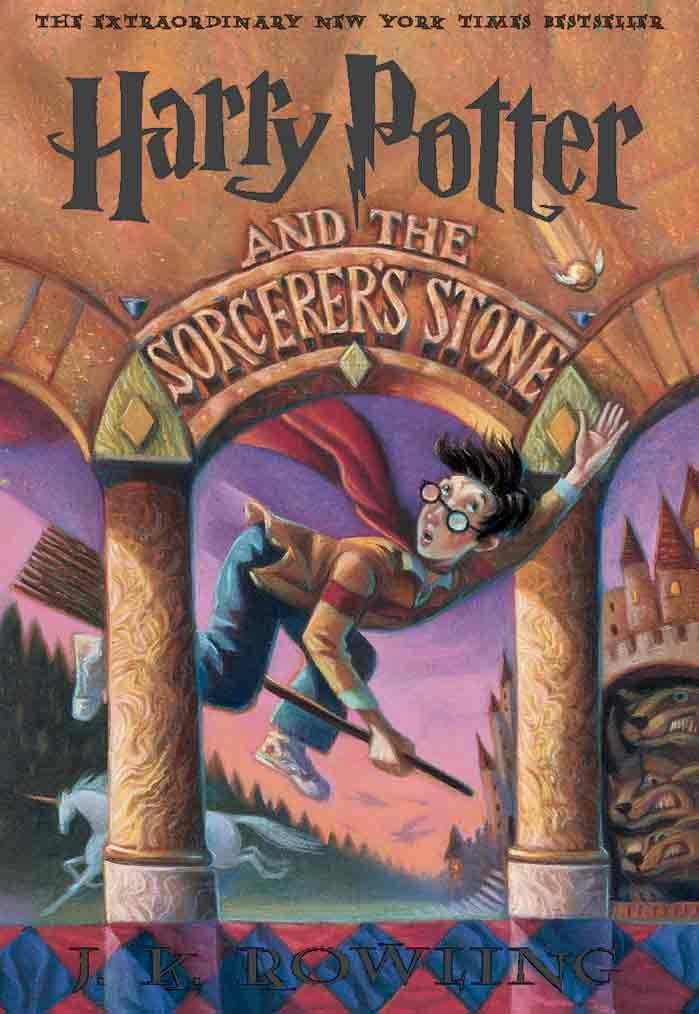
Harry Potter and the Sorcerer’s Stone by J.K. Rowling tells the magical story of an orphaned boy who discovers on his eleventh birthday that he’s a wizard and is invited to attend Hogwarts School of Witchcraft and Wizardry. This guide provides parents and teachers with reading level information, age recommendations, content insights, and discussion questions for the first book in the beloved Harry Potter series about friendship, courage, and the fight between good and evil.
For Parents
Find the right reading level for your child, understand the book’s themes around friendship and standing up to evil, and get conversation starters to help your child explore questions about courage, loyalty, and the power of love over darkness.
For Teachers
Access grade-level guidance, reading metrics, character analysis support, and thematic discussion questions perfect for classroom use. This modern classic offers rich opportunities for exploring themes of good versus evil, the importance of choices, and the value of friendship and bravery.
Harry Potter and the Sorcerer’s Stone at a Glance
Find on Amazon →| Author | J.K. Rowling |
| Published | 1997 (UK), 1998 (US) |
| Grade Level | 5–7 (our assessment) |
| Recommended Age | 9–13 |
| Flesch-Kincaid Grade | 5.5 |
| Word Count | ~77,000 |
| Pages | 309 (US hardcover) |
| Chapters | 17 |
| Genre | Fantasy / adventure / coming-of-age |
| Setting | England, Hogwarts School, 1991–1992 |
| Awards | Multiple awards including British Book Awards Children’s Book of the Year |
For official Lexile and AR levels, visit Lexile.com or AR BookFinder. ReadingVine provides independent editorial assessments.
What Reading Level Is Harry Potter and the Sorcerer’s Stone?
Harry Potter and the Sorcerer’s Stone is appropriate for grades 5–7, with a Flesch-Kincaid grade level of 5.5. The vocabulary includes magical terms that Rowling invents, British English spellings and expressions, and some sophisticated words, but context makes meanings clear. The sentence structure ranges from simple to moderately complex, making the mechanics comfortable for fifth graders while providing enough challenge to engage sixth and seventh graders.
Rowling writes with wit, warmth, and vivid detail that brings the magical world to life. The prose is accessible and moves at a brisk pace, with engaging dialogue and visual descriptions that help readers picture Hogwarts, Diagon Alley, and the magical creatures. The narrative style is straightforward—third person limited, following Harry closely—which makes it easy for readers to connect with his wonder, confusion, and excitement as he discovers the wizarding world.
While strong fifth graders can handle the reading mechanics, the book resonates most deeply with readers ages 9–13 who can appreciate the themes about good and evil, understand Harry’s loneliness and desire for belonging, and grasp the more subtle elements like the mystery of who’s after the Sorcerer’s Stone and the clues Rowling plants throughout. It’s an excellent choice for readers ready for longer chapter books with complex plots, multiple characters, and thematic depth beneath the magical adventure.
What Age Is Harry Potter and the Sorcerer’s Stone Appropriate For?
Harry Potter and the Sorcerer’s Stone is most appropriate for readers ages 9–13. The story includes some frightening moments, magical violence, and themes about death and loss, but these are handled in age-appropriate ways. The book balances darker elements with humor, friendship, and wonder, making it exciting without being overwhelming for most upper elementary and middle school readers.
Death of parents: Harry’s parents were murdered by Voldemort when Harry was a baby. This loss is central to Harry’s story and discussed throughout the book.
Abuse and neglect: The Dursleys neglect and mistreat Harry. They force him to live in a cupboard, deny him affection, and treat him harshly. While not graphically violent, this mistreatment is ongoing and may be upsetting for some readers.
Frightening scenes: The climax involves Harry facing Voldemort, a three-headed dog, dangerous magical challenges, and life-threatening danger. There’s also a scene with a troll in the bathroom that’s scary but ends safely.
Dark magic and evil: Voldemort represents pure evil—he murdered Harry’s parents and wants to return to power. References to dark magic, killing curses, and evil wizards are present.
Some violence: Magical duels, a unicorn being killed and its blood drunk (off-page), Harry’s scar hurting, and confrontations with bullies. Nothing is graphically described but danger and conflict are present.
Bullying: Draco Malfoy and his friends bully other students. Harry also faces bullying from his cousin Dudley.
What’s NOT in the book: No sexual content, no profanity, no graphic violence. The scary moments are balanced with humor and friendship. The tone emphasizes that love is more powerful than evil, that friendship matters, and that good ultimately triumphs. The ending is happy and hopeful, with Harry finding belonging and friends at Hogwarts.
What Is Harry Potter and the Sorcerer’s Stone About?
Harry Potter lives a miserable life with his aunt Petunia, uncle Vernon, and cousin Dudley Dursley. The Dursleys treat Harry terribly—he sleeps in a cupboard under the stairs, wears Dudley’s old oversized clothes, and is denied any affection or kindness. Harry has always been told his parents died in a car crash, and he knows nothing about his real heritage. Strange things happen around Harry sometimes—like making glass disappear at the zoo or ending up on the school roof—but he doesn’t understand why.
Everything changes just before Harry’s eleventh birthday when mysterious letters begin arriving at the Dursley house, addressed to “Mr. H. Potter, The Cupboard Under the Stairs.” Vernon desperately tries to prevent Harry from reading the letters, going so far as to move the family to a shack on a rock in the sea. But at midnight on Harry’s birthday, a giant named Hagrid breaks down the door with shocking news: Harry is a wizard, and he’s been accepted to Hogwarts School of Witchcraft and Wizardry.
Hagrid reveals the truth the Dursleys have hidden for ten years: Harry’s parents, James and Lily Potter, were powerful wizards murdered by the dark wizard Lord Voldemort. When Voldemort tried to kill baby Harry, the curse rebounded—Voldemort was destroyed, and Harry survived with only a lightning-bolt scar on his forehead. Harry is famous in the wizarding world as “The Boy Who Lived,” the only person to survive Voldemort’s killing curse.
Hagrid takes Harry to Diagon Alley, the magical shopping district hidden in London, where Harry buys his school supplies: a wand (which chooses him—phoenix feather core, twin to Voldemort’s wand), spell books, a cauldron, robes, and a snowy owl he names Hedwig. Harry discovers he’s wealthy—his parents left him gold in Gringotts Wizarding Bank. He also learns that Hagrid has collected a mysterious package from a high-security vault on Dumbledore’s orders.
On September 1st, Harry boards the Hogwarts Express from Platform 9¾ at King’s Cross Station. On the train, he meets Ron Weasley, a friendly boy from a large wizarding family, and Hermione Granger, a brilliant girl from a non-magical family. He also encounters Draco Malfoy, a bully who scorns anyone not from an old pure-blood wizarding family.
At Hogwarts, students are sorted into four houses: Gryffindor (brave), Hufflepuff (loyal), Ravenclaw (wise), and Slytherin (ambitious). The Sorting Hat considers putting Harry in Slytherin but honors Harry’s choice to be in Gryffindor instead. Harry, Ron, and Hermione all end up in Gryffindor, while Draco goes to Slytherin. The Sorting Hat’s words haunt Harry: “You could be great, you know, and Slytherin will help you on the way to greatness.”
Harry discovers he’s a natural at Quidditch, a magical sport played on broomsticks, and becomes Gryffindor’s youngest Seeker in a century. He makes friends, learns magic, and finally feels like he belongs somewhere. But he also makes an enemy—Professor Snape, the Potions master, seems to hate Harry for reasons Harry doesn’t understand. During Harry’s first Quidditch match, his broom goes wild as if someone is jinxing it. Harry and his friends suspect Snape is trying to hurt him.
On Halloween, a mountain troll gets into the castle. Harry and Ron save Hermione from the troll in the girls’ bathroom, cementing their friendship. Hermione takes the blame to protect them, and the three become inseparable. Later, Harry accidentally discovers a three-headed dog guarding a trapdoor on the forbidden third floor. The friends realize the dog is guarding the mysterious package Hagrid retrieved from Gringotts—something called the Sorcerer’s Stone.
Harry learns that the Sorcerer’s Stone, created by Nicolas Flamel, produces the Elixir of Life, granting immortality. The Stone is at Hogwarts because someone tried to steal it from Gringotts. Harry becomes convinced that Snape is trying to steal the Stone for Voldemort, who wants to use it to return to power. When the protective enchantments around the Stone appear to be failing, Harry, Ron, and Hermione decide they must reach it first.
The three friends get past the three-headed dog (named Fluffy), survive Devil’s Snare, catch a flying key, win a life-sized wizard’s chess game (where Ron sacrifices himself heroically), and solve a logic puzzle with potions. Harry continues alone to the final chamber, where he expects to find Snape. Instead, he discovers Professor Quirrell, the stuttering Defense Against the Dark Arts teacher—and Voldemort himself, living on the back of Quirrell’s head under a turban.
Quirrell has been the one trying to kill Harry and steal the Stone. He tried to jinx Harry’s broom, let the troll in, and has been working to get past the protective enchantments. Voldemort, weakened and without a body, has been possessing Quirrell, waiting for the Stone to restore him to power. Harry looks into the Mirror of Erised (which shows the deepest desire of one’s heart) and the Stone appears in his pocket—the mirror gives it to those who want to find it but not use it.
When Quirrell tries to take the Stone, he cannot touch Harry—Harry’s skin burns him because of the magical protection left by his mother’s sacrificial love. Voldemort commands Quirrell to kill Harry anyway, but Harry’s touch causes Quirrell intense pain and injury during the struggle. As the confrontation continues, Voldemort abandons Quirrell’s body, and Quirrell later dies from the encounter. Harry loses consciousness and later wakes in the hospital wing, where Dumbledore explains that his mother’s love, which saved him as a baby, still protects him. Voldemort cannot understand or endure this kind of love, which is why Quirrell could not successfully harm Harry. The Stone is later destroyed to prevent anyone from using it for immortality.
The book ends with the end-of-year feast, where Gryffindor wins the House Cup thanks to last-minute points awarded for Harry, Ron, Hermione, and Neville’s bravery. Harry returns to the Dursleys for the summer, but he’s no longer the miserable boy who slept in a cupboard. He has friends, a place where he belongs, and the knowledge that he’ll return to Hogwarts—his true home—in a few months. For the first time in his life, Harry has hope and happiness.
Harry Potter and the Sorcerer’s Stone Characters
Harry Potter and the Sorcerer’s Stone Themes and Lessons
At its heart, Harry Potter and the Sorcerer’s Stone is about love’s power to overcome evil. Harry survived Voldemort’s curse because his mother sacrificed herself to save him—her love created a protection so powerful that even the darkest magic cannot break it. When Quirrell, possessed by Voldemort, tries to touch Harry, he burns because Voldemort cannot understand or endure love. The book teaches that love is not weakness but the strongest magic of all, that selfless sacrifice creates lasting protection, and that evil ultimately cannot defeat those protected by love.
The book also emphasizes that our choices, not our abilities or background, define who we are. The Sorting Hat tells Harry he could be great in Slytherin, but Harry chooses Gryffindor. Dumbledore later explains: “It is our choices, Harry, that show what we truly are, far more than our abilities.” This theme runs throughout—Harry could have been dark (he shares qualities with Voldemort, including speaking Parseltongue), but he chooses to be good. Hermione could have been in Ravenclaw but chose bravery over cleverness. The book teaches that we are not defined by our circumstances, heritage, or natural talents, but by the choices we make.
Discussion questions for families:
- Why couldn’t Quirrell touch Harry? What does this teach about the power of love versus evil magic?
- Harry chooses Gryffindor over Slytherin even though the Hat suggests he’d do well in Slytherin. Why is this choice important? What does it show about Harry?
- How do Harry, Ron, and Hermione become friends? What does the troll incident teach about friendship and loyalty?
- Dumbledore says “It takes a great deal of bravery to stand up to our enemies, but just as much to stand up to our friends.” What does this mean? When does someone show this kind of courage in the book?
How Many Pages and Chapters in Harry Potter and the Sorcerer’s Stone?
Harry Potter and the Sorcerer’s Stone has 309 pages in the US hardcover edition (223 pages in the UK edition) and is divided into 17 chapters. The word count is approximately 77,000 words. The chapters average about 18 pages each (US edition) and typically cover a specific period or event—Harry’s first visit to Diagon Alley, the Sorting ceremony, his first Quidditch match, Halloween with the troll, etc.
For independent readers in the target age range (9–13), the book typically takes 6–8 hours to complete, or about two weeks of reading 30 minutes per day. The engaging plot, humor, and magical details keep most readers moving quickly through the book. Many readers report difficulty putting it down once they start, often finishing faster than expected.
As a read-aloud, Harry Potter and the Sorcerer’s Stone takes approximately 8–9 hours total. The book works wonderfully as a family read-aloud because the magical world delights listeners of all ages, the humor appeals across age ranges, and the themes about friendship and courage prompt meaningful discussions. Many families read the entire series aloud together, making it a cherished shared experience. Teachers also commonly use it as a class read-aloud for upper elementary grades.
Books Similar to Harry Potter and the Sorcerer’s Stone
If your child enjoyed Harry Potter and the Sorcerer’s Stone, here are six similar books that explore themes of magic, friendship, and good versus evil:
About J.K. Rowling
J.K. Rowling (born 1965) is a British author who created one of the most successful and beloved book series in history. Born Joanne Rowling in Gloucestershire, England, she conceived the idea for Harry Potter while on a delayed train from Manchester to London in 1990. The character of Harry Potter—a lonely boy who didn’t know he was a wizard—appeared fully formed in her imagination. Rowling spent the next several years planning the seven-book series and writing the first novel while living as a single mother in Edinburgh, Scotland, often writing in cafes while her baby daughter slept. She was living on welfare and struggling financially when she completed Harry Potter and the Philosopher’s Stone (the UK title). The manuscript was rejected by twelve publishers before Bloomsbury finally accepted it in 1996, offering a modest advance. The book was published in 1997 in the UK and became an immediate success. Scholastic bought the US rights and published it in 1998 as Harry Potter and the Sorcerer’s Stone. The series exploded in popularity, with each subsequent book breaking sales records. The seven books have sold over 500 million copies worldwide, been translated into over 80 languages, and spawned a massive film franchise, theme parks, and a theatrical production. Rowling’s creation revitalized children’s literature and created millions of passionate readers around the world. Beyond Harry Potter, Rowling has written adult fiction under the name Robert Galbraith and continues to expand the wizarding world through spinoff books, films, and the Pottermore website. She’s known for her intricate plotting, rich world-building, and ability to weave together humor, darkness, and heart. The Harry Potter series addresses serious themes—death, prejudice, authoritarianism, sacrifice—while remaining fundamentally a story about love, friendship, and the power of choice. Rowling has received numerous awards and honors, including the Order of the British Empire, and has used her wealth and platform for extensive charitable work, particularly supporting single parents and multiple sclerosis research. Harry Potter and the Sorcerer’s Stone remains her most influential work, introducing readers to a magical world that has become part of global culture and inspiring a generation to believe that ordinary people can do extraordinary things.
Harry Potter and the Sorcerer’s Stone: Frequently Asked Questions
What’s the difference between Sorcerer’s Stone and Philosopher’s Stone?
They’re the same book with different titles for different markets. In the UK and most other countries, the book is called “Harry Potter and the Philosopher’s Stone.” When Scholastic bought the US publishing rights, they changed the title to “Harry Potter and the Sorcerer’s Stone” because they believed American children wouldn’t want to read a book with “Philosopher” in the title. The content is nearly identical—the only changes are the title and a few British terms that were Americanized (like “jumper” becoming “sweater”). The Philosopher’s Stone is a real concept from alchemy, while Sorcerer’s Stone was invented for the US market. Many fans prefer the original UK title, but both versions tell the exact same magical story.
How did Harry Potter survive Voldemort’s killing curse?
Harry survived because his mother, Lily Potter, sacrificed herself to save him. When Voldemort came to kill the Potters, Lily had the chance to step aside—Voldemort even told her to move so he could kill Harry. But she refused and died protecting her son. This act of pure, selfless love created a powerful magical protection. When Voldemort cast the killing curse at baby Harry, the love protection caused the curse to rebound, destroying Voldemort’s body instead. This ancient magic—love and sacrifice—is more powerful than any dark spell. The protection continued to guard Harry, which is why Quirrell (possessed by Voldemort) couldn’t touch him without burning. Dumbledore explains that Voldemort, who has never loved or been loved, cannot understand this magic and is therefore vulnerable to it.
Why does Snape seem to hate Harry?
Snape appears to hate Harry because Harry looks exactly like his father, James Potter, whom Snape despised. James bullied Snape when they were students at Hogwarts, and Snape has never forgiven him. When Snape sees Harry, he sees James—the reminder of his tormentor. However, there’s much more to Snape’s feelings than initially appears, which becomes clear in later books. In Sorcerer’s Stone, Snape’s hostility toward Harry is real, but so is his protection—Snape actually tries to save Harry during the Quidditch match when Quirrell is jinxing his broom. Snape is one of the most complex characters in the series, and his true loyalties and motivations are revealed gradually across all seven books.
What is the Sorcerer’s Stone and what does it do?
The Sorcerer’s Stone (Philosopher’s Stone in the UK) is a legendary alchemical substance created by Nicolas Flamel. It has two magical properties: it can transform any metal into pure gold, and it produces the Elixir of Life, which makes the drinker immortal. In the book, Nicolas Flamel has used the Stone to live for over 600 years with his wife Perenelle. Voldemort wants the Stone so he can use the Elixir of Life to regain a body and return to power. The Stone was hidden at Hogwarts under powerful protective enchantments to keep it safe from Voldemort. At the end of the book, Dumbledore and Flamel agree to destroy the Stone to prevent anyone from using it for evil, even though this means Flamel and his wife will eventually die. They’ve lived long enough and believe some things are more important than immortality.
Why was Harry put with the Dursleys if they treat him so badly?
Dumbledore placed Harry with the Dursleys despite knowing they would treat him badly because Petunia Dursley is Lily Potter’s sister, making her Harry’s only living blood relative. The ancient magic protection created by Lily’s sacrifice lives on in her blood, and therefore in Petunia. As long as Harry can call the place where his mother’s blood lives “home,” he’s protected from Voldemort. Dumbledore explains that while the Dursleys wouldn’t give Harry love or kindness, they would take him in, and that’s enough to maintain the blood protection. This protection keeps Voldemort from finding and killing Harry during his vulnerable childhood years. It’s a calculated choice—Dumbledore sacrifices Harry’s happiness and childhood to keep him alive, believing survival is more important than happiness. This decision and its consequences become more significant as the series continues.
What grade level is Harry Potter and the Sorcerer’s Stone?
Harry Potter and the Sorcerer’s Stone is appropriate for grades 5–7 (ages 9–13). The reading level is comfortable for fifth graders, with a Flesch-Kincaid grade of 5.5. The vocabulary includes magical terms but context makes them understandable. The content—including themes of death, evil, and some frightening scenes—is appropriate for upper elementary and middle school readers. Many schools teach it in fifth or sixth grade. Some advanced fourth graders can handle it, and it remains engaging for seventh graders and beyond. The series grows darker and more complex with each book, so while this first book is appropriate for younger readers, later books in the series are better suited for older students.
How many Harry Potter books are there?
There are seven books in the main Harry Potter series, one for each of Harry’s years at Hogwarts: (1) Harry Potter and the Sorcerer’s Stone, (2) Harry Potter and the Chamber of Secrets, (3) Harry Potter and the Prisoner of Azkaban, (4) Harry Potter and the Goblet of Fire, (5) Harry Potter and the Order of the Phoenix, (6) Harry Potter and the Half-Blood Prince, and (7) Harry Potter and the Deathly Hallows. J.K. Rowling has also written companion books set in the same world, including Fantastic Beasts and Where to Find Them, Quidditch Through the Ages, and The Tales of Beedle the Bard. Additionally, there’s a stage play called Harry Potter and the Cursed Child (published as a script book) that takes place 19 years after the main series ends. But the core story is told across the seven main novels.
What is the main message of Harry Potter and the Sorcerer’s Stone?
The main message is that love is the most powerful magic of all, stronger than any dark force or evil spell. Harry survives Voldemort’s curse because of his mother’s sacrificial love, and Voldemort cannot touch Harry because evil cannot endure love. The book also teaches that our choices define us more than our abilities or circumstances—Harry chooses to be good despite sharing qualities with Voldemort, and this choice is what makes him a hero. Additionally, the book celebrates friendship, courage, standing up for what’s right, and the importance of finding where you belong. It shows that ordinary people can do extraordinary things when they’re brave, that true friends stand by you in danger, and that home is where people love and accept you. Ultimately, it’s a story about choosing good over evil, love over hate, and courage over fear.