
 = Partner Site
A Wrinkle in Time Reading Level: A Complete Guide
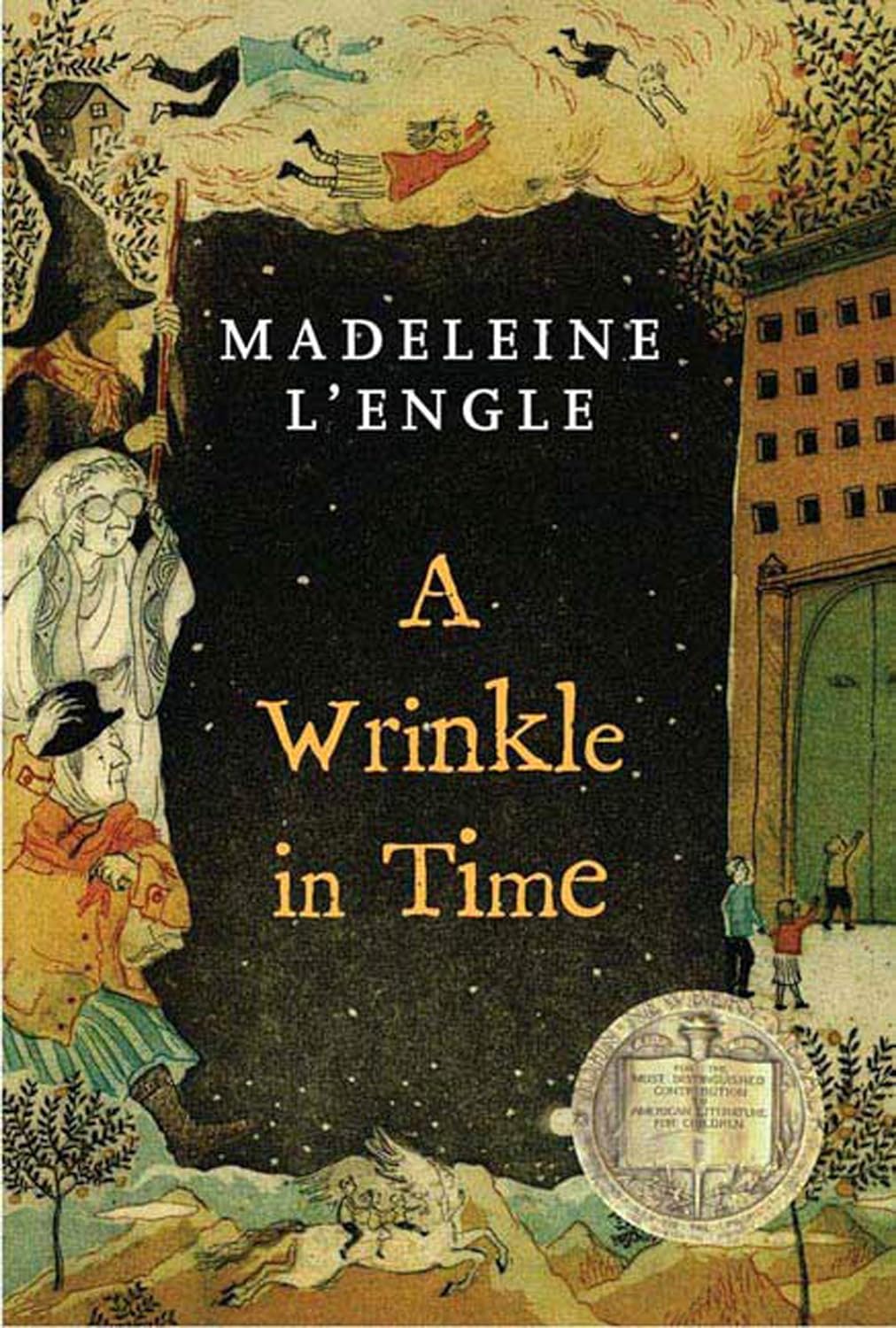
A Wrinkle in Time by Madeleine L’Engle tells the extraordinary story of Meg Murry, a brilliant but awkward girl who travels through space and time to rescue her father from a dark force threatening the universe. This guide provides parents and teachers with reading level information, age recommendations, content insights, and discussion questions for this Newbery Medal-winning classic about family, courage, and the power of love to overcome evil.
For Parents
Find the right reading level for your child, understand the book’s themes around individuality and courage, and get conversation starters to help your child explore questions about conformity, the nature of good and evil, and using your unique strengths to fight darkness.
For Teachers
Access grade-level guidance, reading metrics, character analysis support, and thematic discussion questions perfect for classroom use. This Newbery Medal winner offers rich opportunities for exploring science fiction concepts, philosophy, spirituality, and standing up against conformity and evil.
A Wrinkle in Time at a Glance
Find on Amazon →| Author | Madeleine L’Engle |
| Published | 1962 |
| Grade Level | 5–7 (our assessment) |
| Recommended Age | 10–13 |
| Flesch-Kincaid Grade | 4.7 |
| Word Count | ~49,000 |
| Pages | 211 (paperback) |
| Chapters | 12 |
| Genre | Science fiction / fantasy / adventure |
| Setting | Earth and various planets across the universe, 1960s |
| Awards | Newbery Medal (1963) |
For official Lexile and AR levels, visit Lexile.com or AR BookFinder. ReadingVine provides independent editorial assessments.
What Reading Level Is A Wrinkle in Time?
A Wrinkle in Time is appropriate for grades 5–7, with a Flesch-Kincaid grade level of 4.7. While the sentence structure and vocabulary are accessible—L’Engle writes clearly and directly—the conceptual complexity requires sophisticated comprehension. The book deals with abstract ideas like tesseracts (fifth-dimensional travel), quantum physics concepts, philosophical questions about good and evil, and spiritual themes that demand mature thinking to fully grasp.
L’Engle writes with a blend of scientific precision and poetic imagination. She introduces complex concepts—like traveling through a wrinkle in time by “tessering” (folding space-time), or the nature of the Black Thing (evil as a cosmic force)—through concrete examples and Meg’s emotional experience. The prose alternates between adventure-story pacing and quieter, more philosophical moments where characters discuss the nature of reality, free will, and love’s power over darkness.
While mechanically readable by strong fifth graders, the book resonates most deeply with readers ages 10–13 who can appreciate both the adventure and the deeper questions. Younger readers may enjoy the quest to rescue Meg’s father but miss the subtler themes about conformity versus individuality, the relationship between science and spirituality, and why love specifically (not just courage or strength) defeats evil. It’s an excellent choice for readers ready for science fiction with philosophical depth.
What Age Is A Wrinkle in Time Appropriate For?
A Wrinkle in Time is most appropriate for readers ages 10–13. The story includes some frightening moments and deals with abstract evil and spiritual themes, but these are handled in ways that challenge readers without overwhelming them. The book balances darker elements with warmth, family love, and ultimately hopeful messages about good triumphing over evil.
Abstract evil and darkness: The Black Thing is a cosmic force of evil threatening to consume planets and individuals. IT is a disembodied brain that controls people’s minds. These concepts can be frightening, though they’re not graphically violent.
Mind control and conformity: On Camazotz, everyone is controlled by IT to think and act identically. The imagery of controlled, identical people (children bouncing balls in perfect rhythm) can be unsettling.
Father in danger: Mr. Murry has been trapped on an alien planet, and the quest involves rescuing him. This prolonged parental absence and danger may affect some children.
Charles Wallace’s possession: Meg’s beloved little brother becomes controlled by IT, turning cold and cruel. Watching someone you love become someone else is emotionally difficult.
Cosmic peril: The stakes are universe-threatening—entire planets falling to darkness. The scope can feel overwhelming.
Complex/abstract concepts: Tesseracts, fifth dimensions, quantum physics, and philosophical/spiritual ideas about good and evil may confuse or frustrate some readers.
What’s NOT in the book: No graphic violence, no sexual content, no profanity. The scary moments come from ideas and atmospheres rather than explicit descriptions. The spiritual elements are broadly Christian but not preachy or exclusive. The ending is triumphant—love defeats evil, the family is reunited, and good prevails.
What Is A Wrinkle in Time About?
Meg Murry is a brilliant but troubled teenager who feels like she doesn’t fit in anywhere. She’s awkward, temperamental, and struggles at school despite being naturally gifted at math and science. Her father, a physicist, disappeared mysteriously over a year ago, and people gossip that he abandoned his family. Meg’s mother, also a scientist, insists he’ll return, but Meg struggles with his absence and with feeling different from everyone around her.
Meg adores her little brother Charles Wallace, a five-year-old prodigy who seems to read minds and speaks with unusual wisdom. Charles Wallace befriends three eccentric elderly women who live near the Murry home: Mrs. Whatsit, Mrs. Who, and Mrs. Which. One stormy night, Mrs. Whatsit visits the Murry home and casually mentions that “there is such a thing as a tesseract”—the very concept Mr. Murry was researching before he disappeared.
Charles Wallace introduces Meg and their friend Calvin O’Keefe to the three mysterious women, who reveal they are not human but supernatural beings on a mission to fight darkness in the universe. They explain that Mr. Murry is alive but trapped on a planet that has fallen to the Black Thing—a cosmic force of evil that is gradually consuming planets and galaxies. The women can “tesser” (travel through a wrinkle in time/space) and offer to take the children across the universe to rescue Mr. Murry.
Meg, Charles Wallace, and Calvin tesser through space, visiting several planets. On Uriel, they see the Black Thing—a massive shadow spreading across the universe, swallowing stars and worlds. Mrs. Whatsit transforms into a beautiful winged creature and flies them over Uriel’s stunning landscape while explaining that many beings throughout the universe are fighting against the darkness. She shows them Earth, which is partially shadowed by the Black Thing but not yet consumed.
The women show the children a vision of great fighters against darkness throughout Earth’s history: Jesus, Leonardo da Vinci, Einstein, Shakespeare, and others who fought darkness through truth, beauty, and love. The children learn that darkness represents conformity, control, hatred, and the elimination of individuality, while light represents freedom, love, uniqueness, and choice.
The three Mrs. W’s take the children to Camazotz, a planet completely consumed by darkness where Mr. Murry is imprisoned. Camazotz appears orderly and perfect—identical houses, children playing identically, everything synchronized perfectly. But this perfection is actually horror: everyone is controlled by IT, a disembodied brain that has eliminated all individuality, choice, and free will. People on Camazotz don’t think for themselves; IT thinks for them.
The three Mrs. W’s cannot go any farther—Camazotz is too dark for them. Before the children go on alone, each woman gives a “gift” meant to help in the fight ahead: Mrs. Whatsit gives Meg her faults (her stubbornness, anger, and impatience), explaining that these can become strengths; Mrs. Who gives Meg her special glasses to help her see beyond appearances; and Mrs. Which gives Charles Wallace the reminder to stay a child and not try to act like an adult, because his childlike trust and resilience are part of what makes him strong. With these gifts—and the Mrs. W’s cryptic warnings—the children enter the Central Central Intelligence building where Mr. Murry is held.
They encounter the Man with Red Eyes, a puppet of IT who tries to control them through hypnosis. Charles Wallace, confident in his intelligence, tries to resist IT while maintaining mental contact to learn its secrets. But IT is too powerful—Charles Wallace becomes possessed, his personality erased and replaced with IT’s cold, cruel control. The boy who was warm and loving becomes mechanical and mean, loyal only to IT.
Meg and Calvin, devastated by losing Charles Wallace, press on to find Mr. Murry. They discover him trapped in a transparent column, unable to see or hear the outside world. Meg uses Mrs. Who’s glasses (which allow seeing beyond appearances) and her own determination to penetrate the column and free her father. But Mr. Murry, weakened by imprisonment and unaware of IT’s full power, cannot immediately rescue Charles Wallace or defeat IT.
When they confront IT directly—a disembodied brain pulsing rhythmically on a platform—Meg feels IT’s pull trying to control her thoughts and heartbeat. She nearly succumbs but resists by reciting random things: nursery rhymes, the periodic table, the Declaration of Independence. Her father tessers them away to escape, but in his weakened state, he cannot bring Charles Wallace. They escape Camazotz, but Charles Wallace remains behind, still controlled by IT.
They land on Ixchel, a planet inhabited by kind, tentacled, eyeless beings. One creature (whom Meg calls Aunt Beast) cares for Meg, who was injured during the tesser. The beings of Ixchel cannot see but perceive through other senses and live without darkness or IT’s influence. They nurture Meg back to health while she struggles with rage at her father for leaving Charles Wallace behind.
The three Mrs. W’s appear and explain that Meg must return alone to Camazotz to save Charles Wallace. Only Meg can save him because only she loves him enough, and IT has no power over love. Mr. Murry cannot go—IT would use his guilt against him. Calvin cannot go—his love is too new. Only Meg’s deep, long-standing love for her brother can penetrate IT’s control. This is Meg’s quest alone.
The women tell Meg that what she has is the one thing IT (pure intellect without compassion, control without freedom, conformity without individuality) can’t understand or use: love. Mrs. Which reminds her, “Thee have something that IT has not.” Meg returns to Camazotz to face IT and reach Charles Wallace, who is still under IT’s control. Instead of trying to outthink IT, she focuses on her fierce, personal love for her brother—refusing to give in to fear or the pressure to conform—and holds onto him with that love until he can break free.
The love breaks IT’s hold. Charles Wallace becomes himself again, warm and free. Meg, Charles Wallace, and Calvin tesser back to Earth, landing in the vegetable garden at home exactly the right time to have dinner with Mrs. Murry and the twins. Mr. Murry has returned. The family is reunited. The three Mrs. W’s appear briefly to say goodbye, then vanish, their mission complete.
The book ends with normalcy restored but transformed—the Murrys are together, but they’ve learned profound truths about the universe. Meg has discovered that her faults (stubbornness, temper, impatience) are actually strengths when fighting for what matters. She’s learned that love is not weakness but the most powerful force in existence, capable of defeating evil that seems invincible. The family’s ordinary life continues, but they now understand they’re part of a cosmic battle between light and darkness, and that individual choices and love matter on a universal scale.
A Wrinkle in Time Characters
A Wrinkle in Time Themes and Lessons
At its heart, A Wrinkle in Time is about love as the most powerful force in the universe—more powerful than intellect, control, or darkness. IT represents pure reason without compassion, perfect order without freedom, conformity without individuality. IT can control minds through logic and rhythm, but it cannot understand or combat love. When Meg defeats IT by loving Charles Wallace, she proves that love is not sentiment or weakness but the fundamental force that makes free will and individuality possible. The book teaches that in a universe threatened by forces of conformity and control, love for specific individuals (not abstract humanity) is what preserves freedom and defeats evil.
The book also celebrates individuality and different kinds of intelligence. Meg feels like a misfit—awkward, stubborn, emotional. But these “faults” become strengths. Her stubbornness means she won’t give in to IT. Her impatience drives her to act rather than accept. Her deep emotions, especially love, give her power IT cannot touch. The book rejects the idea that there’s one right way to be smart or valuable, showing that Meg’s mathematical intelligence, Charles Wallace’s intuition, and Calvin’s emotional perceptiveness are all valid forms of brilliance. In a story about fighting conformity, the message is clear: your uniqueness, including your flaws, is your power.
Discussion questions for families:
- Why can only Meg save Charles Wallace? What does she have that IT doesn’t have, and why is that more powerful?
- What is IT, and what does it represent? How is Camazotz’s “perfect” order actually evil?
- Mrs. Whatsit gives Meg “her faults” as a gift. How do Meg’s faults—stubbornness, impatience, anger—become strengths in the fight against IT?
- The book mentions many fighters against darkness: Jesus, Einstein, Shakespeare, and others. What do they all have in common in how they fought darkness?
How Many Pages and Chapters in A Wrinkle in Time?
A Wrinkle in Time has 211 pages in the standard paperback edition and is divided into 12 chapters. The word count is approximately 49,000 words. The chapters average about 17-18 pages each and typically cover a major event or location—meeting the three Mrs. W’s, visiting Uriel, arriving on Camazotz, confronting IT, staying on Ixchel, and the final rescue of Charles Wallace.
For independent readers in the target age range (10–13), the book typically takes 4–5 hours to complete, or about one to two weeks of reading 30 minutes per day. The pacing alternates between action-packed sequences (tessering through space, escaping IT) and quieter philosophical moments (conversations about the nature of good and evil). Some readers move quickly through the adventure elements but slow down during the more abstract discussions.
As a read-aloud, A Wrinkle in Time takes approximately 4–5 hours total. The book works well as a family or classroom read-aloud because the complex concepts benefit from discussion, and the adventure elements engage listeners across age ranges. Teachers often use it to introduce science fiction concepts, discuss conformity and individuality, and explore how science and spirituality can coexist. The philosophical depth makes it suitable for discussion-based teaching.
Books Similar to A Wrinkle in Time
If your child enjoyed A Wrinkle in Time, here are six similar books that explore themes of good versus evil, cosmic adventures, and the power of love and courage:
About Madeleine L’Engle
Madeleine L’Engle (1918–2007) was an American author who wrote more than 60 books, but A Wrinkle in Time remains her most famous and influential work. Born in New York City, L’Engle struggled in school and felt like an outsider, much like Meg Murry. She wrote A Wrinkle in Time while raising three children and facing repeated rejection—the manuscript was rejected by 26 publishers before Farrar, Straus and Giroux finally published it in 1962. Publishers told her the book was too difficult, too unusual, that it mixed science and religion in ways that wouldn’t sell, and that it couldn’t be categorized. But when it was published, young readers immediately connected with Meg’s struggles and the book’s profound themes. It won the Newbery Medal in 1963 and became a beloved classic, eventually selling millions of copies and being translated into numerous languages. L’Engle wrote four more books continuing Meg’s story (A Wind in the Door, A Swiftly Tilting Planet, Many Waters, and An Acceptable Time), collectively known as the Time Quintet, as well as other series and standalone novels. She was deeply influenced by her Christian faith, but her spirituality was expansive and inclusive rather than dogmatic—she saw no conflict between science and faith, believing both sought truth about the universe. This integration of quantum physics, philosophy, and spiritual themes made her work unique in children’s literature. L’Engle was also ahead of her time in creating a female protagonist who was brilliant at mathematics and science at a time when girls were not encouraged in STEM fields. Meg’s intelligence, combined with her emotional depth and her “faults” that become strengths, created a complex female hero rare in 1960s children’s literature. Throughout her life, L’Engle was an advocate for imagination, questioning authority, and rejecting conformity—the very themes of A Wrinkle in Time. She continued writing until shortly before her death in 2007 at age 88, leaving behind a legacy of books that challenged young readers to think deeply about good and evil, love and hate, conformity and freedom. A Wrinkle in Time remains her masterpiece, a science fiction novel that is also a spiritual journey, a fantasy adventure that grapples with real philosophical questions, and a story about an awkward girl who saves the universe through the simple but profound act of loving her brother.
A Wrinkle in Time: Frequently Asked Questions
What is a tesseract in A Wrinkle in Time?
A tesseract is a fifth-dimensional way of traveling through space and time by folding the fabric of the universe, creating a shortcut between distant points. Mrs. Whatsit explains it by having Meg imagine an ant walking along a string from one point to another—the normal way would take a long time. But if you fold the string so the two points touch, the ant can step directly across. That’s tessering—folding space-time to travel instantly across vast distances. Mr. Murry was researching tesseracts when he disappeared, and the three Mrs. W’s can tesser, which is how they take the children across the universe to rescue him. The concept is based on real theoretical physics about higher dimensions and space-time, though L’Engle presents it in an accessible, imaginative way.
What is IT in A Wrinkle in Time?
IT is a disembodied brain on the planet Camazotz that has taken control of the entire planet and all its inhabitants. IT represents pure intellect without love, complete control without freedom, and conformity without individuality. IT forces everyone to think identical thoughts, feel nothing, and behave in perfect synchronized patterns. IT is the ultimate expression of evil in the book—not as violence or cruelty, but as the elimination of free will, choice, and individuality. IT can control minds through rhythm and logic, but it cannot understand or combat love, which is why only Meg’s love for Charles Wallace can free him from IT’s control. IT represents totalitarianism, conformity, and any force that tries to eliminate human uniqueness and freedom.
Why can only Meg save Charles Wallace?
Only Meg can save Charles Wallace because only she has the right kind of love for him—deep, long-standing, and unconditional. Mr. Murry cannot save him because IT would use his guilt against him (guilt over being imprisoned while his son grew up, guilt over leaving Charles Wallace behind). Calvin cannot save him because his love is too new and not yet deep enough. But Meg has loved Charles Wallace his whole life with a fierce, protective love that has no conditions or doubts. This love is what IT cannot understand or combat. IT is pure intellect without love, so love is its weakness. Mrs. Which tells Meg, “Thee have ssomethingg that IT hass not,” and that something is love. Meg defeats IT not through intelligence or strength but by focusing all her love on Charles Wallace and declaring it repeatedly until it breaks IT’s control.
What is the Black Thing in A Wrinkle in Time?
The Black Thing (also referred to as the darkness) is a massive cosmic shadow spreading across the universe, gradually consuming planets and galaxies. It represents evil not as individual bad actions but as a universal force—hatred, fear, conformity, control, and the destruction of individuality and love. When the children see it from Uriel, it looks like a dark cloud swallowing stars. Earth is partially shadowed by it but not completely consumed, because many people throughout history have fought against it (Jesus, da Vinci, Einstein, and countless unnamed individuals). The Black Thing is abstract evil—not a villain you can fight with weapons but a force you resist through love, truth, beauty, and maintaining your individuality and free will. Camazotz is a planet completely consumed by the Black Thing, where IT rules.
Is A Wrinkle in Time a Christian book?
A Wrinkle in Time contains Christian themes and symbolism, but it’s not exclusively Christian or preachy. L’Engle was a devout Christian, and the book reflects her faith—Jesus is mentioned as one of the great fighters against darkness, the power of love echoes Christian theology, and the battle between good and evil has spiritual dimensions. However, the book also includes fighters from other traditions (Buddha, Gandhi) and presents spiritual truth as universal rather than denominational. L’Engle saw no conflict between science and faith—she believed both sought truth. The book was actually controversial among some religious groups for being too inclusive and for mixing science fiction with spirituality. It’s best described as a book with spiritual themes that will resonate with Christian readers but doesn’t require Christian belief to appreciate.
What grade level is A Wrinkle in Time?
A Wrinkle in Time is appropriate for grades 5–7 (ages 10–13). The Flesch-Kincaid grade level is 4.7, making it mechanically accessible to fifth graders. However, the conceptual complexity—tesseracts, quantum physics, philosophical questions about good and evil, spiritual themes—requires mature comprehension. It’s most commonly taught in sixth and seventh grade where students can grasp both the adventure story and the deeper meanings. Some advanced fourth graders can read it, but they may miss some of the subtler themes. The book rewards re-reading at different ages—you notice different things as you mature. Many adults who first read it as children discover new layers of meaning when they revisit it.
Are there sequels to A Wrinkle in Time?
Yes, Madeleine L’Engle wrote four more books continuing Meg’s story, collectively known as the Time Quintet: A Wind in the Door (1973), where Meg must save Charles Wallace again, this time from something attacking him at a cellular level; A Swiftly Tilting Planet (1978), where Charles Wallace (now grown) must prevent nuclear war; Many Waters (1986), where Meg’s twin brothers travel back to the time of Noah’s flood; and An Acceptable Time (1989), where Meg’s daughter Polly time-travels to meet ancient peoples. Each book can be read independently, but they’re connected through the Murry family. A Wrinkle in Time remains the most famous and widely read, but the sequels expand on the themes and continue exploring the family’s adventures across time and space.
What is the main message of A Wrinkle in Time?
The main message is that love is the most powerful force in the universe, stronger than evil, intellect, or conformity. Meg defeats IT not through intelligence (though she’s brilliant) or physical strength, but through love for her brother. The book teaches that what makes us different—our faults, our emotions, our individuality—is actually our strength, especially when fighting forces that want everyone to be identical. It argues that free will and the ability to choose, even when those choices lead to pain or failure, are more valuable than perfect order and control. It also shows that science and spirituality aren’t opposites but both seek truth, and that fighting evil requires both rational thinking and emotional connection. Ultimately, it’s about an awkward, flawed girl discovering that her unique qualities and her capacity for love make her powerful enough to save the universe.
