
 = Partner Site
The Giver Reading Level: A Complete Guide
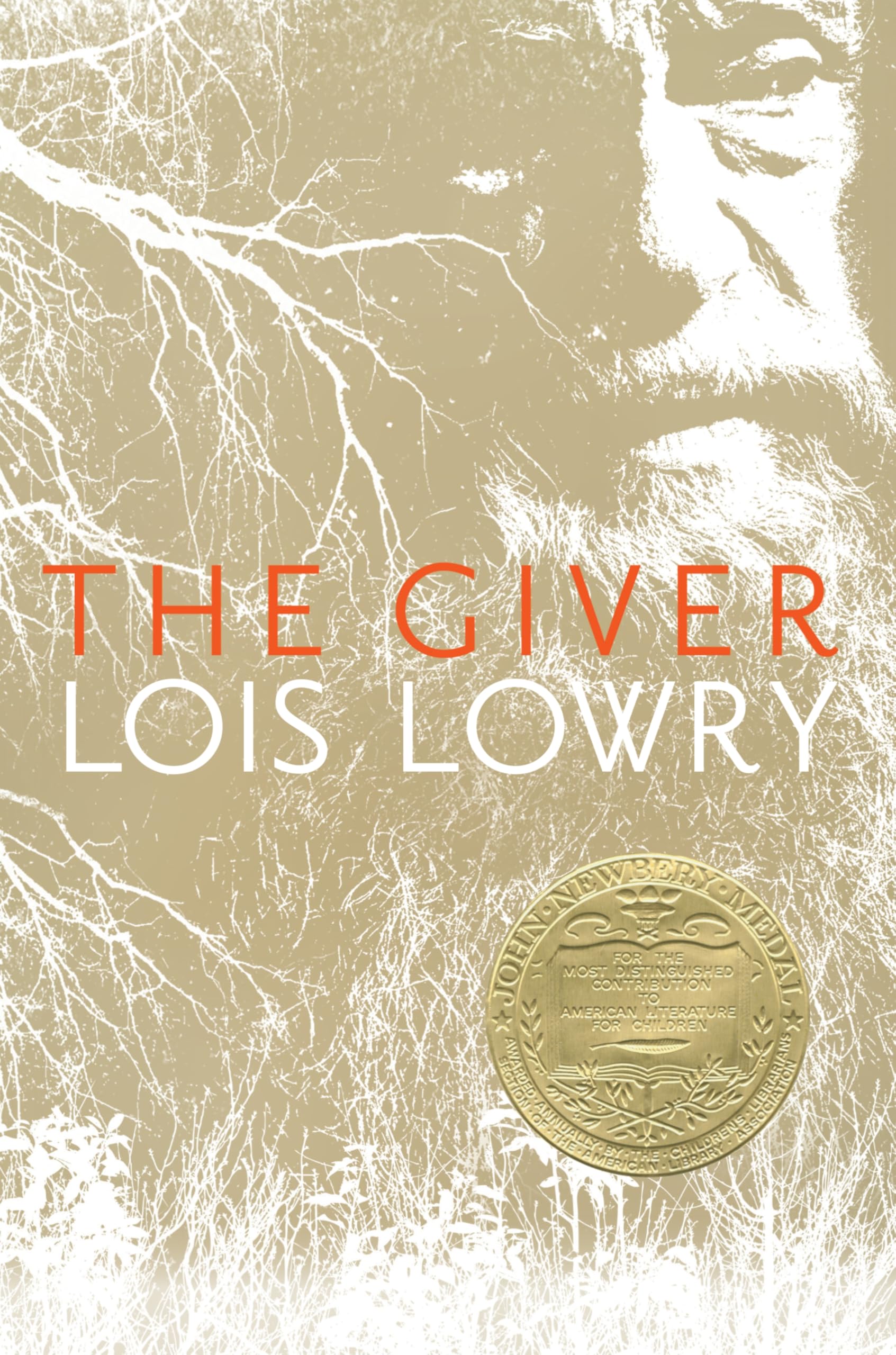
The Giver by Lois Lowry tells the thought-provoking story of Jonas, a twelve-year-old boy living in a seemingly perfect society who discovers the dark truths hidden beneath its surface. This guide provides parents and teachers with reading level information, age recommendations, content insights, and discussion questions for this Newbery Medal-winning dystopian classic about choice, memory, and what it means to be human.
For Parents
Find the right reading level for your child, understand the book’s complex themes about conformity and control, and get conversation starters to help your child explore questions about freedom, memory, emotions, and the cost of a “perfect” society.
For Teachers
Access grade-level guidance, reading metrics, character analysis support, and thematic discussion questions perfect for classroom use. This Newbery Medal winner offers rich opportunities for exploring dystopian literature, ethical dilemmas, and what makes life meaningful.
The Giver at a Glance
Find on Amazon →| Author | Lois Lowry |
| Published | 1993 |
| Grade Level | 5–8 (our assessment) |
| Recommended Age | 11–14 |
| Flesch-Kincaid Grade | 5.7 |
| Word Count | ~43,000 |
| Pages | 208 (standard paperback) |
| Chapters | 23 |
| Genre | Dystopian fiction / science fiction / young adult |
| Setting | A futuristic, controlled community (unspecified location) |
| Awards | Newbery Medal (1994) |
For official Lexile and AR levels, visit Lexile.com or AR BookFinder. ReadingVine provides independent editorial assessments.
What Reading Level Is The Giver?
The Giver is appropriate for grades 5–8, with a Flesch-Kincaid grade level of 5.7. The vocabulary is accessible and the sentence structure is straightforward, making the mechanics manageable for fifth graders. However, the conceptual complexity—understanding a dystopian society, recognizing subtle manipulation, and grappling with abstract ideas about freedom versus security—requires maturity that makes it most meaningful for sixth through eighth graders.
Lowry writes with deceptive simplicity. The prose is clean and precise, reflecting the controlled, emotionless society Jonas inhabits. But beneath this surface clarity are layers of meaning that require careful reading. The community’s euphemistic language (“released” instead of killed, “Stirrings” instead of sexual feelings) masks horrifying realities that readers must learn to decode. Understanding what’s really happening requires reading between the lines and questioning what seems normal in Jonas’s world.
While strong fifth graders can handle the reading mechanics, the philosophical questions—Is a painless life worth living if it means no real choices? Can you have love without the possibility of loss? What makes us human?—resonate most deeply with middle school readers ready to think critically about society, authority, and individual freedom. It’s an excellent bridge to more complex young adult dystopian literature.
What Age Is The Giver Appropriate For?
The Giver is most appropriate for readers ages 11–14. The story deals with mature themes including euthanasia, infanticide, loss of individuality, and totalitarian control. While Lowry handles these topics without graphic descriptions, the concepts are disturbing and require readers mature enough to process the implications of what Jonas discovers about his “perfect” society.
Euthanasia and infanticide: The community “releases” (kills) elderly people, disabled infants, and rule-breakers. Jonas witnesses his father euthanizing a baby. While not graphically violent, the concept is deeply disturbing.
Loss of emotions and choice: Citizens take pills to suppress emotions and have no real choices. Families are assigned, not formed by love. This emotional emptiness pervades the society.
Implied sexuality: “Stirrings” (sexual feelings) are chemically suppressed. Jonas stops taking his pills and begins experiencing these feelings, though this is handled very subtly.
War and suffering: Jonas receives memories of warfare, starvation, and intense physical and emotional pain as part of his training.
Ambiguous ending: The book’s conclusion is intentionally unclear, which some readers find frustrating or unsettling.
What’s NOT in the book: No graphic violence, no explicit sexual content, no profanity. The disturbing elements are conceptual rather than graphic. Lowry trusts readers to understand the horror without detailed descriptions. The tone is thoughtful and philosophical rather than shocking or sensational.
What Is The Giver About?
Twelve-year-old Jonas lives in a seemingly perfect community where there is no war, no pain, no poverty, no choices, and no color. Everything is controlled and predictable. People follow strict rules, use precise language, and share their feelings at required family discussions. When you turn twelve, you receive your lifelong job assignment based on careful observation of your abilities. Jonas expects a normal assignment like his friends receive—one becomes a Caretaker of the Old, another a Laborer.
But Jonas is different. He’s been selected to become the next Receiver of Memory, the most honored position in the community. The Receiver holds all the memories of the past—everything the community gave up to achieve “Sameness,” the state of total control and predictability. Jonas begins training with the current Receiver, an old man who asks Jonas to call him the Giver. Through the transmission of memories, Jonas experiences things his community has never known: color, music, love, sunshine, snow, and joy. But he also receives memories of war, starvation, loneliness, and devastating pain.
As Jonas receives more memories, he begins to see his community differently. He realizes that the “Sameness” that eliminated suffering has also eliminated everything that makes life meaningful. People don’t choose their spouses or children—families are assigned. No one experiences real love because deep emotions have been chemically suppressed through daily pills. The elderly and disabled infants aren’t sent “Elsewhere” as he’s been told—they’re killed through lethal injection, a process the community calls “release.”
The horrifying truth crystallizes when Jonas watches a video of his father—a kind, gentle Nurturer—euthanizing a newborn twin as part of his normal duties, calmly and without emotion. His father doesn’t understand what he’s done is murder because he has no concept of death, no memories of what life could be. Jonas realizes his entire community lives in willful ignorance, accepting a world without real choices, real feelings, or real humanity.
Jonas learns that when the previous Receiver-in-training, a girl named Rosemary, received unbearable memories, she applied for release. When she died, all the memories she’d received returned to the people, causing chaos because they had no context for understanding pain or loss. The Giver and Jonas develop a plan: Jonas will escape the community, and when he crosses beyond its boundaries, all the memories he holds will return to the people. They’ll be forced to deal with both joy and pain, recovering their humanity even though it will be difficult.
The plan accelerates when Jonas learns that Gabriel, a baby his family has been caring for, is scheduled for release because he isn’t developing properly. Unable to let an innocent child be killed, Jonas steals his father’s bicycle, takes Gabriel, and flees into the night. They travel for days through the wilderness, slowly starving and freezing as Jonas’s memories of warmth fade. Jonas searches desperately for the boundary, believing that crossing it will save Gabriel and restore memories to the community.
The book ends ambiguously. Jonas and Gabriel, near death from cold and starvation, sled down a hill toward lights and music that Jonas believes are real but might be hallucinations from hypothermia. Whether they survive, whether they find a real community, whether the memories return to Jonas’s people—Lowry leaves all of this unclear, trusting readers to decide what they believe happened and what it means.
The Giver Characters
The Giver Themes and Lessons
At its heart, The Giver asks whether a life without pain, suffering, or difficult choices is worth living. Jonas’s community has eliminated war, poverty, and inequality—but they’ve also eliminated color, music, love, and genuine human connection. The book argues that pain and pleasure, joy and sorrow, are inseparable parts of being human. You can’t have deep love without the risk of loss, can’t experience real joy without knowing sadness, can’t make meaningful choices if there are no consequences.
The book also explores the importance of memory and history. Jonas’s community has deliberately forgotten the past to avoid repeating its mistakes, but in doing so, they’ve lost the wisdom, beauty, and humanity that make life worth living. Without memory, they can’t learn, can’t grow, and can’t truly be human. The Giver teaches that we must remember the past—both its beauty and its horror—to understand who we are and make informed choices about who we want to become.
Discussion questions for families:
- Would you want to live in Jonas’s community? What would you gain and what would you lose?
- Why does the community suppress emotions and memories? Do you think the trade-off is worth it?
- What does the book teach about the importance of choice, even when choices might lead to pain?
- What do you think happens at the end? Do Jonas and Gabriel survive? Why do you think Lowry left it ambiguous?
How Many Pages and Chapters in The Giver?
The Giver has 208 pages in the standard paperback edition and is divided into 23 chapters. The word count is approximately 43,000 words. The chapters average about 9 pages each and are structured around Jonas’s training sessions and the gradual revelation of the community’s dark secrets.
For independent readers in the target age range (11–14), the book typically takes 4–6 hours to complete, or about one to two weeks of reading 30 minutes per day. The accessible prose makes it a quick read mechanically, but many readers slow down to process the philosophical questions and disturbing revelations as Jonas’s understanding of his world shifts.
As a read-aloud, The Giver takes approximately 3.5–4.5 hours total. The book works exceptionally well as a classroom or family read-aloud because the dystopian elements naturally prompt discussion about freedom, control, and what makes life worth living. Many teachers use it to introduce dystopian literature and critical thinking about society and government.
Books Similar to The Giver
If your child enjoyed The Giver, here are six similar books that explore themes of dystopian societies, freedom, and questioning authority:
About Lois Lowry
Lois Lowry (born 1937) is one of America’s most celebrated children’s authors, having won two Newbery Medals—for Number the Stars (1990) and The Giver (1994). Born in Hawaii to a military family, Lowry moved frequently as a child, an experience that gave her insight into feeling like an outsider and questioning established systems. She was inspired to write The Giver after visiting her elderly father, who was losing his memory. She realized he was also losing his pain—he’d forgotten his daughter’s death and his own grief. This sparked her thinking about whether a world without painful memories would truly be better. The result was a dystopian novel that has become one of the most taught books in American middle schools and has sold millions of copies worldwide. Lowry wrote three companion novels—Gathering Blue, Messenger, and Son—which are set in the same universe but follow different characters. The Giver launched a resurgence in dystopian young adult literature and has been translated into more than 30 languages. A film adaptation was released in 2014, though it differs significantly from the book. Lowry has written more than forty books spanning multiple genres and continues to be celebrated for her willingness to tackle difficult subjects with honesty and respect for young readers’ intelligence. She lives in Maine and continues writing.
The Giver: Frequently Asked Questions
What happens at the end of The Giver?
The ending is intentionally ambiguous. Jonas and Gabriel, near death from cold and starvation, sled down a snowy hill toward lights and music that Jonas believes represent a real community. Whether they survive, whether the lights are real or hallucinations from hypothermia, whether the memories return to Jonas’s community—Lowry leaves all of this unclear. Some readers believe Jonas and Gabriel reach safety and hear Christmas carols, suggesting hope and new life. Others believe they die from exposure and the final scene is a dying dream. Lowry has said she intentionally made it ambiguous so readers could decide what they believe, though the companion novel Messenger suggests Jonas did survive.
What does “release” mean in The Giver?
Release is the community’s euphemism for euthanasia—killing someone through lethal injection. The community releases elderly people when they reach a certain age, releases one twin when identical twins are born (they can’t have people who look exactly alike), releases babies who don’t develop properly, and releases anyone who breaks major rules. Citizens believe released people go “Elsewhere,” but there is no Elsewhere—they’re killed and their bodies disposed of. The community uses this pleasant-sounding language to hide the reality of what’s happening, allowing people like Jonas’s father to kill babies without understanding the moral weight of their actions.
Why can’t Jonas’s community see color?
The community eliminated color as part of creating “Sameness”—their quest to remove all differences and choices. They genetically engineered people to see only in black and white because color represents choice, individuality, and beauty, all things that might lead to preferences or inequality. Jonas begins seeing color when he receives memories because the capacity still exists in human biology—it’s just been suppressed. The return of color symbolizes Jonas awakening to a richer, more meaningful life beyond the community’s control.
What are “Stirrings” in The Giver?
Stirrings are the community’s term for sexual feelings and romantic attraction. When children begin experiencing Stirrings during puberty, they’re required to take daily pills that suppress these feelings. The community eliminates sexual attraction because it leads to choice, passion, and preference—all things that threaten their controlled system. When Jonas stops taking his pills, he begins experiencing Stirrings for his friend Fiona, which is part of his awakening to real human emotions and the realization of what the community has taken away.
Is The Giver appropriate for middle school?
Yes, The Giver is widely taught in middle schools (grades 6–8) and is considered appropriate for ages 11–14. While it deals with mature themes including euthanasia and loss of freedom, Lowry handles these concepts thoughtfully without graphic content. The book is excellent for introducing dystopian literature and prompting discussions about freedom, choice, and what makes life meaningful. Some schools use it in fifth grade for advanced readers, while others wait until sixth or seventh grade. Parents and teachers should be prepared to discuss the euthanasia scenes and the ambiguous ending, as these can be disturbing or confusing for some students.
Are there sequels to The Giver?
Yes, Lois Lowry wrote three companion novels: Gathering Blue (2000), Messenger (2004), and Son (2012). These books are set in the same world but don’t directly continue Jonas’s story—they follow different characters in different communities. Gathering Blue follows a girl with a disabled leg in a brutal village. Messenger takes place in a community where Jonas appears as a leader. Son follows Claire, who was actually the birth mother of Gabriel (the baby Jonas saves), as she searches for her son. Together, the four books are called “The Giver Quartet,” exploring different aspects of the dystopian world Lowry created.
Why is The Giver controversial or banned?
The Giver has been challenged or banned in some schools primarily because of its themes of euthanasia (particularly infanticide), suicide (Rosemary’s release), and the brief mention of Stirrings. Some parents and communities feel these topics are too mature or disturbing for middle school students. Others object to the ending’s ambiguity or believe the book promotes questioning authority. However, many educators defend the book as an important introduction to critical thinking about society, government, and individual freedom. It remains one of the most frequently taught books in American middle schools despite occasional challenges.
What is the main message of The Giver?
The main message is that a meaningful life requires the freedom to make choices, even when those choices might lead to pain. A society that eliminates suffering by removing choice, memory, emotion, and individuality has eliminated what makes us human. The book teaches that we need both joy and sorrow, love and loss, freedom and its risks to truly live. It argues that protecting people from pain by controlling every aspect of their lives ultimately destroys their humanity. True safety and happiness come not from control but from the freedom to choose, feel, remember, and be individuals.