
 = Partner Site
Tuck Everlasting Reading Level: A Complete Guide
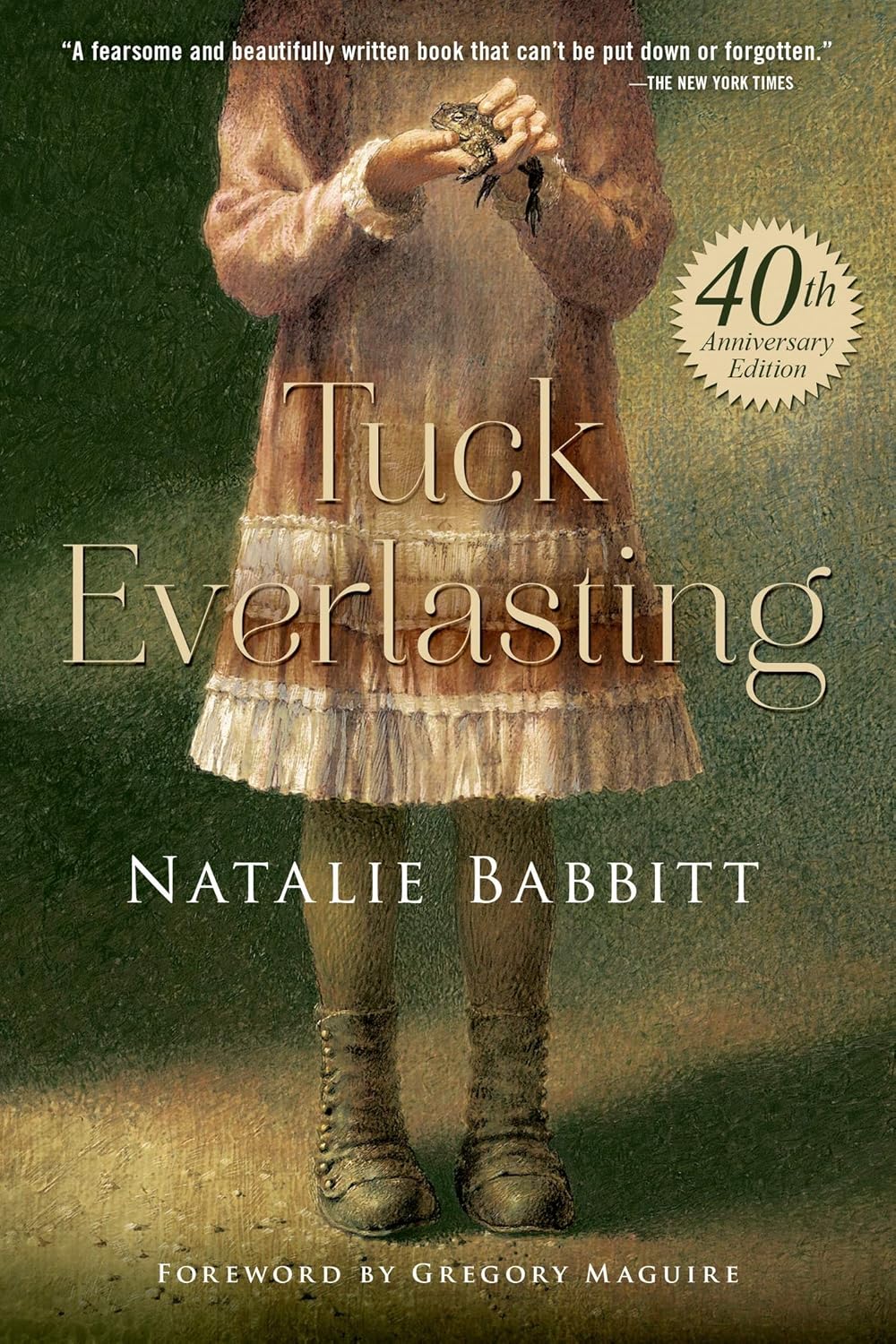
Tuck Everlasting by Natalie Babbitt is a luminous, philosophically rich, and quietly devastating novel about a ten-year-old girl named Winnie Foster who discovers a family called the Tucks living in the woods near her home — and who discovers along with them a secret that forces her to confront one of the most fundamental questions a person can face: whether eternal life is a gift worth having, or whether death is what gives life its meaning. One of the most beautifully written novels in the middle grade canon, it is also one of the most philosophically serious — a book that asks children to think about mortality, freedom, and what it means to live fully, and that trusts them to hold those questions with honesty and without false comfort. This complete guide covers the reading level, age appropriateness, themes, characters, and everything parents and teachers need to know about this enduring classic.
For Parents
Tuck Everlasting is a novel about death — not in the way that sad books about pets or grandparents are about death, but in the way that philosophy is about death: as a question, as a condition of human existence, as the thing that makes everything else matter. Best suited for readers ages 10-13, it is short, beautifully written, and entirely age-appropriate in its content while being genuinely demanding in its ideas. Parents who want their children to encounter a book that takes big questions seriously and trusts children to take them seriously too will find it one of the most important books available at this level.
For Teachers
A widely taught classic well suited to grades 5-6, Tuck Everlasting is one of the finest texts available at this level for teaching literary prose style, extended metaphor, and philosophical argument embedded in narrative. Babbitt’s prose is among the most carefully crafted in middle grade fiction — the opening chapter alone rewards extended close reading — and the novel’s central question about immortality is one of the most productive philosophical discussions available at this grade level. Winnie’s eventual choice is the novel’s most debated moment in classrooms, and that debate is the novel’s gift to teachers: a question with no easy answer that children take completely seriously.
Tuck Everlasting at a Glance
Find on Amazon →| Author | Natalie Babbitt |
| Published | 1975 |
| Grade Level | 5-6 (our assessment) |
| Recommended Age | 10-13 |
| Flesch-Kincaid Grade | 5.2 |
| Word Count | ~27,000 |
| Pages | 139 (standard paperback) |
| Chapters | 25 |
| Genre | Fantasy / philosophical fiction |
| Setting | Treegap, a small fictional village, late 19th century |
| Awards | ALA Notable Children’s Book; included in numerous best-of lists and school curricula nationwide |
For official Lexile and AR levels, visit Lexile.com or AR BookFinder. ReadingVine provides independent editorial assessments.
What Reading Level Is Tuck Everlasting?
Tuck Everlasting reads at approximately a 5th-6th grade level by our editorial assessment, with a Flesch-Kincaid grade level of around 5.2. That score runs somewhat low for a novel most strongly associated with grades 5-6 and frequently taught at the upper end of that range. Babbitt writes with a prose style that is among the most deliberately and most beautifully crafted in middle grade fiction — lyrical, precise, and organized around the extended metaphor of a wheel that appears in the prologue and recurs throughout the novel. The sentences are not difficult; they are carefully made, which is a different thing, and readers who move through them quickly will miss what makes the book extraordinary.
What makes the novel more demanding than its word-level score suggests is the philosophical weight it asks readers to carry. The question at the novel’s center — whether immortality would be a gift or a curse, whether death is a tragedy or a necessary condition of a meaningful life — is genuinely difficult, and Babbitt does not resolve it. She presents the arguments on both sides with complete seriousness and trusts her readers to sit with the irresolution. Readers who want a clear answer will find the novel frustrating; readers who are ready to hold a genuine question will find it one of the most rewarding books they have ever read.
The book is most commonly recommended for grades 5-6, with grade 5 as the most common classroom assignment. For official Lexile and Accelerated Reader scores, visit Lexile.com or AR BookFinder.
What Age Is Tuck Everlasting Appropriate For?
We recommend Tuck Everlasting for readers ages 10-13. The novel deals seriously with mortality — with death as a philosophical question and as a lived reality — and parents should be prepared for a book that does not offer comfort where comfort would be false. It is not a frightening book; it is a thoughtful one, and the difference matters.
The novel includes a murder: a character called the Man in the Yellow Suit is shot by Mae Tuck, depicted briefly and without graphic detail, but real in its consequence — Mae is arrested and sentenced to hang, which drives the novel’s final act. Death is a sustained philosophical subject throughout the novel rather than an event to be avoided. The novel ends with Winnie’s death, conveyed in a single brief epilogue — she has lived her natural life and died, which is the ending the novel has been building toward and which is entirely in keeping with its argument, but which some younger readers find unexpectedly affecting. There is a very mild, entirely age-appropriate romantic element between Winnie and Jesse Tuck. There is no sexual content and no strong language. The novel’s difficulty is entirely philosophical and emotional.
Tuck Everlasting is one of those novels that children read at ten and think about for the rest of their lives. The question it raises — would you drink from the spring? — is one of the most reliably productive discussion questions in the middle grade canon, and children who have been given space to answer it honestly, without being told what the right answer is, carry the question with them in a way that makes it a permanent part of how they think about life and mortality. Parents who read it alongside their children will find it opens conversations that are difficult and necessary and entirely worth having.
What Is Tuck Everlasting About?
The novel opens with a prologue of unusual beauty that establishes the first week of August as a time outside of time — a hinge between the heat of summer and the first premonition of fall, a moment of false stasis before the wheel of the year turns. The wheel is the novel’s central metaphor, and Babbitt introduces it here before the story begins: the idea that life is a wheel, turning always, and that the natural thing — the only livable thing — is to be part of that turning.
Winnie Foster is ten years old and lives in a large house behind a fence in the village of Treegap. Her family owns a wood at the edge of the village, and Winnie has never been allowed inside it. On a hot August morning, restless and constrained by the propriety her family requires of her, she slips into the wood alone — and finds, at the center of it, a boy of about seventeen named Jesse Tuck drinking from a spring.
Jesse is not alone for long. His mother Mae and his older brother Miles arrive quickly, and they do something that frightens Winnie more than anything that has happened so far: they take her with them, not roughly, not cruelly, but firmly, because she has seen the spring and they cannot let her go back to the village until they have explained what it means. What it means is this: eighty-seven years ago, the Tuck family drank from that spring, and they have not aged a day since. They cannot be killed. They will never die. And the spring, if it were known, would be the most dangerous thing in the world.
Winnie spends a night and a day with the Tucks at their home in the woods, and in that time she comes to understand what immortality has cost them. Angus Tuck — the father, patient and melancholy and utterly clear-eyed about his situation — takes her out on a pond in a rowboat and explains it to her in the novel’s most important scene: that life is a wheel, turning, and that the Tucks have fallen off it. They are stuck. They cannot change. They can watch the world moving around them but they cannot be part of its movement, and that stasis, he tells her, is not life. It is something else entirely.
Jesse wants Winnie to drink from the spring. He wants her to wait until she is seventeen and then drink, and grow no older, and be with him forever. Miles, who has already watched a wife and children age and die while he stayed the same, is less certain that this is a gift worth offering. And Winnie, who is ten years old and has never been allowed to make a real choice about anything, must decide what she thinks about all of it — about death, about forever, about what kind of life is worth living.
The novel’s plot accelerates when the Man in the Yellow Suit, who has been searching for the Tuck family and their secret for his own reasons, appears and threatens to expose them. Mae’s response to his threat is swift and final, and its consequences drive the novel to its conclusion. Winnie makes her choice. The epilogue reveals what that choice was, in a paragraph of extraordinary compression and quiet power.
Natalie Babbitt has spoken about writing Tuck Everlasting as a response to her own fear of death — specifically to her recognition that immortality, which she had always assumed would be the answer to that fear, was in fact no answer at all. The novel is the working-out of that recognition, made into story.
Tuck Everlasting Characters
Is Tuck Everlasting Banned?
Tuck Everlasting has been challenged occasionally — primarily on the grounds of its depiction of violence (Mae Tuck’s killing of the Man in the Yellow Suit) and, in some cases, its philosophical treatment of death and immortality, which some parents and community members have found inconsistent with religious teachings about the afterlife. These challenges have been rare and have not been widely sustained. The novel is one of the most broadly embraced texts in the middle grade canon, appearing on the recommended reading lists of virtually every major educational and library organization and in the curricula of schools across the country. It is widely available and widely taught.
Tuck Everlasting Themes and Lessons
The central theme of Tuck Everlasting is the relationship between mortality and meaning — the argument, made by Angus Tuck on the pond and sustained by everything the novel shows us of the Tucks’ existence, that death is not the opposite of life but one of its conditions. The wheel turns. The water in the stream moves. Things change and end and become other things, and that movement — that participation in the great turning — is what life is. The Tucks have been removed from that turning. They watch it. They cannot join it. And what they have instead of life, Tuck tells Winnie with absolute certainty and absolute sorrow, is not life at all.
Freedom and choice are the novel’s second great themes, centered on Winnie. She begins the novel constrained — by her family, by the fence around her house, by the propriety that governs every aspect of her existence. Her encounter with the Tucks is the first time anyone has treated her as someone capable of understanding a serious thing and making a serious choice about it. The spring is a choice no one can make for her, and the novel’s deepest respect for Winnie is its refusal to make it for her — to tell her, or the reader, what the right answer is.
The novel is also a sustained meditation on the specific quality of impermanence — the way that things having endings is part of what makes them beautiful and worth having. Jesse’s love for Winnie is real. The summer the two of them have together is real. But the novel asks whether a love that requires freezing a person in time — that requires removing her from the wheel — is a gift or a theft, and it asks this without answering it, which is the most honest thing it could do.
Discussion starters for classrooms: Would you drink from the spring? Why or why not? What does Tuck mean when he says the Tucks are like rocks stuck at the side of a stream? Is Jesse’s offer to Winnie a gift or something else? What does Winnie’s final choice tell us about what she believes? Why does the novel end the way it does — and is that ending sad, or is it something else?
How Many Pages and Chapters Are in Tuck Everlasting?
The standard paperback edition of Tuck Everlasting is 139 pages, divided into a prologue, 25 chapters, and an epilogue. The word count is approximately 27,000 words — making it one of the shortest Newbery-caliber novels in the middle grade canon and one of the most efficient: every word is doing work, and the novel’s brevity is a function of Babbitt’s extraordinary compression rather than any thinness of content. The opening chapter and the pond scene are particularly rewarding for close reading and are commonly used as exemplary passages in writing instruction.
For readers in the target age range of 10-13, expect a reading time of roughly 3-4 hours, or about a week of comfortable reading at 20-30 minutes per session. The novel is short enough to read aloud in its entirety as a class over two to three weeks — a common approach that allows the prose style to be experienced aurally, which is one of the best ways to access Babbitt’s careful sentence-making. The question “would you drink from the spring?” is one of the most reliable discussion prompts in the middle grade canon, generating genuine disagreement and genuine philosophical engagement at virtually every grade level where the novel is taught. Two adaptations — a 1981 film and a 2002 film — are available for classroom comparison; the 2002 version ages Winnie to fifteen, a change that significantly alters the novel’s philosophical stakes and is worth discussing explicitly.
Books Similar to Tuck Everlasting
About Natalie Babbitt
Natalie Babbitt (1932-2016) was an American author and illustrator whose small body of work — she published fewer than fifteen novels — is among the most carefully crafted in American children’s literature. Born in Dayton, Ohio, she studied art at Smith College and began her career as an illustrator before turning to writing. Tuck Everlasting, published in 1975, is her most celebrated novel and has never gone out of print. It emerged, she has said, from her own lifelong preoccupation with death and her recognition that immortality — which she had always assumed would be the answer to the fear of dying — was in fact no answer at all, because a life without ending would be a life without meaning. Her other novels include The Eyes of the Amaryllis (1977) and Kneeknock Rise (1970), which received a Newbery Honor. She illustrated all of her own books. Babbitt died in 2016, and the tributes that followed her death noted, almost universally, that she had given generations of children their first serious encounter with the question of mortality — and that the question she asked, and the answer she trusted them to find, had stayed with those children their entire lives.
Tuck Everlasting: Frequently Asked Questions
What reading level is Tuck Everlasting?
Tuck Everlasting has a Flesch-Kincaid grade level of approximately 5.2, which runs somewhat low for a novel most strongly associated with grades 5-6 (ages 10-13). The prose is lyrical and carefully crafted rather than syntactically difficult — readers who move through it quickly will miss what makes it extraordinary. The philosophical weight of the novel’s central question about mortality and meaning is more demanding than the word-level score suggests. For official Lexile and AR scores, visit Lexile.com or AR BookFinder.
Would you drink from the spring?
This is the question the novel is asking, and it has been generating genuine disagreement in classrooms for fifty years. Babbitt does not answer it — she presents both sides with complete seriousness and trusts her readers to decide. Those who would drink tend to emphasize love, the fear of loss, the appeal of more time. Those who would not tend to echo Tuck’s argument: that a life without ending is not a life but a stasis, that death is what gives each moment its weight and its meaning, that to be frozen at any point — even a happy one — is to be removed from the wheel that is living. The novel’s ending suggests, quietly and without insisting, where Babbitt herself came down — but it does so with enough restraint that the question remains genuinely open for discussion.
What does the wheel mean in Tuck Everlasting?
The wheel is the novel’s central metaphor, introduced in the prologue and developed throughout. It represents the cycle of life — the constant turning of birth, growth, change, death, and renewal that constitutes the natural order. Tuck explains it to Winnie on the pond: life is like a stream, always moving, always changing, and to be part of it is to accept that you will eventually pass through it and become something else. The Tucks have fallen off the wheel. They are like rocks stuck at the side of the stream — present, permanent, unchanging, while the water flows around them. What they have is not life, Tuck argues, because life requires movement, requires change, requires the possibility of ending. The wheel metaphor is Babbitt’s most important literary achievement in the novel and the most productive thing to discuss in a close reading of the text.
What does Winnie choose at the end?
The epilogue, set many years after the main story, reveals that Winnie did not drink from the spring. She lived her life, aged, and died — her grave is in the Treegap cemetery, and Jesse finds it when he and Mae pass through the village decades later. Babbitt conveys this in a single brief paragraph of extraordinary compression. Whether this ending is sad depends entirely on what the reader has taken from Tuck’s argument on the pond: if you believe, as Tuck does, that death is what gives life its meaning, then Winnie’s choice is the right one, and her grave is not a tragedy but a completion. If you believe Jesse’s version — that forever with someone you love is worth the cost — then the ending is devastating. The novel does not tell you which to believe. It shows you both and leaves you with the question.
Is there a movie version of Tuck Everlasting?
There are two film adaptations. The first, released in 1981, follows the novel closely and keeps Winnie at ten years old. The second, released in 2002 and starring Alexis Bledel and Jonathan Jackson, ages Winnie to fifteen — a change that significantly alters the philosophical stakes of the novel by making the romantic element more central and Jesse’s offer more straightforwardly appealing. Many teachers show clips from the 2002 film alongside the novel and use the age change as a discussion point: what does it mean that the filmmakers felt they needed to make Winnie older? What does that change do to the novel’s argument? Both adaptations are available for classroom use.
Why does the novel open with a description of the first week of August?
The opening of Tuck Everlasting is one of the most deliberately crafted passages in middle grade fiction and rewards close reading in its own right. Babbitt establishes the first week of August as a time of false stasis — a moment that feels permanent, that holds its breath between summer and fall, but that is not actually permanent at all. The wheel is about to turn; the stasis is about to break. This opening prepares readers for the novel’s central argument: that apparent permanence is always illusion, that the natural thing is always the turning, and that what the Tucks have — their genuine, actual permanence — is not the fulfillment of that summer feeling but its negation. The opening is also simply beautiful prose, and reading it aloud is one of the best introductions to what literary language can do that is available at this grade level.
What grade is Tuck Everlasting typically assigned in?
Tuck Everlasting is most commonly assigned in grades 5 and 6, both as independent reading and as a classroom text. It is particularly well suited to units on literary craft — the prologue and the pond scene are used in writing instruction across the country — and to philosophical discussions about mortality, meaning, and the nature of a good life. The question “would you drink from the spring?” is one of the most reliable and most productive Socratic seminar prompts available at this grade level. Many teachers pair it with The Giver for a unit on dystopian and philosophical fiction, or with Charlotte’s Web for a unit on mortality in children’s literature.