
 = Partner Site
Walk Two Moons Reading Level: A Complete Guide
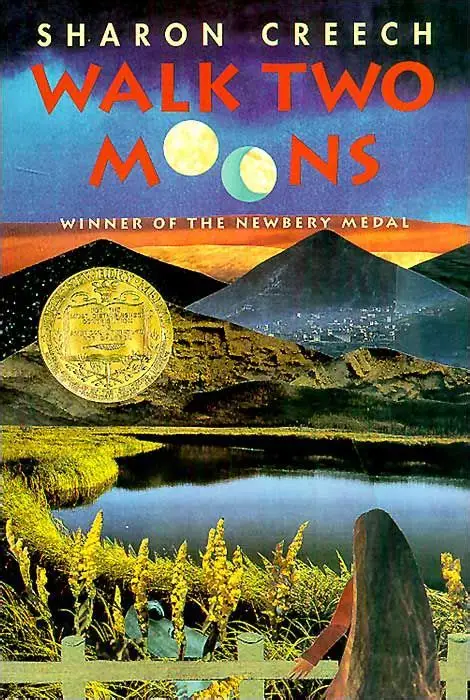
Walk Two Moons by Sharon Creech tells the unforgettable story of Salamanca Tree Hiddle, a thirteen-year-old girl on a cross-country road trip with her grandparents, searching for her mother while unraveling a friend’s mysterious story. This guide provides parents and teachers with reading level information, age recommendations, content insights, and discussion questions for this Newbery Medal-winning novel about grief, acceptance, and the stories we tell ourselves.
For Parents
Find the right reading level for your child, understand the book’s themes around loss and grief, and get conversation starters to help your child explore questions about missing a parent, processing death, and the difference between the stories we want to believe and the truth.
For Teachers
Access grade-level guidance, reading metrics, character analysis support, and thematic discussion questions perfect for classroom use. This Newbery Medal winner offers rich opportunities for exploring narrative structure, symbolism, unreliable narration, and coming-of-age through loss.
Walk Two Moons at a Glance
Find on Amazon →| Author | Sharon Creech |
| Published | 1994 |
| Grade Level | 5–7 (our assessment) |
| Recommended Age | 10–13 |
| Flesch-Kincaid Grade | 4.9 |
| Word Count | ~70,000 |
| Pages | 280 (standard paperback) |
| Chapters | 44 (short chapters) |
| Genre | Contemporary fiction / coming-of-age |
| Setting | Road trip from Ohio to Idaho, with flashbacks to Kentucky |
| Awards | Newbery Medal (1995) |
For official Lexile and AR levels, visit Lexile.com or AR BookFinder. ReadingVine provides independent editorial assessments.
What Reading Level Is Walk Two Moons?
Walk Two Moons is appropriate for grades 5–7, with a Flesch-Kincaid grade level of 4.9. While the vocabulary and sentence structure are accessible—Creech writes in a clear, conversational style—the narrative complexity requires sophisticated reading comprehension. The book uses a story-within-a-story structure: Sal narrates her friend Phoebe’s story while on a road trip with her grandparents, and both stories gradually reveal deeper truths about Sal’s own journey.
Creech writes with deceptive simplicity. The prose feels effortless and natural, but underneath is a carefully constructed narrative where seemingly unrelated details and stories all connect to reveal a devastating truth. Readers must track two timelines (the road trip and Sal’s memories), understand symbolism and foreshadowing, and recognize when Sal is projecting her own story onto Phoebe’s. This requires mature reading skills and the ability to read between the lines.
While strong fifth graders can handle the sentence-level reading, the book resonates most deeply with sixth and seventh graders who can appreciate the sophisticated narrative structure, understand how grief manifests in denial and storytelling, and grasp the emotional complexity of a child processing a parent’s death. It’s an excellent choice for readers ready for layered, literary fiction that rewards close reading and reflection.
What Age Is Walk Two Moons Appropriate For?
Walk Two Moons is most appropriate for readers ages 10–13. The story deals with death, grief, and a child’s journey to accept her mother’s absence. While Creech handles these themes with sensitivity and hope, the emotional reality—that Sal’s mother is dead and not coming back—requires readers mature enough to process loss and the difficult truth that sometimes we tell ourselves comforting stories to avoid facing painful realities.
Death of a parent: Sal’s mother dies in a bus accident. The truth is revealed gradually, and while not graphically described, the loss is central and emotionally heavy.
Grief and denial: Sal spends the book in denial about her mother’s death, believing she can bring her home. Understanding Sal’s denial and her eventual acceptance requires emotional maturity.
Marital strain: Sal’s parents’ marriage was troubled before her mother left. There are references to miscarriage and her mother’s depression, handled sensitively but present.
A second death: Sal’s grandparents are in a car accident near the end. Gram dies from injuries, adding another layer of loss.
A kiss: Sal receives her first kiss from a boy she likes. It’s sweet and age-appropriate but may prompt questions from younger readers.
Complex emotions: The book explores guilt, denial, anger, and the messy reality of grief—emotions that can be challenging for some readers.
What’s NOT in the book: No graphic violence, no sexual content beyond an innocent first kiss, no profanity. The difficult content comes from emotional complexity rather than explicit material. The tone is ultimately hopeful—Sal learns to accept reality and finds a way to move forward with both sadness and joy.
What Is Walk Two Moons About?
Thirteen-year-old Salamanca Tree Hiddle—”Sal”—has left her beloved Kentucky farm to live in Ohio with her father. Sal misses everything about her old life, especially her mother, who left months ago promising to return but hasn’t. When Sal’s eccentric grandparents propose a cross-country road trip to Idaho—to Lewiston, where Sal’s mother is—Sal jumps at the chance. She’s convinced that if she can just get to her mother before her mother’s birthday, she can bring her home.
During the drive, Sal entertains her grandparents by telling them the story of her new friend Phoebe Winterbottom. Phoebe’s story is strange and compelling: mysterious messages appear on Phoebe’s porch, a peculiar young man keeps visiting asking for Mrs. Winterbottom, and then one day, Phoebe’s mother disappears, leaving only a cryptic note. Phoebe is convinced her mother has been kidnapped by a lunatic (the young man who kept visiting). Sal and Phoebe become amateur detectives, following clues and creating elaborate theories.
As Sal narrates Phoebe’s story, she weaves in memories of her own mother and their life in Kentucky. We learn about Sal’s Native American heritage from her mother’s side, the family’s deep connection to their farm, and the tragedy that began unraveling their perfect life: Sal’s mother had a stillborn baby. After losing the baby, Sal’s mother fell into depression. She became distant, unable to even kiss Sal goodnight. Eventually, she left on a bus trip to Idaho—to visit a cousin and “clear her head”—promising to return.
Sal’s father, trying to help both himself and Sal heal, sold the farm and moved them to Ohio, where he reconnected with an old friend, Mrs. Cadaver. Sal resents Mrs. Cadaver intensely—she’s convinced this woman is trying to replace her mother. She doesn’t want a new life in Ohio; she wants her old life back, with her mother in it.
The road trip takes Sal, Gram, and Gramps through multiple states, with each landmark bringing new stories and new memories. Sal continues narrating Phoebe’s story: Mrs. Winterbottom returns with shocking news—the young man who kept visiting is her son from before her marriage, a child she gave up for adoption and has now reconnected with. Phoebe is devastated to learn her mother had secrets, had a whole life before Phoebe existed.
Meanwhile, Sal’s own memories become increasingly painful. She remembers the last time she saw her mother, the way her mother kissed the trees goodbye, how Sal refused to go with her on the bus trip. Sal has been carrying tremendous guilt—she blames herself for not going with her mother, for letting her leave alone.
As they near Idaho, tragedy strikes the road trip: Gram suffers a stroke. They rush her to a hospital, but she dies from complications. Gramps is devastated. Despite this new loss, Gramps insists Sal must complete the journey to Lewiston. He knows what Sal will find, but she needs to discover it herself.
Sal completes the final leg alone, driving illegally to reach Lewiston by her mother’s birthday. She finds the place where her mother’s bus went off the road—a dangerous mountain curve. She learns the truth she’s been denying for months: her mother died in the bus accident. Her body was identified and buried in Idaho. She’s never been coming home.
The revelation is devastating but also clarifying. Sal has been telling herself and everyone else a story—that her mother would return, that Sal could bring her back, that the trip to Idaho would reunite them. But it was denial, a way to avoid facing the unbearable truth. Phoebe’s story was really Sal’s story all along: both girls had mothers who left, both girls needed to accept painful truths about their mothers, both needed to learn that mothers are complex people with their own lives and struggles.
The book ends with Sal returning to Kentucky with Gramps to live on the farm again. She’s learned to accept her mother’s death, to hold both sadness and joy, to understand that life contains beauty and tragedy intertwined. The title comes from a Native American saying Sal’s mother taught her: “Don’t judge a man until you’ve walked two moons in his moccasins.” Sal has learned to see her mother—and herself—with compassion and understanding rather than just pain and longing.
Walk Two Moons Characters
Walk Two Moons Themes and Lessons
At its heart, Walk Two Moons is about how we process unbearable loss and the stories we tell ourselves to avoid facing painful truths. Sal spends the entire book in denial, convincing herself that her mother will return, that the trip to Idaho will reunite them. Phoebe’s story becomes Sal’s way of processing her own situation at a safe distance—she can see Phoebe’s denial and drama clearly while remaining blind to her own. The book teaches that grief often manifests as denial, that we sometimes need time and distance to face reality, and that accepting loss doesn’t mean forgetting or stopping loving—it means learning to hold sadness and joy together.
The title’s meaning—walking two moons in someone’s moccasins before judging—pervades the entire story. Sal learns to understand her mother not as someone who abandoned her but as a complex person struggling with depression and loss. She learns to see Mrs. Cadaver not as a threat but as another grieving widow. She sees Phoebe’s mother not as a kidnap victim but as a woman with her own hidden history and pain. The book argues that true empathy requires imaginative effort—we must try to understand others’ experiences and motivations rather than judging based solely on our own perspective and pain.
Discussion questions for families:
- Why does Sal tell Phoebe’s story instead of her own? How are the two stories similar and different?
- When did you realize what the book was really about? What clues did Creech give along the way?
- What does “Don’t judge a man until you’ve walked two moons in his moccasins” mean? How does Sal learn this lesson?
- How does Sal change from the beginning to the end? How does her understanding of her mother’s leaving change?
How Many Pages and Chapters in Walk Two Moons?
Walk Two Moons has 280 pages in the standard paperback edition and is divided into 44 short chapters. The word count is approximately 70,000 words. The chapters average about 6 pages each and alternate between the road trip narrative (present) and Sal’s memories (past), with Phoebe’s story woven throughout both timelines.
For independent readers in the target age range (10–13), the book typically takes 6–8 hours to complete, or about two weeks of reading 30 minutes per day. The short chapters and alternating narratives create momentum that keeps readers engaged, though some readers slow down as they realize the book’s true direction and begin processing the emotional weight.
As a read-aloud, Walk Two Moons takes approximately 5–6 hours total. The book works well as a classroom read-aloud because the narrative structure naturally prompts discussion about clues, foreshadowing, and what’s really happening. Reading it aloud allows teachers to help students track the parallel stories and recognize the symbolism. The ending often sparks emotional responses and important conversations about grief, denial, and acceptance.
Books Similar to Walk Two Moons
If your child enjoyed Walk Two Moons, here are six similar books that explore themes of loss, grief, and coming-of-age through difficult truths:
About Sharon Creech
Sharon Creech (born 1945) is an American author who has won numerous awards for her children’s and young adult novels, including the Newbery Medal for Walk Two Moons in 1995. Born in Ohio, Creech taught English in England and Switzerland for many years, and the experience of living abroad deeply influenced her writing. Walk Two Moons was inspired by several sources: a message in a fortune cookie that read “Don’t judge a man until you’ve walked two moons in his moccasins,” Creech’s own road trip across America, and her reflections on how we tell stories to make sense of our lives. The book’s narrative complexity—with its embedded story, unreliable narrator, and gradual revelation of truth—showcases Creech’s sophisticated understanding of how grief works and how children process loss. Creech has written more than twenty books, including Love That Dog, The Wanderer (a Newbery Honor book), Ruby Holler, and Heartbeat. Her work is characterized by lyrical prose, deep emotional truth, and respect for young readers’ ability to handle complex feelings and difficult subjects. She often explores themes of loss, family, identity, and finding your place in the world. Creech has said that she writes to understand her own feelings and experiences, and this authenticity resonates with readers of all ages. She’s received numerous awards beyond the Newbery, including the Carnegie Medal and multiple state book awards. Walk Two Moons remains her most celebrated work, taught widely in middle schools for its sophisticated narrative structure and its honest, hopeful approach to grief and acceptance. Creech continues to write and lives in Maine with her husband.
Walk Two Moons: Frequently Asked Questions
What happens to Sal’s mother in Walk Two Moons?
Sal’s mother died in a bus accident in Idaho months before the book begins. She left Kentucky on a bus trip to visit her cousin and “clear her head” after suffering from depression following the stillbirth of Sal’s baby brother. The bus went off a dangerous mountain road near Lewiston, Idaho, killing her and several other passengers. Sal spends the entire book in denial about this truth, convincing herself that her mother is alive in Idaho waiting for her. The revelation comes when Sal reaches Lewiston and visits the accident site, finally accepting what she’s been denying: her mother is dead and buried in Idaho, and she’s never coming home.
Why does Sal tell Phoebe’s story?
Sal tells Phoebe’s story as a way to process her own situation without directly confronting it. Phoebe’s story about her missing mother parallels Sal’s own experience, but by narrating it as someone else’s story, Sal can examine grief, denial, and loss at a safe emotional distance. Throughout the book, Sal is projecting her own feelings and fears onto Phoebe’s situation. Both have missing mothers, both are in denial about the truth, both need to accept that their mothers are complex people with their own struggles. Telling Phoebe’s story allows Sal to explore these themes while still protecting herself from the full pain of her own reality. This narrative technique also helps readers gradually understand what’s really happening with Sal.
What does “Walk Two Moons” mean?
The title comes from the saying “Don’t judge a man until you’ve walked two moons in his moccasins,” which means you shouldn’t judge someone until you’ve tried to understand their experience and perspective. In the book, Sal’s mother taught her this saying, and it becomes central to Sal’s journey. Sal learns to “walk in the moccasins” of her mother, understanding that her mother wasn’t abandoning her but was struggling with depression and grief. She learns to walk in Mrs. Cadaver’s moccasins and see her as a fellow grieving widow rather than a threat. The saying teaches empathy—really trying to understand others’ experiences rather than judging based only on your own pain or perspective.
How did Gram die in Walk Two Moons?
Gram suffers a stroke during the road trip and is taken to a hospital. Despite medical care, she dies from complications. Her death happens near the end of the book, adding another layer of loss to Sal’s journey. Gramps is devastated by losing his wife, but he insists that Sal must complete the journey to Idaho even in the midst of this new grief. Gram’s death mirrors the book’s themes about loss being part of life and learning to hold both sadness and joy together. Despite losing Gram, Sal must still face the truth about her mother and find a way forward.
Is Walk Two Moons appropriate for 5th grade?
Yes, Walk Two Moons is appropriate for most fifth graders, though it’s emotionally complex and deals with death and grief. The reading level is accessible to fifth grade, and the book is commonly taught in fifth and sixth grade classrooms. However, the narrative structure is sophisticated—readers must track parallel stories and recognize when Sal is in denial—which can be challenging for some fifth graders. The themes of parental death and grief require emotional maturity. Teachers and parents should be prepared to support children in processing the book’s emotional content, particularly the revelation about the mother’s death. Some schools wait until sixth grade, while others successfully teach it in fifth grade with proper scaffolding and discussion.
What is the relationship between Sal and Phoebe?
Sal and Phoebe are friends, though their friendship is complicated by the fact that Sal is using Phoebe’s story to process her own grief. Phoebe is dramatic, imaginative, and creates elaborate theories about her missing mother. Sal is initially drawn to Phoebe because their situations parallel each other—both have mothers who left. By helping Phoebe search for her mother and solve the “mystery,” Sal is really working through her own feelings about her mother’s absence. The friendship is genuine, but it also serves Sal’s psychological need to explore her grief indirectly. By the end, both girls have learned difficult truths about their mothers and must accept that mothers are complex people, not just the idealized figures children want them to be.
What is the twist in Walk Two Moons?
The major twist is that Sal’s mother has been dead the entire time. Throughout the book, Sal talks about her mother as if she’s alive in Idaho waiting for Sal to bring her home. Readers gradually realize that Sal is in denial—clues accumulate that something more serious has happened. The revelation comes when Sal reaches the accident site and finally accepts the truth: her mother died in a bus accident months ago and is buried in Idaho. The book has been Sal’s journey toward accepting this unbearable truth. A secondary twist is that Mrs. Cadaver’s husband died in the same bus accident—she’s not trying to replace Sal’s mother but is a fellow grieving widow who survived the crash while her husband and Sal’s mother did not.
What is the main message of Walk Two Moons?
The main message is that accepting difficult truths—even when they’re painful—is necessary for healing and moving forward. Sal must face the reality that her mother is dead and not coming back, that her mother was a complex person who struggled with depression, and that Sal cannot change what happened no matter how much she wants to. The book teaches that grief often manifests as denial, that we sometimes tell ourselves comforting stories to avoid unbearable pain, but that eventually we must accept reality to truly heal. It also emphasizes empathy—the importance of trying to understand others’ experiences and motivations. Finally, it shows that life contains both joy and sorrow intertwined, and that we can move forward while still honoring and remembering what we’ve lost.