
 = Partner Site
Number The Stars Reading Level: A Complete Guide
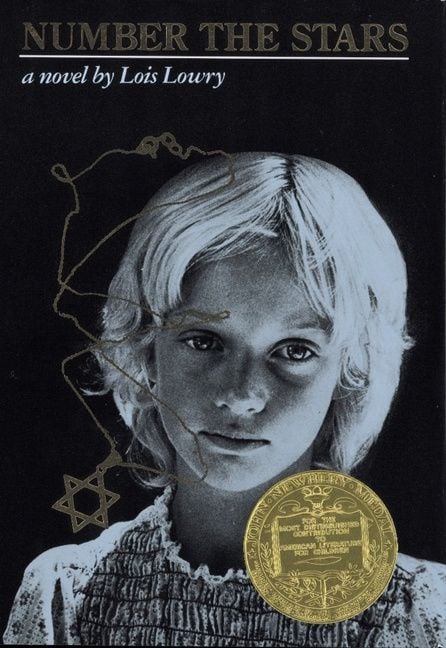
Number the Stars by Lois Lowry tells the powerful story of a ten-year-old Danish girl who helps her Jewish best friend escape the Nazis during World War II. This guide provides parents and teachers with reading level information, age recommendations, content insights, and discussion questions for this Newbery Medal-winning historical fiction classic about courage, friendship, and resistance.
For Parents
Find the right reading level for your child, understand how the book presents the Holocaust in age-appropriate ways, and get conversation starters to help your child explore themes of bravery, sacrifice, and standing up for what’s right.
For Teachers
Access grade-level guidance, reading metrics, character analysis support, and thematic discussion questions perfect for classroom use. This Newbery Medal winner offers rich opportunities for exploring World War II history, moral courage, and the Danish resistance movement.
Number the Stars at a Glance
Find on Amazon →| Author | Lois Lowry |
| Published | 1989 |
| Grade Level | 4–6 |
| Recommended Age | 9–12 |
| Flesch-Kincaid Grade | 4.5 |
| Word Count | ~27,000 |
| Pages | 137 (standard paperback) |
| Chapters | 17 |
| Genre | Historical fiction / World War II |
| Setting | Copenhagen, Denmark, 1943 |
| Awards | Newbery Medal (1990) |
For official Lexile and AR levels, visit Lexile.com or AR BookFinder. ReadingVine provides independent editorial assessments.
What Reading Level Is Number the Stars?
Number the Stars is appropriate for grades 4–6, with a Flesch-Kincaid grade level of 4.5. The vocabulary is accessible and the sentence structure is straightforward, making the book manageable for fourth graders. However, understanding the historical context—Nazi occupation, the Holocaust, and the Danish resistance—requires background knowledge that teachers and parents may need to provide.
Lowry writes with clarity and restraint, never overwhelming young readers with graphic descriptions of wartime violence. The story is told from ten-year-old Annemarie’s perspective, which helps readers connect with the material through a child’s eyes. The pacing is steady, with suspenseful moments balanced by quieter scenes that allow readers to process what’s happening.
While the reading mechanics are accessible to fourth graders, the emotional and historical complexity makes this book most impactful for fifth and sixth graders who have some understanding of World War II. The themes of sacrifice, courage in the face of evil, and moral choice require readers mature enough to grasp why ordinary people would risk their lives to help others. It’s an excellent introduction to Holocaust literature for upper elementary students.
What Age Is Number the Stars Appropriate For?
Number the Stars is most appropriate for readers ages 9–12. The book deals with serious historical events—Nazi occupation, the persecution of Jews, and wartime danger—but presents them in age-appropriate ways. Lowry focuses on acts of courage and resistance rather than dwelling on atrocities, making the story accessible while still honoring the gravity of the Holocaust.
Nazi occupation and persecution: The book depicts German soldiers, curfews, rationing, and the threat to Jewish families. The danger is real but not graphically described.
Death (off-page): Annemarie’s older sister Lise died in a resistance-related incident before the story begins. A character is killed by Nazi soldiers, but this happens off-page and is not described in detail.
Fear and tension: Characters face life-threatening situations, including soldiers with dogs searching for hidden refugees. These scenes are suspenseful but age-appropriate.
The Holocaust context: While the book doesn’t describe concentration camps directly, the threat of deportation and what would happen to Jewish families is implicit throughout.
What’s NOT in the book: No graphic violence, no torture scenes, no detailed descriptions of concentration camps or mass killing. The book focuses on rescue and resistance rather than atrocity. Lowry treats the subject matter with appropriate seriousness while keeping it suitable for upper elementary readers. The tone is hopeful, emphasizing the courage and humanity of the Danish people.
What Is Number the Stars About?
Ten-year-old Annemarie Johansen lives in Copenhagen, Denmark in 1943. Nazi Germany has occupied Denmark for three years, and life has changed dramatically—German soldiers patrol the streets, food is rationed, and Jews face increasing persecution. Annemarie’s best friend Ellen Rosen is Jewish, and the girls have been inseparable since childhood, despite the growing danger.
When the Nazis plan to “relocate” (actually deport) all Danish Jews, Ellen’s parents go into hiding separately, leaving Ellen with the Johansens for safety. The family pretends Ellen is Annemarie’s sister Lise, who died two years earlier. When Nazi soldiers search the Johansen apartment looking for Jews, Annemarie must think quickly—she rips Ellen’s Star of David necklace from her friend’s neck just before the soldiers enter the bedroom. Annemarie’s quick thinking and her parents’ calm deception convince the soldiers that Ellen is not Jewish.
The Johansens then travel to Uncle Henrik’s coastal home, where Annemarie begins to understand that her family is part of the Danish resistance. Uncle Henrik is a fisherman who secretly transports Jewish refugees to neutral Sweden, where they’ll be safe from the Nazis. During a “funeral” that’s actually a gathering point for refugees, Ellen is reunited with her parents, and many Jewish families prepare to be smuggled across the sea to freedom.
When Nazi soldiers and their dogs arrive to search for hidden Jews, the refugees hide in a secret compartment on Uncle Henrik’s boat. Annemarie’s mother leads the Rosens and other families through the dark woods to the harbor, but on her return, she falls and breaks her ankle. She realizes she’s dropped a crucial package that Henrik needs—a handkerchief treated with a chemical mixture that will confuse the Nazi dogs’ sense of smell, preventing them from detecting the hidden refugees.
In an act of tremendous courage, Annemarie runs through the dark woods alone, past Nazi soldiers and their dogs, to deliver the packet to Uncle Henrik. She pretends to be just a silly little girl bringing her uncle his lunch, and the soldiers, fooled by her innocent act, let her pass. The handkerchief works, the dogs don’t detect the hidden families, and the Rosens safely reach Sweden. The book ends with the knowledge that Denmark’s Jews have been saved through the courage of ordinary Danes like the Johansens, and with Annemarie’s promise to wear Ellen’s Star of David necklace until her friend can return home safely.
Number the Stars Characters
Number the Stars Themes and Lessons
Number the Stars explores what true courage means. Uncle Henrik tells Annemarie that being brave doesn’t mean not being afraid—it means doing what you must even when you’re scared. Annemarie demonstrates this when she runs through the woods past Nazi soldiers, terrified but determined to save Ellen’s family. The book teaches that ordinary people can perform extraordinary acts of courage when they choose to do what’s right.
The book also examines friendship and loyalty across religious and cultural lines. The Danish people, as a whole, refused to abandon their Jewish neighbors. Annemarie’s family risks everything to save Ellen’s family, not because they expect reward or recognition, but simply because it’s the right thing to do. This demonstrates the power of standing together against injustice and the importance of protecting those who are vulnerable.
Discussion questions for families:
- What does Uncle Henrik mean when he says that all Danish people “are bodyguards for the Jews”? Why did the Danish people act differently than people in other occupied countries?
- How does Annemarie show courage throughout the story? What’s the difference between being fearless and being brave?
- Why didn’t Annemarie’s parents tell her the whole truth about what they were doing? When is it okay to keep secrets to protect people?
- What would you have done if you were in Annemarie’s position? Would you have been willing to risk your life to help a friend?
How Many Pages and Chapters in Number the Stars?
Number the Stars has 137 pages in the standard paperback edition and is divided into 17 chapters plus an Afterword. The word count is approximately 27,000 words. The chapters average about 8 pages each and typically cover a specific event or day—the encounter with soldiers, Ellen hiding with the Johansens, the journey to Uncle Henrik’s, Annemarie’s run through the woods, etc.
For independent readers in the target age range (9–12), the book typically takes 3–4 hours to complete, or about one week of reading 30 minutes per day. The accessible prose and engaging story keep most readers moving steadily through the book. The suspenseful moments make it difficult to put down, and many students finish it more quickly than expected.
As a read-aloud, Number the Stars takes approximately 3–4 hours total. The book works beautifully as a family or classroom read-aloud because it prompts important discussions about courage, moral choices, and standing up against injustice. Teachers commonly use it in fourth through sixth grade as an introduction to Holocaust literature. The Afterword provides historical context that helps readers understand which parts of the story are based on real events and which characters are fictional.
Books Similar to Number the Stars
If your child enjoyed Number the Stars, here are six similar books that explore themes of courage, resistance, and difficult moral choices:
About Lois Lowry
Lois Lowry (born 1937) is an American author who has written more than 30 books for young readers and won two Newbery Medals. Number the Stars, published in 1989, won the Newbery Medal in 1990. Lowry was inspired to write the book after meeting her friend Annemarie Platt (for whom the protagonist is named), who grew up in Copenhagen during the Nazi occupation. Lowry wanted to tell the story of the Danish resistance and the remarkable rescue of Denmark’s Jewish population—over 7,000 Jews were secretly transported to Sweden in 1943, saving nearly all of Denmark’s Jewish citizens. The book honors both her friend’s experiences and the courage of the Danish people. Lowry’s other famous work, The Giver (1993), also won the Newbery Medal. She’s known for tackling difficult subjects in ways that are accessible to young readers without condescending to them. Number the Stars reflects her commitment to teaching children about important historical events while maintaining hope and emphasizing the power of ordinary people to resist evil. The book continues to be widely taught in schools as an introduction to Holocaust literature for upper elementary students.
Number the Stars: Frequently Asked Questions
Is Number the Stars based on a true story?
Number the Stars is historical fiction based on true events. The Danish resistance’s rescue of nearly all of Denmark’s Jewish population in 1943 is historical fact—over 7,000 Jews were secretly transported to neutral Sweden, saving them from Nazi deportation. The specific characters and events in the book are fictional, but they’re based on real resistance activities. Lois Lowry was inspired by her friend Annemarie Platt’s stories of growing up in Denmark during the occupation.
What happened to Lise in Number the Stars?
Lise Johansen, Annemarie’s older sister, died in a car accident two weeks before her wedding, years before the main story takes place. However, Annemarie learns later that this was a lie her parents told to protect her. The truth is that Lise was a member of the Danish resistance and was killed by Nazi soldiers while on a resistance mission. This revelation helps Annemarie understand that her family has been fighting the Nazis all along.
Why is it called Number the Stars?
The title comes from Psalm 147, which says that God determines the number of the stars and calls them each by name. In the book, Annemarie reflects on this passage when thinking about her friend Ellen and all the Jewish people being hunted by the Nazis. The title suggests that each person is known and precious—just as God knows each star individually, each person matters and deserves to be saved.
What was in the handkerchief in Number the Stars?
The handkerchief was treated with a chemical mixture designed to confuse the Nazi dogs’ sense of smell. When soldiers used trained dogs to search boats for hidden refugees, the dogs would sniff the handkerchief first, temporarily numbing their noses so they couldn’t detect the people hiding below. This was based on real resistance tactics used during the Danish rescue operation to help refugees escape detection.
Does Ellen survive in Number the Stars?
Yes, Ellen and her family safely reach Sweden thanks to the Danish resistance and the Johansen family’s bravery. The book ends with the knowledge that the rescue operation was successful, though Ellen hasn’t yet returned to Denmark. Annemarie keeps Ellen’s Star of David necklace, planning to wear it herself until Ellen can safely return home.
Is Number the Stars appropriate for 4th grade?
Yes, Number the Stars is appropriate for most fourth graders. The reading level is accessible to fourth grade readers, and Lois Lowry handles the difficult subject matter in age-appropriate ways. The book doesn’t include graphic violence or detailed descriptions of Holocaust atrocities. Instead, it focuses on courage, friendship, and resistance. However, teachers and parents should provide historical context about World War II and the Holocaust.
What happened to Peter Nielsen at the end of Number the Stars?
The book’s Afterword reveals that Peter Nielsen, like many Danish resistance fighters, was captured and executed by the Nazis. This detail reflects the historical reality that members of the resistance faced grave dangers, and many did not survive the war. The book mentions this fact matter-of-factly in the Afterword rather than depicting it in the story itself.
What is the main message of Number the Stars?
The main message is that ordinary people have the power to stand up against evil and that small acts of courage can make an enormous difference. The book teaches that bravery isn’t about being fearless—it’s about doing what’s right even when you’re scared. It also emphasizes the importance of friendship, loyalty, and protecting those who are being persecuted.