
 = Partner Site
The Sign of the Beaver Reading Level: A Complete Guide
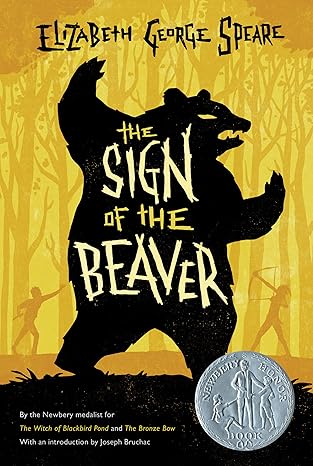
The Sign of the Beaver by Elizabeth George Speare tells the compelling story of Matt, a twelve-year-old boy left alone to guard his family’s cabin in the Maine wilderness, and Attean, a Native American boy who teaches him survival skills. This guide provides parents and teachers with reading level information, age recommendations, content insights, and discussion questions for this Newbery Honor classic about friendship across cultures, survival, and mutual respect.
For Parents
Find the right reading level for your child, understand the book’s themes around cultural differences and survival, and get conversation starters to help your child explore questions about prejudice, learning from others, and what it means to build friendships across cultural divides.
For Teachers
Access grade-level guidance, reading metrics, character analysis support, and thematic discussion questions perfect for classroom use. This Newbery Honor book offers rich opportunities for exploring colonial history, Native American perspectives, cultural exchange, and wilderness survival.
The Sign of the Beaver at a Glance
Find on Amazon →| Author | Elizabeth George Speare |
| Published | 1983 |
| Grade Level | 4–6 |
| Recommended Age | 9–12 |
| Flesch-Kincaid Grade | 4.9 |
| Word Count | ~40,000 |
| Pages | 135 (standard paperback) |
| Chapters | 25 (short chapters) |
| Genre | Historical fiction / survival / adventure |
| Setting | Maine wilderness, 1768 |
| Awards | Newbery Honor (1984), Scott O’Dell Award |
For official Lexile and AR levels, visit Lexile.com or AR BookFinder. ReadingVine provides independent editorial assessments.
What Reading Level Is The Sign of the Beaver?
The Sign of the Beaver is appropriate for grades 4–6, with a Flesch-Kincaid grade level of 4.9. The vocabulary is accessible and the sentence structure is straightforward, making the mechanics comfortable for fourth graders. The book includes some Penobscot words and colonial-era terms, but context makes meanings clear. Speare’s prose is clean and efficient, never bogged down with excessive description.
Speare writes with restraint and precision, trusting young readers to understand complex themes without heavy-handed explanation. The narrative moves at a steady pace through Matt’s months alone, with each chapter typically covering a specific challenge, lesson, or development in his relationship with Attean. The dialogue is natural and reveals character—Matt’s initial assumptions about “Indians” gradually shift as he gets to know Attean as an individual with his own intelligence, humor, and cultural knowledge.
While strong fourth graders can handle the reading mechanics, the book resonates most deeply with readers ages 9–12 who can appreciate the nuanced portrayal of cultural exchange, understand that Matt’s initial prejudices are wrong without needing them explicitly condemned, and grasp the bittersweet ending where friendship must overcome cultural and historical divides. It’s an excellent choice for readers ready for historical fiction that respectfully portrays Native American perspectives.
The book is also popular as a read-aloud for younger students because the survival elements are engaging and the chapters are short, making it easy to read one or two per session while discussing the cultural and historical elements.
What Age Is The Sign of the Beaver Appropriate For?
The Sign of the Beaver is most appropriate for readers ages 9–12. The story deals with survival challenges, cultural prejudice, and the historical reality of colonial expansion and its impact on Native Americans. While Speare handles these topics with age-appropriate restraint, the themes require readers mature enough to understand nuance, cultural differences, and historical context.
Survival danger: Matt faces bee stings that nearly kill him, hunger, cold, and the challenge of surviving alone. A stranger steals his rifle, leaving him defenseless. These situations create real peril.
Cultural prejudice: Matt initially holds stereotypical views about Native Americans, calling them “savages” and viewing them as inferior. The book shows him learning these views are wrong, but the prejudice is present.
Historical context of displacement: The book honestly portrays that white settlers are taking Native American land. Attean’s people are being pushed west by colonial expansion, and this injustice is acknowledged.
Violence (referenced): There are mentions of conflicts between colonists and Native tribes, including Attean’s father being captured and possibly killed. Nothing is graphically described.
Extended isolation: Matt spends months completely alone, which some readers may find unsettling, though he handles it with increasing competence.
Difficult choice: Matt must decide between his family and his friendship with Attean’s tribe. The choice involves loyalty conflicts that may be emotionally complex for some readers.
What’s NOT in the book: No graphic violence, no death of major characters, no profanity. The prejudice Matt initially shows is challenged by the narrative itself—readers understand that Matt is wrong and must learn to see Attean differently. The tone is ultimately hopeful about the possibility of friendship and understanding across cultural divides.
What Is The Sign of the Beaver About?
In 1768, twelve-year-old Matt Hallowell and his father have spent the summer building a cabin in the Maine wilderness. Their family plans to settle here, but first Matt’s father must return to Massachusetts to bring back Matt’s mother, sister, and new baby. Matt will stay alone to guard the cabin and tend the garden until the family returns—his father expects to be gone about seven weeks.
Matt is proud to be trusted with this responsibility. He’s confident he can handle it—he has his father’s rifle, a good supply of food, the garden, and the skills his father taught him. But almost immediately, things start going wrong. A stranger appears asking for food, and while Matt is distracted showing him the garden, the man steals Matt’s rifle. Without the rifle, Matt can’t hunt, and he’s essentially defenseless in the wilderness.
Desperate for protein, Matt makes a foolish decision: he reaches into a hollow tree to retrieve honey from a bee hive. The bees attack him viciously, and he barely escapes to a stream where he plunges underwater repeatedly to escape the swarm. He’s stung so many times that he becomes dangerously ill with fever and delirium. He would die except that an elderly Native American man named Saknis finds him and tends to him, applying healing herbs and staying with him until the fever breaks.
When Matt recovers, Saknis proposes a bargain: Matt will teach Saknis’s grandson, Attean, to read English. In exchange, Attean will bring Matt food and teach him survival skills. Matt agrees, though he’s uncomfortable around “Indians”—his society has taught him to view Native Americans as dangerous savages, and he knows nothing about their actual culture or humanity.
Attean appears for lessons, but he’s surly and resentful. He doesn’t want to learn to read—he considers it pointless and beneath him. Matt tries to teach using Robinson Crusoe, the only book they have, but Attean is contemptuous of the story. He points out that Crusoe treats Friday (a “savage” who becomes Crusoe’s servant) as inferior and stupid. Attean finds the book insulting and asks why white people think this is a good story. Matt, who has never questioned the book before, begins to see its problems through Attean’s eyes.
As the lessons continue, Attean starts teaching Matt in return—not reading, but survival skills the Penobscot way. He shows Matt how to make snares, how to track animals, how to fish with his hands, which plants are edible, how to move silently through the forest, how to understand animal behavior. Matt realizes that Attean knows far more about surviving in the wilderness than Matt does, despite Matt’s assumption that “civilized” people are superior.
Gradually, mutual respect develops into genuine friendship. Matt learns about Penobscot customs, beliefs, and way of life. He’s invited to Attean’s village, where he’s accepted (though not fully trusted) by most of the tribe. He participates in their daily life, eats their food, and begins to understand that Native Americans are not the savages he was taught to fear—they’re people with rich culture, deep knowledge, complex social structures, and spiritual beliefs.
The turning point in Matt and Attean’s friendship comes when they hunt a bear together. A bear has been raiding the village, and the men are away. Attean decides to hunt it himself, and he brings Matt along. When the bear charges, both boys show courage. Though they don’t kill the bear, their shared danger and cooperation cement their friendship. They’ve proven themselves to each other as equals.
As summer turns to fall, Matt’s family still hasn’t returned. Seven weeks have passed, then eight, then more. Matt begins to worry—what if something has happened? What if they’re not coming? Meanwhile, Attean’s people are preparing to move west, away from the encroaching white settlements. The English settlers keep coming, taking more land, and the tribe has decided to relocate to escape the conflict and preserve their way of life.
Saknis invites Matt to come with them. They’ve accepted him as almost part of the tribe, and Saknis offers to adopt him. Matt would have a place with them, would learn their ways fully, would remain with his friend Attean. It’s an extraordinary offer—recognition that Matt has earned their respect and that friendship transcends cultural boundaries.
Matt is torn. Part of him wants to go—he’s grown to love the Penobscot way of life and values Attean’s friendship deeply. But he made a promise to his father to guard the cabin and wait for the family. He also knows, deep down, that he belongs with his own family, even though he respects and admires the Penobscot people. He declines Saknis’s offer, choosing loyalty to his family over adventure with the tribe.
Attean gives Matt a gift before leaving: his dog. This is a tremendous sacrifice—the dog is valuable and beloved—but Attean wants Matt to have protection and companionship during the lonely winter ahead. In return, Matt gives Attean his watch, the one thing of value he owns. The exchange of gifts represents their deep friendship and mutual respect.
The tribe leaves, heading west, and Matt is alone again. But now he has the skills Attean taught him, and he’s a different person than the boy who was left alone months ago. He survives the harsh winter, using Penobscot techniques to trap food, make snowshoes, and endure the cold. Finally, in winter, his family arrives—delayed by the birth of the baby and difficult travel.
The book ends with Matt reunited with his family but forever changed. He’s gained wilderness skills, learned to question his society’s prejudices, formed a cross-cultural friendship that taught him respect and humility, and discovered that people from different cultures have much to teach each other. The sign of the beaver—Attean’s tribal symbol carved into a tree—stands as a reminder of the friendship between a colonial boy and a Penobscot boy, a friendship that transcended the historical forces dividing their peoples.
The Sign of the Beaver Characters
The Sign of the Beaver Themes and Lessons
At its heart, The Sign of the Beaver is about learning to see people as individuals rather than stereotypes. Matt begins with all the prejudices his colonial society has taught him—Native Americans are “savages,” inferior to white people, dangerous and uncivilized. Through his friendship with Attean, Matt learns that these assumptions are completely wrong. Attean is intelligent, skilled, knowledgeable, and culturally sophisticated. The book teaches that prejudice comes from ignorance, that getting to know people different from ourselves breaks down stereotypes, and that every culture has valuable knowledge and wisdom to offer.
The book also honestly addresses the historical reality of colonial expansion and its impact on Native Americans. Attean’s people are being displaced by white settlers—people like Matt’s family. The book doesn’t avoid this uncomfortable truth. Saknis and Attean explain that more white people keep coming, taking more land, and the tribe must move to survive. The book shows readers that the “settling” of America meant displacement and loss for Native peoples, presenting this history from the Native perspective rather than celebrating colonial expansion uncritically. This makes it a valuable historical fiction that respects both Matt’s story and the larger historical injustice.
Discussion questions for families:
- How does Matt’s view of Native Americans change from the beginning to the end? What causes this change?
- Why is Attean insulted by Robinson Crusoe? What does the book teach about Friday, and why does Attean see it differently than Matt?
- Saknis invites Matt to join the tribe and go west with them. Why does Matt say no? Do you think he made the right choice?
- The book shows white settlers taking Native American land. How does this historical reality affect Matt and Attean’s friendship?
How Many Pages and Chapters in The Sign of the Beaver?
The Sign of the Beaver has 135 pages in the standard paperback edition and is divided into 25 short chapters. The word count is approximately 40,000 words. The chapters average about 5 pages each and typically focus on a specific event—a survival challenge, a lesson between Matt and Attean, or a development in their relationship.
For independent readers in the target age range (9–12), the book typically takes 3–4 hours to complete, or about one week of reading 30 minutes per day. The short chapters and steady pacing make it accessible even to reluctant readers, while the cultural themes and survival elements keep stronger readers engaged.
As a read-aloud, The Sign of the Beaver takes approximately 3–3.5 hours total. The book works excellently as a classroom read-aloud because the historical and cultural themes naturally prompt important discussions about prejudice, cultural exchange, and colonial history. Teachers can use it to explore Native American perspectives often missing from traditional history lessons, making it particularly valuable for fourth through sixth grade social studies connections.
Books Similar to The Sign of the Beaver
If your child enjoyed The Sign of the Beaver, here are six similar books that explore themes of survival, cross-cultural friendship, and wilderness adventures:
About Elizabeth George Speare
Elizabeth George Speare (1908–1994) was an American author who wrote only five books but won the Newbery Medal twice—an extraordinary achievement. Born in Melrose, Massachusetts, Speare grew up loving history and developed a particular interest in colonial New England and the interactions between European settlers and Native Americans. After working as a teacher and raising a family, she began writing historical fiction in her forties. Her first Newbery Medal came for The Witch of Blackbird Pond (1958), set in colonial Connecticut. Her second came for The Bronze Bow (1961), set in ancient Israel during Jesus’s time. The Sign of the Beaver, published in 1983 when Speare was 75, won a Newbery Honor and the Scott O’Dell Award for Historical Fiction. The book was inspired by Speare’s research into the Penobscot people and colonial Maine, as well as her belief that historical fiction should present multiple perspectives rather than just glorifying European settlement. She wanted to show the humanity and sophistication of Native American culture and acknowledge the injustice of colonial expansion while still creating an engaging story about friendship. Speare was meticulous about historical accuracy, researching extensively to ensure that the survival techniques, Penobscot customs, and historical details were authentic. She consulted with Native American historians to respectfully portray Attean and his people. The book reflects Speare’s commitment to nuanced, thoughtful historical fiction that doesn’t shy away from uncomfortable truths. Speare received numerous honors beyond her Newbery Medals, including the Laura Ingalls Wilder Medal for lasting contribution to children’s literature. She continued writing until her death in 1994, leaving behind a small but powerful body of work characterized by historical accuracy, strong characters, and respect for all cultures. The Sign of the Beaver remains her most accessible book for elementary readers and continues to be widely taught as an introduction to both wilderness survival and thoughtful discussion of colonial history and cultural exchange.
The Sign of the Beaver: Frequently Asked Questions
Is The Sign of the Beaver based on a true story?
The Sign of the Beaver is fiction, but it’s based on extensive historical research. Elizabeth George Speare researched colonial Maine, the Penobscot people, and the historical reality of interactions between European settlers and Native Americans in the 1700s. The survival techniques, cultural details, and historical context are all accurate. While Matt and Attean are fictional characters, their story reflects real patterns of cultural exchange, displacement of Native peoples, and the possibility of friendship across cultural divides during this period. The book is considered historically accurate in its portrayal of both colonial life and Penobscot culture, thanks to Speare’s meticulous research and consultation with Native American historians.
What is the sign of the beaver?
The sign of the beaver is the Penobscot tribal symbol—a representation of a beaver carved or drawn on trees to mark territory or leave messages. In the book, Attean carves this symbol on a tree near Matt’s cabin as a sign of their friendship and as a marker of the Penobscot presence in that territory. The beaver is significant because it’s the tribal totem or symbol of Attean’s people. When Attean carves it near Matt’s cabin before leaving to go west, it serves as a permanent reminder of their friendship and the connection between two cultures, even as historical forces push them apart.
Does Matt go with Attean’s tribe?
No, Matt chooses to stay at the cabin and wait for his family rather than joining Attean’s tribe when they move west. This is a difficult decision—Saknis has offered to adopt him, and Matt values his friendship with Attean and respects their way of life. But Matt feels loyalty to his family and his promise to his father to guard the cabin. He also recognizes that while he’s learned from the Penobscot people and formed a genuine friendship, he ultimately belongs with his own family and culture. The choice shows Matt’s maturity and sense of responsibility, even though it means losing his friend and the adventure of going west with the tribe.
What does Matt learn from Attean?
Attean teaches Matt essential wilderness survival skills that save his life: how to make snares and traps for catching game, how to track animals, how to fish with his hands, which plants are edible and which are poisonous, how to move silently through the forest, how to read animal signs and predict weather, and how to think like a hunter rather than making noise and scaring game away. Beyond practical skills, Matt learns respect for nature and for Penobscot culture. He learns that Native Americans are not “savages” but people with sophisticated knowledge, complex culture, and deep wisdom about living in harmony with the land. Most importantly, Matt learns humility—that his assumptions about cultural superiority were wrong and that he has much to learn from people different from himself.
Why does Attean hate Robinson Crusoe?
Attean is insulted by Robinson Crusoe because the book portrays Friday, the “savage” character, as inferior and stupid. Friday (who represents indigenous peoples) is shown as someone who needs to be “civilized” by Crusoe and who becomes Crusoe’s servant. Attean recognizes this as racist—the book assumes white European culture is superior and that indigenous people should be grateful to serve white people. Attean finds this offensive because it’s the opposite of his own cultural pride and experience. Through Attean’s reaction, Matt (and readers) are challenged to see the racism embedded in a story they might have accepted uncritically. This moment is pivotal in Matt’s growth—he begins to question the assumptions of his own culture.
What grade level is The Sign of the Beaver?
The Sign of the Beaver is appropriate for grades 4–6 (ages 9–12). The reading level is accessible with a Flesch-Kincaid grade of 4.9, making it comfortable for fourth graders. However, the themes—cultural prejudice, historical displacement of Native peoples, and complex friendship across cultures—resonate most deeply with fifth and sixth graders who can understand nuance and historical context. It’s commonly taught in fourth through sixth grade classrooms, often in conjunction with social studies units on colonial America or Native American history. The short chapters and engaging survival story make it accessible to reluctant readers while the cultural themes provide depth for stronger readers.
Does Matt’s family ever come back?
Yes, Matt’s family finally arrives in winter, months later than expected. They were delayed by the difficult birth of Matt’s baby brother and by challenging travel conditions. By the time they arrive, Matt has survived alone for many months and has been transformed by his friendship with Attean and the survival skills he learned. When his family arrives, they find a much more capable, mature, and culturally aware Matt than the boy they left behind. The reunion is joyful, but it’s also bittersweet because Attean and his tribe have already left to go west, meaning Matt never sees his friend again. The ending balances happiness (family reunion) with loss (losing Attean).
What is the main message of The Sign of the Beaver?
The main message is that people from different cultures have much to teach each other when they approach each other with respect and openness rather than prejudice. Matt learns that his assumptions about Native American “savagery” were completely wrong—Attean and his people possess sophisticated knowledge, rich culture, and deserve respect as equals. The book teaches that prejudice comes from ignorance, that cross-cultural friendship requires humility and willingness to learn, and that different cultures each have valuable wisdom to offer. It also honestly addresses the historical injustice of colonial displacement of Native peoples, showing readers that the “settlement” of America meant loss and suffering for indigenous peoples. Ultimately, it’s a story about mutual respect, the possibility of friendship across divides, and the importance of questioning our society’s biases.