
 = Partner Site
My Side of the Mountain Reading Level: A Complete Guide
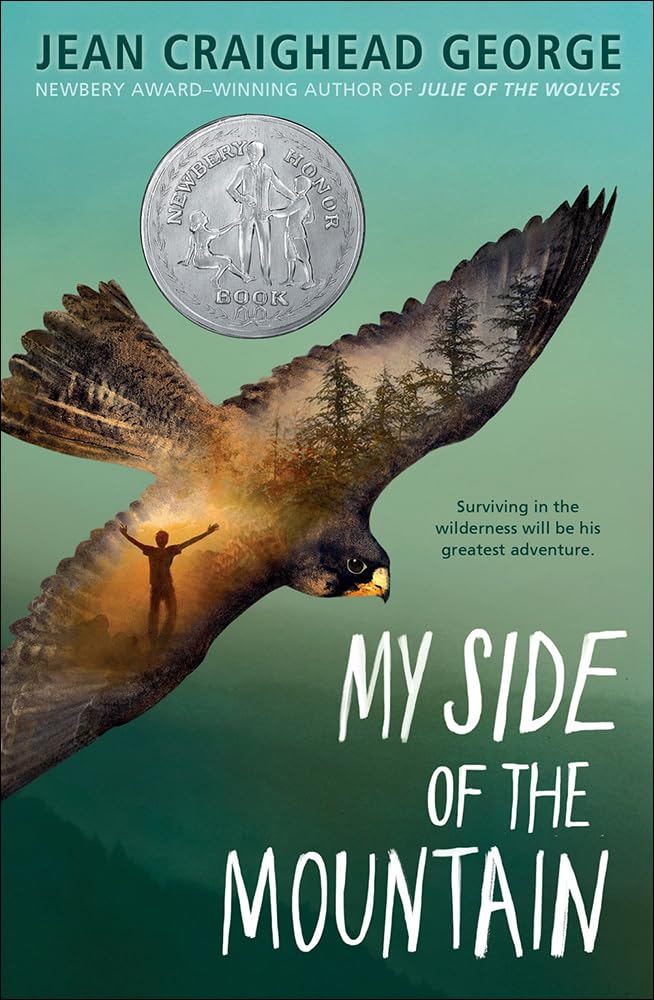
My Side of the Mountain by Jean Craighead George tells the remarkable story of Sam Gribley, a boy who runs away from his crowded New York City apartment to live alone in the Catskill Mountains for a year. This guide provides parents and teachers with reading level information, age recommendations, content insights, and discussion questions for this Newbery Honor classic about self-reliance, survival skills, and living in harmony with nature.
For Parents
Find the right reading level for your child, understand the book’s themes around independence and wilderness survival, and get conversation starters to help your child explore questions about self-sufficiency, nature, and what it means to choose solitude over society.
For Teachers
Access grade-level guidance, reading metrics, character analysis support, and thematic discussion questions perfect for classroom use. This Newbery Honor book offers rich opportunities for exploring survival skills, environmentalism, independence, and the relationship between humans and nature.
My Side of the Mountain at a Glance
Find on Amazon →| Author | Jean Craighead George |
| Published | 1959 |
| Grade Level | 4–6 (our assessment) |
| Recommended Age | 9–12 |
| Flesch-Kincaid Grade | 5.6 |
| Word Count | ~54,000 |
| Pages | 178 (standard paperback) |
| Chapters | Multiple short sections with descriptive titles |
| Genre | Adventure / survival / realistic fiction |
| Setting | Catskill Mountains, New York (1950s) |
| Awards | Newbery Honor (1960) |
For official Lexile and AR levels, visit Lexile.com or AR BookFinder. ReadingVine provides independent editorial assessments.
What Reading Level Is My Side of the Mountain?
My Side of the Mountain is appropriate for grades 4–6, with a Flesch-Kincaid grade level of 5.6. The vocabulary includes extensive nature and wilderness terminology—names of plants, animals, survival techniques, and outdoor skills—but the detailed descriptions and context make meanings clear. The sentence structure is straightforward, making the mechanics accessible to fourth graders, while the detailed survival information and philosophical reflections engage fifth and sixth graders.
George writes with precise, observational detail that reflects her background as a naturalist and ecologist. The prose is rich with sensory descriptions of the forest, weather, wildlife, and Sam’s daily routines. The book reads like a combination of adventure story and nature journal, with Sam narrating his experiences in first person as they happen and occasionally looking back from the future. This creates an intimate, immediate reading experience that puts readers directly into Sam’s wilderness life.
While strong fourth graders can handle the reading mechanics, the book resonates most deeply with readers ages 9–12 who can appreciate both the adventure of wilderness survival and the deeper themes about independence, self-sufficiency, and the relationship between humans and nature. It’s an excellent choice for readers who love outdoor adventures, detailed survival information, and protagonists who rely on intelligence and observation rather than luck.
What Age Is My Side of the Mountain Appropriate For?
My Side of the Mountain is most appropriate for readers ages 9–12. The story deals with a boy living alone in the wilderness, which involves hunting, preparing food, and facing natural dangers. While George handles these topics matter-of-factly as part of wilderness survival, the realities of living alone and killing animals for food require readers mature enough to understand the difference between wilderness necessity and cruelty.
Hunting and killing animals: Sam hunts and traps animals (deer, rabbits, fish) for food and tans their hides for clothing. He also trains a falcon to hunt. These scenes are not graphic but are present and treated as necessary for survival.
Running away from home: Sam runs away at age 12 to live alone in the mountains. While his parents eventually accept his choice, some parents may want to discuss that running away is generally not a good solution to family problems.
Extended solitude: Sam spends months completely alone. The isolation is portrayed positively (he loves it), but some readers may find the loneliness unsettling.
Some danger: Sam faces a forest fire, harsh winter storms, and the challenges of surviving without adult help. These moments create tension but are resolved through Sam’s skills.
Independence from adults: Sam lives without parental supervision for a year. The book celebrates this independence, which may require parental discussion about appropriate levels of freedom.
Eating unusual foods: Sam eats things city kids might find strange: acorn pancakes, turtle soup, wild plants, venison. This is presented positively but may surprise some readers.
What’s NOT in the book: No violence beyond necessary hunting for food, no profanity, no inappropriate content. Sam’s relationship with nature is respectful and sustainable—he takes only what he needs. The tone is optimistic and celebratory of wilderness living. The ending is bittersweet but ultimately happy, with Sam finding balance between wilderness and family.
What Is My Side of the Mountain About?
Sam Gribley is a twelve-year-old boy living in a cramped New York City apartment with his large family—parents and eight siblings. He feels suffocated by the crowded city life and dreams of living in the wilderness like his great-grandfather, who once owned land in the Catskill Mountains. When Sam announces he’s going to run away to live on the family’s old land, his father doesn’t take him seriously. But Sam is completely serious.
Sam runs away in May, taking only forty dollars, a penknife, an ax, some flint and steel, and a ball of cord. He travels to the Catskills and finds the old Gribley farm, now completely overgrown and returned to forest. Sam begins building his new life from scratch. He needs shelter, food, fire, and tools—everything a person needs to survive—and he must create or find all of it using only wilderness resources and his own intelligence.
Sam’s first major accomplishment is finding and hollowing out a huge hemlock tree to create a home. The tree has a lightning scar, and Sam burns and chops out the interior to create a cozy one-room dwelling with a fireplace, bed of bough, and storage areas. He calls his tree home simply “my tree.” It becomes his castle, protection from weather and animals, and the center of his wilderness life.
Next, Sam must learn to find food. He catches and smokes fish, gathers edible plants, makes acorn pancakes, and eventually learns to hunt. He’s a vegetarian initially but realizes he needs protein to survive the coming winter. He makes a bow and arrows, sets snares, and successfully hunts deer. Sam uses every part of the animals he kills—meat for food, hides for clothing and blankets, sinew for thread, bones for tools. Nothing is wasted. This isn’t sport hunting; it’s survival, done with respect and gratitude.
One of Sam’s most important relationships is with Frightful, a peregrine falcon. Sam climbs a cliff to reach a falcon’s nest, takes a chick (leaving the others for the parents to raise), and trains her using falconry techniques he learned from library books. Frightful becomes his hunting companion, friend, and the closest thing he has to family in the wilderness. She hunts rabbits for both of them, and Sam depends on her skill and companionship.
As summer turns to fall, Sam prepares frantically for winter. He smokes and stores fish, gathers nuts and acorns, makes warmer clothing from deerskin, stockpiles firewood, and prepares his tree for the brutal cold ahead. He meets occasional people—a professor studying falcons, a boy named Bando who becomes his friend, a folklorist who writes about him—but mostly Sam is alone with nature, learning its rhythms and secrets.
Winter arrives with fierce storms and deep cold. Sam survives inside his tree, warmed by his fireplace, wearing his deerskin clothing, eating his stored food, and reading by the light of deer tallow candles. The winter is hard but beautiful. Sam experiences the profound peace of winter silence, watches snow fall, listens to owls, and feels completely at home in a world most people would find terrifying.
Throughout his year in the wilderness, Sam keeps a journal written on birch bark, recording his observations, discoveries, and feelings. He learns incredible skills: how to predict weather, which plants are edible, how to tan leather, how to make salt from hickory ashes, how to read animal tracks, how to move through the forest without disturbing it. He becomes a true part of the ecosystem, living in harmony with the natural world.
But Sam’s solitude can’t last forever. A reporter discovers his story and writes a sensational article about the “wild boy” living alone in the mountains. Suddenly, people are searching for him. Sam’s father reads the article and recognizes his son. As Christmas approaches, Sam returns from a walk to find his entire family at his tree—they’ve come to see him and celebrate Christmas in the wilderness.
The book ends with Sam facing a choice: his family wants him to return to the city, but Sam can’t imagine leaving his mountain. The resolution is a compromise—Sam’s father proposes that the whole family move to the mountains permanently. They’ll build a house near Sam’s tree and live there together. Sam realizes he doesn’t have to choose between wilderness and family; he can have both. The book concludes with Sam still living on his mountain but no longer alone, having found a way to balance his love of nature with his need for human connection.
Throughout the story, Sam proves that with knowledge, observation, creativity, and respect for nature, a person can live independently in the wilderness. But he also learns that complete independence isn’t the same as happiness, and that sharing your life—even your wild, free life—with people you love makes it richer and more meaningful.
My Side of the Mountain Characters
My Side of the Mountain Themes and Lessons
At its heart, My Side of the Mountain is about self-reliance and the empowering discovery that with knowledge, observation, and determination, a person can meet their own needs. Sam proves that survival skills aren’t just theoretical—they’re practical abilities that, when learned and practiced, provide genuine independence. The book teaches that knowledge is power, that observation and thinking are as important as physical strength, and that humans are capable of far more than modern convenience suggests. Sam’s success comes not from luck but from careful study, trial and error, and respect for natural processes.
The book also explores the relationship between humans and nature, presenting wilderness not as something to conquer but as something to join. Sam doesn’t dominate the mountain; he becomes part of it. He hunts, but sustainably. He uses resources, but doesn’t waste. He lives with animals, not against them. This environmental ethic—written in 1959, before the modern environmental movement—presents a vision of how humans can live in harmony with nature rather than in opposition to it. The book suggests that the separation between “civilization” and “wilderness” is artificial; humans are part of nature, and living close to natural rhythms isn’t primitive but deeply fulfilling.
Discussion questions for families:
- Could you survive alone in the wilderness like Sam? What skills would you need to learn? What would be hardest for you?
- Sam says he’s happier alone on the mountain than in the city with his family. Do you think complete independence is better than living with others? What does Sam learn about this by the end?
- How does Sam show respect for the animals he hunts and the resources he uses? What’s the difference between what Sam does and being wasteful or cruel?
- Why do you think Sam’s father agrees to move the family to the mountains instead of forcing Sam to return to the city?
How Many Pages and Chapters in My Side of the Mountain?
My Side of the Mountain has 178 pages in the standard paperback edition and is divided into multiple short sections with descriptive titles rather than numbered chapters (for example: “In Which I Find Frightful and Have Trouble with the Fire Warden,” “In Which I Learn to Season My Food”). The word count is approximately 54,000 words. The sections vary in length but average about 8–10 pages each, with each typically covering a specific period or event in Sam’s wilderness year.
For independent readers in the target age range (9–12), the book typically takes 4–6 hours to complete, or about one to two weeks of reading 30 minutes per day. The detailed survival information and rich nature descriptions mean some readers slow down to absorb the techniques Sam uses, while others race through, captivated by the adventure.
As a read-aloud, My Side of the Mountain takes approximately 4.5–5.5 hours total. The book works beautifully as a family or classroom read-aloud because the wilderness survival details naturally prompt discussions about nature, self-sufficiency, and how much independence is appropriate for children. Many families read it together during camping trips or outdoor adventures, making connections between the book and real wilderness experiences.
Books Similar to My Side of the Mountain
If your child enjoyed My Side of the Mountain, here are six similar books that explore themes of wilderness survival, independence, and connection with nature:
About Jean Craighead George
Jean Craighead George (1919–2013) was an American author and naturalist who wrote more than 100 books for children and young adults, nearly all focused on nature and wildlife. Born into a family of naturalists—her father, brothers, and twin brother John were all ecologists—George grew up camping, hiking, and studying animals. This childhood shaped her lifelong commitment to environmental education through literature. My Side of the Mountain, published in 1959, was inspired by George’s own wilderness experiences and her belief that children should learn survival skills and develop deep connections with nature. The character of Sam Gribley was partly based on George’s observations of her own children, who loved outdoor adventures. George herself was an accomplished outdoorswoman who could identify hundreds of plants, track animals, and survive in wilderness conditions. She lived for a time in a teepee to better understand self-sufficient living. My Side of the Mountain became George’s most famous and beloved work, winning a Newbery Honor in 1960 and inspiring generations of children to explore nature and develop outdoor skills. She wrote two sequels: On the Far Side of the Mountain (1990) and Frightful’s Mountain (1999), which follows Sam’s falcon. George’s other well-known books include Julie of the Wolves (which won the Newbery Medal in 1973), The Talking Earth, and numerous nature picture books. Throughout her career, George was celebrated for combining scientific accuracy with compelling storytelling, never talking down to young readers, and inspiring environmental awareness before it was mainstream. She received numerous awards including the Newbery Medal, the Knickerbocker Award, and the Laura Ingalls Wilder Medal for lasting contribution to children’s literature. George continued writing until her death in 2013 at age 92, leaving behind a legacy of books that have inspired millions of children to appreciate, respect, and protect the natural world.
My Side of the Mountain: Frequently Asked Questions
Is My Side of the Mountain based on a true story?
My Side of the Mountain is not based on one specific true story, but Jean Craighead George drew from her extensive wilderness experience and knowledge. George was an accomplished naturalist who could survive in the wilderness using many of the techniques Sam uses in the book. The survival skills, plants, animals, and techniques described are all accurate and based on real wilderness living practices. George wanted to write a book that would inspire children to learn outdoor skills and appreciate nature while showing that such skills are genuinely practical and achievable. While Sam Gribley is fictional, readers could theoretically replicate his wilderness year if they had his knowledge, preparation, and determination (though this is absolutely not recommended without adult supervision and permission!).
How long does Sam live alone in the wilderness?
Sam lives alone on the mountain for a little over a year, arriving in late spring and remaining there through the following winter. He arrives in May and is still living independently when his family finds him around Christmas of the following year. Throughout this time, Sam experiences all four seasons in the wilderness—the abundance of summer, the preparation demands of fall, the harsh challenges of winter, and the renewal of spring. The year-long timeline allows Sam to develop complete survival skills and truly integrate into the natural cycles of his mountain home.
What is Frightful in My Side of the Mountain?
Frightful is a peregrine falcon that Sam captures as a chick from a cliff nest and trains to hunt using falconry techniques. She becomes Sam’s hunting companion, closest friend, and most important relationship in the wilderness. Frightful hunts rabbits and other small game for both herself and Sam, making survival much easier. Beyond her practical help, Frightful provides companionship and emotional connection during Sam’s solitude. She represents the possibility of partnership between humans and wild animals based on mutual respect and benefit. Frightful is so important to the story that George later wrote a sequel, Frightful’s Mountain, told from the falcon’s perspective.
Does Sam go back to the city at the end?
No, Sam doesn’t return to the city. When his family finds him living on the mountain, they initially expect him to come home. But Sam’s father recognizes that Sam has built a real life in the wilderness and has proven he can survive independently. Instead of forcing Sam to return, Sam’s father proposes that the entire family move to the mountains permanently—they’ll build a house near Sam’s hemlock tree and live there together. This compromise allows Sam to keep his wilderness life while reconnecting with his family. The ending suggests that Sam will continue living on his mountain, but no longer alone, having found a balance between independence and family connection.
What does Sam eat in My Side of the Mountain?
Sam eats a varied diet of wild foods: fish (trout and others he catches), venison from deer he hunts, rabbit (often caught by Frightful), turtle soup, wild plants and roots, acorns (which he makes into flour for pancakes), walnuts and other nuts, berries, cattail tubers, wild onions, and various edible plants he identifies using guidebooks. He also makes salt from hickory ashes to season his food. Sam is initially vegetarian but realizes he needs protein to survive the coming winter, so he learns to hunt. He uses every part of the animals he kills—nothing is wasted. His diet is nutritionally complete and demonstrates extensive knowledge of wild edibles and sustainable hunting practices.
What grade level is My Side of the Mountain?
My Side of the Mountain is appropriate for grades 4–6 (ages 9–12). The reading level has a Flesch-Kincaid grade of 5.6, making it comfortable for fourth and fifth graders. The vocabulary includes nature and wilderness terms, but these are explained through context. The content—including hunting animals and living independently from parents—requires some maturity. It’s commonly taught in fourth, fifth, and sixth grade classrooms as an adventure story that also teaches wilderness skills, environmental awareness, and self-reliance. The book appeals to readers who love outdoor adventures and detailed, practical information about survival techniques.
Are there sequels to My Side of the Mountain?
Yes, Jean Craighead George wrote two sequels. On the Far Side of the Mountain (1990) continues Sam’s story and focuses on his sister Alice, who comes to live on the mountain and has her own adventures. Frightful’s Mountain (1999) tells the story from Frightful the falcon’s perspective after she’s captured and must find her way back to Sam. Both sequels explore different aspects of wilderness life and continue the themes of the original book. However, My Side of the Mountain works perfectly as a standalone book with a satisfying ending, and many readers choose to read only the first book.
What is the main message of My Side of the Mountain?
The main message is that with knowledge, observation, and determination, humans can live independently and in harmony with nature. Sam proves that self-reliance is achievable through learning wilderness skills, respecting natural resources, and living sustainably. The book teaches that observation and intelligence are as important as physical strength, that nature isn’t something to fear or conquer but to join and learn from, and that simplicity can be deeply fulfilling. The ending also suggests that complete independence isn’t the ultimate goal—Sam realizes that sharing his life with family makes it richer. The book celebrates both self-sufficiency and connection, suggesting that the ideal life balances independence with meaningful relationships and respect for both wilderness and human community.