
 = Partner Site
Holes Reading Level: A Complete Guide
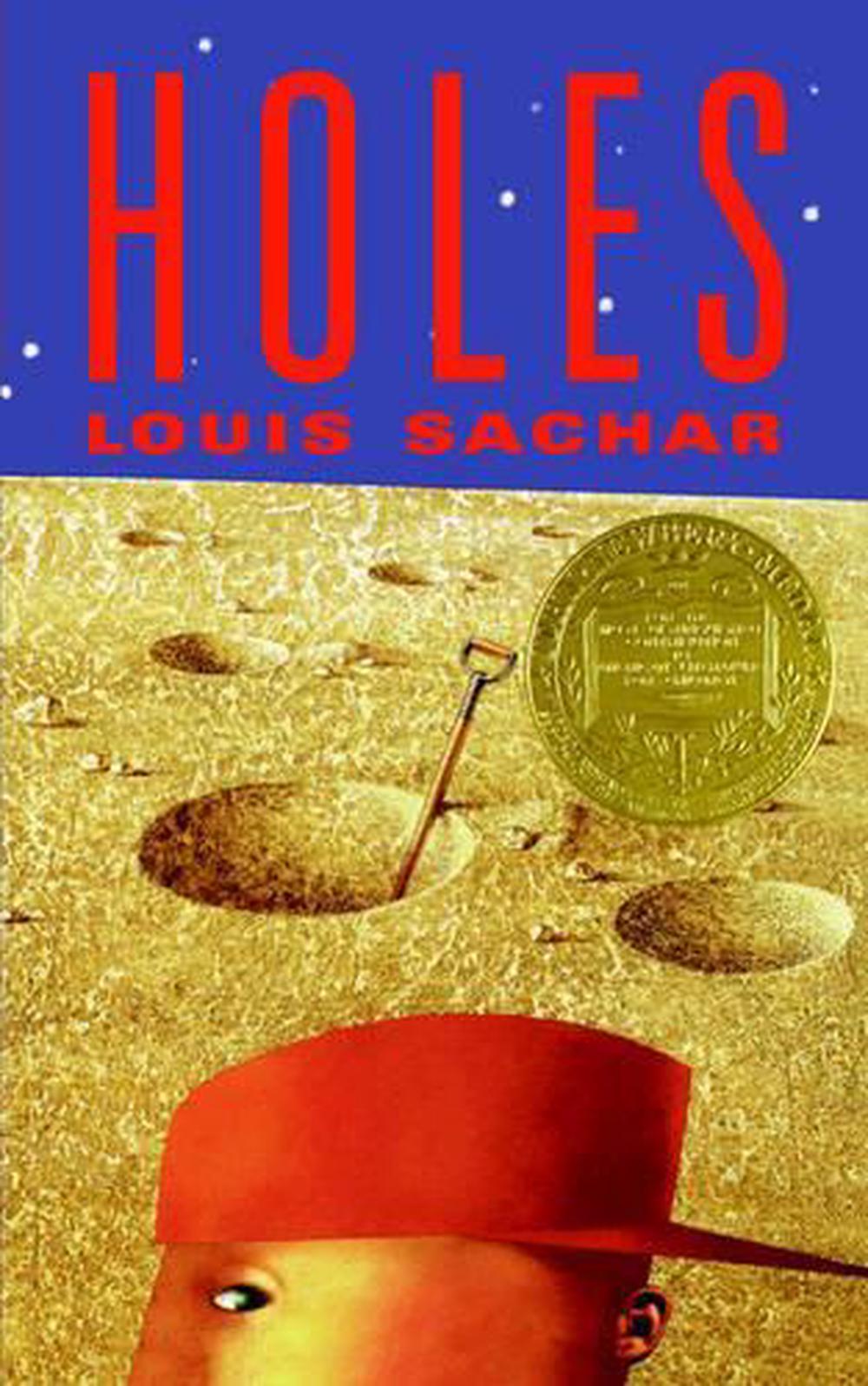
Holes by Louis Sachar tells the ingenious story of a boy sent to a desert detention camp where digging holes reveals secrets spanning generations. This guide provides parents and teachers with reading level information, age recommendations, content insights, and discussion questions for this Newbery Medal-winning novel that masterfully weaves together past and present, fate and justice.
For Parents
Find the right reading level for your child, understand the book’s themes around justice and destiny, and get conversation starters to help your child explore questions about fairness, friendship, and how the past connects to the present.
For Teachers
Access grade-level guidance, reading metrics, character analysis support, and thematic discussion questions perfect for classroom use. This Newbery Medal winner offers rich opportunities for exploring plot structure, interconnected storylines, and themes of justice and redemption.
Holes at a Glance
Find on Amazon →| Author | Louis Sachar |
| Published | 1998 |
| Grade Level | 4–7 (our assessment) |
| Recommended Age | 10–13 |
| Flesch-Kincaid Grade | 4.6 |
| Word Count | ~47,000 |
| Pages | 233 (standard paperback) |
| Chapters | 50 (short chapters) |
| Genre | Children’s fiction / adventure / mystery |
| Setting | Camp Green Lake, Texas (present day and historical flashbacks) |
| Awards | Newbery Medal (1999), National Book Award |
For official Lexile and AR levels, visit Lexile.com or AR BookFinder. ReadingVine provides independent editorial assessments.
What Reading Level Is Holes?
Holes is appropriate for grades 4–7, with a Flesch-Kincaid grade level of 4.6. The vocabulary is straightforward and the sentences are generally simple, making the mechanics accessible to fourth graders. However, the complex plot structure—with three interwoven storylines spanning different time periods—requires readers who can track multiple narratives and understand how they connect.
Sachar’s writing is deceptively simple. The chapters are short (often just 2–4 pages), and the prose is clean and direct. But the story itself is intricate, with careful foreshadowing and details that only make sense when you see how the past and present come together. Readers need to pay attention to seemingly small details—names, objects, events—because everything matters and connects in surprising ways.
While strong fourth graders can handle the reading mechanics, the story resonates most with fifth through seventh graders who can appreciate the clever plot construction and understand the themes about justice, fate, and how history repeats itself. The book rewards careful readers who enjoy puzzles and mysteries, making it excellent for readers ready to engage with more sophisticated storytelling even when the language itself remains accessible.
What Age Is Holes Appropriate For?
Holes is most appropriate for readers ages 10–13. The story deals with serious themes including juvenile detention, poverty, racism in historical context, and injustice. While Sachar handles these topics in age-appropriate ways, the book doesn’t shy away from the reality that bad things happen to good people and that systems can be unjust.
Juvenile detention setting: The boys at Camp Green Lake are there for crimes they committed (or in Stanley’s case, were falsely accused of). The camp is harsh, with cruel authority figures and difficult conditions.
Violence and cruelty: The Warden and counselors are verbally and occasionally physically abusive. A character is killed by yellow-spotted lizards (described but not graphic). Historical storylines include violence related to racism.
Racism in historical context: The book depicts 19th-century racism, including the murder of a Black man for kissing a white woman. While handled thoughtfully, these scenes show the brutal reality of racism.
Poverty and homelessness: Stanley’s family struggles financially. The historical storyline shows extreme poverty and desperation.
Injustice: Stanley is wrongly convicted and sent to camp. The book shows that the justice system doesn’t always work fairly.
What’s NOT in the book: No sexual content, no graphic violence, no excessive profanity (though some mild language exists). The difficult content serves the story’s themes about justice and serves to make the eventual triumph more meaningful. The tone is ultimately hopeful, showing that wrongs can be righted and curses can be broken.
What Is Holes About?
Stanley Yelnats IV is an unlucky boy from an unlucky family. His great-great-grandfather lost the family fortune, and the Yelnatses have been plagued by bad luck ever since. When Stanley is wrongly convicted of stealing a famous baseball player’s sneakers, he’s sent to Camp Green Lake, a juvenile detention center in the Texas desert. There’s no lake at Camp Green Lake—it dried up over a hundred years ago—just endless flat desert and scorching heat.
At the camp, Stanley and the other boys are forced to dig one hole per day, each exactly five feet deep and five feet across. The Warden claims this builds character, but Stanley soon realizes she’s searching for something buried in the dried-up lakebed. As Stanley digs, he befriends a boy called Zero, who is quiet and can’t read but is deeply loyal. Despite warnings from the other boys, Stanley teaches Zero to read, and Zero helps Stanley with his digging.
The story alternates between Stanley’s present-day experience and two historical storylines. One follows Stanley’s great-great-grandfather Elya Yelnats in Latvia, where he failed to fulfill a promise to Madame Zeroni, a fortune teller, resulting in a curse on the Yelnats family. The other storyline is set in Green Lake when it was still a thriving town, focusing on Kate Barlow, a schoolteacher who fell in love with Sam, an African American onion seller. When the racist townspeople killed Sam for kissing Kate, she became the outlaw “Kissin’ Kate Barlow” and buried her stolen treasure before dying.
When Zero runs away from camp after hitting Mr. Pendanski, Stanley follows him into the desert. They find refuge on a mountain where Sam’s onions still grow wild. Stanley carries the exhausted Zero up the mountain, unknowingly fulfilling his great-great-grandfather’s promise to carry Madame Zeroni up a mountain—and Zero turns out to be Madame Zeroni’s great-great-great-grandson, completing the circle.
Stanley realizes that Kate Barlow’s treasure is buried where he found a lipstick tube—in the hole where he found the sneakers. The boys return to camp and dig up a suitcase full of treasure, but the Warden tries to claim it. Yellow-spotted lizards (deadly poisonous) surround the boys, but because they’ve been eating Sam’s onions (which repel the lizards), they’re safe. Stanley’s lawyer arrives with proof of his innocence, and the suitcase turns out to belong to Stanley’s family—Kate Barlow had stolen it from Stanley’s great-grandfather. The boys are freed, the camp is shut down, Stanley’s father invents a cure for foot odor (changing the family’s luck), and Stanley and Zero share the treasure and remain best friends. The curse is broken, justice is served, and the intricate connections between past and present are revealed.
Holes Characters
Holes Themes and Lessons
At its heart, Holes explores how the past connects to the present in unexpected ways. The book shows that history isn’t something dead and gone—it echoes through generations, affecting people who don’t even know the stories behind their circumstances. Stanley breaks his family’s curse by unknowingly fulfilling his great-great-grandfather’s promise, showing that we can change our destinies even when we don’t understand all the connections.
The book also examines justice and injustice on multiple levels. Stanley is wrongly convicted, the camp system is corrupt, and historically, Sam was murdered simply for being Black and in love with a white woman. But the book ultimately argues that justice can prevail—wrongs can be righted, truth can come to light, and people who do good (like Stanley helping Zero) are rewarded. The intricate plot demonstrates that while bad luck and injustice exist, persistence, loyalty, and doing the right thing can break cycles of misfortune.
Discussion questions for families:
- How do the three storylines (Stanley’s present, Elya’s past, Kate Barlow’s past) connect? What details matter in all three stories?
- Why does Stanley decide to teach Zero to read, even though it means less help with digging? What does this tell us about real friendship?
- What is the family curse, and how does Stanley break it without knowing?
- The book shows injustice in Stanley’s trial and in how Sam was treated. What does it teach about fighting injustice?
How Many Pages and Chapters in Holes?
Holes has 233 pages in the standard paperback edition and is divided into 50 chapters. The word count is approximately 47,000 words, making it a substantial but manageable read. The chapters are remarkably short—averaging just 4–5 pages each—which makes the book feel fast-paced and easy to read in small chunks. The short chapters also allow Sachar to alternate between storylines without losing momentum.
For independent readers in the target age range (10–13), the book typically takes 5–7 hours to complete, or about two weeks of reading 30 minutes per day. The short chapters and compelling mystery keep readers engaged, and many report reading it quickly because they can’t put it down once the connections start becoming clear.
As a read-aloud, Holes takes approximately 4–5 hours total. The short chapters make it perfect for read-aloud sessions—you can easily read 2–3 chapters in one sitting. The alternating storylines create natural discussion points as readers try to figure out how everything connects. Many teachers use Holes as a read-aloud because it demonstrates masterful plot construction while remaining thoroughly entertaining.
Books Similar to Holes
If your child enjoyed Holes, here are six similar books that explore themes of survival, friendship, and overcoming injustice:
About Louis Sachar
Louis Sachar (born 1954) is an American author best known for Holes, which won both the Newbery Medal and the National Book Award in 1999—a rare double honor. Born in New York and raised in California, Sachar worked as a teacher’s aide at an elementary school while in college, an experience that inspired his first book, Sideways Stories from Wayside School. He practiced law for several years while continuing to write, eventually becoming a full-time author. Holes took Sachar a year and a half to write, and he carefully plotted all three storylines to interweave perfectly. He’s said that he knew the ending before he wrote the beginning and worked backward to plant all the necessary details. Sachar is known for his clever, intricate plots, his dry humor, and his respect for young readers’ intelligence. He never talks down to children and trusts them to follow complex narratives and understand sophisticated themes. Besides Holes, Sachar has written over twenty books, including the popular Wayside School series and the Marvin Redpost series. He continues to write from his home in Austin, Texas, creating stories that are both entertaining and meaningful, always with surprising connections that reward careful readers.
Holes: Frequently Asked Questions
Why is the book called Holes?
The title “Holes” has multiple meanings that reflect the book’s themes. Most obviously, the boys at Camp Green Lake dig holes every day. But the title also represents the “holes” or gaps in the characters’ lives—Stanley feels like there’s a hole in his life from bad luck, Zero has holes in his education (he can’t read), Kate Barlow has a hole in her heart after Sam’s death, and the dried-up lake itself is a hole where water used to be. The book is also about filling these holes—Stanley and Zero fill the gaps in each other’s lives through friendship, Stanley fills his family’s hole of bad luck by breaking the curse, and the boys literally fill the Warden’s life-long search by finding the treasure. The simple title captures the book’s central metaphor of emptiness being filled.
How are Stanley and Zero related?
Stanley and Zero are connected through their ancestors. Stanley is the great-great-grandson of Elya Yelnats, who promised Madame Zeroni he would carry her up a mountain and sing to her but broke his promise when he left Latvia for America. Zero is the great-great-great-grandson of Madame Zeroni. When Stanley carries Zero up the mountain (God’s Thumb) and sings to him, he unknowingly fulfills his ancestor’s broken promise. This act breaks the family curse that has plagued the Yelnats family for generations. The boys’ friendship literally corrects a wrong from over a hundred years ago, showing how the past and present are connected.
What was Kate Barlow’s treasure?
Kate Barlow’s treasure was a suitcase full of valuable items she had stolen during her years as an outlaw. The suitcase originally belonged to Stanley’s great-grandfather, the first Stanley Yelnats, who was robbed by Kissin’ Kate Barlow while he was heading to California. Kate buried the suitcase before she died, and it remained hidden at the bottom of the dried-up lake for over a hundred years. When Stanley and Zero dig it up, it contains stocks, bonds, and other valuables that rightfully belong to the Yelnats family. This means the treasure not only breaks the curse but also restores the family fortune that was lost generations ago.
Why do the yellow-spotted lizards not bite Stanley and Zero?
The yellow-spotted lizards don’t bite Stanley and Zero because the boys have been eating Sam’s onions, which repel the lizards. When Stanley and Zero were hiding on God’s Thumb (the mountain), they survived by eating the wild onions growing there—the same onions Sam used to sell in Green Lake over a hundred years earlier. Sam had claimed his onions were good for everything, and it turns out they make people’s blood unappealing to the deadly lizards. This is another example of how the past (Sam’s onions) saves Stanley in the present, and it’s also poetic justice—Sam’s legacy protects the boys from the same kind of evil that killed him.
What crime did Stanley commit to get sent to Camp Green Lake?
Stanley didn’t actually commit any crime—he was wrongly convicted. A famous baseball player named Clyde “Sweet Feet” Livingston donated his old sneakers to a homeless shelter for a charity auction. The sneakers fell from the sky and hit Stanley on the head while he was walking home. Stanley, who had been thinking about his father’s foot odor invention, took the sneakers home hoping his father could use them for his experiments. He was arrested for stealing them, and because he couldn’t explain how he got them (the truth sounded absurd—that they simply fell from the sky), he was convicted and sent to Camp Green Lake. The injustice of Stanley’s conviction is one of the book’s central themes.
Is Holes based on a true story?
No, Holes is entirely fiction. However, the historical context about racism in the American South is realistic—African Americans were murdered for relationships with white people, and such injustices were common. The juvenile detention system depicted in the book reflects real problems with how young offenders are sometimes treated, though Camp Green Lake itself is fictional. Louis Sachar created the intricate plot entirely from his imagination, carefully weaving the three storylines together to create the book’s clever connections. The genius of Holes is how Sachar made everything fit together so perfectly that it feels like it must be real, but it’s all his invention.
What grade level is Holes appropriate for?
Holes is appropriate for grades 4–7 (ages 10–13). The reading level is accessible to fourth graders, with straightforward vocabulary and relatively simple sentences. However, the complex plot structure with three interwoven storylines is best appreciated by fifth graders and up who can track multiple narratives and understand how they connect. The themes—injustice, racism, detention—are also more suitable for older elementary and middle school readers. It’s one of the most popular books in fifth and sixth grade classrooms because it’s engaging, teaches excellent lessons about plot construction, and addresses important themes while remaining highly entertaining.
What is the main message of Holes?
The main message is that the past affects the present in surprising ways, and that we have the power to break negative cycles through loyalty, courage, and doing the right thing. The book teaches that justice can ultimately prevail even when systems are corrupt, that true friendship means helping others even when it costs you something, and that what seems like bad luck might actually be part of a larger story that eventually makes sense. Stanley’s willingness to help Zero—to teach him to read, to follow him into the desert, to carry him up the mountain—breaks a generational curse and brings justice and fortune to both families. The book argues that our choices matter and that kindness and loyalty are rewarded, even if not immediately.