
 = Partner Site
Maniac Magee Reading Level: A Complete Guide
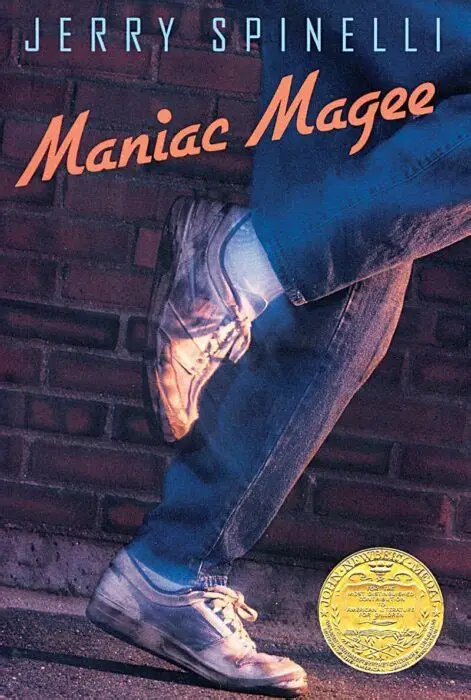
Maniac Magee by Jerry Spinelli tells the legendary story of Jeffrey “Maniac” Magee, a boy who becomes a hero in a racially divided town by challenging prejudice through his extraordinary running, his fearless spirit, and his simple belief that people are people. This guide provides parents and teachers with reading level information, age recommendations, content insights, and discussion questions for this Newbery Medal-winning novel about racism, homelessness, and the power of one person to inspire change.
For Parents
Find the right reading level for your child, understand the book’s themes around racism and homelessness, and get conversation starters to help your child explore questions about prejudice, belonging, and how individuals can challenge injustice.
For Teachers
Access grade-level guidance, reading metrics, character analysis support, and thematic discussion questions perfect for classroom use. This Newbery Medal winner offers rich opportunities for exploring racism, segregation, homelessness, and social change through one remarkable boy’s story.
Maniac Magee at a Glance
Find on Amazon →| Author | Jerry Spinelli |
| Published | 1990 |
| Grade Level | 4–6 (our assessment) |
| Recommended Age | 9–12 |
| Flesch-Kincaid Grade | 4.7 |
| Word Count | ~44,000 |
| Pages | 184 (standard paperback) |
| Chapters | 46 (short chapters) |
| Genre | Contemporary realistic fiction / tall tale |
| Setting | Two Mills, Pennsylvania (fictional town) |
| Awards | Newbery Medal (1991) |
For official Lexile and AR levels, visit Lexile.com or AR BookFinder. ReadingVine provides independent editorial assessments.
What Reading Level Is Maniac Magee?
Maniac Magee is appropriate for grades 4–6, with a Flesch-Kincaid grade level of 4.7. The vocabulary is accessible and the sentence structure is straightforward, making the mechanics manageable for fourth graders. However, the themes—systemic racism, homelessness, prejudice, and what it means to belong—require maturity that makes the book most meaningful for fifth and sixth graders ready to grapple with social justice issues.
Spinelli writes with energy and humor, blending realistic fiction with tall-tale elements. The book is told as a legend being passed down, with an omniscient narrator who sometimes addresses readers directly. This creates distance that allows Spinelli to tackle difficult topics without overwhelming young readers—we’re hearing about Maniac’s feats and struggles through the filter of story and myth. The short chapters and fast pacing keep readers engaged, while the serious themes give the book depth and staying power.
While strong fourth graders can handle the reading mechanics, the book resonates most deeply with readers ages 9–12 who can understand systemic racism (not just individual meanness), recognize how prejudice operates in communities, and appreciate Maniac’s role as someone who challenges the status quo simply by refusing to see racial divisions. It’s an excellent choice for readers ready to think critically about social justice and what it means to stand against prejudice.
What Age Is Maniac Magee Appropriate For?
Maniac Magee is most appropriate for readers ages 9–12. The story deals with racism, homelessness, family dysfunction, and social division in honest but age-appropriate ways. While Spinelli uses the tall-tale format to create some distance from the harsh realities, the prejudice and hardship are real and require readers mature enough to understand and discuss these issues.
Racism and segregation: The town is racially divided, with Black residents in the East End and white residents in the West End. Characters use racial slurs (not written out but referenced), and prejudice is systemic and pervasive. This is central to the story, which uses this division to explore racism, community, and belonging.
Parental death: Maniac’s parents die in a trolley accident when he’s young. While not graphically described, this loss drives his entire story and his search for family.
Homelessness: Maniac spends much of the book homeless, sleeping in various places including a zoo, an equipment shed, and eventually with the Beales family. The reality of having nowhere to go is present throughout.
Family dysfunction: Maniac lives briefly with his aunt and uncle who hate each other and haven’t spoken in years. The McNab family lives in squalor with an abusive, alcoholic father.
Violence and threats: Maniac faces physical danger from racist bullies, particularly Cobras gang members. There’s a scene where someone shoots at him. The violence isn’t graphic but is present.
Poverty: The book honestly depicts economic hardship and how it intersects with race in Two Mills.
What’s NOT in the book: No graphic violence, no explicit profanity (though racial slurs are referenced), no sexual content. The difficult content serves the book’s social justice themes. The tone, while addressing serious issues, maintains hope and humor. The ending is bittersweet but ultimately optimistic about Maniac finding home.
What Is Maniac Magee About?
Jeffrey Lionel Magee becomes an orphan at age three when his parents die in a trolley accident. He’s sent to live with his Aunt Dot and Uncle Dan in Hollidaysburg, Pennsylvania. But his aunt and uncle hate each other so much they’ve divided their house in two and refuse to speak. Jeffrey lives for eight years in this toxic household, enduring two of everything—two Thanksgivings, two Christmases—until finally, at age eleven, he can’t take it anymore. During a school musical, he stands up and runs away, leaving everything behind.
Jeffrey runs—literally runs—for a year, traveling two hundred miles until he arrives in Two Mills, Pennsylvania. Two Mills is a deeply segregated town: Black residents live in the East End, white residents in the West End, and the two communities rarely mix. The division is so complete that most people accept it as natural and inevitable. Into this divided town comes Jeffrey, who doesn’t understand or acknowledge the racial boundaries. He’s completely color-blind to the segregation, treating everyone the same regardless of which end of town they’re from.
Jeffrey’s running speed and athletic feats quickly make him legendary. Kids start calling him “Maniac” after he intercepts a pass during a high school football practice, runs for a touchdown, and then just keeps running out of town. Stories spread about his abilities: he can hit home runs off the toughest pitcher, untie impossible knots, outrun the fastest runners. But what really makes Maniac legendary is his willingness to cross the racial divide—he doesn’t just cross the line between the East End and West End, he erases it in his own mind.
Maniac is taken in by the Beale family—Amanda, Hester, Lester, and their parents—a Black family in the East End. For the first time since his parents died, Maniac feels like he has a home. The Beales welcome him, and he becomes part of their family. But the prejudice of Two Mills won’t leave him alone. People in the East End begin to resent having a white kid in their neighborhood. Someone paints racist graffiti on the Beales’ house: “FISHBELLY GO HOME.” Maniac realizes his presence is bringing trouble to the family he loves, and he leaves to protect them, choosing homelessness over endangering the Beales.
Maniac moves into the baseball equipment shed at the park’s band shell, befriending an elderly man named Grayson who works as a park groundskeeper. Grayson was once a Minor League baseball pitcher, and he and Maniac form a deep bond. Grayson gives Maniac his old baseball glove, and Maniac teaches Grayson to read—something Grayson has been ashamed of his whole life. They celebrate Thanksgiving and Christmas together, creating their own family. But just after Christmas, Grayson dies, leaving Maniac alone and devastated once again.
Homeless again, Maniac ends up staying briefly with the McNabs, a white family in the West End. The McNab household is chaotic and troubled—the father is an alcoholic, the house is filthy, and the two older McNab boys are building a pillbox in their living room because they believe Black people are going to attack the West End. Maniac tries to help the younger McNab boys, Russell and Piper, but he realizes he can’t fix this family’s deep dysfunction and racism.
Throughout his time in Two Mills, Maniac performs legendary feats that challenge the town’s divisions. He untangles Cobble’s Knot, an impossible knot that’s been hanging in a pizza shop for years—something no one believed possible. He faces down Mars Bar Thompson, a tough East End kid who initially bullies him but gradually comes to respect him. Most importantly, Maniac lives his life refusing to acknowledge racial boundaries, treating everyone with the same respect and expecting them to see past color.
The climax comes when Russell McNab gets stuck on the trolley trestle—the same trestle where Maniac’s parents died. Russell is terrified and frozen. The only person who can save him is Mars Bar, but getting Mars Bar (a Black teenager) to come to the West End to help a white kid requires overcoming all of Two Mills’ racial divisions. Maniac brings Mars Bar across the line, and together they save Russell. This act of cross-racial cooperation becomes another legend, showing the town that the divisions they’ve accepted as permanent can be crossed.
The book ends with Maniac finally allowing himself to return to the Beale family. Amanda Beale has been searching for him, determined to bring him home. Maniac has learned that running away doesn’t solve problems and that real home means staying even when it’s hard. The ending suggests that while Maniac can’t single-handedly fix Two Mills’ racism, he’s shown that individuals can choose to see past divisions, that small acts of bridge-building matter, and that home is where someone wants you and won’t let you run away.
The book’s title reflects Maniac’s legendary status—he’s become a myth, a larger-than-life figure in Two Mills. But underneath the legend is just Jeffrey Lionel Magee, an orphan boy searching for a place to belong and inadvertently challenging a divided town to be better.
Maniac Magee Characters
Maniac Magee Themes and Lessons
At its heart, Maniac Magee is about how one person can challenge systemic racism not through grand gestures but by simply refusing to accept divisions as natural or inevitable. Maniac doesn’t give speeches about equality or organize protests—he just treats people as people, crossing the East End/West End divide as if it doesn’t exist. The book teaches that while individuals can’t single-handedly dismantle racist systems, personal choices matter. By befriending Amanda, living with the Beales, and later bringing Mars Bar to help Russell, Maniac creates small cracks in Two Mills’ racial wall. These acts inspire others and show that change is possible.
The book also explores what it means to find home when you’re an outsider. Maniac is homeless both literally and figuratively—he has nowhere to live, but more deeply, he doesn’t fit into Two Mills’ racial categories. He’s white but wants to live in the East End; he’s accepted by the Beales but brings them trouble; he can’t stay with Grayson forever or fix the McNabs. The book asks profound questions: Where do you belong when you don’t fit the categories others have created? How do you find family when traditional structures have failed you? Maniac’s journey suggests that home is built through love and acceptance, not racial conformity or geographical boundaries.
Discussion questions for families:
- Why is Two Mills divided into the East End and West End? How do people maintain this division, and what would it take to change it?
- Maniac doesn’t see the racial divisions in Two Mills at first. Is being “color-blind” enough to fight racism? What else is needed?
- Why does Maniac keep running away from the people who love him? What does he finally learn about home and belonging?
- The book is told as a legend or tall tale. Why do you think Spinelli chose this format? How does it affect the story?
How Many Pages and Chapters in Maniac Magee?
Maniac Magee has 184 pages in the standard paperback edition and is divided into 46 short chapters organized into two parts. The word count is approximately 44,000 words. The chapters are brief—averaging about 4 pages each—which creates fast pacing and makes the book accessible even to reluctant readers. The short chapters also work well for reading one or two at a time.
For independent readers in the target age range (9–12), the book typically takes 4–5 hours to complete, or about one week of reading 30 minutes per day. The fast pacing, legendary feats, and short chapters keep most readers engaged and moving quickly through the story. Many report that once they start, they have difficulty putting it down.
As a read-aloud, Maniac Magee takes approximately 3.5–4 hours total. The book works exceptionally well as a classroom read-aloud because the racism and segregation themes naturally prompt important discussions about prejudice, social justice, and how individuals can challenge unjust systems. Teachers can use the book to explore both historical segregation and contemporary racism, making connections between Two Mills’ fictional divisions and real-world inequality.
Books Similar to Maniac Magee
If your child enjoyed Maniac Magee, here are six similar books that explore themes of challenging injustice, finding where you belong, and the courage to be different:
About Jerry Spinelli
Jerry Spinelli (born 1941) is an American author celebrated for his authentic portrayals of childhood and adolescence. Born in Norristown, Pennsylvania, Spinelli grew up in a working-class neighborhood and began writing seriously at age sixteen after his high school football team won a big game and he wrote a poem about it that was published in the local newspaper. He continued writing through college and worked in a department store and magazine publishing before becoming a full-time author. Maniac Magee, published in 1990, won the Newbery Medal in 1991 and established Spinelli as one of children’s literature’s most important voices on social justice. The book was inspired by the stories Spinelli heard growing up about legendary local characters and his observations of racial divisions in his own community. He wanted to write a book that would help children think about racism and segregation in accessible ways while still entertaining them with an exciting story. Spinelli has written more than 30 books, including Stargirl, Wringer, Crash, and Loser. His work is known for tackling difficult subjects—racism, bullying, conformity, peer pressure—with humor, heart, and deep respect for young readers’ intelligence. He often features outsider protagonists who challenge social norms and inspire others to be braver and kinder. Spinelli has received numerous awards beyond the Newbery, including multiple state book awards and the Golden Kite Award. He’s particularly celebrated by teachers for creating books that prompt important classroom discussions about social justice, identity, and what it means to stand up for what’s right even when it’s hard. Spinelli continues to write and lives in Pennsylvania with his wife, children’s author Eileen Spinelli. Maniac Magee remains his most acclaimed work, taught in schools across America as a powerful introduction to conversations about racism, segregation, and individual responsibility in creating a more just world.
Maniac Magee: Frequently Asked Questions
Is Maniac Magee based on a true story?
Maniac Magee is not based on one specific true story, but Jerry Spinelli drew inspiration from several sources. The character was inspired by stories Spinelli heard growing up about local legendary figures—people who became myths in their communities through extraordinary feats or unusual behavior. The racial divisions in Two Mills reflect real segregation Spinelli observed in communities throughout America, particularly in the 1980s when he was writing. While Maniac himself is fictional, the racism, segregation, and social divisions he faces are based on real patterns of American inequality. Spinelli wanted to write a book that would help children understand and discuss racism in an accessible but honest way.
What happened to Maniac Magee’s parents?
Maniac’s parents died in a trolley accident when he was three years old. The trolley went off the P&W trestle (the same trestle that becomes important later in the book when Russell McNab gets stuck there). This tragedy turned Jeffrey into an orphan and set him on his journey—first to his aunt and uncle’s dysfunctional home, then running away, and ultimately searching for a new family and place to belong throughout the book. The trauma of losing his parents so young shapes Maniac’s desperate need for family and his fear of abandonment, which is why he keeps running away even from people who love him.
Why is Two Mills divided in Maniac Magee?
Two Mills is divided by racism and segregation. The town has a white East End and a Black West End, with an invisible but very real racial boundary that people don’t cross. This division reflects historical patterns of segregation in American towns where Black and white residents lived in separate neighborhoods, attended separate schools, and rarely interacted. The book shows how this division is maintained through both explicit racism (slurs, violence, threats) and implicit social pressure (disapproval, gossip, exclusion). The division is presented as something people accept as “natural” or “the way things are,” which is exactly how systemic racism operates—it becomes normalized and invisible to those who benefit from it.
What is Cobble’s Knot in Maniac Magee?
Cobble’s Knot is an impossibly tangled knot hanging in Cobble’s Corner pizza shop. It’s been there for years, and no one has been able to untie it. The knot represents impossible problems—challenges that seem so complex and tangled that no one believes they can be solved. When Maniac untangles it through patience, determination, and a different approach, it becomes legendary and symbolic: just as he unties the impossible knot, Maniac also challenges Two Mills’ seemingly impossible racial divisions. The knot shows that problems people accept as permanent can actually be solved if someone is willing to try a new approach and not give up.
Does Maniac Magee end racism in Two Mills?
No, Maniac does not end racism in Two Mills. The book is realistic about the limits of individual action against systemic injustice. Maniac shows that the racial boundary can be crossed, inspires some people to question the divisions, and creates small moments of connection across racial lines (like bringing Mars Bar to help Russell). But the East End and West End remain divided, and the book’s ending doesn’t suggest that Maniac has solved the town’s deep-rooted racism. What Maniac does accomplish is showing that individuals can choose differently, that small acts of bridge-building matter, and that change is possible even if it’s slow. The book teaches that we can’t wait for one hero to fix systemic problems—we all have to make choices to challenge prejudice in our own lives.
Why does Maniac keep running away?
Maniac runs away because he’s afraid—afraid of losing people he loves (since he lost his parents), afraid of bringing them trouble (like when racist graffiti appears on the Beales’ house), and afraid that he doesn’t truly belong anywhere. Running is his coping mechanism for loss and fear. Each time someone offers him a home, he eventually runs because he believes he’s either putting them in danger or doesn’t deserve their love. By the end of the book, Amanda Beale forces him to stop running, making him understand that real home means staying even when it’s hard, that family means people who refuse to let you run away, and that belonging requires accepting love rather than fleeing from it.
What grade level is Maniac Magee appropriate for?
Maniac Magee is appropriate for grades 4–6 (ages 9–12). The reading level is accessible to fourth graders with a Flesch-Kincaid grade of 4.7, but the content—particularly the racism, segregation, and homelessness—requires emotional maturity and readiness to discuss social justice issues. It’s most commonly taught in fifth and sixth grade classrooms where teachers can provide historical context about segregation and facilitate discussions about racism, prejudice, and individual responsibility. The book works well for helping upper elementary and middle school students understand systemic racism in age-appropriate ways while still engaging them with an exciting story.
What is the main message of Maniac Magee?
The main message is that individuals have the power to challenge prejudice and injustice through their choices and actions, even when they can’t single-handedly dismantle unjust systems. Maniac shows that refusing to accept racial divisions as natural or inevitable matters, that treating people with dignity regardless of race creates cracks in racist structures, and that small acts of bridge-building inspire others to question the status quo. The book also teaches that home and family are created through love and acceptance rather than racial conformity or social approval. Ultimately, it’s a call to action: each person must decide whether to accept injustice or challenge it, whether to maintain divisions or cross them, whether to run from belonging or embrace it despite the risks.