
 = Partner Site
Because of Winn-Dixie Reading Level: A Complete Guide
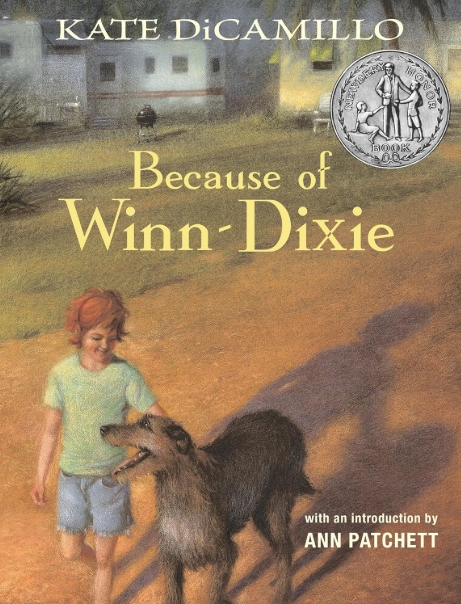
Because of Winn-Dixie by Kate DiCamillo tells the heartwarming story of a lonely girl who adopts a stray dog and discovers that friendship can heal sadness and bring a community together. This guide provides parents and teachers with reading level information, age recommendations, content insights, and discussion questions for this beloved Newbery Honor book about loss, loneliness, and the transformative power of connection.
For Parents
Find the right reading level for your child, understand the book’s themes around loss and friendship, and get conversation starters to help your child explore questions about loneliness, accepting imperfect people, and how love can help us heal from sadness.
For Teachers
Access grade-level guidance, reading metrics, character analysis support, and thematic discussion questions perfect for classroom use. This Newbery Honor book offers rich opportunities for exploring themes of community, forgiveness, loss, and finding family in unexpected places.
Because of Winn-Dixie at a Glance
Find on Amazon →| Author | Kate DiCamillo |
| Published | 2000 |
| Grade Level | 3–5 (our assessment) |
| Recommended Age | 8–11 |
| AR/ATOS | ~3.9 |
| Lexile | 660L–670L (depends on listing/source) |
| Word Count | ~22,000 (varies by edition) |
| Pages | 182 (paperback) |
| Chapters | 26 (short chapters) |
| Genre | Realistic fiction / contemporary |
| Setting | Small town in Florida, summer |
| Awards | Newbery Honor (2001) |
For official Lexile and AR levels, visit Lexile.com or AR BookFinder. ReadingVine provides independent editorial assessments.
What Reading Level Is Because of Winn-Dixie?
Because of Winn-Dixie is appropriate for grades 3–5, with an AR/ATOS level of approximately 3.9 and a Lexile measure of 660L–670L (depends on listing/source). The vocabulary is accessible and the sentence structure is straightforward, making the mechanics comfortable for third graders. DiCamillo writes with elegant simplicity—her prose is clear and uncluttered, yet emotionally rich and deeply moving.
The narrative style is intimate and immediate, told in first person by ten-year-old Opal. Her voice feels authentic—sometimes funny, sometimes sad, always honest about her feelings. DiCamillo trusts young readers to understand complex emotions without explaining everything explicitly. The short chapters (averaging about 7 pages each) make the book approachable for younger or reluctant readers while the emotional themes engage more sophisticated readers.
While strong third graders can handle the reading mechanics, the book is often most meaningful for readers in the 8–11 age range who can fully appreciate the themes about loss, loneliness, and healing. Opal’s struggle with her mother leaving resonates particularly with readers old enough to understand that some sadness doesn’t have simple fixes, and that connection with others—even imperfect people—can help us heal. It’s an excellent choice for readers ready for realistic fiction that handles sadness with hope and warmth.
What Age Is Because of Winn-Dixie Appropriate For?
Because of Winn-Dixie is most appropriate for readers ages 8–11. The story deals with a parent leaving the family, loneliness, and adult characters with troubled pasts, but these topics are handled with gentleness and hope. The book introduces these topics gently and focuses more on friendship, healing, and hope than on sadness. DiCamillo balances the heavier emotional content with warmth, humor, and the joyful presence of Winn-Dixie himself.
Opal’s mother leaving when she was young: Opal’s mother left the family when Opal was three. Opal deeply misses her mother and asks her father to tell her ten things about her mama. This absence and longing are central to the story.
Loneliness and sadness: Opal is profoundly lonely at the beginning—new town, no friends, distant father. The preacher (her father) is also sad and withdrawn, still grieving his wife’s departure. These emotions are present throughout and may be emotionally intense for some readers.
Adult characters with painful pasts: Miss Franny lost her father and best friend; Gloria Dump struggles with alcoholism in her past; Otis previously served time in prison after an altercation with a police officer related to playing music in public; Sweetie Pie’s father is absent. Everyone has experienced loss or hardship.
Fear and trauma: Winn-Dixie is extremely afraid of thunderstorms (likely from past trauma). Gloria Dump mentions her past mistakes without details. Amanda Wilkinson’s family is grieving her drowned brother.
Mild tension: The Dewberry boys tease Opal, and Dunlap calls her names. A thunderstorm at the party causes brief panic when Winn-Dixie runs away. Nothing is violent but there’s emotional tension.
What’s NOT in the book: No graphic violence, no graphic descriptions of trauma, no profanity. The sadness is real but handled with warmth and gentleness. The book emphasizes that while everyone carries pain, friendship and community can help us heal. The ending is hopeful—Opal finds friends, her father becomes more open, and Winn-Dixie helps bring everyone together.
What Is Because of Winn-Dixie About?
Ten-year-old India Opal Buloni has just moved to Naomi, Florida with her father, a Baptist preacher whom she calls “the preacher.” They’re new in town, and Opal is lonely. She has no friends, knows no one, and her father is emotionally distant—still grieving the loss of his wife, who left the family when Opal was three years old. The preacher rarely talks about Opal’s mother, and Opal desperately wants to know about the mama she can’t remember.
One day, Opal is sent to the Winn-Dixie grocery store to buy some items. Inside the store, a large, ugly, stray dog is running wild, causing chaos. The store manager wants to call animal control to take the dog away. On impulse, Opal claims the dog is hers and calls him “Winn-Dixie” after the store. She takes him home, and though the preacher is reluctant, he lets Opal keep the dog.
Winn-Dixie is a special dog. He smiles—actually pulls back his lips to show all his teeth in a goofy grin. He’s friendly, loyal, and has a talent for making friends. But he also has a problem: he’s terrified of thunderstorms. During storms, he panics, shakes, whines, and tries to destroy things in his terror. Opal learns to hold him and comfort him during storms, and this shared vulnerability bonds them deeply.
Through Winn-Dixie, Opal begins making friends in the small town. At the library, she meets Miss Franny Block, an elderly librarian with wonderful stories. Miss Franny tells Opal about her great-grandfather who made a fortune selling Littmus Lozenges—candies that taste sweet but also melancholy, like they contain a secret sadness. Miss Franny lost her father when she was young and has been lonely since her best friend died. She’s thrilled to have Opal and Winn-Dixie visit.
Opal gets a job at Gertrude’s Pets, a small pet store run by Otis, a shy man who previously served time in prison. Otis was arrested after an altercation with a police officer related to playing music in public—he plays guitar beautifully and would play on street corners, but when asked to stop, an incident occurred. Now he’s quiet and gentle, working at the pet store where he plays his guitar to calm the animals. Opal works to earn a collar and leash for Winn-Dixie, and she and Otis become friends despite his troubled past.
Behind the trailer park where Opal lives is a house with an overgrown yard that the neighborhood children say belongs to a witch. Winn-Dixie runs into the yard one day, and Opal follows to find Gloria Dump, an elderly Black woman who is nearly blind but wise and kind. Gloria tells Opal to judge people by their hearts, not their pasts. She reveals that she herself made many mistakes when she was younger—she struggled with alcoholism and hurt people she loved. She’s hung bottles in the trees in her yard to represent her mistakes, so she can see them and remember not to repeat them. Gloria becomes Opal’s closest friend and confidant.
Opal also meets Sweetie Pie Thomas, a little girl who follows Opal around and adores Winn-Dixie. And she encounters Amanda Wilkinson, a girl who seems sour and unfriendly. Opal later learns that Amanda’s family is grieving—her younger brother Carson drowned, and Amanda carries the sadness of that loss, making her seem cold when she’s actually just sad.
Throughout the summer, Opal asks the preacher to tell her ten things about her mama—one for each year Opal has been alive. The preacher reluctantly shares ten facts: her mama loved stories and flowers, she could run fast, she couldn’t cook, she had red hair and freckles, she drank alcohol, she couldn’t be a preacher’s wife, she loved the preacher, she loved Opal, and most painfully—she left and isn’t coming back. Opal clings to these ten things, trying to know the mother she lost.
Opal realizes that many of the traits her father listed about her mama also apply to her—she has red hair and freckles, she loves stories, she can run fast. She’s like her mama in many ways, but she’s terrified that the similarity means she’ll also leave people like her mama did. The preacher, distant and sad for so long, begins to open up through these conversations. Sharing memories of his wife helps him process his grief and reconnect with his daughter.
Gloria suggests that Opal throw a party to bring together all the friends she’s made because of Winn-Dixie. Opal invites Miss Franny, Otis, Sweetie Pie, Amanda, the preacher, and even the Dewberry boys (who’ve been teasing her). She asks Otis to bring his guitar and play music, and she plans to serve egg salad sandwiches, pickles, and Littmus Lozenges—the candies that taste sweet but melancholy.
The party begins beautifully. Everyone comes together in Gloria’s garden, and for the first time, these lonely people—each carrying their own sadness—are part of a community. Otis plays his guitar, and they share food and stories. But then a thunderstorm arrives. In the chaos of the storm, Winn-Dixie, terrified by the thunder, runs away and disappears into the night.
Opal is devastated. She searches frantically in the rain, calling for Winn-Dixie, convinced he’s gone forever just like her mama. The preacher and all the party guests search with her, but they can’t find the dog. Opal breaks down, sobbing that she’s lost Winn-Dixie, and the preacher holds her and tells her they need to accept that some things can’t be found, that sometimes we have to let go.
But then they discover Winn-Dixie had been hiding under Gloria Dump’s bed the whole time, trembling but safe. He never left; he was just scared and hiding close by. Opal realizes something profound: Winn-Dixie didn’t leave her. Unlike her mama, Winn-Dixie stayed. And all the friends she made because of Winn-Dixie stayed too—they’re all there, searching for the dog, caring about Opal, being a community together.
The book ends with everyone back at the party, this time inside Gloria’s house because of the storm. They eat their sandwiches and Littmus Lozenges, and Opal realizes that the melancholy taste of the candy—the sweet sadness—is just like life. You can’t have the sweet without a little sadness mixed in, but the sweetness is still there. She’s made friends, her father is opening up and healing, and she has Winn-Dixie. Her mama isn’t coming back, but Opal isn’t alone anymore. She has a family—not the one she wished for, but a real one made of people who choose to love her and stay.
Because of Winn-Dixie Characters
Because of Winn-Dixie Themes and Lessons
At its heart, Because of Winn-Dixie explores how connection and friendship can heal loneliness and help us process loss. Every major character is carrying sadness: Opal misses her mother, the preacher grieves his wife, Miss Franny lost her best friend, Gloria regrets her past mistakes, Otis is isolated by shame, Amanda mourns her brother. The book shows that reaching out to others—even when we’re scared or hurting—can create the community and belonging we desperately need. Winn-Dixie becomes the catalyst for connection, bringing together people who might otherwise have remained isolated in their separate sorrows.
Many readers interpret the book as teaching about acceptance and forgiveness—both of others and ourselves. Gloria’s tree of bottles represents her mistakes, visible reminders that she carries but doesn’t hide. She tells Opal to judge people by their hearts, not their actions or pasts. This wisdom applies to Otis (who went to prison), to Amanda (who seems mean but is just sad), to the preacher (who withdrew in grief), and even to Opal’s mother (who left but still loved). The book suggests that everyone makes mistakes and everyone has pain, but we can choose to see each other with compassion rather than judgment.
The Littmus Lozenges—candies that taste sweet and sad at the same time—function as a central symbol that many readers see as representing life’s mixture of joy and sorrow. The candy’s dual flavor suggests that happiness and sadness aren’t separate experiences but are often intertwined, and that accepting both is part of being human.
Discussion questions for families:
- How does Winn-Dixie help Opal make friends? What is it about the dog that brings people together?
- Gloria Dump says to judge people “by what’s in their hearts, not by what’s on the outside.” What does she mean? How does Opal learn to do this?
- What do the Littmus Lozenges represent? Why do they taste both sweet and sad? How is this like real life?
- At the end, Opal realizes Winn-Dixie didn’t leave her—he was just hiding nearby. How is this different from her mama? What does Opal learn about who stays and who goes?
How Many Pages and Chapters in Because of Winn-Dixie?
Because of Winn-Dixie has 182 pages in the standard paperback edition and is divided into 26 short chapters. The word count is approximately 22,000 words (varies by edition). The chapters average about 7 pages each and typically cover a single scene or event—meeting Winn-Dixie, visiting the library, working at the pet store, talking with Gloria, the party, etc. The short chapter structure makes the book feel accessible and allows natural stopping points for younger readers.
For independent readers in the target age range (8–11), the book typically takes 3–4 hours to complete, or about one week of reading 30 minutes per day. The accessible prose and emotional engagement keep most readers moving steadily through the story. Many readers report feeling deeply connected to Opal and wanting to keep reading to see how her summer unfolds.
As a read-aloud, Because of Winn-Dixie takes approximately 3–4 hours total. The book works beautifully as a family or classroom read-aloud because the emotional themes prompt meaningful conversations about loneliness, loss, acceptance, and community. The short chapters make it easy to read one or two per session, and DiCamillo’s warm, accessible prose translates wonderfully when read aloud. Many teachers use it in third through fifth grade to discuss themes of empathy, forgiveness, and building community.
Books Similar to Because of Winn-Dixie
If your child enjoyed Because of Winn-Dixie, here are six similar books that explore themes of loneliness, friendship, and healing:
About Kate DiCamillo
Kate DiCamillo (born 1964) is an American author who has become one of the most celebrated writers of contemporary children’s literature. Born in Philadelphia and raised in Florida, DiCamillo moved to Minnesota as an adult and began writing seriously in her thirties. Because of Winn-Dixie was her first published novel, released in 2000 when she was 36 years old. The book won a Newbery Honor in 2001 and established DiCamillo as a significant voice in children’s literature. Since then, she has written numerous acclaimed books including The Tale of Despereaux (Newbery Medal, 2004), The Tiger Rising, and Flora & Ulysses (Newbery Medal, 2014). DiCamillo has received two Newbery Medals and served as National Ambassador for Young People’s Literature from 2014 to 2015. She’s known for her emotionally resonant prose that handles complex themes with warmth and hope, never condescending to young readers. Because of Winn-Dixie remains one of her most beloved books and continues to be widely read in elementary classrooms, helping children explore themes of loneliness, acceptance, and community.
Because of Winn-Dixie: Frequently Asked Questions
What happens to Opal’s mother in Because of Winn-Dixie?
Opal’s mother left the family when Opal was three years old. She struggled with alcohol and couldn’t handle being a preacher’s wife. The preacher tells Opal that her mother loved both him and Opal, but she left anyway and isn’t coming back. Throughout the book, Opal asks her father to tell her ten things about her mama—one for each year of Opal’s life—so she can know the mother she doesn’t remember. The preacher shares facts like: her mama had red hair and freckles, loved stories and flowers, could run fast, couldn’t cook, and loved them both. Opal realizes she’s like her mother in many ways, which both comforts and frightens her. The book doesn’t provide a reunion or resolution with the mother—she stays gone. Instead, Opal learns to accept this loss while building new connections and a found family with the people who choose to stay in her life.
Does Winn-Dixie die in the book?
No, Winn-Dixie does not die. During the party at Gloria Dump’s house, a thunderstorm arrives and Winn-Dixie—who is terrified of storms—runs away in panic. Opal searches frantically in the rain and fears she’s lost him forever, just like she lost her mama. But they discover Winn-Dixie had been hiding under Gloria Dump’s bed the whole time, scared but safe. This moment is significant because Opal realizes that unlike her mother who left and didn’t come back, Winn-Dixie stayed close by. The dog is fine and remains with Opal at the end of the book. The story ends on a hopeful, happy note with everyone gathered together, eating Littmus Lozenges and celebrating their community.
What are Littmus Lozenges in Because of Winn-Dixie?
Littmus Lozenges are candies invented by Miss Franny Block’s great-grandfather, Littmus W. Block, after he returned from the Civil War. The candies taste sweet but also have a melancholy flavor—a kind of sadness mixed with the sweetness. Littmus created them because he wanted to capture how life felt: sweet and sad at the same time. In the story, many readers interpret the candies as symbols for the book’s central theme—that life contains both joy and sorrow mixed together, and you can’t have one without the other. When Opal and her friends eat the Littmus Lozenges at the party, they each taste the sweet-sad flavor and share their own experiences of sadness and sweetness. The candies suggest that accepting life’s complexity—both the happiness and the pain—is part of being human.
Who is Gloria Dump in Because of Winn-Dixie?
Gloria Dump is an elderly, nearly blind African American woman who lives behind the trailer park in a house with an overgrown yard. The neighborhood children think she’s a witch, but she’s actually a wise, kind mentor to Opal. Gloria has made mistakes in her past—she struggled with alcoholism and hurt people she loved when she was younger. She’s hung empty bottles in the trees in her backyard to represent those mistakes, so she can “see” them and remember not to repeat them. She teaches Opal to judge people “by what’s in their hearts, not by what’s on the outside” and to accept that everyone has pain and makes mistakes. Gloria becomes Opal’s closest confidant and friend, offering wisdom, acceptance, and love. She hosts the party where all of Opal’s friends come together, symbolically creating a community of lonely people who find belonging with each other.
What reading level is Because of Winn-Dixie?
Because of Winn-Dixie is appropriate for grades 3–5 (ages 8–11). The AR/ATOS level is approximately 3.9 and the Lexile measure is 660L–670L (depends on listing/source), making it accessible for third graders to read independently. The vocabulary and sentence structure are straightforward, and the short chapters make it approachable for younger or reluctant readers. However, the emotional themes—a parent leaving the family, loneliness, grief, adults with troubled pasts—are sophisticated and resonate most deeply with readers in the 8–11 age range who can understand that some sadness doesn’t have simple fixes. It’s commonly taught in third, fourth, and fifth grade classrooms as realistic fiction that handles complex emotions with warmth and hope. The book is excellent for teaching empathy, community, and processing difficult feelings.
What does the ending of Because of Winn-Dixie mean?
The ending explores accepting loss while celebrating the connections that remain. When Winn-Dixie is found safe after the storm, Opal has an important realization: unlike her mother who left and didn’t come back, Winn-Dixie stayed. He was scared and hiding, but he didn’t leave. All the friends Opal made because of Winn-Dixie also stayed—they searched for the dog in the rain, they cared about Opal, they showed up. The ending shows Opal understanding that while her mother is gone and that sadness is real, she’s not alone. She has a father who is learning to open up, friends who care about her, and a community built on mutual acceptance and love. When they eat the Littmus Lozenges—which taste sweet and sad at the same time—many readers see this as representing the acceptance that life contains both joy and sorrow, and that’s okay. The sweetness is still there.
Why is the book called Because of Winn-Dixie?
The book is called Because of Winn-Dixie because the dog is the catalyst for everything good that happens in Opal’s summer. Because of Winn-Dixie, Opal meets Miss Franny at the library (the dog runs in and Miss Franny thinks he’s a bear). Because of Winn-Dixie, Opal gets a job at the pet store (to earn money for a collar and leash). Because of Winn-Dixie, Opal meets Gloria Dump (the dog runs into her yard). Because of Winn-Dixie, Opal starts conversations with people and builds relationships. Because of Winn-Dixie, her father begins opening up about her mother. Because of Winn-Dixie, the party happens where everyone comes together. The dog doesn’t just provide companionship—he’s the reason Opal transforms from a lonely girl to someone with a whole community of friends and a healing family. The title emphasizes that sometimes one act of connection (adopting a stray dog) can change everything and create ripple effects of friendship and healing.
What is the main message of Because of Winn-Dixie?
Many readers interpret the main message as showing how friendship and connection can heal loneliness and help us process loss. Every character in the book is lonely and carrying sadness, but by reaching out to each other and forming community, they find belonging and hope. The book teaches that everyone has pain—whether it’s a parent leaving, a loved one dying, past mistakes, or other sorrows—but we don’t have to carry that pain alone. It also emphasizes judging people by their hearts rather than their pasts or appearances, accepting that life is a mixture of sweet and sad, and understanding that found family (people who choose to love you) can be just as meaningful as biological family. Ultimately, it’s about opening your heart even when you’re scared, reaching out even when you’re lonely, and trusting that connection—whether with a dog, a friend, or a community—can make life’s sadness more bearable and its sweetness more real.