
 = Partner Site
Sarah, Plain and Tall Reading Level: A Complete Guide
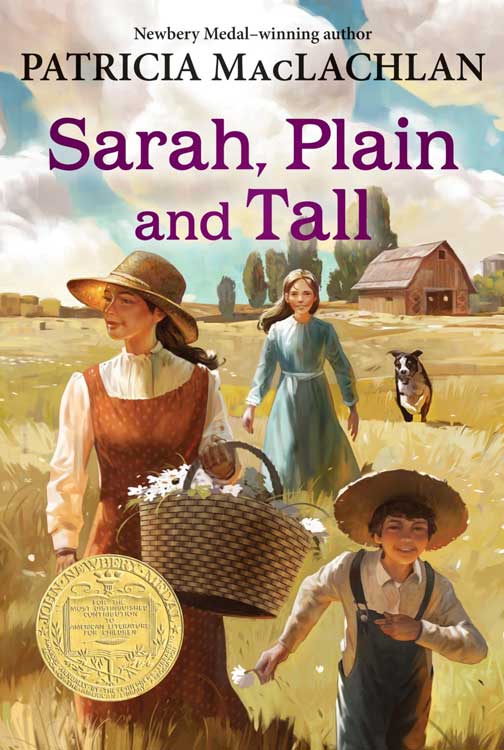
Sarah, Plain and Tall by Patricia MacLachlan tells the touching story of a mail-order bride who comes to the prairie to see if she can make a home with a widowed father and his two children. This guide provides parents and teachers with reading level information, age recommendations, content insights, and discussion questions for this Newbery Medal-winning classic about family, belonging, and finding home.
For Parents
Find the right reading level for your child, understand the book’s themes around loss and new beginnings, and get conversation starters to help your child explore questions about family, missing a mother, and what makes a place feel like home.
For Teachers
Access grade-level guidance, reading metrics, character analysis support, and thematic discussion questions perfect for classroom use. This Newbery Medal winner offers rich opportunities for exploring pioneer life, family structures, and the meaning of home.
Sarah, Plain and Tall at a Glance
Find on Amazon →| Author | Patricia MacLachlan |
| Published | 1985 |
| Grade Level | 3–5 (our assessment) |
| Recommended Age | 7–10 |
| Flesch-Kincaid Grade | 3.4 |
| Word Count | ~8,500 |
| Pages | 58 (standard paperback) |
| Chapters | 9 |
| Genre | Historical fiction / family story |
| Setting | Kansas prairie, late 1800s |
| Awards | Newbery Medal (1986) |
For official Lexile and AR levels, visit Lexile.com or AR BookFinder. ReadingVine provides independent editorial assessments.
What Reading Level Is Sarah, Plain and Tall?
Sarah, Plain and Tall is appropriate for grades 3–5, with a Flesch-Kincaid grade level of 3.4. The vocabulary is simple and accessible, with straightforward language that reflects the sparse prairie setting. The sentence structure is deliberately simple, often short and direct, which makes the mechanics easy for third graders. However, the emotional depth—understanding grief, fear of abandonment, and the cautious hope of new love—requires more maturity than the reading level alone suggests.
MacLachlan writes with lyrical simplicity, using sparse prose that echoes the open prairie landscape. Every word carries weight, and the silences between dialogue are as meaningful as what’s said. The book is deceptively short—only 58 pages—but it packs profound emotional truth into those pages. The brevity and accessible language make it perfect for younger readers, while the themes resonate with older readers and adults who can appreciate the sophisticated restraint in MacLachlan’s writing.
While third graders can handle the reading mechanics comfortably, the story resonates most deeply with readers ages 7–10 who can understand the children’s fear that Sarah might leave, the father’s cautious hope for companionship, and Sarah’s own longing for the sea she left behind. It’s an excellent choice for readers ready for quiet, character-driven stories where emotional truth matters more than action.
The book is also exceptionally popular as a read-aloud for younger children (even first and second graders) because the simple language allows the emotional story to shine through, and adults can help younger listeners understand the subtle feelings the characters experience.
What Age Is Sarah, Plain and Tall Appropriate For?
Sarah, Plain and Tall is most appropriate for readers ages 7–10. The story deals with loss—the children’s mother died around the time of Caleb’s birth—and the fear that Sarah might not stay. While there’s no graphic content, the emotional reality of missing a mother and fearing abandonment requires readers mature enough to understand these feelings without being overwhelmed.
Death of a parent: The children’s mother died around the time of Caleb’s birth, years before the story begins. This loss shapes the family and is discussed matter-of-factly throughout the book.
Fear of abandonment: Anna and Caleb worry that Sarah will decide not to stay and will return to Maine, leaving them motherless again. This anxiety runs throughout the story.
Loneliness and longing: All the characters experience loneliness—Sarah misses the sea, the children miss their mother, their father misses his wife. These feelings are handled gently but honestly.
Mail-order bride concept: The story involves Papa placing an advertisement for a wife, which may require explanation for younger readers unfamiliar with this historical practice.
What’s NOT in the book: No violence, no profanity, no inappropriate content. The sadness comes from loss and longing, not from trauma or abuse. The tone is gentle, hopeful, and ultimately optimistic. The ending affirms that Sarah chooses to stay, providing closure and comfort for young readers worried about the characters.
What Is Sarah, Plain and Tall About?
Anna and Caleb live on the Kansas prairie with their father, Jacob. Their mother died around the time Caleb was born, and while their father has managed to care for them, the house feels incomplete without her. Anna remembers her mother’s singing, her laughter, and the way she made the prairie feel less lonely. Caleb, who never knew his mother, constantly asks Anna to tell him about her—what she looked like, what she loved, whether she sang.
One winter day, Papa tells the children he’s placed an advertisement in the newspaper for a wife. He shows them a letter from Sarah Elisabeth Wheaton from Maine, who writes that she’s “plain and tall” and asks if they would like her to come for a visit. Papa writes back inviting her to come, and Sarah agrees, saying she’ll come for one month to see if the prairie could be her home.
As Sarah’s arrival approaches, Anna and Caleb are filled with both hope and fear. They hope Sarah will stay and bring joy back to their home, but they’re terrified she’ll leave like their mother did—not by choice, but still gone. When Sarah arrives, she’s exactly as she described: plain, tall, and different from what they imagined. She brings her cat, Seal, named for the seals of Maine, and she tells them about the ocean she loves—its colors, its sounds, its constant motion.
Sarah begins to settle into prairie life, but she’s clearly homesick for the sea. She teaches Anna and Caleb to swim in the cow pond, singing songs of sailing ships. She draws pictures of the ocean with her colored pencils, showing them what she misses. Every mention of the sea makes Anna and Caleb worry—will Sarah’s longing for Maine pull her away from them?
Sarah learns to do farm chores, helps with the animals, and begins to make the house feel like a home again. She fixes the roof, tends the garden, and even plows the fields alongside Papa. She brings color to the house with flowers and brings joy with her singing. But Anna notices that Sarah keeps her trunk packed, ready to leave at any moment.
One day, Sarah announces she’s going to town alone. Anna and Caleb are devastated, certain she’s going to the train station to leave them forever. They wait anxiously all day, fearing she won’t return. But when Sarah comes back, she hasn’t gone to leave—she’s gone to buy supplies. She’s bought colored pencils in sea colors: blue, gray, and green. “For all the flowers I’ll draw,” she tells them. “And for the sea that will be far away.”
That night, Sarah tells them the truth: she’ll always miss the sea, just as they’ll always miss their mother. But she’s going to stay. She’s chosen this family, this prairie, this life. The book ends with Sarah singing—the sound the children’s mother used to make, now filling the house again. Sarah is home, and so are they.
Sarah, Plain and Tall Characters
Sarah, Plain and Tall Themes and Lessons
Sarah, Plain and Tall explores what makes a place home. Sarah could stay in Maine near the sea she loves, or she could choose the prairie and this family. The book teaches that home isn’t just a location—it’s where we choose to love and commit. Sarah will always miss the sea, but she chooses the prairie because the people there matter more. This teaches children that love involves sacrifice and that we can honor what we’ve lost while embracing something new.
The book also addresses healing after loss. Anna and Caleb have lived with their mother’s absence, and they’re terrified of losing another mother figure. Their father has closed himself off emotionally to avoid more pain. Sarah’s arrival opens the possibility of joy again, but with it comes risk. The book shows that moving forward after loss doesn’t mean forgetting—Anna will always remember her mother’s singing, just as Sarah will always miss the sea. But new love is possible, and choosing it is what makes us whole.
Discussion questions for families:
- Why does Sarah keep bringing up the sea? How does this make Anna and Caleb feel?
- What does it mean when Sarah buys the colored pencils “for the sea that will be far away”? How does this show her decision?
- How is Sarah different from the children’s mother? Is it okay for her to be different?
- What does the book teach about choosing to love even when it’s scary?
How Many Pages and Chapters in Sarah, Plain and Tall?
Sarah, Plain and Tall has 58 pages in the standard paperback edition and is divided into 9 chapters. The word count is approximately 8,500 words. The chapters average about 6 pages each and typically cover a specific event or period—Sarah’s letter, her arrival, learning to do farm chores, the trip to town, etc. The book is remarkably short, making it accessible to younger readers while still delivering profound emotional depth.
For independent readers in the target age range (7–10), the book typically takes 1–2 hours to complete, or about 2–3 days of reading 20–30 minutes per day. The simple language and short chapters make it manageable for younger readers, while the emotional story keeps them engaged. Many readers finish it in one or two sittings because they need to know whether Sarah will stay.
As a read-aloud, Sarah, Plain and Tall takes approximately 1–2 hours total. The book works beautifully as a family or classroom read-aloud because MacLachlan’s spare, lyrical prose is perfect for reading aloud, and the short chapters make natural stopping points for discussion. Teachers commonly use it in third through fifth grade to explore themes of family, loss, and belonging. The brevity makes it ideal for sustained unit study without overwhelming young readers.
Books Similar to Sarah, Plain and Tall
If your child enjoyed Sarah, Plain and Tall, here are six similar books that explore themes of family, loss, belonging, and finding home:
About Patricia MacLachlan
Patricia MacLachlan (1938–2022) was an American children’s author best known for Sarah, Plain and Tall, which won the Newbery Medal in 1986. MacLachlan was inspired to write the story after learning about her own family history—her grandfather’s family had placed an advertisement for a mail-order bride, and a woman from the East Coast came to join them. While the specific characters and events in the book are fictional, the practice of mail-order brides was common in the late 1800s when men on the frontier needed partners and women in the East sought new opportunities. MacLachlan wrote with spare, lyrical prose that mirrors the open prairie landscape and allows emotional truth to resonate without excess words. She believed in treating young readers with respect and not talking down to them about difficult topics like loss and longing. MacLachlan wrote four sequels to Sarah, Plain and Tall: Skylark (1994), Caleb’s Story (2001), More Perfect Than the Moon (2004), and Grandfather’s Dance (2006). She also wrote numerous other acclaimed children’s books including Journey and The Facts and Fictions of Minna Pratt. Sarah, Plain and Tall remains her most beloved work and continues to be widely taught in elementary schools for its themes of family, belonging, and the meaning of home. MacLachlan died in 2022, leaving behind a legacy of beautiful, emotionally honest books that help children understand complex feelings.
Sarah, Plain and Tall: Frequently Asked Questions
Does Sarah stay at the end of Sarah, Plain and Tall?
Yes, Sarah decides to stay. The climax comes when Sarah goes to town alone, and the children fear she’s leaving. But she returns with colored pencils in the colors of the sea. When asked if she misses the sea, Sarah says yes, but she would miss Anna, Caleb, and their father more. The book ends with Sarah singing as she drives the wagon, bringing music back to the house.
Is Sarah, Plain and Tall based on a true story?
Sarah, Plain and Tall is fictional, but it was inspired by a real event from Patricia MacLachlan’s family history. MacLachlan’s grandfather’s family actually placed an advertisement for a mail-order bride, and a woman did come from the East Coast. While the characters and specific events are invented, the historical practice of mail-order brides and the prairie setting are authentic to the late 1800s.
What does plain and tall mean?
Plain and tall is how Sarah describes herself in her first letter. Plain means she’s not fancy or beautiful—she sees herself as ordinary-looking and straightforward. Tall is simply her height. Sarah is being honest and unpretentious about who she is, setting realistic expectations. The title captures Sarah’s modesty and directness.
How did the children’s mother die in Sarah, Plain and Tall?
The children’s mother died around the time Caleb was born, apparently from complications related to childbirth. This was tragically common in the 1800s. The book doesn’t provide explicit details about the exact timing or circumstances—it’s mentioned matter-of-factly that she died when Caleb was born. Anna’s memories of their mother singing make her loss more poignant.
What grade level is Sarah, Plain and Tall?
Sarah, Plain and Tall is appropriate for grades 3–5 (ages 7–10). The reading level is accessible with a Flesch-Kincaid grade of 3.4. It’s also popular as a read-aloud for younger children (first and second grade) because the simple language allows the story to shine through. Many schools teach it in third or fourth grade.
Are there sequels to Sarah, Plain and Tall?
Yes, Patricia MacLachlan wrote four sequels: Skylark (1994), Caleb’s Story (2001), More Perfect Than the Moon (2004), and Grandfather’s Dance (2006). While the sequels continue the family’s story, Sarah, Plain and Tall works perfectly as a standalone.
Why does Sarah miss the sea so much?
Sarah grew up in Maine by the ocean, and the sea was a fundamental part of her life. She misses its colors, sounds, smell, and constant motion. The prairie is the sea’s opposite—flat, dry, still. Sarah’s longing represents homesickness and the sacrifice she’s making. The book’s power comes from Sarah never stopping missing the sea—she simply chooses to stay because she loves her new family more.
What is the main message of Sarah, Plain and Tall?
The main message is that home is created through choice and commitment, not just location. Sarah chooses the prairie even though she’ll always miss the sea. The book teaches that we can honor what we’ve lost while embracing new love, that family is built through care and commitment, and that making a home requires sacrifice but choosing to stay and love is what makes us whole.