
 = Partner Site
Little House in the Big Woods Reading Level: A Complete Guide
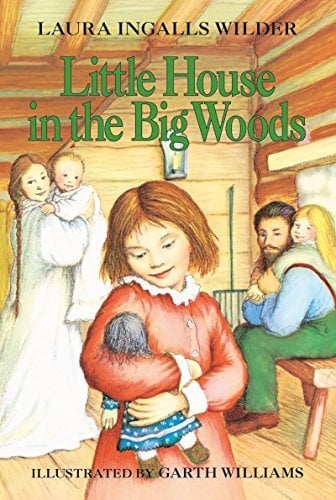
Little House in the Big Woods by Laura Ingalls Wilder is the first book in one of the most beloved series in American children’s literature — a warmly detailed account of a year in the life of five-year-old Laura Ingalls and her pioneer family living in a log cabin deep in the Wisconsin woods in the 1870s, drawn from Wilder’s own memories of her childhood. This complete guide covers Little House in the Big Woods’ reading level, recommended age, content considerations, characters, themes, and books similar to Little House in the Big Woods, designed for parents, teachers, and students.
For Parents
Little House in the Big Woods is one of the great American family read-alouds — a book that works equally well for a five-year-old listening and a ten-year-old reading independently, and that adults consistently find themselves absorbed in alongside their children. The world Wilder describes is completely different from modern life in ways that endlessly fascinate young readers: the making of butter, the smoking of meat, the sound of a bear outside the cabin at night. Content concerns are minimal. There is hunting and butchering described matter-of-factly, which is worth knowing about in advance, and some parents note that the book reflects the attitudes of its era toward race and Native Americans. Appropriate for most readers ages 5 and up as a read-aloud, and grades 3–4 for independent reading.
For Teachers
Little House in the Big Woods is a staple of early American history and pioneer life units in grades 2–5. Its episodic structure makes it easy to assign in manageable sections, and the wealth of domestic detail — food preservation, clothing, tools, seasonal rhythms — makes it an exceptionally rich primary-source-adjacent text for understanding 19th-century American frontier life. It pairs naturally with nonfiction resources on westward expansion, pioneer life, and Laura Ingalls Wilder’s biography. The book is also an excellent model for personal narrative writing, demonstrating how specific sensory detail brings memory to life.
Little House in the Big Woods at a Glance
Find on Amazon →| Author | Laura Ingalls Wilder |
| Published | 1932 |
| Grade Level | 3–4 (our assessment) |
| Recommended Age | 5–10 |
| Flesch-Kincaid Grade | 4.9 |
| Word Count | ~50,000 |
| Pages | 238 (standard paperback) |
| Chapters | 13 |
| Genre | Historical fiction / autobiographical fiction |
| Setting | Pepin County, Wisconsin; circa 1871–1872 |
| Awards | — |
For official Lexile and AR levels, visit Lexile.com or AR BookFinder. ReadingVine provides independent editorial assessments.
What Reading Level Is Little House in the Big Woods?
Little House in the Big Woods reads at approximately a 4th- to 5th-grade word level by standard readability measures (Flesch-Kincaid grade 4.9), placing it in the lower middle-grade range. Our editorial assessment is grades 3–4 for independent reading, with the book working beautifully as a read-aloud for children as young as 5 or 6. Wilder’s prose is clear, warm, and unaffected — she writes with a child’s directness and a storyteller’s gift for sensory detail, describing the sights, sounds, smells, and textures of pioneer life with the vividness of someone who genuinely remembers them.
What makes Little House in the Big Woods somewhat more demanding than its accessible prose might suggest is its episodic structure and its assumption that readers can find interest in domestic processes — the making of cheese, the preparation of a pig, the packing of a smokehouse — that do not drive a conventional plot. The book has very little external conflict or narrative tension; its pleasures are entirely in the texture of a life carefully observed and lovingly rendered. Readers who enjoy this kind of immersive, detail-rich storytelling will find it deeply satisfying. Readers who need a strong plot to stay engaged may find some chapters slow. For official Lexile and AR scores, visit Lexile.com or AR BookFinder.
What Age Is Little House in the Big Woods Appropriate For?
We recommend Little House in the Big Woods for readers ages 5–10, with an unusually wide effective range that reflects the book’s dual nature as both a compelling read-aloud for very young children and a richly rewarding independent read for upper elementary students. As a read-aloud, it is one of the best choices available for children ages 5–8 — the descriptions of pioneer life are endlessly fascinating to young listeners, Pa’s fiddle playing and storytelling give the chapters a warm, cozy atmosphere, and the family at the center is one of the most appealing in children’s literature. For independent reading, grades 3–4 is the natural range.
Little House in the Big Woods describes frontier life with matter-of-fact honesty, including the hunting and butchering of animals. The book’s opening chapters include the slaughter and processing of a pig, described in considerable detail — including the scraping of bristles, the rendering of lard, and children playing with the pig’s bladder as a balloon. This is not presented as disturbing but as a normal and celebratory part of pioneer life; most children find it fascinating rather than upsetting, though very sensitive readers may need some preparation. There is also hunting — Pa hunts deer and bear — and a brief scene involving a bear encounter near the cabin. The book contains some language and attitudes toward Native Americans that reflect the prejudices of the 1870s frontier, which parents and teachers may wish to discuss in context. There is no other violence, profanity, or mature content.
Little House in the Big Woods has remained one of the most beloved children’s books in America for more than ninety years, and its appeal rests on something simple and durable: it makes an ordinary domestic life feel extraordinary through the quality of attention brought to it. Children who read it frequently become devoted followers of the entire series, which spans eight books and covers Laura’s life from early childhood through her marriage.
What Is Little House in the Big Woods About?
Five-year-old Laura lives with her Ma, her Pa, her older sister Mary, and her baby sister Carrie in a log cabin deep in the Wisconsin woods, far from any neighbors or town. The family’s life is defined by the rhythms of the seasons and the work each season demands: smoking and storing meat before winter, making butter and cheese in summer, gathering and preserving everything the land provides. Pa hunts and farms and tells stories and plays his fiddle in the evenings. Ma cooks, sews, preserves, and keeps the household running with a precision and skill that the book treats with deep respect.
The book follows the family through a full year — from the long isolation of a Wisconsin winter through spring planting, summer work, harvest, and back to winter again. Along the way, Laura experiences the texture of daily life: the making of maple sugar, a trip to town to visit relatives, Sundays with their enforced quiet and special foods, the excitement of the annual harvest dance. There is no single plot driving the narrative — the book is a series of vignettes, each lovingly detailed, that together build a complete portrait of what this life looked, felt, and smelled like.
Laura Ingalls Wilder wrote Little House in the Big Woods in her sixties, drawing on childhood memories she had carried for more than fifty years. She was encouraged to write the series by her daughter Rose Wilder Lane, who was herself a writer and who edited and shaped the manuscripts significantly. The extent of Rose’s contribution has been a subject of ongoing scholarly discussion, but the memories, the voice, and the warmth of the material are unquestionably Laura’s own. The book was published in 1932, during the Great Depression, when its portrait of self-sufficiency, family warmth, and making do with very little had particular resonance.
Little House in the Big Woods Characters
Little House in the Big Woods Themes and Lessons
Little House in the Big Woods is, at its most essential, a book about paying attention — about the satisfaction of a life lived close to its material realities, understood in full, and appreciated for what it offers. Wilder describes making cheese, smoking meat, and constructing a log cabin with the same loving specificity she brings to Pa’s fiddle tunes and Christmas morning, treating all of it as equally worthy of notice and memory. This democratization of experience — the idea that a child playing with a pig’s bladder balloon is as worth remembering as a holiday — is the book’s deepest gift to young readers.
The book is also a sustained meditation on what it feels like to be safe and warm and loved within a small family circle. The Ingalls family has almost nothing by the standards of modern American life, and the book makes this feel not like deprivation but like freedom — freedom from the distractions of a larger world, and a resulting clarity of attention to what is immediately at hand. This is why it speaks so powerfully across generations and why children who grow up in very different material circumstances respond to it so strongly: it is less about the specific content of pioneer life than about the quality of attention and love that made that life feel full. Discussion questions worth exploring: What does Laura notice that modern children might not pay attention to? How does the family prepare for winter, and what does that preparation involve? Why does Pa tell stories and play music in the evenings — what does it give the family? What would a day in Laura’s life look and feel like compared to a day in your own?
How Many Pages and Chapters Are in Little House in the Big Woods?
Little House in the Big Woods is 238 pages in the standard paperback edition, divided into 13 chapters. The word count is approximately 50,000 words. At an average upper-elementary reading pace of around 200 words per minute, most readers in the target age range finish the book in roughly 4 hours of total reading time, typically one to two weeks of 20–30 minute daily reading sessions. The chapters are moderately long — most run 15–20 pages — and each is organized around a specific activity, season, or event rather than a narrative throughline, which means they work well as self-contained read-aloud sessions. Most editions include illustrations by Garth Williams, whose warm pencil drawings have become inseparable from the series and are among the most beloved in American children’s book illustration.
Books Similar to Little House in the Big Woods
About Laura Ingalls Wilder
Laura Ingalls Wilder was born in 1867 in Pepin County, Wisconsin — the setting of Little House in the Big Woods — and spent her childhood moving across the frontier with her family as her father sought new land and opportunity: Kansas, Minnesota, Iowa, the Dakota Territory. She married Almanzo Wilder in 1885 and eventually settled in Mansfield, Missouri, where she lived for the rest of her life. She did not begin writing the Little House books until her sixties, encouraged by her daughter Rose Wilder Lane. The series — eight books published between 1932 and 1943 — covers her life from early childhood through her marriage to Almanzo and the birth of their daughter Rose. A ninth book, The First Four Years, was published posthumously in 1971 from an unfinished manuscript. Wilder died in 1957 at the age of 90, three days after her birthday. The Little House series has never been out of print, has sold tens of millions of copies worldwide, and was adapted into a long-running television series starring Michael Landon that aired from 1974 to 1983. In 2018 the American Library Association renamed its children’s literature award — previously called the Laura Ingalls Wilder Award — the Children’s Literature Legacy Award, following reexamination of her books’ depictions of Native Americans and Black Americans.
Little House in the Big Woods: Frequently Asked Questions
What grade level is Little House in the Big Woods?
By standard readability measures, Little House in the Big Woods reads at approximately a 4th- to 5th-grade word level (Flesch-Kincaid grade 4.9). Our editorial assessment is grades 3–4 for independent reading, with the book working beautifully as a read-aloud for children as young as 5 or 6. Wilder’s prose is clear and direct, and the book’s episodic structure makes individual chapters accessible even to developing readers.
Is Little House in the Big Woods part of a series?
Yes. Little House in the Big Woods is the first of eight books in the Little House series by Laura Ingalls Wilder. The series follows Laura’s life from early childhood through her marriage and early adult years. The books in order are: Little House in the Big Woods (1932), Farmer Boy (1933), Little House on the Prairie (1935), On the Banks of Plum Creek (1937), By the Shores of Silver Lake (1939), The Long Winter (1940), Little Town on the Prairie (1941), and These Happy Golden Years (1943). Farmer Boy, the second book, is actually about Almanzo Wilder’s childhood in New York rather than Laura’s story, and some readers skip it initially and return to it later. A posthumously published ninth book, The First Four Years (1971), covers the early years of Laura and Almanzo’s marriage.
Is Little House in the Big Woods a true story?
It is based on true events from Wilder’s own childhood, but it is classified as historical fiction rather than memoir because Wilder fictionalized and rearranged some events, and because she was writing from memories formed when she was five years old. The family is real, the setting is real, and the general shape of the life described is accurate to what the historical record shows. However, some specific episodes and details may have been adjusted, combined, or invented to serve the narrative. Wilder herself described the books as “stories” rather than strictly factual accounts.
Is there a TV show based on Little House in the Big Woods?
The Little House on the Prairie television series, which aired from 1974 to 1983 and starred Michael Landon as Pa and Melissa Gilbert as Laura, is loosely based on the Little House series rather than specifically on any single book. The show took considerable creative liberties with the source material and is set primarily on the Kansas prairie rather than in the Wisconsin woods of the first book. It remains one of the most watched family television series in American history and has introduced multiple generations of viewers to the Ingalls family, though readers of the books will find the television version significantly different in both tone and story.
Does Little House in the Big Woods have any problematic content?
The book contains depictions of hunting, butchering, and animal processing that reflect the realities of frontier life and may be unfamiliar or startling to modern readers. More significantly, the book contains passages that reflect the racial attitudes of the 1870s American frontier, including characterizations of Native Americans that are considered offensive by contemporary standards. These passages are relatively brief in this first book but become more significant in later volumes, particularly Little House on the Prairie. Parents and teachers who use the series often find it valuable to discuss this historical context openly with children rather than ignoring it — the books can serve as a starting point for discussions about how attitudes change over time and whose perspectives are and are not represented in historical narratives.
Why is the book called “Little House in the Big Woods”?
The title refers simply to the Ingalls family’s log cabin — their little house — set within the vast Wisconsin wilderness surrounding it. The contrast between the small, warm, human-made shelter and the enormous, wild, sometimes dangerous forest is one of the book’s central sensory realities: the family’s life is defined by the tension between the cosiness of the cabin interior and the immensity and unpredictability of the natural world just outside the door. The title captures that contrast in five words.
What is Pa’s fiddle playing, and why is it so important in the book?
Pa’s fiddle is one of the most memorable elements of the Little House series and a recurring presence throughout the books. In the evenings, after the day’s work is done, Pa plays his fiddle — folk tunes, hymns, dance music — while the family gathers around. The fiddle represents everything the Ingalls family has that cannot be taken away by poverty or hardship: music, creativity, joy, the warmth of being together. Wilder describes specific songs Pa plays, and several editions of the books have been published with musical notation so readers can hear the tunes she remembers. The fiddle playing also reflects the real Charles Ingalls, who was by all historical accounts an accomplished amateur fiddler.
How does Little House in the Big Woods differ from the other Little House books?
Little House in the Big Woods is the coziest and most contained of the Little House books — it covers a single year in one location, the family is complete and settled, and the tone is almost entirely warm and secure. The later books follow the family as they move across the frontier, facing more significant hardships: prairie fires, grasshopper plagues, severe blizzards, illness and loss. The Long Winter (book 6) in particular is considered one of the most harrowing survival stories in children’s literature. Little House in the Big Woods is often the recommended starting point precisely because it establishes the family and its values in the most welcoming possible setting before the series moves into more challenging territory.