
 = Partner Site
Little House on the Prairie Reading Level: A Complete Guide
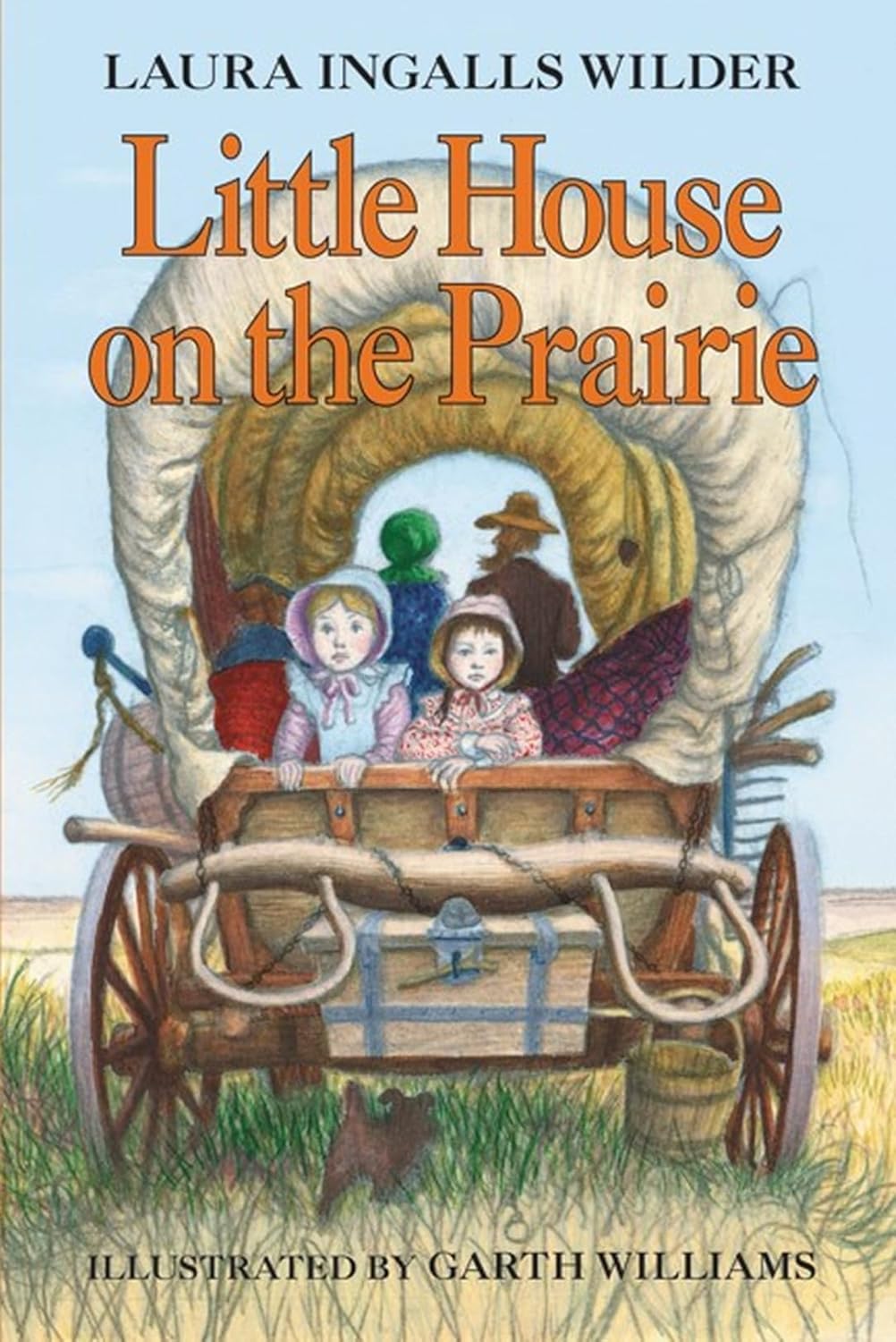
Little House on the Prairie by Laura Ingalls Wilder follows the Ingalls family as they leave Wisconsin and travel by covered wagon to settle on the Kansas prairie, building a new home and facing the challenges of frontier life. This guide provides parents and teachers with reading level information, age recommendations, content insights, and discussion questions for this beloved classic about pioneer life, family, and resilience.
For Parents
Find the right reading level for your child, understand the book’s historical context and period attitudes, and get conversation starters to help your child explore themes about family, perseverance, and frontier life.
For Teachers
Access grade-level guidance, reading metrics, character analysis support, and thematic discussion questions. This Wilder classic offers rich opportunities for exploring American history, pioneer life, and memoir-based historical fiction.
Little House on the Prairie at a Glance
Find on Amazon →| Author | Laura Ingalls Wilder |
| Published | 1935 |
| Grade Level | 3–5 (our assessment) |
| Recommended Age | 8–11 |
| Flesch-Kincaid Grade | 4.9 |
| Word Count | ~47,000 |
| Pages | ~335 (standard paperback) |
| Chapters | 26 |
| Genre | Historical fiction / memoir / pioneer life |
| Setting | Kansas prairie, 1870s |
| Awards | Classic (part of the beloved Little House series) |
For official Lexile and AR levels, visit Lexile.com or AR BookFinder. ReadingVine provides independent editorial assessments.
What Reading Level Is Little House on the Prairie?
Little House on the Prairie is appropriate for grades 3–5, with a Flesch-Kincaid grade level of 4.9. The vocabulary is accessible and the prose is clear and straightforward. Wilder wrote from a child’s perspective, describing pioneer life through young Laura’s eyes, which makes the narrative easy to follow despite the historical setting and unfamiliar frontier terms.
Laura Ingalls Wilder’s writing style is simple, direct, and vivid. She describes daily life on the prairie with precise detail—how to build a house from logs, how to make butter, how to survive a prairie fire—in a way that brings history alive without being overwhelming. The episodic structure means each chapter often focuses on a single event or task, making the book easy to read in installments. The pacing is gentle, focused more on everyday routines and small adventures than on dramatic plot twists.
The story resonates most deeply with readers ages 8–11 who are interested in pioneer life, family stories, and historical settings. The book provides a detailed window into 1870s frontier life that many readers find fascinating. Strong third graders can read it independently; fourth and fifth graders will appreciate the historical context and themes about family resilience more fully.
What Age Is Little House on the Prairie Appropriate For?
Little House on the Prairie is most appropriate for readers ages 8–11. The book portrays frontier life honestly, including real dangers like wolves, illness, and prairie fires, but without graphic violence or trauma. However, the book reflects attitudes of the 1870s frontier that require contextual discussion with modern readers.
Period attitudes toward Native Americans: The book reflects 1870s frontier attitudes that are racist by modern standards. Pa says “the only good Indian is a dead Indian” (though he doesn’t act on this and is generally fair). The family settles on Osage land without permission. These attitudes should be discussed as historical context, not endorsed.
Danger and fear: The family faces real threats: wolves circle the house at night, a prairie fire nearly destroys their home, Laura and Mary nearly fall down a well, and Pa becomes seriously ill with malaria. The dangers are real but handled matter-of-factly.
Near-encounters with Native Americans: Native American characters appear briefly. The family is frightened of them based on frontier prejudices, though no violence occurs between them.
Harsh living conditions: The family lives in poverty by modern standards—one dress per girl, little food variety, hard physical labor from dawn to dusk.
What’s NOT in the book: No graphic violence, no death of family members, no sexual content. The book ends with the family having to leave their house because they’ve unknowingly settled on Osage land that the government is protecting. This is disappointing but handled with resilience. The overall message is about family togetherness, hard work, and making the best of difficult circumstances.
What Is Little House on the Prairie About?
The Ingalls family—Pa (Charles), Ma (Caroline), and daughters Mary, Laura, and baby Carrie—leave their little house in the Big Woods of Wisconsin. Pa wants to go west where there’s more space and opportunity. They pack everything they own into a covered wagon pulled by their horses Pet and Patty, and head out toward the Kansas prairie with their dog Jack running alongside.
The journey is long and sometimes dangerous. They ford swollen creeks where the wagon nearly tips and the horses almost drown. They travel through wild, empty country. Laura, who is about five years old during this journey, watches everything with fascination—the endless grass, the strange new sights, the feeling of moving toward something unknown.
Pa finds a spot on the prairie where the grass is tall and there’s a creek nearby for water. He stakes his claim and begins building their house. Laura and Mary watch as Pa cuts logs, notches them to fit together, and raises the walls. He builds a fireplace from prairie sod and stones from the creek. He makes a door, cuts out windows, and fashions furniture—a bed frame, a table, shelves. The whole process is described in careful detail, showing exactly how a pioneer family created a home from raw materials.
As the house takes shape, the family establishes their routines. Ma cooks over the fireplace, makes butter, and keeps the house clean despite the dirt floor and lack of supplies. Pa hunts for meat and works the land. Laura and Mary help with chores appropriate to their age—fetching water, minding baby Carrie, helping Ma. The girls have few toys; their greatest treasure is a rag doll and a china doll that Ma has saved from their old home.
Life on the prairie brings both wonders and dangers. Laura is enchanted by the vast sky, the wind in the grass, and the animal life—antelope, rabbits, prairie chickens. But there are also wolves that howl at night and circle the house and stable. Pa has to stay up with his gun to protect the stock. A pack of wolves passes so close that Laura can see their eyes glowing in the dark. Jack the family dog guards the house fiercely.
Pa becomes seriously ill with fever and ague (malaria), which was common in frontier areas near water. He’s too sick to hunt or work. Ma nurses him through chills and fever while keeping the household running. A neighbor, Mr. Scott, comes to help with the heavy work and brings them a cow. The illness lasts for weeks, and the family’s food supplies run low. Eventually Pa recovers, though weakened.
The most dramatic event is the prairie fire. Laura sees a wall of flame racing toward their house across the dry grass. Pa plows furrows around the house to create a firebreak and sets a backfire to burn the grass near the house so the main fire will have nothing to consume when it arrives. The family watches in terror as the fire roars past, the heat intense and the smoke choking. The backfire works—the house is saved, though the prairie around them is blackened for miles.
Throughout the book, Native Americans (referred to in the period language as “Indians”) pass near the house. The family sees smoke from their campfires and hears their cries. Pa tells the family to stay inside when they’re nearby. Two Osage men come into the house while Pa is away, looking around and taking cornbread that Ma offers them. Ma is frightened but courteous. The men leave peacefully. The family’s fear is based on frontier prejudice and stories of violence, though they never experience actual harm from Native people.
As winter approaches and then gives way to spring, the family settles into their prairie life. Laura grows to love the vast openness, the sunset colors, the sound of wind, and the simple routines of their days. She and Mary have few luxuries but they’re together as a family, and Pa plays his fiddle in the evenings, filling the house with music.
Then comes devastating news: the government has decided to enforce the boundaries of the Osage Diminished Reserve, and settlers like the Ingalls family must leave. They’ve built their house on land that legally belongs to the Osage Nation. Pa is angry and disappointed—he believed the land was open for settlement—but he’s law-abiding and won’t squat illegally. The family packs the wagon again, leaving behind the house Pa built and the well he dug. Laura looks back as they drive away, watching their little house grow smaller on the prairie.
The book ends with the family heading east again, leaving Kansas. Pa promises there are other places they can settle. Laura is sad to leave but trusts Pa. The last lines capture the family’s resilient spirit: as long as they’re together, they can make a home anywhere.
Little House on the Prairie Characters
Little House on the Prairie Themes and Lessons
At its heart, Little House on the Prairie celebrates family and the idea that home is wherever your family is together. The Ingalls family has to leave their carefully built house at the end, losing months of hard work, but the message is clear: the house was just a structure—the family is what matters. As long as Pa, Ma, Laura, Mary, and Carrie are together, they can build a new home anywhere. This theme of resilience and adaptability runs through the entire Little House series.
The book also celebrates self-sufficiency and the pioneer spirit. Pa builds their house from trees he cuts himself. Ma makes butter, bread, and clothes from raw materials. They create everything they need with their own hands and skills. This appeals to readers’ sense of accomplishment and shows that with knowledge and hard work, people can create a life from almost nothing. The detailed descriptions of how things are made—building a house, making a well, churning butter—give readers a sense of pioneer life’s practicality and ingenuity.
Discussion questions for families:
- How does the Ingalls family create a home from raw materials? What skills do Pa and Ma each bring to frontier life?
- How does Laura feel about the prairie? What does she love about it?
- The book reflects attitudes toward Native Americans common in the 1870s frontier. How should we think about these attitudes today?
- Why does the family have to leave at the end? How do they handle this disappointment?
How Many Pages and Chapters in Little House on the Prairie?
Little House on the Prairie is approximately 335 pages in standard paperback editions and is divided into 26 chapters. The word count is about 47,000 words. Chapters average about 13 pages and each typically focuses on a single event or aspect of prairie life—building the house, a wolf pack, the prairie fire, Christmas, etc.
For independent readers ages 8–11, the book typically takes 5–7 hours to read. The episodic structure and straightforward prose make it accessible. The detailed descriptions of pioneer tasks may slow some readers but fascinate others. As a read-aloud, it takes approximately 4–5 hours and works beautifully in installments—families can read a chapter at a time over several weeks. The book is the third in the Little House series chronologically, though it can be read independently.
Books Similar to Little House on the Prairie
About Laura Ingalls Wilder
Laura Ingalls Wilder (1867–1957) lived the pioneer life she wrote about. Born in Wisconsin, she traveled with her family across the Midwest—to Kansas, Minnesota, Iowa, and finally South Dakota—experiencing the frontier adventures she later described in the Little House books. She married Almanzo Wilder in 1885 and farmed in South Dakota before moving to Missouri. Wilder didn’t begin writing the Little House books until she was in her sixties, encouraged by her daughter Rose Wilder Lane, who was a successful writer and helped edit the manuscripts. The first book, Little House in the Big Woods, was published in 1932 when Wilder was 65. She wrote eight more books over the next eleven years, covering her life from early childhood through her first years of marriage. The books were immediate successes and have never gone out of print. Little House on the Prairie, published in 1935, is the third book chronologically but is often the most famous, partly due to the long-running television series (1974–1983) that was very loosely based on the books. Wilder’s books were groundbreaking in children’s literature for their detailed, unsentimental portrayal of pioneer life from a child’s perspective. She captured both the hardships and the joys of frontier existence, showing a resilient family making a life through skill, hard work, and love for each other. The books have been celebrated for bringing American history alive for generations of readers, though modern editions often include contextual notes about the books’ treatment of Native Americans, which reflects the prejudices of both the 1870s setting and the 1930s when Wilder was writing. The Little House books remain classics of American children’s literature, teaching about history, family, and the pioneer spirit.
Little House on the Prairie: Frequently Asked Questions
What grade level is Little House on the Prairie?
Little House on the Prairie is appropriate for grades 3–5 (ages 8–11). The Flesch-Kincaid level of 4.9 reflects accessible vocabulary and straightforward prose. Wilder wrote from a child’s perspective, making frontier life understandable despite historical setting and unfamiliar terms. The episodic structure and detailed descriptions of pioneer tasks make it easy to read in installments. Strong third graders can read independently; fourth and fifth graders appreciate the historical context more fully. It’s widely taught in elementary schools and works beautifully as a family read-aloud. The main challenge isn’t reading difficulty but understanding historical context and processing period attitudes that require discussion.
Is Little House on the Prairie historically accurate?
Little House on the Prairie is based on Laura Ingalls Wilder’s real childhood experiences, but it includes some fictional elements and historical liberties. The Ingalls family did travel to Kansas and build a house on the prairie in the early 1870s, and they did have to leave because they were on Osage land. The details about pioneer life—how to build a house, make butter, survive prairie fires—are accurate based on Wilder’s memories and research. However, Wilder compressed timelines, combined events, and changed some details for narrative purposes. She also wrote the books in the 1930s, sixty years after the events, relying on childhood memories that may not have been perfect. The books are best understood as memoir-based historical fiction—true to the spirit and many facts of pioneer life but not a documentary record. They provide valuable insight into 1870s frontier existence while being shaped by both childhood perspective and adult authorship decades later.
Why does the family have to leave at the end?
The Ingalls family has to leave because they’ve unknowingly built their house on land that belongs to the Osage Diminished Reserve. When white settlers began moving onto Osage land in Kansas, the government initially seemed to allow it, but then decided to enforce the treaty boundaries and remove the settlers. Pa believed the land was open for homesteading, but it was actually protected territory for the Osage Nation. When soldiers come to enforce the removal, Pa chooses to move the family rather than squat illegally. This is historically accurate—many settlers were removed from Osage lands in the early 1870s. The book presents this from the settlers’ perspective of disappointment and frustration, but modern readers should understand that the Osage had legal and moral rights to their land and that the settlers, however sympathetic, were in the wrong for occupying it without permission.
What is the reading order for the Little House books?
The Little House books in chronological order of Laura’s life are: Little House in the Big Woods (Wisconsin, ages 4-5), Farmer Boy (Almanzo Wilder’s childhood in New York, same time period), Little House on the Prairie (Kansas, ages 5-6), On the Banks of Plum Creek (Minnesota, ages 7-9), By the Shores of Silver Lake (Dakota Territory, ages 12-13), The Long Winter (ages 13-14), Little Town on the Prairie (ages 15-16), These Happy Golden Years (ages 15-18, courtship and marriage), and The First Four Years (first years of marriage). Little House on the Prairie is third chronologically but can be read independently. Many readers start with Little House in the Big Woods, though some begin with Little House on the Prairie because it’s the most famous. All the books can stand alone, but reading in order gives the complete arc of Laura’s life from childhood through young adulthood.
How does the book portray Native Americans?
Little House on the Prairie reflects the prejudiced attitudes of 1870s frontier settlers and, to some extent, the 1930s when Wilder was writing. Pa says things like “the only good Indian is a dead Indian” (though he doesn’t act violently). The family fears Native people based on frontier prejudice and stories. The Osage characters who appear are portrayed as potentially threatening, though they never actually harm the family. Modern editions often include contextual notes explaining that these attitudes were wrong and that the Osage had every right to be angry about settlers illegally occupying their land. The book should be read as a historical document showing how settlers thought, not as an endorsement of those views. Teachers and parents should discuss this context with young readers, explaining that the settlers’ fears and prejudices were based on racism rather than reality, and that the real injustice was white settlers taking Native land, not Native people defending their territory.
Is Little House on the Prairie appropriate for kids?
Yes, Little House on the Prairie is appropriate for children ages 8 and up, with important context. The book portrays frontier life honestly—the family faces wolves, prairie fires, illness, and harsh conditions—but without graphic violence or trauma. The main content concern is the book’s portrayal of Native Americans, which reflects racist 1870s frontier attitudes. Parents and teachers should discuss this historical context with young readers rather than avoiding the book entirely. The portrayal is a valuable teaching opportunity about how attitudes have changed and why the settlers’ fears and prejudices were wrong. Beyond that issue, the book is gentle and family-centered, celebrating togetherness, hard work, and resilience. No family members die, no one is seriously harmed, and the ending, though disappointing for the characters, shows the family’s strength and adaptability.
What happens in Little House on the Prairie?
The Ingalls family travels from Wisconsin to Kansas by covered wagon. Pa builds a house on the prairie from logs he cuts himself. The family establishes their frontier life—Pa hunts and works the land, Ma keeps house and cooks, Laura and Mary help with chores. They face dangers including wolves, a prairie fire, and Pa’s illness with malaria. Native Americans pass near their house, and the family fears them based on frontier prejudice, though no violence occurs. The family settles into prairie life over about a year. Then the government enforces the boundaries of the Osage Diminished Reserve, and the family must leave because they’ve unknowingly built on Osage land. They pack their wagon and head east, leaving behind the house Pa built. The book ends with them traveling toward new opportunities, sad to leave but resilient and together.
How old is Laura in Little House on the Prairie?
Laura is approximately five to six years old during the events of Little House on the Prairie. The book covers roughly one year of the family’s time in Kansas. Mary is about seven years old, making her about two years older than Laura. Baby Carrie is an infant during most of the book. The books were written from adult Laura’s memories of her childhood, so the narrative has both a child’s perspective (Laura’s observations and feelings) and adult understanding and vocabulary. This dual perspective is part of what makes the books work so well—readers see frontier life through a child’s wondering eyes while benefiting from an adult’s ability to explain and contextualize what’s happening.