
 = Partner Site
Old Yeller Reading Level: A Complete Guide
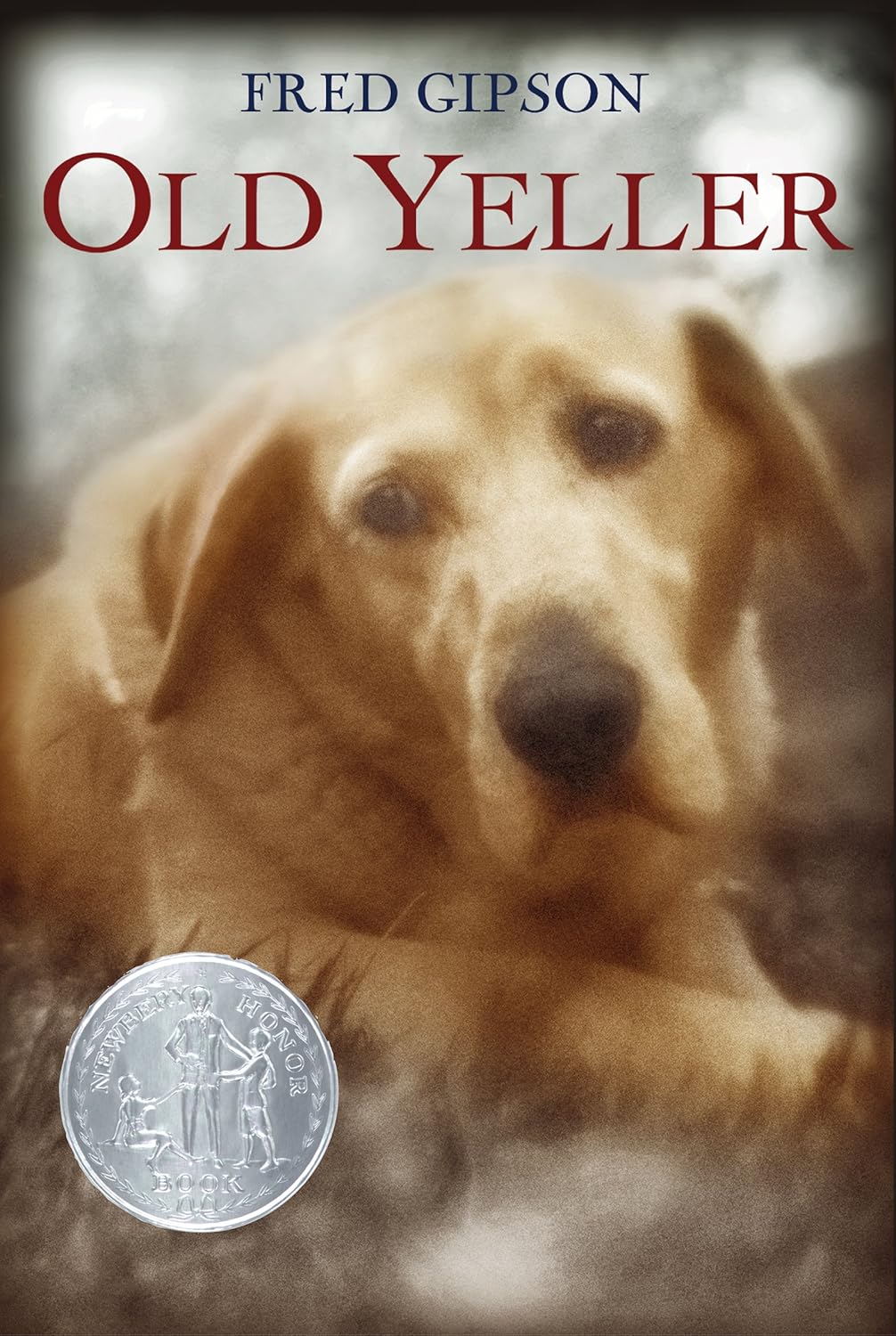
Old Yeller by Fred Gipson tells the story of a boy and the stray dog who becomes his best friend and protector on a Texas frontier homestead in the 1860s. This guide provides parents and teachers with reading level information, age recommendations, content insights, and discussion questions for this powerful classic about love, loss, and growing up.
For Parents
Find the right reading level for your child, understand the book’s emotional impact and themes, and get conversation starters to help your child process the story’s difficult ending and explore ideas about responsibility and sacrifice.
For Teachers
Access grade-level guidance, reading metrics, character analysis support, and thematic discussion questions. This Gipson classic offers rich opportunities for exploring frontier life, coming-of-age narratives, and difficult themes about love and loss.
Old Yeller at a Glance
Find on Amazon →| Author | Fred Gipson |
| Published | 1956 |
| Grade Level | 4–6 (our assessment) |
| Recommended Age | 10–13 |
| Flesch-Kincaid Grade | 5.4 |
| Word Count | ~39,000 |
| Pages | ~184 (standard paperback) |
| Chapters | 16 |
| Genre | Historical fiction / coming-of-age / animal story |
| Setting | Texas frontier, 1860s |
| Awards | Newbery Honor (1957), classic |
For official Lexile and AR levels, visit Lexile.com or AR BookFinder. ReadingVine provides independent editorial assessments.
What Reading Level Is Old Yeller?
Old Yeller is appropriate for grades 4–6, with a Flesch-Kincaid grade level of 5.4. The vocabulary includes some Texas frontier dialect and 1860s terms, but Gipson’s prose is clear and straightforward. The first-person narration from fourteen-year-old Travis makes the story accessible and immediate. The emotional complexity—particularly the tragic ending—requires more maturity than the reading mechanics alone would suggest.
Fred Gipson’s writing style is direct and unadorned, with a strong sense of place and authentic frontier dialogue. Travis narrates in a voice that captures Texas speech patterns without being difficult to read. The pacing builds steadily from Old Yeller’s arrival through various adventures to the devastating climax. Gipson doesn’t soften the realities of frontier life—animals die, injuries are serious, and rabies is a real and terrifying threat.
The story resonates most deeply with readers ages 10–13 who can process the themes about responsibility, sacrifice, and the painful aspects of growing up. The ending is emotionally difficult and requires readers mature enough to handle genuine grief and loss. Strong fourth graders can read it, but sixth graders often engage more deeply with the coming-of-age themes.
What Age Is Old Yeller Appropriate For?
Old Yeller is most appropriate for readers ages 10–13. The book includes animal violence, danger, and a tragic ending that is genuinely sad and may be difficult for sensitive readers or younger children. Parents should be prepared to support children through the emotional impact of the story.
Old Yeller’s death: At the climax, Old Yeller contracts rabies while protecting the family from a rabid wolf. Travis must shoot Old Yeller to prevent the disease from spreading and to end the dog’s suffering. This is the most emotionally difficult moment in the book.
Animal violence and death: Animals fight, are injured, and die throughout the book. A bear mauls Travis, hogs attack Old Yeller, and the rabid wolf attack is frightening. The violence is not gratuitous but is honestly portrayed.
Rabies: The threat of rabies is central to the story’s climax. The disease and its inevitably fatal outcome are explained clearly, which may be frightening.
Frontier hardships: The family faces real dangers—wild animals, injury, illness, and isolation. Travis, at fourteen, has adult responsibilities while his father is away.
What’s NOT in the book: No sexual content, no profanity. The ending is sad but meaningful—Travis learns about sacrifice, love, and the responsibilities of adulthood. The book’s final pages show Travis beginning to heal and accept a new puppy, suggesting that love and life continue despite loss.
What Is Old Yeller About?
Fourteen-year-old Travis Coates lives with his mother, younger brother Arliss, and their dog Jimbo on a small homestead in Texas Hill Country in the 1860s. His father has left to drive cattle to Kansas, leaving Travis as the man of the family for several months. Travis takes his new responsibilities seriously, though he sometimes resents having to look after Arliss and do the endless work of keeping the farm running.
One day, a big ugly yellow dog shows up and steals meat from their smokehouse. Travis is furious and wants to shoot the thieving dog, but Arliss falls in love with the stray and names him Old Yeller. Mama decides they can keep the dog despite Travis’s objections. Travis thinks Old Yeller is worthless—too ugly to be worth feeding and too much of a thief to trust.
But Old Yeller quickly proves his value. When a bear wanders into the yard after the family’s hogs, Old Yeller fights it off, protecting Arliss who is playing dangerously close to the conflict. The dog’s bravery and loyalty begin to change Travis’s opinion. Old Yeller helps hunt, protects the farm from predators, and works alongside Travis in ways that make the boy’s burden lighter.
Travis and Old Yeller have several adventures together. They hunt wild hogs, with Old Yeller helping Travis catch and mark the pigs. During one hunt, a group of hogs attacks and Old Yeller is badly injured protecting Travis. Travis risks his own safety to save the dog, carrying him home where Mama nurses Old Yeller back to health. This experience cements Travis’s love for the dog—Old Yeller is no longer just useful, he’s family.
A neighbor, Bud Searcy, comes by with his granddaughter Lisbeth. Bud mentions that Old Yeller belongs to them and was stolen by his grandson before the family headed west. Now that the grandson is settled, they’ve come back for the dog. Travis is devastated—he’s grown to love Old Yeller deeply. But Lisbeth sees how much Travis and Old Yeller mean to each other. She trades Old Yeller to Travis in exchange for a horned toad that Arliss has caught, allowing Travis to keep the dog.
Bud Searcy also brings disturbing news: there’s hydrophobia (rabies) spreading through the area. Animals are going mad and attacking anything in sight. Any animal bitten by a rabid creature will contract the disease, which is always fatal. The family must be vigilant and shoot any animal showing signs of rabies.
One night, a rabid wolf gets into the family’s cow pen. Old Yeller fights it off, protecting the family’s livestock and preventing the wolf from reaching the cabin where Mama, Travis, and Arliss are sleeping. The battle is vicious and Old Yeller is bitten multiple times. They manage to shoot the wolf, but the damage is done—Old Yeller has been exposed to rabies.
Mama explains that they must pen up Old Yeller and wait to see if he develops symptoms. If he does, he’ll have to be destroyed before he becomes dangerous. For weeks, they watch and wait. Old Yeller seems fine, and hope begins to grow that maybe he wasn’t infected. But then Old Yeller begins showing signs—he becomes aggressive, snarling and snapping at the family he once protected.
Travis knows what must be done. Old Yeller is suffering and will only get worse, and the disease makes him dangerous to everyone Travis loves. Mama offers to do it, but Travis knows it’s his responsibility. He’s the man of the family, and sometimes being a man means doing the hardest things. With his heart breaking, Travis takes his rifle and shoots Old Yeller.
In the aftermath, Travis is devastated. He can’t eat, can’t work, can’t feel anything but grief and anger. He blames himself and wonders if there was any other way. Mama tries to comfort him, explaining that loving something means sometimes having to let it go or make terrible choices to protect it. She tells him that life involves pain but that you have to take both the joy and the hurt together.
Papa returns from his cattle drive and sees that Travis has changed—he’s grown up in ways that have cost him. Papa understands without being told exactly what Travis has lost and what he’s learned. Lisbeth brings Travis a puppy—one of Old Yeller’s pups, born before the rabies exposure. At first Travis can’t bear to look at it, the reminder is too painful. But Arliss loves the puppy immediately, and when it gets into trouble, Travis finds himself protecting it instinctively.
The book ends with Travis beginning to heal. He realizes that he can honor Old Yeller’s memory by moving forward, by accepting love again, and by taking the hard lessons Old Yeller taught him about sacrifice and responsibility. The puppy won’t replace Old Yeller, but it represents hope and the continuation of life despite loss.
Old Yeller Characters
Old Yeller Themes and Lessons
At its heart, Old Yeller is about the painful aspects of growing up and learning that love sometimes requires sacrifice. Travis’s journey from boy to man happens not through adventure or triumph but through loss and the terrible responsibility of having to destroy what he loves to protect his family. Mama tells Travis that life is about taking the good with the bad—you can’t experience the joy of loving without risking the pain of loss. This hard truth is what defines adulthood: the acceptance that love is worth the cost.
The book also explores the deep bond between humans and animals, and how that bond can teach us about loyalty, courage, and unconditional love. Old Yeller saves Travis’s family multiple times, ultimately sacrificing his life to protect them from the rabid wolf. Travis’s decision to shoot Old Yeller—rather than letting Mama do it or letting the dog suffer—is an act of love and a recognition that sometimes being responsible means doing the hardest thing. The book teaches that manhood isn’t about being tough or fearless; it’s about facing difficult truths and making painful choices when necessary.
Discussion questions for families:
- How does Travis’s attitude toward Old Yeller change throughout the book? What causes these changes?
- Why does Travis insist on being the one to shoot Old Yeller? What does this tell us about his character?
- What does Mama mean when she says you have to take the good with the bad in life?
- How does the puppy at the end relate to Travis’s grief and healing?
How Many Pages and Chapters in Old Yeller?
Old Yeller is approximately 184 pages in standard paperback editions and is divided into 16 chapters. The word count is about 39,000 words. Chapters average about 11-12 pages and the pacing builds steadily toward the climactic rabies attack and its aftermath.
For independent readers ages 10–13, the book typically takes 3–4 hours to read. The straightforward prose and engaging plot make it accessible, though readers may need to slow down during the emotional climax and ending. As a read-aloud, it takes approximately 2.5–3 hours. Many teachers and families use the book as an opportunity to discuss difficult topics like death, responsibility, and processing grief. The 1957 Disney film adaptation is famous but changes some details and may intensify the emotional impact for some viewers.
Books Similar to Old Yeller
About Fred Gipson
Fred Gipson (1908–1973) was born in Texas and grew up hearing stories about frontier life from his parents and grandparents. He worked as a journalist and ranch hand before becoming a full-time writer. Old Yeller, published in 1956, was based loosely on stories Gipson heard about life in the Texas Hill Country during the 1860s, when his family was settling the region. The character of Travis was partly autobiographical—Gipson drew on his own experiences growing up in rural Texas and his relationship with childhood dogs. The book won a Newbery Honor in 1957 and became an immediate classic. Disney adapted it into a film in 1957, with Gipson writing the screenplay. The movie, starring Tommy Kirk and Dorothy McGuire, became famous for its emotional ending and introduced the story to an even wider audience. Gipson wrote a sequel, Savage Sam (1962), following Travis and the puppy from Old Yeller’s ending on new adventures. He also wrote other novels including Hound-Dog Man and The Home Place. Old Yeller remains Gipson’s most famous work and is considered one of the great American dog stories. The book is praised for its honest treatment of frontier life and its unflinching portrayal of loss and growing up. Gipson understood that children’s literature could handle difficult emotions and hard truths, and Old Yeller demonstrates that sometimes the most meaningful stories are also the most painful.
Old Yeller: Frequently Asked Questions
Does Old Yeller die?
Yes, Old Yeller dies at the end of the book. After fighting off a rabid wolf to protect the family, Old Yeller contracts rabies. Travis must shoot Old Yeller to prevent the disease from spreading and to end the dog’s suffering before the disease progresses further. This is the book’s most emotionally difficult moment and the climax of Travis’s coming-of-age journey. Gipson doesn’t soften this ending—it’s genuinely sad and is meant to teach about sacrifice, responsibility, and the painful aspects of love and growing up. The book’s final pages show Travis beginning to heal and accepting a puppy (one of Old Yeller’s offspring), suggesting that while loss is real and painful, life and love continue.
What grade level is Old Yeller?
Old Yeller is appropriate for grades 4–6 (ages 10–13). The Flesch-Kincaid level of 5.4 reflects straightforward prose with some Texas frontier dialect. The reading mechanics are accessible for strong fourth graders, but the emotional complexity—particularly the tragic ending—requires maturity to process. Fifth and sixth graders often engage most fully with the coming-of-age themes and can better handle the grief and loss at the heart of the story. The book is widely taught in upper elementary and middle school, often as an opportunity to discuss difficult topics like death, responsibility, and processing loss. It won a Newbery Honor in 1957 and remains a classic of American children’s literature.
Why does Travis have to shoot Old Yeller?
Travis must shoot Old Yeller because the dog contracted rabies while fighting off a rabid wolf that attacked the family’s livestock. Rabies is always fatal and there was no cure in the 1860s (and no cure today once symptoms appear). Old Yeller begins showing symptoms—becoming aggressive and dangerous—which means the disease is progressing. Travis shoots Old Yeller for two reasons: to end the dog’s suffering before the disease gets worse, and to protect his family from a rabid animal that could spread the disease. Mama offers to do it, but Travis knows it’s his responsibility as the man of the family. The act represents Travis’s painful passage into adulthood—sometimes being responsible means doing the hardest thing, and sometimes loving something means making a terrible sacrifice to protect others.
Is Old Yeller appropriate for kids?
Old Yeller is appropriate for children ages 10 and up, but parents should be aware that the ending is genuinely sad and may be emotionally difficult. The book includes animal violence (fights, injuries), frontier dangers, and Old Yeller’s death, which can be hard for sensitive readers or animal lovers. However, the book’s treatment of these difficult topics is thoughtful and purposeful—it teaches about sacrifice, responsibility, and processing grief. The ending is sad but meaningful, showing Travis beginning to heal and accept new love. Many educators and families consider it valuable precisely because it helps children process difficult emotions and understand that loss is part of life. Parents should be prepared to support children through the emotional impact and use it as an opportunity to discuss death, grief, and the responsibilities of growing up.
What is the main message of Old Yeller?
The main message of Old Yeller is that growing up involves learning that love sometimes requires sacrifice, and that you have to accept both the joy and the pain that come with caring deeply. Travis learns that being a man doesn’t mean being tough or fearless—it means taking responsibility even when it’s heartbreaking, doing what needs to be done to protect those you love, and understanding that loss is part of life. Mama tells Travis that you can’t have the good without the bad, and you can’t experience the joy of loving without risking the pain of loss. The book teaches that this risk is worth it—that the love and loyalty Old Yeller showed, and the love Travis felt for him, were valuable even though they ended in grief. The puppy at the end represents hope and the continuation of life, teaching that healing doesn’t mean forgetting but rather honoring what was lost by continuing to love.
Is Old Yeller based on a true story?
Old Yeller is fiction, but it’s based on true stories Fred Gipson heard growing up in Texas about frontier life in the 1860s. Gipson drew on real experiences from his family’s history and his own childhood with dogs in rural Texas. The historical details—the 1860s Texas setting, the threat of rabies spreading through animal populations, the realities of frontier homestead life—are accurate. Rabies outbreaks were real and terrifying for frontier families, and the necessity of destroying animals that contracted the disease was a genuine hardship. The character of Travis was partly autobiographical, drawing on Gipson’s own coming-of-age experiences. While the specific story of Travis and Old Yeller is invented, it represents real experiences and emotions that many frontier families faced. The book captures the truth of frontier life and childhood loss even though the particular events are fictional.
What happens at the end of Old Yeller?
At the end of Old Yeller, Travis must shoot the dog after Old Yeller contracts rabies from fighting a rabid wolf. Travis is devastated and grieves deeply, unable to eat or work. Papa returns from his cattle drive and understands without being told what Travis has lost and how he’s grown up. Lisbeth brings Travis a puppy—one of Old Yeller’s pups born before the rabies exposure. At first Travis can’t bear to look at it because the reminder is too painful. But when the puppy gets into danger, Travis instinctively protects it, and he begins to heal. The book ends with Travis realizing he can honor Old Yeller’s memory by moving forward and accepting love again. The puppy won’t replace Old Yeller, but it represents hope and the continuation of life despite loss. Travis has learned the hard lessons of growing up—that love is worth the cost, that responsibility sometimes means sacrifice, and that you can survive grief and find joy again.
Does Old Yeller have a sequel?
Yes, Fred Gipson wrote a sequel called Savage Sam (1962), which follows Travis and the puppy from the end of Old Yeller (now grown into a dog named Sam) on new adventures. In Savage Sam, the dog helps rescue Travis’s brother Arliss and their friend Lisbeth when they’re captured during a Comanche raid. The sequel maintains the frontier setting and Travis’s first-person narration but has a more action-adventure focus than the character-driven, emotionally complex story of Old Yeller. While Savage Sam is a solid frontier adventure, it never achieved the classic status of Old Yeller. Disney also adapted Savage Sam into a film in 1963, though it’s far less well-known than the original Old Yeller movie. Most readers find the first book to be the more powerful and memorable story.