
 = Partner Site
The Call of the Wild Reading Level: A Complete Guide
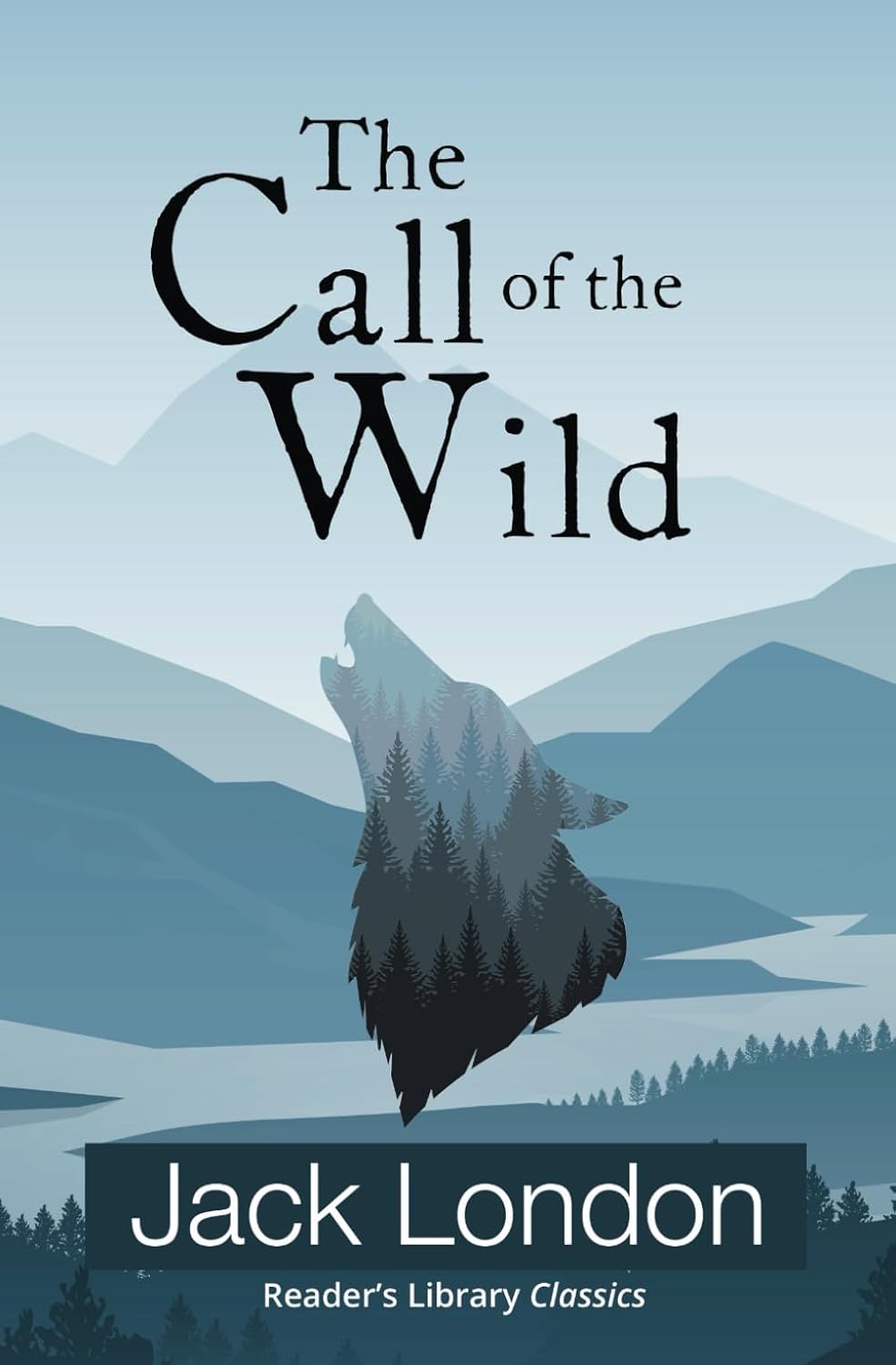
The Call of the Wild by Jack London follows Buck, a domesticated dog stolen from his California home and thrust into the brutal Klondike Gold Rush, where he must rediscover the primitive instincts buried within him to survive. This guide provides parents and teachers with reading level information, age recommendations, content insights, and discussion questions for this enduring classic about nature, survival, and the tension between civilization and wildness.
For Parents
Find the right reading level for your child, understand the book’s animal violence and themes about the natural world, and get conversation starters to help your child explore questions about instinct, loyalty, and what it means to be truly free.
For Teachers
Access grade-level guidance, reading metrics, character analysis support, and thematic discussion questions. This classic offers rich opportunities for exploring the Klondike Gold Rush, naturalistic literature, and the philosophical tension between civilization and wilderness.
The Call of the Wild at a Glance
Find on Amazon →| Author | Jack London |
| Published | 1903 |
| Grade Level | 5–7 (our assessment) |
| Recommended Age | 10–13 |
| Flesch-Kincaid Grade | 6.8 |
| Word Count | ~33,000 |
| Pages | ~170 (standard paperback) |
| Chapters | 7 |
| Genre | Classic adventure fiction / naturalism |
| Setting | Klondike, Yukon, Canada, 1897–1898 |
| Awards | Classic (one of the best-known American novels of the 20th century) |
For official Lexile and AR levels, visit Lexile.com or AR BookFinder. ReadingVine provides independent editorial assessments.
What Reading Level Is The Call of the Wild?
The Call of the Wild is appropriate for grades 5–7, with a Flesch-Kincaid grade level of 6.8. Despite its relatively short length—only about 33,000 words—the vocabulary and sentence structures are more sophisticated than most contemporary middle-grade fiction, reflecting London’s early 20th-century literary style. The prose is muscular and vivid, built for atmosphere and intensity, and it rewards careful readers.
Jack London’s writing style is direct and powerful. He narrates from close to Buck’s perspective without ever slipping into fantasy—Buck’s thoughts and feelings are conveyed through behavior and instinct rather than human-style inner monologue, which creates a unique reading experience. London uses naturalistic detail to render the Yukon landscape—cold, violent, and beautiful—with great immediacy. The short chapters (only seven) are long and dense, meaning the book reads more like a novella than a novel and requires sustained focus.
The story resonates most deeply with readers ages 10–13 who can appreciate the philosophical dimension of Buck’s transformation, understand the Klondike Gold Rush historical context, and process the violence that is an honest part of survival in the wild. Strong fifth graders can handle the reading mechanics, but sixth and seventh graders will engage most fully with the themes.
What Age Is The Call of the Wild Appropriate For?
The Call of the Wild is most appropriate for readers ages 10–13. The book contains animal violence—dogs fight, dogs are beaten, dogs die—that is handled honestly and without sentimentality. London does not soften the brutal realities of sled dog life in the Klondike, and sensitive readers or younger children should be prepared.
Animal violence: Dogs fight frequently and viciously. Buck witnesses and participates in dog fights, some fatal. This is central to the story and handled matter-of-factly rather than graphically, but it is real.
Animal cruelty: In the early chapters, Buck and other dogs are beaten by cruel owners. One particularly brutal scene involves a dog being beaten to death. These scenes are difficult but historically accurate to the treatment of working dogs.
Death of animals: Several dogs die over the course of the novel, including characters Buck has formed bonds with.
Death of humans: Human characters die as well, including Buck’s beloved owner John Thornton. His death is shocking and sad.
Harsh wilderness: The Yukon environment is brutal—extreme cold, starvation, exhaustion, and danger are constant. The book does not romanticize nature.
What’s NOT in the book: No sexual content, no profanity. The violence is purposeful and tied to the story’s themes about survival and instinct rather than gratuitous. The ending is not conventionally happy—Buck joins a wolf pack and never returns to human civilization—but it is presented as triumphant for Buck, a return to his true nature. Parents and teachers should prepare readers for the death of John Thornton, which is emotionally difficult.
What Is The Call of the Wild About?
Buck is a large, powerful St. Bernard–Scotch Collie mix living a comfortable life on a California estate in 1897. He’s the companion of Judge Miller and his family—well-fed, respected, accustomed to ease and warmth. But the Klondike Gold Rush has created a massive demand for sled dogs in Canada, and Buck is stolen by a ranch hand who sells him to dog traders. Transported north in a crate, he arrives in the Yukon cold, bewildered, and furious.
The north teaches Buck immediately and brutally. He watches a fellow dog beaten to death for refusing to work, and the lesson is clear: obey, or be destroyed. A man in a red sweater beats Buck into submission with a club—the beating establishes dominance and teaches Buck who is master. Buck learns the lesson, but he doesn’t forget his pride. From his first days in the Klondike, he begins to change—shedding the domesticated dog and awakening to something older and more powerful within himself.
Buck joins a sled team owned by two Canadian postal workers, François and Perrault, who are professional and fair. He learns the ways of the trail: the harness, the running, the hierarchy of the pack. He watches the lead dog, Spitz—vicious, cunning, and dominant—and recognizes in him a rival. Their conflict builds over many chapters until Buck challenges Spitz directly and kills him in a brutal fight, taking his place as lead dog. The transformation from pampered pet to pack leader is complete.
Buck passes through several owners. After the government mail run ends, he’s sold to a trio of gold seekers—Hal, Charles, and Mercedes—who are incompetent, cruel, and dangerously ignorant of the north. They overload the sled, underfeed the dogs, and push the exhausted team across deteriorating spring ice. One by one the dogs die. When a stranger named John Thornton orders them to stop—warning that the ice ahead won’t hold—Hal refuses and strikes Buck to force him forward. Buck refuses to move. Thornton cuts Buck free. The rest of the team and the three gold seekers fall through the ice and drown.
Thornton is the great love of Buck’s life. He is everything a human can be to a dog—kind, competent, and genuinely attached. Buck’s devotion to him is total. He saves Thornton from drowning. He wins Thornton a bet by pulling an enormous load. He attacks a man who threatens Thornton without hesitation. In the warmth of Thornton’s camp, Buck is both the powerful sled dog he’s become and something like his old self—loved, and capable of love.
But the call of the wild grows louder. Buck begins to make forays into the forest at night, running with wolves, hearing something ancient calling to him. He feels the pull of a life before domestication—before humans, before leashes and sleds, a life of pure instinct and wilderness. He returns to Thornton each time, held by love.
Then Thornton is killed by a Yeehat raiding party while Buck is away in the forest. Buck returns to find the camp destroyed and Thornton dead. He attacks the Yeehats, killing several before they flee. With Thornton gone, the last tie holding him to human civilization is severed. Buck answers the call of the wild fully and finally, running into the forest to join a wolf pack. He becomes the pack’s leader—larger and more powerful than the wolves. The Yeehats begin telling stories of a Ghost Dog, a great pale wolf-like creature that leads the pack, the primitive beast Buck always was beneath the domestication.
The Call of the Wild Characters
The Call of the Wild Themes and Lessons
The central tension in The Call of the Wild is between civilization and wildness—between the domesticated life Buck was raised to and the primitive nature he discovers within himself. London argues, through Buck’s story, that beneath the surface of any domesticated creature—human or animal—lies an ancient, wild self that civilization has only temporarily suppressed. Buck’s transformation isn’t a fall or a degradation; it’s a homecoming. London was deeply influenced by Darwin and by naturalistic philosophy, which held that humans and animals are shaped by environment and instinct more than by morality or choice.
The book also explores what constitutes a good life. Buck’s time with John Thornton is the happiest of his civilized existence—he is loved, useful, and free within limits. But even that good life can’t compete, ultimately, with the pull of pure freedom. London doesn’t present this as tragic; Buck’s final run into the wilderness is triumphant. The book raises questions worth discussing: Is freedom always better than safety and love? What do we lose when we are domesticated—and what do we gain?
Discussion questions for families:
- Why does Buck ultimately leave human civilization even though he loved John Thornton?
- What does the “call of the wild” mean? Is it only about Buck, or does it say something about people too?
- How do Buck’s different owners treat him? What does each owner teach him?
- Is the ending of this book happy or sad? Why might different readers feel differently about it?
How Many Pages and Chapters in The Call of the Wild?
The Call of the Wild is approximately 170 pages in standard paperback editions and is divided into just 7 chapters, each with a descriptive title. The word count is about 33,000 words—short for a classic novel, which is one reason it’s widely assigned in schools. Despite its brevity, each chapter is substantial and the prose is dense with atmosphere and meaning.
For independent readers ages 10–13, the book typically takes 3–4 hours to complete. The pace is intense throughout—London wastes nothing. As a read-aloud, it takes approximately 2.5–3 hours. The Klondike setting pairs beautifully with discussion of the Gold Rush, sled dog culture, and London’s naturalistic philosophy. Many teachers assign it alongside White Fang, London’s companion novel that inverts the premise—a wild wolf-dog becoming domesticated.
Books Similar to The Call of the Wild
About Jack London
Jack London (1876–1916) was born in San Francisco and had a hardscrabble early life—working-class, largely self-educated, and driven by enormous ambition. He spent time in the Klondike during the 1897–98 Gold Rush, and the experience shaped his writing profoundly. The Call of the Wild, published in 1903, was his breakthrough novel and remains his most famous work. London was a committed naturalist in the literary sense—he believed that humans and animals are products of their environment and heredity, shaped by forces beyond their control. This philosophy animates Buck’s story. London was also a prolific author: White Fang (1906), his companion novel to The Call of the Wild, follows a wild wolf-dog’s journey toward domestication. The Sea-Wolf (1904) and Martin Eden (1909) are among his other major works. Despite enormous commercial success, London died at forty, possibly from kidney disease. The Call of the Wild has been adapted for film multiple times, most recently in a 2020 film starring Harrison Ford, though most adaptations soften the novel’s harsher edges.
The Call of the Wild: Frequently Asked Questions
What happens to Buck at the end of The Call of the Wild?
At the end of The Call of the Wild, Buck joins a wild wolf pack and never returns to human civilization. After John Thornton—the one human Buck truly loved—is killed by a Yeehat raiding party, the last tie holding Buck to the human world is severed. Buck attacks and kills several Yeehats in revenge, then answers the wild’s call completely, running into the forest to lead a wolf pack. He becomes the dominant leader—larger, stronger, and more cunning than the wolves. The Yeehats begin telling stories of a Ghost Dog, describing him in their legends as a great pale wolf-like creature who leads the pack and is unlike any other. The ending is not conventionally happy, but London presents it as triumphant: Buck has returned to his true nature and found the freedom that civilization could never give him.
Is The Call of the Wild appropriate for kids?
The Call of the Wild is appropriate for readers ages 10 and up. The book contains real animal violence—dog fights, beatings, and deaths—handled honestly and without sentimentality. One scene involves a dog being beaten to death, and John Thornton’s death near the end is emotionally difficult. Younger readers (under 10) or those sensitive to animal harm may find this distressing. The book does not glamorize cruelty; the violence serves the story’s honest portrayal of survival in the Klondike. For readers ages 10–13, it is an entirely appropriate and rewarding classic. Parents and teachers should prepare readers for the difficult content rather than letting it come as a surprise.
What grade level is The Call of the Wild?
The Call of the Wild is appropriate for grades 5–7 (ages 10–13). The Flesch-Kincaid level of 6.8 reflects early 20th-century literary prose. Despite its short length (about 33,000 words), it is not an easy read—the vocabulary is sophisticated and the themes are philosophically rich. Strong fifth graders can manage it with support; sixth and seventh graders are the ideal audience. It is widely taught in middle school and is a standard classroom novel. Its short length makes it appealing for classroom use, and the themes—civilization vs. nature, instinct, loyalty, freedom—generate strong discussion.
What does “the call of the wild” mean?
The call of the wild refers to the instinctive pull of the natural, primitive world that Buck hears and feels throughout the novel—a call to abandon civilization and return to the wild life of his wolf ancestors. It’s represented in the book as literal sounds: Buck hears wolf howls and something older and deeper responding within him, memories of life before domestication. Symbolically, the call of the wild represents the idea that beneath civilization—for animals and perhaps for humans—lies a primal nature that cannot be permanently suppressed. For Buck specifically, it means freedom: the freedom of the wilderness, of the pack, of pure instinct unmediated by human demands. London uses Buck’s story to explore the idea that the wild is not savage but authentic—more true to Buck’s deepest nature than any life humans could offer him.
Is The Call of the Wild based on a true story?
The Call of the Wild is fiction, but it draws heavily on Jack London’s real experience during the Klondike Gold Rush of 1897–98, when he spent time in the Yukon. The conditions he describes—the brutal cold, the sled dog culture, the desperate gold seekers—are historically accurate. London had direct experience with sled dogs and the world he depicted. Buck himself is not based on a specific dog, but London observed and worked with sled dogs and drew on those observations. The Klondike setting and the culture of the gold rush are rendered with documentary accuracy. London was a journalist as well as a novelist, and his naturalistic philosophy—the idea that environment and heredity shape all living creatures—was a sincere intellectual position that animates the entire book.
What kind of dog is Buck in The Call of the Wild?
Buck is described as a St. Bernard–Scotch Collie mix (some editions say Scotch shepherd). He weighs 140 pounds and is described as magnificently built—large, powerful, and intelligent. His size and strength are crucial to the plot: they make him valuable as a sled dog and give him the physical power to defeat Spitz and eventually lead a wolf pack. His intelligence is equally important—Buck is exceptional among dogs in his capacity to observe, learn, and strategize. His mixed heritage is symbolically relevant: he is partly a breed associated with domesticity and rescue (St. Bernard) and partly a working herding dog (Collie), and his transformation into a wild pack leader represents the shedding of both those domesticated identities in favor of something older and more elemental.
How does The Call of the Wild end?
The Call of the Wild ends with Buck fully returning to the wild after John Thornton’s death. Buck kills several Yeehats who murdered Thornton and his camp companions, then runs into the forest and joins a wolf pack. He becomes the pack’s dominant leader—larger, stronger, and more cunning than the wolves. The Yeehats tell stories of a Ghost Dog, describing him in their legends as a great pale wolf-like creature who leads the pack and brings bad luck to any hunter who sees him. London ends with a vision of Buck running with his pack under the northern lights, howling the ancient wolf-song—free, powerful, and wild. It is a triumphant ending on Buck’s terms, though readers who loved Thornton will feel the sadness of his loss. London does not present the ending as tragic; Buck has found his true home.
What is the difference between The Call of the Wild and White Fang?
The Call of the Wild and White Fang are companion novels by Jack London that tell inverse stories. The Call of the Wild (1903) follows Buck’s journey from domestication to wildness—a tame dog who joins and leads a wild wolf pack. White Fang (1906) follows the opposite journey—a wild wolf-dog becoming domesticated through the love of a kind owner. Together they explore London’s central themes about the relationship between civilization and wildness from both directions. White Fang is slightly longer and some readers find it more hopeful, since it ends with the wolf-dog finding a loving human home. The Call of the Wild is more widely read and taught. Both books share the Yukon setting, the sled dog world, and London’s naturalistic philosophy. Readers who love one often go on to read the other.