
 = Partner Site
Treasure Island Reading Level: A Complete Guide
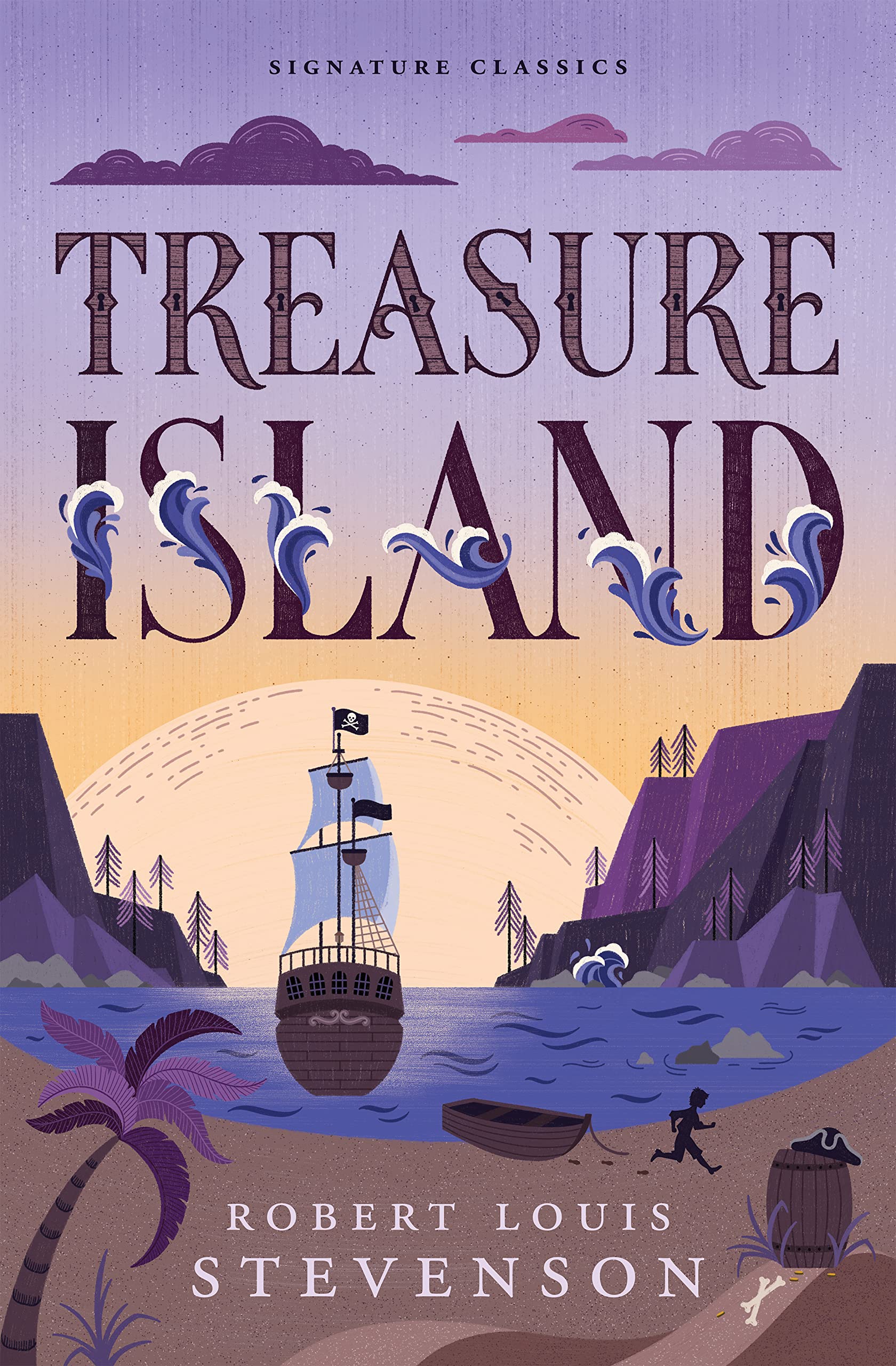
Treasure Island by Robert Louis Stevenson follows young Jim Hawkins from his family’s seaside inn to a dangerous voyage and a buried pirate treasure, with the unforgettable Long John Silver at his side—friend, mentor, and threat all at once. This guide provides parents and teachers with reading level information, age recommendations, content insights, and discussion questions for this definitive adventure classic about courage, loyalty, and the seductive pull of danger.
For Parents
Find the right reading level for your child, understand the book’s adventure content and pirate violence, and get conversation starters to help your child explore themes of courage, loyalty, and moral ambiguity in one of literature’s greatest adventure stories.
For Teachers
Access grade-level guidance, reading metrics, character analysis support, and thematic discussion questions. This classic offers rich opportunities for exploring 18th-century seafaring, narrative perspective, and the moral complexity of Long John Silver—one of literature’s most fascinating characters.
Treasure Island at a Glance
Find on Amazon →| Author | Robert Louis Stevenson |
| Published | 1883 |
| Grade Level | 5–7 (our assessment) |
| Recommended Age | 10–13 |
| Flesch-Kincaid Grade | 7.2 |
| Word Count | ~67,000 |
| Pages | 292 (standard paperback) |
| Chapters | 34 |
| Genre | Classic adventure fiction |
| Setting | English coast and a Caribbean island, 18th century |
| Awards | Classic (considered the definitive pirate adventure novel) |
For official Lexile and AR levels, visit Lexile.com or AR BookFinder. ReadingVine provides independent editorial assessments.
What Reading Level Is Treasure Island?
Treasure Island is appropriate for grades 5–7, with a Flesch-Kincaid grade level of 7.2. The vocabulary reflects 19th-century British English and includes nautical terminology, period slang, and archaic expressions that may require a dictionary or annotations. Stevenson’s prose is vivid and energetic—his sentences are built for excitement—but the formal register and period language make it more challenging than contemporary adventure novels of similar length.
Stevenson wrote Treasure Island to entertain his stepson, and the storytelling instincts show: chapters are short, the pace rarely flags, and action scenes are thrilling. The first-person narration shifts midway through to a third-person chapter narrated by Dr. Livesey—a small but interesting structural choice worth discussing with students. Nautical terms like “fo’c’s’le,” “larboard,” and “capstan” add atmosphere but may need explanation; many annotated editions provide glossaries.
The story resonates most deeply with readers ages 10–13 who can appreciate the moral complexity of Long John Silver, follow the strategic cat-and-mouse between Jim’s party and the pirates, and reflect on questions of loyalty, courage, and the meaning of honesty. Strong fifth graders can manage the reading level with some support; sixth and seventh graders are in the ideal range.
What Age Is Treasure Island Appropriate For?
Treasure Island is most appropriate for readers ages 10–13. The book includes pirate violence—stabbings, shootings, and deaths—that is handled matter-of-factly in the style of 19th-century adventure fiction. It is not graphic by modern standards, but younger readers or those sensitive to violence should be aware.
Violence and death: Characters are killed by pirates throughout the book. The violence is not described in graphic detail but is present and real—men are stabbed, shot, and killed. This is handled in a matter-of-fact adventure style.
Alcohol and tavern culture: The story begins in a seaside inn, and pirates drink heavily. Billy Bones drinks rum obsessively and suffers a stroke partly from alcohol. This is not glamorized.
Moral ambiguity: Long John Silver is simultaneously charismatic, kind to Jim, and a dangerous murderer. His complexity may confuse younger readers expecting clear heroes and villains.
Period language: Some period terms and attitudes reflect 18th- and 19th-century language. Nothing egregious, but adult readers should be aware.
What’s NOT in the book: No sexual content, no profanity. The violence is adventure-style and not gratuitous. The book ends with Jim safely home, wealthier but haunted—a genuinely earned conclusion that neither celebrates nor condemns the adventure entirely. The moral complexity is one of the book’s great strengths.
What Is Treasure Island About?
Jim Hawkins is a boy who lives with his parents at the Admiral Benbow Inn, a seaside tavern in southwest England. The story begins when a mysterious, weathered sailor named Billy Bones takes a room at the inn. Billy is clearly frightened of someone or something—he keeps watching the road and drinks himself into a state each night. He pays Jim to watch for a “seafaring man with one leg.”
Billy Bones is visited by a blind beggar named Pew, who delivers him the “Black Spot”—a death warning used by pirates. Billy dies of a stroke shortly after. Before he dies, Jim and his mother search Billy’s sea chest for payment of his overdue rent, finding a packet of papers that Jim pockets just before pirates arrive looking for the chest. Jim and his mother barely escape. The pirates ransack the inn but find nothing, and Pew is killed in the chaos.
Jim brings the papers to local gentry—Dr. Livesey and Squire Trelawney. The papers contain a map showing the location of the buried treasure of the notorious pirate Captain Flint. Trelawney is immediately fired up: he’ll hire a ship and go find the treasure. He heads to Bristol to do exactly that, and Jim is invited along as cabin boy.
In Bristol, Trelawney has hired a crew—but he’s been indiscreet, and Long John Silver, who was a former member of Flint’s crew, has gotten wind of the expedition and engineered himself aboard as ship’s cook, filling the crew with his own men. Jim overhears the pirates’ plot while hiding in an apple barrel: once the treasure is found, Silver and his men plan to kill Jim’s party and take the treasure for themselves.
Jim warns Captain Smollett, Dr. Livesey, and Trelawney. They’re outnumbered but prepared. When the island is reached, tensions explode. Some of the pirates go ashore, and Jim impulsively goes with them—a reckless move that proves crucial. On the island, Jim meets Ben Gunn, a former pirate who was marooned there by Captain Flint three years earlier and has been living alone ever since. Ben is wild and strange but proves to be a vital ally.
The narrative shifts to Dr. Livesey’s perspective as Jim’s party abandons ship and fortifies a stockade on the island, where they hold off a pirate attack. Jim rejoins them but is restless and reckless—he keeps making independent decisions that horrify the adults but also keep saving the situation. He sneaks away and single-handedly cuts the pirate ship adrift, eliminating the pirates’ means of escape. In doing so, he finds himself aboard with the treacherous pirate Israel Hands, whom he must outwit in a harrowing confrontation.
Long John Silver, meanwhile, is revealed in all his complexity. He’s clearly fond of Jim—he protects him from the other pirates, treats him with genuine warmth, and their conversations have real depth. But Silver is also ruthless: he kills without hesitation when it suits him, and his loyalty shifts with the winds of fortune. He’s not a villain in the simple sense—he’s a pragmatist who understands power, survival, and the uses of charm, and who perhaps sees in Jim a version of himself uncorrupted.
The treasure, when found, is already gone—dug up by Ben Gunn months earlier. The pirates’ rage is explosive, and Jim’s party, forewarned by Dr. Livesey (who made a deal with Silver), is ready for them. The pirates are defeated. Ben Gunn’s cave holds Flint’s treasure. The survivors load the silver and gold, leave the remaining pirates marooned, and sail for home.
On the voyage home, Long John Silver escapes with a portion of the treasure. Jim’s party lets him go—they’re glad to be rid of him without bloodshed. Jim returns home changed: wealthier, older, and haunted by Silver’s image. He says the treasure has brought him no real peace, and that he still has nightmares of the island—the surf, the gulls, and Silver’s voice. It is one of the great, honest endings in adventure literature.
Treasure Island Characters
Treasure Island Themes and Lessons
The most compelling theme in Treasure Island is the moral ambiguity embodied in Long John Silver—a character so fascinating precisely because he resists easy categorization. Silver is kind to Jim but murders his shipmates without hesitation. He’s loyal to no one but himself, yet his affection for Jim seems genuine. He escapes at the end, neither punished nor redeemed, and Jim is left troubled by his own feelings: he can’t entirely condemn a man he liked and who protected him. Stevenson was ahead of his time in creating a villain readers couldn’t help but admire, teaching young readers that the world is full of people who are neither entirely good nor entirely bad.
The book is also about the cost of greed and the hollow nature of treasure. The gold and silver that drive the entire plot don’t bring Jim peace—he’s haunted by the island at the end, and the treasure feels tainted. Characters who pursue it recklessly (the pirates, Trelawney in his enthusiasm) suffer for it. The book doesn’t moralize heavily, but its ending quietly suggests that adventure has costs, and that what we seek isn’t always what we need.
Discussion questions for families:
- Why does Jim have complicated feelings about Long John Silver at the end? Is Silver a villain? A hero? Something else?
- Jim frequently acts on his own without telling the adults—cutting the ship adrift, going ashore alone. Does this make him brave or reckless? Both?
- Why does Jim say the treasure brought him no peace? What do you think he means?
- How does Captain Smollett differ from Long John Silver as a leader? What makes each of them effective?
How Many Pages and Chapters in Treasure Island?
Treasure Island has approximately 292 pages in standard paperback editions and is divided into 34 chapters organized into six parts. The word count is approximately 67,000 words—shorter than it feels, given how much happens. Chapters are brisk and often end on hooks that pull readers forward.
For independent readers ages 10–13, the book typically takes 6–8 hours to complete. The early chapters at the inn are atmospheric and slightly slower; once the voyage begins, the pace rarely lets up. As a read-aloud, it takes approximately 5–6 hours and works particularly well read aloud—Stevenson’s prose has a spoken-word energy, and Silver’s dialect is fun to perform. The book pairs well with discussions about 18th-century piracy, navigation, and the real historical figures (like Blackbeard and Calico Jack) who inspired pirate mythology.
Books Similar to Treasure Island
About Robert Louis Stevenson
Robert Louis Stevenson (1850–1894) was born in Edinburgh, Scotland, and spent much of his life in poor health, which may have fueled his intense imagination and love of adventure stories. Treasure Island originated as a game: Stevenson drew a map of an imaginary island with his twelve-year-old stepson Lloyd Osbourne, and the story grew from there. It was first serialized in a children’s magazine, Young Folks, under a pseudonym in 1881–1882 before being published as a novel in 1883. It became an immediate success. Stevenson went on to write Strange Case of Dr Jekyll and Mr Hyde (1886) and Kidnapped (1886), among many others. He spent his final years in Samoa, where he died at forty-four. Long John Silver was reportedly inspired by Stevenson’s friend W.E. Henley, a poet who had lost a leg to tuberculosis—Stevenson admired Henley’s vitality and refused to let disability define his friend, giving Silver the same indomitable energy. Treasure Island essentially invented the modern pirate myth: the treasure map with the X, the one-legged pirate, the Black Spot, the desert island—all originate with or were codified by this novel.
Treasure Island: Frequently Asked Questions
Is Long John Silver a villain or a hero in Treasure Island?
Long John Silver is neither a straightforward villain nor a hero—he’s one of literature’s most deliberately complex characters. He’s a ruthless pirate who murders his own crewmates without hesitation, and he conspires to kill Jim’s entire party and steal the treasure. By any objective measure, he’s a villain. And yet he’s genuinely fond of Jim, protects him multiple times, and their conversations have real warmth. He’s charismatic, intelligent, and refuses to be defeated even when his plans fall apart. Jim is troubled by his own complicated feelings about Silver at the end of the book—he can’t simply condemn a man he liked. Stevenson created Silver to be fascinatingly ambiguous on purpose, showing that the world’s most dangerous people aren’t always the ones we dislike. This moral complexity is one of the book’s great gifts to readers.
What grade level is Treasure Island?
Treasure Island is appropriate for grades 5–7 (ages 10–13). The Flesch-Kincaid level of 7.2 reflects 19th-century British English vocabulary and sentence structure. Nautical terminology and period slang add challenge but also atmosphere; annotated editions with glossaries help. Strong fifth graders can manage the reading level with some support; sixth and seventh graders are in the ideal range. The book is widely taught in middle school and is an excellent entry point to classic adventure fiction. Boys who might be resistant to classics are often won over by Treasure Island’s relentless pace and morally fascinating characters.
Is Treasure Island appropriate for kids?
Treasure Island is appropriate for readers ages 10 and up. The book includes pirate violence—characters are stabbed and shot—but it is handled in the matter-of-fact style of 19th-century adventure fiction rather than graphically. There is no sexual content and no profanity. The moral complexity of Long John Silver is a feature rather than a concern—it gives older children something real to grapple with. Younger readers (under 10) may find the violence disturbing or the period language discouraging. For readers in grades 5–7, it’s an entirely appropriate and rewarding adventure classic.
What is the Black Spot in Treasure Island?
The Black Spot is a pirate warning invented by Stevenson for Treasure Island, and it became so influential that it is now part of pirate mythology. It is a round piece of paper, blackened on one side, delivered to a pirate to signal that they have been condemned by their crewmates—usually meaning they will be removed from leadership or face death. In the book, Billy Bones receives the Black Spot from the blind pirate Pew, and the shock and stress contribute to the stroke that kills him, along with his already fragile health from heavy drinking. Later in the story, Long John Silver is also given the Black Spot by his mutinous crew. Stevenson may have drawn on maritime folklore, though historians debate whether such a tradition existed among real pirates. Regardless, the Black Spot remains one of the novel’s most iconic and enduring inventions.
Does Jim find the treasure in Treasure Island?
Jim’s party does find and retrieve Flint’s treasure, but not in the way they expected. When they reach the spot marked on the map, they find only an empty hole—Ben Gunn had discovered and moved the treasure months earlier while marooned on the island. The pirates’ rage at finding nothing creates chaos and danger for Jim’s group. However, Dr. Livesey already knew the treasure had been moved (Ben told him), which is why he made a deal with Silver and was able to warn the group. The treasure—the great hoard of gold and silver that Captain Flint had buried—is found in Ben Gunn’s cave, loaded onto the ship, and brought back to England. Jim, Squire Trelawney, and the others are rewarded. But Jim says the treasure brought him no real peace, and he’s still haunted by nightmares of the island.
Is Treasure Island based on a true story?
Treasure Island is fiction, not based on a specific true story, but it draws heavily on pirate history, legend, and geography. Stevenson was influenced by real historical pirates including Captain Kidd, Blackbeard, and other figures from the golden age of piracy. The Caribbean island setting reflects real geography. Long John Silver was reportedly inspired by Stevenson’s friend W.E. Henley, a one-legged poet. The buried treasure trope draws on real pirate legends, particularly stories about Captain Kidd’s lost treasure. Stevenson began the story by drawing an imaginary map with his stepson, and the story grew from that map. While no specific events or characters are based on historical fact, the book is steeped in genuine pirate lore and successfully launched the modern pirate myth—establishing images and conventions (the treasure map with X, the one-legged pirate) that persist to this day.
Why does Jim say the treasure gave him nightmares?
At the end of Treasure Island, Jim says he still has nightmares about the island—the sound of the surf, the screaming of gulls, and Long John Silver’s voice—and that no amount of treasure would bring him back there. This is one of the most honest and memorable endings in adventure literature: rather than celebrating his wealth and triumph, Jim admits that the adventure cost him something. He saw men killed, made decisions that endangered everyone, and formed a complicated attachment to a man who was genuinely dangerous. The treasure doesn’t undo any of that. Stevenson is subtly questioning the romance of adventure and treasure-seeking—the greed that drove the expedition brought real violence and death, and wealth doesn’t erase those memories. It’s a quietly moral ending that elevates the book above simple adventure.
How long is Treasure Island?
Treasure Island is approximately 292 pages and 67,000 words in standard editions—shorter than it feels, given how densely plotted it is. It’s divided into 34 chapters organized into six parts. For readers ages 10–13, it typically takes 6–8 hours to read independently. The early chapters at the inn are atmospheric and slightly slower; once the voyage begins, the pace is relentless. Reading 30 minutes per day, most readers complete it in about two weeks. As a classroom or family read-aloud, it takes approximately 5–6 hours. Stevenson’s prose has a rhythmic, spoken-word quality that makes it particularly satisfying to hear aloud, and Silver’s dialect and speeches are especially enjoyable to perform.