
 = Partner Site
The Hobbit Reading Level: A Complete Guide
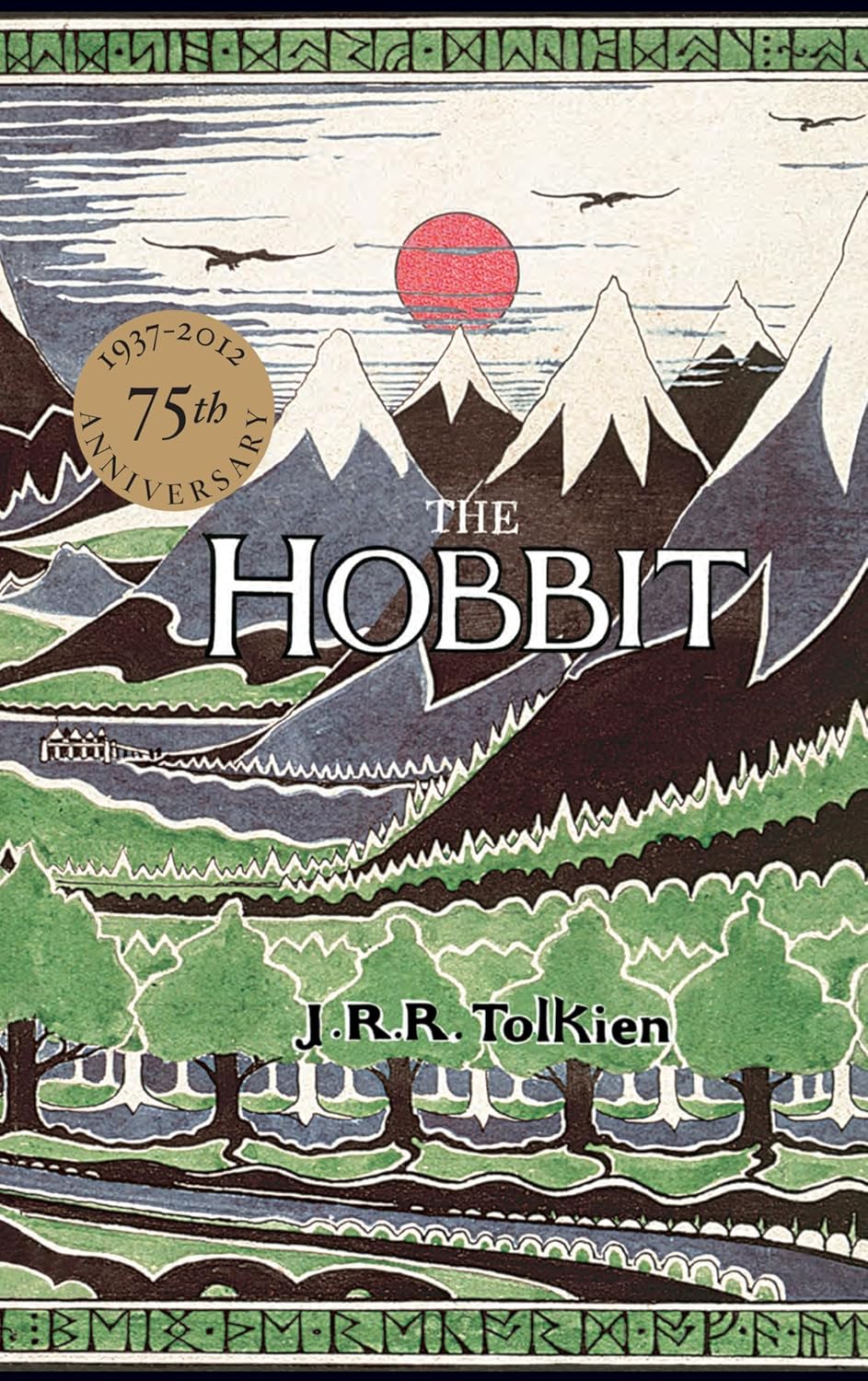
The Hobbit by J.R.R. Tolkien follows Bilbo Baggins, a comfort-loving hobbit who is swept into an unexpected adventure with thirteen dwarves and a wizard to reclaim treasure from a dragon. This guide provides parents and teachers with reading level information, age recommendations, content insights, and discussion questions for this beloved classic about courage, heroism, and finding yourself through adventure.
For Parents
Find the right reading level for your child, understand the book’s themes and fantasy elements, and get conversation starters to help your child explore ideas about courage, greed, and the hero’s journey.
For Teachers
Access grade-level guidance, reading metrics, character analysis support, and thematic discussion questions. This Tolkien masterpiece offers rich opportunities for exploring fantasy literature, hero’s journey structure, and themes about courage and transformation.
The Hobbit at a Glance
Find on Amazon →| Author | J.R.R. Tolkien |
| Published | 1937 |
| Grade Level | 5–8 (our assessment) |
| Recommended Age | 10–14 |
| Flesch-Kincaid Grade | 6.6 |
| Word Count | ~95,000 |
| Pages | ~310 (standard paperback) |
| Chapters | 19 |
| Genre | Fantasy / adventure / hero’s journey |
| Setting | Middle-earth (fantasy world) |
| Awards | Classic (foundational fantasy literature) |
For official Lexile and AR levels, visit Lexile.com or AR BookFinder. ReadingVine provides independent editorial assessments.
What Reading Level Is The Hobbit?
The Hobbit is appropriate for grades 5–8, with a Flesch-Kincaid grade level of 6.6. The vocabulary includes invented fantasy words (hobbit, troll, orc) and archaic terms, but Tolkien’s prose is clearer and more accessible than his later Lord of the Rings trilogy. Originally written for Tolkien’s children, the book has a more playful, storybook tone than his adult works, with a narrator who directly addresses readers.
J.R.R. Tolkien’s writing style is rich, descriptive, and influenced by Norse sagas and fairy tales. He creates an immersive fantasy world with detailed geography, invented languages, and deep history. The narrative voice is warm and conversational—Tolkien frequently comments on events, foreshadows outcomes, and speaks directly to readers (“Now you know enough to go on with”). This creates a cozy, read-aloud quality despite the epic adventure. The pacing alternates between quiet moments (Bilbo’s comfortable hobbit-hole, stays in Rivendell) and exciting action sequences (trolls, goblins, spiders, the dragon Smaug).
The story resonates most deeply with readers ages 10–14 who enjoy fantasy worlds, epic quests, and character transformation. Bilbo’s journey from timid homebody to capable hero appeals to readers exploring their own courage. Strong fifth graders can manage it; middle schoolers typically connect most fully with the themes and world-building. The book rewards readers who enjoy detailed settings and don’t mind the slower pacing of classic fantasy.
What Age Is The Hobbit Appropriate For?
The Hobbit is most appropriate for readers ages 10–14. The book includes fantasy violence—battles, monsters, and character deaths—but Tolkien’s treatment is relatively gentle compared to modern fantasy. The tone is adventurous rather than grim.
Fantasy violence: Characters fight trolls, goblins, giant spiders, and a dragon. The Battle of Five Armies includes warfare and deaths. Violence is not graphically described but is present.
Character deaths: Several dwarves die in the Battle of Five Armies, including Thorin Oakenshield. These deaths are sad but handled with dignity and purpose.
Frightening creatures: Giant spiders, goblins, wargs (evil wolves), and the dragon Smaug may be scary for younger or sensitive readers. Gollum’s riddle scene in the dark is suspenseful.
Greed and corruption: The dragon’s gold corrupts those who seek it, including Thorin who becomes obsessed. This “dragon-sickness” is a central theme.
What’s NOT in the book: No sexual content, no profanity, no graphic violence. The ending is bittersweet—the quest succeeds but at a cost. The message is about courage, friendship, and the dangers of greed, celebrating ordinary people who rise to meet extraordinary challenges.
What Is The Hobbit About?
Bilbo Baggins is a respectable hobbit living comfortably in his hobbit-hole at Bag End in the Shire. Hobbits are small, peaceful folk who love food, comfort, and predictability. Bilbo’s life is pleasant and uneventful—exactly how he likes it. Then the wizard Gandalf arrives with thirteen dwarves led by Thorin Oakenshield, and everything changes.
The dwarves are on a quest to reclaim their ancestral home, the Lonely Mountain, and the treasure within it. Sixty years ago, the dragon Smaug attacked the mountain kingdom, killed many dwarves, and claimed the treasure as his own. Thorin, grandson of the King Under the Mountain, wants to reclaim his birthright. The dwarves need a burglar to help them steal from the dragon, and Gandalf has volunteered Bilbo—much to Bilbo’s horror. He’s never been on an adventure and doesn’t want to start now.
But something in Bilbo—perhaps his Took side (his mother’s family were adventurous hobbits)—accepts the challenge. He joins the company, leaving his comfortable home behind. The journey east toward the Lonely Mountain is full of dangers. The company is captured by trolls who plan to eat them, but Gandalf tricks the trolls into staying out past dawn, and they turn to stone in sunlight. They rest in Rivendell with the elves, where Elrond examines their map and reveals moon-letters showing a secret entrance to the mountain.
Crossing the Misty Mountains, they’re captured by goblins. In the chaos of their escape, Bilbo gets separated from the group and lost in the dark tunnels. There he finds a magic ring and encounters Gollum, a twisted creature living in the depths. Gollum challenges Bilbo to a riddle contest—if Bilbo wins, Gollum will show him the way out; if Gollum wins, he’ll eat Bilbo. Bilbo wins by asking “What have I got in my pocket?” (the ring). Gollum discovers his “precious” ring is missing and realizes Bilbo has it. He tries to attack, but Bilbo discovers the ring makes him invisible. He escapes, using this new power.
Reunited with the dwarves, Bilbo continues the journey. They’re chased by wargs (evil wolves) and rescued by eagles. They reach the edge of Mirkwood, a dark, enchanted forest. Gandalf leaves them there, and the company must cross without him. In Mirkwood, giant spiders capture the dwarves and wrap them in webs. Bilbo, using his ring to become invisible and his sword (which he’s named Sting), rescues them single-handedly. This is Bilbo’s first true moment of heroism—he’s no longer the helpless hobbit who needed saving.
After escaping the spiders, the company is captured by Wood-elves and imprisoned. Bilbo, still invisible, helps the dwarves escape by hiding them in empty barrels floated down the river to Lake-town (Esgaroth), a human settlement near the Lonely Mountain. The people of Lake-town help them, hopeful that the dwarves will kill Smaug and restore prosperity to the region.
The company finally reaches the Lonely Mountain. Using the secret entrance revealed by the moon-letters, they enter through a side door while the main gate is blocked by Smaug. Bilbo volunteers to scout ahead and encounters the dragon. Smaug is terrifying—huge, intelligent, cunning, and covered in gemstones embedded in his scales. Bilbo learns through flattering conversation that Smaug has a weak spot on his chest where a scale is missing. Smaug smells Bilbo’s connection to Lake-town and flies off to attack the town in revenge.
Bard, a skilled archer from Lake-town, learns of Smaug’s weak spot. When Smaug attacks, Bard shoots him with his black arrow, hitting the vulnerable spot. Smaug falls dead into the lake. The dragon is defeated, but now the treasure lies unguarded.
Word spreads that the dragon is dead and the treasure is available. Thorin and the dwarves fortify the mountain. Men from Lake-town and elves from Mirkwood arrive, demanding shares of the treasure to rebuild Lake-town and as payment promised long ago. Thorin, consumed by “dragon-sickness”—the corrupting greed the treasure inspires—refuses. He summons his dwarf cousin Dáin and an army for support. War seems inevitable.
Bilbo tries to prevent disaster by secretly taking the Arkenstone (the most precious jewel, Thorin’s greatest desire) and giving it to Bard and the Elf-king as a bargaining chip. Thorin feels betrayed when he learns what Bilbo did. Before the conflict between dwarves, men, and elves can turn violent, goblins and wargs attack—seeking revenge and treasure. The groups must unite against this common enemy in the Battle of Five Armies.
The battle is fierce. Eagles and Beorn (a shape-shifter who can become a bear) arrive to help. The goblins are defeated, but Thorin is mortally wounded. Before dying, Thorin reconciles with Bilbo, apologizing for his greed and thanking Bilbo for his courage. He recognizes that Bilbo’s simple values—friendship, mercy, and peace—are worth more than all the treasure. Thorin’s nephews Fíli and Kíli also die in the battle.
Bilbo returns home to the Shire with his small share of treasure and the magic ring. He’s gone so long that he’s presumed dead, and the Sackville-Bagginses are auctioning his belongings. He reclaims his home but finds he’s changed—he’s no longer a purely respectable hobbit. He’s been on an adventure and seen wonders. He’s comfortable being slightly odd, writing his memoirs, and entertaining elves and wizards. The ring, which seems like a minor magical trinket, goes into his pocket, unnoticed. (Readers of The Lord of the Rings know its true significance, but here it’s just a helpful tool that made Bilbo invisible.)
The book ends with Bilbo at home, safe and changed. He’s learned that there’s more to life than comfort, that ordinary people can do extraordinary things, and that courage isn’t the absence of fear but acting despite it. Gandalf reminds him that he’s not the same hobbit who left Bag End—he’s something more.
The Hobbit Characters
The Hobbit Themes and Lessons
At its heart, The Hobbit is about discovering courage you didn’t know you had. Bilbo begins as the least heroic person imaginable—small, comfort-loving, afraid of adventure. But through the journey, he discovers capabilities he never suspected. He saves the dwarves from spiders, negotiates with a dragon, and tries to prevent war by sacrificing something precious to him. The book teaches that heroism isn’t about being fearless or powerful—it’s about ordinary people doing what’s right despite being afraid. Bilbo’s greatest strength isn’t his magic ring or his sword; it’s his good sense, his cleverness, and his decent heart.
The book also explores greed and its corrupting power. The dragon’s treasure carries a curse—dragon-sickness—that makes those who seek it obsessed and unreasonable. Thorin succumbs to it, nearly destroying himself and his friendships. His redemption comes when he recognizes that Bilbo’s simple values—friendship, mercy, peace—matter more than gold. Smaug himself represents ultimate greed: he hoards treasure he can’t use, destroys communities to possess wealth, and values gold above all life. The book teaches that treasure without purpose is meaningless and that greed isolates and destroys. The happiest ending belongs to Bilbo, who takes little treasure but gains wisdom and friendship.
Discussion questions for families:
- How does Bilbo change from the beginning to the end? What causes these changes?
- What is “dragon-sickness” and who suffers from it? How does it affect them?
- Why does Bilbo give the Arkenstone away? What does this show about his character?
- What does the book teach about what makes someone a hero?
How Many Pages and Chapters in The Hobbit?
The Hobbit is approximately 310 pages in standard paperback editions and is divided into 19 chapters. The word count is about 95,000 words. Chapters average about 16 pages and each typically covers a distinct episode or adventure in the journey.
For independent readers ages 10–14, the book typically takes 8–10 hours to read. The rich descriptions and world-building require patience, but readers who enjoy fantasy find it engrossing. As a read-aloud, it takes approximately 6–8 hours and works beautifully in installments—families can read a chapter at a time over several weeks. The book pairs well with map-reading activities, discussions about hero’s journey structure, and explorations of how Tolkien created Middle-earth. Many readers discover The Hobbit before tackling the more complex Lord of the Rings trilogy.
Books Similar to The Hobbit
About J.R.R. Tolkien
J.R.R. Tolkien (1892–1973) was an Oxford professor of Anglo-Saxon literature who created the most influential fantasy world in literature. The Hobbit began as a story he told his children in the 1930s. He wrote it down, and a student working for a publisher heard about it and asked to see the manuscript. It was published in 1937 and became an immediate success. Tolkien was a philologist (language scholar) who invented entire languages for his fantasy world, complete with grammar, alphabets, and thousands of years of imagined history. Middle-earth, the setting of The Hobbit, is drawn from Norse mythology, Old English epics like Beowulf, and fairy tales, but is entirely Tolkien’s creation. The book’s success led publishers to request a sequel, which became The Lord of the Rings trilogy—a much darker, more complex work that expanded Middle-earth into the most detailed fantasy setting ever created. The Hobbit is lighter in tone than the trilogy and can be read independently, though readers who love it often move on to the deeper world of The Lord of the Rings. Tolkien’s influence on modern fantasy is immeasurable—nearly every fantasy novel since owes him a debt. The concepts he popularized (elves, dwarves, hobbits, dark lords, magic rings, quest narratives, detailed world-building) became the foundation of the fantasy genre. The Hobbit has been adapted multiple times, most recently in Peter Jackson’s film trilogy (2012-2014), though the films significantly expanded and altered the story. The book itself remains a classic of children’s and fantasy literature, teaching generations about courage, friendship, and the dangers of greed while creating a world readers never want to leave.
The Hobbit: Frequently Asked Questions
What grade level is The Hobbit?
The Hobbit is appropriate for grades 5–8 (ages 10–14). The Flesch-Kincaid level of 6.6 reflects accessible prose with fantasy vocabulary. Originally written for children, it’s clearer than Tolkien’s adult works. The conversational narrator and episodic structure make it approachable. Strong fifth graders can read it; middle schoolers typically connect most fully with the themes and world-building. The book rewards readers who enjoy detailed fantasy settings and don’t mind classic pacing. It’s widely taught in upper elementary and middle school and often serves as an introduction to Tolkien’s Middle-earth before students tackle The Lord of the Rings.
Is The Hobbit appropriate for kids?
Yes, The Hobbit is appropriate for children ages 10 and up. The book includes fantasy violence—battles with trolls, goblins, spiders, and a dragon—but Tolkien’s treatment is relatively gentle compared to modern fantasy. Characters die in the Battle of Five Armies, including Thorin, but deaths are handled with dignity rather than graphic detail. Giant spiders and Smaug may frighten sensitive younger readers but aren’t overly dark. The tone is adventurous and ultimately hopeful. The main themes—courage, friendship, the dangers of greed—are age-appropriate and valuable. The book celebrates ordinary people discovering courage, making it inspiring rather than frightening. Parents should be aware of the violence and character deaths but most find the book appropriate and worthwhile for upper elementary and middle school readers.
What happens at the end of The Hobbit?
At the end of The Hobbit, the Battle of Five Armies erupts between dwarves, elves, men, goblins, and wargs. The good armies unite and defeat the goblins with help from eagles and Beorn. Thorin Oakenshield is mortally wounded and dies after reconciling with Bilbo, recognizing that friendship and decency matter more than gold. Dáin becomes King Under the Mountain. Bilbo returns home to the Shire with a small share of treasure and his magic ring. He finds himself presumed dead and his belongings being auctioned, but he reclaims his home. He’s changed by the adventure—no longer a purely respectable hobbit but someone who has seen wonders and discovered his courage. The ending is bittersweet: the quest succeeds but at a cost, and Bilbo is forever different from the hobbit who left Bag End.
Do you need to read The Hobbit before The Lord of the Rings?
No, you don’t need to read The Hobbit first, but it helps and most readers prefer starting with it. The Hobbit is lighter, shorter, and more accessible—a better introduction to Tolkien’s world. It introduces Bilbo, Gandalf, Gollum, and the ring (though its true significance isn’t revealed until LOTR). The Hobbit can be read as a standalone adventure, while The Lord of the Rings is more complex and assumes some Middle-earth knowledge. Many readers start with The Hobbit, and if they love it, move to the trilogy. However, LOTR can be read independently—it recaps necessary information from The Hobbit. The ideal order is The Hobbit first, but it’s not required. For young readers, starting with The Hobbit is strongly recommended as it’s more age-appropriate than the darker, more complex trilogy.
How does Bilbo find the ring in The Hobbit?
Bilbo finds the ring in the goblin tunnels under the Misty Mountains after being separated from the dwarves during their escape. Lost in the dark, he literally stumbles upon it—his hand touches something on the ground, and he puts it in his pocket without thinking. Later, he encounters Gollum, who lives in the deep caves. Gollum challenges Bilbo to a riddle contest. If Bilbo wins, Gollum will show him the way out; if Gollum wins, he’ll eat Bilbo. Bilbo wins by asking “What have I got in my pocket?” (the ring). Gollum then realizes his “precious” ring is missing and deduces Bilbo has it. Bilbo discovers the ring makes him invisible and uses this power to escape Gollum and the goblin tunnels. At this point in the story, it seems like a simple magic ring that grants invisibility—its true nature as the One Ring of Power isn’t revealed until The Lord of the Rings.
Why does Thorin go mad in The Hobbit?
Thorin succumbs to “dragon-sickness,” the corrupting power of the treasure that makes those who seek it obsessed and unreasonable. After Smaug is killed, Thorin becomes consumed by greed for the treasure, particularly the Arkenstone. He refuses to share any treasure with the Lake-town men or elves, even though they helped and have legitimate claims. He summons dwarf armies and prepares for war rather than negotiate. The dragon’s gold carries a curse—it isolates people, makes them value wealth over friendship and life, and drives them to destructive choices. Thorin’s obsession alienates his allies and nearly destroys everything. Only when he’s mortally wounded in the Battle of Five Armies does he break free from the dragon-sickness, reconciling with Bilbo before death and recognizing that friendship and decency matter infinitely more than gold. His redemption shows it’s possible to overcome greed, but the cost is terrible.
What is a hobbit in The Hobbit?
Hobbits are a race Tolkien invented for Middle-earth. They’re small people (about three to four feet tall) with thick, leathery feet that don’t need shoes. They have curly hair on their heads and feet. Hobbits are generally comfort-loving, peaceful, and unadventurous—they enjoy good food, pipes, cozy homes, and predictability. They live in holes dug into hillsides (hobbit-holes) that are comfortable homes, not dirty caves. Bilbo’s home, Bag End, has round doors and windows, many rooms, and all the comforts of civilization. Hobbits are surprisingly tough and stealthy despite seeming soft—they can endure hardship when necessary and move quietly. The Shire, where hobbits live, is a peaceful agricultural region in Middle-earth. Bilbo is unusual for a hobbit in having a sense of adventure (inherited from his Took ancestors). Tolkien created hobbits as his own invention—they don’t come from traditional mythology but have become iconic in fantasy literature.
What is the main message of The Hobbit?
The main message of The Hobbit is that ordinary people can discover extraordinary courage when faced with challenges, and that true heroism comes from character rather than power or status. Bilbo begins as the least heroic person imaginable but discovers capabilities he never suspected—cleverness, courage, and moral strength. The book teaches that you don’t need to be big, strong, or fearless to be a hero; you need a good heart and the willingness to do what’s right despite fear. The book also teaches about the corrupting power of greed through “dragon-sickness”—treasure without purpose is meaningless and obsession with wealth destroys what matters (friendship, peace, decency). Thorin’s redemption shows it’s possible to overcome greed, but Bilbo’s contentment with little treasure demonstrates that wisdom. Finally, the book celebrates mercy and compassion—Bilbo’s decision to spare Gollum, though it seems minor here, becomes crucial in The Lord of the Rings.