
 = Partner Site
The Phantom Tollbooth Reading Level: A Complete Guide
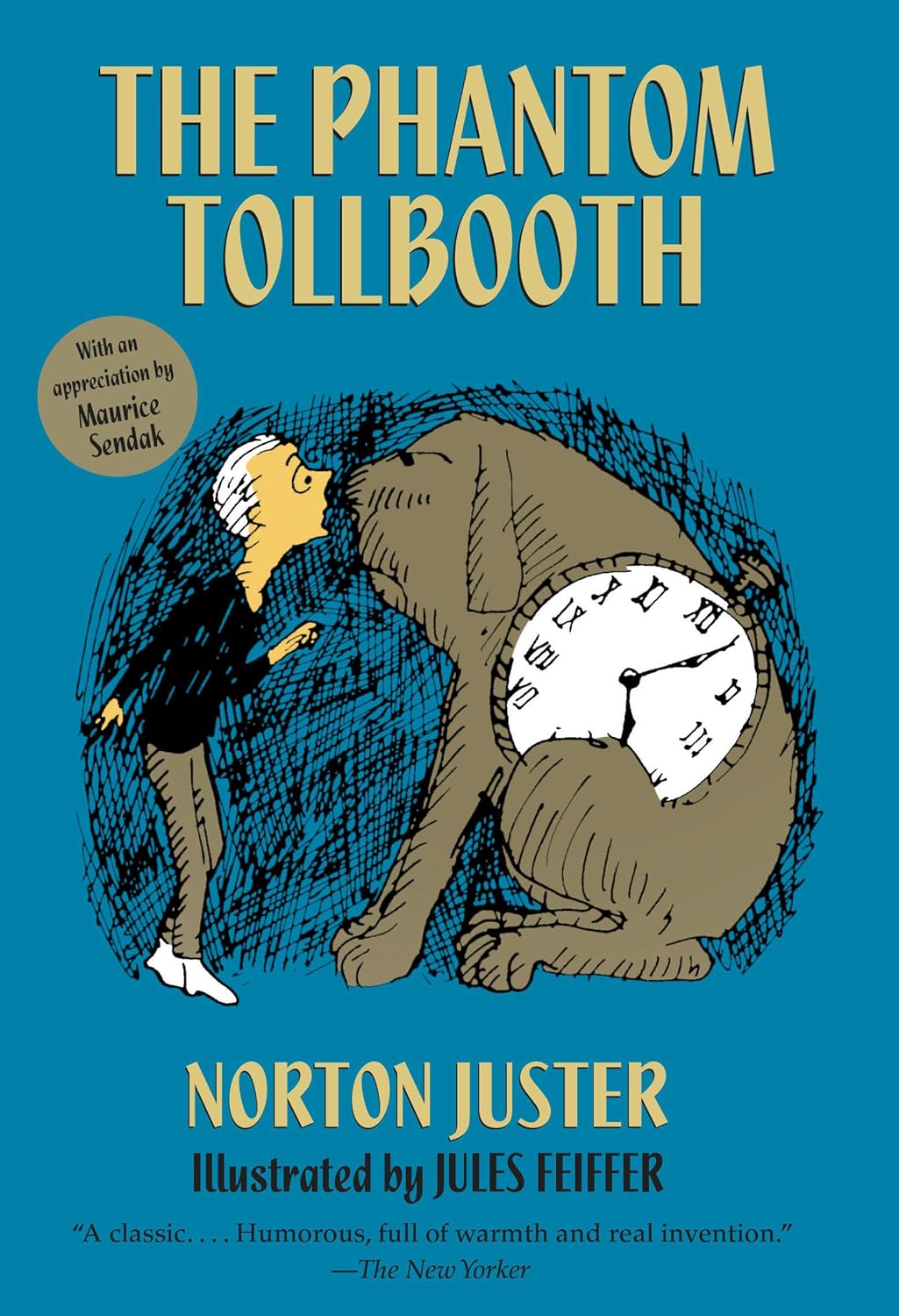
The Phantom Tollbooth by Norton Juster tells the imaginative story of a bored boy who receives a mysterious tollbooth that transports him to a magical kingdom where he must rescue Rhyme and Reason. This guide provides parents and teachers with reading level information, age recommendations, content insights, and discussion questions for this beloved classic about curiosity, learning, and the adventure in everyday life.
For Parents
Find the right reading level for your child, understand the book’s clever wordplay and educational themes, and get conversation starters to help your child explore questions about boredom, learning, and finding wonder in the world around them.
For Teachers
Access grade-level guidance, reading metrics, character analysis support, and thematic discussion questions perfect for classroom use. This classic offers rich opportunities for exploring puns, figurative language, critical thinking, and the value of knowledge.
The Phantom Tollbooth at a Glance
Find on Amazon →| Author | Norton Juster |
| Published | 1961 |
| Grade Level | 4–6 (our assessment) |
| Recommended Age | 9–12 |
| Flesch-Kincaid Grade | 6.7 |
| Word Count | ~49,000 |
| Pages | 256 (standard paperback) |
| Chapters | 20 |
| Genre | Children’s fiction / fantasy / adventure |
| Setting | A magical kingdom divided between words and numbers |
| Awards | Classic (enduringly popular since 1961) |
For official Lexile and AR levels, visit Lexile.com or AR BookFinder. ReadingVine provides independent editorial assessments.
What Reading Level Is The Phantom Tollbooth?
The Phantom Tollbooth is appropriate for grades 4–6, with a Flesch-Kincaid grade level of 6.7. The vocabulary is sophisticated and the book is packed with wordplay, puns, idioms used literally, and clever language jokes that require strong reading comprehension. The higher reading level reflects not just difficult words but the conceptual complexity—readers must understand abstract ideas about language, mathematics, and learning.
Juster’s writing is witty and layered, with humor that works on multiple levels. Many of the jokes involve taking common expressions literally (like “jumping to conclusions” becoming a literal island you jump to), understanding homonyms and puns, or recognizing references to idioms and figures of speech. Younger or less sophisticated readers may miss much of the wordplay, though they can still follow the adventure. The book rewards rereading—children often catch jokes they missed the first time as their vocabulary and knowledge expand.
While strong fourth graders can handle the basic mechanics of reading the book, it resonates most deeply with readers ages 9–12 who have developed enough knowledge of language, mathematics, and general concepts to appreciate the clever jokes and understand what Juster is satirizing. Precocious readers and those who love wordplay, puns, and thinking about how language works will find it delightful. The book is particularly effective for readers who’ve experienced boredom with school and need to rediscover that learning can be an adventure.
What Age Is The Phantom Tollbooth Appropriate For?
The Phantom Tollbooth is most appropriate for readers ages 9–12. The story deals with abstract concepts and satirizes bureaucracy, arguments over trivial matters, and people who waste time. While there’s no graphic content, the intellectual sophistication means younger children may find it confusing or boring, while older children who “get it” find it hilarious and thought-provoking.
Abstract concepts: The book personifies ideas like Reason, Sound, Silence, and Time. Understanding what these characters represent requires abstract thinking that develops around ages 9–10.
Heavy wordplay: The entire book is built on puns, idioms, and language jokes. Children with limited vocabulary or who haven’t encountered many common expressions may struggle to understand what’s happening.
Educational themes: The book is explicitly about the value of learning, curiosity, and paying attention. Some children may find it preachy or school-like if they’re not in the right mindset for it.
Slow start: The first few chapters establish the world and concepts. Some readers find the beginning slow before the adventure picks up pace.
No graphic violence but some peril: Milo faces demons and dangerous situations, but these are more conceptual than physically threatening. The demons represent bad ideas and time-wasting behaviors.
What’s NOT in the book: No sexual content, no profanity, no graphic violence. The “scary” elements are demons that represent laziness, procrastination, and negative thinking—abstract threats rather than physical ones. The book is intellectually challenging but emotionally safe, making it ideal for bright children ready for sophisticated humor and ideas.
What Is The Phantom Tollbooth About?
Milo is a boy who finds everything boring. He’s bored at school, bored at home, bored everywhere—nothing interests him, and he can’t see the point of learning anything. One day he comes home to find a mysterious tollbooth in his room. With nothing better to do, he drives his toy car through it and suddenly finds himself on a road in a strange land.
Milo arrives in the Lands Beyond, a kingdom divided between Dictionopolis (the city of words) and Digitopolis (the city of numbers). The two cities are ruled by King Azaz the Unabridged and the Mathemagician, brothers who constantly argue about whether words or numbers are more important. Long ago, the princesses Rhyme and Reason kept peace between the brothers, but when the kings asked the princesses to settle their argument, Rhyme and Reason declared that words and numbers are equally important. Outraged, the kings banished the princesses to the Castle in the Air, and without them, the kingdom fell into chaos and nonsense.
Milo is given a quest: rescue the princesses and restore order to the kingdom. Along the way, he meets remarkable companions. There’s Tock, a watchdog (literally—a dog with a clock in his side) who represents the importance of time. Tock teaches Milo to value time and use it wisely. There’s also the Humbug, a pompous beetle who talks constantly but says nothing meaningful, representing empty words and pretense.
Milo’s journey takes him through fantastic places that satirize real-world problems. In Dictionopolis, he meets the word merchants and attends a royal banquet where you eat your words (literally). He visits the Island of Conclusions (which you get to by jumping), where people leap to conclusions without thinking. He explores the Valley of Sound, where sounds are kept in jars but have been banned by a bureaucrat. He climbs the Mountains of Ignorance, where demons representing ignorance, procrastination, and other obstacles to learning try to stop him.
In Digitopolis, Milo learns about the beauty of numbers and mathematics. He works in the number mines, where precious gems are numbers, and discovers that math isn’t just boring homework—it’s valuable and important. The Mathemagician shows him mathematical magic and explains that numbers describe the world just as words do.
Finally, Milo and his companions climb through the Mountains of Ignorance, battling demons like the Terrible Trivium (who makes you waste time on pointless tasks), the Demon of Insincerity (who convinces you nothing matters), and the Sensekeeper (who wants people to stop thinking). They reach the Castle in the Air and rescue Rhyme and Reason, who explain that Milo was the perfect person for the quest precisely because he’s an ordinary boy—the task was thought to be impossible, and only someone who didn’t know it was impossible would attempt it.
Milo returns through the tollbooth to find he’s been gone exactly one hour, though he experienced days of adventure. The tollbooth disappears with a note explaining that it was meant only to get him started—now that he knows how interesting the world can be, he doesn’t need it anymore. The book ends with Milo excited to go to school, eager to learn, and seeing his ordinary world through new eyes filled with wonder and possibility.
The Phantom Tollbooth Characters
The Phantom Tollbooth Themes and Lessons
At its core, The Phantom Tollbooth shows that the world becomes fascinating when you choose to engage with it. Milo begins the story feeling bored and disconnected, not fully noticing or thinking about the world around him. Through his journey, he discovers that learning—about words, numbers, music, and ideas—can be exciting and meaningful. When Milo returns home, the tollbooth disappears because he no longer needs it; he has learned how to find curiosity, wonder, and adventure in everyday life.
The book also celebrates both words and numbers, showing that different ways of knowing and understanding the world are all valuable. King Azaz and the Mathemagician’s argument represents the false choice between humanities and sciences, reading and math. Rhyme and Reason understand that both are essential—you need language to express ideas and mathematics to measure and understand reality. The book encourages readers to embrace all forms of learning rather than deciding some subjects are “boring” or “useless.”
Discussion questions for families:
- What makes Milo bored at the beginning? Have you ever felt that way? What changed for him?
- The book is full of idioms that become real (like “jumping to conclusions”). Can you find examples? What do they teach about language?
- Why do King Azaz and the Mathemagician argue about whether words or numbers are more important? Who’s right?
- What do the demons in the Mountains of Ignorance represent? Have you encountered any of these problems in real life?
How Many Pages and Chapters in The Phantom Tollbooth?
The Phantom Tollbooth has 256 pages in the standard paperback edition and is divided into 20 chapters. The word count is approximately 49,000 words, making it a substantial read for middle-grade readers. The chapters average about 12–13 pages each and are titled with clever names that hint at the wordplay within (like “A Colorful Symphony” and “Dischord and Dynne”).
For independent readers in the target age range (9–12), the book typically takes 6–8 hours to complete, or about two to three weeks of reading 30 minutes per day. The sophisticated vocabulary and dense wordplay mean it’s not a quick read, and many children benefit from rereading sections to catch jokes they missed. Readers who love language and puns find it goes faster because they’re delighting in every sentence, while those less attuned to wordplay may find it slower going.
As a read-aloud, The Phantom Tollbooth takes approximately 5–6 hours total. Reading it aloud can help children catch the puns and language jokes they might miss reading independently. Adults can explain unfamiliar idioms and point out clever wordplay, making the humor more accessible. Many families and classrooms enjoy reading it together because it prompts discussions about language, learning, and the ideas being satirized. The original Jules Feiffer illustrations also enhance understanding and enjoyment.
Books Similar to The Phantom Tollbooth
If your child enjoyed The Phantom Tollbooth, here are six similar books that explore themes of magical adventures, wordplay, and discovering wonder:
About Norton Juster
Norton Juster (1929–2021) was an American architect and author best known for The Phantom Tollbooth, published in 1961. Juster wrote the book almost by accident—he was supposed to be writing a book about cities for adults but got distracted and started writing a children’s story instead. The book began as a short story about a boy who was bored with everything, and it grew into a full novel as Juster explored ideas about language, learning, and paying attention to the world. His background in architecture influenced the book’s careful structure and the way Milo’s physical journey mirrors his intellectual journey. Juster’s friend, the cartoonist and playwright Jules Feiffer, illustrated the book, and the two collaborated closely to ensure the pictures enhanced the wordplay and humor. The Phantom Tollbooth was initially rejected by several publishers who thought it was too sophisticated for children and not literary enough for adults, but when it was finally published, it became an instant classic. The book has never gone out of print and has sold millions of copies worldwide. It’s taught in schools, beloved by both children and adults, and regularly appears on lists of the greatest children’s books ever written. Juster wrote other books, including The Dot and the Line (an illustrated mathematics romance) and Alberic the Wise, but The Phantom Tollbooth remains his masterpiece. He continued to practice architecture throughout his life while occasionally writing, always with the same wit, intelligence, and playfulness that made The Phantom Tollbooth so special.
The Phantom Tollbooth: Frequently Asked Questions
What does the phantom tollbooth symbolize?
The phantom tollbooth symbolizes the gateway to learning and curiosity. It appears when Milo is at his most bored and apathetic, offering him a chance to discover that the world is full of wonder. The tollbooth represents the opportunity to see life differently—to recognize that adventure and meaning are available if you’re willing to look for them. When Milo returns from his adventure, the tollbooth disappears with a note explaining that he doesn’t need it anymore because he’s learned to find magic in everyday life. This suggests that the “tollbooth” was really about changing Milo’s perspective rather than literally transporting him to another world. The barrier you have to pay to pass through (the “toll”) represents the effort required to truly engage with learning rather than passively accepting boredom.
What grade level is The Phantom Tollbooth appropriate for?
The Phantom Tollbooth is most appropriate for grades 4–6, though it works best for readers in grades 5–6 who have developed enough vocabulary and knowledge of idioms to appreciate the wordplay. The Flesch-Kincaid grade level is 6.7, reflecting the sophisticated vocabulary and complex concepts. While fourth graders can read it, they may miss many of the puns and language jokes. The book rewards rereading as children’s knowledge expands—a fifth grader who rereads it in seventh or eighth grade will catch jokes they missed earlier. It’s also popular with adults who enjoy the satirical humor and clever wordplay. Strong, precocious readers in fourth grade who love puns and language will enjoy it, but average fourth graders might find it confusing or slow.
Who are Rhyme and Reason in The Phantom Tollbooth?
Rhyme and Reason are two princesses who represent logic, balance, and harmony. They’re sisters who were adopted by the kingdom and helped keep peace between King Azaz (words) and the Mathemagician (numbers). When the kings asked the princesses to settle their argument about whether words or numbers are more important, Rhyme and Reason declared that both are equally valuable and necessary. The kings, each wanting to be declared superior, became furious and banished the princesses to the Castle in the Air. Without Rhyme and Reason, the kingdom fell into chaos—people argued over trivial matters, wasted time, and stopped thinking clearly. Their names suggest their role: “Rhyme” represents poetry, language, and artistic expression, while “Reason” represents logic, mathematics, and rational thought. Together, they symbolize the balanced thinking that comes from valuing both art and science, words and numbers, creativity and logic.
What do the demons represent in The Phantom Tollbooth?
The demons in the Mountains of Ignorance represent obstacles to learning and clear thinking. Each demon embodies a specific problem: the Terrible Trivium makes you waste time on pointless busy work instead of meaningful tasks; the Demon of Insincerity convinces you that nothing matters so why bother trying; the Gelatinous Giant absorbs you into the crowd so you stop thinking for yourself; the Threadbare Excuse provides reasons not to learn or grow; and the Sensekeeper wants to ban thinking altogether. These aren’t physical monsters but rather mental and behavioral obstacles that keep people from learning, growing, and using their minds. By defeating these demons, Milo learns to recognize and overcome the real-world equivalents—procrastination, apathy, conformity, making excuses, and refusing to think critically. The demons make abstract concepts concrete, showing children what “ignorance” actually means in practical terms.
Is The Phantom Tollbooth hard to read?
The Phantom Tollbooth is moderately challenging, primarily because of its sophisticated vocabulary and heavy use of puns, idioms, and wordplay. Readers need to understand figurative language to “get” most of the jokes—for instance, “jumping to conclusions” becomes a literal island you jump to, and eating your words happens at a royal banquet. Children with strong vocabularies and exposure to common English idioms will find it clever and funny. Those with more limited language experience may find it confusing or miss the humor entirely. The plot itself is straightforward (a quest to rescue princesses), so children can follow the story even if they miss some jokes. However, much of the book’s delight comes from the wordplay, so readers who don’t catch the puns may find it slow or boring. Reading it aloud with an adult who can explain idioms and point out clever language can make it much more accessible and enjoyable.
What is the main conflict in The Phantom Tollbooth?
The main external conflict is Milo’s quest to rescue Rhyme and Reason from the Castle in the Air, overcoming the demons and obstacles that guard them. However, the deeper internal conflict is Milo’s battle against his own boredom and apathy. At the beginning, Milo can’t find interest in anything—school, home, learning, life. His journey through the Lands Beyond teaches him to be curious, pay attention, value time, think critically, and find wonder in knowledge. The external adventure (fighting demons, solving problems, completing the quest) mirrors his internal transformation from a bored, passive child to an engaged, curious learner. By the end, Milo has conquered his real enemy—not the demons in the mountains but his own inability to see that the world is endlessly fascinating.
Why is The Phantom Tollbooth a classic?
The Phantom Tollbooth is a classic because it works on multiple levels and rewards readers as they grow. Children enjoy the adventure story and funny characters. Older readers appreciate the sophisticated wordplay, satire of bureaucracy and time-wasting, and the philosophical questions about knowledge and meaning. The book celebrates learning without being preachy—it shows rather than tells that education is an adventure. Its message about overcoming boredom by paying attention to the world remains relevant across generations. The brilliant wordplay means it can be reread many times, with readers catching new jokes as their vocabulary expands. Teachers love it for teaching figurative language, critical thinking, and the value of both humanities and mathematics. Parents appreciate that it encourages curiosity and makes learning seem exciting. Norton Juster’s clever writing, Jules Feiffer’s perfect illustrations, and the book’s timeless wisdom about finding wonder in everyday life have made it beloved for over sixty years.
What is the message of The Phantom Tollbooth?
The main message is that the world is endlessly fascinating if you pay attention, think critically, and approach life with curiosity rather than apathy. Boredom isn’t a condition imposed on you—it’s a failure to engage with the wonder all around you. The book teaches that learning (both words and numbers, arts and sciences) is valuable and exciting, not boring homework. It shows that wasting time, jumping to conclusions, making excuses, and refusing to think are real dangers that keep you trapped in ignorance. The book also argues for balance—King Azaz and the Mathemagician’s argument represents false choices between different types of knowledge, when really you need both language and mathematics to understand the world. Ultimately, The Phantom Tollbooth says that adventure, meaning, and wonder are available in ordinary life if you’re willing to truly see, listen, and think about the world around you.