
 = Partner Site
From the Mixed-up Files of Mrs. Basil E. Frankweiler Reading Level: A Complete Guide
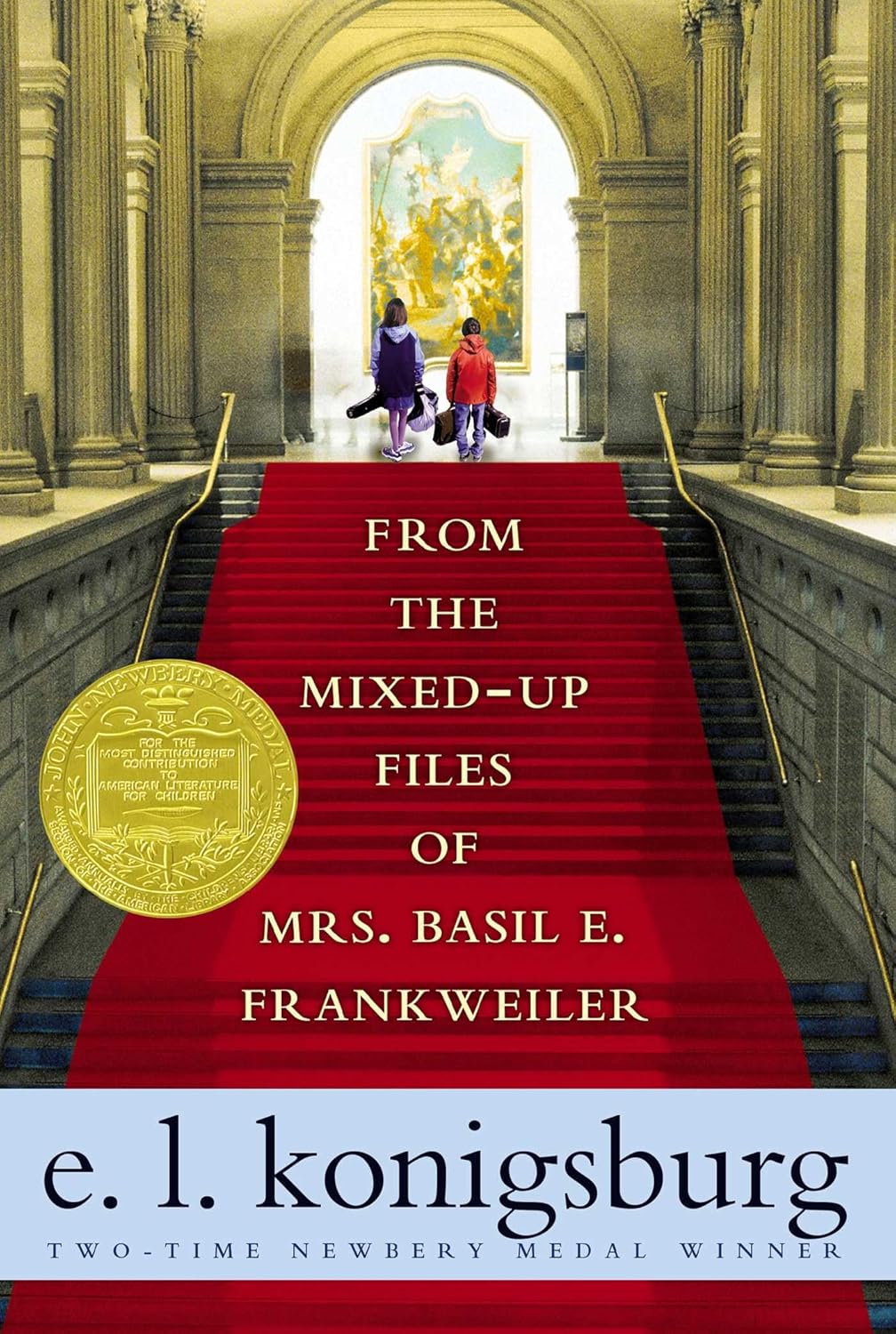
From the Mixed-Up Files of Mrs. Basil E. Frankweiler by E.L. Konigsburg tells the captivating story of two siblings who run away to live in the Metropolitan Museum of Art and solve a mystery. This guide provides parents and teachers with reading level information, age recommendations, content insights, and discussion questions for this Newbery Medal-winning classic about adventure, intelligence, and finding something greater than yourself.
For Parents
Find the right reading level for your child, understand the book’s themes about running away responsibly and intellectual adventure, and get conversation starters to help your child explore questions about feeling underappreciated, seeking meaning, and using your intelligence creatively.
For Teachers
Access grade-level guidance, reading metrics, character analysis support, and thematic discussion questions perfect for classroom use. This Newbery Medal winner offers rich opportunities for exploring narrative structure, problem-solving, and the value of knowledge and art.
From the Mixed-Up Files of Mrs. Basil E. Frankweiler at a Glance
Find on Amazon →| Author | E.L. Konigsburg |
| Published | 1967 |
| Grade Level | 4–6 (our assessment) |
| Recommended Age | 9–12 |
| Flesch-Kincaid Grade | 4.9 |
| Word Count | ~38,000 |
| Pages | 162 (standard paperback) |
| Chapters | 10 |
| Genre | Children’s fiction / mystery / adventure |
| Setting | Metropolitan Museum of Art, New York City, 1960s |
| Awards | Newbery Medal (1968) |
For official Lexile and AR levels, visit Lexile.com or AR BookFinder. ReadingVine provides independent editorial assessments.
What Reading Level Is From the Mixed-Up Files of Mrs. Basil E. Frankweiler?
From the Mixed-Up Files of Mrs. Basil E. Frankweiler is appropriate for grades 4–6, with a Flesch-Kincaid grade level of 4.9. The vocabulary is sophisticated with some challenging words, particularly related to art and museums, and the sentence structure ranges from simple to complex. The unique narrative framework—Mrs. Frankweiler writing about Claudia and Jamie to her lawyer—adds a layer of complexity that rewards attentive readers.
E.L. Konigsburg’s writing style is intelligent and witty, never talking down to young readers. She assumes children are smart enough to understand clever plotting, appreciate art and history, and follow a story told through an unusual narrative structure. The book includes references to Renaissance art, Michelangelo, and museum procedures that children may be unfamiliar with, but context makes the meaning clear. Konigsburg also captures Claudia’s voice perfectly—sophisticated, organized, sometimes imperious—contrasting nicely with Jamie’s practical, economical thinking.
While strong fourth graders can handle the reading mechanics, the story resonates most deeply with readers ages 9–12 who can appreciate the sophistication of Claudia’s plan, understand the angel statue mystery, and grasp the deeper themes about seeking something meaningful beyond comfort and routine. The book rewards readers who enjoy clever protagonists, mysteries that require thinking rather than action, and stories that celebrate intelligence and curiosity.
What Age Is From the Mixed-Up Files of Mrs. Basil E. Frankweiler Appropriate For?
From the Mixed-Up Files of Mrs. Basil E. Frankweiler is most appropriate for readers ages 9–12. The story deals with running away from home, which could concern some parents, but Konigsburg handles it in a way that’s adventurous rather than dangerous or traumatic. The story presents their adventure as controlled and low risk rather than dangerous or traumatic. Their “running away” is more of an elaborate, thoughtful escape to somewhere beautiful and interesting rather than a reckless or desperate act.
Running away from home: Claudia and Jamie run away to live in the museum. While this could seem like it’s endorsing running away, the book actually shows it as a planned, temporary adventure. They’re never in danger, and they return home safely with new perspective.
Deceiving adults: The children hide in the museum, sleep in beds on display, bathe in the fountain, and evade museum guards. They’re breaking rules and lying, though they never steal or damage anything.
Feeling underappreciated: Claudia runs away partly because she feels unappreciated at home. While this feeling is validated, the resolution shows that adventure and meaning come from within, not from changing circumstances.
Some sophisticated themes: The book explores concepts like anonymity, the search for meaning, the value of beautiful things, and what makes something “special.” These require some maturity to fully grasp.
What’s NOT in the book: No violence, no scary elements, no danger to the children, no family dysfunction. Claudia’s family is loving and normal; she’s not running from abuse or neglect. The children are resourceful and safe throughout. The book’s “rebellion” is intellectual and creative rather than destructive. The ending shows Claudia’s parents worried but loving, and Claudia returns home changed but not traumatized.
What Is From the Mixed-Up Files of Mrs. Basil E. Frankweiler About?
The story is framed as Mrs. Basil E. Frankweiler writing about two children, Claudia and Jamie Kincaid, to her lawyer Saxonberg (who happens to be the children’s grandfather, though this isn’t revealed until the end). She’s telling him a story about an adventure his grandchildren had, though he doesn’t know it yet.
Claudia Kincaid is eleven years old, the oldest of four siblings, and she’s tired of being taken for granted. She’s responsible, organized, and good at everything, but she feels like nobody notices or appreciates her. She decides to run away—not in anger or desperation, but as a carefully planned adventure. She wants to teach her parents a lesson and, more importantly, she wants to experience something different, something beautiful and elegant, far from the monotony of suburban life.
Claudia chooses to run away to the Metropolitan Museum of Art in New York City. She carefully selects her brother Jamie to accompany her because he’s frugal and has saved $24.43 from playing cards—money they’ll need. Jamie is nine, practical, and surprisingly agreeable to the plan despite the risks. Claudia and Jamie leave for school one morning but instead take the train to New York City and hide in the museum just before closing time.
Living in the museum requires ingenuity. They hide in bathrooms during the guards’ final sweep, then emerge after hours to sleep in the Renaissance beds on display (choosing the ones with canopies to hide under). They bathe in the fountain, washing their clothes and themselves with coins they collect from the fountain to fund their stay. They eat breakfast at the museum cafeteria and dinner at the automat, budgeting carefully. They store their belongings in various hiding places throughout the museum. The adventure is elegant and civilized—Claudia ensures they maintain standards.
Soon after their arrival, the museum acquires a new statue: a beautiful Renaissance angel that may or may not have been sculpted by Michelangelo. If it’s authentic, it’s priceless; if not, it’s just a nice statue. The museum purchased it for $225 from Mrs. Basil E. Frankweiler’s collection, and experts are divided on whether it’s a real Michelangelo. The statue becomes Claudia’s obsession. She decides that solving this mystery—proving whether the angel is a genuine Michelangelo—will be the “something different” she’s seeking, the thing that will make her special.
Claudia and Jamie research extensively, studying everything in the museum about Michelangelo, examining the statue minutely, and trying to find proof of its authenticity. They become amateur art historians, learning about Renaissance sculpture, Michelangelo’s techniques, and how to authenticate art. The mystery consumes Claudia—she’s convinced that if they can solve it, they’ll have accomplished something truly meaningful.
After a week in the museum, the children realize they can’t solve the mystery on their own. They need to talk to the person who sold the statue: Mrs. Basil E. Frankweiler. Claudia writes her a letter (as “students doing research”), and Mrs. Frankweiler invites them to her home. When they arrive, she immediately knows who they are—the runaway children from the news. She’s delighted by them and makes a deal: she’ll tell them the secret of the angel statue if Jamie beats her at a card game. When Jamie wins, she reveals the truth.
Mrs. Frankweiler shows them her “mixed-up files”—boxes of documents, letters, and papers she’s accumulated over her long, interesting life. Among these files is a sketch by Michelangelo of the angel, proving definitively that Michelangelo did carve the statue. She’s known all along but kept it secret because she enjoyed the mystery. She offers the children the sketch as proof—it’s priceless—on the condition that they can never sell it or make it public. It must stay secret, passing down through their family.
Claudia realizes that the truth about the statue is less satisfying than she expected. The angel is a Michelangelo, but knowing this doesn’t make her feel as special or different as she’d hoped. Mrs. Frankweiler understands and explains that Claudia was searching for something deeper than the statue’s authenticity—she was looking for a secret, something that makes her special on the inside, not just knowledgeable on the outside. The real treasure isn’t the proof but the adventure, the curiosity, and the knowledge that some mysteries are more valuable when they remain partially mysterious.
Mrs. Frankweiler calls the children’s grandfather (her lawyer Saxonberg) to arrange their return home. She doesn’t reveal she knows who they are, and Saxonberg—the reader now learns—is Claudia and Jamie’s grandfather, though he doesn’t know the story Mrs. Frankweiler has been telling him is about his own grandchildren. The book ends with Claudia and Jamie returning home, changed by their adventure. Claudia no longer needs to run away because she’s found what she was looking for: the knowledge that being different isn’t about external circumstances but about carrying secrets, experiences, and a sense of wonder inside yourself.
From the Mixed-Up Files Characters
From the Mixed-Up Files Themes and Lessons
At its heart, From the Mixed-Up Files is about Claudia’s search for something to make her feel different and special. She runs away not because she’s unhappy or unloved, but because she wants to feel like more than just another suburban kid doing homework and chores. She thinks living in the museum will make her special, then thinks solving the Michelangelo mystery will do it. But Mrs. Frankweiler teaches her that being special isn’t about external achievements or circumstances—it’s about carrying secrets, experiences, and wonder inside yourself. The real transformation happens within Claudia, not in her circumstances.
The book also celebrates intelligence, curiosity, and resourcefulness. Claudia and Jamie succeed in their adventure not through luck or magic but through careful planning, creative problem-solving, and using their brains. They research, observe, adapt, and think their way through challenges. The book honors children’s intelligence and shows that being smart and curious can lead to real adventures. It also celebrates art and culture as valuable—the museum isn’t just a hiding place but a treasure worth experiencing and understanding. Knowledge and beauty have intrinsic value beyond their practical uses.
Discussion questions for families:
- Why does Claudia run away? What is she really searching for beyond just teaching her parents a lesson?
- How do Claudia and Jamie work together as a team? What does each contribute to their success?
- Why does Mrs. Frankweiler keep the Michelangelo sketch a secret instead of selling it or making it public? What does she understand about secrets and mysteries?
- What does Claudia learn about being “different” or “special”? How has she changed by the end of the book?
How Many Pages and Chapters in From the Mixed-Up Files?
From the Mixed-Up Files of Mrs. Basil E. Frankweiler has 162 pages in the standard paperback edition and is divided into 10 chapters. The word count is approximately 38,000 words, making it a substantial read for middle-grade students. The chapters average about 16 pages each and are framed as Mrs. Frankweiler’s letters to Saxonberg, with each chapter advancing the children’s adventure and the mystery.
For independent readers in the target age range (9–12), the book typically takes 4–5 hours to complete, or about two weeks of reading 30 minutes per day. The mystery of the angel statue and the cleverness of the children’s museum adventure keep readers engaged. The unique narrative structure—Mrs. Frankweiler telling the story to Saxonberg—adds interest, and the final revelation that Saxonberg is the children’s grandfather rewards attentive readers who’ve been following the framing device.
As a read-aloud, From the Mixed-Up Files takes approximately 3–4 hours total. The chapter structure works well for reading sessions, and the museum setting provides opportunities to show children pictures of the Metropolitan Museum of Art and Renaissance sculpture. Many families and classrooms enjoy it because it combines adventure with art appreciation, encourages creative problem-solving, and sparks conversations about museums, art, and what makes experiences meaningful. Teachers often use it to introduce art history concepts and discuss narrative structure.
Books Similar to From the Mixed-Up Files
If your child enjoyed From the Mixed-Up Files, here are six similar books that explore themes of clever kids, mysteries, and adventures:
About E.L. Konigsburg
E.L. Konigsburg (1930–2013) was one of the most distinguished American children’s authors, known for her intelligent, sophisticated novels that respect young readers’ capacity for complex ideas. From the Mixed-Up Files of Mrs. Basil E. Frankweiler, published in 1967, won the Newbery Medal in 1968—remarkably, the same year her second book, Jennifer, Hecate, Macbeth, William McKinley, and Me, Elizabeth, was a Newbery Honor book, making her the only author to win the Medal and Honor in the same year. The idea for Mixed-Up Files came from Konigsburg’s own experiences taking her children to the Metropolitan Museum of Art and imagining what it would be like to live there. She was fascinated by the museum as a beautiful, safe place full of treasures, and she wondered what kind of child would choose to run away to somewhere so civilized rather than somewhere wild. This led to Claudia—sophisticated, organized, seeking beauty and meaning rather than just escape. Konigsburg did extensive research at the Met, sketching the museum layout, studying the beds and furniture on display, and figuring out exactly how children could hide there overnight. The angel statue mystery was inspired by a real controversy about whether a statue was a genuine Michelangelo. Konigsburg was a trained chemist and worked as a science teacher before becoming a full-time writer, and her scientific mind shows in her careful plotting and logical problem-solving. She believed children were intelligent and could handle sophisticated narrative structures, moral complexity, and big ideas. Her books never talked down to readers. She wrote over twenty books, including The View from Saturday (which won a second Newbery Medal in 1997) and many other acclaimed novels. Common themes include intelligence, art, identity, and children using their minds to navigate complex situations. Konigsburg illustrated her own books with distinctive pen-and-ink drawings that perfectly complemented her witty, intelligent prose. From the Mixed-Up Files remains her most beloved work, a timeless story that celebrates curiosity, art, and the search for meaning that resonates with smart, thoughtful children across generations.
From the Mixed-Up Files: Frequently Asked Questions
Is the angel statue a real Michelangelo?
Yes, in the book, the angel statue is a genuine Michelangelo. Mrs. Basil E. Frankweiler possesses proof—a sketch by Michelangelo of the angel—that definitively authenticates it. However, she’s kept this secret for years, enjoying the mystery and uncertainty surrounding the statue. When Claudia and Jamie come to her seeking answers, she shows them the sketch but makes them promise to keep it secret. The statue will never be publicly authenticated, remaining valuable but mysterious. This is important to the book’s themes: Mrs. Frankweiler understands that some mysteries are more precious when they remain partially unsolved, and she teaches Claudia that the real treasure isn’t factual proof but the experience of curiosity, investigation, and carrying secret knowledge inside yourself. The secret proof must stay within their family, making them keepers of a beautiful mystery rather than public heroes.
Why does Claudia run away in From the Mixed-Up Files?
Claudia runs away because she feels taken for granted and wants to feel special and different. She’s the oldest of four children, always responsible and capable, but nobody seems to appreciate her efforts. She wants to teach her parents a lesson and experience something elegant and beautiful beyond suburban routine. Importantly, Claudia isn’t running from abuse or trauma—her family is loving and normal. She’s running toward something: adventure, beauty, and a sense of being unique. She chooses the Metropolitan Museum because she wants her running away to be comfortable, elegant, and cultured—very different from the typical runaway fantasy. By the end, Claudia learns that what she really wanted wasn’t external circumstances that made her different, but an internal sense of being special, which comes from experiences, secrets, and perspective rather than where you live or what you accomplish.
Is From the Mixed-Up Files appropriate for 4th grade?
From the Mixed-Up Files can be appropriate for fourth graders, especially strong readers or as a class read-aloud, though fifth and sixth graders typically connect with it most deeply. The reading level (4.9 Flesch-Kincaid) is accessible to strong fourth graders, and the adventure plot engages younger readers. However, some content requires maturity: understanding why Claudia feels underappreciated, appreciating the art history elements, following the narrative structure (Mrs. Frankweiler telling the story to Saxonberg), and grasping the deeper themes about identity and meaning. Fourth graders can enjoy it as an adventure about clever kids living in a museum, but they may miss the more sophisticated thematic elements. As a class read-aloud with teacher guidance to discuss the art, the mystery, and Claudia’s motivations, it works excellently for fourth grade. For independent reading, strong fourth graders will enjoy it while average fourth graders might do better waiting until fifth grade.
What is the setting of From the Mixed-Up Files?
The primary setting is the Metropolitan Museum of Art in New York City during the 1960s. E.L. Konigsburg researched the museum extensively and described it accurately, from the Great Hall to the Renaissance galleries where Claudia and Jamie sleep in the antique beds, to the fountain where they bathe. The museum is not just a backdrop but integral to the story—its beauty, art, and cultural treasures are what Claudia seeks. Secondary settings include the children’s suburban home (which they’re escaping from), the train they take to New York City, the automat where they eat, and Mrs. Basil E. Frankweiler’s enormous house in Connecticut where the final revelation occurs. The framing narrative—Mrs. Frankweiler writing to Saxonberg—suggests her office or home where she’s composing the letter. The Met is the heart of the story: a place where children can be surrounded by beautiful, valuable things and where solving an art history mystery becomes the adventure.
How do Claudia and Jamie survive in the museum?
Claudia and Jamie survive through careful planning and resourcefulness. They hide in bathroom stalls during the final guard sweep at closing time, then emerge after everyone leaves. They sleep in the Renaissance beds with canopies (choosing beds where they can hide under covers). They bathe in the museum fountain, washing themselves and their clothes with soap they brought. They collect coins from the fountain to fund their stay. They store their belongings (including school bags and instruments) in various hiding spots throughout the museum. For food, they eat breakfast at the museum cafeteria when it opens, blending in with early visitors, and dinner at an automat outside the museum, budgeting Jamie’s saved money carefully. They hide successfully for a week by being observant, quiet, and clever—staying in different galleries to avoid patterns, learning guard routines, and maintaining the appearance of normal museum visitors during the day. Their survival isn’t about wilderness skills but intelligence, planning, and ingenuity.
What does Mrs. Frankweiler teach Claudia?
Mrs. Frankweiler teaches Claudia that being special isn’t about external achievements or circumstances but about what you carry inside yourself. Claudia had been searching for something—proof about the angel, recognition for solving the mystery—that would make her feel different and important. Mrs. Frankweiler shows her that the real treasure isn’t the proof of Michelangelo’s authorship but the experience of curiosity, investigation, and possessing secret knowledge. She teaches Claudia that some mysteries are more valuable when they remain partially mysterious, that keeping secrets can be more meaningful than revealing them, and that the internal transformation from the adventure matters more than external recognition. Mrs. Frankweiler recognizes that Claudia’s running away was really a search for meaning and identity, and she helps Claudia understand that she can carry that sense of being special inside herself—through experiences, secrets, and perspective—rather than needing the world to acknowledge it.
Is From the Mixed-Up Files based on a true story?
No, From the Mixed-Up Files is fiction, not based on a true story. However, E.L. Konigsburg drew inspiration from real experiences and real places. The Metropolitan Museum of Art is real, and Konigsburg researched it extensively, accurately describing the layout, the Renaissance beds on display, and the fountain. The book was inspired by Konigsburg taking her own children to the Met and imagining what it would be like to live there. The angel statue mystery was loosely inspired by real controversies about art authentication—there have been genuine disputes about whether certain sculptures were created by Michelangelo. The book’s details about museum life, art history, and New York City in the 1960s are realistic and well-researched. While Claudia and Jamie are fictional characters, their feelings about wanting to be special and their clever problem-solving reflect real childhood experiences. The book feels authentic because Konigsburg grounded the fantasy in realistic details and genuine understanding of children’s emotional lives.
What is the main message of From the Mixed-Up Files?
The main message is that feeling special and finding meaning comes from within—from experiences, secrets, perspective, and how you see the world—not from external circumstances or achievements. Claudia runs away seeking to feel different and important, first thinking living in the museum will make her special, then thinking solving the Michelangelo mystery will do it. But Mrs. Frankweiler teaches her that the real transformation happened through the adventure itself: the curiosity, the investigation, the secret knowledge she now carries. The book celebrates intelligence, resourcefulness, and using your mind to solve problems. It argues that art, beauty, and culture have inherent value beyond their practical uses. It also teaches that some mysteries are more precious when kept secret rather than revealed, and that carrying secrets and experiences inside yourself gives you an internal sense of being special that doesn’t depend on the world’s recognition. Ultimately, it’s about finding meaning through curiosity, adventure, and the journey of self-discovery rather than through external validation.