
 = Partner Site
The Westing Game Reading Level: A Complete Guide
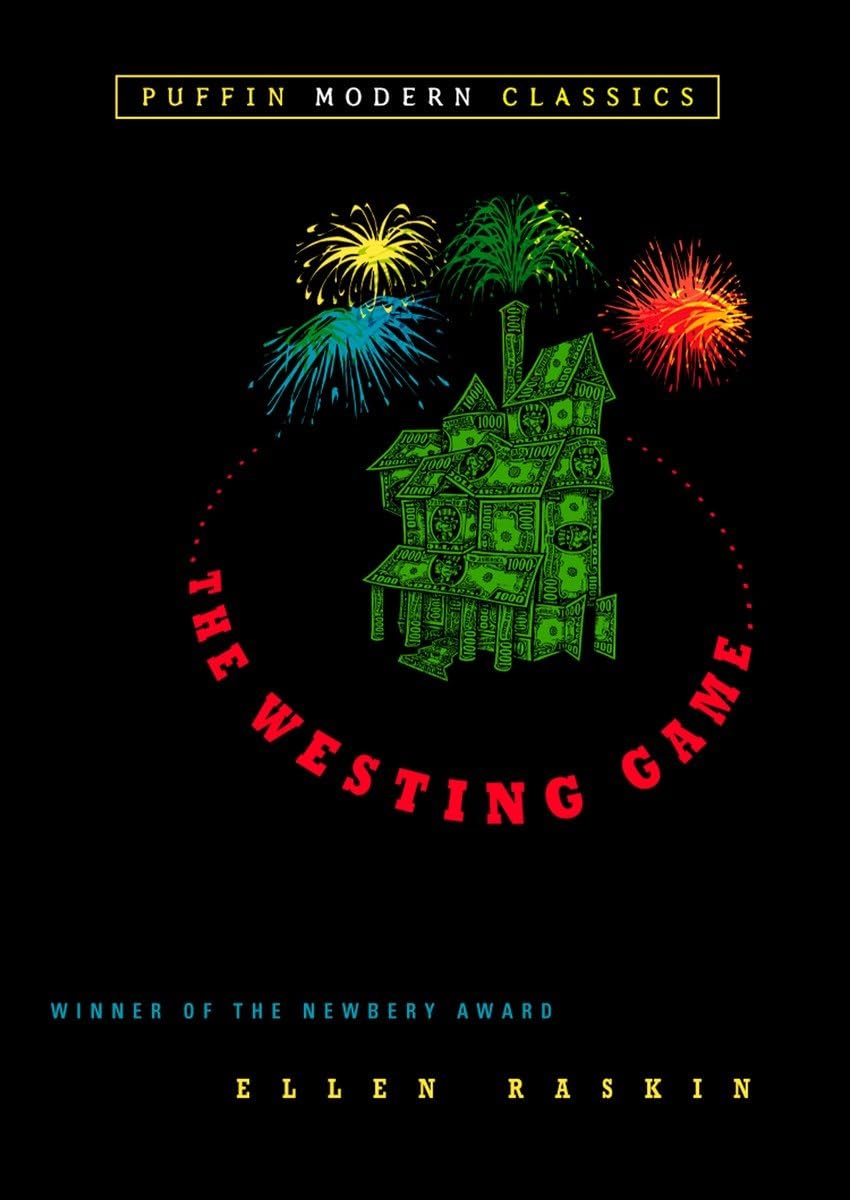
The Westing Game by Ellen Raskin is one of the most inventive, most intricately plotted, and most purely enjoyable mystery novels ever written for young readers — a Newbery Medal winner that assembles sixteen very different residents of a luxury apartment building, sets them competing to inherit the fortune of the mysterious Samuel W. Westing, and challenges both the characters and the reader to solve a puzzle that is considerably more interesting than it first appears. Funny, surprising, and constructed with the precision of a master clockmaker, it is a novel that rewards rereading as generously as it rewards the first read — a book in which every detail is doing work and in which the solution, when it comes, is both completely surprising and completely inevitable. This complete guide covers the reading level, age appropriateness, themes, characters, and everything parents and teachers need to know about this essential novel.
For Parents
The Westing Game is a novel that takes its readers seriously — a puzzle mystery that gives the reader exactly the same information the characters have and trusts them to work with it. Best suited for readers ages 10-13, it is one of the most reliably beloved novels in the middle grade canon: funny, warm, and constructed with a level of craft that is entirely invisible on first reading and entirely astonishing on second. Parents who enjoy mysteries themselves will find it as satisfying as their children do, and it is one of the best shared reading experiences available for families with readers in the recommended age range.
For Teachers
A Newbery Medal novel well suited to grades 5-7, The Westing Game is an exceptional text for teaching how authors manage large casts, plant and pay off clues, use dramatic irony, and construct plots in which every detail matters. The novel’s sixteen characters — each a distinct individual, each with secrets, each paired with someone they would never have chosen — reward character study and perspective-taking exercises. It also opens productive discussions about identity, assumption, and how thoroughly the people around us can surprise us when we stop categorizing them.
The Westing Game at a Glance
Find on Amazon →| Author | Ellen Raskin |
| Published | 1978 |
| Grade Level | 5-7 (our assessment) |
| Recommended Age | 10-13 |
| Flesch-Kincaid Grade | 5.3 |
| Word Count | ~45,000 |
| Pages | 185 (standard paperback) |
| Chapters | 30 |
| Genre | Mystery / puzzle fiction |
| Setting | Sunset Towers apartment building, a fictional lakeside town in Wisconsin, 1970s |
| Awards | Newbery Medal (1979); Edgar Award nominee |
For official Lexile and AR levels, visit Lexile.com or AR BookFinder. ReadingVine provides independent editorial assessments.
What Reading Level Is The Westing Game?
The Westing Game reads at approximately a 5th-7th grade level by our editorial assessment, with a Flesch-Kincaid grade level of around 5.3. That score runs somewhat low for a novel most strongly associated with grades 5-7 and frequently taught at the upper end of that range. Raskin writes with a brisk, dry wit that compresses a great deal of information into very small spaces — a style that reflects the novel’s puzzle structure, in which every sentence is potentially a clue and nothing is included that does not eventually matter. The prose rewards readers who are paying close attention and gently baffles those who are not, which is precisely the experience a mystery novel should provide.
The novel’s primary challenge is not vocabulary or sentence structure but the management of sixteen named characters, each with their own secrets and circumstances, introduced in rapid succession in the early chapters. First-time readers almost always feel a pleasant mild bewilderment during the opening sections — a feeling Raskin cultivates deliberately — and most readers find that the characters sort themselves out naturally as the plot advances and each one’s personality becomes distinct. Rereading the novel with the solution in mind is one of the most rewarding reading experiences available at this level: every detail that seemed incidental reveals itself as precise, and the novel’s construction becomes fully visible as the masterwork it is.
The book is most commonly recommended for grades 5-7. For official Lexile and Accelerated Reader scores, visit Lexile.com or AR BookFinder.
What Age Is The Westing Game Appropriate For?
We recommend The Westing Game for readers ages 10-13. It is one of the most content-appropriate novels at this level — a mystery with genuine stakes and genuine wit that contains nothing requiring parental guidance beyond the mild complexity of its puzzle structure.
There is essentially nothing in The Westing Game that requires a content warning. The novel involves a death — Samuel Westing is found dead at the novel’s opening — but this is handled with the matter-of-factness appropriate to the mystery genre rather than with graphic detail. There is a subplot involving small explosive devices that cause property damage but no injury. One character has a serious illness that is part of the plot. The novel’s most significant demand on its readers is attention and patience with a large cast — qualities that the mystery genre rewards rather than penalizes. There is no violence beyond what is described above, no strong language, and no content concerns. It is one of the most reliably appropriate novels in the middle grade mystery canon.
The Westing Game is one of those novels that children read at eleven and adults reread at forty with equal pleasure — a genuine crossover text in the best sense, one whose pleasures are entirely accessible to its intended age range and entirely available to adult readers as well. It is an excellent family read-aloud, a reliable classroom text, and one of the novels most frequently cited by adults as a formative reading experience.
What Is The Westing Game About?
Sixteen people are chosen — or maneuvered, or lured — into taking apartments at Sunset Towers, a luxury building on the shore of Lake Michigan in Wisconsin. They are an unlikely collection: a judge, a dressmaker, a doctor, a delivery boy, a bookie, a secretary, a restaurateur, a decorator, a podiatrist, a Chinese exchange student, a cleaning woman, a retired soldier, a young woman who may or may not be who she says she is, and a thirteen-year-old girl named Turtle Wexler who is arguably the novel’s protagonist and certainly its sharpest mind. None of them know yet why they have been brought together.
The reason arrives with the death of their neighbor: Samuel W. Westing, the reclusive millionaire who owns the Westing mansion visible across the lake, has been found dead. His will — read to all sixteen residents in his empty house — contains an announcement: one of the people in this room is the heir to his two-hundred-million-dollar fortune. To determine which one, they will play the Westing Game. The sixteen are divided into eight pairs, each pair given an envelope containing a set of clue words and ten thousand dollars. The pair that figures out who killed Samuel Westing wins everything.
What follows is one of the most ingeniously plotted novels in the mystery canon — a book in which the clue words mean something entirely different from what the players assume, in which every character is hiding something that turns out to be both more and less important than it appears, and in which the game itself is doing something quite different from what the players believe it is doing. The Westing Game is not really a murder mystery. It is something considerably more interesting, and the discovery of what it actually is — what Westing was actually after, what the game was actually for — is one of the most satisfying reveals in middle grade fiction.
Raskin spent years constructing the novel’s puzzle, working backward from the solution to plant every clue with precision. She has spoken about the pleasure of concealment — of giving the reader exactly the information needed to solve the mystery while ensuring that the solution remains genuinely surprising — as the central technical challenge of the book. The result is a novel that functions simultaneously as entertainment, as puzzle, and as a quietly affecting portrait of a group of people who arrive as strangers and discover, through the game, that they are more capable and more connected than they knew.
The Westing Game Characters
Is The Westing Game Banned?
The Westing Game has not been banned or challenged and does not appear on any lists of challenged books. It has been embraced by educators, librarians, and readers since its publication in 1978 as one of the finest mystery novels ever written for young readers. Its Newbery Medal reflects the broad institutional recognition of its literary quality, and its continued presence in school curricula more than forty years after its publication reflects its enduring appeal to successive generations of readers. It is widely available in school and public libraries.
The Westing Game Themes and Lessons
The central theme of The Westing Game is the gap between how people appear and who they actually are — the argument, made through sixteen characters each of whom is hiding something and each of whom turns out to be different from the category they initially occupy, that the people around us are almost always more complicated, more capable, and more surprising than our first impressions allow. Grace Wexler sees Turtle as a problem and Angela as an asset; the novel shows us both daughters clearly and lets the reader see how wrong that calculus is. The heirs arrive as strangers defined by their surface characteristics and leave, transformed by the game, as people who have discovered something about themselves they did not know before.
Identity — the specific question of who we are versus who others think we are versus who we choose to be — is the novel’s second great theme, rendered through Westing’s multiple identities and through the game’s effect on each of the players. Several characters are living under names or identities that are not their original ones. Several more are living as versions of themselves that do not match their inner reality. The game, which requires each player to pay close attention to the others, is a mechanism for bringing hidden selves into visibility — not always comfortably, but always revealingly.
The novel is also, beneath its puzzle surface, a warm and funny portrait of an unlikely community — sixteen people who would never have chosen each other, who arrive full of suspicion and self-interest, and who find themselves, by the end, genuinely connected. Raskin’s affection for all of her characters — even the most ridiculous, even the most self-deluded — is one of the novel’s most distinctive qualities, and it is part of what makes the ending, which could have been merely clever, genuinely moving.
Discussion starters for classrooms: Why do you think Westing chose these sixteen people? Which character surprised you most as the novel progressed? What does the game do for the players beyond the competition for the inheritance? Which clues did you notice on first reading, and which did you miss? What is the Westing Game actually for — what was Westing really trying to accomplish?
How Many Pages and Chapters Are in The Westing Game?
The standard paperback edition of The Westing Game is 185 pages, divided into 30 chapters averaging around six pages each. The word count is approximately 45,000 words. The short chapters move at a brisk, propulsive pace that reflects the novel’s puzzle structure — each one advances the mystery, introduces new information, or recontextualizes something the reader thought they understood — and the novel is difficult to put down once the game begins in earnest.
For readers in the target age range of 10-13, expect a reading time of roughly 4-5 hours, or about a week of comfortable reading at 30 minutes per session. Many readers finish it in a weekend of engaged reading, and many of those readers immediately want to start over from the beginning with the solution in mind. As a classroom text it works extremely well in a two-to-three week unit, with close reading exercises focused on clue identification and character study. A useful classroom activity is having students track the clue words each pair receives and theorize about their meaning before the solution is revealed — an exercise that demonstrates both how the mystery works and how thoroughly Raskin has concealed its mechanism. The novel was adapted as a film in 1997 and as a more faithful television adaptation in 1997; neither has achieved the status of the novel, and most educators find the book considerably more satisfying than either screen version.
Books Similar to The Westing Game
About Ellen Raskin
Ellen Raskin (1928-1984) was an American author and illustrator who spent her career creating some of the most visually inventive and intellectually demanding books in the picture book and middle grade canons. Born in Milwaukee, Wisconsin — the state where The Westing Game is set — she worked primarily as a graphic designer and illustrator before turning to writing, and her visual sensibility is evident throughout her fiction: the cover of The Westing Game, which she designed herself, is a puzzle in its own right, and the novel’s construction reflects the precision of a mind trained to think in terms of design and visual problem-solving. The Westing Game, published in 1978, won the Newbery Medal in 1979 and has remained in continuous print ever since. Raskin died in 1984, and The Westing Game is the novel for which she is best remembered — a book whose construction is, according to those who have studied it closely, one of the most technically accomplished puzzles in American children’s literature. Her other novels include Figgs & Phantoms (1974) and The Tattooed Potato and Other Clues (1975), both of which share her characteristic combination of wit, puzzle, and an affection for the eccentric and the overlooked.
The Westing Game: Frequently Asked Questions
What reading level is The Westing Game?
The Westing Game has a Flesch-Kincaid grade level of approximately 5.3, which runs somewhat low for a novel most associated with grades 5-7 (ages 10-13). Raskin’s prose is brisk and dry, compressing considerable information into small spaces. The novel’s primary challenge is managing sixteen characters introduced in rapid succession — a pleasant mild bewilderment that resolves naturally as the plot advances. For official Lexile and AR scores, visit Lexile.com or AR BookFinder.
Is The Westing Game hard to follow?
The first three chapters introduce sixteen characters in rapid succession, and first-time readers almost always feel a pleasant mild bewilderment that is entirely intentional — Raskin is doing several things at once, all of them with purpose. Most readers find that the characters sort themselves out naturally by around chapter five or six, as each one’s personality and circumstances become distinct. A useful strategy is not to worry too much about remembering everyone immediately and to let the novel reveal who matters most through whose perspective it spends the most time with. The early confusion is part of the experience, and it resolves into clarity that makes the novel’s final sections all the more satisfying.
Who is the murderer in The Westing Game?
Answering this question directly would spoil one of the most carefully constructed reveals in middle grade fiction — and doing so would be genuinely unfair to readers who are about to experience the novel for the first time. What is worth saying is that the answer is more interesting than any straightforward naming of a killer would suggest, and that what the Westing Game is actually about — its true purpose, Westing’s real motivation, what he was trying to accomplish — is considerably more surprising and considerably more moving than the whodunit surface implies. The mystery is worth preserving. Read the book.
What are the clue words in The Westing Game?
Each of the eight pairs of heirs receives an envelope containing a set of words that seem to be clues to the mystery — fragments that the players assume, reasonably but incorrectly, are parts of a coded message that will name the murderer when assembled. The clue words are one of the novel’s most elegant misdirections: they do mean something, but not what the players think they mean, and the gap between the meaning the players assign to them and the meaning they actually have is one of the most productive discussions the novel generates in classrooms. Teachers often assign students to track all the clue words and theorize about their significance before the solution is revealed — an exercise that demonstrates both how the mystery works and how thoroughly Raskin has concealed its mechanism.
Why did The Westing Game win the Newbery Medal?
The Newbery Medal is awarded for distinguished contribution to American literature for children, and The Westing Game won in 1979 for the combination of qualities that make it still essential more than forty years later: its extraordinary technical construction, its large and fully realized cast of characters, its dry and affectionate wit, and its demonstration that a puzzle novel can be simultaneously a rigorous intellectual exercise and a genuinely moving human story. The novel is, in the estimation of many critics and educators who have studied it closely, the most technically accomplished mystery novel ever written for young readers — a book whose every detail is doing work and whose solution is both completely surprising and completely inevitable, which is the hardest thing a mystery can be.
Is there a sequel to The Westing Game?
No — The Westing Game is a standalone novel. Ellen Raskin died in 1984, six years after its publication, and did not write a sequel. The novel’s ending is entirely complete — the game is resolved, every character’s fate is accounted for, and the epilogue provides a satisfying account of what happens to the residents of Sunset Towers in the years that follow. It is one of those novels that does not need a sequel because it gives its readers everything they need to imagine the rest.
What grade is The Westing Game typically assigned in?
The Westing Game is most commonly assigned in grades 5, 6, and 7, both as independent reading and as a classroom text. It is particularly well suited to units on mystery fiction, plot construction, and how authors plant and pay off clues. Close reading exercises focused on identifying clues in retrospect — going back through the text after the solution is known and marking every detail that pointed toward it — are among the most productive analytical exercises available in middle grade fiction. It pairs naturally with From the Mixed-Up Files of Mrs. Basil E. Frankweiler for an E.L. Konigsburg-adjacent unit on smart young investigators, and with When You Reach Me for a unit on puzzle mysteries that trust their readers.