
 = Partner Site
The Parker Inheritance Reading Level: A Complete Guide
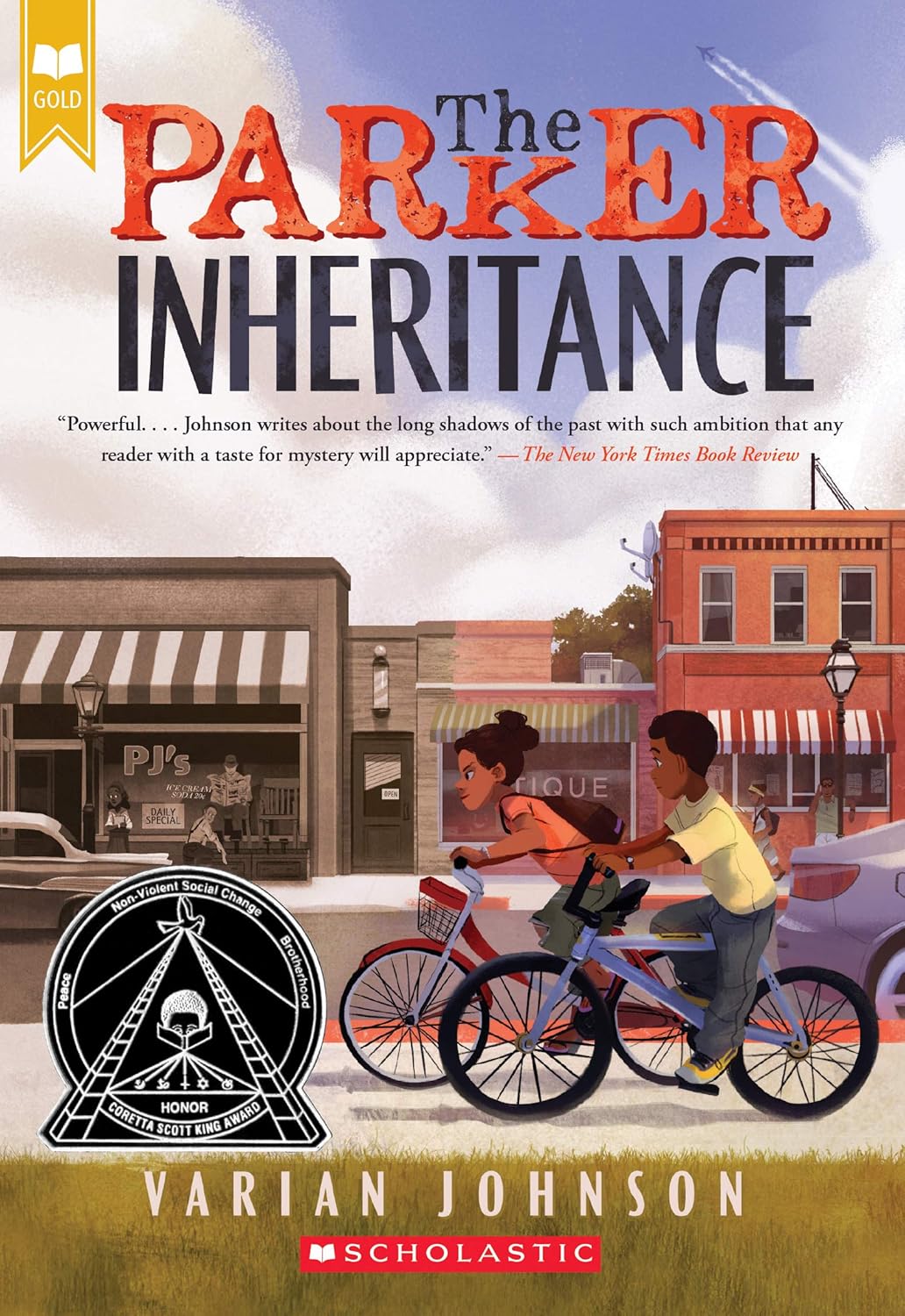
The Parker Inheritance by Varian Johnson is a mystery novel that weaves together two timelines, a buried treasure, and decades of racial injustice in a small South Carolina town. When twelve-year-old Candice finds an old letter in her grandmother’s house, she and her new friend Brandon set out to solve a puzzle that has gone unsolved for forty years — and discover, along the way, that the mystery is inseparable from a history of racism and cruelty that the town has never fully reckoned with. Clever, propulsive, and deeply felt, it is one of the best middle grade mysteries of recent years and an important book about what communities owe to the people they have wronged. This complete guide covers the reading level, age appropriateness, themes, characters, and everything parents and teachers need to know about this acclaimed novel.
For Parents
The Parker Inheritance is a genuinely gripping mystery that earns its twists and delivers a satisfying solution — and it also happens to be a thoughtful, honest novel about racism, community, and what it means to make things right. Best suited for readers ages 9-12, it is one of those rare books that works as pure entertainment and as an invitation to think seriously about history and justice at the same time. It is also one of the few middle grade novels to feature a Black girl protagonist in a classic puzzle mystery, and that representation matters.
For Teachers
A Coretta Scott King Honor book well suited to grades 4-6, The Parker Inheritance is an outstanding text for teaching mystery structure, dual timelines, and how authors use historical fiction to illuminate the present. The novel’s treatment of racial injustice in the Jim Crow South — specifically the destruction of Black wealth and community through discriminatory law and mob violence — opens substantial historical discussions that connect to the present day. The puzzle structure also makes it an excellent text for teaching inference and close reading.
The Parker Inheritance at a Glance
Find on Amazon →| Author | Varian Johnson |
| Published | 2018 |
| Grade Level | 4-6 (our assessment) |
| Recommended Age | 9-12 |
| Flesch-Kincaid Grade | 5.2 |
| Word Count | ~68,000 |
| Pages | 352 (standard hardcover) |
| Chapters | 38 |
| Genre | Mystery / historical fiction / contemporary fiction |
| Setting | Lambert, South Carolina, present day and 1955-1960 |
| Awards | Coretta Scott King Honor (2019) |
For official Lexile and AR levels, visit Lexile.com or AR BookFinder. ReadingVine provides independent editorial assessments.
What Reading Level Is The Parker Inheritance?
The Parker Inheritance reads at approximately a 4th-6th grade level by our editorial assessment, with a Flesch-Kincaid grade level of around 5.2. The prose is clear and propulsive — Johnson writes in a style that prioritizes momentum and character over literary complexity, which makes the novel unusually accessible for its thematic weight. Readers who love mysteries will find the pacing irresistible from the first chapter.
The dual-timeline structure adds a layer of demand: the novel moves between Candice’s present-day investigation and the historical story of what happened in Lambert in the 1950s, and readers need to track both threads simultaneously. Johnson manages these transitions with skill, but readers need to stay oriented. The historical content — Jim Crow laws, the destruction of Black-owned property, the specific mechanisms of racial injustice in the mid-20th century South — adds depth that the word-level score does not capture and that rewards engaged reading and discussion.
The book is most commonly recommended for grades 4-6 and is accessible to strong 3rd grade readers. For official Lexile and Accelerated Reader scores, visit Lexile.com or AR BookFinder.
What Age Is The Parker Inheritance Appropriate For?
We recommend The Parker Inheritance for readers ages 9-12. The novel deals honestly with racism — both the historical racism of the Jim Crow era and its present-day legacy — as well as with a family’s history of complicity in injustice and the difficulty of reckoning with what your ancestors did. These are handled with care and age-appropriate directness.
The historical timeline depicts racial injustice in the Jim Crow South with honesty: the destruction of Black-owned businesses and property through discriminatory law and mob pressure, the mechanisms by which Black wealth and community were systematically dismantled, and the personal cost to the families affected. A character in the historical timeline loses everything she worked for due to racial injustice, and the emotional weight of this is significant. The present-day timeline involves a family dealing with divorce and the emotional aftermath of a parent’s professional failure. There is no graphic violence, no strong language, and no sexual content. Some of the historical racial injustice is depicted through documents and discovery rather than dramatized scenes, which gives the novel its mystery structure while handling difficult material responsibly.
The novel is widely used in elementary and middle school classrooms and has been praised by educators for its ability to make the history of racial injustice accessible and emotionally immediate for young readers without being traumatic or overwhelming.
What Is The Parker Inheritance About?
Candice Miller is twelve years old and spending the summer in Lambert, South Carolina, in the house that belonged to her grandmother — a woman who, before she died, was the town’s first Black city manager and who left behind a mystery that destroyed her reputation and career. Candice’s grandmother spent years obsessing over a letter and a puzzle she could never solve, and people in Lambert blamed her for wasting the town’s time and resources in pursuit of it. Candice’s mother has returned to pack up the house and get out. Candice, though, finds the letter — and she cannot leave it alone.
Teaming up with Brandon, the boy next door who is dealing with his own family difficulties, Candice begins to decode the puzzle. The letter, it turns out, was written decades ago and points toward something buried — not just a physical treasure, but a reckoning. The deeper they dig, the more they uncover about what happened in Lambert in the 1950s: how a Black tennis champion named Siobhan Washington was cheated of her title and her livelihood by the town’s white establishment, how the community she built was systematically dismantled, and how several families — including Candice’s own — were involved in what was done.
The novel moves between the present-day investigation and the historical story of Siobhan Washington and her family, gradually revealing how the past connects to the present and what it would mean to truly make things right. The mystery is genuine and satisfying — Johnson plays fair with his clues, the puzzle is solvable, and the solution rewards careful readers — but the novel is about more than the treasure. It is about inheritance: what we receive from those who came before us, both the good and the terrible, and what we are responsible for doing with what we have inherited.
Varian Johnson has spoken about drawing on the real history of Black tennis in the United States — the segregated tournaments, the Black players who were excluded from major competitions and built their own circuits in response — and on the broader history of how Black wealth and community were dismantled through both legal and extralegal means throughout the 20th century.
The Parker Inheritance Characters
Is The Parker Inheritance Banned?
The Parker Inheritance has not been widely banned, though it has appeared on some challenged book lists due to its direct treatment of racism, racial injustice, and the history of discrimination against Black Americans. As with many books that bring this history honestly to young readers, challenges have typically come from parents who feel the subject matter is inappropriate for the age group. The children’s literature community has broadly and strongly defended the book. It received the Coretta Scott King Honor in 2019 and is widely used in school curricula across the country.
The Parker Inheritance Themes and Lessons
The central theme of The Parker Inheritance is inheritance — in every sense of the word. Candice has literally inherited a house, a letter, and a puzzle. She has also inherited her grandmother’s unfinished work, her family’s complicated history in Lambert, and a question she cannot walk away from: what do we owe to the people our community has wronged? The title points to a moral as well as a material inheritance, and the novel takes both seriously.
The history of how Black wealth and community were systematically dismantled in the mid-20th century South is rendered in The Parker Inheritance not as abstract history but as a specific injustice done to specific people. Siobhan Washington is not a symbol — she is a character with a life, a gift, and a family, and what was done to her is a crime with real victims and real perpetrators. Johnson refuses to let the historical injustice remain comfortable or distant, and the novel’s resolution requires characters to reckon with what that injustice actually cost and what, if anything, can be done about it now.
Friendship is a third major thread — the specific friendship between Candice and Brandon, two children from different circumstances who find in each other something neither expected. Their partnership is built on complementary strengths and honest communication, and watching it develop is one of the novel’s consistent pleasures.
Discussion starters for classrooms: What is an inheritance? What has Candice inherited from her grandmother beyond the house? What was done to Siobhan Washington, and who was responsible? What does the novel suggest communities should do when they discover a historical injustice in their past? How does solving the puzzle change Candice and Brandon? What do you think the treasure really was?
How Many Pages and Chapters Are in The Parker Inheritance?
The standard hardcover edition of The Parker Inheritance is 352 pages, divided into 38 chapters averaging around nine pages each. The word count is approximately 68,000 words — substantial for a middle grade novel, but the mystery structure creates consistent forward momentum that makes the length feel manageable. Readers who are hooked early often report finishing the book in two or three extended sittings.
For readers in the target age range of 9-12, expect a reading time of roughly 6-9 hours, or about a week and a half of steady reading at 30 minutes per session. As a classroom text, the novel works well in a three-week unit, with the dual-timeline structure providing a natural scaffold for discussions of how historical fiction connects past and present. The mystery structure — tracking clues, making predictions, testing theories — also provides strong material for reading comprehension and inference exercises.
Books Similar to The Parker Inheritance
About Varian Johnson
Varian Johnson is an American author based in Austin, Texas, whose middle grade and young adult novels consistently center Black protagonists and Black American history. The Parker Inheritance received the Coretta Scott King Honor in 2019 — an award given by the American Library Association to African American authors and illustrators whose work makes outstanding contributions to literature for young people. His other novels include The Great Greene Heist, a middle grade caper novel featuring many of the same pleasures as The Parker Inheritance — a Black protagonist, a clever plot, a satisfying resolution — and Twins, a graphic novel about two brothers navigating middle school. Johnson has spoken about his desire to write the kinds of mystery and adventure novels he loved as a child, with Black protagonists at their center, filling a gap he felt acutely as a young reader. He teaches at a university and lives in Austin with his family.
The Parker Inheritance: Frequently Asked Questions
What reading level is The Parker Inheritance?
The Parker Inheritance has a Flesch-Kincaid grade level of approximately 5.2. Our editorial assessment places it at grades 4-6 (ages 9-12). The prose is clear and propulsive, and the mystery structure creates strong reading momentum. The dual-timeline structure and historical content add depth beyond the word-level score. For official Lexile and AR scores, visit Lexile.com or AR BookFinder.
Is The Parker Inheritance actually solvable as a mystery?
Yes — and this is one of the novel’s great pleasures. Johnson plays fair with his clues, planting the information readers need to solve the puzzle throughout the novel. Engaged readers who pay attention to details and make connections as they read can work out significant portions of the solution before Candice and Brandon arrive at it. The final revelation rewards careful reading and delivers genuine satisfaction. It is a mystery that respects its readers’ intelligence, which is rarer than it should be.
What historical injustice is at the center of The Parker Inheritance?
Without spoiling the full details of the mystery’s solution, the historical injustice at the novel’s center involves the systematic destruction of a Black woman’s livelihood and community through the discriminatory mechanisms of the Jim Crow South — including the manipulation of legal and civic systems to strip Black residents of property, opportunity, and recognition they had earned. Johnson grounds this in the real history of how Black wealth was dismantled throughout the 20th century: through racially restrictive covenants, discriminatory business licensing, mob pressure, and the complicity of civic institutions. The specific injustice in Lambert is fictional, but it is built from entirely real historical practices.
What is the Coretta Scott King Award?
The Coretta Scott King Book Award is given annually by the American Library Association to African American authors and illustrators whose work makes outstanding inspirational and educational contributions to literature for children and young adults. It is named for Coretta Scott King, the civil rights activist and widow of Martin Luther King Jr., and has been awarded since 1970. The Parker Inheritance received a Coretta Scott King Honor in 2019, recognizing it as one of the year’s most distinguished works by a Black author for young readers.
What grade is The Parker Inheritance typically assigned in?
The Parker Inheritance is most commonly assigned in grades 4, 5, and 6, both as independent reading and as a class text. It is particularly well suited to units on mystery structure and inference, Black American history, the Jim Crow era, or community and responsibility. The puzzle structure makes it an unusually strong text for reading comprehension exercises — tracking clues, making predictions, and evaluating evidence.
What is the significance of the title The Parker Inheritance?
The title works on multiple levels. Most literally, it refers to what Candice has inherited from her family — the house, the letter, the puzzle, the unfinished work. But “the Parker inheritance” also refers to the broader legacy that the Parker family and the town of Lambert have inherited from the historical injustice at the novel’s center: a debt, a responsibility, and a question about what reckoning actually looks like. The title asks, quietly, what we owe to the past — and whether inheritance can include moral obligation as well as material goods.
Does The Parker Inheritance have a sequel?
No. The Parker Inheritance is a standalone novel with a complete, self-contained story. Varian Johnson’s other middle grade novel The Great Greene Heist is not a sequel but shares similar pleasures — a clever Black protagonist, a well-constructed plot, and a satisfying resolution. Readers who love the mystery and caper elements of The Parker Inheritance are likely to enjoy it.
What is the history of Black tennis that the novel draws on?
Throughout the first half of the 20th century, Black tennis players were excluded from the United States Lawn Tennis Association’s tournaments and the events that would become the major championships. In response, the American Tennis Association was founded in 1916 as the oldest Black sports organization in the United States, and it ran its own championships and developed its own competitive circuit. Players like Althea Gibson, who won Wimbledon and the US Championships in the late 1950s, emerged from this tradition. Johnson draws on this history in creating Siobhan Washington — a skilled player competing in a system designed to exclude her and building her own community in response.