
 = Partner Site
Each Tiny Spark Reading Level: A Complete Guide
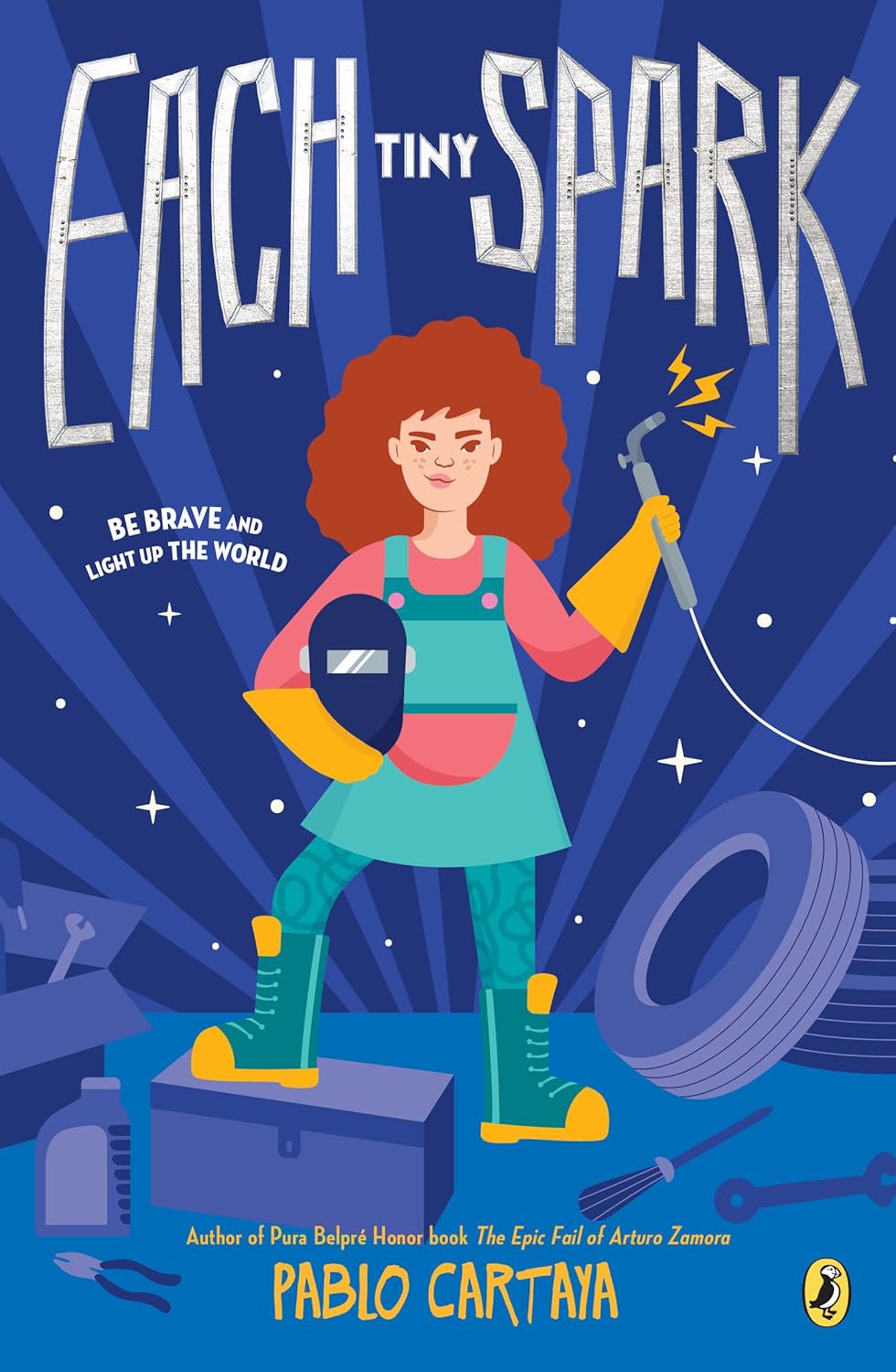
Each Tiny Spark by Pablo Cartaya is a contemporary middle grade novel about a Cuban American girl named Emilia Torres who is struggling with an ADHD diagnosis, a father recently returned from deployment, a fractured friendship, and the discovery — through an unexpected school project — that her small Georgia town has a history of racial injustice that most people would rather forget. Warm, honest, and quietly urgent, it is a novel about listening, about what divides communities and what can begin to heal them, and about a girl learning to trust her own voice. This complete guide covers the reading level, age appropriateness, themes, characters, and everything parents and teachers need to know about this timely and important novel.
For Parents
Each Tiny Spark is a warm, accessible novel about a girl navigating ADHD, a father returning from war with PTSD, a changing friendship, and the discovery of her town’s buried racial history — all told with humor, honesty, and genuine heart. Best suited for readers ages 9-12, it handles difficult subjects with care and without being heavy-handed. It is an excellent choice for families with children who have ADHD, who have a family member who has served in the military, or who are ready to have conversations about race and community in America.
For Teachers
A thoughtful and timely novel well suited to grades 4-6, Each Tiny Spark is rich territory for teaching about ADHD and neurodiversity, the history of racial violence in the American South, the role of community oral history in civic life, and what it means to be a good neighbor and citizen. Emilia’s school project — collecting oral histories from her town’s elders — provides a natural scaffold for classroom projects on local history. The novel’s Cuban American and African American characters make it an important text for discussions of intersectional identity and allyship.
Each Tiny Spark at a Glance
Find on Amazon →| Author | Pablo Cartaya |
| Published | 2019 |
| Grade Level | 4-6 (our assessment) |
| Recommended Age | 9-12 |
| Flesch-Kincaid Grade | 4.7 |
| Word Count | ~48,000 |
| Pages | 272 (standard hardcover) |
| Chapters | 34 |
| Genre | Realistic fiction / contemporary fiction |
| Setting | Merryville, Georgia, present day |
| Awards | Pura Belpré Honor (2020); Americas Award (2019) |
For official Lexile and AR levels, visit Lexile.com or AR BookFinder. ReadingVine provides independent editorial assessments.
What Reading Level Is Each Tiny Spark?
Each Tiny Spark reads at approximately a 4th-6th grade level by our editorial assessment, with a Flesch-Kincaid grade level of around 4.7. The prose is accessible and immediate — Cartaya writes in Emilia’s first-person voice, which is funny, honest, and propelled by the slightly scattered energy of a girl whose mind works faster than she can always track. The voice is one of the novel’s great pleasures: readers quickly feel they know Emilia, and her narration carries both the comedy and the weight of the story with equal ease.
The novel’s primary demand is not linguistic but thematic. Each Tiny Spark asks young readers to engage with ADHD as a lived experience rather than a diagnosis, with the history of racial violence in the American South, and with the difficulty of listening to people whose experiences are very different from your own. These are not light subjects, but Cartaya handles them with the light touch of a writer who trusts his readers to be capable of holding complexity without being overwhelmed by it.
The book is most commonly recommended for grades 4-6 and is accessible to strong 3rd grade readers. For official Lexile and Accelerated Reader scores, visit Lexile.com or AR BookFinder.
What Age Is Each Tiny Spark Appropriate For?
We recommend Each Tiny Spark for readers ages 9-12. The novel deals with several serious subjects — PTSD in a returning veteran parent, racial violence in American history, and the dissolution of a close friendship — but handles all of them with warmth and age-appropriate care.
Emilia’s father has returned from military deployment and is struggling with PTSD — he is distant, emotionally withdrawn, and there is clear family tension as a result. This is depicted honestly but without dramatization, and the family’s path toward healing is part of the novel’s arc. The oral history project Emilia undertakes uncovers evidence of a historical racial massacre in her town — a sundown town with a history of violence against Black residents. This history is presented soberly and factually, and it opens conversations about racial injustice that are handled with care but not minimized. A friendship breaks apart in painful ways. There is no strong language, no sexual content, and no graphic violence. The historical racial violence is referenced and discussed rather than depicted.
Parents of children with ADHD may find the novel particularly valuable — Emilia’s experience of her own mind is one of the most honest and sympathetic portrayals of ADHD in middle grade fiction, and many children with the diagnosis have described feeling genuinely seen by this book.
What Is Each Tiny Spark About?
Emilia Torres is eleven years old and starting sixth grade in Merryville, Georgia, a small town where everyone knows each other and where nothing, it seems, ever changes. Emilia has ADHD — her brain makes connections in unexpected directions, pulls her away from what she is supposed to be focused on, fills her with energy and ideas that don’t always fit the shape the school day requires. Her best friend Gabriela has drifted toward a new group of friends, and Emilia’s father, recently returned from his third deployment, is not quite himself — quieter, further away, not the man who left.
When her class is assigned a project on local history, Emilia begins interviewing the town’s elders, including Mr. Solis, an elderly Cuban man who has lived in Merryville for decades, and Ms. Eunice, a Black woman whose family has deep roots in the town’s past. What Emilia gradually uncovers is that Merryville has a buried history — that it was once a sundown town, a place where Black people were violently driven out and forbidden to remain after dark, and that this history has been deliberately forgotten by the white residents who benefited from it while its wounds are still being lived with by the Black families who remained.
As Emilia digs deeper, she must navigate a town that is not sure it wants to remember, friendships that are changing around her, a father who needs help she is not sure how to give, and her own ADHD, which is both a source of struggle and — increasingly — a kind of gift. She is the one who notices connections others miss, who asks the questions other people have stopped asking, who cannot let the thing she has found go just because it is uncomfortable.
Pablo Cartaya drew on his own Cuban American heritage and on extensive research into sundown towns — a widespread but underacknowledged feature of American history, particularly in the South — to write the novel. He has spoken about wanting to write a book that honored both the complexity of identity and the possibility that communities can, with honesty and courage, begin to reckon with what they have done.
Each Tiny Spark Characters
Is Each Tiny Spark Banned?
Each Tiny Spark has not been widely banned, but it has appeared on challenged book lists in some districts due to its treatment of racial history — specifically its depiction of sundown towns and the history of racial violence against Black residents in the American South. As with many books that bring honest historical content to young readers, challenges have come primarily from parents or community members who feel the subject matter is not appropriate for the age group. The children’s literature community has broadly defended the book as age-appropriate, historically important, and handled with care. It has been recognized with the Pura Belpré Honor and the Americas Award, and it is widely used in school curricula.
Each Tiny Spark Themes and Lessons
The central theme of Each Tiny Spark is listening — genuinely, patiently listening to people whose experiences and histories are different from your own. Emilia begins the novel as a girl who has trouble paying attention, whose mind races ahead of the conversation, who misses things because she is thinking about something else. What her oral history project teaches her is a different kind of attention: the kind that slows down, that asks questions and waits for answers, that honors what an old woman has carried for decades. The novel is, at its heart, an argument that listening is a form of courage and a form of love.
ADHD is treated as neither a superpower nor a tragedy but as a real feature of how Emilia’s mind works — with genuine costs and genuine gifts. Cartaya depicts the frustration of not being able to focus when focus is demanded, the loneliness of feeling out of step, and the specific pleasure of a mind that makes connections others miss. This is a balanced and honest portrayal that many readers with ADHD have described as the first time they felt accurately represented in a middle grade novel.
The novel’s treatment of sundown towns and historical racial violence is careful and serious. Cartaya does not dramatize the violence itself but focuses on its legacy — the way a town’s buried history continues to shape its present, the way silence and forgetting are themselves forms of harm. The novel argues, through Emilia’s project and through Ms. Eunice’s willingness to tell her story, that communities can begin to heal only when they are willing to remember honestly.
Discussion starters for classrooms: How does Emilia’s ADHD shape the way she approaches her history project? What is a sundown town, and why is that history important to understand? Why is Ms. Eunice cautious about sharing her family’s story with Emilia? What does Papi’s experience suggest about what veterans need when they come home? How does the novel define what it means to be a good neighbor?
How Many Pages and Chapters Are in Each Tiny Spark?
The standard hardcover edition of Each Tiny Spark is 272 pages, divided into 34 chapters averaging around eight pages each. The word count is approximately 48,000 words. The chapters are short enough to create natural momentum and reading milestones, and the propulsive quality of Emilia’s narration makes the book feel faster than its page count suggests.
For readers in the target age range of 9-12, expect a reading time of roughly 5-7 hours, or about a week of steady reading at 30 minutes per session. As a classroom text, the novel works well in a two-to-three week unit, with the oral history thread providing a natural scaffold for a parallel classroom project on local or family history. The short chapters and accessible voice make it an excellent read-aloud choice for grades 4-6.
Books Similar to Each Tiny Spark
About Pablo Cartaya
Pablo Cartaya is a Cuban American author, actor, and educator born and raised in Miami, Florida. He is the author of several middle grade novels, including The Epic Fail of Arturo Zamora and Marcus Vega Doesn’t Speak Spanish, which, like Each Tiny Spark, center on Latino protagonists navigating questions of identity, family, and community in contemporary America. Each Tiny Spark received the Pura Belpré Honor in 2020 — an award given by the American Library Association for Latino writers and illustrators whose work best portrays and celebrates the Latino cultural experience — and the Americas Award in 2019. Cartaya has spoken extensively about his belief that all children deserve to see themselves in books and that literature has a particular responsibility to bring buried histories to light. He has also written about his own experience as a child who struggled in school and who found in stories the sense of possibility that the classroom sometimes denied him. He lives in Austin, Texas.
Each Tiny Spark: Frequently Asked Questions
What reading level is Each Tiny Spark?
Each Tiny Spark has a Flesch-Kincaid grade level of approximately 4.7. Our editorial assessment places it at grades 4-6 (ages 9-12). The prose is accessible and immediate, written in Emilia’s funny, propulsive first-person voice. The thematic content — ADHD, racial history, family trauma — is more demanding than the word-level score suggests. For official Lexile and AR scores, visit Lexile.com or AR BookFinder.
How does the novel portray ADHD?
Cartaya’s portrayal of Emilia’s ADHD is one of the most praised aspects of the book among readers with the diagnosis and among educators who work with neurodivergent students. He depicts ADHD neither as a superpower nor as a tragedy but as a real feature of how Emilia’s mind works: the genuine difficulty of sustaining attention when it is demanded, the frustration of feeling out of step with school’s expectations, and the specific gift of a mind that makes unexpected connections and notices what others miss. Emilia’s ADHD is central to the plot — it is precisely her kind of attention that makes her the right person to uncover her town’s buried history. Many children with ADHD have reported feeling accurately and sympathetically represented for the first time by this novel.
What is a sundown town?
A sundown town was a community — particularly common in the American South and Midwest — that used laws, threats, and violence to exclude Black residents and enforce the rule that Black people had to leave town before sundown or face severe consequences. Sundown towns were far more widespread than most Americans realize: historian James Loewen documented thousands of them across the country in his book Sundown Towns. In the novel, Emilia’s research reveals that Merryville was a sundown town — that Black families were driven out through violence, and that this history has been deliberately suppressed. The novel uses this history to explore how a community’s present is shaped by what it is willing and unwilling to remember about its past.
Why does Emilia’s father seem so different when he comes home?
Emilia’s father is struggling with PTSD — post-traumatic stress disorder — following his third military deployment. PTSD is a real and common condition among veterans that can cause emotional withdrawal, difficulty connecting with family, sleep disturbances, and other symptoms that affect family life significantly. The novel depicts his experience honestly and without sensationalism, showing a family navigating the gap between the father who left and the man who returned, and working slowly toward understanding and healing. For families with a veteran parent, this thread of the novel can be a valuable and validating entry point for conversations about what service members carry home.
What grade is Each Tiny Spark typically assigned in?
Each Tiny Spark is most commonly assigned in grades 4, 5, and 6, both as independent reading and as a class text. It is particularly well suited to units on local history, oral history projects, ADHD and neurodiversity, or immigration and Latino identity. Its oral history framework makes it a natural scaffold for classroom projects in which students interview community elders about local history — an assignment that mirrors Emilia’s own project in the novel.
What is the significance of the title Each Tiny Spark?
The title refers to the idea that change — in a community, in a family, in a person — does not happen all at once but through small acts: each tiny spark of honesty, each small courageous choice to listen, each individual decision to remember rather than forget. The image of sparks runs through the novel as a metaphor for the kind of incremental, patient work that healing and justice require. It is also an image that suits Emilia herself — a girl whose mind fires in quick, bright, scattered directions, who is herself a kind of spark looking for the right material to catch.
Is Each Tiny Spark part of a series?
No. Each Tiny Spark is a standalone novel with a complete, self-contained story. Pablo Cartaya’s other novels — The Epic Fail of Arturo Zamora and Marcus Vega Doesn’t Speak Spanish — are not sequels but are thematically related: all three feature Latino protagonists navigating questions of identity, family, and community. Readers who love Each Tiny Spark are likely to enjoy both.
What is the Pura Belpré Award?
The Pura Belpré Award is given by the American Library Association to Latino writers and illustrators whose work best portrays and celebrates the Latino cultural experience in literature for young people. It is named for Pura Belpré, the first Latina librarian at the New York Public Library, who was a pioneering storyteller and advocate for Latino children’s literature. Each Tiny Spark received a Pura Belpré Honor in 2020, recognizing it as among the year’s most distinguished works celebrating Latino identity and experience for young readers.