
 = Partner Site
Fish in a Tree Reading Level: A Complete Guide
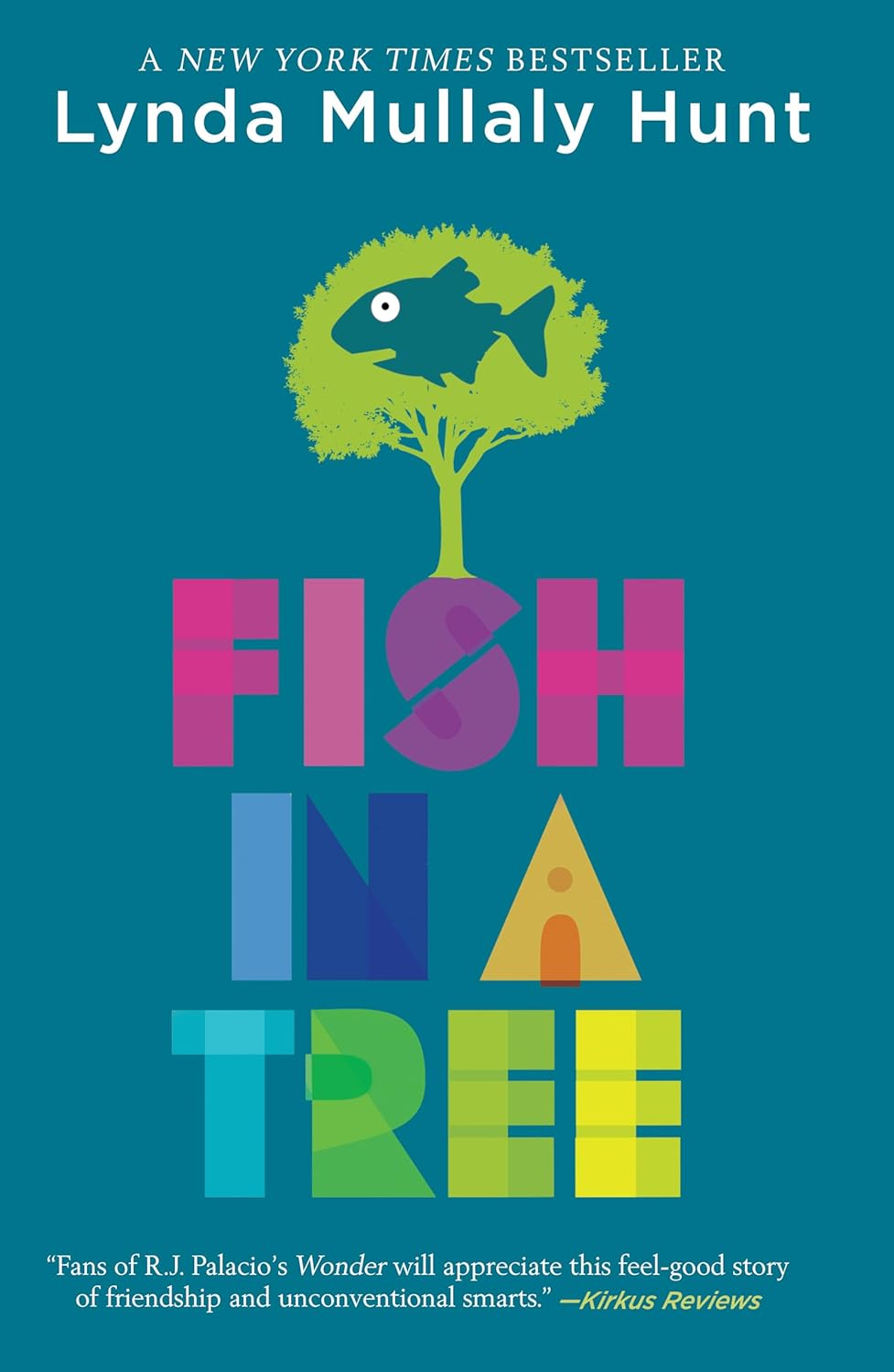
This complete guide to Fish in a Tree by Lynda Mullaly Hunt covers everything parents, teachers, and students want to know — from reading level and recommended age to a full character breakdown, key themes, and the best books to read next. Published in 2015 by Nancy Paulsen Books/Penguin, Fish in a Tree is a New York Times bestseller and winner of the Schneider Family Book Award (Middle School category, 2016), widely considered an important middle grade novel about dyslexia, learning differences, and the transformative power of a good teacher. It follows Ally Nickerson, a sixth-grader who has spent years hiding the fact that she can’t read — fooling teachers, switching schools, and telling herself that “dumb” is just who she is — until a new teacher finally sees what everyone else has missed. Whether you’re a parent of a struggling reader, a teacher looking for a classroom text about learning differences, or a student trying to find a book that gets it, this guide gives you the information you need.
For Parents
Fish in a Tree is a warm, hopeful book that deals directly with the experience of having an undiagnosed learning difference — the shame, the hiding, the daily fear of being “found out,” and what changes when one adult finally pays attention. The content is gentle: some name-calling (words like “dumb,” “loser,” “freak”) and mild schoolyard-level physical conflict (boys hitting each other, a girl being pushed down). No sexual content beyond a sweet note passed between students. No significant violence. Common Sense Media rates it age 8+. It’s especially well-suited for children who struggle academically or who have been diagnosed with dyslexia or a learning difference — and for parents who want to better understand what that experience feels like from the inside.
For Teachers
Fish in a Tree is one of the most commonly assigned middle grade novels in grades 4–6, particularly in classrooms with diverse learners. Its portrait of an inspirational teacher — patient, specific, creative, willing to see each child as an individual — makes it a natural read-aloud for the start of the school year, and a powerful text for discussing multiple intelligences, learning differences, and what it means to truly teach rather than just instruct. Paperback editions include a full teacher’s guide and discussion questions. Lexile 550L, ATOS 3.7 — accessible text complexity that can reach reluctant and struggling readers in the target age range. Paired well with nonfiction about dyslexia.
Fish in a Tree at a Glance
Find on Amazon →| Author | Lynda Mullaly Hunt |
| Published | 2015 (Nancy Paulsen Books / Penguin) |
| Grade Level | 4–6 (our assessment) |
| Recommended Age | 8–13 |
| Flesch-Kincaid Grade | ~3.7 |
| Word Count | ~48,663 |
| Pages | 276 (hardcover); 320 (paperback, includes bonus content) |
| Genre | Realistic fiction / Contemporary middle grade |
| Setting | A middle school in a small American town; contemporary |
| Awards | Schneider Family Book Award (2016); ALA Notable Book; New York Times Bestseller; Global Read-Aloud 2015; SLJ Best Book of 2015; SCBWI Crystal Kite Award; Nerdy Book Award |
For official Lexile and AR levels, visit Lexile.com or AR BookFinder. ReadingVine provides independent editorial assessments.
What Reading Level Is Fish in a Tree?
Fish in a Tree has a Lexile score of 550L and an ATOS (Accelerated Reader) level of 3.7, worth 7 AR points. These metrics place it at approximately a third-to-fourth grade text complexity — noticeably lower than many other books assigned at grades 4–6. This is not a mistake or an indication that the book is too easy for older readers. It is a deliberate craft choice. Lynda Mullaly Hunt writes in a first-person voice that mirrors how a child with dyslexia actually experiences language: direct, sensory, image-driven, with a preference for short sentences and concrete details over abstractions. The accessible prose is part of what makes the book meaningful for its intended audience — children who struggle to read can actually read it, and children who read fluently experience what it feels like to be inside a mind that processes the world differently.
The Booksource interest level is grades 5–8, and our editorial assessment is grades 4–6 with a recommended age of 8–13. The emotional and thematic content — chronic shame about a learning difference, social isolation, bullying, the experience of being labeled and dismissed by adults who should know better — is fully appropriate for ages 8 and up, not ages 6–7. The low Lexile reflects text complexity, not thematic simplicity. For struggling readers in particular, this is one of the rare books where the reading level and the interest level are genuinely matched: a fourth-grader reading at a third-grade level can read it comfortably, and it speaks to their actual life experience. That combination is why it gets assigned as widely as it does.
For official Lexile and AR scores, visit Lexile.com or AR BookFinder.
What Age Is Fish in a Tree Appropriate For?
We recommend Fish in a Tree for readers ages 8–13. Common Sense Media rates it age 8+. The book is one of the most content-appropriate novels dealing with learning differences and middle school social dynamics available at this level — there is no sexual content beyond a sweet note a boy passes to Ally, no profanity, and no graphic violence. The content parents should know about is limited to the emotional core of the book itself: the experience of shame, being called “dumb” and “stupid,” and what it feels like to be dismissed or misunderstood by adults who are supposed to help.
The primary emotional content involves the ongoing shame and anxiety of an undiagnosed learning difference: Ally regularly fears being “found out,” describes her inability to read as proof that she is stupid, and has internalized years of explicit and implicit messages from teachers and classmates that she is less capable than her peers. This is depicted honestly and from the inside, and many children who have experienced it will find it painfully recognizable. Name-calling includes words like “dumb,” “loser,” and “freak” — used by Shay, the class bully, and sometimes by other classmates. Physical conflict is present but mild: boys hit each other in a confrontation, a girl is pushed to the ground by bullies. Albert, one of Ally’s friends, regularly arrives at school with bruises from being bullied on his way home. Albert’s family is poor and food-insecure — this is handled with sensitivity but is a real element of the story. Ally’s father is a truck driver who is frequently away from home for work, creating a background of family stress and instability. There is no sexual content, no significant profanity, and no graphic violence.
For children who have a learning difference or have struggled academically, this book can be deeply affirming — particularly the realization that many of history’s most celebrated minds, including Albert Einstein and Thomas Edison, are believed to have had dyslexia. Many teachers and school counselors recommend it specifically for that reason, and for parents, reading it alongside your child can open conversations that are otherwise difficult to start.
What Is Fish in a Tree About?
Ally Nickerson is a sixth-grader with a secret she has spent years protecting: she cannot read. Not really. The letters move on the page. The words jumble. No matter how hard she tries, reading feels like trying to make sense of a bowl of alphabet soup dumped on a plate. Because her father’s military career has moved the family from school to school — seven schools in seven years — it has been easy to hide. She’s learned to be a troublemaker instead, to make everyone laugh, to give the wrong answer on purpose and play it as a joke before anyone can realize she didn’t understand the question. She’s good at math and extraordinary at drawing. But she believes, with complete certainty, that she is dumb, and that nothing will change that.
Then her regular teacher goes on maternity leave and a substitute named Mr. Daniels arrives. Unlike anyone Ally has had before, Mr. Daniels actually looks at her — not at her behavior, not at her test scores, not at the labels in her file. He notices what she’s good at. He arranges for her to be tested. And when the results confirm dyslexia, he doesn’t treat it like a verdict; he treats it like a starting point. He teaches her chess to give her a context where her mind can succeed. He has her trace letters in shaving cream so her body learns what her eyes can’t. Slowly, painstakingly, Ally begins to read. And along the way, she finds two genuine friends in Keisha — fierce, funny, and an extraordinary baker — and Albert — a brilliant science mind who faces his own daily battles with bullies and poverty, and who may understand what it means to be underestimated better than anyone.
The title comes from a principle the novel treats as fundamental: you cannot judge a fish by its ability to climb a tree. Measuring all minds by the same standard does not reveal who is smart and who isn’t. It only reveals which minds the standard was designed to measure.
Fish in a Tree Characters
Is Fish in a Tree Banned?
Fish in a Tree has not been banned or formally challenged in any documented way. It does not appear on the American Library Association’s lists of challenged or banned books, and there is no documented history of removal from school libraries or classrooms. It is one of the more universally welcomed classroom texts at the middle grade level — its subject matter (learning differences, the power of good teaching, friendship) and its clear, warm message give it a profile that tends to disarm rather than generate controversy. The novel has been named a Global Read-Aloud selection and is used as a whole-class text in thousands of schools annually. If your child’s school has assigned it, the book is considered well within the mainstream of middle grade classroom reading.
Fish in a Tree Themes and Lessons
The novel’s central argument is stated plainly in its title and epigraph: judging a fish by its ability to climb a tree tells you nothing about the fish and everything about the assumptions built into the test. This is not just a message about dyslexia. It is a claim about how schools, and people generally, tend to measure intelligence — and about who gets left behind when the measurement system only recognizes one kind of mind. Ally is not a struggling reader who happens to be good at art and math; she is a child with a specific, nameable cognitive difference that makes one particular task difficult, while leaving intact — or even amplifying — other capabilities that the standard system never bothers to look for.
The secondary argument is about what happens when one adult decides to actually look. Mr. Daniels is not depicted as exceptional because he is extraordinarily kind or patient (though he is both). He is exceptional because he is specific: he diagnoses rather than labels, he creates conditions for success rather than conditions for failure, and he treats each child’s difference as a problem worth understanding rather than a nuisance to manage. Hunt has said the novel is a thank-you note to her own sixth-grade teacher, who did exactly this for her. For family and classroom discussion: What does it feel like to be misunderstood by someone who is supposed to help you? What does it mean to be “smart”? How would school look different if it were designed around Ally’s strengths instead of her weaknesses? What does it cost Ally to ask for help — and what does it cost her not to?
How Many Pages and Chapters in Fish in a Tree?
The hardcover edition of Fish in a Tree is 276 pages. The paperback edition is 320 pages and includes bonus content: “The Sketchbook of Impossible Things” — a reproduction of Ally’s sketchbook — as well as discussion questions for classroom and family use. The novel has approximately 43 chapters, each short enough to make the pacing feel fast despite the overall length. Word count is approximately 48,663 words. At typical reading speeds for the target age group, most readers complete it in about five to seven days of independent reading. It is a frequently recommended read-aloud, and it works particularly well in that format — Ally’s voice is strong and immediate, and the short chapters make it easy to find natural stopping points. For children who have dyslexia themselves, the audiobook is an excellent option and may carry additional emotional resonance given the subject matter.
Books Similar to Fish in a Tree
About Lynda Mullaly Hunt
Lynda Mullaly Hunt lives in Connecticut with her husband, two children, an impetuous beagle, and a beagle-loathing cat. She is a former elementary school teacher — a background that is visible in every page of Fish in a Tree — and holds writing retreats for the Society of Children’s Book Writers and Illustrators. She has said that Fish in a Tree was written from both sides of the classroom: she was a student who struggled, and later a teacher who looked for ways to reach every child. From first grade through sixth grade, Lynda was placed in the lowest reading group every year. Her fifth-grade teacher stopped asking her to submit assignments — not as cruelty, but as a quiet signal that he had given up on her, which she understood perfectly. The summer before sixth grade, she was genuinely frightened about what would become of her. Then she met Mr. Christy, her sixth-grade teacher, who gave her books other teachers thought were too hard for her, arranged for her to tutor younger students in math, and — in a detail that stayed with her for decades — smiled when she walked into the room. Lynda Mullaly Hunt has described Fish in a Tree as a giant thank-you note to Mr. Christy. Her debut novel, One for the Murphys (2012), is on thirty-one state award lists. Fish in a Tree won the 2016 Schneider Family Book Award, given by the American Library Association to books that authentically embody the disability experience for child and adolescent audiences, and has been published in fifteen languages. Her subsequent novels include Shouting at the Rain (2019).
Fish in a Tree: Frequently Asked Questions
What reading level is Fish in a Tree?
Fish in a Tree has a Lexile score of 550L and an ATOS level of 3.7, worth 7 AR points. Our editorial assessment is grades 4–6 with a recommended age of 8–13. The low Lexile is intentional — Hunt writes in a voice that mirrors how a child with dyslexia experiences language, and the accessible text complexity is part of what allows the book to reach struggling readers at the same grade level it’s assigned to. The interest level and thematic content are appropriate for grades 4–6, not for primary-grade readers.
What age is Fish in a Tree appropriate for?
We recommend Fish in a Tree for ages 8–13. Common Sense Media rates it age 8+. The book is mild on content — some name-calling, mild physical bullying, and the emotional weight of chronic academic shame. There is no sexual content, no profanity, and no graphic violence. It’s especially appropriate for children who have struggled academically, have been diagnosed with a learning difference, or have ever felt dismissed or labeled at school. Many parents find it valuable to read alongside their child, as it opens conversations about learning differences that are often hard to start directly.
Does Fish in a Tree accurately portray dyslexia?
Lynda Mullaly Hunt has described her own experience as a struggling reader in the author’s note, and the novel draws directly on those experiences. The book’s portrayal — letters that move on the page, words that jumble and rearrange, the specific social strategies a child develops to avoid reading aloud, the way shame compounds the difficulty — is widely regarded by educators and readers with dyslexia as authentic and recognizable. The novel’s author’s note includes an explanation of what dyslexia is and how it actually works, making clear that it is a specific neurological difference, not an intelligence deficit. One critical note: some specialists observe that the specific signs of Ally’s dyslexia are more exaggerated or dramatic than what most children with dyslexia experience, but the emotional experience — the fear, the hiding, the shame — is consistently cited as accurate.
What is the title Fish in a Tree about?
The title comes from a principle central to the novel: judging a fish by its ability to climb a tree tells you nothing about the fish’s intelligence — it only reveals that your measurement system was not designed for fish. The idea is frequently attributed to Albert Einstein (though its exact origin is debated), and it applies directly to Ally’s situation: she is not unintelligent. She has a specific, named cognitive difference that makes reading and writing difficult, while other cognitive abilities — visual-spatial reasoning, mathematical thinking, pattern recognition — remain entirely intact. The novel argues that the school system’s failure to see this is the system’s failure, not Ally’s.
Is Mr. Daniels based on a real teacher?
Yes. Lynda Mullaly Hunt has said that Fish in a Tree is a thank-you note to her real sixth-grade teacher, Mr. Christy. Like Mr. Daniels in the novel, Mr. Christy gave her books that other teachers thought were too hard for her, arranged for her to tutor younger students in math to build her confidence, and treated her as a capable student at a time when she had stopped believing she was one. Hunt has said that a teacher can change the trajectory of a child’s life — and that Mr. Christy changed hers.
Why is Fish in a Tree’s Lexile so low for a grades 4–6 book?
The 550L Lexile is deliberately low. Hunt writes in a first-person voice that mirrors how Ally actually processes language — direct, image-driven, concrete, with short sentences rather than complex subordinate clauses. This is not a simplification for a young audience; it is a characterization choice that makes Ally’s perspective feel authentic. It also means the book is genuinely readable by children who are below grade level in reading but at or above grade level in everything else — exactly the population it was written to reach. The Booksource interest level for the book is grades 5–8, and the Lexile should be understood in that context.
Has Fish in a Tree been made into a movie?
As of early 2026, no film or television adaptation of Fish in a Tree has been released. The novel has been adapted into a stage production — it has been performed as a play in multiple cities, including a production in New York City. For the most current information on any adaptation announcements, check Lynda Mullaly Hunt’s official website at lyndamullalyhunt.com.
What other books has Lynda Mullaly Hunt written?
Lynda Mullaly Hunt’s debut novel is One for the Murphys (2012), the story of a girl in foster care who discovers what it means to be part of a family. It is on thirty-one state award lists. Her third novel, Shouting at the Rain (2019), follows a girl in a Cape Cod community who navigates friendships, family, and belonging. All three books share Hunt’s characteristic warmth and her interest in children who are navigating circumstances they didn’t choose.