
 = Partner Site
Rules Reading Level: A Complete Guide
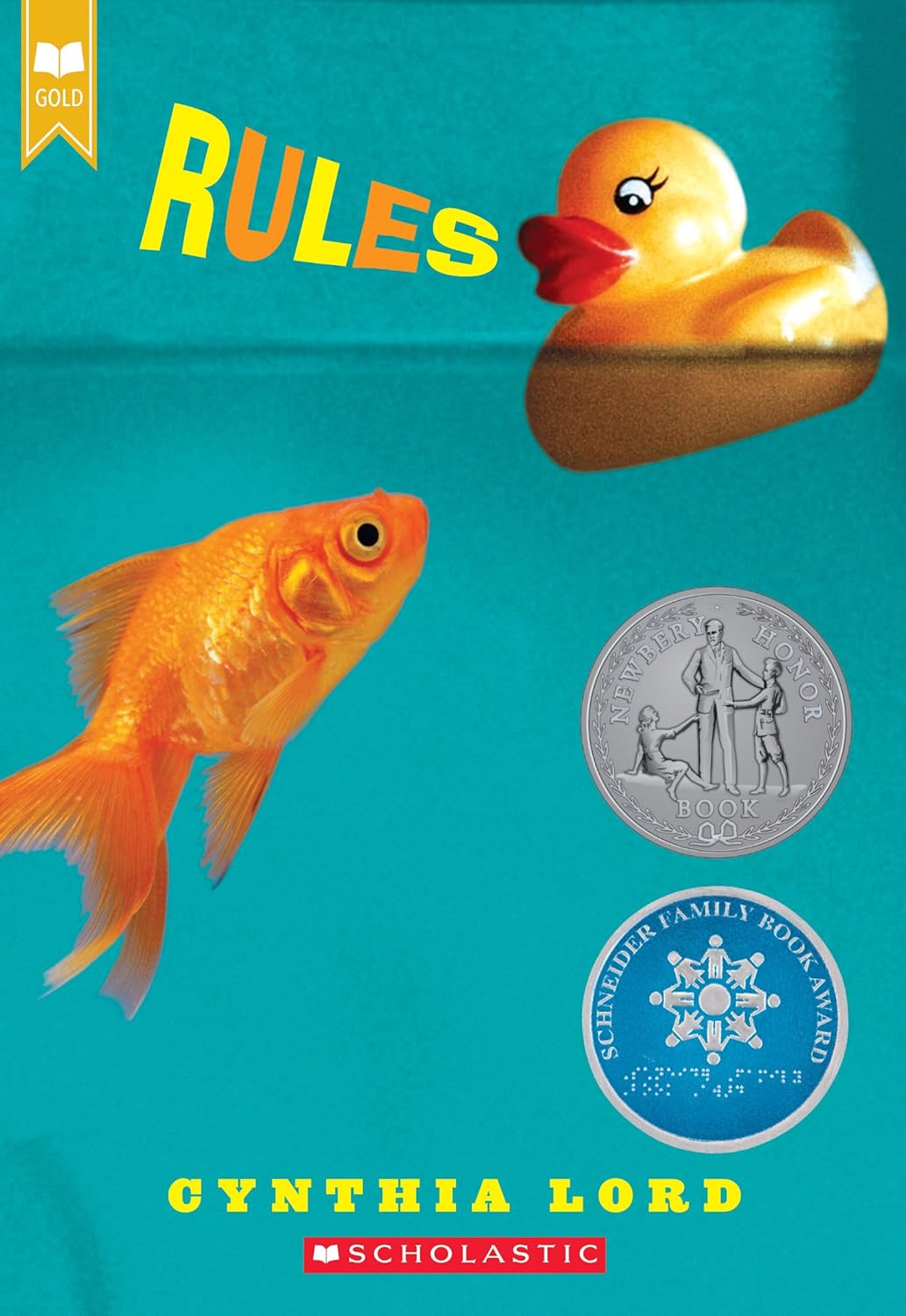
Rules by Cynthia Lord is a warm, funny, and emotionally precise novel about a twelve-year-old girl named Catherine who has spent her whole life making rules to help her autistic younger brother David navigate the world — and who discovers, over the course of one summer, that the rules she has made for herself are every bit as limiting as the ones she has made for him. Winner of a Newbery Honor, it is one of the most honest and most humane portrayals of a sibling relationship in middle grade fiction: a book about the specific love and the specific exhaustion of growing up alongside someone whose needs are always larger than your own, and about what happens when a girl who has been managing everything begins, finally, to let things be complicated. This complete guide covers the reading level, age appropriateness, themes, characters, and everything parents and teachers need to know about this important novel.
For Parents
Rules is a novel told from the perspective of the neurotypical sibling — the child in the family whose needs are consistently secondary to those of an autistic brother, and who has never been given adequate space to feel the complicated mix of love, embarrassment, and longing that comes with that position. Best suited for readers ages 9-12, it is funny and warm and entirely without content concerns, and it offers something rare: a story that validates the feelings of neurotypical siblings without diminishing the humanity or the dignity of the autistic character. Parents who have a child with a disability in the family, and parents who do not, will find it one of the most useful and most moving books available at this level.
For Teachers
A Newbery Honor book well suited to grades 4-6, Rules is an exceptional text for teaching character development through internal conflict, the difference between what characters say and what they feel, and how authors use a single summer’s events to illuminate a protagonist’s full arc. The novel opens essential discussions about disability, neurodiversity, what it means to be a good friend, and the specific social pressures that make middle school particularly difficult for children who are different. Its portrait of the friendship between Catherine and Jason — a nonverbal boy who uses word cards to communicate — is one of the most carefully and most affectingly rendered cross-ability friendships in the middle grade canon.
Rules at a Glance
Find on Amazon →| Author | Cynthia Lord |
| Published | 2006 |
| Grade Level | 4-6 (our assessment) |
| Recommended Age | 9-12 |
| Flesch-Kincaid Grade | 3.9 |
| Word Count | ~36,000 |
| Pages | 200 (standard hardcover) |
| Chapters | 21 |
| Genre | Realistic fiction / contemporary fiction |
| Setting | A small coastal town in Maine, present day |
| Awards | Newbery Honor (2007); Schneider Family Book Award (2007) |
For official Lexile and AR levels, visit Lexile.com or AR BookFinder. ReadingVine provides independent editorial assessments.
What Reading Level Is Rules?
Rules reads at approximately a 4th-6th grade level by our editorial assessment, with a Flesch-Kincaid grade level of around 3.9. That score runs notably low for a Newbery Honor novel most strongly associated with grades 4-6 — Lord writes in Catherine’s voice with deliberate accessibility, short sentences, and the plain directness of a girl who has learned to be efficient and clear because efficiency and clarity are what David’s world requires. The prose feels right for Catherine: no wasted words, no unnecessary ornamentation, everything in service of getting through the day.
What makes the novel more emotionally demanding than its word-level score suggests is the complexity of what Catherine is feeling and not saying. She loves David completely and is sometimes desperately ashamed of him in the same moment, and she is not able to fully articulate either feeling because the family’s emotional vocabulary has been organized entirely around David’s needs. Readers who can feel this gap — between what Catherine says and what she is actually experiencing — will find the novel considerably richer than its surface simplicity suggests. At grades 4-6 this gap is usually accessible; younger readers may take the surface at face value, which is also a valid and rewarding experience of the book.
The book is most commonly recommended for grades 4-6. For official Lexile and Accelerated Reader scores, visit Lexile.com or AR BookFinder.
What Age Is Rules Appropriate For?
We recommend Rules for readers ages 9-12, though it has been read aloud to younger children and enjoyed by older students and adults. This is one of the most content-concern-free Newbery Honor books — warm, honest, and entirely without anything that requires parental guidance beyond the emotional complexity it handles with complete care.
There is essentially nothing in Rules that requires a content warning. David’s autism is depicted with honesty and specificity: he has meltdowns, he follows rigid routines, he does and says things in public that embarrass Catherine, and his needs consistently take priority over hers in ways that are real and that the novel treats seriously rather than dismissing. Jason uses a wheelchair and communicates through word cards; his disability is depicted with dignity and without sentimentality. Catherine experiences the social dynamics of middle school with accuracy, including the specific anxiety of wanting to be liked by the right people and the specific cost of that wanting. There is a mild, entirely age-appropriate romantic thread involving Catherine and a boy named Ryan. No violence, no strong language, no sexual content. The novel’s difficulty is entirely emotional and social, which is exactly appropriate for its intended audience.
Rules has been particularly valuable in classrooms and families that include children with disabilities or autistic siblings, but its portrait of Catherine’s experience — the longing for ordinary things, the love that coexists with embarrassment, the desire to be seen as herself rather than as David’s sister — resonates with any reader who has felt secondary to someone else’s needs. The Schneider Family Book Award it received alongside the Newbery Honor specifically recognized its portrayal of disability and its impact on families as artistically serious and humanely rendered.
What Is Rules About?
Catherine is twelve and has spent years making rules for her younger brother David, who is autistic. The rules are practical and specific: A boy can take off his shirt to swim but not his pants. Say “excuse me” after you burp. Don’t talk about your personal business in public. The rules are Catherine’s attempt to give David the social knowledge that does not come naturally to him — to make him legible to the world and the world navigable for him. They are also, the novel gradually reveals, Catherine’s way of managing her own anxiety: if she can anticipate every situation, make a rule for every scenario, she can control what cannot actually be controlled.
The summer the novel covers is the summer Catherine most wants to be normal. There is a new girl in the neighborhood named Kristi, who is exactly the kind of friend Catherine has always wanted — easy, popular, and entirely unconnected to the complicated reality of David. Catherine wants this friendship with a desperation she is not entirely aware of, and she is willing to minimize David, to manage him out of Kristi’s sight, to make herself smaller and simpler than she is in order to have it.
At the same time, Catherine has begun accompanying David to occupational therapy, where she meets Jason — a boy her age who uses a wheelchair and who is nonverbal, communicating through a book of word cards. Catherine begins making word cards for Jason: drawing pictures of things he wants to say that his standard communication book does not include. Words like weird and frustrating and that’s not fair. Their friendship develops through these cards — through the specific intimacy of making language for someone who does not otherwise have it — and it becomes, without Catherine entirely planning it, the most genuine relationship she has.
The novel’s tension comes from Catherine’s two incompatible desires: to be accepted by Kristi and the social world she represents, which requires performing a version of herself that excludes David and Jason; and to be genuinely known by Jason, which requires the version of herself that includes everything. By the novel’s end, Catherine has made a choice — not a dramatic one, not a complete transformation, but a real one — about which version of herself she is willing to be.
Cynthia Lord has spoken about drawing on her own experience as the parent of an autistic child and as someone who spent years thinking about the specific experience of siblings in families with disabled children — the children whose needs are consistently secondary, who love their sibling completely and are sometimes ashamed of them, and who rarely see their own experience reflected in the books they read.
Rules Characters
Is Rules Banned?
Rules has not been banned or challenged and does not appear on lists of frequently challenged books. It has been embraced by educators, librarians, parents, and disability advocacy organizations as an important, compassionate, and artistically serious novel. The dual recognition of the Newbery Honor and the Schneider Family Book Award in 2007 — the Schneider Award specifically recognizing works that authentically portray the disability experience — reflects the breadth of institutional support the novel has received. It is widely taught and widely recommended across a range of classroom and family contexts.
Rules Themes and Lessons
The central theme of Rules is the gap between who we are and who we perform for the people we want to like us — the specific, exhausting work of managing another person’s perception of you. Catherine has two versions of herself: the one who loves David and makes word cards for Jason and draws pictures of the things she actually sees; and the one who wants Kristi to think she is normal, uncomplicated, and unconnected to anything that might be embarrassing. The novel’s argument is that the second version is not a self at all — it is a performance that costs everything and gives nothing — and that the first version, with all its complications, is the only one worth being.
The novel is also one of the most honest portrayals of neurotypical sibling experience in children’s literature — the specific love and the specific exhaustion of growing up alongside someone whose needs consistently come first. Catherine’s feelings about David are not simple: she loves him, she is sometimes desperate for him to be different, she is ashamed of herself for wanting that, she is ashamed of him in public and ashamed of herself for that too. Lord does not resolve these feelings into a lesson or a liberation. She lets them be what they actually are: complicated, simultaneous, and entirely consistent with loving someone completely.
Genuine friendship is the novel’s third great theme, rendered through the contrast between Catherine’s friendship with Kristi and her friendship with Jason. The Kristi friendship requires performance — Catherine is always managing what Kristi sees and knows. The Jason friendship requires presence — he sees through performance immediately, partly because his own communication demands such precision that he has no patience for anything less than the actual thing. The word cards Catherine makes for Jason are the novel’s image of what real friendship asks: the willingness to make language for another person’s specific, individual experience, rather than the experience you wish they were having.
Discussion starters for classrooms: Why does Catherine make rules? Do the rules help David, or do they help Catherine, or both? What does Catherine give up by trying to hide David and Jason from Kristi? What do the word cards Catherine draws for Jason tell us about her? What is the difference between Catherine’s friendship with Kristi and her friendship with Jason? Why is it so hard for Catherine to be herself in front of Kristi?
How Many Pages and Chapters Are in Rules?
The standard hardcover edition of Rules is 200 pages, divided into 21 chapters averaging around ten pages each. The word count is approximately 36,000 words, making it one of the shorter novels commonly assigned in grades 4-6 and one of the most comfortable length commitments at this level. The chapters move at a brisk, forward pace — Lord structures the novel around a series of encounters and realizations that accumulate rather than a single dramatic arc — and the short word count makes it practical to complete in a single week of classroom reading or a few evenings at home.
For readers in the target age range of 9-12, expect a reading time of roughly 3-4 hours, or about a week of comfortable reading at 20-30 minutes per session. As a classroom text it works well in a two-week unit, with substantial time available for discussion of the novel’s emotional complexity. The word cards Catherine draws for Jason are a particularly productive creative extension activity — many teachers ask students to create their own word cards for a character or situation, which opens discussion about what words we have and what words we need. The novel pairs naturally with nonfiction resources on autism and AAC (augmentative and alternative communication) devices for students who want to understand more about Jason’s communication method.
Books Similar to Rules
About Cynthia Lord
Cynthia Lord is an American author who lives in Maine — the setting of Rules — and who drew directly on her own experience as the parent of an autistic child when writing the novel. She has spoken about wanting to write a book that honored the full complexity of family life with a disabled child: not the inspirational narrative in which disability teaches everyone around it a lesson about humanity, but the actual, daily, complicated reality of loving someone whose needs consistently come first and of being the person whose needs consistently come second. Rules, published in 2006, was her debut novel, and its dual recognition by the Newbery Honor and the Schneider Family Book Award in 2007 was an extraordinary achievement for a first book. The Schneider Family Book Award specifically recognized the novel’s portrayal of disability — both David’s autism and Jason’s physical disability and nonverbal communication — as artistically serious, humanely rendered, and free of the condescension and sentimentality that too often characterize disability in children’s literature. Her subsequent novels include Touch Blue (2010) and Half a Chance (2014). She visits schools frequently and has spoken extensively about writing, disability, and the experience of the siblings who are so rarely the center of their own stories.
Rules: Frequently Asked Questions
What reading level is Rules?
Rules has a Flesch-Kincaid grade level of approximately 3.9, which runs notably low for a Newbery Honor novel most associated with grades 4-6. Our editorial assessment places it at grades 4-6 (ages 9-12). The plain, direct prose reflects Catherine’s voice accurately, but the emotional complexity she is not articulating — the gap between what she says and what she is actually feeling — is more demanding than the word-level score suggests. For official Lexile and AR scores, visit Lexile.com or AR BookFinder.
What are the rules in Rules?
The rules are Catherine’s practical guidelines for David — specific social instructions that give him the knowledge that does not come naturally to him. Examples from the novel: A boy can take off his shirt to swim but not his pants. Say “excuse me” after you burp. Don’t stand in front of the TV when other people are watching it. The rules are both genuinely helpful to David and a way for Catherine to manage her own anxiety — if she can anticipate every situation and create a rule for it, she can feel a measure of control over a life that is largely outside her control. The novel’s insight is that Catherine has rules for herself too — unspoken ones about who she is allowed to be in front of which people — and those rules are just as limiting as the ones she makes for David.
What are word cards and why does Catherine make them for Jason?
Word cards are a form of augmentative and alternative communication (AAC) — cards with pictures and words that allow nonverbal or minimally verbal individuals to communicate by pointing to or presenting the relevant card. Jason has a standard communication book but it does not contain all the words he wants to say. Catherine, who is an artist, begins drawing new cards for him: pictures of things his existing book cannot express, like weird, that’s not fair, and I’m frustrated. Making these cards is the novel’s central image of genuine connection — Catherine is literally creating language for Jason’s specific, individual experience, paying close attention to what he actually wants to say rather than what his communication system assumes he wants to say. The cards are also a portrait of Catherine’s own gift: she is making something beautiful and useful in the same gesture, which is what good art always does.
What is the Schneider Family Book Award?
The Schneider Family Book Award is given annually by the American Library Association to books that embody an artistic expression of the disability experience for child and adolescent audiences. It recognizes books that authentically portray the experience of living with a physical, mental, or emotional disability. Rules won the award in 2007 in the middle school category, the same year it received its Newbery Honor — recognizing both David’s autism and Jason’s physical disability and AAC use as depicted with genuine artistic care and without sentimentality or condescension. and Out of My Mind.
Is Rules based on a true story?
The specific characters and plot are fictional, but the emotional core of the novel is drawn directly from Cynthia Lord’s experience as the parent of an autistic child. She has spoken about the particular experience of the siblings in families like hers — the children whose needs are consistently secondary, who love their sibling completely and are sometimes desperate for things to be different, and who rarely find their own experience reflected in the books they read. Rules is fiction grounded in genuine lived knowledge, and its specificity — the particular rules, the particular embarrassments, the particular forms of David’s love for Catherine — reflects that knowledge throughout.
What grade is Rules typically assigned in?
Rules is most commonly assigned in grades 4, 5, and 6, both as independent reading and as a classroom text. It is particularly well suited to units on disability and neurodiversity, empathy and perspective-taking, and social-emotional learning. Many teachers pair it with nonfiction resources on autism and AAC communication devices. It is also widely used in special education contexts and in inclusive classrooms, where it opens discussions about disability, difference, and what it means to genuinely include rather than merely tolerate people whose needs and communication styles differ from the norm.
Does Catherine end up with Ryan or Jason?
The novel does not resolve either relationship with a definitive romantic conclusion — it is not that kind of book. What it resolves is Catherine’s relationship with herself: her willingness to stop performing a simplified version of herself for people she wants to impress, and her recognition that the friendships worth having are the ones in which she is known as her actual self. Jason is a friend whose significance the novel is careful not to reduce to a lesson or a romance; he is the person who sees Catherine most clearly, and what Catherine does with that seeing is the novel’s real resolution.