
 = Partner Site
Counting by 7s Reading Level: A Complete Guide
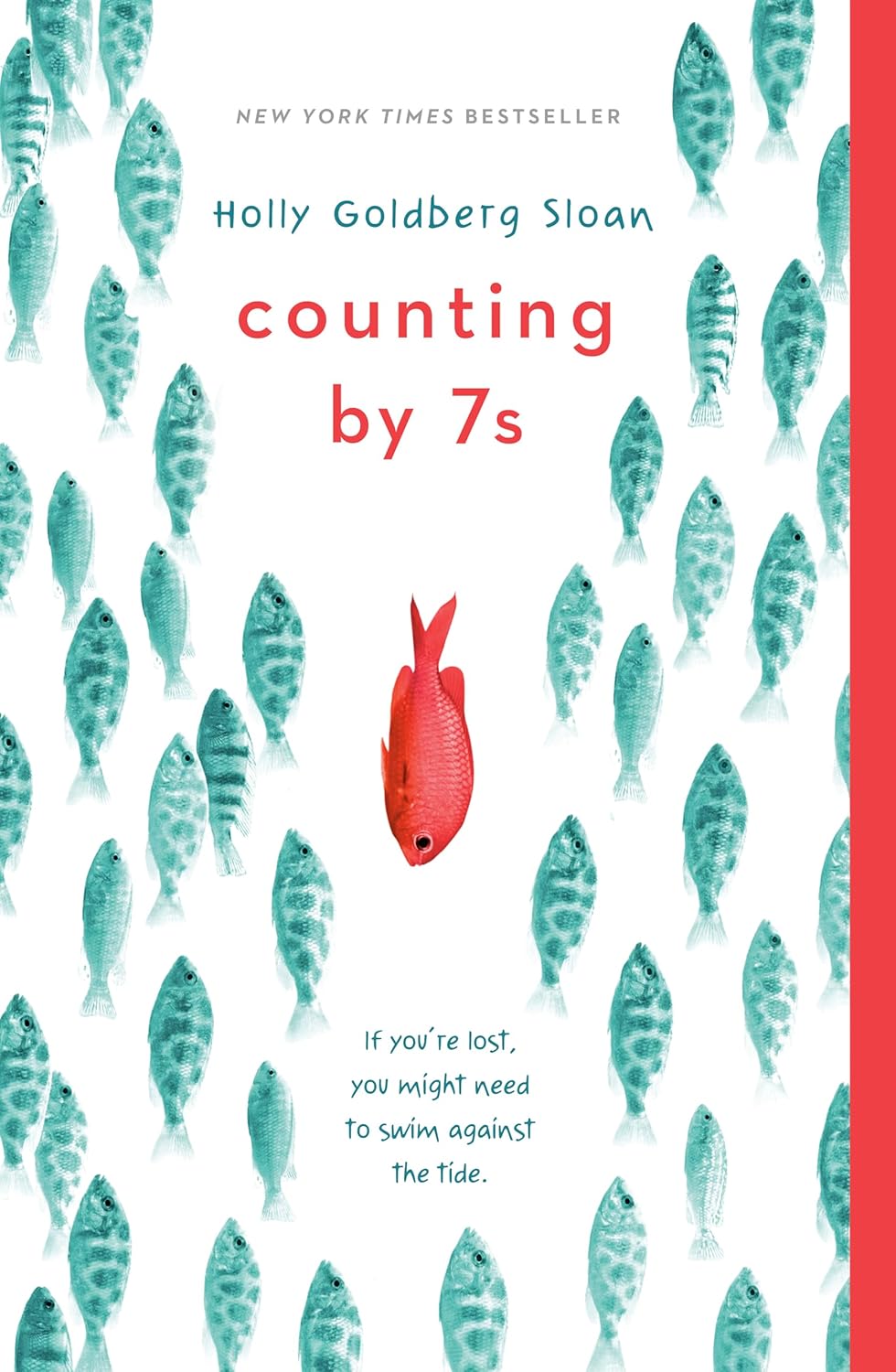
Counting by 7s by Holly Goldberg Sloan is a luminous and quietly extraordinary novel about a twelve-year-old girl named Willow Chance who is a genius — in botany, medicine, and the observation of the natural world — and who loses her adoptive parents in a car accident, and who must build a new life and a new family from the wreckage of the old one. Funny, strange, heartbreaking, and ultimately radiant, it is one of the finest middle grade novels of the past decade: a book about grief and resilience that never lets either emotion become simple, and a portrait of an unusual child so fully realized that readers who have ever felt genuinely different from everyone around them will recognize her on every page. This complete guide covers the reading level, age appropriateness, themes, characters, and everything parents and teachers need to know about this important book.
For Parents
Counting by 7s is a novel about a girl who loses everything and builds something new — not better than what she lost, but real, and hers. Best suited for readers ages 10-13, it deals honestly with grief, loss, and the specific loneliness of being a child who is genuinely different from everyone around her. It is also one of the funniest and most original novels in the middle grade canon, and its portrait of the improbable community that forms around Willow is among the warmest things in contemporary children’s literature. Parents who hand their children this book are giving them something genuinely good.
For Teachers
A widely taught novel well suited to grades 5-7, Counting by 7s is an exceptional text for teaching multiple-perspective narration, voice differentiation, and how authors use an unusual protagonist to defamiliarize ordinary life. The novel’s rotating cast of narrators — each chapter headed with a character name — allows each member of Willow’s emerging community to speak in their own voice, and examining how Sloan differentiates those voices is a rich craft exercise. The novel also opens essential discussions about grief, found family, the meaning of home, and what it means to be gifted in ways that don’t fit standard categories.
Counting by 7s at a Glance
Find on Amazon →| Author | Holly Goldberg Sloan |
| Published | 2013 |
| Grade Level | 5-7 (our assessment) |
| Recommended Age | 10-13 |
| Flesch-Kincaid Grade | 5.2 |
| Word Count | ~72,000 |
| Pages | 380 (standard hardcover) |
| Chapters | 52 |
| Genre | Realistic fiction / contemporary fiction |
| Setting | Bakersfield and surrounding area, California, present day |
| Awards | ALA Notable Children’s Book; Schneider Family Book Award (2014) |
For official Lexile and AR levels, visit Lexile.com or AR BookFinder. ReadingVine provides independent editorial assessments.
What Reading Level Is Counting by 7s?
Counting by 7s reads at approximately a 5th-7th grade level by our editorial assessment, with a Flesch-Kincaid grade level of around 5.2. Sloan writes in a style that is both accessible and richly layered — Willow’s chapters have a distinctive voice that is simultaneously clinical and deeply feeling, the voice of a girl who processes the world through data and observation and who is nevertheless overwhelmed by what she cannot measure. The rotating narrators each have distinct speech patterns and vocabularies, and readers who pay attention to these differences will find the craft reward considerable.
At 380 pages, the novel is on the longer end for its target age group, but the short chapters — fifty-two of them, most running six to eight pages — give it a forward momentum that makes the length feel comfortable rather than daunting. Each chapter is labeled with the speaking character’s name, which helps readers stay oriented as the perspective shifts. The novel’s emotional demands — sustained grief, the gradual building of trust between damaged people — exceed the word-level score and are most fully felt by readers in the 10-13 range.
The book is most commonly recommended for grades 5-7. For official Lexile and Accelerated Reader scores, visit Lexile.com or AR BookFinder.
What Age Is Counting by 7s Appropriate For?
We recommend Counting by 7s for readers ages 10-13. The novel deals with the sudden death of both parents, grief and its aftermath, poverty, homelessness, and the specific difficulties facing children who fall outside standard systems. All of this is handled with honesty and care, but the emotional content is genuinely substantial.
Willow’s adoptive parents die in a car accident early in the novel — the death is sudden, off-page, and reported rather than depicted, but its impact on Willow is the novel’s central emotional fact and is not minimized. Willow subsequently experiences a period of genuine psychological withdrawal — she stops engaging with the world, stops speaking in the way she previously did, and exhibits what the novel describes clearly as grief-induced breakdown. This is handled honestly and with clinical accuracy rather than sensationalism. The novel also depicts poverty, precarious housing, and the experience of children navigating adult bureaucratic systems without adequate support. There is no sexual content and no violence beyond the car accident. The novel’s emotional difficulty is entirely proportionate to what it is depicting, and the warmth and humor that run through it make it bearable and ultimately uplifting.
For children who have experienced loss, grief, or the feeling of not fitting in anywhere, the novel can be deeply validating. Willow’s experience of being genuinely, comprehensively different — not just quirky but categorically outside the normal range — is rendered with enough specificity and enough warmth that readers who have felt this way will recognize it immediately. Parents who are concerned about the grief content should know that the novel handles it with complete honesty and moves, without sentimentality, toward genuine recovery and belonging.
What Is Counting by 7s About?
Willow Chance is twelve years old, adopted, Black in a white family, and a genius. Not a gifted-program genius or a precocious-child genius — a genuine, categorically unusual intelligence that extends in all directions at once, particularly toward botany, medicine, and the patterns she finds everywhere in the natural world. She counts by sevens. She grows plants in her bedroom. She has been tested repeatedly by school officials who cannot decide whether she is gifted, disturbed, or both. She has essentially no friends.
Then her parents are killed in a car accident on a Tuesday afternoon, and Willow’s carefully maintained world collapses entirely. The novel follows what happens next: where Willow goes, who takes her in, and how the improbable collection of damaged, lonely, and fundamentally good people who gather around her become, over the course of a California autumn, something that functions like a family.
The cast of characters who orbit Willow is one of the novel’s great pleasures. Dell Duke is Willow’s school counselor — incompetent, cowardly, deeply unhappy, and entirely unprepared for a student like Willow, who has organized his clients into categories of misery and correctly placed him in one of them. Mai and Quang-ha are Vietnamese-American siblings who become Willow’s first real friends — Mai practical and sharp, Quang-ha sullen and resistant and gradually, almost against his will, devoted to her. Pattie, their mother, runs a nail salon and takes Willow in when there is nowhere else for her to go. Jairo is a cab driver who becomes, through a series of events that are both comic and touching, something like a guardian.
The novel is told in rotating perspectives — Willow, Dell, Mai, Quang-ha, Jairo, and others each narrate their own chapters — which gives readers a view of Willow from the outside that her own narration cannot provide: the experience of being in the presence of someone so unusual that you cannot fully process what you are seeing. The community that forms around Willow is not formed out of charity or obligation; each person in it is changed by contact with her in ways they did not anticipate and could not have planned.
Holly Goldberg Sloan has spoken about drawing on her own experience of adoption and her interest in the specific experience of highly gifted children who do not fit standard educational or social categories. She has also spoken about her conviction that resilience is not a quality people have or don’t have but something that is built, imperfectly, out of the materials available — which is precisely what Willow and the people around her spend the novel doing.
Counting by 7s Characters
Is Counting by 7s Banned?
Counting by 7s has not been banned or widely challenged and does not appear on lists of frequently challenged books. It is widely embraced by educators, librarians, and parents as an exceptional and important novel. Its honest treatment of grief, poverty, and the experience of highly gifted children who do not fit standard categories has been cited as one of its greatest strengths rather than a source of concern. It received the Schneider Family Book Award in 2014, given annually to books that embody an artistic expression of the disability experience for child and adolescent audiences — recognizing the novel’s portrait of Willow’s neurodivergence.
Counting by 7s Themes and Lessons
The central theme of Counting by 7s is found family — specifically, the argument that family is not the people you are assigned to by biology or bureaucracy but the people who choose to show up for you and whom you choose to show up for in return. The community that forms around Willow is not a natural or inevitable one: these people have no reason to be in each other’s lives, no prior connection, no shared background. They are assembled by circumstance and held together by Willow’s presence and by the gradual discovery that being around her has changed each of them in ways they cannot undo. The novel’s portrait of this assembly — how it forms, how it holds, what each person contributes to it — is its most sustained and most moving achievement.
Grief is the novel’s second great theme, and it is handled with a specificity and honesty that distinguishes it from most middle grade treatments of loss. Willow’s grief is not a stage to be passed through or a lesson to be learned; it is a physical and psychological fact that reorganizes her entirely. The novel depicts what genuine grief actually does to a person — the withdrawal, the inability to function, the specific quality of a world that has lost the people who made it familiar — without sanitizing any of it. And it depicts recovery not as a return to what was but as the building of something new from available materials, which is both more honest and more hopeful than most novels allow themselves to be.
The novel is also a portrait of giftedness as a form of difference that is not straightforwardly advantageous — of what it is like to be a child whose intelligence is so unusual that it marks her as strange rather than special, who has been tested and categorized and observed and still does not fit any available category. Willow’s neurodivergence is never named with a clinical label in the novel, but it is depicted with accuracy and care, and the Schneider Family Book Award recognized this portrait as an important artistic contribution to the literature of disability and difference.
Discussion starters for classrooms: What makes Willow different from other people, and how does that difference make her life harder and easier? How does each person in Willow’s new community change because of her? What is Dell’s category system, and what does it tell us about him? How does the novel define family by the end? What does Willow’s habit of counting by sevens tell us about how she experiences the world?
How Many Pages and Chapters Are in Counting by 7s?
The standard hardcover edition of Counting by 7s is 380 pages, divided into 52 short chapters averaging around seven pages each. The word count is approximately 72,000 words. Each chapter is labeled with the name of its narrator, which orients readers immediately as the perspective shifts between Willow, Dell, Mai, Quang-ha, Jairo, and others. The short chapters and the labeling system make the novel’s multiple perspectives easy to follow and give the book its characteristic forward momentum — each short chapter is a complete scene or reflection, and the switching of perspectives creates a cumulative portrait of Willow’s world that no single narrator could provide alone.
For readers in the target age range of 10-13, expect a reading time of roughly 7-9 hours, or about two weeks of comfortable reading at 30 minutes per session. As a classroom text, the novel works well in a three-week unit, with the multiple narrators providing a natural structure for character study and voice analysis exercises. The labeled chapters also make it practical for jigsaw activities, with different student groups tracking different narrators through the novel and reporting on what their character observes and how their voice is distinct from the others.
Books Similar to Counting by 7s
About Holly Goldberg Sloan
Holly Goldberg Sloan is an American author and screenwriter born in Ann Arbor, Michigan, who spent her childhood moving frequently due to her father’s work as a diplomat. Her experience of being perpetually the new person in new places — of having to build community from scratch, again and again — is visible in her fiction’s recurring interest in found families and unlikely belonging. She has written several feature films, including Angels in the Outfield and Made in America, before turning to novels for young readers. Counting by 7s, published in 2013, was her second novel and her breakthrough — it won the Schneider Family Book Award in 2014 and established her as a major voice in contemporary middle grade fiction. Her other novels include I’ll Be There (2011) and Short (2017), which shares Counting by 7s’s interest in an unusual child finding her place in a community that initially does not know what to do with her. Sloan has spoken extensively about adoption — she was adopted herself — and about her interest in the specific experience of children who are categorically different from their peers in ways that existing systems are not designed to accommodate.
Counting by 7s: Frequently Asked Questions
What reading level is Counting by 7s?
Counting by 7s has a Flesch-Kincaid grade level of approximately 5.2. Our editorial assessment places it at grades 5-7 (ages 10-13). The prose is accessible but the emotional demands — sustained grief, the building of trust between damaged people — exceed the word-level score. The rotating narrators and labeled chapters make the multiple-perspective structure easy to follow. For official Lexile and AR scores, visit Lexile.com or AR BookFinder.
Why does Willow count by 7s?
The novel never offers a clinical explanation for Willow’s habit of counting by sevens, and this is intentional. Counting by sevens is Willow’s way of moving through the world — a pattern she finds in the number that the world also finds in her, since seven appears everywhere she looks: in the days of the week, in musical notes, in the colors of the spectrum, in the number of cervical vertebrae. For Willow, sevens are a kind of order she can count on when everything else is uncertain. The title is not a description of a symptom; it is a portrait of a mind that finds pattern where others find randomness, and finds comfort in that finding.
What is Willow’s diagnosis?
The novel deliberately never gives Willow a clinical diagnosis. She has been tested repeatedly by school systems trying to categorize her — she scores off the charts on standardized tests, and her interests and behaviors are clearly outside the normal range — but the novel resists the temptation to label her, either with a gifted designation or a neurodevelopmental one. This is one of the novel’s most important choices: Willow is not defined by a diagnosis but by her specific, irreducible self. Readers and educators have noted features of her presentation that are consistent with twice-exceptionality — extremely high cognitive ability alongside social and sensory differences — but the novel presents these as Willow, not as a condition Willow has.
What is Dell Duke’s category system?
Dell Duke, Willow’s school counselor, has secretly organized all his clients into five categories: Odd, Misfit, Lone Wolf, Stray, and Lost. He uses these categories to manage his caseload from a distance, doing as little actual counseling as possible. Willow, after a single session, correctly identifies his system and points out that he belongs in one of the categories himself — a moment that is simultaneously funny and devastating, and that begins Dell’s transformation from a man hiding from his own life to someone who is changed by contact with one of his students. The category system is the novel’s comic portrait of how institutions process unusual children: by sorting them into categories that are more about the institution’s comfort than the child’s reality.
What is the Schneider Family Book Award?
The Schneider Family Book Award is given annually by the American Library Association to books that embody an artistic expression of the disability experience for child and adolescent audiences. It recognizes books that authentically portray the experience of living with a physical, mental, or emotional disability. Counting by 7s won the award in 2014 in the middle school category, recognizing the novel’s portrait of Willow’s neurodivergence as an honest, non-stigmatizing, and artistically serious depiction of a child whose way of experiencing the world is outside the standard range.
What grade is Counting by 7s typically assigned in?
Counting by 7s is most commonly assigned in grades 5, 6, and 7, both as independent reading and as a classroom text. It is particularly well suited to units on grief and resilience, found family, giftedness and neurodiversity, and multiple-perspective narration. The labeled chapter structure makes it practical for jigsaw reading activities, with student groups tracking different narrators and reporting on voice and perspective. It is also widely used in units on immigration and cultural identity, given the Nguyen family’s significant presence in the novel.
Is Counting by 7s based on a true story?
No — it is a work of fiction. However, Holly Goldberg Sloan has drawn on her own experience of adoption (she was adopted herself) and her interest in the specific social and educational challenges facing highly gifted children who do not fit standard categories. The Vietnamese-American family at the novel’s center reflects her genuine interest in immigrant experience and the specific dynamics of communities that form across cultural boundaries. The novel is fiction grounded in careful observation rather than autobiography.
How does the novel handle Willow’s racial identity?
Willow is Black and was adopted by white parents, and the novel addresses this directly rather than treating it as incidental. After her parents’ deaths, Willow’s racial identity becomes one of the factors that complicates the bureaucratic and social question of where she belongs and who is responsible for her. The novel does not reduce Willow’s experience of racial difference to a single narrative, but it is present throughout — in how she is perceived by the various institutions and adults she encounters, and in the specific texture of her experience of being visibly different from her adoptive family. It is handled with honesty rather than resolution.