
 = Partner Site
The Penderwicks Reading Level: A Complete Guide
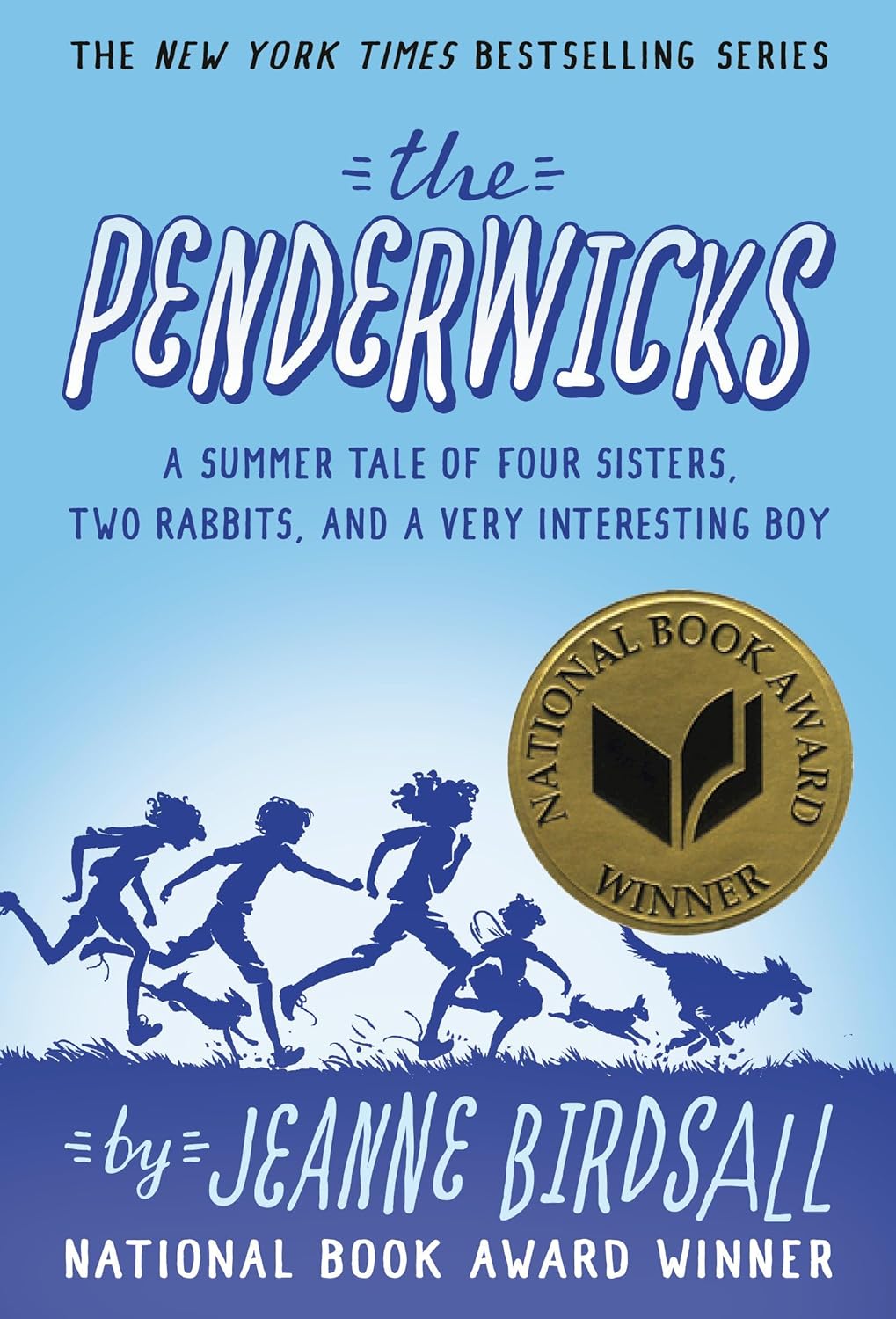
The Penderwicks by Jeanne Birdsall is a warm, funny, and deeply satisfying novel about four sisters — Rosalind, Skye, Jane, and Batty — who spend a summer vacation in a cottage on the grounds of a grand estate in the Berkshires, befriend the lonely boy who lives in the manor house, and have the kind of summer that becomes the standard by which all other summers are measured. Deliberately old-fashioned in the best sense, it is a novel that wears its love for E.B. White and Edward Eager and Noel Streatfeild on its sleeve, while being entirely and unmistakably itself. This complete guide covers the reading level, age appropriateness, themes, characters, and everything parents and teachers need to know about this beloved modern classic.
For Parents
The Penderwicks is the kind of book parents who loved old-fashioned children’s novels will press into their children’s hands with barely concealed urgency — and the kind of book children will stay up past bedtime to finish. It is funny, warm, and completely without content concerns. Best suited for readers ages 8-12, it is an ideal family read-aloud: each sister is distinct enough to assign voices, the comedy is physical and verbal, and the summer-in-the-country pleasures are rendered with an affection that adults and children feel equally. It is simply a very good book.
For Teachers
A National Book Award winner well suited to grades 4-6, The Penderwicks is an excellent text for teaching character differentiation, ensemble casts, and how authors distinguish multiple protagonists through voice, action, and specific detail. The four sisters are genuinely distinct — in temperament, in strength, in the kinds of trouble they attract — and examining how Birdsall keeps each one vivid is a rich writing and reading exercise. The novel also opens discussions about family, friendship, and the specific pleasures and rules of old-fashioned children’s literature as a genre.
The Penderwicks at a Glance
Find on Amazon →| Author | Jeanne Birdsall |
| Published | 2005 |
| Grade Level | 4-6 (our assessment) |
| Recommended Age | 8-12 |
| Flesch-Kincaid Grade | 5.8 |
| Word Count | ~55,000 |
| Pages | 262 (standard hardcover) |
| Chapters | 19 |
| Genre | Realistic fiction / contemporary classic |
| Setting | Arundel, Massachusetts, one summer |
| Awards | National Book Award for Young People’s Literature (2005) |
For official Lexile and AR levels, visit Lexile.com or AR BookFinder. ReadingVine provides independent editorial assessments.
What Reading Level Is The Penderwicks?
The Penderwicks reads at approximately a 4th-6th grade level by our editorial assessment, with a Flesch-Kincaid grade level of around 5.8. Birdsall writes with a slightly elevated, gently formal narrative voice — the prose has the quality of a book that knows it is a book and enjoys being one, the same pleasurable self-awareness you find in E.B. White or Edward Eager. The vocabulary is wide without being difficult, and the sentences have a balanced, unhurried rhythm that rewards reading aloud.
The novel’s primary demand is attention to character rather than plot. The story’s pleasures come from the specific qualities of each sister and the specific ways those qualities collide with each other and with the situations the summer produces. Readers who are primarily plot-driven may find the pacing leisurely; readers who fall in love with the Penderwicks as people will find every page a pleasure. The humor is both physical — pratfalls, disasters, a bull — and verbal, and both kinds reward attentive readers.
The book is most commonly recommended for grades 4-6 and works beautifully as a family or classroom read-aloud. For official Lexile and Accelerated Reader scores, visit Lexile.com or AR BookFinder.
What Age Is The Penderwicks Appropriate For?
We recommend The Penderwicks for readers ages 8-12, though it has been read aloud to younger children and enjoyed by adults. This is one of the most content-worry-free novels in the middle grade canon — gentle, warm, and entirely without anything that requires parental guidance.
There is essentially nothing in The Penderwicks that requires a content warning. The Penderwick girls’ mother died before the novel begins, which is mentioned but not dwelt upon — the family is whole and happy in its particular configuration, and the loss is handled with the matter-of-fact acceptance of children who have grown up with it. There are mild comic disasters: a bull, a broken window, some social embarrassments. Mrs. Tifton, the manor’s owner, is unpleasant and somewhat intimidating. There is a small, sweet romantic subplot involving the eldest sister Rosalind. Nothing in any of this requires advance warning. This is exactly the right book to hand a child without any caveats.
The Penderwicks is one of those rare contemporary novels that parents and grandparents who grew up on old-fashioned children’s books can recommend to today’s children with complete confidence that the experience will be the same: warm, funny, and entirely good.
What Is The Penderwicks About?
The Penderwick family is on its way to the Berkshires for summer vacation: widowed botany professor Mr. Penderwick, his four daughters, and their dog Hound. The cottage they have rented turns out to be on the grounds of a grand estate called Arundel, owned by a formidable and disagreeable woman named Mrs. Tifton. Mrs. Tifton has a son named Jeffrey who is lonely, kind, musical, and deeply relieved when four sisters and a large dog appear in his garden.
What follows is a summer. The novel does not have a complicated plot — it has a summer, which is a different and in some ways richer thing: a series of days in which the Penderwick girls and Jeffrey explore the estate, scheme and adventure, get into trouble and out of it, fight and make up, and slowly build the kind of friendship that the rest of a life is measured against. The threats are modest: Mrs. Tifton wants to send Jeffrey to a military academy he has no desire to attend. A bull named Herschel lives in the neighboring field and has opinions about trespassers. Rosalind, the eldest at twelve, finds herself unexpectedly interested in a boy named Thomas Cagney from a neighboring farm.
Each of the four sisters is fully herself: Rosalind is responsible and maternal, the one who holds the family’s practical life together. Skye is fierce, mathematical, and allergic to sentiment. Jane is a romantic who narrates her own life as if it were an adventure novel and is writing one to prove it. Batty, the youngest at four, is shy and animal-obsessed and carries a pair of butterfly wings with her wherever she goes. Their father is warm, distracted, and entirely unsuited to managing four daughters, which means they largely manage themselves.
Jeanne Birdsall has spoken about writing the novel as a deliberate love letter to the old-fashioned children’s novels she adored — the Nesbit books, the Eager books, the Streatfeild books — and about wanting to give contemporary children the experience of that kind of reading: warm, funny, character-driven, and set in a world where summer is infinite and friendship is everything. The novel won the National Book Award for Young People’s Literature in 2005, the same year it was published, and has been followed by four sequels: The Penderwicks on Gardam Street (2008), The Penderwicks at Point Mouette (2011), The Penderwicks in Spring (2015), and The Penderwicks at Last (2018).
The Penderwicks Characters
Is The Penderwicks Banned?
The Penderwicks has not been banned or challenged and does not appear on any lists of challenged books. It is one of the most universally embraced novels in contemporary children’s literature — a National Book Award winner that is shelved in virtually every school and public library and recommended without reservation by librarians, teachers, and parents across the country. There is simply nothing in it to object to, which is part of what makes it such a reliable recommendation.
The Penderwicks Themes and Lessons
The central theme of The Penderwicks is the specific love between sisters — not idealized or sentimental but rendered with the full texture of real sibling life: the arguments and alliances, the ways each sister simultaneously drives the others mad and is entirely irreplaceable, the specific knowledge of each other that comes from having shared every day of your life. Birdsall gives each sister a distinct inner life and a distinct relationship with each of the others, and the pleasure of watching them operate as a unit — four very different people who function as a single, complicated entity — is one of the novel’s great and lasting satisfactions.
Friendship and belonging are the novel’s second great theme, rendered through Jeffrey’s relationship with the Penderwicks. Jeffrey is lonely not because he lacks people around him but because none of them see him clearly — his mother sees the person she wants him to be, the students at his school see the manor-house boy, nobody sees Jeffrey. The Penderwicks see Jeffrey. His relief at being truly known is one of the novel’s most moving emotional notes, and his willingness to stand up for himself — to tell his mother that he will not go to military academy, that he will play piano, that his life belongs to him — is the courage the summer teaches him.
The novel is also a gentle argument for the pleasures of the kind of childhood it depicts: outdoor, imaginative, relatively unsupervised, bounded by the physical world of the estate and the social world of the family. Birdsall is not nostalgic in a mournful way — the novel is funny and present-tense in its pleasures — but it does suggest, quietly, that a summer with room to roam and people you love is one of the best things available to a child.
Discussion starters for classrooms and families: Which Penderwick sister are you most like? How does each sister contribute something the others can’t? What does Jeffrey find in his friendship with the Penderwicks that he doesn’t have at home? What do the family rules — the Penderwick Family Honour — tell us about how the family works? What makes this summer different from ordinary summers?
How Many Pages and Chapters Are in The Penderwicks?
The standard hardcover edition of The Penderwicks is 262 pages, divided into 19 chapters averaging around fourteen pages each. The word count is approximately 55,000 words. The chapters are substantial without being slow — each one advances the summer’s events while spending generous time in the company of the sisters, which is precisely where the novel wants its readers to be.
For readers in the target age range of 8-12, expect a reading time of roughly 5-7 hours, or about a week and a half of comfortable reading at 30 minutes per session. It works beautifully as a family read-aloud that can be completed in two weeks at a chapter a day, or in a single extended weekend for readers who cannot put it down. As a classroom text, the novel works well in a two-to-three week unit, with the four sisters providing a natural structure for character study assignments — each student can track a different sister through the novel and report on what they find.
Books Similar to The Penderwicks
About Jeanne Birdsall
Jeanne Birdsall grew up in Connecticut and spent years as a professional photographer before writing The Penderwicks, which was her first novel. It won the National Book Award for Young People’s Literature in 2005, the year of its publication — an unusually swift recognition for a debut novel. Birdsall has spoken extensively about the novel’s literary ancestry: she read E. Nesbit, Edward Eager, Noel Streatfeild, and E.B. White as a child and wanted to write a book that gave contemporary children the same reading experience those books gave her — warm, funny, character-driven, and set in a world where the children are genuinely capable and genuinely free to be themselves. The Penderwick sisters have been followed through four sequels, tracing the family from that first summer at Arundel through the girls’ adolescence and young adulthood: The Penderwicks on Gardam Street (2008), The Penderwicks at Point Mouette (2011), The Penderwicks in Spring (2015), and The Penderwicks at Last (2018), which brings the series to a close. Birdsall lives in Massachusetts.
The Penderwicks: Frequently Asked Questions
What reading level is The Penderwicks?
The Penderwicks has a Flesch-Kincaid grade level of approximately 5.8. Our editorial assessment places it at grades 4-6 (ages 8-12). The prose has a slightly elevated, pleasurably literary quality, and the novel’s rewards are primarily character-driven rather than plot-driven. It works beautifully as a read-aloud. For official Lexile and AR scores, visit Lexile.com or AR BookFinder.
How many sisters are in The Penderwicks and what are their names?
Four sisters: Rosalind (age 12), the responsible eldest; Skye (age 11), fierce and mathematical; Jane (age 10), a romantic who is writing her own novel; and Batty (age 4), the youngest, shy and always wearing butterfly wings. Each is so distinct that readers typically identify strongly with one sister in particular — a phenomenon Birdsall apparently intended and that readers have enthusiastically confirmed across twenty years of the series.
What is the Penderwick Family Honour (MOPS)?
MOPS stands for Moral Obligation to Penderwick Sisterhood — the family’s informal code of loyalty and mutual obligation that the sisters invoke when one of them needs the others to have her back regardless of personal reservations. It is the novel’s comic shorthand for the deeper truth about sibling love: that you are bound to each other in ways that override individual judgment, and that this binding, properly understood, is not a constraint but a superpower. The MOPS is invoked at several critical moments in the novel and its sequels, and children who read the series tend to adopt it with enthusiasm.
Are there sequels to The Penderwicks?
Yes — four of them, completing a five-book series. The Penderwicks on Gardam Street (2008) follows the family the following autumn when their father begins dating. The Penderwicks at Point Mouette (2011) takes the younger three sisters to Maine for the summer without their father or Rosalind. The Penderwicks in Spring (2015) centers on Batty, now ten, and is the most emotionally complex of the sequels. The Penderwicks at Last (2018) brings the series to a close with a wedding at Arundel. Each book stands reasonably well on its own, but readers who love the first novel will want all five.
What grade is The Penderwicks typically assigned in?
The Penderwicks is most commonly used in grades 4, 5, and 6, both as independent reading and as a classroom text. It is particularly well suited to units on character, sibling relationships, and ensemble fiction. The four sisters provide an ideal structure for character study assignments — each student can track one sister through the novel and report on what they find. It is also a popular choice for classroom read-alouds, where different voices can be assigned to different sisters.
What books inspired The Penderwicks?
Jeanne Birdsall has been specific and enthusiastic about her literary sources: E. Nesbit’s books (particularly Five Children and It and the Bastable series), Edward Eager’s Half Magic and its sequels, Noel Streatfeild’s Ballet Shoes and other family novels, and E.B. White’s prose — particularly its combination of warmth, precision, and gentle humor. She has described wanting to write a book that gave contemporary children the experience of reading those books. Readers who love The Penderwicks and want to pursue its ancestry will find each of those sources rewarding.
Why did The Penderwicks win the National Book Award?
The Penderwicks won the National Book Award for Young People’s Literature in 2005 for the quality and completeness of its achievement: the four sisters are among the most fully realized ensemble of characters in recent children’s fiction, the prose is genuinely lovely, the comedy is earned and specific, and the novel does something rare and difficult — it creates a world that feels both contemporary and deeply rooted in the best traditions of children’s literature, without feeling nostalgic or derivative. It is a book that knows exactly what it wants to be and achieves it entirely.