
 = Partner Site
The One and Only Ivan Reading Level: A Complete Guide
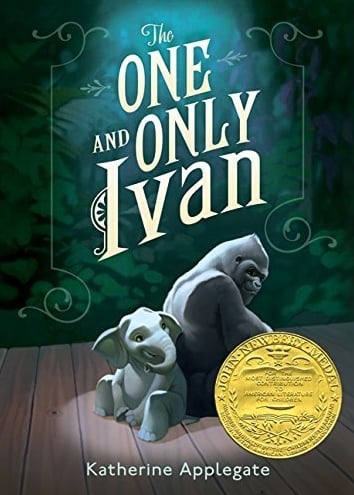
The One and Only Ivan by Katherine Applegate tells the unforgettable story of a silverback gorilla living in a shopping mall circus who finds hope, friendship, and a chance for freedom. This guide provides parents and teachers with reading level information, age recommendations, content insights, and discussion questions for this Newbery Medal-winning book inspired by a true story.
For Parents
Find the right reading level for your child, understand the book’s themes around captivity and freedom, and get conversation starters to help your child process Ivan’s journey from acceptance to activism.
For Teachers
Access grade-level guidance, reading metrics, character analysis support, and thematic discussion questions perfect for classroom use. This Newbery Medal winner offers rich opportunities for exploring animal welfare, friendship, and the power of art and storytelling.
The One and Only Ivan at a Glance
Find on Amazon →| Author | Katherine Applegate |
| Published | 2012 |
| Grade Level | 3–5 (our assessment) |
| Recommended Age | 8–12 |
| Lexile | ~570L |
| AR/ATOS | ~3.6 |
| Word Count | ~26,000 |
| Pages | 305 (standard hardcover) |
| Chapters | Brief chapters (varies by edition) |
| Genre | Children’s fiction / animal perspective / inspired by true story |
| Setting | Exit 8 Big Top Mall and Video Arcade |
| Awards | Newbery Medal (2013) |
For official Lexile and AR levels, visit Lexile.com or AR BookFinder. ReadingVine provides independent editorial assessments.
What Reading Level Is The One and Only Ivan?
The One and Only Ivan is appropriate for grades 3–5, with a Lexile measure of approximately 570L and an AR/ATOS level of around 3.6. The book is written in free verse from Ivan’s perspective, which creates short, accessible chapters with plenty of white space on the page. This format makes it less intimidating for reluctant readers while still delivering profound emotional depth.
The vocabulary is straightforward, and Ivan’s voice is simple and honest. He thinks in short, declarative sentences that reflect how he observes the world around him. However, the book’s true complexity lies in its themes—captivity, freedom, animal rights, and the power of memory. Readers need enough maturity to understand what it means to be confined and to grasp the sadness of Ivan’s situation even when he doesn’t fully articulate it himself.
The free verse format means the book has more pages than a traditional novel of similar word count, but it reads quickly. Many third graders can handle it independently, while the emotional sophistication makes it compelling for fifth and even sixth graders. It’s an excellent bridge book for readers ready to explore more complex themes in an accessible format.
What Age Is The One and Only Ivan Appropriate For?
The One and Only Ivan is most appropriate for readers ages 8–12. The story deals with themes of captivity, loss, and animal welfare in a gentle but honest way. While there are sad moments, the overall tone is hopeful, and the ending shows positive change and new beginnings.
Animal captivity: Ivan has lived in a small enclosure for 27 years. The book addresses the sadness of confinement without being graphic or preachy.
Loss and death: Ivan remembers his family being killed by poachers when he was captured as a baby. Ruby’s mother dies (off-page). These events are handled gently but honestly.
Animal abuse: Mack, the mall owner, uses a claw-stick to control the elephant Ruby. It’s not graphic but clearly upsetting.
Sadness and confinement: The book explores loneliness and what it means to be trapped, which can be emotionally heavy for sensitive readers.
What’s NOT in the book: No graphic violence, no on-page death scenes, no profanity. The difficult content is presented through Ivan’s matter-of-fact perspective, which softens the impact while still conveying the seriousness of his situation. The ending is hopeful and positive.
What Is The One and Only Ivan About?
Ivan is a silverback gorilla who has lived for 27 years in a glass enclosure at the Exit 8 Big Top Mall and Video Arcade. He shares the space with Stella, an elderly elephant, and Bob, a stray dog who sleeps in Ivan’s domain. Ivan has grown comfortable in his routine—he watches TV, creates paintings that Mack sells in the gift shop, and tries not to think about his life in the wild, which he can barely remember. He tells himself he’s not unhappy; he’s simply accepted his life.
Everything changes when Mack brings in Ruby, a baby elephant he’s purchased to revive the failing circus. Ruby is curious, playful, and hopeful, but she’s also traumatized from being separated from her family. Stella takes Ruby under her wing and makes Ivan promise that if anything happens to her, he’ll help Ruby find a better life. When Stella dies from an infected foot injury, Ivan is devastated and determined to keep his promise.
Ivan begins to see his captivity through Ruby’s eyes and realizes that the mall is no place for a young elephant to grow up. Using his art, Ivan creates a massive painting of a zoo—a place where Ruby could live with other elephants, have space to roam, and be cared for properly. With the help of Julia, the daughter of the mall’s janitor, Ivan’s artwork becomes a billboard that sparks public outcry about the animals’ living conditions. Eventually, animal welfare activists intervene, and both Ivan and Ruby are moved to a zoo where they can live in appropriate habitats with others of their kind. The book ends with Ivan finally at peace, having found a home where he can be himself and having saved Ruby from a life of confinement.
The One and Only Ivan Characters
The One and Only Ivan Themes and Lessons
The One and Only Ivan explores how awareness can lead to action. Ivan has accepted his captivity for decades, but Ruby’s arrival makes him see his situation differently. The book teaches that recognizing injustice—even when it’s become normalized—is the first step toward creating change. Ivan’s transformation from passive acceptance to active advocacy shows that it’s never too late to stand up for what’s right.
The book also celebrates the power of art and storytelling as tools for communication and change. Ivan cannot speak human language, but his paintings become a way to express what words cannot. When Julia helps turn his artwork into a billboard, it demonstrates how creative expression can reach across barriers and inspire others to take action. This sends a message about using your unique talents—whatever they may be—to make a difference in the world.
Discussion questions for families:
- How does Ivan’s friendship with Stella and Ruby change the way he sees his own life? What does this teach us about perspective?
- Ivan uses his art to communicate what he cannot say in words. How does creativity help us express important ideas?
- What does the book teach about what animals need to be happy and healthy? How is a zoo different from a mall?
- Ivan makes a promise to Stella and works hard to keep it. Why is keeping promises important, even when it’s difficult?
How Many Pages and Chapters in The One and Only Ivan?
The One and Only Ivan has 305 pages in the standard hardcover edition, divided into many brief chapters. The word count is approximately 26,000 words. Because the book is written in free verse with short chapters and lots of white space, it reads much faster than a traditional novel of the same page count. Many chapters are just a few pages or even a single page long, making it easy to find natural stopping points.
For independent readers in the target age range (8–12), the book typically takes 3–4 hours to complete, or about one week of reading 30 minutes per day. The accessible format and engaging voice keep most readers moving quickly through the story. Many readers report finishing it in one or two sittings because they can’t put it down.
As a read-aloud, The One and Only Ivan takes approximately 3–4 hours total. The book works beautifully as a family or classroom read-aloud because Ivan’s voice is distinctive and expressive, the short chapters allow for natural pauses, and the themes prompt meaningful conversations. Teachers commonly use it in third through fifth grade to discuss animal welfare, empathy, and using your talents to help others.
Books Similar to The One and Only Ivan
If your child enjoyed The One and Only Ivan, here are six similar books that explore themes of animals, captivity, friendship, and standing up for what’s right:
About Katherine Applegate
Katherine Applegate is an American author best known for The One and Only Ivan, which won the Newbery Medal in 2013. Before writing this book, Applegate was primarily known for young adult series including Animorphs (co-written with her husband Michael Grant) and the Everworld series. The One and Only Ivan marked her shift into middle grade fiction and was inspired by the true story of Ivan, a gorilla who lived in a shopping mall in Tacoma, Washington. Applegate visited the real Ivan at Zoo Atlanta before he died in 2012 and has said she wanted to tell his story in a way that would help readers understand what captivity means from an animal’s perspective. The book’s free verse format was chosen to reflect Ivan’s direct, honest way of seeing the world. Since The One and Only Ivan, Applegate has written several sequels and companion books including The One and Only Bob and The One and Only Ruby, as well as other acclaimed middle grade novels like Wishtree and Crenshaw. She continues to write books that combine accessible formats with profound themes, often focusing on characters who are different, overlooked, or underestimated. The One and Only Ivan remains her most celebrated work and continues to be widely read in elementary classrooms, helping children think about animal welfare, friendship, and using their voices to create change.
The One and Only Ivan: Frequently Asked Questions
Is The One and Only Ivan based on a true story?
Yes, The One and Only Ivan is inspired by the true story of a real gorilla named Ivan who lived in a shopping mall in Tacoma, Washington from 1964 to 1994. The real Ivan was captured as a baby in the Democratic Republic of Congo and lived in a glass enclosure at the B&I Circus Store. After public outcry about his living conditions, he was moved to Zoo Atlanta in 1994, where he lived in a more natural habitat until his death in 2012. While the book is fictionalized and takes creative liberties with characters and events, Ivan’s core story—his captivity, his art, and his eventual move to a better home—is based on reality.
Why is The One and Only Ivan written in free verse?
Katherine Applegate chose to write in free verse—short, poetic chapters with sparse language—to reflect how Ivan thinks. As a gorilla, Ivan observes the world differently than humans do, and the simple, direct language captures his honest, uncluttered perspective. The free verse format also makes the book more accessible to reluctant readers by creating lots of white space and short chapters, while still allowing Applegate to convey deep emotions and complex themes.
What happened to the real Ivan?
The real Ivan was moved to Zoo Atlanta in 1994 after public pressure and advocacy from animal welfare groups. At the zoo, he lived in a gorilla habitat with outdoor space and eventually joined a gorilla family group. He seemed to adjust well to his new environment and lived at Zoo Atlanta until his death from natural causes in August 2012 at age 50. His story helped change public perception about keeping great apes in roadside attractions and mall settings.
Does Stella die in The One and Only Ivan?
Yes, Stella the elephant dies from an infected foot injury partway through the book. Her death is a pivotal moment that motivates Ivan to take action. Before she dies, Stella makes Ivan promise to ensure Ruby gets a better life than they had. While Stella’s death is sad, it’s handled gently and serves as a catalyst for Ivan’s transformation from passive acceptance to active advocacy.
Is The One and Only Ivan sad?
The book has sad moments—Ivan’s memories of losing his family, Stella’s death, and the overall reality of captivity can be emotionally heavy. However, the story is ultimately hopeful and uplifting. Ivan finds purpose, uses his art to create change, keeps his promise to Stella, and both he and Ruby end up in better homes. Most readers find it bittersweet rather than devastatingly sad, and the positive ending provides comfort.
What grade level is The One and Only Ivan for?
The One and Only Ivan is appropriate for grades 3–5 (ages 8–12). The free verse format and simple vocabulary make it accessible for third graders, while the emotional themes and subtle storytelling appeal to fifth and even sixth graders. It’s an excellent choice for a wide range of reading abilities because the format is approachable but the content is sophisticated.
How does Ivan communicate with humans?
In the book, Ivan can understand human language but cannot speak it. He communicates through his behavior, his paintings, and his expressions. Julia and George seem to understand him better than most people. The book is narrated from Ivan’s perspective, so readers see his thoughts, but most humans in the story don’t know what he’s thinking. Ivan’s big breakthrough comes when he uses his art to create a message that humans can understand—a picture of a zoo that communicates where Ruby should go.
What is the main message of The One and Only Ivan?
The main message is that all beings deserve freedom, dignity, and the opportunity to live in environments where they can thrive. The book teaches that recognizing injustice—even when it’s become normalized—is the first step toward change, and that we all have the power to make a difference through our unique talents. It also emphasizes the importance of keeping promises, the power of friendship, and the idea that it’s never too late to stand up for what’s right.