
 = Partner Site
Stuart Little Reading Level: A Complete Guide
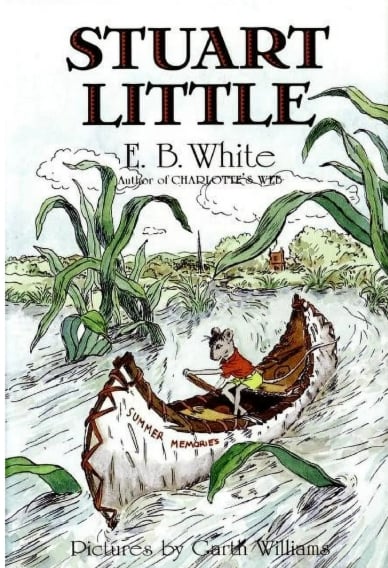
Stuart Little by E.B. White tells the charming story of a mouse-sized boy born to a human family in New York City, who embarks on adventures and searches for his friend, a beautiful bird named Margalo. This guide provides parents and teachers with reading level information, age recommendations, content insights, and discussion questions for this beloved classic that has captivated readers for generations.
For Parents
Discover the appropriate reading level for your child, understand the book’s gentle themes of adventure and acceptance, and find conversation starters to discuss Stuart’s journey of self-discovery and courage.
For Teachers
Access grade-level guidance, reading metrics, character analysis support, and thematic discussion questions ideal for classroom use. This timeless classic offers opportunities to explore themes of identity, perseverance, and the importance of being true to yourself.
Stuart Little at a Glance
Find on Amazon →| Author | E.B. White |
| Published | 1945 |
| Grade Level | 3–5 (our assessment) |
| Recommended Age | 7–10 |
| Lexile | ~920L |
| AR/ATOS | ~6.0 |
| Word Count | ~18,800 (varies slightly by edition) |
| Pages | 131 (standard paperback) |
| Chapters | 15 |
| Genre | Children’s fiction / fantasy |
| Setting | New York City and beyond |
| Awards | Classic (no specific awards) |
For official Lexile and AR levels, visit Lexile.com or AR BookFinder. ReadingVine provides independent editorial assessments.
What Reading Level Is Stuart Little?
Stuart Little is appropriate for grades 3–5, with a Lexile measure of approximately 920L and an AR/ATOS level of around 6.0. While the vocabulary and sentence structure can be sophisticated—characteristic of E.B. White’s elegant writing style—the episodic adventure format and whimsical scenarios make it accessible and engaging for younger readers.
White’s prose has a conversational, storytelling quality that makes it particularly well-suited for read-alouds. The higher reading level reflects White’s precise word choices and occasionally complex sentences, but the imaginative scenarios (a mouse driving a tiny car, competing in a sailboat race, teaching school) capture children’s attention and carry them through any challenging vocabulary.
Many second graders can enjoy Stuart Little as a read-aloud, while third through fifth graders will appreciate it as an independent read. The book’s charm lies in its matter-of-fact acceptance of the extraordinary—Stuart is simply a mouse-sized member of an otherwise normal family—which delights readers of all ages.
What Age Is Stuart Little Appropriate For?
Stuart Little is most appropriate for readers ages 7–10. The story is gentle and whimsical, with only mild peril and conflict, making it suitable for younger children who are ready for chapter books. The open-ended conclusion may puzzle very young readers, but most children in this age range appreciate Stuart’s ongoing journey.
Open ending: The book doesn’t have a traditional resolution. Stuart is still searching for Margalo when the story ends, which some children find unsatisfying.
Mild peril and predator threat: Stuart faces minor dangers including getting stuck in window shades and the threat from Snowbell the cat (who is more comical than truly menacing). These moments are presented humorously rather than frighteningly.
Mild romantic interest: Stuart’s affection for Margalo and later interest in Harriet Ames hint at innocent crushes, portrayed gently and age-appropriately.
What’s NOT in the book: No graphic violence, minimal conflict, no death (though Margalo’s disappearance is sad), no inappropriate language. The book maintains a gentle tone throughout, with quiet humor and modest adventures.
What Is Stuart Little About?
Stuart Little is born to the Little family in New York City, looking exactly like a mouse but only two inches tall. His family accepts him completely, and Stuart adapts to his small size with ingenuity and courage. He retrieves his mother’s ring from a drain, races a toy sailboat in Central Park, and helps around the house despite his diminutive stature.
When a beautiful songbird named Margalo comes to live with the Littles, Stuart develops a deep affection for her. The family cat, Snowbell, initially plots against Margalo, but she escapes when she learns that Snowbell’s friend—an Angora cat—plans to attack her. When Stuart discovers that Margalo has flown away to escape danger, he’s heartbroken. Determined to find her, Stuart sets out in a tiny car on a journey north, following rumors that she’s headed that way.
Along his journey, Stuart has various adventures: he briefly works as a substitute teacher in a small-town school, meets a girl about his size named Harriet Ames and takes her on a disastrous canoe trip, and continues his search. The book ends with Stuart still traveling, still hopeful, heading in the direction he believes Margalo has gone. It’s an open-ended conclusion that emphasizes the journey over the destination—Stuart hasn’t found Margalo, but he’s determined to keep trying, confident he’s headed in the right direction.
Stuart Little Characters
Stuart Little Themes and Lessons
Many readers interpret Stuart Little as a story about acceptance—both accepting yourself and being accepted by others despite differences. Stuart never complains about being mouse-sized or wishes he were different. He simply adapts, finding creative solutions to the challenges his size presents. His family’s complete acceptance of him reinforces that love and family aren’t about being the same, but about accepting each other as we are.
The book’s open ending suggests that the journey itself holds value, even without guaranteed success. Stuart is heading in the right direction with hope and determination, and that matters more than whether he finds Margalo. This theme resonates with many readers as a metaphor for life—not everything has tidy conclusions, but perseverance, optimism, and pursuing what matters to you are worthwhile regardless of outcomes.
Discussion questions for families:
- How does Stuart solve problems that come from being so small? What does this show about his character?
- Why do you think the book ends with Stuart still searching instead of finding Margalo? What does this ending teach us?
- Stuart’s family never treats him as unusual or different. How does their acceptance help Stuart be confident?
- Would you prefer an ending where Stuart finds Margalo, or do you like the open ending? Why?
How Many Pages and Chapters in Stuart Little?
Stuart Little has 131 pages in the standard paperback edition and is divided into 15 chapters. The word count is approximately 18,800 words (varies slightly by edition). The chapters average about 8-9 pages each and typically focus on a specific adventure or episode—Stuart racing his sailboat, Margalo arriving, Stuart teaching school, meeting Harriet Ames, etc. The episodic structure makes it easy to read in short sessions.
For independent readers in the target age range (7–10), the book typically takes 3–4 hours to complete, or about one week of reading 30 minutes per day. The engaging adventures and White’s clear prose keep most readers moving steadily through the story.
As a read-aloud, Stuart Little takes approximately 3–4 hours total. The book works wonderfully as a family read-aloud because White’s conversational style translates beautifully when performed aloud, and the whimsical adventures delight listeners across age ranges. Many families enjoy the episodic nature, which allows reading one chapter at bedtime. Teachers also commonly use it as a class read-aloud for second through fourth grades.
Books Similar to Stuart Little
If your child enjoyed Stuart Little, here are six similar books that explore themes of adventure, being different, and perseverance:
About E.B. White
E.B. White (1899–1985) was an American author and essayist best known for his three beloved children’s books: Stuart Little, Charlotte’s Web, and The Trumpet of the Swan. Born Elwyn Brooks White in Mount Vernon, New York, White became a legendary writer for The New Yorker magazine and co-authored The Elements of Style, the famous writing guide. Stuart Little was his first children’s book, published in 1945 when he was 46 years old. The book was controversial when first published—some librarians objected to a mouse being born to human parents—but children loved it immediately, and it became a classic. White’s writing style is characterized by clarity, precision, warmth, and a conversational tone that never talks down to young readers. He believed children deserved the same elegant prose as adult readers, and his books reflect this respect for his audience. Many critics interpret the book’s open ending as a deliberate artistic choice reflecting White’s philosophical view that not all stories need tidy resolutions, and that heading in the right direction with hope matters more than guaranteed success. White went on to write Charlotte’s Web (1952), which became even more beloved, and The Trumpet of the Swan (1970). He received numerous honors including a Presidential Medal of Freedom and a Pulitzer Prize special citation. E.B. White died in 1985, leaving behind a literary legacy that includes not only his children’s classics but also decades of brilliant essays and contributions to American literature. Stuart Little remains his first children’s book, introducing readers to White’s unique blend of whimsy, wisdom, and respect for the intelligence and emotions of young readers.
Stuart Little: Frequently Asked Questions
Why is Stuart Little a mouse?
E.B. White never explains why Stuart is born looking like a mouse—it’s simply presented as a fact. This is part of the book’s charm: the matter-of-fact acceptance of the impossible. The lack of explanation encourages readers to simply accept Stuart as he is, which reinforces the book’s themes of acceptance and being comfortable with who you are.
Why does Stuart Little have an open ending?
The book ends with Stuart still searching for Margalo, heading north with hope but no guarantee of success. Many readers and critics interpret this as emphasizing that the journey matters as much as the destination. Stuart believes he’s headed in the right direction, and that confidence and determination are what’s important. Some readers find this unsatisfying, but others appreciate that it reflects real life—not all quests have tidy conclusions, but perseverance and hope still matter.
Is Stuart Little adopted?
No, Stuart is born to Mr. and Mrs. Little—he’s their biological son. The book states he was born into the family, and his parents accept him completely as their child. While this is biologically impossible and never explained, it’s treated as simple fact in the story. This is pure fantasy, and White never tries to justify or explain the impossibility.
How old is Stuart Little in the book?
Stuart’s exact age is never specified, but he appears to be around seven to ten years old based on his behavior and the way he’s treated. He’s definitely a child, though he acts with the politeness and maturity of someone older. In the movie adaptation, he’s portrayed as younger (around six), but the book Stuart has a slightly more mature demeanor.
Is Stuart Little the same as the movie?
No, the 1999 movie starring Michael J. Fox makes significant changes to the story. In the movie, Stuart is adopted rather than born to the Littles, the plot is completely different, and Stuart does reunite with Margalo at the end. The book is more episodic and philosophical, with no clear antagonist, while the movie adds more conflict and provides narrative closure. Both are enjoyable, but they’re quite different experiences.
What happened to Margalo in Stuart Little?
Margalo flies away after learning that Snowbell’s friend—an Angora cat—plans to attack her. She leaves to protect herself and possibly to spare the Little family from trouble. The book doesn’t reveal where she went or what happened to her—Stuart spends the second half of the book searching for her based on rumors that she flew north. Her fate remains a mystery, which is part of the book’s open-ended nature.
Is Stuart Little appropriate for kindergarten?
Stuart Little is best suited for readers in grades 3–5 (ages 7–10). The vocabulary and sentence structure are too advanced for most kindergarteners to read independently. However, it makes an excellent read-aloud for kindergarten and first grade, especially for families who enjoy longer chapter books. Young children may struggle with the episodic structure and open ending, but many enjoy the whimsical adventures.
What is the moral of Stuart Little?
Many readers see the main lesson as valuing perseverance, courage, and staying true to yourself over achieving specific outcomes. Stuart never complains about being different—he adapts and makes the most of his situation. The open ending suggests that life is about the journey and heading in the right direction with hope and determination, even when success isn’t guaranteed. It’s a story about acceptance, resourcefulness, and the importance of pursuing what matters to you.