
 = Partner Site
The Trumpet of the Swan Reading Level: A Complete Guide
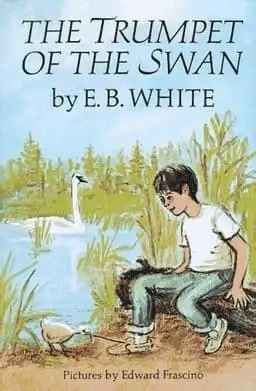
The Trumpet of the Swan by E.B. White tells the heartwarming story of Louis, a Trumpeter Swan born without a voice who learns to communicate through playing a trumpet. This guide provides parents and teachers with reading level information, age recommendations, content insights, and discussion questions for this beloved classic about overcoming obstacles, finding your voice, and the power of determination.
For Parents
Find the right reading level for your child, understand the book’s themes around disability and perseverance, and get conversation starters to help your child explore questions about overcoming challenges, finding creative solutions, and what it means to be different.
For Teachers
Access grade-level guidance, reading metrics, character analysis support, and thematic discussion questions perfect for classroom use. This E.B. White classic offers rich opportunities for exploring disability, problem-solving, determination, and the importance of education.
The Trumpet of the Swan at a Glance
Find on Amazon →| Author | E.B. White |
| Illustrator | Edward Frascino |
| Published | 1970 |
| Grade Level | 4–5 (our assessment) |
| Recommended Age | 8–11 |
| Flesch-Kincaid Grade | 5.8 |
| Word Count | ~61,000 |
| Pages | 210 (standard paperback) |
| Chapters | 21 |
| Genre | Animal fantasy / adventure |
| Setting | Montana, Canada, Boston, Philadelphia (1960s) |
| Awards | William Allen White Children’s Book Award |
For official Lexile and AR levels, visit Lexile.com or AR BookFinder. ReadingVine provides independent editorial assessments.
What Reading Level Is The Trumpet of the Swan?
The Trumpet of the Swan is appropriate for grades 4–5, with a Flesch-Kincaid grade level of 5.8. The vocabulary is rich and sometimes sophisticated—White doesn’t simplify his language for young readers—and includes musical terms, nature descriptions, and some elegant phrasing. The sentence structure varies from simple to complex, making it accessible to fourth graders while providing enough challenge to engage fifth graders.
White writes with elegance and wit, trusting young readers to handle sophisticated concepts and vocabulary. His prose is more formal than contemporary middle-grade fiction, reflecting the book’s 1970 publication date, but it’s never stuffy or inaccessible. The narrative includes detailed descriptions of nature, music, and Louis’s adventures across multiple locations. White also incorporates humor—Louis’s deadpan observations and the absurdity of a swan playing trumpet in human settings create gentle comedy throughout.
While strong fourth graders can handle the reading mechanics, the book resonates most with readers ages 8–11 who can appreciate the themes of finding creative solutions to problems, the importance of education and communication, and the gentle satire of human society through Louis’s adventures. It’s an excellent choice for readers who enjoy classic animal fantasies with heart, humor, and meaningful themes.
The book is also popular as a read-aloud for younger children (even second and third graders) because White’s storytelling is engaging and the adventures are accessible when read aloud, even if the vocabulary would challenge independent younger readers.
What Age Is The Trumpet of the Swan Appropriate For?
The Trumpet of the Swan is most appropriate for readers ages 8–11. The story is gentle and wholesome, with no violence, scary moments, or mature themes. The biggest challenges Louis faces are social (being unable to communicate) and practical (working to pay for his trumpet), making this a safe and uplifting choice for elementary-age readers.
Disability as central theme: Louis is born voiceless, which is treated as a disability that affects his ability to communicate and court a mate. The book handles this sensitively, focusing on creative adaptation rather than tragedy.
Theft: Louis’s father steals a trumpet from a music store to help his son. While Louis later works to pay for it, the initial theft may prompt questions about right and wrong.
Some peril: There are a few tense moments (Louis getting shot, flying through storms, being held in captivity), but these are brief and not traumatic.
Romantic themes: Louis courts Serena, another swan. The romance is entirely G-rated—they simply like each other and eventually become mates. It’s handled with complete innocence.
What’s NOT in the book: No character deaths (there is one scene where Louis is shot by a hunter but survives and recovers), no violence, no frightening scenes, no inappropriate content. The tone is consistently warm, optimistic, and gentle. The ending is completely happy—Louis wins Serena’s heart, pays his debts, and returns to the wilderness as a successful, communicative swan.
What Is The Trumpet of the Swan About?
Sam Beaver is an eleven-year-old boy spending summer in Canada with his father. One day while exploring a remote pond, Sam discovers a pair of Trumpeter Swans building a nest. He watches quietly as the mother swan (the cob calls her his “dear”) lays eggs. Sam witnesses the miraculous moment when the cygnets hatch, counting five baby swans emerging from their shells. He befriends the family, particularly the cob (the male swan), who appreciates Sam’s respectful, quiet observation.
One of the cygnets is different: Louis is born without a voice. Trumpeter Swans are named for their trumpet-like calls, but Louis cannot make a sound. At first, this seems like a minor problem—he’s healthy and strong. But as Louis grows, the implications of his voicelessness become clear: swans communicate through calls, and without a voice, Louis cannot talk to other swans, cannot warn of danger, and most heartbreaking of all, cannot court a female swan. How can he tell a swan he loves her if he cannot make a sound?
Louis tries various solutions. First, he learns to read and write—an extraordinary accomplishment for a swan. Sam brings Louis to school, where the skeptical teacher eventually agrees to teach the swan alongside the children. Louis learns the alphabet, learns to write on a slate board with his webbed foot, and becomes literate. But this solution proves limited: other swans cannot read, so writing doesn’t help Louis communicate with his own kind.
Desperate to help his son, the cob takes drastic action. He flies to Billings, Montana, and crashes through the window of a music store, stealing a brass trumpet. He brings it to Louis, along with a note explaining that his son needs it to have a voice. Louis is mortified—his father is now a thief, and Louis is the reason. Louis vows to pay back every penny the trumpet cost, determined to restore his family’s honor.
Louis teaches himself to play the trumpet, which is no small feat for a swan with no lips and webbed feet. But he perseveres, learning to use his feet to press the valves and his breath to create notes. The trumpet becomes his voice—not just honking notes, but real music. Louis can play beautiful melodies that express what he cannot say in words or swan calls.
To earn money to pay for the trumpet, Louis embarks on a series of jobs. First, he works at a boys’ camp, where his trumpet playing wakes the campers each morning and entertains them each evening. Then he performs at the Boston Public Garden, playing concerts for tourists while wearing a sandwich board advertising his performances. He becomes a minor celebrity, and the money accumulates in a moneybag he wears around his neck.
Louis’s greatest opportunity comes when he’s hired to play trumpet at a Philadelphia nightclub. He becomes the star attraction, playing jazz and popular songs while floating in a tank on stage. The money is excellent, but Louis is also essentially captive—he’s kept in a cramped enclosure when not performing, unable to fly or live naturally. This job pays well but costs Louis his freedom.
Throughout his adventures, Louis has been searching for one swan in particular: Serena, a beautiful female swan he fell in love with back at the pond. She rejected him initially because he had no voice, flying away when he tried to approach her. But now Louis has his trumpet, and when he plays for Serena, she’s enchanted. The music he creates is more beautiful than any swan call. She falls in love with him not despite his difference but because of how he’s overcome it.
Before Louis can be with Serena, he must finish paying his debt. He performs at the Philadelphia Zoo, where the zookeeper arranges for Serena to be brought to Louis. Louis plays for her, and they become mates. But the zookeeper wants to keep Louis and Serena as attractions—he has valuable, talented swans and doesn’t want to lose them.
With Sam Beaver’s help and the intervention of the zoo’s head keeper (who believes swans should be free), Louis and Serena escape. Louis returns to Billings to pay off his debt to the music store owner, who is so moved by the swan’s integrity and the beautiful music Louis plays that he accepts payment and forgives the father’s theft. Louis also donates money to the boys’ camp where he worked and to Sam Beaver’s school.
The book ends with Louis and Serena returning to the Red Rock Lakes in Montana, where Louis was born. They’re free, they’re together, and Louis has paid all his debts. His father’s honor is restored, and Louis has proven that being different doesn’t mean being limited—it just means finding creative ways to overcome obstacles. Louis keeps his trumpet, using it to communicate and make music, living happily as a swan who found his voice through perseverance, education, and the gift of music.
The Trumpet of the Swan Characters
The Trumpet of the Swan Themes and Lessons
At its heart, The Trumpet of the Swan is about finding creative solutions to overcome challenges. Louis faces a significant disability—he cannot communicate in the way swans normally do—but instead of accepting limitation, he finds alternative paths. He learns to read and write (extraordinary for a swan), then learns to play trumpet (even more extraordinary). The book teaches that disabilities require adaptation and creativity, not resignation, and that being different can lead to unique abilities that others don’t have. Louis becomes something no other swan has been: a literate, musical swan who can communicate across species.
The book also emphasizes the importance of integrity and honor. When Louis’s father steals the trumpet, Louis is horrified and immediately commits to paying back every cent, even though doing so means years of hard work and sacrifice. Louis could have kept the trumpet without paying—no one could force a swan to repay a debt. But his sense of honor drives him to make things right. This teaches young readers that living with integrity means taking responsibility even when it’s difficult, that our choices define our character, and that true honor comes from within rather than external enforcement.
Discussion questions for families:
- How does Louis overcome his disability? What different methods does he try, and why does the trumpet work best?
- Was Louis’s father right to steal the trumpet? Why or why not? How does Louis handle his father’s mistake?
- Louis becomes famous and earns money, but he also loses freedom when kept at the zoo. Which is more important—success or freedom?
- How does music become Louis’s voice? In what ways is music a universal language?
How Many Pages and Chapters in The Trumpet of the Swan?
The Trumpet of the Swan has 210 pages in the standard paperback edition and is divided into 21 chapters. The word count is approximately 61,000 words. The chapters average about 10 pages each and typically focus on a specific stage of Louis’s journey—his birth, learning to read, getting the trumpet, working at camp, performing in Boston, etc.
For independent readers in the target age range (8–11), the book typically takes 5–7 hours to complete, or about one to two weeks of reading 30 minutes per day. The episodic structure—Louis moves from one adventure to the next—creates natural momentum, though the more formal prose means some readers take longer than with contemporary middle-grade novels.
As a read-aloud, The Trumpet of the Swan takes approximately 5–6 hours total. The book works beautifully as a family or classroom read-aloud because White’s prose is elegant and rhythmic when spoken aloud, the adventures are engaging, and the themes about overcoming challenges prompt meaningful discussions. Many families read it aloud to children as young as six or seven, while the themes resonate with listeners through middle school.
Books Similar to The Trumpet of the Swan
If your child enjoyed The Trumpet of the Swan, here are six similar books that explore themes of overcoming obstacles, animal adventures, and finding where you belong:
About E.B. White
E.B. White (1899–1985) was one of America’s most beloved writers for both children and adults. Born Elwyn Brooks White in Mount Vernon, New York, he became famous for his witty essays in The New Yorker magazine and his contributions to “The Elements of Style,” the classic writing guide. But he’s best remembered today for his three children’s books: Stuart Little (1945), Charlotte’s Web (1952), and The Trumpet of the Swan (1970). White wrote The Trumpet of the Swan when he was seventy years old, inspired by his observations of Trumpeter Swans and his lifelong love of nature and music. The story reflects White’s beliefs about education, integrity, and the importance of finding creative solutions to life’s challenges. White lived on a farm in Maine for much of his life, raising animals and observing nature closely—experiences that deeply influenced all three of his children’s books. His writing for children is characterized by elegant prose that never condescends, gentle humor, respect for the natural world, and faith in the intelligence and goodness of young readers. White received numerous honors, including a Pulitzer Prize Special Citation, the Presidential Medal of Freedom, and the Laura Ingalls Wilder Medal for his lasting contribution to children’s literature. He continued writing essays and tending his farm until his death in 1985. His three children’s books—each about a different kind of creature finding their way in the world—remain classics, introducing generation after generation of children to beautiful language, meaningful themes, and unforgettable characters. The Trumpet of the Swan, while perhaps less famous than Charlotte’s Web, is treasured for its uplifting message about perseverance and its celebration of music, literacy, and the triumph of the determined spirit.
The Trumpet of the Swan: Frequently Asked Questions
Why can’t Louis talk in The Trumpet of the Swan?
Louis is born without a voice—he’s physically unable to make the trumpet-like calls that Trumpeter Swans are named for. The book doesn’t provide a medical explanation; it’s simply presented as a congenital condition, something Louis was born with. This voicelessness is treated as a disability that affects his ability to communicate with other swans, warn of danger, and court a mate. The lack of explanation keeps the focus on how Louis adapts and overcomes rather than on why he’s different. It’s a gentle way to introduce young readers to the concept of disability and the importance of finding creative accommodations.
How does Louis learn to play the trumpet?
Louis teaches himself to play the trumpet through determination and practice. This is no small feat—swans don’t have lips (which humans use to play brass instruments), and they have webbed feet rather than fingers. Louis learns to use his breath to create sound through the trumpet and uses his feet to press the valves that change the notes. He practices constantly, first learning to produce sounds, then learning to control the notes, and eventually learning to play complete melodies. His success comes from persistence, natural musical ability, and the adaptations he develops to work around his physical differences from human trumpet players.
Does Louis pay for the trumpet his father stole?
Yes, Louis pays back every cent the trumpet cost, plus interest. He works multiple jobs over several years to earn the money: he’s a camp bugler, performs concerts in Boston, and plays trumpet at a Philadelphia nightclub and zoo. He carries the money in a moneybag around his neck, carefully saving every dollar. When he finally has enough money, he returns to Billings, Montana, and pays Mr. Weaver, the music store owner. Mr. Weaver is so moved by Louis’s integrity and beautiful trumpet playing that he accepts the payment and declares the debt fully paid, restoring the honor of Louis’s father, the cob.
What happens to Louis and Serena at the end?
Louis and Serena become mates and return to the wilderness together. After Louis pays all his debts and proves his worth through his trumpet playing, he and Serena escape from the Philadelphia Zoo (with help from Sam Beaver and sympathetic zookeepers who believe swans should be free). They fly back to the Red Rock Lakes in Montana where Louis was born. They’re free to live as wild swans, though Louis keeps his trumpet to communicate and make music. The ending is completely happy—Louis has won Serena’s heart, paid his debts, restored his father’s honor, and returned home to live naturally while still using the unique gifts he’s developed.
Is The Trumpet of the Swan appropriate for 4th grade?
Yes, The Trumpet of the Swan is appropriate for fourth grade, though it’s on the higher end of fourth-grade reading level with a Flesch-Kincaid grade of 5.8. The vocabulary is sophisticated and the prose is more formal than contemporary middle-grade fiction. Strong fourth graders can handle it independently, while others might benefit from reading it as a read-aloud or with some support. The content is completely appropriate for fourth grade—gentle, wholesome, and uplifting. Many schools teach it in fourth or fifth grade, and it’s also popular as a read-aloud for younger students. The themes about overcoming challenges and finding creative solutions resonate across a wide age range.
How is The Trumpet of the Swan different from Charlotte’s Web?
While both are E.B. White classics about animals, they have different tones and themes. Charlotte’s Web deals with death, loss, and the cycles of life—Charlotte dies at the end, though her children continue her legacy. The Trumpet of the Swan is more purely optimistic—Louis overcomes every obstacle and gets a completely happy ending with no significant losses. Charlotte’s Web takes place primarily on a farm and focuses on friendship and sacrifice. The Trumpet of the Swan is more of an adventure story, with Louis traveling to multiple locations and having various jobs and experiences. Both feature White’s elegant prose and respect for animals, but The Trumpet of the Swan is generally considered lighter and more focused on achievement and problem-solving rather than mortality and sacrifice.
What does The Trumpet of the Swan teach about disability?
The book teaches that disabilities require creative adaptation and that being different can lead to unique abilities. Louis’s voicelessness is a real limitation—he can’t communicate the way swans normally do—but instead of accepting this as permanent defeat, he finds alternatives. He learns to read and write (extraordinary for a swan), then learns to play trumpet (even more extraordinary). The trumpet doesn’t “cure” his disability—he still can’t make swan calls—but it gives him a different and arguably better way to communicate. The book shows that accommodation and adaptation aren’t second-best solutions but can lead to remarkable achievements. Louis becomes something unique: a literate, musical swan who can communicate across species in ways no “normal” swan ever could.
What is the main message of The Trumpet of the Swan?
The main message is that challenges and differences can be overcome through education, creativity, perseverance, and determination. Louis faces significant obstacles—he’s born without a voice, his father becomes a thief trying to help him, he must work for years to pay his debt—but he never gives up. He learns to read, learns to play trumpet, earns money through hard work, and ultimately achieves everything he wants: communication, love, freedom, and honor. The book teaches that disabilities don’t define our potential, that integrity matters more than convenience, that education opens doors, and that finding your unique voice (whether literal or figurative) requires courage and persistence. It’s an optimistic celebration of the power of determination and creative problem-solving.