
 = Partner Site
Flipped Reading Level: A Complete Guide
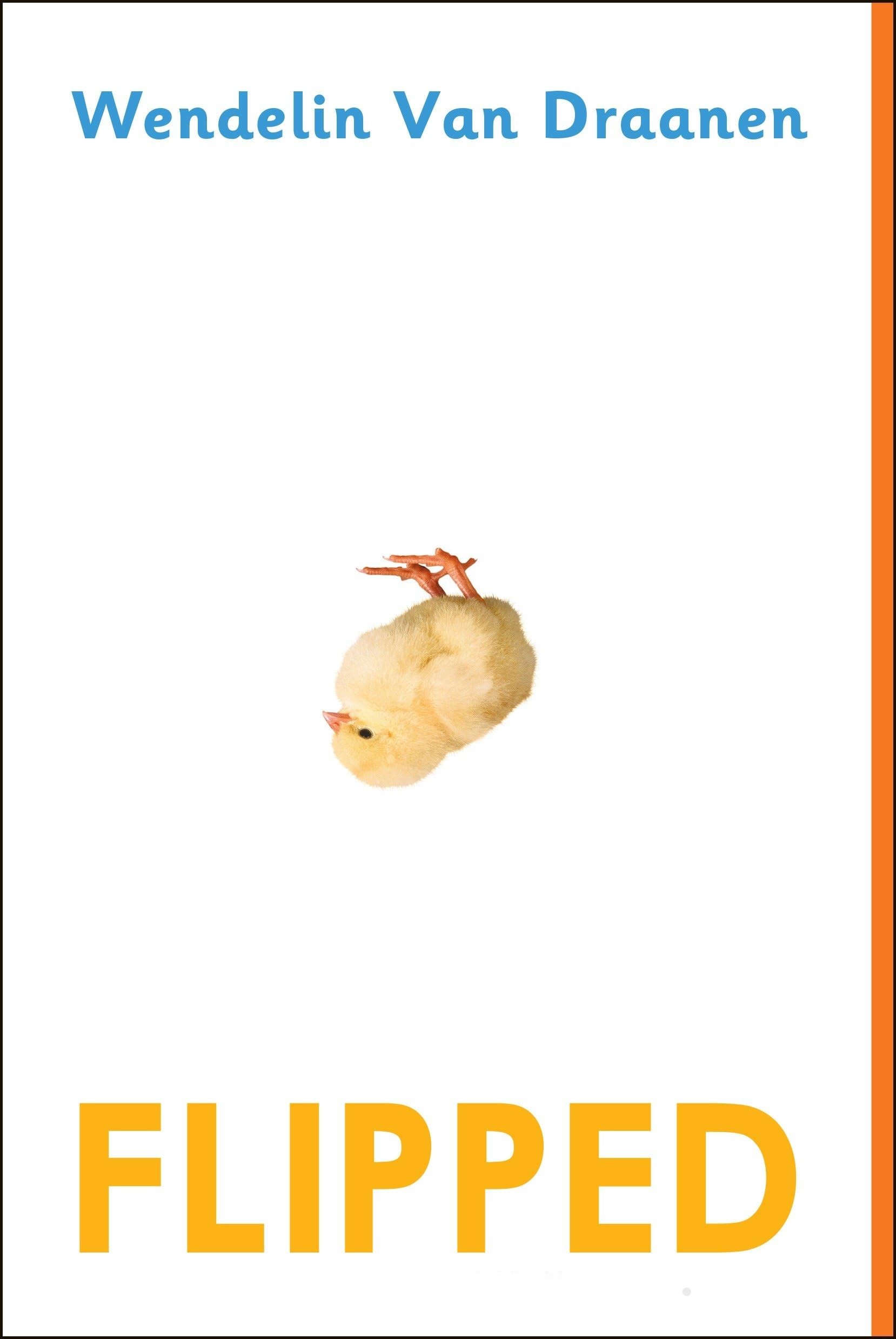
Flipped by Wendelin Van Draanen is a funny, warm, and structurally clever novel about two neighbors — Juli Baker and Bryce Loski — who have been looking at each other from opposite angles for seven years and who are both, by the time eighth grade arrives, beginning to see the other person clearly for the first time. Told in alternating chapters that give the same events from both perspectives, it is one of the most formally satisfying novels in middle grade fiction: a book about the gap between how we see people and how they actually are, about growing up and changing your mind, and about the specific embarrassment and specific grace of being thirteen and discovering that the person you dismissed is more interesting than you thought. This complete guide covers the reading level, age appropriateness, themes, characters, and everything parents and teachers need to know about this beloved novel.
For Parents
Flipped is a novel about first love told with complete honesty and complete tact — funny about the awkwardness, serious about the feelings, and entirely without the content concerns that make many young adult novels inappropriate for the middle grade range. Best suited for readers ages 10-13, it is warm, fast-moving, and genuinely funny in the way that the best comedy of errors always is: painful in the moment and delightful in retrospect. Parents who want their children to read a love story that takes both characters seriously, gives them each their own perspective, and treats the feelings of thirteen-year-olds with respect rather than condescension will find it one of the best available choices.
For Teachers
A widely taught novel well suited to grades 5-7, Flipped is an exceptional text for teaching perspective and point of view — the alternating chapter structure makes the same events look entirely different depending on who is narrating them, and examining how Van Draanen achieves this is one of the richest craft discussions available at this level. The novel also opens substantive conversations about empathy, the gap between perception and reality, how families shape the people we become, and what it means to genuinely see another person. It is particularly useful for units on narrative perspective, unreliable narrators, and the ethics of judgment.
Flipped at a Glance
Find on Amazon →| Author | Wendelin Van Draanen |
| Published | 2001 |
| Grade Level | 5-7 (our assessment) |
| Recommended Age | 10-13 |
| Flesch-Kincaid Grade | 4.8 |
| Word Count | ~47,000 |
| Pages | 212 (standard paperback) |
| Chapters | 16 (8 pairs of alternating Juli/Bryce chapters) |
| Genre | Realistic fiction / romance |
| Setting | A suburban neighborhood, California |
| Awards | ALA Notable Children’s Book; SLJ Best Book of the Year |
For official Lexile and AR levels, visit Lexile.com or AR BookFinder. ReadingVine provides independent editorial assessments.
What Reading Level Is Flipped?
Flipped reads at approximately a 5th-7th grade level by our editorial assessment, with a Flesch-Kincaid grade level of around 4.8. Van Draanen writes in two distinct first-person voices — Juli’s warm, direct, slightly earnest narration and Bryce’s more guarded, self-aware, occasionally sheepish account of the same events — and keeping those voices distinct while covering identical ground is one of the novel’s most impressive craft achievements. Both voices are accessible, conversational, and funny, and the novel moves quickly despite covering the same scenes twice.
The F-K score of 4.8 runs slightly low for the emotional sophistication the novel requires. Flipped is not a difficult read in terms of vocabulary or sentence structure, but understanding what each narrator is getting wrong about the other — and what they are getting right — requires the kind of social and emotional intelligence that develops most fully in the 10-13 range. Younger readers can enjoy the comedy and the sweetness; older readers in the recommended range will feel the full complexity of watching two people slowly come into focus for each other.
The book is most commonly recommended for grades 5-7. For official Lexile and Accelerated Reader scores, visit Lexile.com or AR BookFinder.
What Age Is Flipped Appropriate For?
We recommend Flipped for readers ages 10-13. This is one of the most content-appropriate romantic novels in the middle grade canon — warm and honest about the feelings of early adolescence without any of the content that makes many young adult romances unsuitable for this age range.
The novel’s romantic content is limited to a crush, a hand-holding moment, and a first kiss at the very end — all handled with the complete tact and age-appropriateness of the best middle grade fiction. There is no sexual content of any kind. Bryce’s father makes some unkind remarks about Juli’s family — specifically about her uncle, who has an intellectual disability — that are depicted as wrong and that have consequences within the story. There is some mild family conflict in both households. A subplot involves Juli’s sycamore tree being cut down, which some readers find genuinely upsetting. The novel’s most difficult emotional content is Bryce’s dawning recognition of his own moral failures — the specific discomfort of a boy who has been unkind and begins to understand it — which is handled with honesty rather than melodrama. This is an entirely appropriate novel for the recommended age range.
Flipped has been widely used in classrooms and recommended by librarians for over twenty years as one of the most reliable and most beloved romantic novels for the middle grade range. Its combination of genuine comedy, genuine feeling, and genuine craft makes it one of those novels that readers of almost any age within the recommended range will find something to love in.
What Is Flipped About?
The summer before second grade, Bryce Loski moves into the house across the street from Juli Baker. Juli immediately develops a powerful crush on Bryce — specifically on his eyes, which she finds extraordinary. Bryce immediately finds Juli overwhelming and spends the next several years trying to avoid her. This is the situation at the novel’s start, and it is also the novel’s central comedy: that Juli is completely, visibly, enthusiastically in love with Bryce, and Bryce is completely, visibly, desperately trying to get away from her, and neither of them has any idea that by eighth grade the situation is going to reverse entirely.
The novel covers their shared history from second grade through eighth, told in alternating chapters that give first Juli’s perspective and then Bryce’s on the same period. The alternating structure is the novel’s great formal achievement: the same events look entirely different depending on who is narrating them. A moment that Juli remembers as romantic and significant, Bryce remembers as awkward and embarrassing. A quality that Bryce dismisses in Juli — her tendency to climb the sycamore tree in their neighborhood and refuse to come down, her habit of raising backyard chickens, her devotion to her family — Juli understands as expressions of her own particular kind of integrity.
Bryce is not a villain. He is a boy who has been shaped by a father who values appearances and a best friend who encourages his worst instincts, and who has been coasting on good looks and social ease without examining much of what lies underneath. When he begins to examine it — when Juli’s qualities start to register as genuine rather than embarrassing, when his grandfather Chet starts asking him questions that require honest answers — the discomfort of that examination is the novel’s most interesting emotional territory.
Juli is not a saint either. She is confident, sometimes oblivious, occasionally self-righteous about her own values in ways that are entirely recognizable as thirteen years old. But she has something Bryce lacks: a genuine relationship with her own convictions, a willingness to stand in the sycamore tree until she is ready to come down, a knowledge of what she values and why. The novel’s arc is partly about Juli being seen clearly by Bryce, and partly about Bryce developing the self-knowledge to do the seeing.
Wendelin Van Draanen has spoken about writing Flipped as an exercise in sustained perspective-taking — in asking herself, for every scene, what it would look like from the other side. The result is one of the most formally coherent novels in middle grade fiction: a book whose structure enacts its theme, where the form is the argument.
Flipped Characters
Is Flipped Banned?
Flipped has not been widely banned or challenged and does not appear on lists of frequently challenged books. It has been embraced by educators, librarians, and parents as one of the most appropriate and most beloved romantic novels in the middle grade canon. Its complete absence of sexual content, its warm and honest treatment of early adolescent feelings, and its genuine craft have made it a reliable recommendation for over twenty years. It was adapted into a film in 2010, directed by Rob Reiner, which brought the story to a wider audience.
Flipped Themes and Lessons
The central theme of Flipped is perspective — specifically, how completely two people can experience the same events and arrive at opposite understandings of what happened. Van Draanen’s alternating chapter structure is not a gimmick; it is an argument. Every time a chapter ends and the same scene begins again from the other side, the novel is demonstrating that what we see when we look at other people is shaped as much by what we bring to the looking as by what is actually there. Bryce and Juli are looking at the same events and seeing different things, and the comedy and the pathos of the novel come from the reader’s ability to see both at once.
Character and integrity are the novel’s second great theme, centered on the contrast between the two families. The Bakers are not rich, their yard is not tidy, and Juli’s uncle Daniel is not the kind of relative that Bryce’s father would consider an asset. But the Baker family has something the Loski household lacks: a genuine relationship with their own values, a willingness to be themselves without apology, a household where the things that matter are actually discussed. Bryce’s growing recognition of this difference — his dawning understanding that his father’s social performance is not the same as character — is the novel’s central moral development.
Moral courage is the novel’s third great theme, rendered through Bryce’s repeated failures and eventual partial success. He knows, on several occasions, that he should do something — stand up to his father, correct his friend’s cruelty, acknowledge Juli’s qualities publicly — and he does not do it until the cost of not doing it becomes more uncomfortable than the cost of doing it. His eventual act of small courage is not dramatic, but it is real, and the novel treats it as exactly as significant as it is: a first step, not a redemption.
Discussion starters for classrooms: How does the same event look different from Juli’s perspective and Bryce’s? What does Juli have that Bryce lacks, and what does Bryce have that Juli lacks? What does Chet see in Juli that Bryce’s father doesn’t? Why does Bryce keep failing to do the right thing, and what finally changes? What does the sycamore tree mean to Juli, and why is its loss so important? How are the two families different, and what does the novel suggest those differences mean?
How Many Pages and Chapters Are in Flipped?
The standard paperback edition of Flipped is 212 pages, structured as 16 chapters arranged in 8 pairs — each pair covering the same period of time first from Juli’s perspective and then from Bryce’s. The word count is approximately 47,000 words. The paired chapter structure is the novel’s defining formal feature, and the chapters are substantial enough — averaging around thirteen pages each — to give each perspective time to develop before handing off to the other.
For readers in the target age range of 10-13, expect a reading time of roughly 4-6 hours, or about a week of comfortable reading at 30 minutes per session. Many readers finish it in a weekend — the alternating structure creates a forward momentum that makes stopping difficult, because each chapter ends just as the reader is ready to see the same scene from the other side. As a classroom text it works extremely well in a two-week unit, with the perspective structure providing a natural framework for exercises in point of view, unreliable narration, and empathy. Teachers often ask students to predict Bryce’s chapter before reading it, or to note which details change meaning when seen from the other perspective — both exercises the novel’s structure makes unusually productive.
Books Similar to Flipped
About Wendelin Van Draanen
Wendelin Van Draanen is an American author best known for the Sammy Keyes mystery series and for Flipped, which has become one of the most beloved and most widely taught middle grade novels of the past twenty-five years. Before turning to writing full time she taught middle and high school, and the specificity and affection with which she renders early adolescent social dynamics in Flipped reflects that experience directly. Flipped was adapted into a film in 2010, directed by Rob Reiner, which brought the story to a wider audience and introduced a new generation of readers to the book. Van Draanen has spoken about the dual-perspective structure as the novel’s essential feature — she wrote both voices simultaneously, returning to each scene from the other side immediately after writing the first version, to ensure that both perspectives were equally specific and equally honest. Her other notable novels include Runaway (2006) and The Running Dream (2011), which won the Schneider Family Book Award. She lives in California.
Flipped: Frequently Asked Questions
What reading level is Flipped?
Flipped has a Flesch-Kincaid grade level of approximately 4.8, which runs slightly low for the emotional sophistication the novel requires. Our editorial assessment places it at grades 5-7 (ages 10-13). The prose is conversational and accessible in both voices, but fully appreciating what each narrator is getting wrong about the other requires the social and emotional intelligence that develops most fully in the recommended age range. For official Lexile and AR scores, visit Lexile.com or AR BookFinder.
How does the alternating chapter structure work?
The novel is divided into 8 pairs of chapters, each pair covering the same period of time — first from Juli’s perspective and then from Bryce’s. The same events appear in both chapters, but what each narrator notices, what they remember, what they understand, and what they miss are entirely different. A moment Juli experiences as significant, Bryce experiences as uncomfortable. A quality Bryce has decided is embarrassing, Juli understands as integrity. The structure is not a gimmick; it is the novel’s central argument about perspective — that what we see when we look at other people is as much a reflection of ourselves as it is a description of them.
What does the title Flipped mean?
The title refers to the reversal at the novel’s heart: Juli has been in love with Bryce since second grade, and Bryce has been trying to escape her for the same period. By eighth grade, everything has flipped — Juli has begun to see Bryce’s flaws clearly and has pulled back, and Bryce has begun to see Juli’s qualities clearly and has fallen in love with her. The title is also, more broadly, about the experience of having your understanding of another person flip completely — of realizing that the person you had filed away under a particular label is not that person at all, and of the specific disorientation that realization produces.
Why is the sycamore tree so important to Juli?
The sycamore tree is the novel’s most sustained symbol — a large old tree in the neighborhood that Juli has been climbing since childhood, from which she can see the whole valley spread out below her. For Juli, the tree represents the specific kind of seeing that the whole from above provides: perspective, proportion, the understanding that comes from being high enough to see the full picture. It is also the place where she is most completely herself — unperformed, unhurried, genuinely present. Its removal is genuinely devastating to her, and the fact that Bryce does not understand why it matters to her — and the fact that his grandfather does — is one of the novel’s most precise measurements of where Bryce is and where he needs to get to.
Is Bryce a good person?
This is one of the novel’s most productive questions and one it deliberately does not resolve simply. Bryce is not a villain — he is a boy who has been shaped by a father who values appearances over character, who has been coasting on social ease without examining what lies beneath it, and who knows, on several occasions, that he is failing to do the right thing and fails anyway. He is also, by the novel’s end, beginning — just beginning — to develop the honesty and self-knowledge that would make him genuinely good rather than merely pleasant. Whether that beginning is enough, and what it will become, is left to the reader. The novel’s refusal to simply redeem him with a grand gesture is one of its most honest and most discussed choices.
Is there a movie version of Flipped?
Yes — Flipped was adapted into a film in 2010, directed by Rob Reiner and starring Madeline Carroll as Juli and Callan McAuliffe as Bryce. The film is set in the 1960s rather than the early 1990s of the novel, which changes the period detail but preserves the story’s structure and spirit. It is widely considered a faithful and well-crafted adaptation. Families and classrooms who have read the novel often watch the film as a companion piece, and discussing the differences between the two versions — what the film keeps, what it changes, what the novel can do that the film cannot — is a productive exercise for students who have read both.
What grade is Flipped typically assigned in?
Flipped is most commonly assigned in grades 5, 6, and 7, both as independent reading and as a classroom text. It is particularly well suited to units on narrative perspective and point of view, where the alternating structure makes it the most immediately useful novel in the middle grade canon for demonstrating how perspective shapes meaning. Many teachers use it in conjunction with exercises asking students to rewrite scenes from a different character’s point of view. It is also widely used in social-emotional learning contexts for its portrait of empathy, judgment, and the gap between perception and reality.