
 = Partner Site
Stargirl Reading Level: A Complete Guide
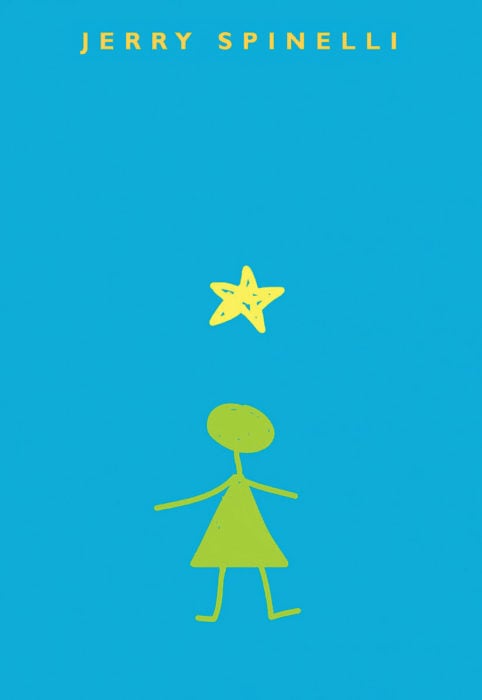
Stargirl by Jerry Spinelli is a provocative and quietly devastating novel about a girl named Stargirl Caraway who arrives at an Arizona high school unlike anyone who has ever been there — who plays ukulele in the cafeteria, carries a pet rat named Cinnamon, celebrates strangers’ birthdays, and is so completely, radiantly herself that the entire school doesn’t know whether to worship her or destroy her. Told by a boy named Leo who falls in love with her and then fails her, it is one of the most honest novels ever written about conformity, courage, and what it costs to be genuinely different. This complete guide covers the reading level, age appropriateness, themes, characters, and everything parents and teachers need to know about this important and enduring book.
For Parents
Stargirl is a novel about what happens to a person who refuses to conform, told from the perspective of a boy who loves her and cannot find the courage to stand with her. Best suited for readers ages 10-14, it deals honestly with social pressure, the cruelty of adolescent group dynamics, and the specific shame of choosing belonging over love. It is not a comfortable book — it is meant to be uncomfortable — but it is an important one. Parents who want their children to think seriously about who they are willing to be, and at what cost, will find it an invaluable starting point for exactly that conversation.
For Teachers
A widely taught novel well suited to grades 5-7, Stargirl is an exceptional text for teaching perspective and narrator reliability, the mechanics of social conformity, and the gap between what characters do and what they know they should do. Leo’s narration — warm, self-aware, and ultimately self-indicting — is a superb model for discussing how point of view shapes a reader’s sympathies. The novel opens essential discussions about individuality, peer pressure, and the social cost of being different that are directly relevant to middle school students navigating these dynamics in real time.
Stargirl at a Glance
Find on Amazon →| Author | Jerry Spinelli |
| Published | 2000 |
| Grade Level | 5-7 (our assessment) |
| Recommended Age | 10-14 |
| Flesch-Kincaid Grade | 4.7 |
| Word Count | ~47,000 |
| Pages | 186 (standard hardcover) |
| Chapters | 32 |
| Genre | Realistic fiction / coming-of-age |
| Setting | Mica, Arizona (a fictional small town), present day |
| Awards | ALA Best Book for Young Adults; ALA Notable Children’s Book |
For official Lexile and AR levels, visit Lexile.com or AR BookFinder. ReadingVine provides independent editorial assessments.
What Reading Level Is Stargirl?
Stargirl reads at approximately a 5th-7th grade level by our editorial assessment, with a Flesch-Kincaid grade level of around 4.7. That score runs low for a novel most powerfully experienced by readers in grades 6-8 — the prose is accessible and direct, but the emotional and philosophical territory the novel covers is squarely adolescent. Spinelli writes in Leo’s voice with a clarity and simplicity that is itself the point: Leo is not a complicated narrator in his language, only in his choices, and the gap between how simply he describes things and how much weight those things carry is where the novel lives.
The short chapters — thirty-two of them in 186 pages — give the novel an unusually swift pace for a book about social dynamics and moral failure. Each chapter is a discrete episode or reflection, and the cumulative effect is powerful. Readers who find social novels slow will find Stargirl moves more quickly than they expect. Readers who are living through anything like what Leo and Stargirl experience will find it moves almost too quickly — the recognition is immediate and sometimes painful.
The book is most commonly recommended for grades 5-7 and is widely used in middle school. For official Lexile and Accelerated Reader scores, visit Lexile.com or AR BookFinder.
What Age Is Stargirl Appropriate For?
We recommend Stargirl for readers ages 10-14. The novel deals with social ostracism, the cruelty of adolescent conformity pressure, a romantic relationship between high school students, and a narrator who makes choices he knows are wrong and cannot stop himself from making. All of this is handled with care and without graphic content, but the emotional territory is genuinely middle-school and high-school in its intensity.
The novel’s central content concern is its sustained and honest depiction of social cruelty — the silent treatment, deliberate exclusion, and the way an entire school can turn on a single person with the thoroughness of a weather system. This is depicted from Leo’s perspective with full emotional honesty and without softening. Stargirl is also shunned after she cheers for the opposing team at a basketball game, and the social consequences for Leo of being associated with her are rendered in uncomfortable detail. There is a mild romantic relationship between Leo and Stargirl — hand-holding, one kiss — with no sexual content. There is no strong language and no violence. The novel’s difficulty is entirely emotional and moral, which is precisely what makes it valuable.
For children who are currently navigating social pressure, peer exclusion, or the question of how much of themselves they are willing to compromise for belonging, the novel can be both validating and challenging. Its refusal to give Leo an easy redemption — to let him off the hook for what he does — is one of its most important and most uncomfortable qualities. Parents who read it alongside their children will find it opens conversations that are difficult and necessary.
What Is Stargirl About?
Leo Borlock has lived his whole life in Mica, Arizona, a small town so thoroughly average that nothing unusual has ever happened there. Then Stargirl Caraway enrolls at Mica Area High School, and everything changes. She arrives in a pioneer dress, carrying a ukulele and a pet rat named Cinnamon. She sings happy birthday to strangers in the cafeteria. She decorates her desk with a cloth and a vase of flowers. She cheers loudly at football games — for both teams. She keeps a card file of people in the community and tracks their birthdays, their losses, and their small joys, sending cards and leaving anonymous gifts. She is, by any measure, completely unlike anyone the students of Mica have encountered.
At first the school doesn’t know what to do with her. Then it decides she is wonderful. Stargirl is briefly the most popular person at Mica, a celebrity, the person everyone wants to be near. Leo falls in love with her with the helplessness of someone encountering something genuinely new. Their relationship — walks in the desert, conversations about nothing and everything, the particular sweetness of first love — is the novel’s warmest thread.
Then Stargirl cheers for the opposing team during a crucial basketball game, and the school turns on her with the same unanimity it had used to celebrate her. The silent treatment descends. She is shunned, ignored, treated as if she does not exist. And Leo, who loves her, begins to feel the social pressure as a physical force — a slow, grinding erosion of his willingness to stand beside her in the school’s disapproval. He asks her to be normal. She tries, briefly and painfully, becoming “Susan” and dressing and behaving like everyone else. It does not work. Stargirl cannot stop being Stargirl, and the school cannot stop hating her for it.
The ending does not redeem Leo. He makes his choices, and the novel, with quiet integrity, declines to forgive them on his behalf. What Leo does with what he has learned — years later, as the adult narrator looking back — is the novel’s final, open question.
Jerry Spinelli has said that Stargirl is based in part on his wife, the author Eileen Spinelli, who is known for her own extravagant kindness and individuality. The novel was published in 2000 and has been followed by a sequel, Love, Stargirl (2007), told in Stargirl’s own voice after she leaves Mica.
Stargirl Characters
Is Stargirl Banned?
Stargirl has appeared on American Library Association lists of challenged books, though it is not among the most frequently challenged titles. Challenges have typically been based on the romantic relationship between Leo and Stargirl and on the novel’s depiction of social cruelty as something that goes unaddressed by adults — a portrayal some parents and administrators have found uncomfortably realistic. The educational community has consistently defended it, and it is widely taught in middle schools across the country. Spinelli’s earlier novel Maniac Magee (Newbery Medal, 1991) has faced similar challenges for similar reasons — realistic depictions of social dynamics that adults find uncomfortable to acknowledge.
Stargirl Themes and Lessons
The central theme of Stargirl is the cost of individuality in a social world — specifically, what happens to a person who is completely themselves in a community that has no room for that kind of completeness. Stargirl is not difficult or aggressive or demanding; she is simply, uncompromisingly good in ways the school cannot accommodate. Her goodness — her habit of noticing people, celebrating them, extending kindness to strangers and enemies with equal warmth — is experienced by Mica as a judgment, an implicit rebuke of their smaller and more conditional love. The novel’s central irony is that the school punishes Stargirl for the quality that makes her most worth knowing.
Leo’s failure is the novel’s second great theme and its most uncomfortable one. He does not choose belonging over Stargirl in a single decisive moment; he chooses it gradually, incrementally, each small retreat feeling individually justifiable and collectively amounting to a betrayal. The novel is honest about how this happens — not through malice but through the accumulation of small, reasonable-feeling choices — and its refusal to let Leo redeem himself within the story’s frame is one of the most morally serious things a novel for this age group can do. It tells readers that some failures follow you, that knowing what was right and not doing it is its own kind of permanent mark.
The novel is also, quietly, about kindness as a radical act — about what it looks like when a person actually does the things most people only feel good about imagining doing: remembers strangers’ birthdays, sends cards to people in the newspaper who are grieving, cheers for the team that is losing because they need it more. Stargirl’s practices are specific and achievable, and readers who finish the novel often find themselves wanting to try them.
Discussion starters for classrooms: Why does the school turn on Stargirl after admiring her? What does Leo know about what he should do, and what stops him from doing it? Is Leo a good person? What is the difference between Stargirl and Susan? Why does becoming Susan make things worse rather than better? What does Archie mean when he says Mica is not ready for Stargirl? Is anyone ready for someone like Stargirl?
How Many Pages and Chapters Are in Stargirl?
The standard hardcover edition of Stargirl is 186 pages, divided into 32 short chapters averaging around six pages each. The word count is approximately 47,000 words. The short chapters give the novel a brisk, episodic quality — each one a distinct scene or reflection — that makes it faster-moving than its subject matter might suggest and nearly impossible to stop at a convenient place once started.
For readers in the target age range of 10-14, expect a reading time of roughly 4-6 hours, or about a week of comfortable reading at 30 minutes per session. Many readers finish it in one or two sittings once the social dynamics take hold. As a classroom text, the novel works well in a two-week unit, with the short chapters allowing for daily reading assignments that leave room for substantial discussion. The novel pairs naturally with writing assignments about a time students witnessed or experienced social pressure, and with discussions of what they would do differently — or not — if they were Leo.
Books Similar to Stargirl
About Jerry Spinelli
Jerry Spinelli is one of the most celebrated American authors of middle grade and young adult fiction, best known for Maniac Magee, which won the Newbery Medal in 1991. Born in Norristown, Pennsylvania, he has spoken extensively about drawing on the specific social world of American small-town adolescence — its loyalties, its cruelties, its particular mixture of freedom and constraint — as the material of his fiction. Stargirl, published in 2000, is widely considered his most fully realized novel after Maniac Magee and the one that most directly addresses the question that runs through all his work: what happens to the person who cannot or will not conform? Spinelli has said that the character of Stargirl was inspired in part by his wife, the author and poet Eileen Spinelli, who is known for her own generous and unconventional spirit. A sequel, Love, Stargirl (2007), is told in Stargirl’s own voice in letters written from her new home after leaving Mica. His other notable works include Wringer (Newbery Honor, 1998), Loser (2002), and Milkweed (2003). He lives in Pennsylvania with his wife.
Stargirl: Frequently Asked Questions
What reading level is Stargirl?
Stargirl has a Flesch-Kincaid grade level of approximately 4.7, which runs low for a novel most powerfully experienced by readers in grades 6-8. Our editorial assessment places it at grades 5-7 (ages 10-14). The prose is clear and accessible, but the emotional and moral territory is squarely adolescent in its intensity and complexity. For official Lexile and AR scores, visit Lexile.com or AR BookFinder.
What happens to Stargirl at the end?
Stargirl leaves Mica. After the school’s sustained hostility and Leo’s retreat from her, she dances at the school’s Ocotillo Ball alone and with complete joy, undeterred by the fact that no one will dance with her — and then she is gone. The novel does not explain where she goes or what happens to her; Leo, the narrator, searches for her for years and finds only traces. Her departure is handled with the same lightness and mystery as her arrival — she was not a person Mica could hold, and the novel does not pretend otherwise. The sequel Love, Stargirl (2007) takes up her story from her own perspective after leaving Mica.
Why does Stargirl cheer for the other team?
Stargirl cheers for the opposing team at a basketball game because they are losing and she feels they need encouragement more than the winning team does. This is entirely consistent with her character — she responds to what she sees in front of her rather than to the social obligations of team loyalty — but it is the action that turns the school against her. The moment is the novel’s hinge: before it, the school is enchanted by Stargirl’s difference; after it, her difference is experienced as a betrayal. That the specific action that destroys her social standing is an act of pure generosity is the novel’s sharpest irony and one of its most important points.
Does Leo ever redeem himself?
This is the question the novel most deliberately leaves open. As an adult narrator, Leo is honest about what he did and what it cost Stargirl; he does not excuse himself or minimize the failure. He has spent years looking for her, carrying what happened. Whether this constitutes redemption — whether awareness of failure is itself a form of repair — is a question the novel poses without answering. Spinelli is careful not to let Leo off the hook within the story, and the ending’s openness is a moral position: knowing what was right and not doing it is its own kind of mark, and the novel will not erase it.
What is the significance of the enchanted place?
Archie takes Leo to a spot in the desert he calls the enchanted place — a circle of stones where he brings students who seem ready for it. It is the novel’s symbol for the space outside ordinary social reality, where a person can see clearly what they cannot see from inside the crowd. Archie’s gift of the enchanted place to Leo is his way of telling him what Stargirl is — that she lives there permanently, in a clarity that most people can only visit. Leo’s inability to stay in that clarity, to choose the enchanted place over the school’s approval, is the measure of his failure.
Is there a sequel to Stargirl?
Yes — Love, Stargirl (2007), told entirely in Stargirl’s voice as a long letter to Leo written from her new home. It reveals what Stargirl was thinking and feeling during the events of the first novel and follows her as she finds a new community — and new people to notice and celebrate. The sequel gives Stargirl a perspective and an interior life the first novel deliberately withholds, and it is a different but complementary reading experience. Readers who want to know what Stargirl was experiencing while Leo was failing her will find Love, Stargirl essential.
What grade is Stargirl typically assigned in?
Stargirl is most commonly assigned in grades 5, 6, and 7, both as independent reading and as a class text. It is particularly well suited to units on peer pressure, individuality, and narrator reliability. The short chapters make it practical for daily classroom reading assignments, and the social dynamics it depicts are directly relevant to middle school students navigating similar pressures in real time. Many teachers pair it with writing assignments about a time students witnessed or experienced the choice between belonging and conscience.
Is Stargirl a real person?
Stargirl is a fictional character, but Jerry Spinelli has said she was inspired in part by his wife, the author and poet Eileen Spinelli, who is known for her generous and unconventional spirit — her habit of noticing people, celebrating them, and extending kindness without social calculation. The specific practices Stargirl performs — keeping a card file of community members, sending anonymous gifts, celebrating strangers’ birthdays — are drawn from things Eileen Spinelli actually does. The character is fiction; the generosity that animates her is real.