
 = Partner Site
Pippi Longstocking Reading Level: A Complete Guide
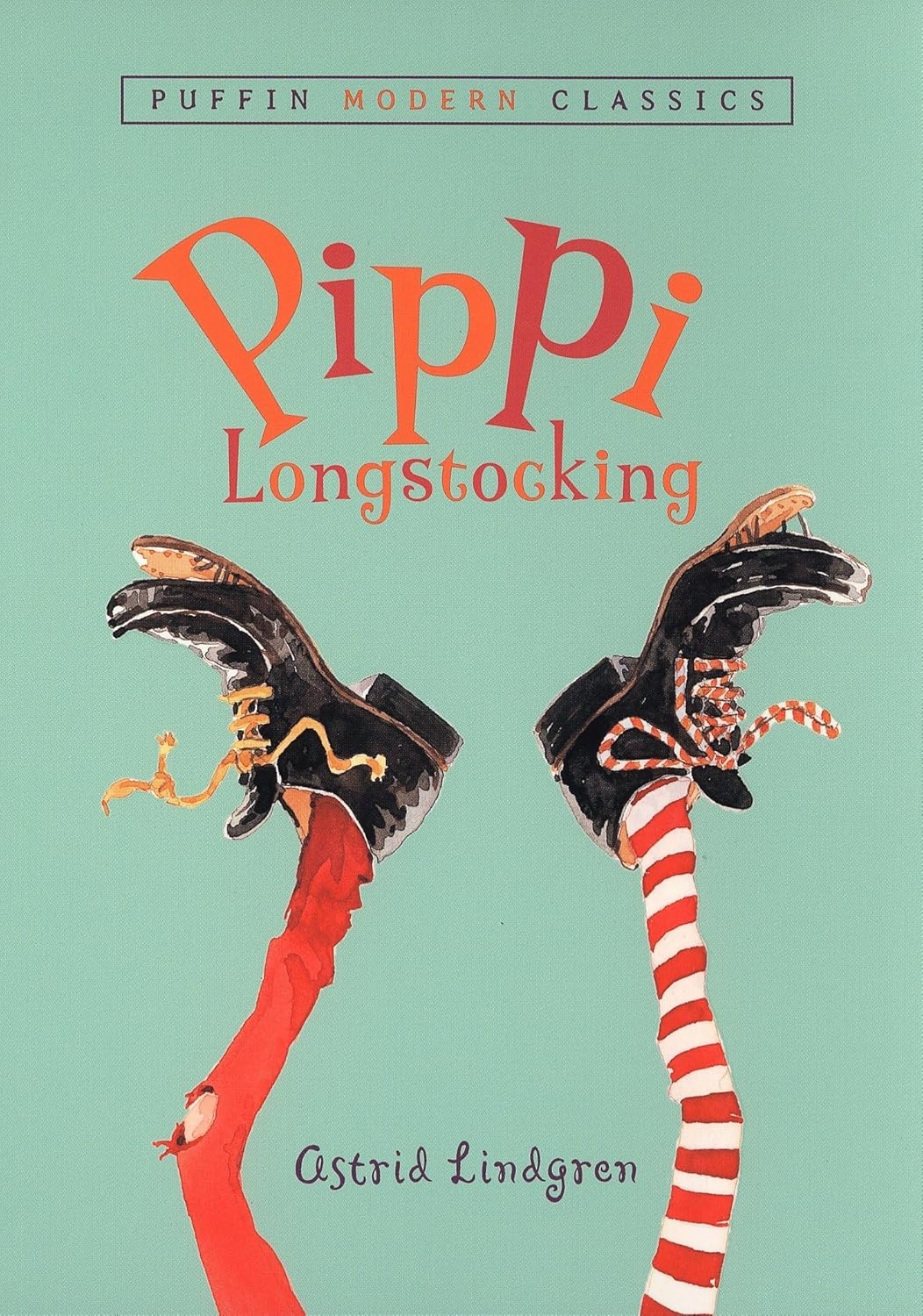
Pippi Longstocking by Astrid Lindgren is a beloved classic about a nine-year-old girl who lives alone in a Swedish villa with a horse on her porch and a monkey on her shoulder, lifts grown men over her head, tells outrageous lies with cheerful confidence, and refuses to behave in any of the ways adults expect. One of the most original and anarchically joyful children’s books ever written, it has been delighting readers since its publication in Sweden in 1945 and remains one of the great portraits of childhood freedom and irreverence in all of literature. This complete guide covers the reading level, age appropriateness, themes, characters, and everything parents and teachers need to know about this enduring classic.
For Parents
Pippi Longstocking is pure, uncut delight — a book about a girl with no rules, no parents, and no particular interest in acquiring either, who uses her superhuman strength to embarrass bullies, bewilder policemen, and generally live life entirely on her own terms. Best suited for readers ages 7-10, it is one of those rare books that children love precisely because it says something they have always felt: that adults are frequently absurd, that rules are frequently arbitrary, and that a child who is free to be completely herself is one of the most wonderful things in the world. There is nothing to worry about. Just enjoy it.
For Teachers
A widely beloved classic well suited to grades 3-4, Pippi Longstocking is an excellent text for teaching character, comic writing, and the episodic novel structure. Pippi’s voice — confident, deadpan, cheerfully indifferent to social convention — is one of the most distinctive in children’s literature and a superb model for character-driven humor. The novel also opens discussions about conformity and freedom, the absurdity of social rules, and what it means to be genuinely good versus merely well-behaved. It works beautifully as a classroom read-aloud, and individual chapters stand alone well for shorter reading activities.
Pippi Longstocking at a Glance
Find on Amazon →| Author | Astrid Lindgren |
| Translator | Florence Lamborn (1950); Tiina Nunnally (2007 modern translation) |
| Published | 1945 (Sweden); 1950 (US, first translation) |
| Grade Level | 3-4 (our assessment) |
| Recommended Age | 7-10 |
| Flesch-Kincaid Grade | 4.5 |
| Word Count | ~26,000 |
| Pages | 160 (standard paperback) |
| Chapters | 11 |
| Genre | Comic fiction / classic children’s literature |
| Setting | A small Swedish town, mid-20th century |
| Awards | Lewis Carroll Shelf Award; Astrid Lindgren received the Hans Christian Andersen Award (1958) |
For official Lexile and AR levels, visit Lexile.com or AR BookFinder. ReadingVine provides independent editorial assessments.
What Reading Level Is Pippi Longstocking?
Pippi Longstocking reads at approximately a 3rd-4th grade level by our editorial assessment, with a Flesch-Kincaid grade level of around 4.5. The prose is clear and lively, moving at the brisk pace of comic adventure. Individual chapters are self-contained episodes, each with its own setup and punchline, which makes the book particularly accessible for readers who are building stamina for longer narratives — they get the satisfaction of a complete story within each chapter.
One note worth knowing: translation matters considerably for this book. Pippi Longstocking was written in Swedish, and the quality of the English text depends entirely on the translation used. The Tiina Nunnally translation, published in 2007, is widely considered the most accurate and most lively. Older translations — particularly the 1950 Florence Lamborn version that many American readers encountered in the 20th century — took significant liberties with the text, softening some of Pippi’s edge and altering cultural references. If possible, seek out a more recent translation for the fullest experience of Lindgren’s original voice.
The book is most commonly recommended for grades 3-4 and works beautifully as a family or classroom read-aloud. For official Lexile and Accelerated Reader scores, visit Lexile.com or AR BookFinder.
What Age Is Pippi Longstocking Appropriate For?
We recommend Pippi Longstocking for readers ages 7-10, though it has been read aloud to younger children and enjoyed by readers of all ages. The content is almost entirely benign — this is one of the gentlest classic novels in terms of content concerns.
There is essentially nothing in Pippi Longstocking that requires a content warning in the contemporary sense. Pippi lives alone without parents, which is presented as a glorious adventure rather than a cause for concern. There are very mild comedic confrontations with policemen, bullies, and schoolteachers. A note for parents of very young children: Pippi’s complete freedom from adult supervision and her delight in ignoring rules is the entire point of the book, and some very young children may take this as a model. This is not a problem — it is the book working as intended — but parents should be prepared for a period of enthusiastic Pippi-inspired independence.
One historical note that some parents and teachers raise: the original Swedish text contains, in one chapter, a reference to Pippi’s father as the “Negro King” of a South Sea island (in some translations rendered as “cannibal king” or “Polynesian king”). This language reflects the casual racial vocabulary of 1940s Sweden and is outdated and offensive by contemporary standards. Different translations handle this differently — some retain it, some update it, some remove the chapter. Parents and teachers who are concerned about this should check which translation they are using. It is a real issue worth knowing about, though it does not define the book as a whole.
What Is Pippi Longstocking About?
Pippilotta Delicatessa Windowshade Mackrelmint Ephraim’s Daughter Longstocking — Pippi for short — moves into the old Villa Villekulla at the edge of a small Swedish town. She is nine years old. She has bright red hair in two braids that stick straight out, a dress she sewed herself with mismatched patches, one black stocking and one brown, enormous shoes, and a suitcase full of gold coins. Her mother died when she was a baby. Her father, a sea captain, was blown overboard in a storm and is presumed dead (Pippi is certain he has become the king of a South Sea island). She lives entirely alone, except for a horse named Old Man who lives on the porch and a monkey named Mr. Nilsson who lives on her shoulder.
The children next door, Tommy and Annika, are the picture of well-behaved Swedish childhood — polite, tidy, and a little bored. When Pippi appears, their world is transformed. She is the strongest girl in the world (she can lift a horse, a policeman, two burglars, or any combination thereof). She has a suitcase full of gold coins and no particular interest in saving them. She has never been to school and has no intention of going, though she tries it once to be sociable and finds it deeply puzzling. She tells stories about her travels with her father that are probably lies and possibly true. She does exactly what she likes.
The novel is structured as a series of episodes: Pippi goes to school; Pippi has a coffee party; Pippi encounters two burglars; Pippi performs at a circus; Pippi faces down a bully named Bengt. Each episode follows the same comic logic — ordinary Swedish social expectations encounter Pippi, and Pippi wins, effortlessly and without malice, simply by being completely herself. The comedy is never cruel. Pippi does not humiliate people out of spite; she simply cannot see why anyone would do things the way everyone does them, and her genuine puzzlement at social convention is funnier and more subversive than any deliberate mockery could be.
Astrid Lindgren invented Pippi in 1941 for her daughter Karin, who asked for a story about “a best friend who is completely different.” Lindgren later said that Pippi was her answer to the question of what childhood would look like if a child were completely free — free of adult authority, free of want, free to be entirely herself. The character was rejected by several publishers before Rabén & Sjögren published the book in 1945, and it became an immediate sensation in Sweden. It has since been translated into more than seventy languages and has never gone out of print.
Pippi Longstocking Characters
Is Pippi Longstocking Banned?
Pippi Longstocking was famously rejected by a Swedish publisher before its eventual publication, partly on the grounds that Pippi was a poor role model for children — a concern that has proved spectacularly unfounded in the seventy-five years since. In the United States, the book has occasionally appeared on challenged book lists, typically on the grounds that Pippi’s disrespect for authority and her unsupervised lifestyle set a bad example. These challenges have been largely unsuccessful and the novel is widely shelved and assigned in schools and libraries. The more substantive concern that educators and parents raise today involves the racial vocabulary in the chapter about Pippi’s father (discussed in the age-appropriateness section above), which some translations retain from the 1945 original. This is a legitimate editorial and pedagogical concern rather than a banning issue, and different editions have handled it in different ways.
Pippi Longstocking Themes and Lessons
The central theme of Pippi Longstocking is freedom — specifically the freedom of a child who has no one to answer to and who uses that freedom not for destruction but for delight. Pippi is not Lord of the Flies; she is not a portrait of what children do without rules. She is a portrait of what a child could be with complete self-determination: generous, brave, creative, and genuinely good in ways that have nothing to do with being told to be good. She gives her gold coins away, she defends Tommy and Annika from bullies, she rescues children from fires. She does these things not because anyone told her to but because they are obviously the right things to do. Lindgren’s argument is that goodness and obedience are not the same thing, and that children who are trusted to be themselves may be better people than children who are only ever told what to do.
The novel’s comic method is to place Pippi in situations governed by social rules she does not recognize as authoritative and watch what happens. When she goes to school, she cannot understand why children must sit in rows and answer questions one at a time; when she goes to a coffee party, she cannot understand why you must not take the biggest cake first; when the policemen come to take her to a children’s home, she cannot understand why a child who is perfectly happy and well-fed needs to live anywhere different. In each case, Pippi’s confusion is sincere, her logic is impeccable from her own premises, and the adults around her are exposed as enforcing conventions they have never examined. The comedy is gentle but the subversion is real.
Friendship is the novel’s warmest theme: the specific friendship between Pippi and Tommy and Annika, in which Pippi’s wildness and their orderliness complement each other perfectly. She gives them adventure; they give her the experience of being genuinely wanted by children her own age. The affection between them is one of the novel’s most consistently moving elements, running beneath all the comic chaos.
Discussion starters for classrooms and families: Why do adults keep trying to change Pippi, and why don’t they succeed? Is Pippi a good person? How do you know? What would you do if you could live like Pippi for a week? What rules does Pippi follow even though no one made them? What does the novel suggest about the difference between being good and being well-behaved?
How Many Pages and Chapters Are in Pippi Longstocking?
The standard paperback edition of Pippi Longstocking is approximately 160 pages, divided into 11 chapters averaging around fourteen pages each. The word count is approximately 26,000 words. Each chapter is a self-contained episode with its own comic setup and resolution, which makes the book unusually flexible for classroom use: individual chapters can be read, discussed, and enjoyed independently of the others, and the novel can be read in any order without losing much.
For readers in the target age range of 7-10, expect a reading time of roughly 2-3 hours, or about a week of comfortable reading at 20-30 minutes per session. It works exceptionally well as a family read-aloud — Pippi’s voice and her comic confrontations with adults are funnier when read aloud — and can be completed over a week of bedtime reading. As a classroom text, the episodic structure makes it easy to fit around other activities, with each chapter providing a complete, discussable unit.
Books Similar to Pippi Longstocking
About Astrid Lindgren
Astrid Lindgren (1907-2002) is the most widely read Swedish author in history and one of the most beloved children’s authors in the world. Born on a farm in Småland, Sweden, she invented Pippi Longstocking in 1941 while bedridden with pneumonia, telling stories to her daughter Karin. The book was published in 1945 and became an immediate sensation. Lindgren went on to write more than one hundred books, including further Pippi adventures (Pippi Goes on Board and Pippi in the South Seas), the Karlsson-on-the-Roof series, Ronja Rövardotter (published in English as Ronia, the Robber’s Daughter), and the deeply serious The Brothers Lionheart, which deals with death and courage in ways quite different from her comic work. She received the Hans Christian Andersen Award in 1958 — the highest honor in international children’s literature — and the Right Livelihood Award in 1994. In Sweden she is a national figure of the highest order: her face has appeared on currency, and she is widely considered one of the most important Swedes of the 20th century. She died in Stockholm in 2002 at the age of ninety-four.
Pippi Longstocking: Frequently Asked Questions
What reading level is Pippi Longstocking?
Pippi Longstocking has a Flesch-Kincaid grade level of approximately 4.5. Our editorial assessment places it at grades 3-4 (ages 7-10). The prose is clear and lively, with self-contained chapters that work well for readers building stamina. Note that reading level varies somewhat by translation — the Tiina Nunnally translation is widely recommended as the most accurate and most faithful to Lindgren’s voice. For official Lexile and AR scores, visit Lexile.com or AR BookFinder.
Why does Pippi live alone?
Pippi’s mother died when she was a baby, and her father — a sea captain named Captain Efraim Longstocking — was blown overboard in a storm and lost at sea, though Pippi is certain he survived and became the king of a South Sea island. In the absence of any adults to take her in, Pippi moves into the old Villa Villekulla that her father owned, with her suitcase full of gold coins, her horse, and her monkey, and simply sets up housekeeping. The Swedish welfare system, represented locally by Mrs. Prysselius, tries to have her sent to a children’s home, but Pippi outmaneuvers every attempt. Her solitary life is presented throughout as a magnificent adventure rather than a hardship — though the reader is also aware, particularly in quieter moments, that she is a child who has lost both her parents and that her bravado is partly a response to that loss.
Is Pippi actually the strongest girl in the world?
Within the world of the novel, yes — Pippi is superhumanly strong, able to lift a horse, throw a grown man through the air, and carry two policemen simultaneously without particular effort. This is presented as simply a fact about Pippi, requiring no explanation, in the same spirit as any fairy-tale gift. The strength is not the point; it is a plot device that enables the comic situations the novel most enjoys: the powerful being unable to compel a child who could break them in half if she chose, and choosing instead simply to ignore them. Pippi’s strength is also, symbolically, the strength of a child who has never been told she cannot do something — the physical expression of her psychological freedom.
What is the concern about racial language in Pippi Longstocking?
In the original 1945 Swedish text, Pippi’s father is referred to as a “Negro king” (in Swedish, negerkung) of a South Sea island. This language reflects the casual racial vocabulary of mid-20th-century Sweden and is offensive by contemporary standards. Different English translations have handled this differently: some retain a version of the original term, some substitute “Polynesian king,” some use “king of the South Seas” without racial designation. The Tiina Nunnally translation for Penguin Young Readers updates the language. Parents and teachers should check which translation they are using. This is a real concern and worth a conversation with children reading the book, though it appears in a limited portion of the text and does not define the novel as a whole.
Are there sequels to Pippi Longstocking?
Yes — two direct sequels: Pippi Goes on Board (1946) and Pippi in the South Seas (1948). Both follow the same episodic structure as the original and maintain the same comic spirit. Pippi in the South Seas is the most expansive of the three, taking Pippi and Tommy and Annika on a voyage to visit Pippi’s father on his island. All three novels are available in the same English translations, and readers who love the first book can proceed directly to the sequels. Lindgren also wrote a shorter picture-book version and several related stories featuring the same characters.
What grade is Pippi Longstocking typically assigned in?
Pippi Longstocking is most commonly used in grades 3 and 4, both as a classroom read-aloud and as independent reading. Its episodic structure makes it flexible for classroom use — individual chapters stand alone well and can be used for shorter reading and writing activities. It is a popular choice for units on character, comic writing, and classic international children’s literature. Many teachers use it as an introduction to translated literature and to the idea that children’s books come from all over the world.
Why has Pippi Longstocking remained popular for eighty years?
Because Pippi is exactly what every child has, at some point, wanted to be: completely free, completely capable, and completely herself. She has no parents to tell her what to do, unlimited money, a horse on her porch, and the ability to throw any adult who bothers her across the room — but she uses all of this not for selfishness or destruction but for fun, adventure, and the defense of anyone weaker than the people trying to push them around. She is the wish fulfillment of childhood distilled into a single magnificent character, and she has not dated because the wish has not dated. Children in 1945 and children today want the same thing: to be taken seriously, to be free, and to be good on their own terms rather than someone else’s.