
 = Partner Site
The Wonderful Wizard of Oz Reading Level: A Complete Guide
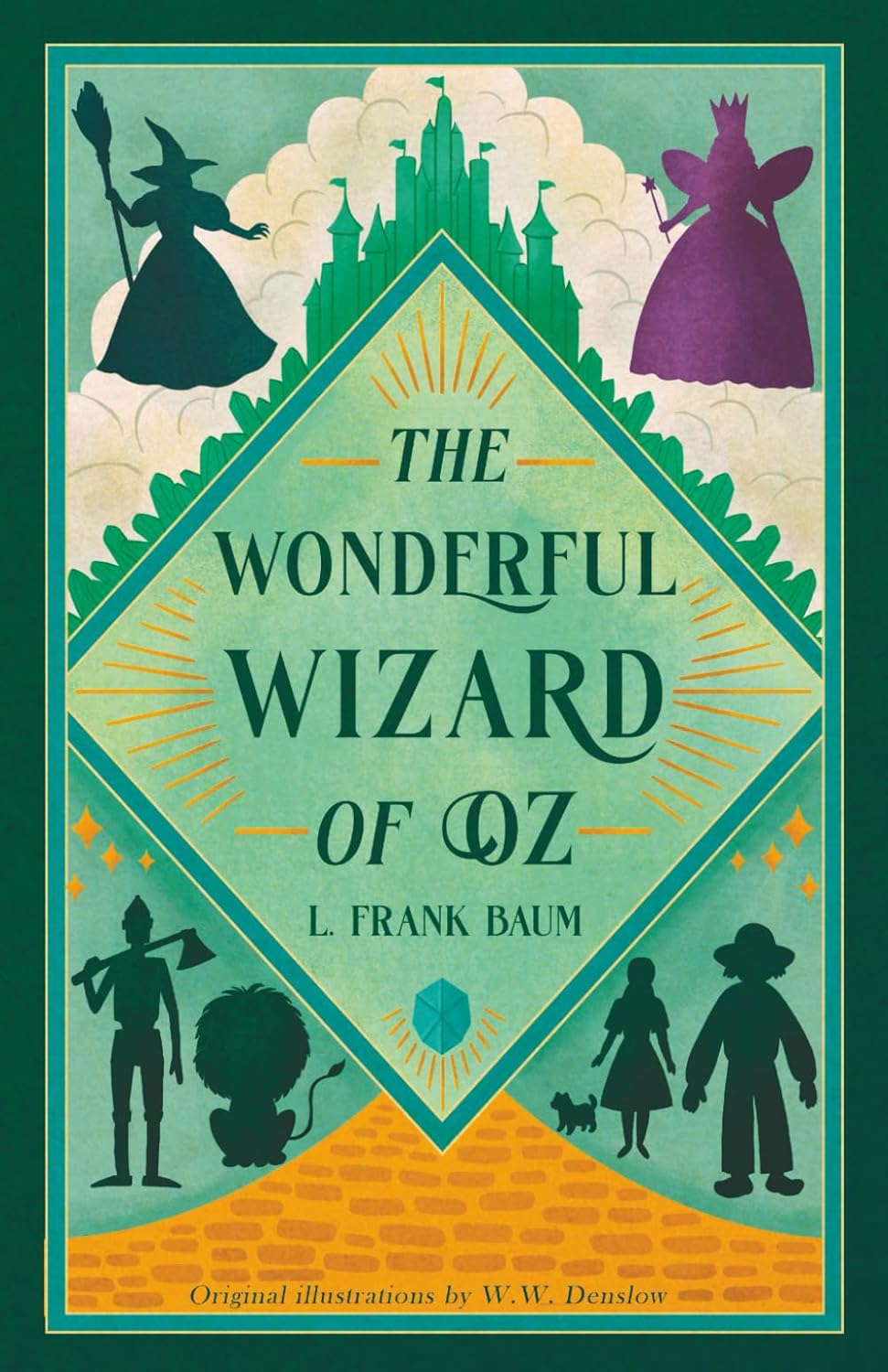
The Wonderful Wizard of Oz by L. Frank Baum follows Dorothy and her dog Toto as they’re swept by a tornado from Kansas to the magical Land of Oz, where they journey to the Emerald City seeking help from the Wizard. This guide provides parents and teachers with reading level information, age recommendations, content insights, and discussion questions for this American classic about courage, friendship, and the discovery that you’ve had what you need all along.
For Parents
Find the right reading level for your child, understand the book’s gentle adventure and themes, and get conversation starters to help your child explore ideas about courage, home, and believing in yourself.
For Teachers
Access grade-level guidance, reading metrics, character analysis support, and thematic discussion questions. This American fairy tale offers rich opportunities for exploring quest narratives, American folklore, and themes about inner strength and home.
The Wonderful Wizard of Oz at a Glance
Find on Amazon →| Author | L. Frank Baum |
| Published | 1900 |
| Grade Level | 3–5 (our assessment) |
| Recommended Age | 8–11 |
| Flesch-Kincaid Grade | 5.6 |
| Word Count | ~42,000 |
| Pages | ~154 (standard paperback) |
| Chapters | 24 |
| Genre | Classic fantasy / American fairy tale |
| Setting | Kansas and the Land of Oz, turn of the 20th century |
| Awards | Classic (foundational American children’s literature) |
For official Lexile and AR levels, visit Lexile.com or AR BookFinder. ReadingVine provides independent editorial assessments.
What Reading Level Is The Wonderful Wizard of Oz?
The Wonderful Wizard of Oz is appropriate for grades 3–5, with a Flesch-Kincaid grade level of 5.6. The vocabulary is accessible with some early 1900s terms and invented words for Oz locations and characters. Baum’s prose is clear and straightforward—he deliberately wrote in a simple, direct style because he wanted to create an American fairy tale accessible to all children, not just advanced readers.
L. Frank Baum’s writing style is matter-of-fact and unadorned. Unlike European fairy tales with elaborate prose, Baum tells his story simply and efficiently. The narrative moves quickly from adventure to adventure, and the fantastical elements are presented without surprise or drama—talking animals, magical objects, and strange creatures are simply facts of Oz. This straightforward approach makes the book easier to read than its publication date might suggest.
The story resonates most deeply with readers ages 8–11 who can appreciate the quest structure, relate to Dorothy’s homesickness, and understand the deeper message that the Scarecrow, Tin Woodman, and Lion already possess the qualities they seek. Strong third graders can read it independently; fourth and fifth graders will grasp the themes more fully.
What Age Is The Wonderful Wizard of Oz Appropriate For?
The Wonderful Wizard of Oz is most appropriate for readers ages 8–11. The book includes some mild fantasy violence and frightening moments, but Baum deliberately avoided the gore and terror of traditional fairy tales. His goal was to create wonder and pleasure rather than fear.
Fantasy violence: The Wicked Witch of the West sends wolves, crows, and bees to attack Dorothy’s party, and the Tin Woodman kills these creatures with his axe. A pack of Kalidahs (bear-tiger creatures) chase them. The violence is not graphic but is present.
The Wicked Witch’s death: Dorothy melts the Wicked Witch by throwing water on her. The witch literally melts into a puddle. This is strange rather than gruesome but may be startling.
The Wizard’s deception: The Wizard is revealed to be an ordinary man using tricks rather than real magic. Some children find this disappointing or confusing.
Period language: Some terms and attitudes reflect turn-of-the-century America and may require brief context.
What’s NOT in the book: No sexual content, no profanity, no real trauma. The ending is happy—Dorothy returns home to Kansas, and her friends become rulers in Oz. The book’s message is optimistic: you have the power within yourself to overcome challenges, and home is where you’re loved.
What Is The Wonderful Wizard of Oz About?
Dorothy lives with her Aunt Em and Uncle Henry on a small farm in Kansas. Life is gray and hard—the sun has baked the color out of everything, and Aunt Em and Uncle Henry never smile anymore. Dorothy’s only joy is her little dog Toto. One day, a cyclone approaches. Uncle Henry and the farmhands take shelter in the storm cellar, but Dorothy can’t get there in time with Toto. She takes refuge in the house, which is picked up by the cyclone and carried away through the air.
When the house finally lands, Dorothy opens the door to discover an impossibly beautiful country—flowers, trees, birds, and colorful little people called Munchkins. The house has landed on the Wicked Witch of the East, killing her, and the Munchkins are grateful to Dorothy for freeing them. The Good Witch of the North appears and gives Dorothy the dead witch’s silver shoes (they’re magic). Dorothy just wants to go home to Kansas, but no one knows how. The Good Witch suggests Dorothy travel to the Emerald City to ask the great and powerful Wizard of Oz for help.
Dorothy sets out on the yellow brick road wearing the silver shoes. Along the way, she meets three companions who join her quest. First is the Scarecrow, who believes he has no brains and wants to ask the Wizard for some. Second is the Tin Woodman, who believes he has no heart and wants the Wizard to give him one. Third is the Cowardly Lion, who believes he has no courage and wants the Wizard to make him brave. Together, the four friends journey toward the Emerald City.
They face various dangers: a river crossing where the Scarecrow is left stranded on a pole (but rescued), a field of poisonous poppies that puts Dorothy and the Lion to sleep (but they’re saved by field mice the Tin Woodman had helped earlier), and Kalidahs chasing them across a gorge. Through each challenge, the Scarecrow demonstrates cleverness, the Tin Woodman shows kindness, and the Lion proves he’s brave despite his fear.
They finally reach the Emerald City, where everyone wears green spectacles (supposedly to protect their eyes from the city’s brilliance). The Wizard agrees to see them but appears in different forms to each—a giant head, a beautiful lady, a terrible beast, a ball of fire. He promises to grant their wishes, but only if they destroy the Wicked Witch of the West, who rules over the Winkies in the western part of Oz.
Reluctantly, they set out to face the Wicked Witch. She sends wolves, crows, bees, and Winkie soldiers to stop them, but they defeat each attack. Finally, she uses her Golden Cap to summon the Winged Monkeys, who capture Dorothy and the Lion and destroy the Scarecrow and Tin Woodman (though they’re later repaired). The Wicked Witch sees the silver shoes Dorothy wears and wants them for herself, but she’s afraid to take them while Dorothy wears them.
Dorothy is forced to work as a servant in the witch’s castle. One day, the witch tricks Dorothy out of one silver shoe. Furious, Dorothy throws a bucket of water at the witch—and the witch melts away into nothing. Water is her weakness. The grateful Winkies help Dorothy rescue the Lion and repair the Scarecrow and Tin Woodman. Dorothy takes the Golden Cap and uses it to summon the Winged Monkeys, who carry them all back to the Emerald City.
They return to the Wizard expecting their rewards, but Toto accidentally knocks over a screen, revealing that the great and powerful Oz is just an ordinary old man operating machinery to create illusions. He’s a humbug—a circus balloonist from Omaha who was blown to Oz years ago and has been pretending to be a wizard ever since.
But the Wizard, though powerless to use real magic, is clever. He gives the Scarecrow a brain made of pins and needles (“sharp”), the Tin Woodman a silk heart stuffed with sawdust, and the Lion a potion of “courage.” These gifts are symbolic rather than magical, but the friends believe in them, and that belief gives them confidence in the qualities they possessed all along. The Wizard plans to take Dorothy home in his balloon, but Toto jumps out at the last moment and Dorothy misses the flight.
The Good Witch of the South, Glinda, finally tells Dorothy the secret: the silver shoes can take her anywhere she wishes. Dorothy has had the power to go home since the beginning—she just needed to learn it for herself. Dorothy says goodbye to her friends (the Scarecrow will rule the Emerald City, the Tin Woodman will rule the Winkies, and the Lion will rule the forest), clicks her heels three times, and is carried back to Kansas, where Aunt Em is just discovering the new farmhouse Uncle Henry has built to replace the one the cyclone took.
The Wonderful Wizard of Oz Characters
The Wonderful Wizard of Oz Themes and Lessons
The central message of The Wonderful Wizard of Oz is that we already possess the qualities we seek—we just need to recognize and believe in them. The Scarecrow proves his intelligence throughout the journey but doesn’t believe he has brains until the Wizard gives him a symbolic gift. The Tin Woodman demonstrates compassion constantly but doesn’t trust his heart until he receives one made of sawdust. The Lion acts bravely to protect his friends but doesn’t feel courageous until he’s given a potion. The Wizard’s “gifts” work not because they’re magical but because they give the friends permission to believe in themselves.
Dorothy’s journey teaches that home isn’t just a place but the people who love you. Kansas is gray and hard, while Oz is colorful and magical, yet Dorothy longs for Kansas because Aunt Em is there. The silver shoes could have taken her home immediately, but Dorothy needed the journey—she needed to help her friends, face dangers, and discover her own strength before she was ready to appreciate home. The book teaches that sometimes we must leave home to understand its value, and that the journey itself is what prepares us to return transformed.
Discussion questions for families:
- Why does Dorothy want to return to Kansas when Oz is so much more beautiful and magical?
- How does each friend (Scarecrow, Tin Woodman, Lion) prove they already have what they’re seeking?
- Why does the Wizard give symbolic gifts rather than real magic? How do these gifts help?
- What does Dorothy learn from her journey that she wouldn’t have learned if the shoes had taken her home right away?
How Many Pages and Chapters in The Wonderful Wizard of Oz?
The Wonderful Wizard of Oz is approximately 154 pages in standard paperback editions and is divided into 24 chapters. The word count is about 42,000 words. Chapters are short (averaging 6-7 pages) and each typically covers a single adventure or encounter, making the book easy to read in manageable chunks.
For independent readers ages 8–11, the book typically takes 3–4 hours to read. The simple prose and fast-moving plot make it accessible and engaging. As a read-aloud, it takes approximately 2.5–3 hours. The episodic structure and short chapters make it perfect for bedtime reading over a week or two. The book is notably different from the famous 1939 film—the shoes are silver rather than ruby, Dorothy makes multiple trips to see the Wizard, and several adventures (the Fighting Trees, the Dainty China Country) don’t appear in the movie.
Books Similar to The Wonderful Wizard of Oz
About L. Frank Baum
L. Frank Baum (1856–1919) was born in upstate New York and worked as a journalist, traveling salesman, and theater producer before writing The Wonderful Wizard of Oz. He published it in 1900 with illustrations by W.W. Denslow, and it became an immediate bestseller. Baum deliberately set out to create a modernized American fairy tale that avoided the graphic violence and frightening elements of traditional European tales. In his introduction, he wrote that his goal was to create a story “solely to pleasure children of today.” While the book does include mild fantasy violence (such as the Tin Woodman defending against attacking animals), it avoids the gore and terror of traditional fairy tales. The book was groundbreaking in its optimistic, straightforward approach and became the first genuinely American fairy tale to achieve widespread success. Baum wrote thirteen sequels following various characters through further Oz adventures, though none achieved the lasting fame of the original. He created the Land of Oz as a detailed, consistent fantasy world with its own geography, history, and rules—a pioneering approach that influenced later fantasy authors. The 1939 MGM film starring Judy Garland significantly changed elements of the story (ruby slippers instead of silver, the journey revealed as a dream) but made Oz a permanent part of American popular culture. Baum’s original book emphasized that Dorothy’s adventure was real, not imagined, and that Oz was a real place she could visit again—which she does in later books. The Wonderful Wizard of Oz remains a foundational text of American children’s literature, teaching generations of readers that courage, intelligence, and compassion come from within, and that home is where you’re loved.
The Wonderful Wizard of Oz: Frequently Asked Questions
What grade level is The Wonderful Wizard of Oz?
The Wonderful Wizard of Oz is appropriate for grades 3–5 (ages 8–11). The Flesch-Kincaid level of 5.6 reflects Baum’s deliberately simple, accessible prose. He wanted to create an American fairy tale that all children could read and enjoy, not just advanced readers. The vocabulary is straightforward with some invented Oz terms. The fast-moving plot and short chapters make it engaging for elementary readers. Strong third graders can read it independently; fourth and fifth graders will grasp the deeper themes about believing in yourself and appreciating home. It’s widely taught in elementary schools and works beautifully as a family read-aloud for slightly younger children.
How does The Wizard of Oz book end?
The book ends with Dorothy using the silver shoes to return home to Kansas. After the Wizard’s balloon leaves without her, Glinda the Good Witch of the South reveals that Dorothy has had the power to go home all along—the silver shoes can take her anywhere she wishes. Dorothy says goodbye to her friends: the Scarecrow will rule the Emerald City, the Tin Woodman will rule the Winkies, and the Lion will rule the forest. Dorothy clicks her heels together three times, wishes to go home to Aunt Em, and is carried through the air back to Kansas. She lands in front of a new farmhouse Uncle Henry has built to replace the one the cyclone took. Aunt Em sees her and cries out in joy. The book ends with Dorothy happy to be home, having learned that “there’s no place like home.” Unlike the 1939 film, the book makes clear this was a real adventure, not a dream.
What is the main message of The Wizard of Oz?
The main message is that we already possess the qualities we seek—we just need to recognize and believe in them. The Scarecrow proves his intelligence throughout the journey but doesn’t believe he has brains until the Wizard validates him with a symbolic gift. The Tin Woodman demonstrates constant compassion but doesn’t trust his heart until he receives one. The Lion acts bravely despite fear but doesn’t feel courageous until given a potion. The Wizard’s gifts work because they give the friends permission to believe in themselves. Dorothy’s journey teaches that home isn’t just a place but the people who love you, and that sometimes we must journey far to understand what we had all along. The silver shoes could have taken Dorothy home immediately, but she needed the journey to discover her own strength and learn to appreciate home.
How is the book different from the movie?
The book differs from the famous 1939 film in several significant ways. Most notably, Dorothy’s shoes are silver in the book, not ruby—MGM changed them to ruby to show off their new Technicolor cameras. The book makes clear that Dorothy’s adventure is real, not a dream as suggested in the film. Dorothy makes multiple separate trips to see the Wizard, and the book includes several adventures that don’t appear in the movie: the Fighting Trees, the Dainty China Country, the Hammer-Heads, and more detailed encounters with the Good Witch of the North and Glinda. The film combines these two good witches into one character. In the book, the companions aren’t representations of Kansas farmhands—they’re distinct Oz characters Dorothy has never met before. The film’s “Over the Rainbow” song and the “it was all a dream” ending were Hollywood additions. The book is more episodic and includes darker moments the film softened. Both are beloved, but they’re quite different experiences.
Why does Dorothy want to go back to Kansas?
Dorothy wants to return to Kansas because home is where Aunt Em is, and Aunt Em loves her. Even though Kansas is gray and hard while Oz is colorful and magical, Dorothy is homesick for the people who care about her. She worries that Aunt Em and Uncle Henry will be frightened about what happened to her. When Aunt Em is mentioned, Dorothy always cries, showing how deeply she misses her. The book teaches that home isn’t just a physical place but the people who love you and where you belong. For Dorothy, a small farm in Kansas with Aunt Em and Uncle Henry is better than all the wonders of Oz because she’s loved there. Her longing for home drives the entire quest—every step toward the Emerald City and every challenge faced is motivated by her desire to return to the people who matter most to her.
Is The Wizard of Oz appropriate for kids?
Yes, The Wonderful Wizard of Oz is entirely appropriate for children ages 8 and up. Baum deliberately wrote it to be a gentler alternative to traditional European fairy tales, which often included violence and frightening elements. The book does include some mild fantasy violence—the Tin Woodman kills wolves and crows attacking the group, and the Wicked Witch melts when Dorothy throws water on her—but none of it is graphic or traumatic. The overall tone is optimistic and adventurous rather than scary. The message is positive: you have inner strength, friends are valuable, and home is important. The book ends happily with Dorothy safe at home and her friends ruling in Oz. It’s been a beloved children’s classic for over 120 years and is widely considered appropriate and valuable for elementary-age readers.
What do the silver shoes do in The Wizard of Oz?
The silver shoes (ruby slippers in the 1939 film) are magical and can take the wearer anywhere they wish to go in three steps. Dorothy gets them when her house lands on the Wicked Witch of the East, killing her—the Good Witch of the North gives Dorothy the dead witch’s shoes. However, Dorothy doesn’t know their power for most of the book. She wears them on her journey because they fit her perfectly and are pretty, not knowing they could take her home to Kansas immediately. Only at the end does Glinda, the Good Witch of the South, reveal the secret: if Dorothy clicks the heels together three times and wishes to be somewhere, the shoes will take her there. This is why the Wicked Witch of the West wants them so badly—with the shoes, she could rule all of Oz. The shoes represent the power Dorothy had all along to control her destiny, but she needed to learn this through her journey rather than being told at the beginning.
Does The Wizard of Oz have sequels?
Yes, L. Frank Baum wrote thirteen sequels to The Wonderful Wizard of Oz, continuing the adventures in the Land of Oz. The most notable are The Marvelous Land of Oz (1904), Ozma of Oz (1907), Dorothy and the Wizard in Oz (1908), The Road to Oz (1909), and The Emerald City of Oz (1910). Later books include The Patchwork Girl of Oz and others. After Baum’s death in 1919, other authors continued the series with the permission of his estate. The sequels explore different regions of Oz, introduce new characters like Princess Ozma (the rightful ruler of Oz), and bring Dorothy back for additional adventures. In later books, Dorothy permanently moves to Oz with Aunt Em and Uncle Henry. While the original Wonderful Wizard of Oz remains the most famous and widely read, fans of the first book often enjoy exploring the expanded Oz universe in the sequels.