
 = Partner Site
Alice’s Adventures in Wonderland Reading Level: A Complete Guide
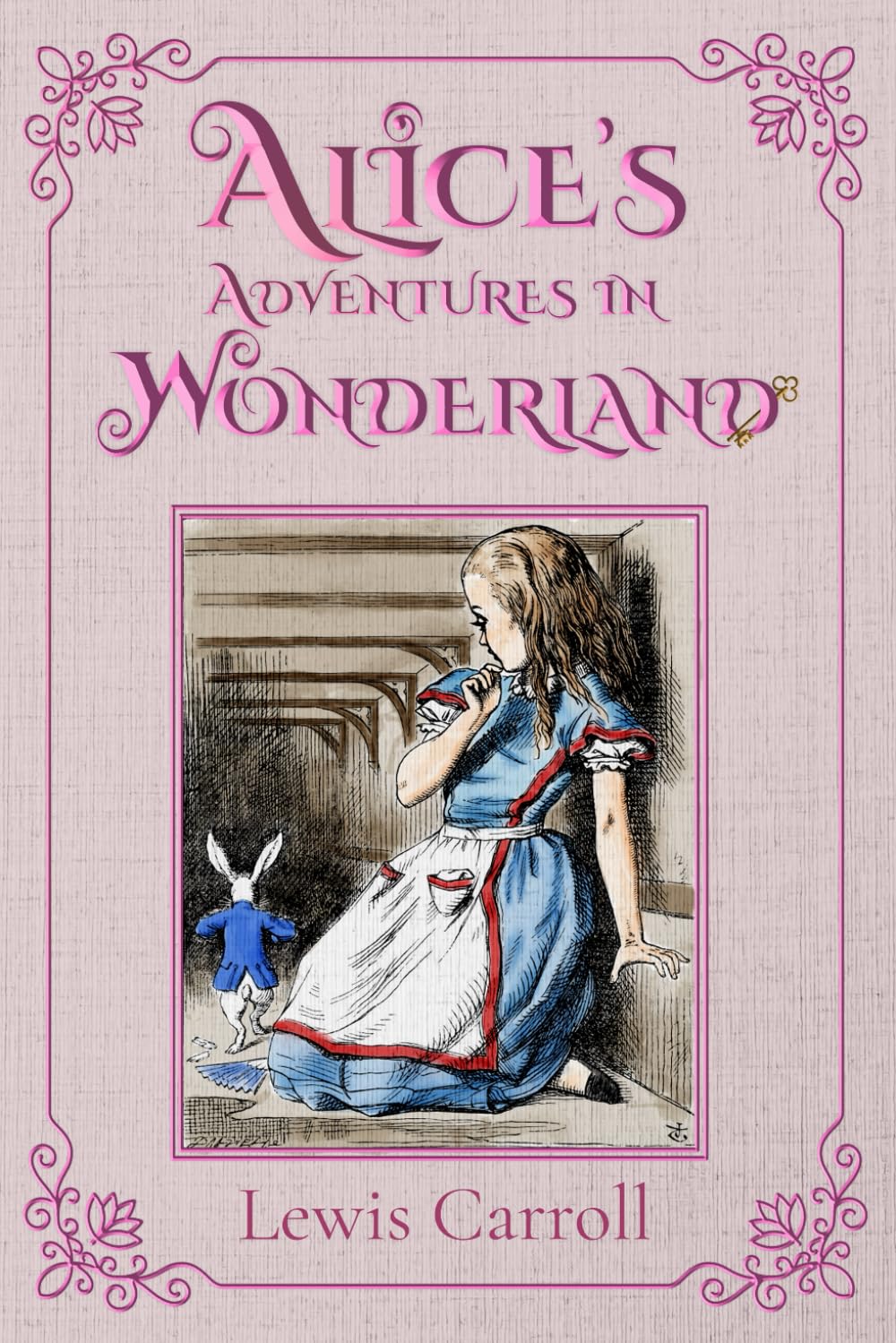
Alice’s Adventures in Wonderland by Lewis Carroll follows a curious girl who falls down a rabbit hole into a fantastical world where logic is upside down, animals talk, and nothing makes sense. This guide provides parents and teachers with reading level information, age recommendations, content insights, and discussion questions for this whimsical classic about imagination, curiosity, and the absurd.
For Parents
Find the right reading level for your child, understand the book’s nonsensical humor and wordplay, and get conversation starters to help your child explore themes about logic, identity, and the joy of nonsense.
For Teachers
Access grade-level guidance, reading metrics, character analysis support, and thematic discussion questions. This Carroll classic offers rich opportunities for exploring Victorian literature, wordplay and logic puzzles, and the celebration of imagination and questioning authority.
Alice’s Adventures in Wonderland at a Glance
Find on Amazon →| Author | Lewis Carroll |
| Published | 1865 |
| Grade Level | 4–6 (our assessment) |
| Recommended Age | 9–12 |
| Flesch-Kincaid Grade | 7.3 |
| Word Count | ~27,000 |
| Pages | ~96 (standard paperback) |
| Chapters | 12 |
| Genre | Classic fantasy / literary nonsense |
| Setting | Victorian England and Wonderland |
| Awards | Classic (one of the most influential books in English literature) |
For official Lexile and AR levels, visit Lexile.com or AR BookFinder. ReadingVine provides independent editorial assessments.
What Reading Level Is Alice’s Adventures in Wonderland?
Alice’s Adventures in Wonderland is appropriate for grades 4–6, with a Flesch-Kincaid grade level of 7.3. The vocabulary reflects Victorian English with invented words, logic puzzles, and extensive wordplay that require careful attention. Carroll’s prose is deceptively simple on the surface but layered with mathematical jokes, puns, and absurd logic that reward multiple readings.
Lewis Carroll’s writing style is playful, precise, and deliberately nonsensical. He delights in turning logic on its head—conversations follow dream-logic rather than real-world sense, characters speak in riddles and paradoxes, and the rules change constantly. The embedded poems are parodies of well-known Victorian verses that children of Carroll’s time would have recognized but modern readers may not. The humor ranges from silly (a grinning cat that disappears leaving only its smile) to sophisticated (mathematical and philosophical jokes).
The story resonates most deeply with readers ages 9–12 who can appreciate the wordplay, follow the dream-like narrative without needing strict plot logic, and enjoy the challenge of puzzles and riddles. Younger readers may find it confusing or slow; older readers appreciate the wit and absurdity. The book rewards readers who don’t mind ambiguity and enjoy language for its own sake.
What Age Is Alice’s Adventures in Wonderland Appropriate For?
Alice’s Adventures in Wonderland is most appropriate for readers ages 9–12. The book is gentle and whimsical—there’s no real violence, no trauma, and nothing frightening except in a dreamlike, surreal way. The Queen of Hearts threatens beheading constantly but no one is actually hurt.
Nonsensical logic: The book deliberately makes no sense. Characters contradict themselves, rules change arbitrarily, and nothing is explained. Some children find this frustrating rather than funny.
The Queen of Hearts: She shouts “Off with their heads!” repeatedly. The threats are not carried out and are portrayed as absurd rather than frightening, but they may startle younger readers.
Alice’s size changes: Alice grows and shrinks repeatedly, sometimes so large she fills a room or so small she nearly drowns in her own tears. The transformations can feel disorienting.
Victorian references: The book includes poems, references, and jokes that would have been familiar to Victorian children but are obscure now. Annotated editions help with context.
What’s NOT in the book: No graphic violence, no death, no inappropriate content. The ending is abrupt—Alice wakes up and it was all a dream. The book celebrates curiosity, questioning authority, and the joy of absurdity. It teaches that not everything needs to make sense to be enjoyed.
What Is Alice’s Adventures in Wonderland About?
Alice is sitting on a riverbank with her sister, bored by her sister’s book, when she sees a White Rabbit run past, muttering “Oh dear! I shall be too late!” and checking a pocket watch. Curious, Alice follows him down a rabbit hole and falls for what seems like forever, finally landing in a strange hall with many locked doors. She finds a key that opens a tiny door revealing a beautiful garden, but she’s too large to fit through.
Alice discovers a bottle labeled “DRINK ME” and shrinks to the right size, but now she can’t reach the key on the table. She eats a cake labeled “EAT ME” and grows enormous, filling the room. Crying in frustration, she creates a pool of tears. She shrinks again and falls into her own tear pool, swimming with a Mouse and other animals who have also fallen in. After getting to shore, the Dodo suggests a “Caucus-race” to get dry—everyone runs in circles with no clear winner.
Alice meets the White Rabbit again, who mistakes her for his housemaid and sends her to fetch his gloves. In his house, she drinks from another bottle and grows so large she’s stuck inside with her arm out the window and foot up the chimney. The Rabbit and his friends try to get her out; eventually Alice eats a cake that makes her shrink again, and she escapes.
In the woods, Alice meets a blue Caterpillar sitting on a mushroom, smoking a hookah. He asks “Who are you?”—a question Alice struggles to answer since she’s changed so many times. The Caterpillar tells her that one side of the mushroom will make her grow and the other will make her shrink. Alice nibbles pieces to manage her size and finally gets herself back to normal height.
She encounters the Cheshire Cat, who grins enormously and can disappear, leaving only his smile behind. He tells her that everyone in Wonderland is mad—including Alice, or she wouldn’t have come there. He gives her directions to the March Hare’s house and the Mad Hatter’s, warning that they’re both mad.
Alice finds the Mad Hatter and March Hare having a perpetual tea party with the Dormouse, who keeps falling asleep. Time has stopped for them at six o’clock (tea time) because the Mad Hatter quarreled with Time. They speak in riddles and nonsense: “Why is a raven like a writing desk?” has no answer. They tell Alice there’s no room at their table (though there’s plenty), pour tea and switch seats constantly, and argue about everything. Alice leaves in frustration.
She finds a door in a tree leading to the hallway from the beginning. This time she manages to keep both the key and the right size, entering the beautiful garden at last. It’s the Queen of Hearts’s garden, where playing-card gardeners are frantically painting white roses red because they planted the wrong color. The Queen arrives and immediately shouts “Off with their heads!” at almost everyone she meets. Alice joins a bizarre croquet game using flamingos as mallets and hedgehogs as balls.
The Cheshire Cat appears during the game, and the Queen demands his beheading—but how do you behead a cat with no body? The executioner, the King, and the Queen all argue about it. Alice is taken to meet the Mock Turtle and the Gryphon, who tell her nonsensical stories about their education (subjects like “Reeling and Writhing” instead of Reading and Writing). They teach her the Lobster Quadrille dance.
Alice is summoned to a trial. The Knave of Hearts is accused of stealing the Queen’s tarts. The trial is absurd: witnesses give irrelevant testimony, the jury writes down nonsense, and the King makes up rules as he goes. Alice has been growing without realizing it, and she’s now giant-sized again. When the Queen shouts “Off with her head!”, Alice retorts “Who cares for you? You’re nothing but a pack of cards!”
The whole pack of cards rises into the air and comes flying at Alice—and she wakes up on the riverbank, brushing leaves off her face. Her sister is beside her. It was all a dream. Alice tells her sister about Wonderland, then runs off to tea, while her sister sits thinking about Alice’s strange dream and the odd creatures in it.
Alice’s Adventures in Wonderland Characters
Alice’s Adventures in Wonderland Themes and Lessons
At its heart, Alice’s Adventures in Wonderland is about identity and the challenge of knowing who you are when everything keeps changing. Alice’s physical transformations mirror the psychological changes of growing up—she literally doesn’t fit anywhere, being too large or too small for every situation. The Caterpillar’s question “Who are you?” is the book’s central challenge. Alice can’t answer because she’s been so many different sizes and experienced so many confusing things that she no longer knows who she is. The book suggests that identity is fluid rather than fixed, and that growing up means constant readjustment.
The book also celebrates questioning authority and rejecting arbitrary rules. Almost every adult figure in Wonderland is absurd, tyrannical, or both: the Queen demands beheadings for no reason, the trial is a farce, and the tea party runs on nonsensical rules. Alice’s triumph comes when she finally declares “You’re nothing but a pack of cards!” and refuses to be intimidated. Carroll, a mathematician, embedded sophisticated logic puzzles and mathematical jokes throughout, showing that true logic and enforced rules are often incompatible. The book teaches children that it’s okay to question things that don’t make sense, and that imagination and curiosity are more valuable than blind obedience.
Discussion questions for families:
- Why can’t Alice answer “Who are you?” when the Caterpillar asks? How do her size changes relate to this question?
- Which Wonderland character do you find most interesting or frustrating, and why?
- Why do you think Carroll made Wonderland so illogical and nonsensical? What’s fun about a place where nothing makes sense?
- What does Alice learn by the end of the book?
How Many Pages and Chapters in Alice’s Adventures in Wonderland?
Alice’s Adventures in Wonderland is approximately 96 pages in standard editions and is divided into 12 chapters. The word count is about 27,000 words—quite short for a classic novel. Chapters average about 8 pages and each typically focuses on an encounter with a particular character or location in Wonderland.
For independent readers ages 9–12, the book typically takes 2–3 hours to read. The short length is deceptive—the wordplay, logic puzzles, and dream-logic narrative mean readers may need to slow down and reread passages to catch jokes. As a read-aloud, it takes approximately 2 hours and works beautifully in installments. Annotated editions are recommended to help modern readers understand Victorian references and mathematical jokes. Many readers enjoy the book more on rereading when they catch humor and wordplay they missed the first time.
Books Similar to Alice’s Adventures in Wonderland
About Lewis Carroll
Lewis Carroll was the pen name of Charles Lutwidge Dodgson (1832–1898), a mathematics lecturer at Oxford University. The story began as an extemporaneous tale told to amuse three young sisters—Alice, Lorina, and Edith Liddell—during a boat trip on July 4, 1862. Ten-year-old Alice Liddell asked Dodgson to write the story down, which he did, presenting her with a handwritten manuscript titled “Alice’s Adventures Under Ground.” At the urging of friends, he expanded and revised it for publication, adding episodes like the Cheshire Cat and the Mad Tea Party. The book was published in 1865 as Alice’s Adventures in Wonderland with illustrations by John Tenniel, and it became an immediate success. Carroll wrote a sequel, Through the Looking-Glass (1871), which continues Alice’s adventures in a mirror world based on chess rather than cards. As a mathematician, Carroll embedded logic puzzles, mathematical jokes, and philosophical paradoxes throughout the book—many are sophisticated enough that scholars still debate their meanings. The poems are parodies of moralistic Victorian verses that children would have been forced to memorize; Carroll’s nonsense versions mock the earnest, preachy tone of children’s literature of his time. The book was revolutionary in presenting childhood as a time for play, imagination, and questioning rather than just moral instruction. Alice’s Adventures in Wonderland has never been out of print and has been translated into over 170 languages. It’s been adapted for stage, film, and television countless times, most famously in Disney’s 1951 animated film. The book influenced everything from surrealism to psychedelic culture to computer science (the terms “Alice and Bob” used in cryptography come from the book). It remains one of the most quoted books in English literature and a foundational text of children’s fantasy.
Alice’s Adventures in Wonderland: Frequently Asked Questions
What grade level is Alice’s Adventures in Wonderland?
Alice’s Adventures in Wonderland is appropriate for grades 4–6 (ages 9–12). The Flesch-Kincaid level of 7.3 reflects Victorian English with wordplay, invented words, and logic puzzles. The prose is deceptively simple but layered with puns, mathematical jokes, and absurd logic. Strong fourth graders can read it, though they may miss some wordplay. Fifth and sixth graders appreciate the wit more fully. The book rewards multiple readings—readers catch jokes on rereading they missed initially. Annotated editions help modern readers understand Victorian references. The challenge isn’t vocabulary so much as following dream-logic narrative and appreciating nonsense for its own sake.
What is the main message of Alice in Wonderland?
Alice’s Adventures in Wonderland celebrates curiosity, imagination, and questioning authority. The book teaches that it’s okay—even necessary—to question things that don’t make sense, and that arbitrary rules enforced by authority figures (like the Queen of Hearts) deserve to be challenged. It explores identity and change: Alice’s physical transformations mirror the psychological changes of growing up, and the Caterpillar’s question “Who are you?” forces her to confront that she’s constantly changing. The book suggests identity is fluid rather than fixed. It also celebrates the joy of nonsense and play over rigid logic and moral lessons. Carroll was reacting against preachy Victorian children’s literature by creating a story purely for pleasure and imagination. The ending—revealing it was all a dream—suggests that imagination and dreams have value even if they’re not “real.” The book teaches that growing up means learning to navigate a world that often doesn’t make sense, and that curiosity and questioning are more valuable than blind obedience.
Is Alice in Wonderland appropriate for kids?
Yes, Alice’s Adventures in Wonderland is entirely appropriate for children ages 9 and up. The book is gentle and whimsical with no real violence, death, or inappropriate content. The Queen of Hearts shouts “Off with their heads!” constantly, but no executions actually happen—the threats are portrayed as absurd rather than frightening. Alice’s size changes can feel disorienting but aren’t scary. The main challenge for young readers is the nonsensical logic—some children find it frustrating rather than funny that nothing makes sense and questions have no answers. The book rewards readers who enjoy wordplay, don’t mind ambiguity, and appreciate absurd humor. Children who need clear explanations or logical plots may struggle with the dream-logic narrative. The book is best for readers who can enjoy language for its own sake and don’t need everything to make sense.
Why is a raven like a writing desk?
This is the famous riddle posed by the Mad Hatter during the tea party, and Lewis Carroll originally intended it to have no answer—it is meant to illustrate the playful nonsense and illogical nature of Wonderland. Readers later pressed Carroll for a solution, so he offered one: “Because it can produce a few notes, tho they are very flat; and it is never put with the wrong end in front!” This answer is a pun: both ravens and writing desks can produce “notes,” meaning sounds or written messages, and the humor lies in the deliberately imperfect and whimsical logic. Carroll’s response was not meant as a strict or definitive solution, and many other creative answers have been suggested over time. The riddle remains one of the book’s most memorable examples of nonsense and reflects Carroll’s fascination with language, logic, and playful paradox.
How does Alice in Wonderland end?
Alice’s Adventures in Wonderland ends with Alice waking up on the riverbank where the story began. During the absurd trial of the Knave of Hearts, Alice grows giant-sized and finally loses patience with the Queen’s tyranny. When the Queen shouts “Off with her head!”, Alice retorts “Who cares for you? You’re nothing but a pack of cards!” The entire pack of playing cards rises into the air and comes flying at Alice—and she wakes up. Her sister is brushing leaves off Alice’s face. It was all a dream. Alice excitedly tells her sister about Wonderland, then runs off to tea. Her sister sits on the riverbank thinking about Alice’s strange dream and the odd creatures in it, imagining how Alice will grow up but always remember the simple joys of childhood. The ending is deliberately abrupt—Carroll doesn’t explain or moralize, he just ends the dream. This frustrated some readers but fits the book’s rejection of tidy morals and explanations.
Who is the Cheshire Cat in Alice in Wonderland?
The Cheshire Cat is a grinning cat who can appear and disappear at will, sometimes leaving only his smile visible after the rest of him has vanished. He’s one of Wonderland’s most memorable characters and the most helpful creature Alice meets—he gives her genuine (if cryptic) guidance about where to go and how to navigate Wonderland’s madness. When Alice asks which way to go, he responds logically: if you don’t care where you’re going, any direction will do. He tells Alice that everyone in Wonderland is mad, including her, because she wouldn’t be there if she weren’t mad. The Cheshire Cat represents philosophical wisdom wrapped in absurdity. His famous smile and ability to disappear have made him an iconic image. The phrase “grin like a Cheshire Cat” predates Carroll’s book—it was a common saying, possibly referring to cheese molds shaped like grinning cats made in Cheshire, England. Carroll took the existing phrase and literalized it, creating a character who is nothing but a grin.
What does Alice in Wonderland teach children?
Alice’s Adventures in Wonderland teaches children that curiosity and questioning are valuable, that it’s okay to challenge authority when it’s arbitrary or absurd, and that imagination and play matter. The book shows that growing up involves constant change and that identity isn’t fixed—Alice literally doesn’t fit anywhere, mirroring how children often feel as they grow. It teaches that not everything needs to make sense or have a moral lesson, and that nonsense can be joyful and liberating. The book encourages children to think critically about rules and question things that seem unfair or illogical. Alice’s triumph comes when she stops trying to make sense of Wonderland’s madness and instead declares “You’re nothing but a pack of cards!”—she refuses to be intimidated by absurd authority. The book also teaches resilience: Alice keeps trying to solve problems even when everything keeps changing. Most importantly, it validates childhood imagination and play as valuable in themselves, not just as preparation for adult life.
Does Alice in Wonderland have a sequel?
Yes, Lewis Carroll wrote Through the Looking-Glass, and What Alice Found There (1871), commonly known as Through the Looking-Glass. In this sequel, Alice climbs through a mirror into a world that’s a giant chess game. She must move across the chessboard as a pawn to become a queen. This sequel features many famous characters and scenes: Tweedledum and Tweedledee, the Walrus and the Carpenter, Humpty Dumpty, the White Knight, and the Red Queen and White Queen. It also includes the famous poem “Jabberwocky” with its invented words like “brillig” and “slithy toves.” Through the Looking-Glass has a more structured plot than the first book (following chess moves) but maintains the wordplay and logic puzzles. While not as universally beloved as the original, it’s still a classic and is often published together with Alice’s Adventures in Wonderland in combined editions. Both books together form the complete Alice story and are considered companion pieces.