
 = Partner Site
Matilda Reading Level: A Complete Guide
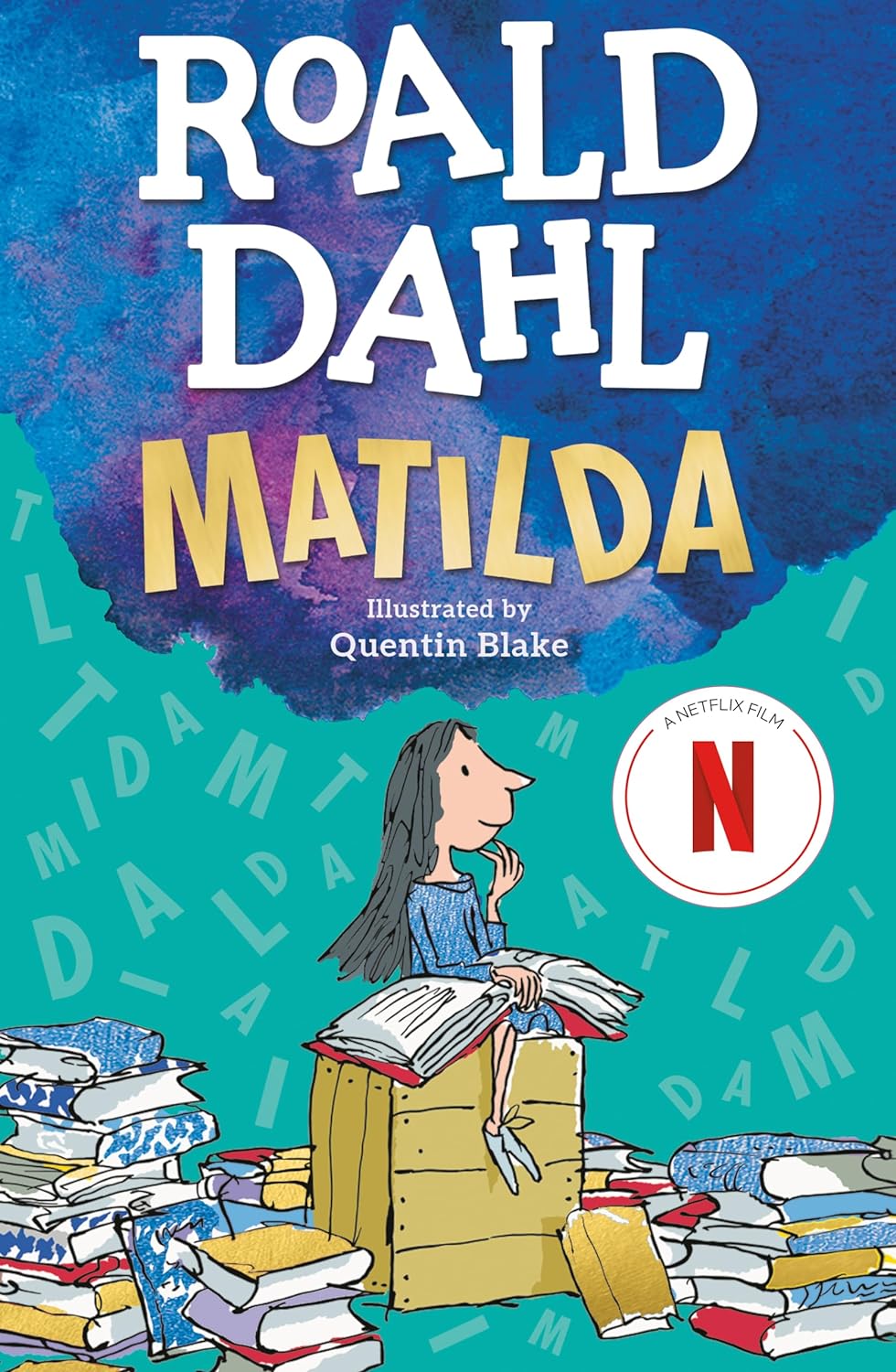
Matilda by Roald Dahl tells the delightful story of an extraordinary little girl with a genius intellect and telekinetic powers who uses her gifts to stand up to cruel adults and protect those she loves. This guide provides parents and teachers with reading level information, age recommendations, content insights, and discussion questions for this beloved classic about intelligence, kindness, and the power of standing up to bullies.
For Parents
Find the right reading level for your child, understand the book’s themes around intelligence and justice, and get conversation starters to help your child explore questions about standing up to unfairness, the importance of reading, and using your talents for good.
For Teachers
Access grade-level guidance, reading metrics, character analysis support, and thematic discussion questions perfect for classroom use. This modern classic offers rich opportunities for exploring themes of education, standing up to injustice, and celebrating intellectual curiosity.
Matilda at a Glance
Find on Amazon →| Author | Roald Dahl |
| Illustrator | Quentin Blake |
| Published | 1988 |
| Grade Level | 3–5 (our assessment) |
| Recommended Age | 8–11 |
| Flesch-Kincaid Grade | 5.0 |
| Word Count | ~45,000 |
| Pages | 240 (hardcover) |
| Chapters | 21 |
| Genre | Fantasy / humor / children’s fiction |
| Setting | England, 1980s |
| Awards | Children’s Book Award, numerous international honors |
For official Lexile and AR levels, visit Lexile.com or AR BookFinder. ReadingVine provides independent editorial assessments.
What Reading Level Is Matilda?
Matilda is appropriate for grades 3–5, with a Flesch-Kincaid grade level of 5.0. The vocabulary is rich and sometimes sophisticated—Dahl never talks down to young readers—but context makes meanings clear. The sentence structure ranges from simple to complex, making the mechanics comfortable for third graders while providing enough challenge to engage fourth and fifth graders. Dahl’s signature British spellings and expressions add flavor without creating significant comprehension barriers.
Dahl writes with wit, warmth, and delicious exaggeration. His narrative voice is conspiratorial, speaking directly to readers as if sharing delightful secrets about the absurd adults in Matilda’s life. The humor comes from wild exaggeration (Miss Trunchbull throwing children, Mr. Wormwood’s ridiculous schemes), sharp social commentary (the cruelty of dismissing intelligent children), and satisfying revenge fantasies (bad people getting their comeuppance). The prose moves briskly, with vivid descriptions and snappy dialogue.
While strong third graders can handle the reading mechanics, the book resonates most with readers ages 8–11 who can appreciate both the fantasy elements and the underlying themes about valuing education, standing up to injustice, and the importance of kind adults (like Miss Honey) in a child’s life. It’s an excellent choice for readers who love stories where clever, underestimated children triumph over terrible adults.
What Age Is Matilda Appropriate For?
Matilda is most appropriate for readers ages 8–11. The story includes some frightening moments involving cruel adults and fantastic elements (telekinesis, extreme punishments), but these are handled with Dahl’s characteristic humor that balances darkness with absurdity. The book celebrates intelligence and goodness while showing that standing up to bullies—even adult ones—is possible and right.
Parental neglect and emotional abuse: Matilda’s parents are cruel and neglectful—they ignore her, insult her intelligence, refuse to send her to school, and treat her with contempt. While exaggerated for comic effect, the emotional neglect is real.
The Trunchbull’s cruelty: Miss Trunchbull is a terrifying headmistress who throws children, locks them in a nail-filled closet called “The Chokey,” forces Bruce Bogtrotter to eat an entire enormous chocolate cake, and threatens children with violence. Dahl presents this with dark humor, but it can be scary.
Revenge and punishment: Matilda plays pranks on her father (gluing his hat, dyeing his hair, putting a parrot in the chimney) and uses her powers to terrify Miss Trunchbull. While satisfying, this involves deception and revenge.
Some gross/crude humor: Dahl’s typical bathroom humor and insults—calling people names like “ignorant twit,” references to smells and bodily functions, etc.
Violence (exaggerated): Miss Trunchbull throws children by their pigtails, swings a girl over the fence, and threatens bodily harm. It’s cartoonish rather than realistic but can be frightening.
Miss Honey’s abuse: Miss Honey was abused by her aunt (Miss Trunchbull) as a child and still lives in fear and poverty because of her. This backstory is sad and involves real child abuse.
What’s NOT in the book: No sexual content, no profanity beyond mild insults, no realistic graphic violence. The scary elements are balanced with humor and magic. The ending is triumphant and happy—Matilda finds a loving home with Miss Honey, the villains are defeated, and goodness prevails.
What Is Matilda About?
Matilda Wormwood is an extraordinary child born to extraordinarily neglectful parents. By age three, she’s taught herself to read. By age four, she’s reading Dickens and Hemingway. But her parents, Mr. and Mrs. Wormwood, are too cruel and self-absorbed to notice or care. Mr. Wormwood is a crooked used car dealer who cheats customers. Mrs. Wormwood is obsessed with bingo and television. They have no interest in books, education, or their brilliant daughter. They refuse to send Matilda to school and ignore her completely except to insult her intelligence and call her ignorant.
Left to her own devices, Matilda walks to the library where the kind librarian, Mrs. Phelps, helps her discover the great works of literature. By age five, Matilda has read everything from Dickens to Steinbeck to Austen, developing a sophisticated mind while her parents remain blissfully unaware she’s even capable of reading.
When Mr. Wormwood is particularly cruel and dismissive, Matilda begins playing small pranks on him as revenge. She puts super-strong glue on his hat so it’s stuck to his head. She uses her mother’s hair dye to turn his hair platinum blonde. She hides a parrot in the chimney that speaks, scaring the family into thinking the house is haunted. These pranks are Matilda’s way of fighting back against neglect and cruelty, and they’re immensely satisfying.
Finally, at age five and a half, Matilda is sent to school—Crunchem Hall Primary School, run by the terrifying Miss Trunchbull. Miss Trunchbull is a former Olympic hammer-thrower who despises children. She’s enormous, strong, and takes pleasure in terrorizing students. She has a torture device called “The Chokey”—a closet so narrow you can’t sit or move, with nails sticking from the walls so if you lean, you get scratched. She throws children by their pigtails, swings them by their arms, and threatens to “squash them like bugs.”
But Matilda also meets Miss Jennifer Honey, her teacher. Miss Honey is gentle, kind, and recognizes immediately that Matilda is extraordinary. She wants to move Matilda to a higher grade where she’ll be challenged, but Miss Trunchbull refuses, dismissing Miss Honey’s assessment and insisting Matilda is probably a cheat and a liar (Trunchbull believes all children are maggots and criminals).
Matilda witnesses Trunchbull’s cruelty firsthand. She sees Trunchbull grab a girl named Amanda Thripp by her pigtails and throw her over the playground fence. She watches as Trunchbull forces Bruce Bogtrotter to eat an entire enormous chocolate cake in front of the whole school as punishment for allegedly stealing a slice (Bruce actually did steal it, but the punishment is wildly disproportionate). The children are terrified of Trunchbull but have no way to fight back—she’s an adult with complete power over them.
One day, when Miss Trunchbull is being particularly cruel to Matilda’s class, Matilda gets so angry that something extraordinary happens: a glass of water tips over seemingly on its own. Matilda realizes she made it happen with her mind. She’s developed telekinetic powers—the ability to move objects just by concentrating on them. Matilda practices at home, learning to control her gift.
Miss Honey, worried about Matilda, invites her to tea at her tiny cottage. There, Miss Honey reveals her sad story: she grew up in a beautiful house with her loving father, Dr. Magnus Honey. But when Miss Honey was young, her mother died, and her father’s sister moved in to care for them. This aunt was cruel and abusive. When Miss Honey was five, her father died suddenly under mysterious circumstances. The aunt—revealed to be Miss Trunchbull—claimed the house and all of Dr. Honey’s money, saying he had debts. Miss Honey strongly suspects that Trunchbull murdered her father, though she has no proof. Trunchbull forced Miss Honey to live in terror, and even now, as an adult, Miss Honey lives in poverty in a tiny cottage, paying Trunchbull most of her salary as “rent.”
Matilda is outraged by this injustice. She decides to use her powers to help Miss Honey. During Miss Trunchbull’s next visit to the classroom, Matilda uses telekinesis to make chalk write on the blackboard by itself, creating ghostly messages that appear to come from Magnus’s spirit. The chalk writes: “Agatha, this is Magnus. This is Magnus. You killed me. I am watching you. Agatha.” The message demands Trunchbull give Miss Honey back her house and belongings.
Miss Trunchbull is terrified—she believes she’s being haunted by Magnus’s ghost. She faints, and when she recovers, she’s so frightened that she flees the school entirely. She packs up and leaves town that very day, never to return. With Trunchbull gone, Miss Honey inherits her father’s house and possessions. The school gets a new, kind headmaster, and everything improves.
Around this same time, Mr. Wormwood’s illegal business dealings catch up with him, and he plans to flee to Spain to avoid the police. He expects Matilda to come with the family. But Matilda doesn’t want to go—she’s finally happy at school with Miss Honey. Miss Honey asks the Wormwoods if she can adopt Matilda, and they—never having cared about their daughter—quickly sign the papers and leave without her.
The book ends happily: Matilda lives with Miss Honey in the beautiful house that’s rightfully hers. Miss Honey gives Matilda the love, attention, and intellectual stimulation she’s always deserved. And here’s the interesting part—once Matilda’s brain is properly challenged and engaged through Miss Honey’s teaching and their conversations, her telekinetic powers gradually fade away. Dahl suggests the powers existed because Matilda’s brilliant mind was so desperately understimulated that it developed extraordinary abilities as an outlet. Now that she has the right education and a loving home, she’s still brilliant but no longer needs magic. She has everything she needs: books, learning, and someone who truly loves her.
Matilda Characters
Matilda Themes and Lessons
Matilda celebrates the power of reading and education to transform lives. Books save Matilda emotionally—they give her escape, knowledge, wisdom, and strength when her family provides none of these things. Her love of learning makes her powerful both intellectually and, eventually, literally through her telekinesis. The book teaches that reading isn’t just entertainment; it’s a source of power that helps you understand the world and stand up for yourself.
The book also explores when it’s right to stand up to adult authority. Both Trunchbull and Matilda’s parents abuse their power over children. Dahl shows that sometimes adults are wrong, and children have the right—even the responsibility—to resist cruelty and injustice. Matilda’s pranks and use of her powers aren’t presented as simple revenge; they’re acts of resistance against genuine abuse. The book teaches that being good doesn’t mean being passive in the face of evil.
Discussion questions for families:
- Why are books so important to Matilda? How do they help her survive her terrible family?
- Is it okay that Matilda plays pranks on her father and scares Miss Trunchbull? When is it right to fight back against unfair adults?
- Why does Miss Honey become a better parent to Matilda than her biological parents? What makes a real family?
- Why do Matilda’s powers go away at the end? What does Dahl suggest about why she had them in the first place?
How Many Pages and Chapters in Matilda?
Matilda has 240 pages in the hardcover edition and is divided into 21 chapters. The word count is approximately 45,000 words. The chapters average about 11 pages each and typically cover a specific event—the library visits, Matilda’s pranks, meeting Miss Honey, Bruce’s cake punishment, discovering her powers, the final confrontation with Trunchbull, and the adoption.
For independent readers in the target age range (8–11), the book typically takes 4–5 hours to complete, or about one week of reading 30–40 minutes per day. Dahl’s engaging prose and the satisfying plot keep most readers moving quickly through the story. Many readers finish it faster because they can’t wait to see how Matilda defeats the villains.
As a read-aloud, Matilda takes approximately 4–5 hours total. The book works wonderfully as a family or classroom read-aloud because Dahl’s voice is so distinctive and fun to perform, the humor lands beautifully when read aloud, and the chapter structure provides natural stopping points. Teachers commonly use it in third through fifth grade to discuss themes of education, justice, standing up to bullies, and the importance of books. The exaggerated villains make it easier for children to discuss real issues like bullying and neglect in a safe, fantastical context.
Books Similar to Matilda
If your child enjoyed Matilda, here are six similar books that explore themes of clever children, standing up to unfair adults, and the power of intelligence:
About Roald Dahl
Roald Dahl (1916–1990) was a British author famous for his darkly humorous children’s books. Matilda, published in 1988, was one of his last and most beloved works. Dahl drew heavily on his own difficult childhood experiences—he attended harsh British boarding schools where corporal punishment was common, experiences that clearly influenced his portrayals of terrible adults like Miss Trunchbull. Dahl had strong opinions about education and believed that children deserved respect, intellectual challenge, and the freedom to read widely. Matilda reflects these beliefs: it celebrates intelligence, reading, and standing up to adults who abuse their power. Dahl was known for never talking down to children in his writing—he tackled dark subjects with humor, created memorably awful villains, and always let the clever, good children triumph. His other famous works include Charlie and the Chocolate Factory, James and the Giant Peach, The BFG, The Witches, and Fantastic Mr. Fox. Dahl’s books have sold over 250 million copies worldwide and continue to be beloved by children for their wit, darkness, exaggeration, and ultimate optimism about good triumphing over evil. Matilda was adapted into a successful film in 1996 and a Tony Award-winning musical in 2010. Dahl died in 1990, but his books remain wildly popular, teaching generation after generation of children that being smart, reading books, and standing up to bullies are all acts of heroism.
Matilda: Frequently Asked Questions
What are Matilda’s powers in the book?
Matilda develops telekinetic powers—the ability to move objects with her mind. She discovers this when angry at injustice and wills a glass to tip over. She practices and eventually controls chalk to write ghostly messages. At the end, after being adopted by Miss Honey and receiving proper intellectual stimulation, her powers fade. Dahl suggests the telekinesis emerged because her brilliant mind was so understimulated that it developed extraordinary abilities as an outlet.
What happens to Miss Trunchbull at the end?
Miss Trunchbull is terrified away by what she believes is the ghost of Magnus (Miss Honey’s father). Matilda uses telekinesis to make chalk write on the blackboard, creating messages that appear to come from Magnus’s spirit, accusing Trunchbull and demanding she return Miss Honey’s inheritance. Trunchbull is so frightened by this apparent supernatural event that she flees the school and town entirely, never to return. Miss Honey inherits her father’s house and belongings.
Does Matilda end up with Miss Honey?
Yes, Matilda is adopted by Miss Honey at the end. When Mr. Wormwood plans to flee to Spain, Matilda doesn’t want to go. Miss Honey wants to adopt her, and the Wormwoods—who never cared about Matilda—quickly sign the adoption papers and leave. Matilda stays with Miss Honey in the recovered house, and finally has the loving, intellectually stimulating home she deserved.
Why are Matilda’s parents so mean to her?
Matilda’s parents are mean because they’re cruel, self-absorbed, and dismissive of intelligence. Mr. Wormwood is a crooked car dealer who sees dishonesty as cleverness and views reading and education as worthless. Mrs. Wormwood is obsessed with bingo and TV and cannot understand why anyone would read. They view Matilda as weird for being smart and have no capacity to appreciate her gifts. Dahl exaggerates their awfulness to make a point: some parents aren’t capable of being good parents, and it’s not the child’s fault.
What is The Chokey in Matilda?
The Chokey is Miss Trunchbull’s torture device—an extremely narrow closet where children cannot sit or move. The walls have broken glass and nails sticking out, so leaning causes cuts and scratches. Children are locked in for hours as punishment. It represents extreme child abuse and Trunchbull’s cruelty, showing the institutional abuse of power over vulnerable children.
What reading level is Matilda?
Matilda is appropriate for grades 3–5 (ages 8–11) with a Flesch-Kincaid grade of 5.0. The vocabulary is rich but accessible. The content is handled with Dahl’s dark humor that balances scary elements with comedy. It’s one of Dahl’s most popular books for upper elementary readers and is commonly taught in third through fifth grade.
Is Matilda appropriate for 7-year-olds?
Matilda can be read by some advanced 7-year-olds but is better for ages 8–11. The reading level works for strong second graders, but the content—Trunchbull’s cruelty, The Chokey, parental neglect—may frighten some 7-year-olds. Many parents read it aloud to younger children and use it to discuss bullies and kind adults, providing context and reassurance about scary parts.
What is the main message of Matilda?
The main message is that intelligence, reading, and education are powerful gifts that help you overcome terrible circumstances. Matilda’s love of books saves her emotionally and gives her strength to survive. It celebrates being smart and teaches that resisting adult abuse of power is right. It shows that family isn’t just biology—Miss Honey becomes Matilda’s true mother through love. It’s about finding where you belong and using your gifts for good.