
 = Partner Site
The BFG Reading Level: A Complete Guide
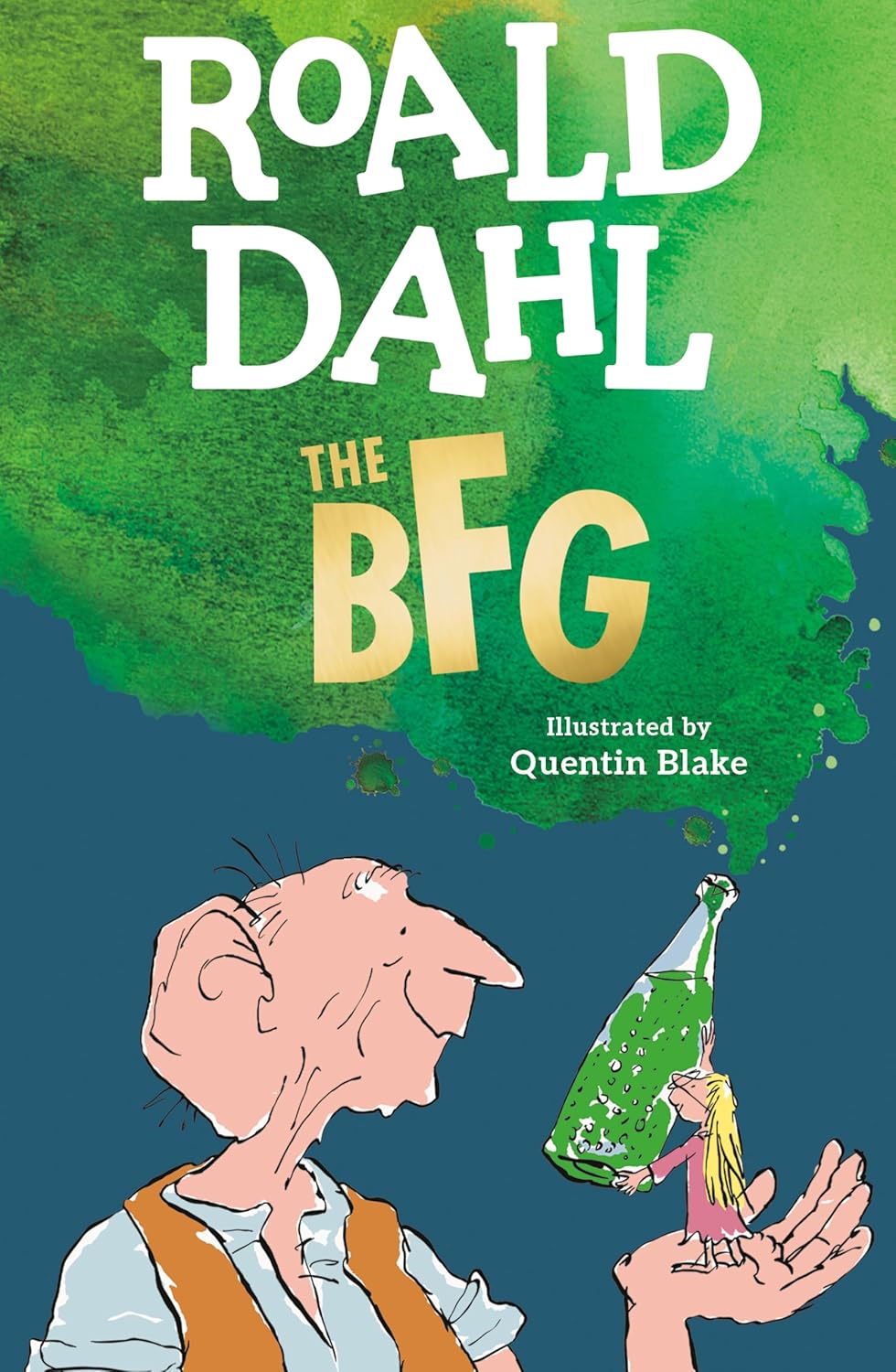
The BFG by Roald Dahl tells the magical story of an orphan girl who befriends a Big Friendly Giant and helps save children from being eaten by other, more terrible giants. This guide provides parents and teachers with reading level information, age recommendations, content insights, and discussion questions for this beloved fantasy classic about friendship, bravery, and the power of dreams.
For Parents
Find the right reading level for your child, understand the book’s balance of scary and heartwarming elements, and get conversation starters to help your child explore themes of loyalty, courage, and standing up to bullies.
For Teachers
Access grade-level guidance, reading metrics, character analysis support, and thematic discussion questions perfect for classroom use. This classic offers rich opportunities for exploring invented language, character development, and Roald Dahl’s distinctive imaginative storytelling.
The BFG at a Glance
Find on Amazon →| Author | Roald Dahl |
| Published | 1982 |
| Grade Level | 3–5 (our assessment) |
| Recommended Age | 8–11 |
| Flesch-Kincaid Grade | 4.8 |
| Word Count | ~37,000 |
| Pages | 199 (standard paperback) |
| Chapters | 24 |
| Genre | Children’s fiction / fantasy / adventure |
| Setting | England and Giant Country |
| Awards | Classic (no specific awards, but enduringly popular) |
For official Lexile and AR levels, visit Lexile.com or AR BookFinder. ReadingVine provides independent editorial assessments.
What Reading Level Is The BFG?
The BFG is appropriate for grades 3–5, with a Flesch-Kincaid grade level of 4.8. The vocabulary includes many invented words that Dahl created for the BFG’s unique way of speaking—”whizzpopping,” “frobscottle,” “scrumdiddlyumptious,” and hundreds more. While these invented words add challenge, context usually makes their meanings clear, and children often delight in the creative language.
Dahl’s writing style is playful and imaginative, with the BFG speaking in charming malapropisms and mixed-up grammar. The giant says things like “I is speaking about crockadowndillies” and “Human beans is not really believing in giants, is they?” This distinctive voice makes the character memorable but requires readers to adjust to non-standard English. The plot itself is straightforward—Sophie and the BFG become friends and work together to stop the evil giants—making the story easy to follow despite the linguistic playfulness.
While strong third graders can handle the reading mechanics, the story resonates most with readers ages 8–11 who can appreciate both the humor in the BFG’s language and the genuine friendship between Sophie and the giant. The book rewards readers who enjoy wordplay, fantastical adventures, and stories where small, brave characters team up to defeat much larger villains.
What Age Is The BFG Appropriate For?
The BFG is most appropriate for readers ages 8–11. The story deals with child-eating giants and includes some frightening moments, but Dahl balances these with humor, warmth, and the reassurance that Sophie and the BFG will triumph. The scary elements are handled with Dahl’s characteristic blend of darkness and whimsy.
Child-eating giants: The main threat in the book is that nine evil giants eat children every night. They’re described vividly (Fleshlumpeater, Bloodbottler, Childchewer, etc.) and their appetite for “human beans” is a constant source of danger.
Scary scenes: Giants break into bedrooms to snatch children, the BFG’s cave is invaded by bullying giants, and there are tense moments when Sophie nearly gets caught and eaten. While not graphic, these scenes can frighten sensitive readers.
Orphan protagonist: Sophie lives in a miserable orphanage run by a cruel woman. While not dwelt upon, the lack of loving parents and the harsh treatment is part of Sophie’s background.
Gross/crude humor: The book includes extensive discussion of “whizzpopping” (farting) from drinking frobscottle, which some parents may find too crude, though children typically find it hilarious.
Violence against giants: The evil giants are ultimately captured and imprisoned, with the army and air force working together to trap them. This is presented as deserved justice.
What’s NOT in the book: No children are actually eaten “on screen,” no graphic violence, no profanity. The child-eating happens off-page in other countries, and the book’s mission is to stop it. The tone is ultimately hopeful and humorous, with good triumphing over evil through cleverness rather than violence.
What Is The BFG About?
Eight-year-old Sophie lives in a dismal orphanage in England. One night, unable to sleep during the “witching hour” (3 a.m.), she looks out her window and sees something extraordinary: a giant man, tall as a building, walking down the street carrying a trumpet and a suitcase. The giant sees Sophie watching him, and knowing he’s been spotted, reaches through her window, plucks her from her bed, and carries her away wrapped in a blanket.
Sophie is terrified—she’s certain the giant will eat her. But she soon discovers this giant is different. He’s the Big Friendly Giant (BFG), and unlike the other giants in Giant Country, he doesn’t eat “human beans.” The BFG is gentle, kind, and vegetarian, surviving on disgusting snozzcumbers (the only thing that grows in Giant Country). He brings Sophie to his cave, where he reveals his secret work: he catches dreams, bottles them, mixes them, and blows good dreams into children’s bedrooms at night through his trumpet.
However, there are nine other giants in Giant Country, and they’re all horrifying: the Fleshlumpeater (the biggest and meanest), the Bloodbottler, the Childchewer, and six others. These giants are fifty feet tall, cruel, and every night they gallop to different countries to eat children. The BFG is only twenty-four feet tall, and the others bully him mercilessly, calling him a “runt” and threatening him. Sophie is horrified that children are being eaten and insists they must do something to stop it.
Sophie and the BFG devise a daring plan. The BFG will create a special dream and blow it into the bedroom of the Queen of England. The dream will tell the Queen all about the child-eating giants and convince her that it’s real. Sophie will sit on the Queen’s windowsill to prove the dream is true. The plan works perfectly—the Queen wakes up, sees Sophie, and believes everything. She invites Sophie and the BFG to Buckingham Palace for breakfast.
At the palace, there’s a wonderful scene of the BFG trying to eat breakfast properly while sitting at a tiny table, drinking frobscottle (which makes you whizzpop), and charming the Queen and her servants. Sophie explains the whole situation, and the Queen immediately mobilizes the army and air force. Helicopters carry the soldiers to Giant Country, where they build a trap. The BFG lures the nine evil giants into the trap by telling them that children are in a particular spot. The giants rush there and fall into a deep pit.
The giants are transported back to England in chains and imprisoned in a huge pit with high walls where they can never escape. They’re fed only snozzcumbers for the rest of their lives—poetic justice since they made the BFG eat nothing else. The Queen builds the BFG a beautiful house next to her palace with a huge door (so he can fit) and gives him the official title of Royal Dream-Blower. Sophie gets to live in a cottage next to the BFG’s house. The book ends with the revelation that the BFG has learned to read and write, and the story we’ve just read is the book he wrote about his adventures with Sophie.
The BFG Characters
The BFG Themes and Lessons
At its heart, The BFG is about the power of unlikely friendships. Sophie and the BFG are both outsiders—she’s an orphan, he’s bullied by the other giants for being small and refusing to eat humans. Together, they find the family and acceptance they’ve been missing. The book teaches that friendship isn’t about being similar; it’s about mutual respect, kindness, and caring for each other. Sophie never treats the BFG as a monster despite his size, and the BFG protects Sophie and values her intelligence even though she’s tiny.
The story also celebrates using cleverness and creativity to overcome seemingly impossible challenges. Sophie and the BFG can’t physically fight the evil giants—they’re too small and weak. Instead, they use imagination (creating a special dream), communication (telling the Queen), and planning (setting the trap) to defeat enemies much larger and stronger than themselves. This teaches readers that brains are more powerful than brawn, and that working together with others (like enlisting the Queen’s help) is smarter than trying to be a hero alone.
Discussion questions for families:
- Why does the BFG refuse to eat humans when all the other giants do? What does this tell us about making your own choices even when others pressure you?
- Sophie is tiny compared to the giants, but she’s not afraid to stand up to them. Where does she get her courage?
- The BFG speaks in mixed-up words and incorrect grammar, but he’s very wise and kind. What does this teach about judging people by how they talk?
- Why do Sophie and the BFG need the Queen’s help? Why don’t they try to stop the giants alone?
How Many Pages and Chapters in The BFG?
The BFG has 199 pages in the standard paperback edition and is divided into 24 chapters. The word count is approximately 37,000 words, making it a substantial but manageable read for middle-grade readers. The chapters average about 8 pages each and are structured around specific events or locations, providing natural stopping points.
For independent readers in the target age range (8–11), the book typically takes 5–6 hours to complete, or about two weeks of reading 30 minutes per day. The BFG’s invented language slows some readers down initially, but most adjust quickly and start enjoying the wordplay. The exciting plot and warm friendship between Sophie and the BFG keep readers engaged throughout.
As a read-aloud, The BFG takes approximately 4–5 hours total. The BFG’s distinctive voice is fun to perform aloud, and children love hearing the invented words pronounced dramatically. The breakfast scene at Buckingham Palace and the whizzpopping moments provide guaranteed laughs. Many families and classrooms enjoy reading it aloud because the humor and heart make it entertaining for both children and adults, and the BFG’s voice creates memorable read-aloud moments.
Books Similar to The BFG
If your child enjoyed The BFG, here are six similar books that explore themes of friendship, magic, and unlikely heroes:
About Roald Dahl
Roald Dahl (1916–1990) was a British author who became one of the world’s most beloved children’s writers. The BFG, published in 1982, was one of Dahl’s later children’s books and was inspired by the bedtime stories he told his own children. Dahl created the BFG’s character and unique language specifically for these storytelling sessions, inventing hundreds of wonderful words like “scrumdiddlyumptious,” “whizzpopping,” and “human beans.” The BFG’s gentle nature was partly inspired by Dahl’s friend, the British children’s author and illustrator Walter “Wally” Saunders, who was very tall and kind. Dahl dedicated the book to his daughter Olivia, who had died from measles many years earlier—a tragedy that deeply affected him and influenced his later work’s emphasis on protecting children. The book became one of Dahl’s most beloved creations, celebrated for its warmth, humor, and the touching friendship between Sophie and the giant. Unlike some of Dahl’s darker works, The BFG is ultimately hopeful and gentle, showing that kindness and friendship can triumph over cruelty and loneliness. Dahl’s other classics include Charlie and the Chocolate Factory, Matilda, James and the Giant Peach, and The Witches. His books have sold over 250 million copies and continue to enchant children with their perfect blend of magic, mischief, and heart.
The BFG: Frequently Asked Questions
What does BFG stand for?
BFG stands for “Big Friendly Giant.” This is what Sophie calls the giant when she realizes he’s not like the other terrible giants who eat children. The name emphasizes his two most important characteristics: he’s big (twenty-four feet tall, though smaller than the other giants), and he’s friendly—kind, gentle, and protective rather than cruel and dangerous. The abbreviation BFG becomes his name throughout the book, and even the Queen and others adopt it. It’s a perfect name because it distinguishes him from the child-eating giants like the Fleshlumpeater and Bloodbottler, making clear that this giant is safe and good.
What is whizzpopping in The BFG?
Whizzpopping is the BFG’s word for farting. It happens when you drink frobscottle, a fizzy drink in Giant Country. Unlike human soda where the bubbles go up, frobscottle bubbles go down, which causes whizzpops. The BFG considers whizzpopping to be a wonderful, natural thing and even demonstrates it proudly for Sophie. When they visit Buckingham Palace, the BFG drinks frobscottle at breakfast and whizzpops in front of the Queen, which causes chaos but ultimately makes everyone laugh. Children typically find these scenes hilarious, while some parents consider them too crude. The whizzpopping represents Dahl’s characteristic gross-out humor and the BFG’s innocent, childlike nature—he sees nothing wrong with something that’s natural.
What happens to the evil giants at the end of The BFG?
At the end of The BFG, all nine evil giants are captured and imprisoned forever. The Queen of England mobilizes the army and air force, who use helicopters to transport soldiers to Giant Country. They dig a huge, deep pit as a trap. The BFG tricks the sleeping giants by telling them there are children in a particular spot, and when the giants rush there, they fall into the pit. The giants are then tied up with heavy steel cables, loaded onto trucks, and transported back to England. They’re imprisoned in a massive pit with walls too high and steep for them to climb, where they spend the rest of their lives. The only food they receive is snozzcumbers—poetic justice since they made the BFG eat nothing but snozzcumbers for years. The giants are miserable but can never hurt children again.
Is The BFG too scary for kids?
Whether The BFG is too scary depends on the child’s age and sensitivity. The book includes genuinely frightening elements—child-eating giants with names like Childchewer and Fleshlumpeater, scenes where giants break into bedrooms to snatch children, and tense moments when Sophie nearly gets caught. However, Dahl balances the scary parts with humor, warmth, and the constant reassurance that Sophie is safe with the BFG. No children are actually eaten “on screen,” and the good guys ultimately triumph. Most children ages 8–11 handle the scary elements well, especially since the BFG himself is so kind and protective. Younger or more sensitive children (under 7) might find the giant descriptions and the threat too frightening. Reading it together with a parent who can provide reassurance often helps.
What are snozzcumbers in The BFG?
Snozzcumbers are the only vegetable that grows in Giant Country, and they’re absolutely disgusting. They’re huge, knobbly, and taste revolting—the BFG describes them as tasting like “frogskinsquinch” and “rotsome rain water.” They’re striped and shaped oddly, and eating them is torture. The BFG is forced to eat nothing but snozzcumbers because the other giants won’t let him have anything else, and he refuses to eat humans like they do. This makes the BFG’s life before meeting Sophie quite miserable—he’s not just lonely and bullied, but also chronically hungry and stuck eating horrible food. When Sophie and the BFG visit the Queen, they finally get to eat real food, which is a joyous moment for the BFG. At the end, the evil giants are sentenced to eat only snozzcumbers forever—fitting punishment from their former victim.
How does the BFG catch dreams?
The BFG catches dreams using a special technique and tools. He goes out during the witching hour (3 a.m.) with a long trumpet and a special net. Dreams drift around invisibly in the air, but the BFG has developed the ability to hear them—each dream makes a different humming or buzzing sound. When he hears a dream, he swoops down with his net and captures it, then carefully transfers it into a glass jar. He labels each jar based on whether it’s a good dream or a nightmare, and describes what the dream is about. He stores thousands of bottled dreams in his cave on shelves, creating a vast dream library. The good dreams, he blows through his trumpet into children’s bedrooms at night. The nightmares, he keeps bottled up so they can never harm anyone—except when he needs one for the special plan to help the Queen believe in giants.
Is The BFG appropriate for 7-year-olds?
The BFG can be appropriate for mature 7-year-olds, especially as a read-aloud, though 8+ is generally better. The reading level (4.8 Flesch-Kincaid) is accessible to strong second-grade readers, and the story is engaging. However, the content about child-eating giants may be too frightening for some 7-year-olds, particularly those who are sensitive to scary stories. The giants are described vividly, and there are tense scenes where Sophie is in danger. As a read-aloud with a parent who can reassure the child that Sophie is safe and that the bad giants are defeated in the end, it works well for many 7-year-olds who enjoy fantasy and adventure. For independent reading, 8 and up is typically more appropriate, as older children can better handle the scary elements and appreciate the humor that balances them.
What is the main message of The BFG?
The main message is that true friendship transcends differences and that even the smallest, seemingly weakest individuals can accomplish great things through courage, cleverness, and working together. Sophie and the BFG are both outsiders and underdogs—she’s an orphan, he’s bullied by bigger giants—but together they defeat enemies much more powerful than themselves. The book teaches that it’s important to stand up for what’s right even when it’s scary, that refusing to go along with cruelty makes you brave (the BFG won’t eat humans despite pressure from other giants), and that kindness and gentleness are strengths, not weaknesses. It also shows that family isn’t about biology—Sophie and the BFG become family through their love and loyalty to each other. The story celebrates using your brain over brute strength and the power of unlikely friendships to change the world.