
 = Partner Site
Roll of Thunder, Hear My Cry Reading Level: A Complete Guide
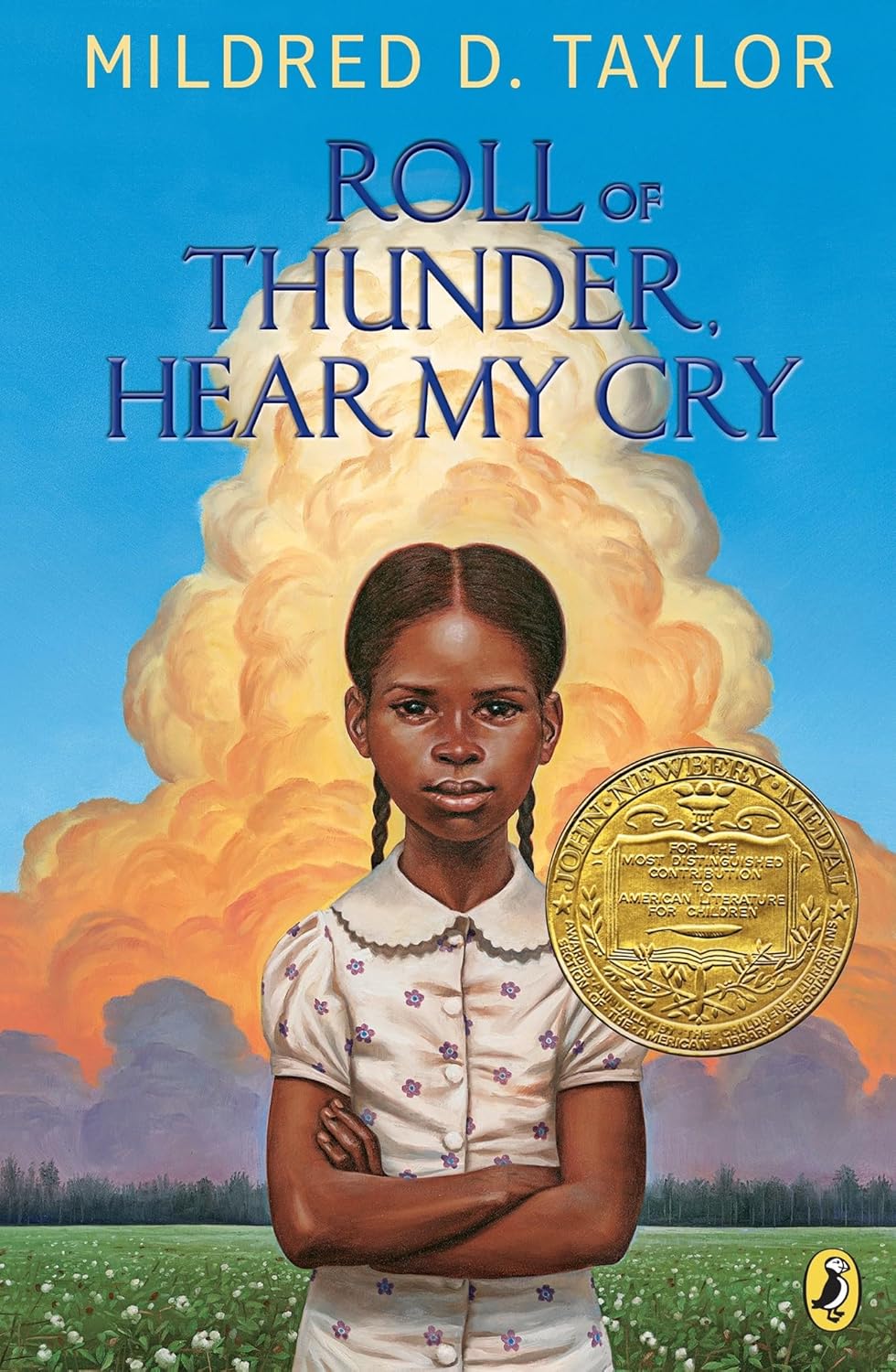
Roll of Thunder, Hear My Cry by Mildred D. Taylor tells the powerful story of a Black family in Depression-era Mississippi standing up against racism and fighting to keep their land. This guide provides parents and teachers with reading level information, age recommendations, content insights, and discussion questions for this Newbery Medal-winning classic about dignity, family strength, and the courage to resist injustice.
For Parents
Find the right reading level for your child, understand the book’s honest portrayal of racism and violence, and get conversation starters to help your child explore themes of injustice, family pride, and standing up for what’s right despite the costs.
For Teachers
Access grade-level guidance, reading metrics, character analysis support, and thematic discussion questions perfect for classroom use. This Newbery Medal winner offers rich opportunities for exploring Civil Rights history, systemic racism, and family resilience.
Roll of Thunder, Hear My Cry at a Glance
Find on Amazon →| Author | Mildred D. Taylor |
| Published | 1976 |
| Grade Level | 5–7 (our assessment) |
| Recommended Age | 10–13 |
| Flesch-Kincaid Grade | 5.7 |
| Word Count | ~58,000 |
| Pages | 276 (standard paperback) |
| Chapters | 12 |
| Genre | Historical fiction / young adult |
| Setting | Mississippi, 1933 (Great Depression era) |
| Awards | Newbery Medal (1977) |
For official Lexile and AR levels, visit Lexile.com or AR BookFinder. ReadingVine provides independent editorial assessments.
What Reading Level Is Roll of Thunder, Hear My Cry?
Roll of Thunder, Hear My Cry is appropriate for grades 5–7, with a Flesch-Kincaid grade level of 5.7. The vocabulary is accessible but includes historical terms and dialect that may be unfamiliar to modern readers. The sentence structure ranges from simple to complex, and the narrative requires readers to understand historical context about Jim Crow segregation, sharecropping, and the Great Depression.
Mildred D. Taylor’s writing is direct, powerful, and deeply rooted in the Black Southern experience of the 1930s. She uses authentic dialect and historical language to bring the era to life, capturing how people actually spoke while remaining accessible to young readers. The story is told through nine-year-old Cassie Logan’s first-person perspective, which makes the narrative voice immediate and relatable even as it describes events and injustices that may be outside modern children’s experience.
While strong fifth graders can handle the reading mechanics, the story resonates most deeply with readers ages 10–13 who can understand the historical context of segregation, grasp the economic pressures facing the Logan family, and process the serious themes of racism, violence, and moral courage. The book rewards readers who are ready for honest, unflinching discussions about racial injustice and who can appreciate stories where characters face real danger for standing up for their dignity and rights.
What Age Is Roll of Thunder, Hear My Cry Appropriate For?
Roll of Thunder, Hear My Cry is most appropriate for readers ages 10–13. The story deals with racism, violence, lynching threats, and the brutal realities of Jim Crow Mississippi in frank, honest ways. Taylor doesn’t sanitize the violence and hatred Black families faced, but she also doesn’t graphically depict violence. The focus is on the Logan family’s strength, dignity, and resistance rather than on victimization.
Racism and racial slurs: The book portrays the brutal racism of 1930s Mississippi, including use of the N-word and other slurs by white characters. This historical language is used to show the reality of the era, not endorsed by the narrative.
Violence and lynching threats: The book depicts a man being burned to death (not graphically but the event is clear), threats of lynching, physical beatings, and racist violence. These are historical realities portrayed seriously.
Economic exploitation: The sharecropping system, debt bondage, and deliberate economic oppression of Black families are central to the story. Children need to understand economic injustice.
Children in danger: The Logan children face real threats, including being run off the road by a white school bus, threats from racist neighbors, and general danger from simply being Black in Jim Crow Mississippi.
Injustice without resolution: Unlike many children’s books, not all wrongs are righted. The system remains oppressive, and the Logans must accept partial victories and strategic retreats rather than total justice.
What’s important to know: The book is honest about racism and violence but focuses on the Logan family’s dignity, strength, and resistance. The Logans are not victims—they’re proud landowners who fight back intelligently and courageously. The book teaches that resistance is possible even in oppressive systems, that family and community provide strength, and that maintaining your dignity and humanity matters even when you can’t change everything. The ending is bittersweet but not hopeless—the Logans keep their land and their pride, even as they recognize ongoing struggles ahead.
What Is Roll of Thunder, Hear My Cry About?
Nine-year-old Cassie Logan lives with her family on their own land in Mississippi in 1933. The Logans are unusual—most Black families in the area are sharecroppers working white-owned land, trapped in debt and poverty. The Logans own 400 acres, bought by Cassie’s grandfather after slavery ended. This land represents freedom, pride, and power in a system designed to keep Black families landless and powerless.
Cassie’s father, David Logan, works on the railroad hundreds of miles away to earn money for the mortgage on their land. Her mother, Mary Logan, is a teacher. Cassie has three brothers: Stacey (twelve), Christopher-John (seven), and Little Man (six). The family is proud, dignified, and determined to keep their land and their self-respect despite living in a deeply racist society.
The story follows one year in Cassie’s life as she learns about the realities of racism in the South. At school, Black children receive tattered, discarded textbooks from the white school—books so old and damaged they’re unusable. When Cassie’s teacher distributes the books, Little Man sees the chart inside showing the books were labeled “very poor” when given to the “nigra” students. He and Cassie refuse to accept the books. Their mother supports them, getting herself fired for teaching the truth about slavery and racism.
White children ride a school bus while Black children walk to school. The white bus driver deliberately runs Black children off the road, covering them in dust and mud. Stacey and his friends dig a ditch to trap the bus, which breaks down in the mud. The children understand that this small act of sabotage is risky, but it feels meaningful to them—a quiet act of resistance and a way to reclaim some sense of justice.
The Wallace family, white store owners, exploit Black sharecroppers through credit and debt. They also run a store where adult Black men are lured in, given credit, and encouraged to drink and fight for white people’s entertainment. When one of the Logans’ friends is badly burned in a fight at the Wallace store, the Logans organize a boycott. They shop in Vicksburg instead and help other Black families do the same, threatening the Wallaces’ profits. This makes the Logans targets.
Cassie experiences racism directly when she goes to nearby Strawberry with her grandmother. In the store, Cassie is forced to wait while white customers—even children who arrived after her—are served first. When she protests being ignored, the white store owner throws her out. Outside, Cassie accidentally bumps into Lillie Jean Simms, a white girl. Lillie Jean’s father, Charlie Simms, forces Cassie to apologize and call Lillie Jean “Miz Lillie Jean,” pushing Cassie into the street. Cassie is humiliated and enraged, but her grandmother makes her understand: in this time and place, pride can get you killed. Later, Cassie gets revenge by pretending to befriend Lillie Jean, then humiliating her away from witnesses—a small, private victory.
T.J. Avery, Stacey’s friend, is increasingly desperate and foolish. He cheats, lies, and seeks acceptance from white boys R.W. and Melvin Simms, who pretend friendship while mocking him. T.J. wants a pearl-handled pistol he can’t afford. R.W. and Melvin offer to get it for him, then break into the store to steal it, wearing masks and forcing T.J. to participate. When the white store owner tries to stop them, R.W. hits him with the flat of an axe, seriously injuring him. They frame T.J. for the robbery and assault.
A white mob forms, planning to lynch T.J. The mob goes to the Avery house and drags T.J. out, beating him brutally. They plan to hang him, with or without a trial. The Logan children watch in horror from nearby. Papa Logan realizes that mob violence will spread—once started, lynchings often escalate, and the Logans could be next. He makes a desperate decision: he sets his own cotton field on fire. The fire threatens everyone’s crops, Black and white, and the mob has to abandon the lynching to fight the fire and save their livelihoods.
The Logans lose a quarter of their cotton—a devastating economic loss they can barely afford. But T.J. isn’t lynched that night. He’s arrested and will face “legal” proceedings, though everyone knows he won’t get a fair trial. Papa Logan explains to Cassie that T.J. will likely be imprisoned or harshly punished anyway, but at least they saved him from being burned alive by a mob. It’s not justice, but it’s something. The Logans have used their resources—their land, their cotton—to save a life, even at great cost to themselves.
The book ends with the Logans safe but struggling. They’ve kept their land despite white neighbors trying to take it. They’ve maintained their dignity despite constant humiliation. They’ve resisted economically through the boycott and morally through refusing to accept racism passively. But the system remains oppressive, T.J.’s fate is bleak, and the Depression and racism continue. Cassie cries for T.J. and for the land, understanding now that keeping their land and freedom requires constant struggle and sacrifice. The thunder in the title—suggested by the spiritual “Roll of Thunder, Hear My Cry”—represents both the cry for justice and the ongoing fight for dignity and freedom.
Roll of Thunder, Hear My Cry Characters
Roll of Thunder, Hear My Cry Themes and Lessons
At its heart, Roll of Thunder, Hear My Cry is about the connection between land ownership and freedom. The Logans’ land isn’t just property—it’s independence, power, and dignity in a system designed to keep Black families landless and dependent. The land allows them to resist economically (through the boycott), provides resources to save lives (burning the cotton to stop the lynching), and gives them bargaining power and self-sufficiency. The book teaches that economic independence is foundational to other freedoms, and that maintaining that independence requires constant struggle and sacrifice.
The book also explores different forms of resistance and the wisdom of strategic choices. Uncle Hammer represents bold, proud resistance that doesn’t bow to white supremacy—admirable but dangerous. Papa represents strategic resistance—he fights back but carefully, protecting his family while still maintaining dignity. Mama resists through education, teaching truth even when it costs her job. The children’s small acts (sabotaging the bus, Cassie’s revenge on Lillie Jean) are ways of maintaining self-respect within an oppressive system. The book teaches that resistance takes many forms, that sometimes you must choose battles carefully to survive and fight another day, and that maintaining your humanity and dignity matters even when you can’t change the entire system.
Discussion questions for families:
- Why is owning land so important to the Logan family? How does it give them power and freedom that sharecropping families don’t have?
- When Cassie is humiliated in Strawberry, Big Ma makes her apologize. Was this the right choice? What does it teach about surviving in an unjust system?
- Why does Papa burn his own cotton? What does this sacrifice teach about protecting community and choosing what matters most?
- How is the Logan family’s resistance different from T.J.’s attempts to fit in with white boys? What makes their approach successful while T.J.’s fails?
How Many Pages and Chapters in Roll of Thunder, Hear My Cry?
Roll of Thunder, Hear My Cry has 276 pages in the standard paperback edition and is divided into 12 chapters. The word count is approximately 58,000 words, making it a substantial historical novel for middle-grade to young adult readers. The chapters average about 23 pages each and are structured around key events throughout the year—from the first day of school through the cotton harvest to the climactic fire and T.J.’s arrest.
For independent readers in the target age range (10–13), the book typically takes 7–9 hours to complete, or about two to three weeks of reading 30 minutes per day. The historical context and serious themes may slow some readers as they process events and emotions, but the compelling story and Cassie’s strong voice keep readers engaged. The pacing builds steadily toward the climactic events, making the second half particularly gripping.
As a read-aloud, Roll of Thunder, Hear My Cry takes approximately 6–7 hours total. The chapter structure works well for reading sessions, and the historical content provides excellent opportunities to discuss Jim Crow laws, sharecropping, the Great Depression, and the ongoing impact of these systems. Many families and classrooms use it to teach both history and important lessons about racism, resistance, and social justice. Teachers often pair it with primary sources about segregation and the Civil Rights movement to provide context. The book’s difficult content requires careful discussion but offers profound teaching moments about injustice, dignity, and courage.
Books Similar to Roll of Thunder, Hear My Cry
If your child enjoyed Roll of Thunder, Hear My Cry, here are six similar books that explore themes of justice, courage, and standing up to oppression:
About Mildred D. Taylor
Mildred D. Taylor (born 1943) is an African American author best known for the Logan family saga, which includes Roll of Thunder, Hear My Cry and several other acclaimed novels. Roll of Thunder, published in 1976, won the Newbery Medal in 1977 and became one of the most important works of children’s literature about racism and the Black experience in America. Taylor based the Logan family on her own family’s history—her father grew up in Mississippi, and many of the stories he told her about surviving Jim Crow became the foundation for her novels. The land-owning Logan family reflects Taylor’s actual ancestors who managed to buy land after slavery and fought to keep it despite white efforts to force them off. Taylor was deeply influenced by her father’s storytelling, which emphasized dignity, pride, and resistance rather than victimization. She wanted to write books that showed Black families as strong, loving, and actively resisting oppression—not passive victims waiting for white saviors. This was revolutionary in children’s literature of the 1970s, which rarely centered Black protagonists or honestly depicted racism. Taylor conducted extensive research into the economics of sharecropping, Jim Crow laws, and the specific conditions of 1930s Mississippi to ensure historical accuracy. She uses authentic dialect and period-appropriate language, including racial slurs, because she believes whitewashing history disrespects those who lived through it. The book was controversial when published and continues to face challenges from parents who find the honest depiction of racism too disturbing or who object to the use of racial slurs in the text. However, Taylor argues that children need to understand the reality of racism, both historical and ongoing, and that sugarcoating this history does a disservice to both Black children who deserve to see their ancestors’ strength and resistance, and white children who need to understand the truth about American history. Taylor wrote several other books about the Logan family, including Let the Circle Be Unbroken, The Land, and The Road to Memphis, following the family through different time periods. Roll of Thunder, Hear My Cry remains her most celebrated work and continues to be taught in schools across America, introducing generations of readers to honest discussions about racism, injustice, and the courage required to maintain dignity and fight for freedom in oppressive systems.
Roll of Thunder, Hear My Cry: Frequently Asked Questions
What happens to T.J. at the end of Roll of Thunder, Hear My Cry?
T.J. is arrested after being beaten by a white mob that planned to lynch him. Papa Logan sets the cotton field on fire to distract the mob and save T.J. from being burned alive. T.J. survives the night but is taken to jail, where he’ll face trial. The book makes clear that T.J. won’t receive justice—he’ll likely be convicted regardless of the truth (that R.W. and Melvin Simms, the white boys, actually committed the robbery and assault, forcing T.J. to participate). The ending is ambiguous about T.J.’s ultimate fate, but it’s implied he’ll be executed or imprisoned for a crime he didn’t commit. This reflects the historical reality that Black defendants rarely received fair trials in Jim Crow Mississippi. The Logans save T.J. from immediate mob violence but can’t save him from the racist legal system.
Why does Papa burn the cotton in Roll of Thunder, Hear My Cry?
Papa burns the cotton to stop the white mob from lynching T.J. When the mob drags T.J. from his home, planning to hang and burn him, Papa realizes the violence will spread—once started, lynchings often escalate, and the Logans could be next. He makes a desperate decision: setting his own cotton field on fire. The fire threatens everyone’s crops, Black and white, and the mob must abandon the lynching to fight the fire and save their livelihoods. This costs the Logans a quarter of their cotton—a devastating economic loss they can barely afford—but it saves T.J.’s life that night. Papa’s decision demonstrates strategic resistance: using the one resource they have (their land and crop) to intervene against mob violence. It shows that resistance sometimes requires sacrifice, and that protecting community and human life matters more than economic survival, even when you’re already struggling.
Is Roll of Thunder, Hear My Cry appropriate for 5th grade?
Roll of Thunder, Hear My Cry can be appropriate for fifth graders, especially in a classroom setting with teacher guidance, though sixth and seventh graders typically handle the content with more maturity. The reading level (5.7 Flesch-Kincaid) is accessible to fifth graders. However, the content—racism, violence, lynching threats, racial slurs—requires emotional maturity and historical context to process. Fifth graders can understand the story but may need help processing the injustice, violence, and use of the N-word by racist characters. The book works best in fifth grade as a class read-aloud with structured discussions about historical context, the economic system of sharecropping, and why Taylor chose to use authentic historical language including slurs. Teachers should prepare students and families, provide historical background, and create space for honest conversations about racism past and present. For independent reading, sixth grade and up is typically more appropriate.
What is the main conflict in Roll of Thunder, Hear My Cry?
The main external conflict is the Logan family’s fight to keep their land and dignity in the face of white supremacist oppression and economic exploitation. White landowners and neighbors want to take the Logans’ land and force them into sharecropping dependence. The family faces constant threats: economic pressure through the mortgage, violence from night riders, retaliation for the store boycott, and general dangers of being Black in Jim Crow Mississippi. The deeper internal conflict, particularly for Cassie, is learning to navigate a racist society while maintaining self-respect and dignity—understanding when to fight back, when to strategically retreat, and how to resist without getting yourself or your family killed. The resolution shows the Logans surviving through strategic resistance, family unity, and sacrifice, keeping their land and pride but recognizing that the struggle continues. Not all wrongs are righted, but the family endures with dignity intact.
Why is Roll of Thunder, Hear My Cry called that?
The title comes from a spiritual song that includes the lyrics “Roll of thunder, hear my cry / Over the water, bye and bye.” Spirituals were songs created by enslaved people that often had double meanings—both religious comfort and coded messages about freedom and resistance. In the context of the book, the title suggests several meanings: it’s a cry for justice (“hear my cry”), a reference to the power and danger in the natural world (thunder/the fire), and a connection to African American spiritual tradition and history. The thunder can represent both the voice of the oppressed crying out for justice and the power required to resist oppression. The phrase “bye and bye” suggests hope for future justice even when immediate justice is impossible. Taylor chose this title to connect her story to the long history of Black resistance and the ongoing struggle for freedom and dignity.
Is Roll of Thunder, Hear My Cry based on a true story?
Roll of Thunder, Hear My Cry is fiction, but it’s based on Mildred D. Taylor’s family history and extensive historical research. Taylor’s father grew up in Mississippi, and many of the events in the book—including stories about maintaining land ownership, facing down racism, and resisting economic exploitation—were based on stories he told her about his family’s experiences. The Logan family reflects Taylor’s actual ancestors who bought land after slavery and fought to keep it. While the specific characters and events are fictionalized, they represent real patterns of Black life in Jim Crow Mississippi: the sharecropping system was real, the economic exploitation was real, the threat of violence for any resistance was real, and lynchings happened regularly. Taylor researched extensively to ensure historical accuracy about 1930s Mississippi, Depression-era economics, and the specific conditions Black landowners faced. The book is true to the historical experience even though the specific story is fictional.
How many books are in the Roll of Thunder series?
There are several books in the Logan family saga by Mildred D. Taylor, though they’re not always numbered as a formal series. The main books in chronological order of the Logans’ lives are: The Land (2001, prequel set after the Civil War, following Cassie’s grandfather), Song of the Trees (1975, novella when Cassie is 8), Roll of Thunder, Hear My Cry (1976, when Cassie is 9), Let the Circle Be Unbroken (1981, continues immediately after Roll of Thunder), The Road to Memphis (1990, set in 1941 when Cassie is 17), The Well (1995, about Cassie’s father as a child), and The Friendship (1987, another story about young David Logan). Roll of Thunder, Hear My Cry is the most famous and most widely read, winning the Newbery Medal. The books can be read independently but together they tell the multi-generational story of the Logan family from slavery through the 1940s.
What is the message of Roll of Thunder, Hear My Cry?
The main message is that maintaining dignity, family unity, and land ownership provides the foundation for resistance against oppression, and that strategic, intelligent resistance is possible even in brutally unjust systems. The book teaches that economic independence (land ownership) is crucial to freedom and power. It shows that resistance takes many forms—economic (the boycott), educational (Mama teaching truth), strategic (Papa’s choices), and personal (maintaining self-respect). It argues that family and community strength enable survival and resistance. The book also teaches that fighting injustice sometimes requires sacrifice (burning the cotton, losing jobs, accepting partial victories), and that you can maintain your humanity and dignity even when you can’t change the entire system. It validates both strategic retreat when necessary (Big Ma making Cassie apologize to survive) and bold resistance when possible (the boycott, sabotaging the bus). Ultimately, it’s a message about the power of family, land, and dignity to sustain resistance across generations.